If you are considering window tint for your vehicle, you may be asking, “Is XPEL tint good?” The short answer is yes. XPEL is widely recognized for producing premium automotive window films, particularly its ceramic tint options. The brand focuses on heat rejection, UV protection, optical clarity, and long term performance, making it a popular choice among car owners who want more than basic window tint.
XPEL offers several window tint products designed for different needs and budgets. Its PRIME CS, PRIME XR, and PRIME XR PLUS films provide different levels of performance and protection. This means choosing XPEL is only the first step. Selecting the right film is equally important.
One of the biggest reasons drivers choose XPEL tint is its ability to reduce solar heat entering the cabin. A quality ceramic film can make the interior feel more comfortable on hot days while also reducing exposure to ultraviolet radiation. It can also reduce glare and help protect interior materials from prolonged sunlight.
However, premium tint comes at a higher price than many standard films. The question is whether the additional performance justifies the cost. In this guide, we will examine XPEL tint performance, benefits, product options, potential drawbacks, cost, and overall value to help you decide whether it is a good choice for your car.
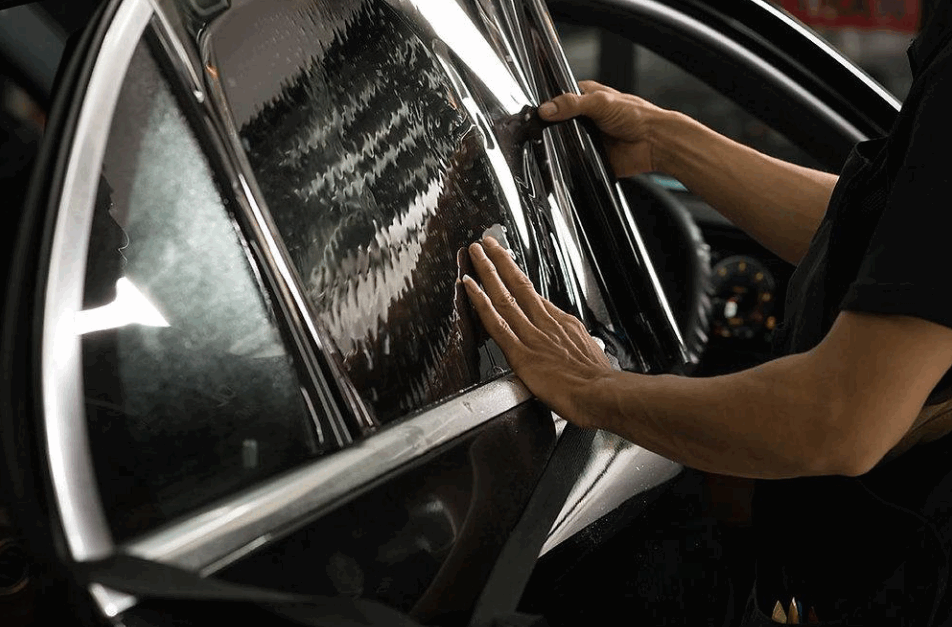
What Is XPEL Window Tint?
XPEL window tint is an automotive window film designed to improve comfort, protection, and appearance while driving. The company offers several film technologies, including ceramic options designed to reject solar heat without relying on metallic materials.
XPEL PRIME CS is positioned as a more accessible option, while PRIME XR and PRIME XR PLUS are premium ceramic films. The higher tier films are designed to provide stronger infrared heat rejection while maintaining optical clarity. This makes them particularly appealing for drivers in hot and sunny climates.
A key term to understand when comparing window tint is Visible Light Transmission, or VLT. VLT describes how much visible light can pass through the film and glass. A lower VLT generally means a darker appearance, while a higher VLT allows more light into the cabin. However, darker tint does not automatically mean better heat rejection.
Ceramic window films work differently from traditional dyed films. They use ceramic particles to help reject infrared radiation and solar energy. Because they are non metallic, they can also avoid signal interference associated with some older metallic films.
When evaluating XPEL tint, it is important to consider more than the brand name. The specific film series, VLT, vehicle glass, installation quality, and local tint regulations can all affect the final result. Choosing the right combination is what determines whether the investment is worthwhile.
How Well Does XPEL Tint Perform?
XPEL tint performs well across the areas that matter most to automotive window film buyers. Its premium ceramic films are designed to reduce solar heat, block ultraviolet radiation, and improve cabin comfort without significantly compromising visibility.
Heat rejection is one of the main reasons drivers choose premium ceramic tint. By reducing the amount of solar energy entering the vehicle, the film can help the cabin feel less intense under direct sunlight. This can be especially noticeable when the vehicle is parked outdoors during hot weather.
Infrared rejection is another important consideration. Infrared radiation contributes to the heat associated with direct sunlight. XPEL’s premium ceramic films are designed to reject a significant portion of infrared energy. However, infrared rejection should not be treated as the only measurement of tint quality. Overall solar energy rejection, glass composition, film construction, and installation also influence real world performance.
UV protection is another major advantage. Quality automotive window film can block most ultraviolet radiation, helping reduce exposure for occupants and potentially slowing sun related deterioration of interior materials.
Optical clarity also matters. A tint that looks impressive from outside but creates distortion or poor visibility at night can become frustrating. XPEL’s premium films are designed to maintain clear viewing through the glass when properly installed.
The actual experience will still vary between vehicles. Factory glass, film shade, installation technique, and windshield design can all affect performance. Therefore, published specifications should be considered alongside real world driving conditions.
XPEL Tint Benefits for Your Car
The main benefit of XPEL tint is improved cabin comfort. When a vehicle sits under direct sunlight, solar radiation can quickly increase the temperature inside. A quality ceramic film can reduce the amount of solar energy entering through the windows, making the cabin more comfortable and potentially reducing the workload on the air conditioning system.
UV protection is another important advantage. XPEL’s automotive window films are designed to block ultraviolet radiation. This can help reduce UV exposure for passengers while also helping protect materials inside the vehicle from prolonged sunlight.
Glare reduction can make driving more comfortable as well. Bright sunlight reflecting from roads, buildings, and other vehicles can make it harder to maintain comfortable visibility. Appropriate window tint can reduce some of this glare without requiring extremely dark film.
XPEL tint can also improve the appearance of a vehicle. A professionally installed film can give the windows a more uniform and refined appearance. The right shade can complement the vehicle’s exterior while providing additional privacy.
Another advantage of ceramic film is its compatibility with electronic signals. Because ceramic tint does not depend on a metallic layer for its performance, it is generally suitable for modern vehicles equipped with GPS, Bluetooth, cellular connectivity, and other wireless systems.
The benefits are strongest when the film is professionally installed. Poor installation can result in bubbles, uneven edges, visible imperfections, or premature problems. For that reason, the installer is an important part of the overall tinting decision, not simply an afterthought.
XPEL PRIME CS vs XR vs XR PLUS
XPEL offers several film options, so choosing the right series is important. PRIME CS is generally positioned as a more affordable option for drivers who want reliable window film protection without moving into the highest premium category.
PRIME XR is a step up and uses ceramic technology designed to provide stronger heat and infrared rejection. It is a practical choice for drivers who want a balance between performance and price. For many vehicle owners, this middle option provides enough performance without paying for the most expensive film.
PRIME XR PLUS sits at the premium end of the range. It is designed for drivers who place a high priority on maximum heat and infrared rejection. This can make it particularly attractive for vehicles that spend significant time outside in strong sunlight.
The best option depends on how you use your vehicle. A driver who mainly wants improved appearance and basic protection may not need the highest tier. Someone who regularly drives long distances in a hot climate may get more value from a premium ceramic film.
It is also important to remember that tint shade and film series are separate decisions. A darker film is not automatically the highest performing option. Buyers should consider heat rejection, visibility, local regulations, and driving habits together.
For most buyers, PRIME XR offers a strong balance of performance and value. XR PLUS makes more sense when maximum heat rejection is a priority and the higher price fits the budget.
Is XPEL Tint Worth the Cost?
XPEL tint can be worth the cost if you value heat rejection, UV protection, optical clarity, and long term performance. However, whether it is worth paying a premium depends on your vehicle, climate, driving habits, and expectations.
Standard window tint can be considerably cheaper, and it may provide enough protection for drivers who mainly want privacy or a darker appearance. Premium ceramic tint becomes more compelling when comfort and solar performance are important priorities.
The cost of XPEL tint also depends on the specific film series and the vehicle being tinted. A larger SUV with more glass can require more material and labor than a compact sedan. Windshield and sunroof applications can also affect the final price.
Installation quality is another part of the value equation. Paying for premium film does not guarantee a premium result if the installer lacks experience. A skilled installer can produce cleaner edges, better glass coverage, and a more consistent appearance.
For drivers who live in hot climates or regularly park outside, the additional comfort from a high quality ceramic film may justify the investment. For someone who rarely drives in direct sunlight, a less expensive film could provide better overall value.
Ultimately, XPEL should be viewed as a premium investment rather than simply a darker window covering. If your priority is a combination of cabin comfort, solar protection, appearance, and long term quality, the higher upfront cost can make sense.