When searching for a Mercon V equivalent, many vehicle owners want a simple answer. They need to know which transmission fluid can safely replace Mercon V without affecting transmission performance. However, choosing the right automatic transmission fluid is not as simple as matching product names. The correct fluid depends on the transmission design, vehicle requirements, and fluid specification.
Mercon V is a specific automatic transmission fluid specification associated with Ford applications. It was developed to provide the friction control, lubrication, oxidation resistance, and temperature performance required by compatible automatic transmissions. Several aftermarket fluids are marketed for applications that require Mercon V. However, not every multi vehicle ATF or universal transmission fluid should automatically be considered an equivalent.
The term Mercon V equivalent can also create confusion because manufacturers use different wording on product labels. Some fluids may state that they meet Mercon V requirements. Others may list Mercon V among their recommended applications. These statements can have different meanings, so checking the manufacturer’s technical information is important before choosing a replacement.
This guide explains what Mercon V is, what makes an ATF a suitable equivalent, and how to evaluate alternative fluids. It also covers Mercon V compatibility, differences between Ford fluid specifications, and common mistakes to avoid when selecting transmission fluid. By understanding the specification instead of relying only on brand names, vehicle owners can make a more informed decision when servicing an automatic transmission.
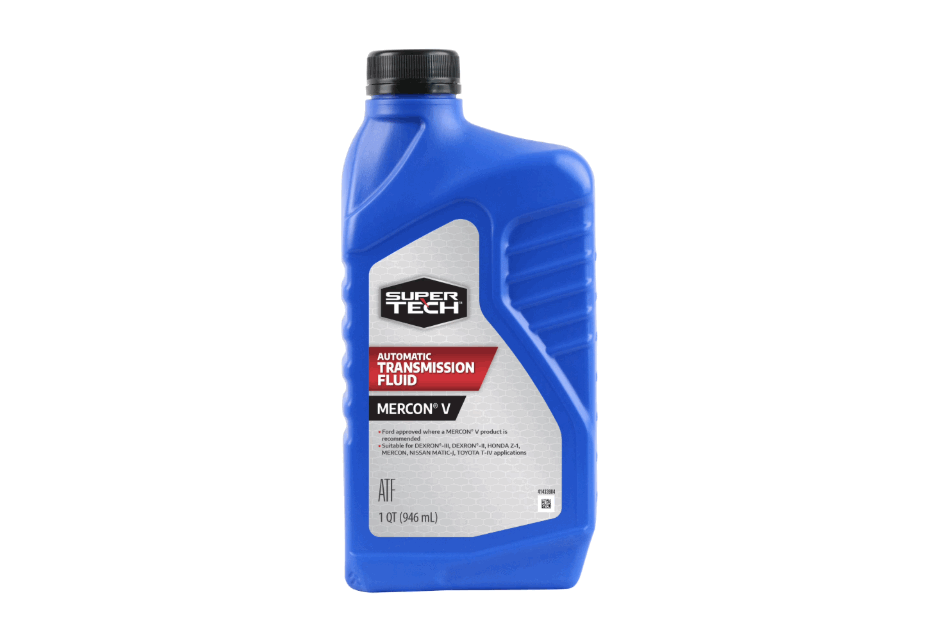
What Is MERCON V Transmission Fluid?
MERCON V is an automatic transmission fluid specification developed for specific Ford transmission applications. It is designed to provide the friction characteristics, lubrication, cooling, and oxidation resistance needed for compatible automatic transmissions. These properties help the transmission shift smoothly while protecting internal components from excessive wear and heat.
The term MERCON V refers to a fluid specification, not a single product. Motorcraft offers fluids that meet this specification, while other fluid manufacturers produce aftermarket ATFs that are formulated for applications requiring MERCON V. This means two products can have different brand names while being intended for the same type of transmission application.
MERCON V fluid is important because automatic transmissions depend on precise fluid characteristics. ATF does more than lubricate moving parts. It also transfers hydraulic pressure, controls clutch engagement, helps manage transmission temperature, and protects components from deposits and oxidation. A fluid with the wrong friction characteristics can affect shift quality and transmission operation.
It is also important to distinguish MERCON V from other Ford transmission fluid specifications. MERCON, MERCON LV, MERCON SP, and other specifications are not simply different names for the same fluid. Each specification is designed around particular transmission requirements. Using the correct specification listed for the vehicle is therefore more important than choosing an ATF based only on viscosity, brand, or price.
When looking for a Mercon V equivalent, start by identifying the exact fluid specification required by the vehicle. The owner’s manual, manufacturer service information, and ATF manufacturer’s technical documentation can help confirm whether a particular fluid is suitable. This approach reduces the risk of using an incompatible fluid and helps maintain proper transmission performance.
What Is a Mercon V Equivalent?
A Mercon V equivalent is an automatic transmission fluid formulated and documented for applications that require the MERCON V specification. The word equivalent does not simply mean that the fluid has similar viscosity or is designed for automatic transmissions. A suitable replacement must have the friction, lubrication, oxidation resistance, and performance characteristics needed by the specific transmission.
Many aftermarket ATF products are designed to cover multiple transmission fluid specifications. Their labels may state that the product meets MERCON V requirements or is recommended for applications that call for MERCON V. These statements are useful, but they should be checked against the manufacturer’s technical data before use. Product descriptions can vary between brands, so the exact wording matters.
A dedicated MERCON V fluid is usually the simplest option when the vehicle specifically calls for MERCON V. However, a multi vehicle ATF can also be suitable when the manufacturer clearly lists MERCON V compatibility. The key factor is not whether the bottle says universal, synthetic, or multi vehicle. The key factor is whether the product is documented for the required application.
It is also important not to assume that another Ford ATF specification is automatically an equivalent. MERCON LV and MERCON SP, for example, were developed for different transmission requirements. A fluid can be high quality and still be unsuitable for a transmission that requires MERCON V.
Before choosing a replacement, check the vehicle’s owner’s manual and transmission service information. Then compare the required specification with the product label and technical data sheet. If the manufacturer specifically identifies the fluid as suitable for MERCON V applications, it can be considered a potential Mercon V equivalent for those applications. This method is more reliable than choosing an ATF based only on brand reputation or general compatibility claims.
Best Mercon V Alternatives for Automatic Transmissions
Several aftermarket automatic transmission fluids are marketed for applications that require MERCON V. These products can provide an alternative to an original equipment fluid when their manufacturer clearly confirms compatibility. However, the best Mercon V equivalent is not necessarily the most expensive or the most popular ATF. The correct choice depends on whether the product matches the transmission specification required by the vehicle.
Dedicated MERCON V fluids are often the most straightforward option. They are formulated specifically for applications associated with the MERCON V specification. This can make product selection easier because the intended application is clearly identified on the label and supporting documentation.
Multi vehicle ATFs are another common option. These fluids are designed to cover several transmission specifications in one formulation. Some are listed for MERCON V applications, which can make them convenient for vehicles that require this specification. Before using one, verify the exact compatibility information provided by the manufacturer rather than relying only on the phrase multi vehicle.
OEM transmission fluid is also an important choice. Using the fluid recommended by the vehicle manufacturer can reduce uncertainty, particularly when the transmission has specific service requirements. It may cost more than some aftermarket alternatives, but the specification and application are usually clearly defined.
Synthetic ATF can also be suitable for a MERCON V application when the manufacturer specifically identifies it as compatible. Being synthetic does not automatically make an ATF equivalent to MERCON V. Likewise, a product being marketed as universal does not mean it can be used in every automatic transmission.
When comparing alternatives, focus on the required specification, manufacturer documentation, transmission application, and service recommendations. A properly documented aftermarket fluid can be a practical Mercon V equivalent, while an ATF without confirmed compatibility should not be selected simply because it appears similar.
Mercon V Compatibility: What You Need to Check
Checking Mercon V compatibility is an important step before replacing transmission fluid. Even when an ATF is marketed as a multi vehicle or universal product, it should not be assumed to work with every transmission. Automatic transmissions have different clutch materials, hydraulic systems, operating temperatures, and friction requirements. The fluid must be suitable for the specific application.
Start by identifying the vehicle’s make, model, model year, engine, and transmission. This information can help determine which ATF specification the manufacturer originally required. The owner’s manual is usually the first place to check, but service information and transmission documentation can provide additional details.
Next, check the fluid specification rather than focusing only on the product name. A bottle may list several applications, while another product may be designed specifically for MERCON V. Look for clear manufacturer statements about MERCON V compatibility. If the manufacturer does not identify the fluid as suitable for the required specification, choosing it can create unnecessary risk.
The type of transmission service also matters. A simple drain and refill may leave some of the original fluid inside the transmission, while a complete fluid exchange can replace a much larger amount. Mixing different fluids should therefore be considered carefully. If the fluids are not confirmed to be compatible, it is better to follow the vehicle manufacturer’s recommended service procedure.
Temperature performance is another consideration. Automatic transmission fluid must remain stable under repeated heating and cooling cycles. It also needs to maintain the correct friction characteristics as it ages. Using the correct Mercon V equivalent helps support consistent shifting and protection of internal transmission components.
When in doubt, prioritize the vehicle manufacturer’s specification and the ATF manufacturer’s technical documentation. Matching the correct specification is more important than choosing a particular brand, price point, or marketing claim.
MERCON V vs MERCON, MERCON LV and MERCON SP
MERCON V belongs to a group of Ford transmission fluid specifications. However, these specifications do not all serve the same applications. MERCON, MERCON V, MERCON LV, and MERCON SP each have different performance requirements. For that reason, you should always check the specification listed for your transmission before choosing an ATF.
Ford introduced MERCON V as an updated fluid specification for many applications that previously used MERCON. The newer formulation provides different friction and performance characteristics. Still, you should not assume that every transmission that uses MERCON can automatically use MERCON V. Always verify the required fluid specification for your specific vehicle.
MERCON LV has a different purpose. The LV designation refers to a lower viscosity formulation designed for transmissions that require that specification. Its fluid characteristics differ from those of MERCON V. Therefore, an ATF that meets MERCON LV requirements does not automatically qualify as a Mercon V equivalent.
MERCON SP also serves specific Ford transmission applications. Although both fluids support automatic transmissions, their formulations and intended uses can differ. Using one in place of the other without confirmation can affect shift quality and transmission performance.
The same rule applies when comparing aftermarket ATFs. A product may list several Ford specifications on its label, but that does not make every application interchangeable. Instead, check the manufacturer’s compatibility information and compare it with your vehicle’s service requirements.
Choosing the correct ATF specification helps maintain smooth shifting, proper lubrication, hydraulic operation, and transmission protection. When specifications appear similar, follow the requirement listed for your transmission rather than choosing a fluid based only on its brand or marketing claims.
Can You Use Dexron or Multi Vehicle ATF Instead of MERCON V?
Many vehicle owners wonder whether Dexron or multi vehicle ATF can replace MERCON V. The answer depends on the specific product and transmission. You should never assume that two automatic transmission fluids are interchangeable simply because they serve similar purposes.
Dexron refers to a family of General Motors transmission fluid specifications, while MERCON V belongs to Ford’s fluid specifications. Their formulations can have different friction characteristics and performance requirements. Therefore, a Dexron fluid does not automatically qualify as a Mercon V equivalent.
Multi vehicle ATF requires a closer look. Manufacturers formulate these fluids to work across multiple transmission applications. Some products specifically list MERCON V compatibility, which can make them suitable for transmissions that require this specification. Other multi vehicle fluids may not cover MERCON V applications.
The wording on the product label also matters. A manufacturer may state that an ATF meets certain requirements, is suitable for specific applications, or is recommended for particular specifications. These claims can provide useful guidance, but you should always compare them with the requirements in your vehicle’s owner’s manual.
Transmission design also affects fluid compatibility. Automatic transmissions rely on specific friction properties to control clutch engagement and gear changes. The wrong fluid can cause harsh shifts, slipping, delayed engagement, or other performance problems.
Before using Dexron, multi vehicle ATF, or another alternative, confirm the required specification for your transmission. Then check the fluid manufacturer’s technical information to verify compatibility. If the product clearly supports MERCON V applications, it may serve as a suitable alternative. If the manufacturer does not mention MERCON V compatibility, choosing another fluid with confirmed compatibility provides a safer approach.
How to Choose the Right Mercon V Equivalent
Choosing the right Mercon V equivalent starts with identifying the exact transmission fluid specification required by your vehicle. The vehicle’s make, model, year, engine, and transmission type can all affect the correct ATF choice. Even two vehicles from the same manufacturer may require different fluids.
Start with the owner’s manual or official service information. Look for the recommended automatic transmission fluid and its specification. If the manual specifically calls for MERCON V, use that specification as the reference point when comparing aftermarket products.
Next, check the ATF manufacturer’s product label and technical data sheet. Look for clear information about MERCON V applications. A product that specifically lists MERCON V provides stronger evidence of compatibility than one that only describes itself as universal or multi vehicle.
Pay attention to the difference between product claims. Terms such as compatible with, recommended for, and meets the requirements can describe different levels of suitability. When possible, use technical information directly from the fluid manufacturer instead of relying only on retailer descriptions.
You should also consider the type of transmission service you plan to perform. A drain and refill may leave some old fluid inside the transmission, while a complete fluid exchange can replace a much larger volume. Follow the manufacturer’s recommended service procedure to reduce potential compatibility issues.
Price should not determine your final choice. A cheaper ATF may appear attractive, but the cost of an incorrect fluid can become much higher if transmission performance suffers. The same applies to premium synthetic fluids. High quality does not automatically mean universal compatibility.
The safest approach is simple. Confirm the required specification, verify the product documentation, and select an ATF that the manufacturer clearly identifies for MERCON V applications. This process helps you find a reliable Mercon V equivalent without relying on assumptions or marketing language.
Common Mistakes When Replacing MERCON V Fluid
Replacing transmission fluid may seem straightforward, but several common mistakes can lead to poor shift quality or unnecessary transmission problems. Understanding these mistakes can help you choose the right Mercon V equivalent and avoid fluid compatibility issues.
One common mistake involves confusing MERCON V with MERCON LV. Both specifications come from Ford, but they serve different transmission applications. A vehicle that requires MERCON V does not automatically accept MERCON LV. Always confirm the required specification before buying an ATF.
Another mistake occurs when drivers choose fluid based only on viscosity. Viscosity affects fluid behavior, but it does not define complete transmission compatibility. Friction characteristics, additives, oxidation resistance, and other properties also affect how an ATF performs inside a transmission.
Some owners also assume that universal or multi vehicle ATF works in every application. Manufacturers design these products to cover multiple specifications, but each product has its own compatibility list. Check the label and technical documentation to confirm MERCON V coverage.
Mixing fluids without checking compatibility can create another problem. A drain and refill may leave some original ATF in the transmission, so the replacement fluid needs to work properly with the remaining fluid. Follow the manufacturer’s service recommendations instead of mixing products based on appearance or viscosity alone.
Finally, do not rely solely on retailer descriptions or online forum recommendations. Product information can become outdated or incomplete. The owner’s manual and fluid manufacturer’s technical documentation provide more reliable guidance.
Avoiding these mistakes makes it easier to select a suitable Mercon V equivalent. When in doubt, prioritize the exact specification required by the transmission and verify the replacement fluid before completing the service.
Frequently Asked Questions About Mercon V Equivalent
What is the closest Mercon V equivalent?
The closest replacement depends on the specific vehicle and transmission. A suitable aftermarket ATF should clearly list MERCON V compatibility in its manufacturer documentation. A multi vehicle ATF can work when the manufacturer confirms that it covers MERCON V applications.
Is MERCON V the same as Dexron?
No. MERCON V and Dexron belong to different transmission fluid specifications. A Dexron ATF should not automatically replace MERCON V unless the fluid manufacturer specifically confirms compatibility with the required application.
Can I use multi vehicle ATF instead of MERCON V?
Yes, but only when the specific multi vehicle ATF lists MERCON V among its compatible applications. The term multi vehicle does not mean that the product works with every transmission fluid specification.
Is MERCON LV compatible with MERCON V?
You should not assume that MERCON LV can replace MERCON V. These specifications have different performance characteristics and serve different transmission applications. Always follow the fluid specification listed for your vehicle.
Can MERCON V be used in every Ford transmission?
No. Ford has used several transmission fluid specifications across different vehicles and transmission designs. MERCON V only applies to transmissions that specifically require or accept that specification.
How do I know if an ATF is compatible with MERCON V?
Check the product label and technical data sheet from the ATF manufacturer. Look for a clear statement that identifies MERCON V applications. You should also compare that information with the transmission fluid requirement in your owner’s manual.
Does using the wrong ATF damage a transmission?
Using an incompatible ATF can affect shift quality, clutch operation, lubrication, and overall transmission performance. The potential consequences depend on the transmission and the fluid used. Choosing a documented Mercon V equivalent reduces the risk of compatibility problems and helps maintain proper transmission operation.
Conclusion
Choosing the right Mercon V equivalent requires more than finding an ATF with a similar name or viscosity. MERCON V represents a specific transmission fluid requirement, so compatibility should remain the main priority when selecting a replacement.
Several aftermarket ATFs may work for applications that require MERCON V. Some dedicated fluids target this specification, while certain multi vehicle ATFs cover several applications. The best choice depends on the product’s documented compatibility with your specific transmission.
Before replacing the fluid, check your owner’s manual or official service information to confirm the required specification. Then review the ATF manufacturer’s label and technical data to verify that the product supports MERCON V applications. This simple comparison can help prevent mistakes and reduce the risk of using an unsuitable fluid.
You should also avoid treating MERCON, MERCON V, MERCON LV, MERCON SP, and Dexron as interchangeable specifications. Each fluid specification has its own performance requirements and intended applications. A high quality ATF cannot automatically replace another specification simply because both fluids serve automatic transmissions.
Ultimately, the right Mercon V equivalent is the fluid that the manufacturer documents as suitable for your transmission. When you match the correct specification and follow the recommended service procedure, you can support smooth shifting, proper lubrication, and long term transmission performance.