Brake caliper bracket bolts do not have one universal torque specification. The correct value depends on the vehicle and its brake system. You should always check the vehicle’s service information before tightening these bolts.
The first step is to identify the exact brake fastener. A caliper bracket bolt is different from a caliper guide pin bolt. Brake hose fittings and wheel lug nuts also use different specifications. Each fastener has a specific function within the brake system. Using the wrong torque value can therefore lead to an incorrect installation.
The correct torque also depends on the application. Front and rear brake assemblies can use different components and specifications. The bolt size and brake design can also affect the required torque. For this reason, a general torque value cannot replace the manufacturer’s specification.
This guide explains how to find the correct torque specs for brake caliper bracket bolts. It also explains how to identify the correct fastener and use a torque wrench. You will also learn how to read Nm and lb ft specifications. Finally, the guide explains what to check after tightening the bolts.
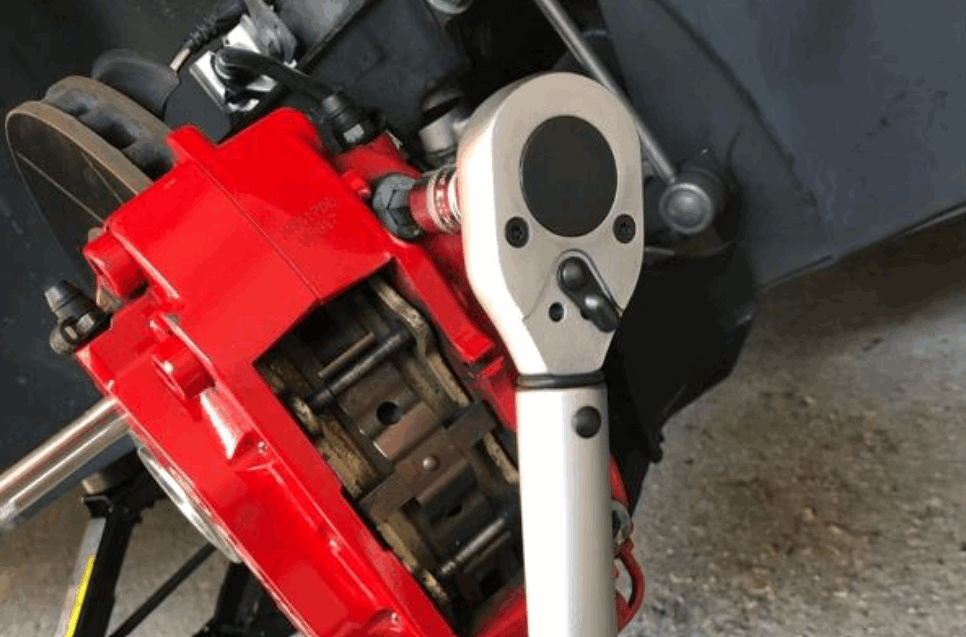
What Are the Torque Specs for Brake Caliper Bracket Bolts?
There is no single torque specification for all brake caliper bracket bolts. The correct torque depends on the vehicle application and the specific brake components. You should use the manufacturer’s service specification for the exact vehicle instead of applying a general value.
Brake caliper bracket bolts connect the bracket to the vehicle’s brake assembly. Their required torque depends on the design of that assembly and the fasteners used. Front and rear brake systems can also use different specifications. The same vehicle may therefore have different torque requirements for different brake locations.
The exact bolt also matters. A brake caliper bracket bolt is not the same as a caliper guide pin bolt. These fasteners perform different functions and can require different torque values. Confusing them can lead to the wrong specification during brake service.
The available reference material shows why vehicle specific values matter. It reports different torque related measurements across different brake and vehicle applications rather than one standard value for every brake system. For example, research on cold water and blood pressure is unrelated to brake fastener specifications, so it cannot establish a universal automotive torque value.
For this reason, the safest approach is simple. Identify the vehicle make, model, year, brake position, and exact fastener. Then check the applicable factory service information for the specified torque. Use that value when setting the torque wrench and completing the brake repair.
How Do You Find the Correct Torque Specification for Your Vehicle?
Start with the exact vehicle application and the exact brake fastener. The correct torque specification depends on the vehicle and the component you are servicing. Manufacturer service documents show that brake mounting specifications can differ between applications. For example, one Ford performance bulletin lists 110 Nm for mounting a front caliper bracket to the vehicle and 92 Nm for mounting the caliper to the bracket.
First, identify the vehicle make, model, and model year. Then confirm whether you are working on the front or rear brake assembly. Check the brake configuration when the vehicle offers more than one brake system. These details help you match the correct service procedure to the vehicle.
Next, identify the exact fastener. Look for the specification for the bolt that attaches the caliper bracket to the vehicle. Do not substitute the torque value for a different brake fastener. Manufacturer documents can list separate specifications for the bracket and the caliper. Ford, for example, publishes separate values for these two mounting points in its brake system documentation.
Finally, verify the specification in the applicable factory service information before tightening the bolt. Manufacturer service documents can also specify additional installation requirements. A 2025 GM service update, for example, instructs technicians to apply thread locking adhesive before installation and then tighten a specific rear caliper bracket bolt to 150 Nm plus an additional 15 to 30 degrees.
This process shows why a generic torque chart cannot replace vehicle specific service information. Identify the vehicle, locate the exact brake procedure, confirm the fastener, and follow the complete specification.
How Do You Know Which Brake Fastener the Torque Specification Applies To?
You need to identify the exact brake fastener before you apply a torque specification. Brake caliper bracket bolts, caliper guide pin bolts, and other brake fasteners do not necessarily share the same torque value. Manufacturer service information often lists these fasteners separately.
The brake caliper bracket bolts secure the bracket to the vehicle. Depending on the brake design, the bracket connects to the steering knuckle or another mounting point. The caliper then attaches to the bracket through separate mounting hardware or guide pin bolts. These components perform different functions, so their torque specifications can differ.
For example, a Chevrolet TrailBlazer service procedure specifies 160 Nm for the front brake caliper bracket bolts. The same procedure specifies 42 Nm for the upper and lower caliper guide pin bolts. A Chevrolet Suburban procedure also lists separate values. It specifies 200 Nm for the rear caliper bracket mounting bolts and 108 Nm for the caliper guide pin bolts.
Other brake fasteners can have different specifications as well. Brake hose fittings, rotor screws, and wheel lug nuts serve different purposes and require their own service values. You should therefore match the specification to the exact fastener named in the repair procedure.
When a service manual lists several brake torque values, read the component description carefully. Look for terms such as brake caliper bracket bolt, caliper mounting bolt, or caliper guide pin bolt. Do not assume that a specification labeled “caliper bolt” applies to every bolt around the caliper assembly.
How Do You Torque Brake Caliper Bracket Bolts Correctly?
Start by confirming the correct torque specification for the exact vehicle and brake assembly. Do not set the torque wrench to a generic value. Use the manufacturer’s service information for the specific caliper bracket bolts. Service procedures can also include a tightening sequence, a special tool, a thread treatment, or an additional angle after the initial torque.
Next, select a calibrated torque wrench that covers the required torque range. Use the correct socket and make sure the wrench connects to the fastener properly. Some brake service procedures require a specific tool position when technicians tighten caliper mounting bolts. For example, an International Motors service procedure specifies a 90 degree relationship between the torque wrench and the caliper wrench during certain caliper bolt tightening procedures.
Follow the manufacturer’s installation sequence when the service procedure provides one. Some applications require an initial torque followed by a final torque. Others may require an additional angle after the specified torque. A GM service procedure, for example, specifies 150 Nm followed by an additional 15 to 30 degrees for a particular rear caliper bracket bolt.
Finally, verify the completed installation according to the service procedure. Check that you used the correct fastener, torque value, and tightening method. Do not add threadlocker, lubricant, or another treatment unless the applicable service information calls for it. The correct procedure depends on the vehicle and fastener, so the manufacturer’s instructions should control the final installation.
What Happens If Brake Caliper Bracket Bolts Are Over Torqued or Under Torqued?
Incorrect torque can affect the way brake caliper bracket bolts secure the brake assembly. Under torquing can leave the fastener with insufficient clamping force, while over torquing can place excessive load on the bolt or threads. The correct torque specification helps control the intended clamping force for the specific brake assembly.
Under torquing can allow a bolt to remain loose or become loose during service. Manufacturer service procedures show that loose brake mounting bolts require corrective action. One 2024 recall procedure instructs technicians to tighten affected caliper mounting bolts when they find a bolt loose or without the required witness marking. The procedure specifies 475 Nm for the affected application.
Over torquing creates a different problem. Excessive tightening can load the fastener and threaded components beyond the intended installation condition. The actual risk depends on the bolt, threads, materials, and vehicle design. For that reason, you should not increase the torque simply because a higher value seems to provide a tighter installation.
Manufacturer specifications can also change when the manufacturer changes the fastener design. Subaru, for example, issued a service bulletin for certain 2017 Legacy and Outback models after changing the front disc brake mounting bolt. The bulletin increased the specified torque to 135 Nm and introduced a new mounting bolt with an integral washer.
Why Is the Manufacturer Torque Specification Important?
The manufacturer specification matches the fastener and brake assembly to the required tightening condition. It can also include additional instructions for bolt replacement, thread treatment, tightening sequence, or torque and angle procedures. Follow the complete service procedure rather than relying on a generic torque value.
How Do You Convert Brake Caliper Bracket Torque From Nm to lb ft?
You can convert a brake caliper bracket torque specification between Nm and lb ft without changing the required tightening force. One lb ft equals 1.355818 Nm. NIST lists this conversion factor for torque measurements.
To convert Nm to lb ft, divide the Nm value by 1.355818. For example, a specification of 100 Nm equals about 73.76 lb ft. A specification of 150 Nm equals about 110.63 lb ft. These converted values represent the same torque in different units.
To convert lb ft to Nm, multiply the lb ft value by 1.355818. For example, 75 lb ft equals about 101.69 Nm. This conversion helps when your service information and torque wrench use different measurement systems.
Always check the unit before setting the torque wrench. Nm and lb ft are not interchangeable numbers. Setting a wrench to 100 lb ft when the specification calls for 100 Nm would apply substantially more torque than intended. The same issue occurs when you treat a value in lb ft as if it were in Nm.
Use the original manufacturer specification whenever possible. Convert the value only when your torque wrench uses another unit. NIST provides the conversion relationship between pound force feet and newton meters, which gives a consistent basis for these calculations.
What Should You Check After Torquing the Brake Caliper Bracket Bolts?
After torquing the brake caliper bracket bolts, check the complete installation against the vehicle manufacturer’s service procedure. Confirm that you used the correct fasteners, torque value, and tightening method. Do not rely on the torque value alone when the service procedure includes additional requirements.
First, verify that you used the correct torque specification for the exact vehicle and brake assembly. Check the vehicle make, model, year, brake position, and fastener description. This step prevents you from applying a torque value intended for another component. Manufacturer documents can list separate specifications for caliper bracket bolts and caliper guide pin bolts.
Next, check the torque wrench setting and measurement unit. Confirm that the wrench uses the same unit as the service specification or that you converted the value correctly. If the manufacturer specifies a torque plus an additional angle, complete both parts of the procedure. Some applications also require a specific thread treatment or a particular installation method.
Finally, inspect the brake assembly according to the applicable service instructions. Confirm that the bracket sits correctly and that the related brake components have the required clearance and installation condition. Complete any additional inspection or verification steps listed by the manufacturer.
The final check should confirm one simple result: the brake caliper bracket bolts match the correct vehicle specific specification and the complete installation procedure has been followed.
How Can You Make Sure Your Brake Caliper Bracket Bolts Have the Correct Torque?
You can make sure your brake caliper bracket bolts have the correct torque by following the vehicle specific service specification. Do not rely on a universal torque value. Identify the vehicle, brake position, and exact fastener before selecting the torque value.
Next, confirm that the specification applies to the caliper bracket bolts rather than another brake fastener. Caliper guide pin bolts, brake hose fittings, and wheel lug nuts can have different torque requirements. Check the service procedure carefully to avoid using the wrong value.
Use a suitable torque wrench and set it to the specified value. Check whether the specification uses Nm or lb ft before tightening. Follow any additional instructions in the service procedure, such as a specific tightening sequence, thread treatment, or torque plus angle procedure.
Finally, verify the complete installation according to the manufacturer’s instructions. Correct brake service depends on more than tightening a bolt to a number. The correct fastener, specification, torque method, and installation procedure must all match the vehicle application.