The Honda Civic Tighten Fuel Cap Message is one of the most common dashboard warnings that drivers encounter after refueling. Although the message often points to a loose or improperly installed fuel cap, it can also indicate a problem within the vehicle’s Evaporative Emission Control (EVAP) system. Ignoring the warning may allow fuel vapors to escape, trigger the Check Engine Light, or lead to emissions-related issues that require further diagnosis.
In many cases, tightening or replacing the fuel cap is enough to resolve the problem. However, a damaged fuel cap seal, a leaking EVAP hose, a faulty purge valve, or a malfunctioning charcoal canister can produce the same warning. Because these components work together to maintain proper fuel system pressure, identifying the exact cause is essential before replacing parts unnecessarily.
This guide explains what the Honda Civic Tighten Fuel Cap Message means, why it appears, and how to diagnose the problem accurately. You will also learn the most common symptoms, step-by-step repair methods, reset procedures, estimated repair costs, and practical maintenance tips to prevent the warning from returning. By the end of this article, you will know whether the issue is a simple maintenance task or a sign that your Honda Civic needs professional inspection.
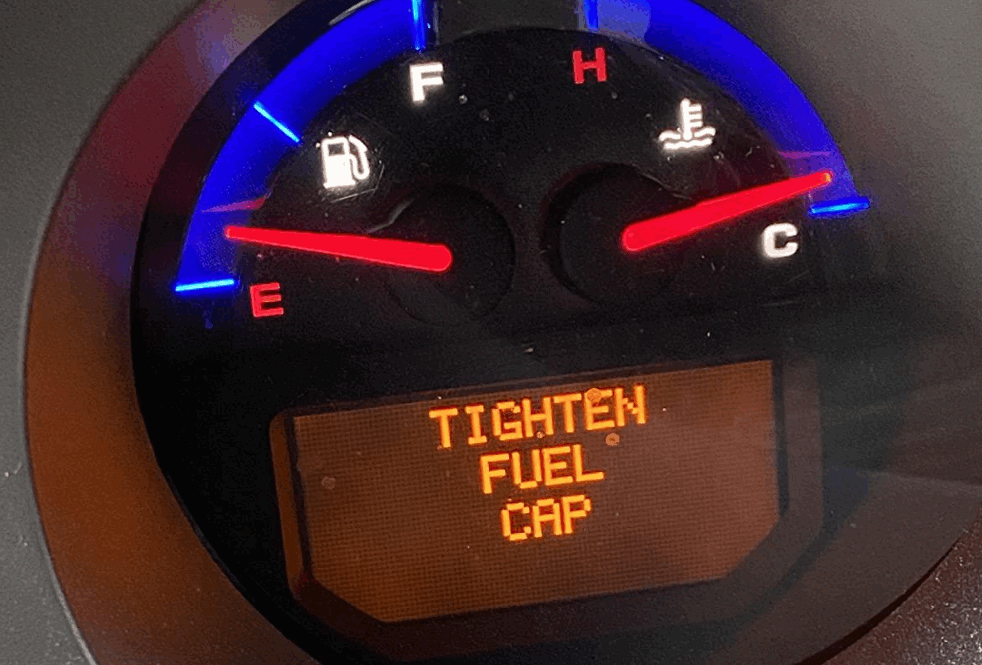
What Does the Honda Civic Tighten Fuel Cap Message Mean?
The Honda Civic Tighten Fuel Cap Message means the vehicle has detected a possible leak in the fuel system or the Evaporative Emission Control (EVAP) system. In most cases, the warning appears because the fuel cap is loose, not fully tightened, or no longer creates a proper seal. Even a small pressure leak can trigger the message because the EVAP system keeps fuel vapors inside the fuel tank.
The fuel cap does more than cover the fuel tank. It seals the system and helps maintain the correct pressure during normal operation. The engine control module (ECM) continuously monitors this pressure. When the ECM detects a leak, it records an EVAP fault. Many Honda Civic models display the Tighten Fuel Cap message before turning on the Check Engine Light. This design encourages drivers to inspect the fuel cap first because it is the most common cause.
You may not see the warning immediately after refueling. The ECM performs EVAP tests only when specific conditions are met. These conditions include the engine temperature, fuel level, and driving speed. As a result, the message often appears during the next trip instead of at the gas station.
The warning usually disappears after you tighten the fuel cap correctly and complete several normal drive cycles. If the message remains, the problem likely involves another EVAP component. Common causes include a damaged fuel cap seal, a leaking vapor hose, a faulty purge valve, a cracked charcoal canister, or a defective pressure sensor. Identifying the exact cause helps you avoid unnecessary repairs and restore the EVAP system correctly.
What Causes the Honda Civic Tighten Fuel Cap Message?
A loose fuel cap is the most common reason the Honda Civic Tighten Fuel Cap Message appears. The fuel cap must seal the fuel tank completely to keep the EVAP system pressurized. If the cap is not tightened until it clicks, fuel vapors can escape through the filler neck. The engine control module detects the pressure loss during its self-test and displays the warning on the dashboard.
A worn or damaged fuel cap can also trigger the message. The rubber gasket around the cap hardens, cracks, or wears out over time. Once the seal loses flexibility, it can no longer hold pressure inside the fuel tank. Even when the cap feels tight, a damaged gasket may still allow a small vapor leak. Replacing the fuel cap is often the quickest and least expensive solution in this situation.
The warning may also indicate a leak somewhere in the EVAP system. Cracked vapor hoses, a damaged fuel filler neck, or loose hose connections can all reduce system pressure. These problems produce the same symptoms as a faulty fuel cap because the EVAP system treats any vapor leak as a pressure loss. A smoke test usually helps technicians locate leaks that are difficult to see during a visual inspection.
Faulty EVAP components can also cause the message to remain on. A defective purge valve may fail to regulate fuel vapors correctly, while a damaged charcoal canister may no longer store vapors before they enter the engine. Some Honda Civic models also use a fuel tank pressure sensor to monitor the system continuously. If this sensor reports incorrect readings, the vehicle may display the Tighten Fuel Cap message even though the fuel cap seals properly. Diagnosing these components with an OBD-II scanner helps identify the exact cause and prevents unnecessary parts replacement.
What Symptoms Can Appear Along With the Fuel Cap Message?
The Honda Civic Tighten Fuel Cap Message often appears before other symptoms become noticeable. Many drivers only see the dashboard warning and experience no immediate changes in vehicle performance. However, the message indicates that the EVAP system has detected a leak or abnormal pressure. If the underlying problem remains unresolved, additional symptoms may develop over time.
The Check Engine Light is one of the most common symptoms that accompanies the fuel cap warning. After the engine control module completes another EVAP system test, it may store a diagnostic trouble code such as P0455, P0456, or P0457. These codes usually indicate a large leak, a small leak, or a loose fuel cap. An OBD-II scanner can identify the stored code and narrow down the possible causes before repairs begin.
Some drivers also notice a slight fuel smell around the rear of the vehicle or near the fuel filler door. This odor develops when gasoline vapors escape through a damaged seal, cracked hose, or leaking EVAP component. Although the smell does not always indicate an immediate safety risk, it confirms that the fuel system is no longer completely sealed. Repairing the leak promptly helps reduce fuel vapor emissions and prevents additional EVAP faults.
A persistent EVAP leak may also cause the vehicle to fail an emissions inspection. In addition, the dashboard warning can return repeatedly even after tightening the fuel cap correctly. These symptoms usually indicate that another EVAP component has failed. Inspecting the fuel cap, scanning for diagnostic codes, and testing the EVAP system allow technicians to identify the exact fault instead of replacing parts based on guesswork.
How Do You Fix the Honda Civic Tighten Fuel Cap Message?
You should always inspect the fuel cap before checking other EVAP components. Remove the cap and examine the rubber seal for cracks, tears, or signs of wear. Dirt and debris around the sealing surface can also prevent the cap from creating an airtight seal. Clean the cap and the filler neck if necessary, then reinstall the cap until you hear several clicks. This simple step resolves the warning in many Honda Civic models.
If the message remains, inspect the fuel cap more carefully. A damaged gasket or worn locking mechanism can prevent the cap from sealing correctly, even when it feels tight. Replacing the fuel cap is usually the next logical step because it is inexpensive and requires no special tools. Always choose an OEM or high-quality replacement to ensure the correct sealing pressure and compatibility with the EVAP system.
The next step is to scan the vehicle with an OBD-II scanner. Diagnostic trouble codes provide valuable information about the source of the leak and help eliminate unnecessary guesswork. Codes such as P0455, P0456, and P0457 often indicate an EVAP leak, while additional codes may point to a faulty purge valve or pressure sensor. Reading these codes before replacing expensive components saves both time and repair costs.
If replacing the fuel cap does not solve the problem, inspect the entire EVAP system for leaks or damaged parts. Check the vapor hoses, fuel filler neck, purge valve, charcoal canister, and fuel tank pressure sensor for visible damage or loose connections. A professional smoke test can reveal small leaks that are impossible to detect during a visual inspection. Once the faulty component is repaired or replaced, clear the diagnostic codes and complete a normal drive cycle to confirm that the Honda Civic Tighten Fuel Cap Message no longer appears.
How Do You Reset the Honda Civic Tighten Fuel Cap Message?
The Honda Civic Tighten Fuel Cap Message often clears automatically after you fix the underlying problem. If the warning appeared because of a loose fuel cap, tighten the cap until it clicks several times. Then drive the vehicle normally for the next few trips. The engine control module will perform another EVAP system test. If it no longer detects a leak, the message usually disappears without any manual intervention.
Some Honda Civic models require one or more complete drive cycles before the warning resets. A drive cycle includes starting the engine, allowing it to reach normal operating temperature, and driving under different speeds and conditions. The EVAP monitor only runs when the vehicle meets specific operating requirements. For this reason, the message may remain visible even after you have already fixed the problem.
An OBD-II scanner provides the fastest way to clear the warning after completing the repair. Connect the scanner to the diagnostic port, read the stored trouble codes, and erase them after confirming that the fault has been repaired. Clearing the codes without fixing the actual cause is not recommended. If the EVAP system still detects a leak, the Honda Civic Tighten Fuel Cap Message and the Check Engine Light will return during the next self-test.
Some drivers disconnect the battery to reset the warning. Although this method may temporarily erase the message, it also clears other stored vehicle data and forces several onboard monitors to restart. In many cases, the warning returns if the original fault remains. Using the correct repair procedure and confirming the fix with an OBD-II scanner provides a more reliable and accurate solution than relying on a battery reset.
Can You Drive With the Tighten Fuel Cap Message On?
You can usually continue driving when the Honda Civic Tighten Fuel Cap Message appears, especially if the vehicle operates normally and the warning is the only symptom. A loose or faulty fuel cap rarely affects engine performance or creates an immediate safety risk. However, you should inspect the fuel cap as soon as possible because the EVAP system cannot function correctly while the leak remains.
The situation changes if the Check Engine Light turns on together with the fuel cap message. Although many EVAP faults are still minor, the warning may also indicate a larger leak or a malfunctioning EVAP component. Continuing to drive for a short distance is generally acceptable, but delaying repairs for an extended period increases the risk of additional emissions problems. In some regions, the vehicle may also fail an emissions inspection until the fault is repaired.
You should stop driving and inspect the vehicle immediately if the warning appears with a strong fuel smell, visible fuel leakage, poor engine performance, or repeated stalling. These symptoms may indicate a problem beyond the fuel cap, such as a damaged fuel line or another fuel system component. Driving under these conditions can increase safety risks and lead to more expensive repairs if the problem worsens.
The safest approach is to treat the Honda Civic Tighten Fuel Cap Message as an early warning rather than an emergency. Check the fuel cap first because it is the most common cause. If the message remains after several drive cycles or the Check Engine Light stays on, scan the vehicle for diagnostic trouble codes and inspect the EVAP system. Early diagnosis helps prevent unnecessary repairs and ensures the fuel system continues to operate efficiently.
How Much Does It Cost to Fix the Honda Civic Tighten Fuel Cap Message?
The cost to fix the Honda Civic Tighten Fuel Cap Message depends on the component causing the warning. Most repairs are inexpensive because a loose or damaged fuel cap is the most common cause. However, costs increase if the problem involves the EVAP system or requires advanced diagnostic testing. Identifying the exact fault before replacing parts helps reduce unnecessary expenses.
Replacing the fuel cap is usually the least expensive repair. An aftermarket fuel cap typically costs between $15 and $30, while a genuine Honda OEM fuel cap generally ranges from $30 to $60. Installation takes only a few minutes and requires no special tools. If the warning disappears after several drive cycles, no additional repairs are necessary.
Repairs become more expensive when another EVAP component fails. Replacing a purge valve usually costs $120 to $250, depending on labor rates and parts quality. Repairing a damaged vapor hose often costs $80 to $200, while replacing a charcoal canister may range from $250 to $600. If technicians cannot identify the leak during a visual inspection, they may perform an EVAP smoke test, which typically costs $80 to $150. An OBD-II diagnostic scan usually adds $50 to $120 if it is not included in the inspection.
The best way to reduce repair costs is to diagnose the problem before replacing any parts. Start by checking the fuel cap because it is the simplest and most affordable solution. If the warning remains, use an OBD-II scanner to read the stored diagnostic codes before scheduling repairs. This approach helps identify the actual source of the problem and prevents unnecessary replacement of working EVAP components.
How Can You Prevent the Fuel Cap Message From Coming Back?
Preventing the Honda Civic Tighten Fuel Cap Message starts with proper refueling habits. Always tighten the fuel cap until you hear several clicks after filling the tank. This simple step creates a proper seal and allows the EVAP system to maintain the correct pressure. Many warning messages appear because the cap was left slightly loose after refueling.
Inspect the fuel cap regularly for signs of wear. The rubber gasket should remain soft, clean, and free of cracks. Dirt, sand, and debris can also affect the seal and create small vapor leaks. Cleaning the sealing surface each time you inspect the cap helps maintain a tight connection between the fuel cap and the filler neck.
Avoid overfilling the fuel tank after the fuel pump shuts off automatically. Adding extra fuel can force gasoline into the charcoal canister and other EVAP components. Excess fuel may damage these parts over time and reduce the system’s ability to capture fuel vapors. Following the fuel pump’s automatic shutoff helps protect the EVAP system and reduces the risk of future warning messages.
Routine inspections also play an important role in preventing EVAP problems. Check the fuel filler neck, vapor hoses, and visible EVAP components during regular vehicle maintenance. Replace a worn fuel cap as soon as you notice cracks, a damaged gasket, or a loose locking mechanism. Addressing small issues early helps prevent larger EVAP leaks, reduces repair costs, and keeps the Honda Civic Tighten Fuel Cap Message from returning.
Conclusion
The Honda Civic Tighten Fuel Cap Message usually indicates a small leak within the fuel system or the EVAP system. In most cases, the problem results from a loose fuel cap, a worn sealing gasket, or a damaged fuel cap that no longer maintains the correct pressure. These issues are easy to inspect and often require only a simple adjustment or an inexpensive replacement.
If tightening or replacing the fuel cap does not clear the warning, the next step is to inspect the EVAP system for leaks or faulty components. Reading the diagnostic trouble codes with an OBD-II scanner provides valuable information and helps identify the actual cause before replacing parts. This approach saves time, reduces repair costs, and prevents unnecessary repairs.
Regular maintenance is the best way to avoid recurring EVAP problems. Tightening the fuel cap correctly, inspecting the rubber seal, and checking the fuel system during routine service help maintain proper system pressure and reduce the chance of future warning messages. By understanding how the EVAP system works and responding quickly when the warning appears, you can keep your Honda Civic running efficiently while avoiding more expensive repairs in the future.