The “Check VSA System” warning on a Honda Civic means the vehicle has detected an issue with the Vehicle Stability Assist system. VSA is a safety system that helps drivers maintain control during slippery conditions or sudden steering changes.
The system controls wheel slip and supports vehicle stability by working with components such as ABS and traction control. When the warning appears, the VSA system may stop providing full stability assistance until the problem gets fixed.
Honda Civic owners see this warning for several reasons. Common causes include weak battery voltage, faulty wheel speed sensors, ABS problems, steering angle sensor errors, brake system issues, and communication failures between control modules.
Some VSA problems are temporary. Other problems need proper diagnosis because they can affect vehicle safety. This guide explains what the Honda Civic Check VSA System warning means, why it appears, how to diagnose the issue, and which repair solutions can solve the problem.
Understanding the VSA system helps drivers respond correctly when the warning appears. It also helps them avoid replacing parts without identifying the actual cause.
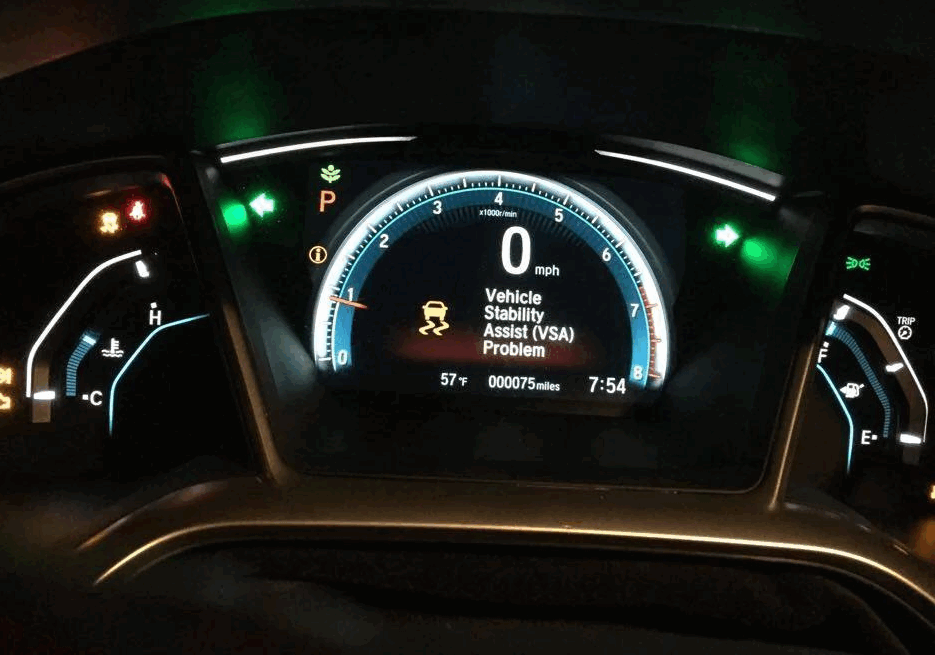
What Does Check VSA System Mean on a Honda Civic?
The “Check VSA System” message on a Honda Civic means the Vehicle Stability Assist system has found a problem. The system detects an abnormal signal from one of its connected components.
VSA is a safety system that helps maintain vehicle control. It reduces wheel slip and improves stability during difficult driving conditions. When VSA detects an issue, it displays a warning message on the dashboard.
The Honda Civic VSA system works with several safety components. These include the Anti lock Braking System, Traction Control System, wheel speed sensors, steering angle sensor, and yaw rate sensor. Each component sends information to the VSA control system.
The system compares vehicle movement with driver input. If the vehicle starts losing traction, VSA can apply braking force to specific wheels. It can also reduce engine power to help restore stability.
A Check VSA System warning does not always mean the VSA module has failed. Many warnings happen because another connected system has a problem. A weak battery can create unstable electrical signals. A faulty wheel speed sensor can send incorrect data to the control system.
Drivers may also see other warning lights with the VSA message. Common examples include the ABS warning light, traction control light, and brake warning light. Multiple warnings usually indicate a problem that needs proper diagnosis.
Understanding the Check VSA System message helps Honda Civic owners make better repair decisions. Drivers should identify the actual cause before replacing any parts.
Why Does My Honda Civic Say Check VSA System?
The Honda Civic displays the “Check VSA System” warning when the Vehicle Stability Assist system detects an abnormal condition. The system monitors vehicle movement, wheel speed, steering input, and braking performance. When one of these signals becomes incorrect, VSA may disable some stability control functions.
There are several common causes behind this warning. The most frequent causes include low battery voltage, faulty wheel speed sensors, ABS system problems, steering angle sensor errors, and brake system issues. Each component plays a different role in helping VSA maintain vehicle stability.
A weak battery can create unstable electrical signals. Modern Honda Civic models use multiple control modules that communicate continuously. When voltage drops, these modules may not exchange information correctly. This can trigger warning messages even when the VSA components work normally.
Wheel speed sensor problems are another common cause. These sensors measure the rotation speed of each wheel and send data to the VSA control system. If one sensor provides incorrect information, the system cannot accurately detect wheel slip.
ABS problems can also affect VSA because both systems share important components. The VSA system needs accurate braking information to control individual wheels during traction loss.
Some warnings appear after battery replacement, wheel alignment, or steering repairs. These situations can affect sensor calibration and system communication.
Finding the exact cause requires proper diagnosis. Resetting the warning without identifying the problem may only remove the message temporarily.
How Do You Diagnose a Honda Civic Check VSA System Warning?
Diagnosing a Honda Civic Check VSA System warning requires identifying the component that creates the system failure. The VSA system connects with several vehicle systems, so the warning message alone cannot show the exact cause. A proper diagnosis uses error codes, component inspections, and system testing.
The first step is checking Diagnostic Trouble Codes (DTCs). A professional technician uses an OBD II scanner to communicate with the Honda Civic control modules. The scanner can read stored fault codes from the VSA, ABS, engine, and transmission systems. These codes provide information about possible failures, such as sensor problems or communication errors.
Battery inspection is another important diagnostic step. The VSA system depends on stable electrical power from the vehicle battery and charging system. A technician checks battery voltage and alternator performance because low voltage can create false warning messages. For example, a Honda Civic may display multiple dashboard warnings after a weak battery causes unstable system communication.
The next step involves checking physical components connected to VSA operation. Technicians inspect wheel speed sensors, wiring connections, brake components, and steering angle sensor calibration. A damaged sensor wire or poor electrical connection can interrupt signals between components.
Some VSA problems appear after maintenance work. Battery replacement, wheel alignment, or steering repairs can affect sensor calibration. In these situations, the system may need a calibration procedure before normal operation returns.
A complete diagnosis prevents unnecessary repairs. Replacing expensive VSA components without identifying the actual fault can increase repair costs and fail to solve the warning message.
Can You Drive a Honda Civic With Check VSA System Warning?
You can drive a Honda Civic with a Check VSA System warning in some situations, but you should not ignore the message. The warning means the Vehicle Stability Assist system may not provide full traction and stability support. The vehicle can still move, but important safety functions may not work correctly.
The level of risk depends on the cause of the warning. If the problem comes from a temporary electrical issue, such as low battery voltage, the vehicle may continue operating normally after proper diagnosis and repair. However, if the warning comes with ABS problems, brake system faults, or sensor failures, the vehicle may have reduced control assistance during emergency situations.
The VSA system becomes especially important when driving on wet roads, snow, ice, or loose surfaces. The system helps prevent wheel slip and reduces the chance of losing control during sudden steering changes. Without proper VSA operation, the driver must rely more on manual control and careful driving techniques.
Drivers should pay attention to other warning lights on the dashboard. A Honda Civic with only a Check VSA System message may require a scheduled inspection. A vehicle with additional warnings, such as the ABS light, brake warning light, or traction control light, requires faster attention.
You should stop driving and seek professional inspection if the vehicle shows unusual braking behavior, reduced steering control, or sudden changes in performance. These symptoms may indicate a problem that affects important safety systems.
A Check VSA System warning does not always mean the vehicle is unsafe immediately. However, proper diagnosis helps confirm whether the problem is minor or requires urgent repair.
How Do You Fix Check VSA System on a Honda Civic?
Fixing a Honda Civic Check VSA System warning requires repairing the component that creates the malfunction. The correct repair depends on the diagnostic results because the VSA system connects with multiple safety systems. A warning reset may remove the message temporarily, but it does not solve the original problem.
Battery problems are one of the simpler VSA issues to fix. If the vehicle has low battery voltage, replacing the battery or repairing the charging system can restore stable electrical communication. After the repair, the technician may clear stored fault codes and check whether the warning returns.
Faulty wheel speed sensors often require sensor replacement. These sensors provide wheel rotation data to the VSA and ABS systems. When a sensor fails, the control module receives incorrect information and may disable stability assistance. Replacing the damaged sensor and checking the wiring connection can restore normal operation.
Steering angle sensor problems usually require calibration rather than replacement. The sensor tells the VSA system the driver’s steering direction. After wheel alignment, battery replacement, or steering repairs, the system may need recalibration to match the correct steering position.
ABS or brake system problems require more detailed repairs. Technicians may need to inspect brake sensors, hydraulic components, wiring, or the ABS control module. These repairs are important because the VSA system depends on accurate braking information.
Some Honda Civic owners try to reset the VSA warning by disconnecting the battery. This method may clear temporary electronic errors, but the warning usually returns if the actual fault remains. A proper diagnosis provides a long term solution and prevents unnecessary part replacement.
What Is the Difference Between Honda VSA and ABS?
Honda VSA and ABS are two different safety systems, but they work together to improve vehicle control. The Anti lock Braking System prevents wheels from locking during hard braking. The Vehicle Stability Assist system helps maintain the vehicle’s direction when it detects traction loss or instability.
ABS focuses mainly on braking control. When a driver suddenly applies the brakes, the system monitors wheel rotation and prevents individual wheels from stopping completely. This action helps the driver maintain steering control during emergency braking. Without ABS, locked wheels can reduce steering ability and increase the risk of losing control.
VSA focuses on overall vehicle stability. The system uses information from wheel speed sensors, steering angle sensors, and yaw rate sensors to understand how the vehicle moves. If the Honda Civic starts to slide or move away from the driver’s intended direction, VSA can apply braking force to specific wheels and adjust engine power.
These systems share several components, which is why ABS problems can trigger a Check VSA System warning. For example, a failed wheel speed sensor can affect both ABS operation and VSA performance. The vehicle control module depends on accurate sensor data to manage braking and stability functions.
The main difference is their purpose. ABS helps maintain control during braking, while VSA helps maintain control during driving situations that involve slipping or sudden direction changes. Both systems support safer driving, especially in rain, snow, or slippery road conditions.
Understanding the relationship between VSA and ABS helps Honda Civic owners identify warning messages more accurately. When both systems show problems, a complete diagnostic inspection is usually necessary.
How Does the Honda Civic VSA System Improve Driving Safety?
The Honda Civic VSA system improves driving safety by helping the vehicle maintain stability during situations where traction changes. The system works automatically and supports the driver when the vehicle begins to lose control. It does not replace safe driving, but it provides additional assistance during unexpected road conditions.
VSA improves stability by monitoring several vehicle signals. The system uses data from wheel speed sensors, steering angle sensors, and yaw rate sensors to understand vehicle movement. It compares the driver’s steering input with the actual direction of the vehicle. When the system detects a difference, it can apply braking force to specific wheels and reduce engine power.
One important function of VSA is controlling wheel slip. When a wheel loses traction during acceleration, the system can reduce power and help the tire regain grip. This function is useful when driving on wet roads, gravel surfaces, or slippery conditions.
VSA also helps during cornering. If the Honda Civic moves differently from the driver’s steering direction, the system can adjust individual wheel braking. This action helps reduce oversteer or understeer and improves vehicle stability.
The VSA system provides the most benefit during sudden driving events. For example, when a driver changes direction quickly to avoid an obstacle, the system can help maintain the vehicle’s intended path. This support reduces the risk of losing control.
Regular maintenance helps keep VSA working correctly. Proper tire condition, stable battery voltage, and functional sensors allow the system to receive accurate information. When these components work together, the Honda Civic VSA system can provide effective stability assistance in daily driving situations.
What Maintenance Prevents Honda Civic VSA Problems?
Regular maintenance helps prevent many Honda Civic VSA problems by keeping the safety system components working correctly. The VSA system depends on accurate signals from sensors, stable electrical power, and reliable braking components. When these parts receive proper maintenance, the system can detect vehicle movement and respond correctly.
Battery maintenance is one of the most important steps for preventing VSA warnings. The Honda Civic uses electronic control modules that require stable voltage to communicate with each other. A weak battery can create incorrect signals and trigger multiple dashboard warnings. Checking battery condition and replacing an aging battery can reduce the risk of electrical related VSA issues.
Tire inspection also affects VSA performance. The system compares wheel speed information from all four wheels. Uneven tire wear, incorrect tire pressure, or different tire sizes can create inaccurate wheel speed data. Maintaining proper tire pressure and using matching tires helps the VSA system work more effectively.
Brake system maintenance is another important factor. The VSA system uses braking force to control individual wheels during traction loss. Regular brake inspections help identify problems with brake pads, brake fluid, sensors, and related components before they affect stability control.
Honda Civic owners should also check warning lights early. Ignoring an ABS light, traction control light, or brake warning light can allow a small issue to become a larger system failure. Early diagnosis reduces repair complexity and prevents unnecessary component replacement.
Keeping sensors and electrical connections clean can also support VSA reliability. Wheel speed sensors and wiring connections can collect dirt or develop damage over time. Regular inspections help maintain accurate communication between vehicle systems.
Proper maintenance does not guarantee that VSA problems will never occur. However, it reduces common causes and helps the Honda Civic safety systems operate as designed.
What Should You Do When Your Honda Civic Shows Check VSA System?
The Honda Civic Check VSA System warning indicates that the Vehicle Stability Assist system has detected a problem that requires attention. The warning does not always mean the vehicle has a serious failure, but it shows that one or more stability control functions may not work correctly.
The most common causes include weak battery voltage, faulty wheel speed sensors, ABS problems, steering angle sensor issues, and brake system failures. Each component affects how the VSA system monitors vehicle movement and controls traction. Finding the exact cause is more effective than replacing parts without proper diagnosis.
Drivers should check for additional warning lights and unusual vehicle behavior. A VSA warning combined with ABS or brake system warnings requires faster inspection because these systems work together to support vehicle safety.
Proper diagnosis with an OBD II scanner helps identify the source of the problem. After the faulty component is repaired, the warning message can be cleared and the VSA system can return to normal operation.
Regular maintenance also reduces the risk of future VSA problems. Checking battery condition, maintaining tires, inspecting brakes, and responding to warning lights early can help protect Honda Civic safety systems.
Understanding how the VSA system works allows drivers to make better decisions when a warning appears. The right approach is to diagnose the issue, repair the cause, and confirm that the stability system operates correctly.