A 6L80 transmission rebuild involves disassembling the transmission, inspecting its internal components, replacing worn or damaged parts, and reassembling the unit to restore proper shifting and power transfer. The process typically includes servicing clutch packs, seals, gaskets, bushings, and the torque converter, along with inspecting the valve body, oil pump, and planetary gearsets for damage.
The GM 6L80 is a six-speed automatic transmission used in various Chevrolet, GMC, and Cadillac vehicles, including certain Silverado, Sierra, Tahoe, and Escalade models. Although designed to handle substantial engine torque, the transmission can develop problems such as slipping gears, delayed engagement, harsh shifts, and torque converter clutch failure. These issues may result from friction material wear, hydraulic pressure loss, overheating, or internal component damage.
Rebuilding a 6L80 transmission can be a practical alternative to replacing the entire unit, particularly when the transmission case and major mechanical assemblies remain serviceable. However, rebuild costs and long-term reliability depend on the extent of internal damage, replacement parts, labor requirements, and the quality of the rebuilding process.
This guide explains the 6L80 transmission rebuild process, common failure points, required replacement parts, repair costs, and the factors that determine whether rebuilding or replacing the transmission is the better option.
What Is a 6L80 Transmission Rebuild?
A 6L80 transmission rebuild is the process of restoring a GM six-speed automatic transmission by disassembling its internal assemblies, replacing worn or damaged components, and reassembling the unit according to manufacturer specifications. Unlike replacing the entire transmission, rebuilding retains serviceable components while correcting mechanical and hydraulic problems responsible for transmission failure.
The rebuilding process involves inspecting clutch packs, planetary gearsets, the oil pump, valve body, and internal sealing components. Friction plates and seals are commonly replaced because they deteriorate through repeated clutch engagement, heat exposure, and hydraulic pressure cycles. Hard parts, including clutch drums and planetary gear assemblies, are inspected for cracks, excessive wear, and dimensional damage before reuse. The torque converter also requires evaluation because deteriorating torque converter clutch material can contaminate transmission fluid and damage other internal components.
A complete rebuild differs from a minor transmission repair in both scope and labor requirements. Replacing a faulty solenoid or repairing an accessible valve body problem may restore normal operation without removing and rebuilding the entire transmission. In contrast, internal clutch failure or widespread metal contamination generally requires extensive disassembly to identify and correct the underlying damage. The objective of a 6L80 rebuild is to restore proper hydraulic pressure, clutch engagement, and gear operation while eliminating the original cause of failure.
What Are the Signs That a 6L80 Transmission Needs Rebuilding?
The main warning signs of a failing 6L80 transmission include slipping gears, delayed engagement, harsh shifting, torque converter shudder, and abnormal mechanical noises. These symptoms indicate possible problems with clutch friction materials, hydraulic pressure regulation, electronic controls, or rotating internal components. However, a complete rebuild should only be recommended after diagnostic testing confirms internal damage or faults that cannot be corrected through a less extensive repair.
Gear slipping occurs when the transmission cannot maintain the clutch holding capacity required for a selected gear ratio. Worn friction plates, leaking clutch piston seals, or insufficient hydraulic pressure can allow engine speed to increase without a corresponding increase in vehicle speed. For example, a driver may notice engine RPM rising during acceleration while the vehicle accelerates slowly. Repeated slipping generates additional heat and accelerates friction material deterioration, increasing the risk of internal damage.
Delayed engagement occurs when the transmission takes longer than expected to engage Drive or Reverse after the gear selector is moved. This delay can result from internal seal leakage, inadequate hydraulic pressure, valve body wear, or clutch application problems. A transmission that hesitates before moving and then engages abruptly may have difficulty building or maintaining the pressure needed to apply the appropriate clutch assembly. Hydraulic pressure testing and scan-tool data help distinguish internal leakage from electronic control faults.
Harsh shifting and transmission shudder can indicate problems with clutch application timing, pressure regulation, or torque converter clutch operation. Harsh shifts occur when clutch engagement is poorly controlled, while torque converter clutch shudder typically produces a vibration during converter clutch application or controlled slip. For example, a vehicle may develop a repeated vibration during steady-speed driving that changes when the torque converter clutch disengages. Similar vibrations can originate from engine misfires or driveline faults, making accurate diagnosis essential.
Abnormal noises and contaminated transmission fluid provide additional evidence of possible mechanical damage. Grinding, whining, or rattling noises may originate from worn bearings, damaged planetary gearsets, or pump-related problems. Burnt-smelling fluid, excessive friction material, or metallic debris in the transmission pan can indicate internal deterioration. When substantial debris circulates through the hydraulic system, it can also affect the valve body, pump, and torque converter. Technicians should evaluate diagnostic trouble codes, fluid condition, hydraulic pressure, and operating behavior together before determining whether a 6L80 transmission rebuild is necessary.
What Are the Most Common 6L80 Transmission Failures?
The most common 6L80 transmission failures involve torque converter clutch deterioration, clutch pack wear, valve body problems, hydraulic pressure loss, and oil pump damage. These failures affect the transmission’s ability to transfer engine torque, maintain hydraulic pressure, and engage gears correctly. Although each problem can develop independently, damage to one component can accelerate wear throughout the transmission, particularly when contaminated fluid circulates through the hydraulic system.
Torque converter clutch failure is a major concern in the 6L80 because deteriorating friction material can contaminate transmission fluid and damage other components. The torque converter clutch creates a mechanical connection between the engine and transmission during lockup to reduce energy loss. When its friction lining wears or the clutch operates with excessive slip, heat generation increases and friction debris enters the fluid. This contamination can circulate through the oil pump, valve body, and clutch assemblies. A failing torque converter may produce shuddering during steady-speed driving, inconsistent lockup, or transmission overheating. If the converter releases significant debris, replacing it without addressing contamination elsewhere in the system can lead to another failure.
Clutch pack failure occurs when friction plates lose their ability to hold the torque required for a selected gear. The 6L80 uses multiple clutch assemblies that engage in different combinations to produce its six forward ratios and reverse. Excessive heat, inadequate apply pressure, worn piston seals, and repeated slipping can damage friction plates and steel plates. As friction material deteriorates, clutch engagement becomes less consistent, producing symptoms such as slipping, delayed shifts, or loss of specific gears. Severely overheated clutch packs may also damage their drums and related sealing surfaces, increasing the scope of a rebuild.
Valve body and hydraulic pressure problems interfere with the controlled application and release of transmission clutches. The valve body directs pressurized automatic transmission fluid through hydraulic passages, while electronically controlled solenoids regulate shifting and pressure. Worn valve bores, sticking valves, damaged seals, or malfunctioning solenoids can cause harsh shifts, delayed engagement, and incorrect clutch pressure. The 6L80 also uses a Transmission Electro-Hydraulic Control Module (TEHCM), which integrates electronic control functions with the solenoid assembly. A TEHCM or valve body fault does not automatically require a complete rebuild, but unresolved pressure regulation problems can contribute to internal clutch damage.
Oil pump and internal mechanical damage can develop from wear, lubrication problems, overheating, or circulating metallic debris. The transmission pump supplies hydraulic pressure for clutch operation and lubrication. Damage to its components or pressure-regulation system can reduce available pressure and affect multiple gear ranges. Planetary gearsets, bearings, bushings, and clutch drums may also deteriorate when lubrication is inadequate or debris circulates through the transmission. During a rebuild, technicians must identify the original failure mechanism and inspect connected components to prevent the same problem from damaging the rebuilt unit.
What Parts Are Needed for a 6L80 Transmission Rebuild?
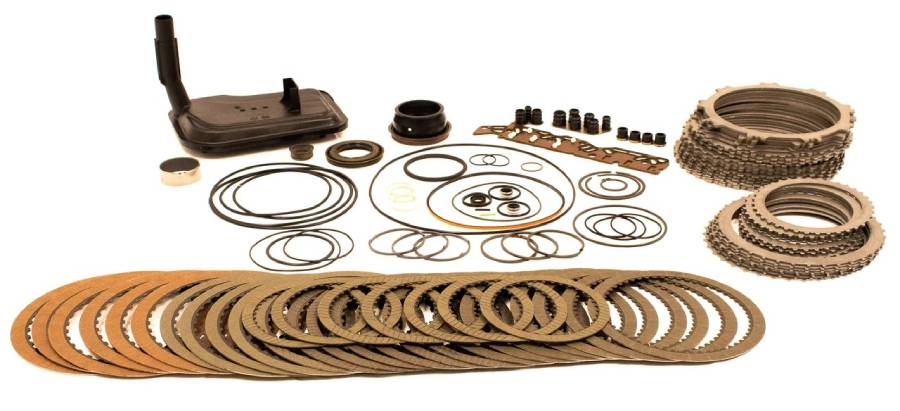
A typical 6L80 transmission rebuild requires friction plates, steel plates, seals, gaskets, sealing rings, a transmission filter, and other wear components identified during inspection. Additional parts may include bushings, clutch pistons, an oil pump, valve body components, and a replacement torque converter. The exact parts list depends on the transmission’s condition, model-year configuration, and whether the rebuild addresses ordinary wear or extensive internal damage.
The following table identifies major components and their roles in a 6L80 rebuild.
| Component | Function | Rebuild consideration |
|---|---|---|
| Friction plates | Transfer torque through clutch engagement | Replace worn, glazed, or damaged plates |
| Steel plates | Provide mating surfaces for friction clutches | Inspect for warping, scoring, and overheating |
| Seals and gaskets | Maintain hydraulic pressure and prevent leakage | Replace applicable service seals and gaskets |
| Bushings | Support rotating components and maintain alignment | Measure wear and replace when outside specifications |
| Torque converter | Transfers engine torque and provides lockup | Replace or professionally remanufacture when damaged or contaminated |
| Oil pump | Supplies hydraulic pressure and lubrication | Inspect for wear, scoring, and pressure-related faults |
| Valve body | Controls hydraulic fluid distribution | Inspect valves, bores, and hydraulic circuits |
| TEHCM and solenoids | Manage electronic shift and pressure control | Test and replace only when faults are confirmed |
| Planetary gearsets | Produce transmission gear ratios | Inspect gears, bearings, and carriers for damage |
A 6L80 transmission rebuild kit generally contains the consumable components needed to restore clutch operation and hydraulic sealing. Basic overhaul kits may include gaskets, O-rings, lip seals, and sealing rings, while more comprehensive kits add friction plates, steel plates, and selected bushings. However, rebuild kit contents vary by manufacturer and product configuration. A kit advertised for the 6L80 should be checked against the transmission’s production year, internal design, and specific component requirements before installation.
The torque converter requires particular attention because its condition directly affects the reliability of the rebuilt transmission. A converter with a deteriorated lockup clutch can release friction material into the transmission fluid, while internal converter damage may introduce metallic debris into the hydraulic circuit. Reusing a contaminated converter risks carrying the original failure mechanism into the rebuilt transmission. For this reason, a damaged or contaminated converter should be replaced or professionally remanufactured, and the transmission cooler and associated lines must be evaluated for contamination before the rebuilt unit is installed.
Hard parts should be replaced according to inspection results rather than automatically included in every rebuild. Clutch drums, planetary gearsets, shafts, pump components, and the transmission case must be checked for cracks, scoring, excessive clearance, and dimensional wear. For example, a clutch drum with damaged sealing surfaces may prevent the clutch piston from maintaining the hydraulic pressure needed for proper engagement, even after new friction plates and seals are installed. Measurements must be compared with the applicable GM service specifications to determine whether each component remains serviceable.
Selecting the correct rebuild components also requires attention to transmission cleanliness and compatibility. Friction debris and metal particles can remain in hydraulic passages, the valve body, torque converter, and cooling circuit after the damaged parts have been removed. Thorough cleaning, appropriate cooler servicing, and verification of replacement-part compatibility are therefore essential to preventing contamination-related failures after reassembly.
How Do You Rebuild a 6L80 Transmission Step by Step?
Rebuilding a 6L80 transmission involves five main stages: diagnosing the failure, removing and disassembling the transmission, inspecting and replacing damaged components, reassembling the internal assemblies, and testing the rebuilt unit. Each stage requires careful inspection, proper tools, and adherence to GM service specifications. Incorrect clutch clearances, damaged seals, or unresolved hydraulic problems can cause shifting issues or premature failure after installation.
How Do You Diagnose a 6L80 Transmission Before Rebuilding It?
Diagnosing a 6L80 transmission before rebuilding it requires checking diagnostic trouble codes, transmission fluid condition, hydraulic pressure, and operating symptoms. These inspections help determine whether the problem originates from mechanical wear, hydraulic leakage, electronic controls, or an external component. A complete rebuild is appropriate when testing identifies significant internal damage that cannot be corrected through a targeted repair.
A transmission-capable diagnostic scanner can retrieve fault codes and monitor parameters such as commanded gear, transmission fluid temperature, input and output shaft speeds, and torque converter clutch slip. For example, gear-ratio errors may indicate clutch slipping, but they do not identify the failed component without additional testing. Technicians should also inspect the transmission pan for friction debris or metal particles and perform hydraulic pressure tests using the procedures specified for the vehicle.
How Do You Remove and Disassemble a 6L80 Transmission?
Removing and disassembling a 6L80 transmission requires safely supporting the vehicle, disconnecting the transmission from the drivetrain, and systematically separating its internal assemblies. The removal procedure varies according to vehicle configuration, particularly between two-wheel-drive and four-wheel-drive applications.
Technicians first disconnect the battery, support the vehicle using appropriately rated equipment, and remove components obstructing transmission access. Depending on the vehicle, these may include driveshafts, exhaust components, crossmembers, cooler lines, electrical connectors, and transfer-case components. The transmission must be supported with a suitable transmission jack before its mounting hardware and bellhousing fasteners are removed.
After removal, the transmission is drained and disassembled in a clean workspace. The oil pan, filter, valve body assembly, oil pump, clutch assemblies, and planetary gear components are removed according to the applicable service procedure. Components should be organized in removal order, with photographs and identification labels used to preserve assembly orientation. This prevents confusion between similar-looking parts and helps identify wear patterns during inspection.
How Do You Inspect and Replace Damaged 6L80 Components?
Inspecting a disassembled 6L80 transmission involves measuring clutch clearances, examining friction surfaces, checking hydraulic sealing components, and evaluating rotating assemblies for mechanical damage. Components that fail inspection must be replaced or repaired before reassembly.
Clutch friction plates are examined for glazing, burning, missing friction material, and excessive wear. Steel plates are checked for discoloration, scoring, and distortion, while clutch drums and pistons are inspected for cracks and damaged sealing surfaces. Bushings, bearings, and planetary gearsets require examination for excessive movement, surface damage, or abnormal wear. Measurements must be compared with the specifications applicable to the transmission variant.
The oil pump and valve body also require inspection because hydraulic pressure problems can damage otherwise serviceable clutch assemblies. Pump surfaces should be checked for scoring, while valve body passages and control valves must be examined for contamination and wear. Damaged seals, gaskets, and applicable wear components are replaced during assembly. A failed or contaminated torque converter should be replaced or professionally remanufactured, and contamination in the cooler circuit must be addressed.
How Do You Reassemble a 6L80 Transmission?
Reassembling a 6L80 transmission requires installing inspected components in the correct sequence, verifying clutch clearances, and securing assemblies according to GM service specifications. Accurate assembly is essential because the transmission depends on controlled hydraulic pressure and precise mechanical clearances to engage each gear.
Technicians install the clutch assemblies, planetary gearsets, shafts, sealing components, and oil pump using the appropriate assembly tools and lubrication. Clutch pack clearance must be measured rather than estimated, since excessive clearance can delay engagement while insufficient clearance can cause clutch drag and overheating. Seals must be positioned correctly to prevent internal hydraulic leakage, and fasteners must be tightened using the specified torque values and sequences.
The valve body and electronic control components are then installed according to the applicable service instructions. Before the transmission is returned to the vehicle, technicians should verify rotating assembly movement, component alignment, and the absence of assembly interference. Exact torque values, clutch clearances, and component installation procedures differ by transmission configuration and must be taken from the relevant GM service documentation.
How Do You Test a Rebuilt 6L80 Transmission?
Testing a rebuilt 6L80 transmission involves verifying fluid level, hydraulic operation, electronic controls, shift quality, and torque converter clutch engagement. These checks confirm whether the transmission operates correctly under different driving conditions and help identify problems before the vehicle returns to regular service.
After installation, the transmission is filled with the manufacturer-specified automatic transmission fluid using the correct temperature-dependent filling procedure. Technicians inspect for leaks, confirm transmission fluid temperature readings, and check diagnostic trouble codes. Applicable control-module programming, setup, or adaptive learning procedures are performed according to the vehicle’s service requirements.
A controlled road test evaluates engagement into Drive and Reverse, upshifts, downshifts, torque converter clutch operation, and shift behavior under varying engine loads. Scan-tool data can help identify excessive clutch slip, incorrect gear ratios, or abnormal temperature changes. A successful 6L80 rebuild must correct the original failure and demonstrate consistent shifting without hydraulic leaks, abnormal noises, or recurring diagnostic faults.
How Much Does a 6L80 Transmission Rebuild Cost?
A 6L80 transmission rebuild typically costs approximately $2,500 to $4,500 at a professional transmission repair shop in the United States. The total expense depends on labor rates, internal damage, replacement parts, and whether major components such as the torque converter, oil pump, or valve body require replacement. A rebuild involving extensive hard-part damage can exceed $5,000, particularly when additional repairs or electronic components are necessary. These figures are general budgeting estimates rather than verified current shop quotations.
The cost of rebuilding a 6L80 transmission includes three primary expenses: replacement parts, transmission removal and installation, and internal rebuilding labor. A basic overhaul kit containing seals, gaskets, and friction components costs less than a comprehensive repair involving a replacement torque converter, damaged clutch drums, or planetary gear assemblies. Labor expenses also vary because the transmission must be removed, completely disassembled, cleaned, measured, reassembled, and tested. Four-wheel-drive vehicles may require additional labor to remove associated drivetrain components.
The following table provides illustrative US-market cost ranges for common 6L80 rebuild expenses.
| Rebuild expense | Estimated cost (USD) |
|---|---|
| Rebuild kit and standard wear parts | $300–$800 |
| Replacement torque converter | $250–$700 |
| Additional internal components | $200–$1,000+ |
| Removal, rebuilding, and installation labor | $1,200–$2,500 |
| Fluid, filter, and related services | $100–$250 |
| Typical professional rebuild total | $2,500–$4,500 |
These cost categories overlap with some shop estimates and should not be added together without checking what each quotation includes. For example, a shop may include the torque converter, transmission fluid, and filter in its rebuild package, while another charges separately for those items. The ranges are planning estimates; actual prices require current local quotations.
The most expensive 6L80 rebuilds generally involve extensive internal damage or widespread transmission fluid contamination. When a failing torque converter releases friction material or metal particles, debris can circulate through the pump, valve body, cooler lines, and clutch assemblies. Correcting this damage may require replacing additional components and servicing the transmission cooling system. Vehicle owners should request an itemized estimate that identifies replacement parts, labor charges, torque converter treatment, cooler service, and warranty coverage before authorizing the rebuild.
How Long Does It Take to Rebuild a 6L80 Transmission?
A professional 6L80 transmission rebuild commonly takes approximately 2–5 business days from vehicle drop-off to completion, provided the required parts are available and no major complications arise. The actual turnaround time depends on transmission removal, internal inspection, parts availability, rebuilding complexity, and post-installation testing. Severe internal damage or delayed replacement components can extend the repair beyond one week.
The rebuilding process includes several labor-intensive stages. Removing the transmission requires disconnecting drivetrain components and supporting the assembly safely. After removal, technicians disassemble the transmission, inspect clutch packs, hydraulic components, and rotating assemblies, and identify parts that require replacement. Cleaning, measuring clearances, reassembling the unit, and reinstalling it account for additional labor. A four-wheel-drive Chevrolet Silverado, for example, may require more removal and installation work than a comparable two-wheel-drive configuration because of its transfer case and associated drivetrain components.
Total repair time differs from the number of labor hours charged by the shop. A transmission may require substantial hands-on work while remaining at the repair facility for several additional days awaiting parts, outsourced torque converter services, or final testing. After installation, technicians must verify fluid level, perform applicable electronic setup procedures, and road-test the vehicle to confirm correct gear engagement and shift quality. These final checks are essential because returning the vehicle before confirming proper operation increases the risk of unresolved transmission problems.
Is It Better to Rebuild or Replace a 6L80 Transmission?
Rebuilding a 6L80 transmission is generally preferable when its case and major internal assemblies remain serviceable, while replacement becomes more practical when extensive mechanical damage makes rebuilding expensive or unreliable. The best option depends on the transmission’s condition, total repair cost, replacement unit quality, warranty coverage, and vehicle value. A properly rebuilt transmission can restore reliable operation, but the rebuilding process must correct the original failure rather than simply replace worn friction components.
Rebuilding the existing 6L80 transmission allows technicians to inspect its internal components and replace damaged parts while retaining serviceable assemblies. This approach is particularly useful when the primary problems involve worn clutch packs, deteriorated seals, or a failed torque converter without extensive damage to the transmission case or planetary gearsets. A rebuild also allows technicians to address identified hydraulic problems and verify clutch clearances during reassembly. However, rebuild quality depends on accurate diagnosis, appropriate replacement parts, and the technician’s experience with GM six-speed automatic transmissions.
Replacing a 6L80 transmission becomes more attractive when internal damage affects multiple expensive assemblies or when a remanufactured unit provides better overall value. A remanufactured transmission is typically disassembled, inspected, restored using specified replacement components, and tested through a standardized production process. A used transmission generally costs less upfront but carries greater uncertainty because its previous operating conditions, maintenance history, and internal wear may be unknown. For example, installing a used 6L80 with an undocumented service history could introduce the same torque converter or clutch problems that caused the original transmission to fail.
The following comparison highlights the primary differences between rebuilding and replacing a 6L80 transmission.
| Factor | Rebuilt transmission | Remanufactured transmission | Used transmission |
|---|---|---|---|
| Repair approach | Restore the existing unit | Install a professionally remanufactured unit | Install a previously operated unit |
| Initial cost | Depends on internal damage | Often higher than a standard rebuild | Often lowest upfront |
| Component condition | Inspected and repaired as needed | Restored under the supplier’s process | Depends on previous use |
| Reliability | Depends on rebuild quality | Depends on remanufacturing quality | Less predictable without documented history |
| Warranty | Varies by rebuilding shop | Varies by supplier | Often limited |
| Best application | Serviceable major assemblies | Extensive damage or preference for a standardized replacement | Budget repairs with acceptable risk |
The decision should be based on the complete installed cost rather than the transmission purchase price alone. A replacement unit may require additional expenses for installation, torque converter compatibility, cooler servicing, fluid, and electronic setup. Similarly, a rebuild estimate can increase when disassembly reveals damaged hard parts that were not identifiable during initial diagnosis. Comparing itemized quotations and written warranty terms provides a more accurate basis for choosing between rebuilding and replacement.
Can You Rebuild a 6L80 Transmission Yourself?
You can rebuild a 6L80 transmission yourself, but the procedure requires advanced mechanical knowledge, transmission-specific tools, accurate measuring equipment, and access to GM service information. Unlike routine maintenance or external component replacement, a complete rebuild involves multiple clutch assemblies, hydraulic circuits, planetary gearsets, and electronically controlled components that must operate together within specified tolerances. Incorrect assembly can cause immediate shifting problems or extensive internal damage.
A DIY 6L80 rebuild requires a clean workspace, a suitable transmission jack, snap-ring pliers, clutch spring compression tools, torque wrenches, and measuring instruments for checking clutch clearances and component wear. A transmission-capable diagnostic scanner is also necessary for identifying electronic faults and verifying operation after installation. Specialized holding fixtures and assembly tools may be required for particular procedures. For example, installing a clutch assembly without correctly measuring its clearance can produce delayed engagement or clutch drag, even when new friction plates and seals have been installed.
The greatest challenge in rebuilding a 6L80 at home is identifying the original failure and verifying that every affected component has been repaired. Replacing worn clutch plates alone will not correct inadequate hydraulic pressure caused by a damaged pump, leaking seal, or worn valve body. Similarly, installing a new torque converter without addressing debris in the cooling system can contaminate the rebuilt transmission. Successful rebuilding requires inspecting the complete hydraulic and mechanical system, not simply installing the contents of an overhaul kit.
A professional rebuild is generally the better choice for vehicle owners without previous automatic transmission rebuilding experience. Transmission specialists have access to diagnostic equipment, component measurement tools, cleaning procedures, and technical information needed to identify internal failures. Experienced DIY mechanics can undertake the project when they have the appropriate equipment and service documentation, but they must also account for the cost of specialized tools, replacement parts, and potential rework. A DIY 6L80 rebuild is worthwhile only when the mechanic can perform the required inspections, assembly measurements, and post-installation tests accurately.
Read more: Dexron 6 vs 3: Differences and Compatibility
How Long Does a Rebuilt 6L80 Transmission Last?
A properly rebuilt 6L80 transmission can last 100,000 miles or more, but its actual lifespan depends on rebuild quality, replacement parts, operating conditions, and maintenance. This mileage is a general durability expectation rather than a guaranteed service life. A transmission rebuilt with correctly installed clutch assemblies, properly functioning hydraulic components, and a reliable torque converter has a better chance of delivering long-term performance than one repaired without addressing the original cause of failure.
Rebuild quality directly affects the lifespan of a 6L80 transmission because clutch engagement and lubrication depend on precise mechanical clearances and hydraulic pressure. Incorrect clutch pack clearance, worn valve body components, or damaged internal seals can cause slipping, excessive heat, and accelerated friction material wear. For example, a rebuilt transmission with inadequate clutch apply pressure may shift normally during light driving but develop slipping under heavier acceleration or towing loads. Accurate component measurements and hydraulic system inspection are therefore essential to long-term reliability.
Operating temperature and driving conditions also influence how long a rebuilt 6L80 transmission lasts. Excessive heat accelerates automatic transmission fluid degradation and can damage clutch friction materials, seals, and other internal components. Vehicles used for frequent towing, hauling heavy loads, or repeated stop-and-go driving place greater demands on the transmission than vehicles operated primarily under moderate highway conditions. Maintaining an effective cooling system and using the correct transmission fluid help reduce these stresses.
A rebuilt 6L80 transmission also requires proper maintenance after installation. Transmission fluid condition, cooler performance, and shift behavior should be monitored according to the vehicle manufacturer’s recommendations and the rebuilder’s warranty requirements. Long-term reliability depends on correcting the original failure, maintaining proper operating conditions, and identifying new transmission problems before they cause extensive internal damage.
How Can You Prevent a Rebuilt 6L80 Transmission From Failing Again?
Preventing a rebuilt 6L80 transmission from failing again requires correcting the original failure, using the specified automatic transmission fluid, maintaining proper cooling, and following an appropriate maintenance schedule. These measures protect the clutch assemblies, hydraulic system, torque converter, and internal rotating components from premature wear. A rebuild that replaces damaged parts without addressing contamination, overheating, or hydraulic pressure problems remains vulnerable to recurring failure.
Using the correct automatic transmission fluid is essential because the 6L80 relies on fluid for hydraulic pressure, lubrication, cooling, and clutch friction control. Many original 6L80 applications specify DEXRON-VI automatic transmission fluid, but the applicable GM service information should be checked for the specific vehicle and transmission configuration. Incorrect fluid characteristics can affect clutch engagement and torque converter clutch operation. Fluid level must also be checked using the prescribed temperature-dependent procedure because underfilling can reduce hydraulic pressure and lubrication, while overfilling can cause aeration and operating problems.
Maintaining the transmission cooling system helps prevent overheating and protects newly installed internal components. The transmission cooler removes heat generated by torque converter operation, clutch engagement, and internal friction. Restricted cooler passages, damaged cooler lines, or inadequate cooling capacity can increase transmission fluid temperature during towing or heavy-load operation. Cooler contamination is particularly important after a torque converter failure because residual friction material or metallic debris can circulate into the rebuilt transmission. Technicians should inspect, clean, or replace contaminated cooling components according to the applicable service procedure before returning the vehicle to operation.
Following the correct transmission maintenance schedule reduces the risk of fluid deterioration and undetected mechanical problems. Service intervals depend on vehicle model, operating conditions, and manufacturer recommendations. Vehicles regularly used for towing, commercial hauling, or severe-duty driving may require more frequent transmission servicing than vehicles operated under normal conditions. Owners should follow the applicable GM maintenance schedule and any additional requirements specified by the transmission rebuilder rather than relying on a universal mileage interval.
Driving habits also affect transmission durability. Repeated aggressive acceleration, excessive towing loads, and continued operation while the transmission is slipping can increase internal heat and clutch wear. Drivers should avoid exceeding the vehicle manufacturer’s towing limits and investigate unusual shifting behavior promptly. For example, recurring torque converter shudder or delayed engagement after a rebuild warrants diagnostic inspection rather than continued driving until the symptoms become severe.
The most effective way to protect a rebuilt 6L80 transmission is to combine proper rebuild procedures with preventive maintenance and early fault detection. Correct fluid specifications, a clean cooling system, controlled operating temperatures, and timely diagnosis help preserve hydraulic performance and reduce the likelihood of another expensive transmission repair.