The 6.4 HEMI gas mileage depends on the vehicle, driving conditions, and driving habits. The 6.4L HEMI V8 focuses on performance, torque, and towing power rather than maximum fuel economy. However, knowing its fuel consumption helps drivers understand ownership costs before buying a HEMI-powered vehicle.
The 6.4 HEMI appears in several vehicles with different purposes. The Dodge Challenger SRT 392 delivers high-performance driving. The Jeep Grand Cherokee SRT combines SUV practicality with V8 power. The Ram 2500 uses the same engine for heavy-duty work and towing. Each vehicle achieves different MPG because weight, aerodynamics, and drivetrain settings affect fuel usage.
This guide explains 6.4 HEMI gas mileage, real-world MPG results, and the main factors that change fuel economy. It also covers ways to improve efficiency while keeping the performance characteristics that make the 6.4 HEMI popular among truck and performance vehicle owners.
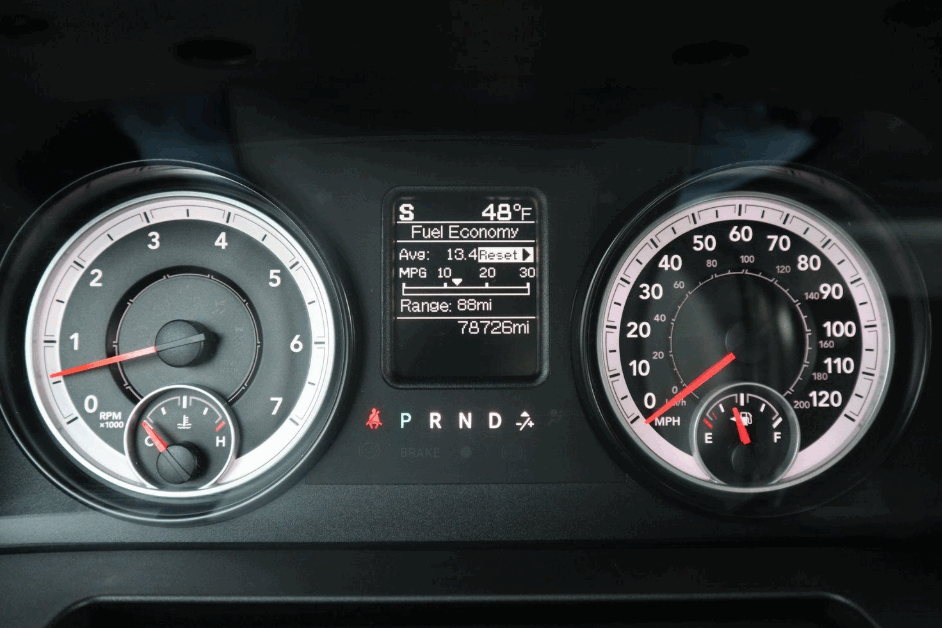
How Much Gas Mileage Does a 6.4 HEMI Get?
The 6.4 HEMI gas mileage usually ranges from around 12 to 19 MPG, depending on the vehicle model, driving environment, and engine workload. The 6.4L HEMI V8 prioritizes horsepower and torque, so it consumes more fuel than smaller engines such as the 5.7 HEMI or V6 alternatives. Its fuel economy reflects the balance between strong performance and daily usability.
The EPA fuel economy rating changes across different 6.4 HEMI applications because manufacturers tune each vehicle for a specific purpose. Performance vehicles focus on acceleration and handling, while trucks focus on towing capacity and payload capability. A lighter vehicle with better aerodynamics generally achieves higher MPG than a heavier truck with a larger body and higher load capacity.
The Dodge Challenger SRT 392 and Dodge Charger SRT 392 typically achieve better fuel economy than heavier 6.4 HEMI vehicles because their lower weight reduces engine workload. The Jeep Grand Cherokee SRT uses the same engine but consumes more fuel because it carries a heavier SUV body. The Ram 2500 6.4 HEMI often delivers lower MPG because it operates as a heavy-duty truck designed for towing and hauling.
Real-world gas mileage also depends on driving conditions. Highway driving usually produces better fuel economy because the engine maintains a stable speed and lower RPM. City driving reduces MPG because frequent acceleration, braking, and idling require more fuel. Drivers who use the 6.4 HEMI aggressively will see lower fuel economy because higher RPM operation increases fuel consumption.
The 6.4 HEMI also includes technologies such as the Multi-Displacement System (MDS) in certain applications. This system can deactivate cylinders during low-load driving conditions to reduce fuel usage. However, the engine remains a large displacement V8 designed to provide power, so drivers should expect performance-focused fuel economy rather than economy-car efficiency.
What Is the Real World Fuel Economy of a 6.4 HEMI?
The real world 6.4 HEMI fuel economy depends on how drivers use the vehicle and where they drive. Official MPG ratings provide a controlled measurement, but daily driving conditions create different results. Factors such as traffic, road conditions, driving speed, and vehicle load directly affect fuel consumption.
Most 6.4 HEMI owners see lower MPG than EPA estimates during normal driving because real conditions require more engine effort. City driving usually creates the biggest fuel economy loss because frequent stops and acceleration increase fuel demand. The engine uses more fuel when it repeatedly moves a heavy vehicle from a complete stop.
Highway driving allows the 6.4 HEMI to operate more efficiently because the engine maintains a steady speed. A consistent cruising speed reduces unnecessary acceleration and keeps RPM levels lower. Vehicles equipped with cylinder deactivation technology can also reduce fuel consumption during light-load highway driving by running on fewer cylinders when full power is not required.
Driving style has a major impact on real world MPG. Smooth acceleration, moderate speeds, and proper maintenance help the engine operate more efficiently. Aggressive driving reduces gas mileage because rapid acceleration requires more fuel from the engine. Frequent high RPM operation also increases fuel consumption because the engine burns more fuel to produce additional power.
Towing and carrying heavy loads create another major difference between official ratings and real-world results. The 6.4 HEMI produces strong torque for towing applications, but moving additional weight requires more energy. A Ram 2500 with a trailer will consume significantly more fuel than a lighter performance vehicle using the same engine.
Real world 6.4 HEMI gas mileage shows the engine’s main purpose. It delivers strong performance, towing capability, and V8 power while accepting higher fuel consumption as a trade-off.
Which Vehicles Use the 6.4 HEMI and How Does MPG Compare?
The 6.4 HEMI engine powers several vehicles with different purposes, and each application produces different gas mileage results. The engine remains the same, but vehicle design changes fuel economy. Weight, drivetrain configuration, aerodynamics, and intended use determine how efficiently each vehicle uses fuel.
The Dodge Challenger SRT 392 and Dodge Charger SRT 392 usually achieve some of the highest 6.4 HEMI gas mileage figures because they use a lighter performance-oriented platform. These vehicles combine the 6.4L HEMI V8 with rear-wheel-drive performance systems designed for acceleration and handling. Their lower curb weight allows the engine to move the vehicle with less energy compared with heavier SUVs and trucks.
The Jeep Grand Cherokee SRT uses the same 6.4 HEMI engine but delivers different fuel economy because it has a larger body and higher ride height. The SUV design increases weight and aerodynamic resistance, which causes the engine to work harder during acceleration and highway driving. However, the Grand Cherokee SRT provides additional space, all-weather capability, and performance SUV characteristics.
The Jeep Wrangler Rubicon 392 also uses the 6.4 HEMI V8, but its off-road design affects fuel efficiency. Larger tires, higher ground clearance, and a boxier shape increase aerodynamic drag and rolling resistance. These features improve off-road performance but reduce MPG compared with lower and lighter vehicles.
The Ram 2500 6.4 HEMI represents a different purpose. This heavy-duty truck uses the engine for towing and hauling rather than performance driving. The increased vehicle weight, stronger chassis, and higher payload capacity create greater fuel demands. As a result, the Ram 2500 generally achieves lower gas mileage than passenger vehicles with the same engine.
Comparing 6.4 HEMI MPG by vehicle shows an important relationship between engine performance and vehicle design. The engine does not determine fuel economy alone. The entire vehicle system influences how much fuel the 6.4 HEMI consumes.
What Factors Affect 6.4 HEMI Gas Mileage?
The 6.4 HEMI gas mileage changes because several mechanical and environmental factors influence fuel consumption. The engine size remains constant, but the way the vehicle operates determines how efficiently it uses gasoline. Understanding these factors helps owners identify why their MPG changes and how they can maintain better fuel economy.
Vehicle weight has one of the biggest effects on 6.4 HEMI fuel consumption. A heavier vehicle requires more energy to accelerate, which increases engine workload. The Ram 2500, for example, uses the same 6.4 HEMI engine as some performance vehicles, but its heavier construction and towing capability create higher fuel demands. Additional cargo, passengers, and trailers also increase the amount of fuel needed during operation.
Driving habits also directly affect MPG. Rapid acceleration, high engine speeds, and frequent hard braking force the engine to burn more fuel. Smooth acceleration allows the transmission to shift efficiently and keeps the engine within a more economical RPM range. Highway driving at a stable speed usually produces better fuel economy because the engine does not need constant power changes.
Tire condition, tire size, and tire pressure influence how easily a vehicle moves. Underinflated tires increase rolling resistance, which makes the engine work harder. Larger tires can also reduce MPG because they add weight and require more energy to rotate. Proper tire maintenance helps the 6.4 HEMI operate more efficiently.
Regular maintenance affects long-term fuel economy as well. Clean air filters, fresh engine oil, properly functioning spark plugs, and correct tire pressure allow the engine to maintain efficient combustion. Mechanical problems such as poor ignition performance or restricted airflow can reduce MPG because the engine needs more fuel to produce the same power output.
Vehicle modifications can also change fuel consumption. Performance upgrades may increase horsepower but can reduce efficiency if they require more fuel or change engine tuning. Owners should consider whether a modification improves daily driving efficiency or only increases performance output.
The 6.4 HEMI delivers strong power, but its fuel economy depends on the complete operating environment. Weight, driving behavior, maintenance quality, and vehicle setup all work together to determine real-world gas mileage.
How Can You Improve 6.4 HEMI Fuel Economy?
Improving 6.4 HEMI fuel economy requires better vehicle management rather than changing the engine’s performance purpose. The 6.4L HEMI V8 is built to produce high horsepower and strong torque, so drivers should focus on reducing unnecessary fuel consumption while maintaining the engine’s original capabilities.
Maintaining correct tire pressure is one of the simplest ways to improve MPG. Tires with low air pressure create higher rolling resistance, which forces the engine to use more energy to move the vehicle. Checking tire pressure regularly helps the vehicle maintain smoother movement and reduces unnecessary fuel usage.
Driving habits also have a direct effect on 6.4 HEMI gas mileage. Smooth acceleration, consistent speeds, and avoiding unnecessary high RPM operation can reduce fuel consumption. Using cruise control during highway driving helps maintain a stable speed and prevents frequent throttle adjustments that increase fuel demand.
Reducing unnecessary vehicle weight can also improve fuel efficiency. Extra cargo, unused equipment, and heavy accessories increase the amount of energy required to accelerate. This effect becomes more noticeable in performance vehicles and SUVs where drivers may carry additional equipment that does not contribute to daily driving needs.
Following the recommended maintenance schedule keeps the engine operating efficiently. Regular oil changes, clean air filters, and properly maintained spark plugs support better combustion. When the engine receives the correct airflow and lubrication, it can produce power more efficiently while avoiding unnecessary fuel consumption.
Some owners consider aftermarket modifications to improve fuel economy, but these changes require careful evaluation. Certain modifications may improve airflow or engine efficiency, while others may increase fuel usage by prioritizing additional horsepower. A proper balance between performance and efficiency remains important for 6.4 HEMI owners.
The best approach to improving 6.4 HEMI fuel economy is optimizing the entire vehicle system. Consistent maintenance, efficient driving habits, and proper vehicle setup can help owners achieve better MPG without reducing the engine’s performance benefits.
Is the 6.4 HEMI Less Fuel Efficient Than Other HEMI Engines?
The 6.4 HEMI is generally less fuel efficient than smaller HEMI engines because it uses a larger displacement design that produces more power and torque. The 6.4L HEMI V8 uses a 6.4-liter engine configuration, while the 5.7 HEMI uses a smaller displacement platform. The larger engine size allows the 6.4 HEMI to deliver stronger performance, but it also requires more fuel during operation.
The 5.7 HEMI often achieves better fuel economy because it produces less horsepower and requires less fuel to generate power. It remains a popular choice for drivers who want V8 performance with lower operating costs. The 6.4 HEMI, however, targets drivers who prioritize acceleration, towing capability, and higher output rather than maximum MPG.
The difference between these engines comes from their performance characteristics. The 6.4 HEMI produces approximately 485 horsepower in many performance applications, while the 5.7 HEMI produces less power but offers a more balanced approach between performance and efficiency. The additional horsepower from the 6.4 HEMI requires more fuel, especially during aggressive driving or heavy-load situations.
The 6.4 HEMI also competes with smaller modern engines that use technologies such as turbocharging and advanced fuel management systems. These engines can produce strong power while using less fuel under certain conditions. However, they usually do not provide the same naturally aspirated V8 characteristics, sound, and immediate power delivery that attract many HEMI owners.
Fuel economy represents a trade-off between performance and efficiency. The 6.4 HEMI sacrifices some MPG to provide higher output, stronger torque, and a more engaging driving experience. For drivers who value power and capability, the additional fuel cost may be acceptable because the engine delivers benefits that smaller engines cannot always match.
The choice between the 6.4 HEMI and other engines depends on the driver’s priorities. Drivers who need lower fuel costs may prefer a smaller engine, while those who want V8 performance, towing ability, and durability may consider the 6.4 HEMI a worthwhile option.
Is the 6.4 HEMI Worth It Despite Its Gas Mileage?
The 6.4 HEMI is worth considering for drivers who value performance, towing capability, and V8 power more than maximum fuel efficiency. The engine does not compete with smaller engines in terms of MPG, but it provides advantages that explain its higher fuel consumption.
The 6.4L HEMI V8 delivers strong horsepower, high torque output, and responsive acceleration across different vehicle applications. Drivers who choose this engine usually want more than basic transportation. They want a performance vehicle, a capable towing platform, or the unique driving experience that comes with a naturally aspirated V8 engine.
Fuel economy depends on the vehicle that uses the engine and how the owner drives it. A lighter performance car can achieve better gas mileage than a heavy-duty truck because vehicle weight and purpose strongly influence fuel consumption. Proper maintenance, efficient driving habits, and correct vehicle setup can also help improve 6.4 HEMI MPG.
The 6.4 HEMI represents a clear balance between power and efficiency. It requires more fuel than smaller engines, but it delivers performance characteristics that many drivers consider valuable. For buyers who prioritize horsepower, capability, and the traditional V8 experience, the additional fuel cost can be a reasonable trade-off.