The 3.0 Hurricane engine is Stellantis’ newest twin turbocharged inline six engine. It replaces several naturally aspirated V8 engines while delivering more power, better fuel efficiency, and lower emissions. As Ram, Jeep, and Dodge continue to introduce this powertrain, more buyers want reliable information before purchasing a new vehicle.
Understanding the 3.0 Hurricane engine specs involves more than checking horsepower and torque. The engine’s architecture, turbochargers, fuel injection system, and compression ratio all affect its overall performance. These components also influence towing capability, fuel economy, throttle response, and long term durability. Learning how they work together helps drivers understand why the Hurricane engine outperforms many larger V8 engines.
This guide explains every important specification in a clear and practical way. It covers the Standard Output and High Output versions, engine design, real world performance, fuel economy, maintenance, and reliability. You will also discover which vehicles use the Hurricane engine and how it compares with the HEMI V8 and other modern turbocharged engines. By the end of this guide, you will understand exactly what the 3.0 Hurricane engine offers and whether it matches your driving needs.
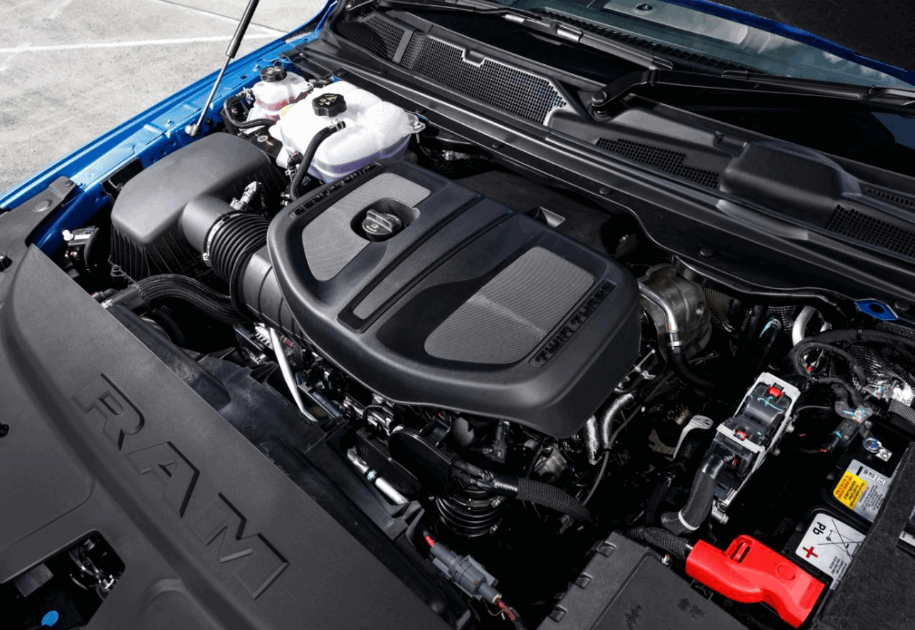
What Are the 3.0 Hurricane Engine Specs?
The 3.0 Hurricane engine is a 3.0-liter twin turbocharged inline six gasoline engine that Stellantis developed to replace several HEMI V8 engines. It combines a lightweight aluminum design with advanced turbocharging technology to deliver strong performance, improved fuel efficiency, and lower emissions. As a result, it produces more power than many larger naturally aspirated engines while reducing overall engine weight.
The engine displaces 2,993 cc and features an inline six cylinder configuration with a dual overhead camshaft valvetrain. Stellantis pairs this layout with four valves per cylinder to improve airflow and combustion efficiency. The engine also uses a forged steel crankshaft and forged connecting rods to handle higher cylinder pressures created by the twin turbochargers. These heavy duty components improve durability under demanding driving conditions, including towing and high load operation.
Another important specification is the engine’s aluminum block and aluminum cylinder head. This construction reduces overall vehicle weight and helps dissipate heat more efficiently than traditional cast iron designs. The engine also features a high pressure direct fuel injection system that delivers precise fuel control during every combustion cycle. Combined with variable valve timing, this system improves throttle response, increases power output, and reduces fuel consumption across different engine speeds.
Twin low inertia turbochargers provide rapid boost pressure without creating excessive turbo lag. Each turbocharger supports three cylinders, allowing the engine to deliver smooth and consistent power throughout the rev range. An advanced liquid cooled charge air cooling system further improves performance by lowering intake air temperatures before combustion. This design helps maintain stable power output during heavy acceleration, towing, and extended highway driving.
The table below summarizes the primary 3.0 Hurricane engine specs.
| Specification | 3.0 Hurricane Engine |
|---|---|
| Engine Type | Twin Turbo Inline-6 Gasoline |
| Displacement | 2,993 cc (3.0 L) |
| Configuration | Inline 6-Cylinder |
| Valvetrain | DOHC, 24-Valve |
| Fuel System | High-Pressure Direct Injection |
| Engine Block | Aluminum |
| Cylinder Head | Aluminum |
| Turbochargers | Twin Low-Inertia Turbochargers |
| Cooling System | Liquid-Cooled Charge Air Cooler |
| Fuel Type | Premium Gasoline (Recommended) |
The 3.0 Hurricane engine combines modern engineering with high strength internal components to achieve impressive power, efficiency, and durability. These specifications also provide the foundation for the engine’s strong horsepower, high torque output, and competitive towing capability, which the following section explores in greater detail.
How Much Horsepower and Torque Does the 3.0 Hurricane Engine Produce?
The 3.0 Hurricane engine delivers between 420 and 540 horsepower and up to 521 lb-ft of torque, depending on the version. Stellantis offers the engine in both Standard Output (SO) and High Output (HO) configurations. Although both versions share the same 3.0-liter twin turbocharged inline-six architecture, different tuning and boost levels create noticeable performance differences.
The Standard Output version produces 420 horsepower and 469 lb-ft of torque. As a result, it offers an excellent balance between performance and everyday drivability. Drivers enjoy smooth acceleration during daily commuting, highway merging, and moderate towing. In addition, the lower boost pressure helps reduce mechanical stress compared with the High Output version.
The High Output version increases performance to 540 horsepower and 521 lb-ft of torque. To achieve this, engineers raise turbocharger boost pressure and optimize the engine calibration. Consequently, the engine accelerates faster and maintains stronger performance under heavy loads. For example, drivers towing large trailers benefit from the additional low-end torque and quicker throttle response.
Another advantage is the engine’s wide torque band. Peak torque arrives at relatively low engine speeds and remains available across much of the RPM range. Therefore, the transmission shifts less frequently during acceleration. At the same time, the engine delivers smoother power when climbing hills or carrying heavy cargo.
The table below compares both versions.
| Specification | Standard Output | High Output |
|---|---|---|
| Horsepower | 420 hp | 540 hp |
| Torque | 469 lb-ft | 521 lb-ft |
| Engine Displacement | 3.0 L | 3.0 L |
| Configuration | Twin Turbo Inline-6 | Twin Turbo Inline-6 |
| Primary Use | Daily Driving, Towing | Maximum Performance |
Overall, both versions outperform many naturally aspirated V8 engines while maintaining modern turbocharged efficiency. However, the best option depends on your driving priorities. The Standard Output model suits drivers who value balanced performance and lower operating costs. By comparison, the High Output version targets buyers who want maximum horsepower, stronger towing capability, and faster acceleration.
What Makes the 3.0 Hurricane Engine Different from the HEMI V8?
The 3.0 Hurricane engine differs from the 5.7 HEMI V8 because it combines twin turbocharging, a lightweight inline six architecture, and advanced fuel delivery technologies to produce more power with greater efficiency. Although both engines power full-size trucks and SUVs, they follow completely different engineering philosophies. As a result, the Hurricane focuses on maximizing performance while reducing fuel consumption and emissions.
The most noticeable difference is the engine layout. The Hurricane uses an inline six configuration, whereas the HEMI features a traditional V8 design. An inline six naturally balances its rotating components, which creates smoother operation and reduces vibration. In addition, Stellantis builds the Hurricane with an aluminum block and aluminum cylinder head to reduce overall weight. This lighter construction improves handling, supports better weight distribution, and helps increase fuel efficiency without compromising strength.
Another major advantage comes from the twin turbocharger system. Instead of increasing engine displacement, the Hurricane forces more air into the combustion chambers to generate additional power. Consequently, the engine produces up to 540 horsepower and 521 lb-ft of torque, exceeding the output of the 5.7-liter HEMI despite its smaller size. At the same time, direct fuel injection, variable valve timing, and advanced thermal management optimize combustion under different driving conditions, allowing the engine to deliver strong acceleration while maintaining consistent efficiency.
Performance also feels different behind the wheel. The HEMI provides the familiar sound and linear power delivery that many truck owners appreciate. However, the Hurricane develops peak torque at lower engine speeds, making acceleration quicker and towing more effortless. Overall, the 3.0 Hurricane engine represents Stellantis’ next generation of gasoline performance by combining modern engineering, higher output, and improved efficiency in a lighter and more technologically advanced package.
Which Vehicles Use the 3.0 Hurricane Engine?
The 3.0 Hurricane engine powers a growing number of Stellantis trucks, SUVs, and performance vehicles. The company introduced this twin turbocharged inline six engine to replace several HEMI V8 applications while improving performance, fuel efficiency, and emissions. As a result, the Hurricane has become the primary gasoline engine for many premium models across the Ram, Jeep, and Dodge brands.
The Ram 1500 is one of the first vehicles to receive the Hurricane engine. Buyers can choose either the Standard Output or High Output version, depending on the trim level. The Standard Output engine delivers strong everyday performance for commuting, hauling, and towing. Meanwhile, the High Output version targets drivers who demand faster acceleration and greater towing confidence. This flexibility allows Ram to replace larger V8 engines without sacrificing capability.
Jeep also equips the Wagoneer and Grand Wagoneer with the Hurricane engine. These full size SUVs benefit from the engine’s broad torque curve and refined power delivery, which improve both on road comfort and highway performance. In addition, the lighter aluminum engine helps reduce front axle weight, creating more balanced handling than previous V8 powered models. Passengers also experience a quieter cabin because the inline six engine operates with less vibration.
The Hurricane engine continues to expand across Stellantis’ performance lineup. For example, the Dodge Charger Sixpack uses this modern powertrain to replace traditional V8 options while maintaining impressive acceleration. Furthermore, Stellantis has indicated that additional trucks and SUVs will adopt the Hurricane engine as future model generations arrive. This broader rollout reflects the company’s strategy of using one advanced engine platform across multiple vehicle segments.
Overall, the 3.0 Hurricane engine now serves as Stellantis’ flagship gasoline powertrain for full size vehicles. It offers the versatility needed for pickup trucks, luxury SUVs, and performance cars while delivering the power, efficiency, and modern technology expected by today’s drivers. As more models transition away from naturally aspirated V8 engines, the Hurricane will play an increasingly important role throughout the Stellantis lineup.
How Does the 3.0 Hurricane Engine Perform in Real-World Driving?
The 3.0 Hurricane engine delivers strong real-world performance because it combines high torque output, twin turbocharging, and a wide power band. Unlike naturally aspirated engines that rely on larger displacement, the Hurricane uses forced induction to produce immediate pulling power at lower engine speeds. Therefore, drivers experience quicker acceleration, smoother highway performance, and stronger towing capability in daily driving situations.
Acceleration is one of the Hurricane engine’s strongest advantages. The High Output version produces up to 540 horsepower and 521 lb-ft of torque, which allows large trucks and SUVs to accelerate with confidence. In addition, the engine maintains strong power delivery through a broad RPM range because the twin turbochargers provide consistent airflow. As a result, the engine responds quickly during highway merging, passing maneuvers, and rapid acceleration.
Towing performance is another important area where the Hurricane engine performs well. The high torque output helps move heavy loads without requiring frequent transmission downshifts. For example, drivers towing trailers benefit from the engine’s low-end torque because it provides stronger pulling force during initial acceleration and uphill driving. Furthermore, the advanced cooling system helps maintain stable temperatures during extended towing sessions.
Daily driving also highlights the engine’s refinement. The inline six design creates smoother operation compared with many traditional V8 engines. Meanwhile, the turbocharger system delivers power without the fuel penalty associated with larger displacement engines. Drivers receive strong performance when needed while maintaining better efficiency during normal cruising.
However, performance depends on the vehicle application, transmission calibration, and drivetrain configuration. A Ram 1500 equipped with the Hurricane engine may deliver a different driving experience compared with a Jeep Grand Wagoneer because each vehicle has different weight, suspension tuning, and intended use.
Overall, the 3.0 Hurricane engine provides a balanced combination of speed, towing strength, and everyday comfort. It proves that a smaller turbocharged engine can compete with larger V8 powertrains while offering improved efficiency and modern driving characteristics.
How Fuel Efficient Is the 3.0 Hurricane Engine?
The 3.0 Hurricane engine improves fuel efficiency by using turbocharging, direct fuel injection, and advanced engine management systems to produce strong performance without relying on a larger displacement design. Although it delivers power levels comparable to or higher than several V8 engines, the Hurricane reduces fuel consumption by optimizing combustion efficiency and controlling boost pressure based on driving conditions.
One major factor behind its efficiency is the twin turbocharger system. Instead of increasing engine size to create more power, the turbochargers force additional air into the combustion chambers when needed. As a result, the engine can deliver high horsepower during acceleration while operating more efficiently during normal cruising. In addition, the inline six configuration reduces internal friction and supports smoother operation compared with some larger engines.
The direct fuel injection system also improves fuel economy. It delivers fuel directly into the combustion chamber at high pressure, which creates a more precise air and fuel mixture. Therefore, the engine burns fuel more effectively and reduces unnecessary fuel consumption. Furthermore, variable valve timing allows the engine to adjust airflow depending on RPM and load, improving efficiency across different driving situations.
Real-world fuel economy depends on several factors, including vehicle weight, driving habits, terrain, and towing conditions. For example, a Ram 1500 with the Hurricane engine may achieve better efficiency during highway cruising than when carrying heavy cargo or towing a large trailer. Similarly, a Jeep Grand Wagoneer places greater demand on the engine because of its larger size and luxury-focused equipment.
Fuel type also affects Hurricane engine performance. Premium gasoline helps the engine achieve its maximum output because the turbocharged system operates with higher cylinder pressures. However, drivers should always follow the manufacturer’s recommended fuel requirements for the specific vehicle.
Overall, the 3.0 Hurricane engine offers a strong balance between performance and efficiency. It provides V8-level power while using modern technologies to reduce fuel waste, making it a practical choice for drivers who need capability without excessive fuel consumption.
Is the 3.0 Hurricane Engine Reliable?
The 3.0 Hurricane engine is designed for reliability through strong internal components, advanced thermal management, and modern turbocharged engineering. Although it uses a more complex design than traditional naturally aspirated engines, Stellantis developed the Hurricane with durability in mind. The engine combines high strength materials, precise manufacturing, and advanced control systems to handle both daily driving and demanding applications such as towing.
One important factor behind the engine’s durability is its internal construction. The Hurricane uses a forged steel crankshaft and forged connecting rods to manage the increased cylinder pressure created by twin turbochargers. In addition, the aluminum block and cylinder head provide effective heat management while reducing weight. These features allow the engine to operate efficiently under high loads without excessive stress on major components.
Turbocharged engines require careful thermal control, and the Hurricane addresses this challenge with advanced cooling systems. The engine uses liquid cooled charge air cooling and electronic controls to maintain stable operating temperatures. As a result, the turbochargers can deliver consistent performance during acceleration, highway driving, and towing. Furthermore, direct fuel injection and precise engine calibration help reduce unnecessary wear by maintaining efficient combustion.
However, long term reliability depends heavily on proper maintenance. Drivers should follow recommended oil change intervals, use the correct engine oil specification, and allow the engine to reach proper operating temperature before demanding high performance. For example, frequent towing or aggressive driving creates higher thermal stress, which makes regular maintenance even more important.
Early reliability expectations for the Hurricane engine remain positive because it uses proven technologies found in modern performance engines. Nevertheless, its long term ownership record will continue to develop as more vehicles accumulate higher mileage. Compared with older HEMI engines, the Hurricane introduces additional turbocharger components, which require more attention but also provide significant gains in power and efficiency.
Overall, the 3.0 Hurricane engine offers a strong reliability foundation. Its robust construction and advanced engineering make it capable of handling demanding workloads, provided owners maintain the engine correctly and follow factory service recommendations.
Is the 3.0 Hurricane Engine Reliable?
The 3.0 Hurricane engine is designed for reliability through strong internal components, advanced thermal management, and modern turbocharged engineering. Although it uses a more complex design than traditional naturally aspirated engines, Stellantis developed the Hurricane with durability in mind. The engine combines high strength materials, precise manufacturing, and advanced control systems to handle both daily driving and demanding applications such as towing.
One important factor behind the engine’s durability is its internal construction. The Hurricane uses a forged steel crankshaft and forged connecting rods to manage the increased cylinder pressure created by twin turbochargers. In addition, the aluminum block and cylinder head provide effective heat management while reducing weight. These features allow the engine to operate efficiently under high loads without excessive stress on major components.
Turbocharged engines require careful thermal control, and the Hurricane addresses this challenge with advanced cooling systems. The engine uses liquid cooled charge air cooling and electronic controls to maintain stable operating temperatures. As a result, the turbochargers can deliver consistent performance during acceleration, highway driving, and towing. Furthermore, direct fuel injection and precise engine calibration help reduce unnecessary wear by maintaining efficient combustion.
However, long term reliability depends heavily on proper maintenance. Drivers should follow recommended oil change intervals, use the correct engine oil specification, and allow the engine to reach proper operating temperature before demanding high performance. For example, frequent towing or aggressive driving creates higher thermal stress, which makes regular maintenance even more important.
Early reliability expectations for the Hurricane engine remain positive because it uses proven technologies found in modern performance engines. Nevertheless, its long term ownership record will continue to develop as more vehicles accumulate higher mileage. Compared with older HEMI engines, the Hurricane introduces additional turbocharger components, which require more attention but also provide significant gains in power and efficiency.
Overall, the 3.0 Hurricane engine offers a strong reliability foundation. Its robust construction and advanced engineering make it capable of handling demanding workloads, provided owners maintain the engine correctly and follow factory service recommendations.
How Does the 3.0 Hurricane Engine Compare with Its Main Competitors?
The 3.0 Hurricane engine competes with the 5.7 HEMI V8, Ford 3.5 EcoBoost V6, and GM 3.0 Duramax by offering a strong combination of power, efficiency, and modern engineering. Each engine uses a different approach to performance. While the HEMI relies on traditional V8 displacement, the EcoBoost uses turbocharging, and the Duramax focuses on diesel efficiency, the Hurricane combines turbocharged power with gasoline refinement.
Compared with the 5.7 HEMI V8, the Hurricane produces significantly higher output from a smaller displacement. The High Output version reaches up to 540 horsepower and 521 lb-ft of torque, while the HEMI provides a more traditional V8 driving experience with a recognizable exhaust note. However, the Hurricane offers better power density because it creates more performance without increasing engine size. As a result, it provides stronger acceleration and improved efficiency for many applications.
The comparison with the Ford 3.5 EcoBoost V6 is closer because both engines use twin turbochargers. The Hurricane matches the EcoBoost approach by using forced induction to increase power while maintaining a smaller displacement. In addition, the Hurricane’s inline six layout provides smoother operation because of its natural mechanical balance. Therefore, it delivers a refined driving experience that appeals to buyers of premium trucks and SUVs.
Against the GM 3.0 Duramax diesel, the Hurricane focuses on gasoline performance rather than maximum fuel economy. The Duramax provides excellent highway efficiency and strong low-end torque, especially for long-distance towing. However, the Hurricane offers faster acceleration, higher horsepower potential, and simpler gasoline ownership for drivers who do not require diesel capability.
Overall, the 3.0 Hurricane engine represents a modern alternative to traditional truck powertrains. It combines the performance of larger engines with the efficiency advantages of advanced turbocharged technology. Therefore, the best choice depends on the driver’s priorities, including towing needs, fuel costs, performance expectations, and preferred driving characteristics.
What Are the Most Frequently Asked Questions About the 3.0 Hurricane Engine?
The 3.0 Hurricane engine raises several common questions about performance, fuel requirements, reliability, and vehicle applications. As Stellantis continues replacing older V8 engines with this twin turbocharged inline six powertrain, many buyers want to understand how it compares with traditional engines and whether it fits their driving needs. The following questions cover the most important topics before purchasing a vehicle equipped with the Hurricane engine.
Is the 3.0 Hurricane engine replacing the HEMI V8?
Yes, the Hurricane engine replaces several HEMI V8 applications across the Stellantis lineup. The main goal is to provide similar or higher performance while improving efficiency and meeting stricter emissions standards. However, the HEMI remains popular among drivers who prefer traditional V8 characteristics and sound.
Is premium fuel required for the 3.0 Hurricane engine?
Premium fuel is recommended for achieving maximum performance, especially with the High Output version. Because the engine uses twin turbochargers and higher cylinder pressures, higher octane fuel helps maintain optimal combustion efficiency. Drivers should always follow the fuel recommendations listed in the owner’s manual.
Is the 3.0 Hurricane engine good for towing?
Yes, the Hurricane engine provides strong towing capability because of its high torque output. The available torque arrives at lower engine speeds, which helps move heavy loads more efficiently. As a result, vehicles equipped with this engine can deliver confident acceleration while towing trailers or carrying heavy cargo.
How long can the 3.0 Hurricane engine last?
The engine uses durable materials and advanced engineering designed for long-term use. However, lifespan depends on maintenance, driving conditions, and usage patterns. Regular oil changes, proper cooling system care, and responsible driving habits are essential for maximizing durability.
Which Hurricane engine version should I choose?
The Standard Output version suits drivers who need reliable daily performance and practical towing capability. Meanwhile, the High Output version fits buyers who want maximum horsepower and stronger acceleration. Therefore, the right choice depends on whether efficiency or maximum performance matters more.
Overall, the 3.0 Hurricane engine represents a significant step in Stellantis’ gasoline engine development. It combines modern turbocharged technology with strong performance, making it a competitive option for trucks, SUVs, and performance vehicles.
Conclusion
The 3.0 Hurricane engine represents a new generation of gasoline performance from Stellantis by combining advanced technology, strong output, and improved efficiency. Unlike traditional large displacement engines, the Hurricane uses twin turbocharging and modern engine management systems to deliver impressive horsepower and torque from a smaller 3.0-liter inline six platform.
Throughout this guide, the engine has shown several important strengths. Its technical design includes an aluminum construction, direct fuel injection, advanced cooling systems, and durable internal components. Furthermore, the Standard Output and High Output versions allow buyers to choose between balanced performance and maximum power. The engine also provides strong towing capability, smooth daily driving, and competitive fuel efficiency compared with older V8 engines.
However, choosing the right engine depends on individual driving needs. Drivers who want maximum performance and heavy-duty capability may prefer the High Output version. Meanwhile, buyers who prioritize everyday usability, efficiency, and practical towing can find excellent value in the Standard Output model. Proper maintenance also remains essential because the twin turbo system requires consistent oil care and responsible ownership.
Overall, the 3.0 Hurricane engine specs show why Stellantis developed this powertrain as a replacement for several traditional engines. It delivers the performance expected from a larger engine while adding the efficiency and technology required for modern vehicles. As more Ram, Jeep, and Dodge models adopt this engine, the Hurricane will continue to play an important role in the future of gasoline-powered trucks, SUVs, and performance vehicles.