Choosing the correct engine oil may seem simple, but using the wrong viscosity or adding the wrong amount can create expensive problems over time. The 2012 Honda Civic is known for reliability, yet that reliability still depends on proper maintenance. Too little oil can increase friction and engine wear, while too much oil can raise crankcase pressure, create leaks, and reduce lubrication efficiency.
The correct 2012 Honda Civic oil type and capacity depends mainly on the engine installed in the vehicle. Most standard models use a 1.8 liter four cylinder engine, while the Civic Si uses a more powerful 2.4 liter four cylinder engine. Both engines generally require SAE 0W 20 motor oil, but their refill capacities are different. This difference is important because using the Civic Si capacity in a standard Civic could result in overfilling.
This guide explains the recommended oil type, oil capacity, oil specifications, filter requirements, change intervals, and common service mistakes. It also covers whether full synthetic oil is worth using, how to check the dipstick correctly, and how the Honda Maintenance Minder helps determine service timing. By understanding these details, owners can protect engine performance, reduce unnecessary repair costs, and keep their Civic running smoothly for many more miles.
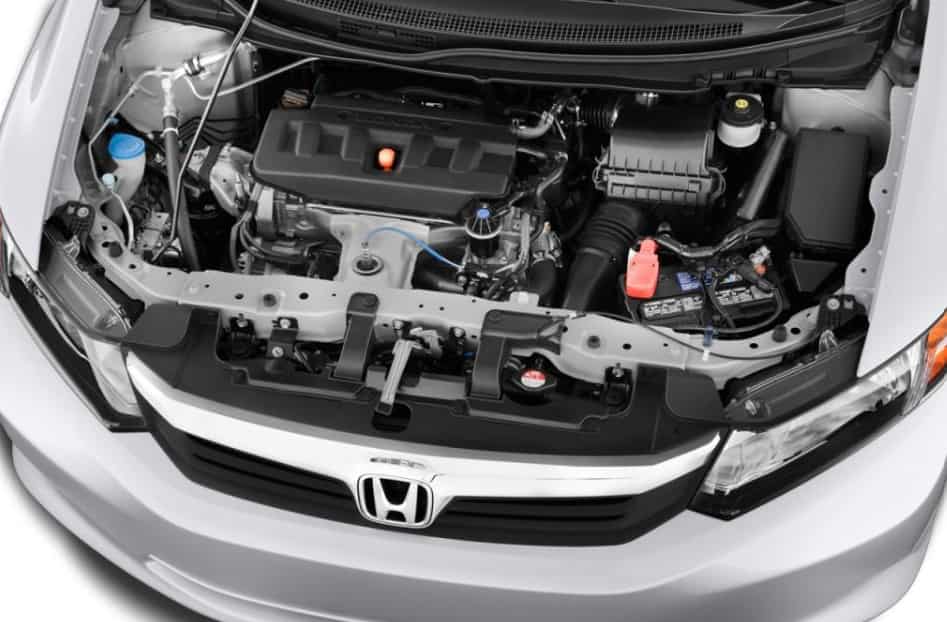
Quick Answer: 2012 Honda Civic Oil Type and Capacity
If you are looking for the correct 2012 Honda Civic oil type and capacity, the answer depends on the engine under the hood. Honda recommends SAE 0W 20 engine oil for both the standard 1.8 liter engine and the larger 2.4 liter engine found in the Civic Si. This viscosity provides excellent cold start protection, supports fuel efficiency, and delivers reliable lubrication across a wide range of operating temperatures.
The standard 1.8 liter engine requires approximately 3.9 US quarts, or 3.7 liters, of engine oil when replacing the oil filter. The 2.4 liter Civic Si engine requires approximately 4.4 US quarts, or 4.2 liters, with a new oil filter installed. These capacities serve as refill guidelines after a complete oil change rather than an exact amount that should be poured into every vehicle without verification.
| Engine | Recommended Oil Type | Oil Capacity with Filter |
|---|---|---|
| 1.8L Inline Four | SAE 0W 20 | 3.9 US qt (3.7 L) |
| 2.4L Inline Four Civic Si | SAE 0W 20 | 4.4 US qt (4.2 L) |
Although these specifications are provided by Honda, the dipstick should always be used to confirm the final oil level. Small amounts of used oil can remain inside the engine after draining, and factors such as drain time or vehicle position may slightly affect the final refill amount. Adding most of the recommended capacity first, starting the engine for a short period, and checking the dipstick after the oil has settled is the safest approach.
What Oil Type Does a 2012 Honda Civic Take?
The recommended oil for a 2012 Honda Civic is SAE 0W 20. Honda selected this viscosity because it delivers fast oil circulation during cold starts while maintaining a protective lubricating film after the engine reaches operating temperature. Using the correct oil helps reduce internal friction, improves fuel economy, and supports long term engine durability.
The first number in the viscosity rating represents how easily the oil flows during cold weather. A lower value allows the lubricant to reach critical engine components more quickly after startup, reducing wear when the engine is most vulnerable. The second number represents the oil’s thickness at normal operating temperature. Together, these characteristics help maintain stable lubrication in a variety of driving conditions.
In addition to selecting the correct viscosity, owners should choose engine oil that meets the latest API service standards specified for gasoline engines. A quality engine oil that meets Honda’s requirements provides better resistance to oxidation, helps prevent sludge formation, and keeps internal engine components cleaner over time.
Many owners wonder whether they can switch to a thicker oil as the vehicle ages. In most cases, Honda continues to recommend SAE 0W 20 even for higher mileage vehicles, provided the engine is in good mechanical condition. Increasing viscosity without a valid mechanical reason does not necessarily improve protection and may reduce fuel efficiency or affect oil flow during cold starts.
Choosing a high quality full synthetic oil that meets the required specifications is often the best option for daily driving. Synthetic oil offers better resistance to heat, maintains its protective properties for a longer period, and performs more consistently in both hot summers and cold winters. While synthetic oil may cost more than conventional oil, the additional protection can help reduce engine wear and maintain reliable performance throughout the life of the vehicle.
How Much Oil Does a 2012 Honda Civic Hold?
The correct oil capacity is just as important as the correct oil type. Too little oil increases engine wear and reduces lubrication. Too much oil can create excess crankcase pressure and cause leaks. It may also reduce engine performance over time. For this reason, always confirm the final oil level with the dipstick after every oil change.
2012 Honda Civic 1.8L Oil Capacity
Most 2012 Honda Civic models use a 1.8 liter four cylinder engine. This engine requires 3.9 US quarts, or 3.7 liters, of SAE 0W 20 engine oil when you replace the oil and the filter.
However, do not pour the entire amount into the engine immediately. A small amount of old oil often remains inside after draining. The final refill amount can also change slightly because of drain time or vehicle position.
Instead, add about 3.5 to 3.7 quarts first. Start the engine and let it idle for about 30 seconds. Next, turn the engine off and wait several minutes. Finally, check the dipstick and add oil gradually until the level reaches the full mark.
Following this process helps prevent overfilling. It also ensures the engine receives the correct amount of lubrication.
2012 Honda Civic Si 2.4L Oil Capacity
The 2012 Honda Civic Si uses a larger 2.4 liter four cylinder engine. This engine holds 4.4 US quarts, or 4.2 liters, of SAE 0W 20 engine oil with a new oil filter.
Do not use the Civic Si capacity for a standard Civic. The two engines have different lubrication systems and different oil capacities. Filling a 1.8 liter engine with 4.4 quarts may overfill the crankcase. On the other hand, adding only 3.9 quarts to a Civic Si may leave the oil level too low.
Before buying engine oil, verify the engine size instead of relying only on the trim level. This simple step helps you avoid costly maintenance mistakes.
Why the Dipstick Is More Important Than the Published Capacity
Many drivers treat the published capacity as an exact refill amount. In reality, it is only a service guideline. Every oil change is slightly different because some used oil remains inside the engine.
Always add most of the recommended amount first. Then install the oil filler cap and start the engine. Let it idle briefly so the new oil fills the filter and circulates through the engine. After that, switch the engine off and wait several minutes.
Next, remove the dipstick and wipe it clean. Insert it fully and check the oil level again. Add oil in small amounts if necessary. Repeat the process until the oil reaches the proper level. Do not fill above the maximum mark.
The dipstick always provides the most accurate reading. Therefore, use it as the final reference instead of relying only on the published oil capacity. This habit improves engine protection and helps prevent unnecessary repairs.
Does the 2012 Honda Civic Require Synthetic Oil?
Yes, the 2012 Honda Civic performs best with full synthetic SAE 0W 20 engine oil. Honda recommends this viscosity because it delivers excellent protection in both cold and hot conditions. It also helps improve fuel economy and reduces engine wear during daily driving.
Full synthetic oil flows quickly when the engine starts. As a result, critical engine parts receive lubrication sooner. This reduces friction during cold starts, which is when most engine wear occurs. In addition, synthetic oil resists heat better than conventional oil. It keeps its protective properties longer and helps prevent sludge from forming inside the engine.
Many drivers ask whether synthetic blend or conventional oil is still acceptable. While these oils may work in some situations, full synthetic oil offers better overall performance. It provides stronger protection under heavy traffic, frequent short trips, and extreme temperatures. For this reason, it remains the preferred choice for most owners.
Older vehicles often raise another question. Some people believe high mileage engines need thicker oil. However, that is not always true. A well maintained 2012 Honda Civic should continue using SAE 0W 20 unless a qualified technician recommends a different viscosity to address a specific mechanical issue.
Full Synthetic vs. Synthetic Blend vs. Conventional Oil
Each type of engine oil offers different benefits. Understanding these differences makes it easier to choose the right product for your driving habits.
Full synthetic oil provides the highest level of protection. It performs well in extreme temperatures and keeps the engine cleaner over time. It also resists oxidation and maintains stable viscosity throughout the service interval.
Synthetic blend oil combines conventional and synthetic base oils. It costs less than full synthetic oil while offering better protection than conventional oil. Many drivers choose it as a balance between performance and price.
Conventional oil is usually the least expensive option. However, it breaks down faster under high temperatures and demanding driving conditions. It also requires more frequent oil changes. For that reason, it is no longer the first choice for most modern Honda engines.
Is Full Synthetic Oil Worth It?
For most owners, the answer is yes. Full synthetic oil costs more at the time of purchase, but it delivers better long term value. It protects engine components more effectively and helps maintain consistent performance between oil changes.
This benefit becomes even more important if you drive in heavy traffic, make frequent short trips, or experience very hot or very cold weather. These conditions place extra stress on engine oil and accelerate its deterioration.
Even if your Civic has accumulated high mileage, full synthetic SAE 0W 20 remains an excellent option when the engine is mechanically sound. It supports cleaner operation, improves lubrication, and helps extend engine life. Most importantly, always choose an oil that meets Honda’s recommended specifications instead of selecting a product based only on brand or price.
Best Oil for a 2012 Honda Civic
The best oil for a 2012 Honda Civic is SAE 0W 20 that meets Honda’s recommended specifications. While many reputable brands offer suitable products, the oil specification matters more than the brand name. Choosing the correct viscosity and quality standard helps protect the engine and maintain reliable performance.
When shopping for engine oil, start by checking the viscosity grade on the label. It should clearly display SAE 0W 20. Next, verify that the oil meets the current API service standards for gasoline engines. A high quality full synthetic oil that meets these requirements will provide excellent lubrication and long lasting protection.
Driving conditions also influence your choice. Drivers who spend most of their time in heavy traffic or make frequent short trips benefit from full synthetic oil. It maintains stable performance under higher temperatures and repeated engine starts. If you regularly drive long highway distances, full synthetic oil continues to provide excellent protection while supporting consistent engine performance.
Price should not be the only factor when choosing motor oil. A cheaper product may save money today, but it can wear out more quickly under demanding conditions. Investing in a quality oil often reduces engine wear and helps maintain performance over the long term.
What to Look for on the Oil Container
Always read the product label before making a purchase. The correct engine oil should meet several important requirements.
First, confirm that the viscosity grade is SAE 0W 20. This is the viscosity Honda recommends for the 2012 Civic. Next, look for an API certification that confirms the oil meets current performance standards for gasoline engines.
If possible, choose a full synthetic formulation. Synthetic oil performs better across a wide range of temperatures and resists breakdown more effectively than conventional oil. It also helps keep internal engine components cleaner by reducing sludge and deposit formation.
Finally, purchase enough oil for a complete service. Most standard 1.8 liter models require about four quarts because the refill capacity is 3.9 US quarts with a new filter. The Civic Si requires five quarts because its refill capacity is 4.4 US quarts. Buying the correct quantity makes it easier to complete the oil change without interruption.
Should You Use High Mileage Oil?
High mileage engine oil can be a good option for some vehicles. However, it is not necessary for every 2012 Honda Civic. Many engines continue to perform well with standard full synthetic SAE 0W 20, even after many years of service.
Consider high mileage oil if your engine consumes small amounts of oil between services or shows minor seal seepage. These products often contain additives that help condition aging seals and reduce small leaks. They may also improve protection in engines with higher mileage.
Do not switch to high mileage oil simply because the vehicle has reached a certain number of miles. Instead, base your decision on the engine’s actual condition. If the engine runs smoothly, uses very little oil, and has no visible leaks, a quality full synthetic oil that meets Honda’s specifications remains an excellent choice.
If you notice excessive oil consumption, blue exhaust smoke, or significant oil leaks, changing the oil alone will not solve the problem. These symptoms usually indicate a mechanical issue that requires inspection and repair.
2012 Honda Civic Oil Change Interval
Honda does not recommend changing the engine oil at one fixed mileage. Instead, the 2012 Honda Civic uses the Honda Maintenance Minder system to monitor engine operating conditions. The system calculates the remaining oil life and tells you when service is due.
For most drivers, the oil life indicator provides a more accurate schedule than following a standard mileage interval. It considers several factors, including engine temperature, driving habits, trip length, and operating conditions. This approach helps prevent changing the oil too early or waiting too long.
Many owners still prefer a mileage estimate. Under normal driving conditions, a full synthetic SAE 0W 20 oil change often falls between 7,500 and 10,000 miles. However, the Maintenance Minder should remain your primary guide because every vehicle operates under different conditions.
Follow the Honda Maintenance Minder
The Honda Maintenance Minder continuously tracks how the engine operates. It does not analyze the oil directly. Instead, it uses data from the engine and driving conditions to estimate the remaining oil life.
When the oil life reaches 15 percent, the system displays a maintenance reminder. This gives you enough time to schedule service before the oil reaches the end of its useful life.
At 5 percent, you should change the engine oil as soon as possible. Driving far beyond this point increases the risk of reduced lubrication and accelerated engine wear.
If the oil life reaches 0 percent, the engine oil has exceeded its recommended service interval. Although the engine may continue running, delaying service further can shorten engine life and increase maintenance costs.
When Should You Change the Oil Earlier?
Some driving conditions place extra stress on engine oil. In these situations, changing the oil before the Maintenance Minder reaches a low percentage can be a smart preventive measure.
You may benefit from shorter oil change intervals if you regularly drive in heavy traffic. Frequent stop and go driving increases engine temperature and places additional stress on the lubricant.
Short trips create another challenge. The engine may not reach its normal operating temperature before you turn it off. As a result, moisture and fuel contamination can build up inside the oil.
Driving on dusty roads also shortens oil life. Fine particles can enter the engine despite the air filtration system. Over time, these contaminants reduce the oil’s ability to protect internal components.
Extreme heat, frequent towing, and long periods of idling also increase oil degradation. If your Civic operates under these conditions, inspect the oil level more often and consider changing the oil sooner.
Why Waiting Too Long Can Be Expensive
Engine oil gradually loses its protective properties as it ages. Heat, moisture, combustion byproducts, and contaminants slowly reduce its effectiveness. Fresh oil keeps engine parts clean and minimizes friction. Old oil cannot provide the same level of protection.
Ignoring oil changes for extended periods can lead to sludge buildup inside the engine. Sludge restricts oil flow and reduces lubrication. As a result, internal components experience more friction and wear.
Old engine oil also struggles to control heat. Higher operating temperatures place additional stress on bearings, camshafts, timing components, and other moving parts. Over time, this extra wear can lead to costly repairs.
Regular oil changes remain one of the simplest and most affordable ways to protect a 2012 Honda Civic. Following the Maintenance Minder and checking the oil level regularly will help maintain engine performance for many years.
How to Check the Oil Level Correctly
Checking the engine oil is one of the easiest ways to protect your 2012 Honda Civic. It takes only a few minutes, but it can help prevent serious engine damage. Regular inspections also allow you to detect low oil levels, leaks, or excessive oil consumption before they become expensive repairs.
For the most accurate reading, park the vehicle on a level surface and turn the engine off. Wait at least five minutes so the oil can drain back into the oil pan. This step helps you obtain a reliable measurement.
Next, open the hood and locate the engine oil dipstick. Pull it out completely and wipe it clean with a lint free cloth or paper towel. Insert the dipstick fully into the tube, then remove it again to check the oil level. The oil should remain between the lower and upper marks. A level near the upper mark is ideal.
If the oil level is low, add a small amount of SAE 0W 20 engine oil. Use a funnel to avoid spills. After each addition, wait about one minute and check the dipstick again. Continue adding oil until the level reaches the proper range. Do not overfill the engine because too much oil can increase crankcase pressure and reduce lubrication efficiency.
You should also examine the condition of the oil while checking the level. Clean oil usually appears amber or light brown, while older oil becomes darker over time. However, thick sludge, metal particles, or a strong fuel odor may indicate a mechanical problem. Checking the oil once a month and before long trips helps keep the engine properly lubricated and supports long term reliability.
How to Change the Oil in a 2012 Honda Civic
Changing the oil in a 2012 Honda Civic is a simple maintenance task that helps protect the engine and maintain reliable performance. Replacing both the engine oil and oil filter at the same time removes contaminants, improves lubrication, and reduces engine wear.
Begin by warming the engine for a few minutes, then park the vehicle on a level surface and turn it off. Allow the engine to cool slightly before working underneath the car. Position a drain pan below the oil pan and remove the drain bolt to let the old oil drain completely.
While the oil is draining, remove the old oil filter with an oil filter wrench. Before installing the new filter, apply a thin layer of fresh engine oil to the rubber gasket. Screw the filter into place by hand until it is snug. Avoid overtightening because it can damage the gasket and make future removal more difficult.
After the oil has drained, install the drain bolt with a new crush washer and tighten it securely. Open the oil filler cap and slowly add the recommended amount of SAE 0W 20 full synthetic engine oil. Most 1.8 liter models require approximately 3.9 US quarts with a new filter, while the Civic Si requires about 4.4 US quarts.
Start the engine and let it idle for one minute. Turn the engine off and wait several minutes before checking the oil level with the dipstick. Add more oil if needed until the level reaches the proper range. Finally, inspect the drain bolt and oil filter for leaks, then reset the Honda Maintenance Minder if an oil change reminder is displayed.
How to Reset the Honda Maintenance Minder
After changing the engine oil, reset the Honda Maintenance Minder to start tracking the next service interval. Resetting the system does not improve engine performance, but it ensures the oil life monitor provides accurate maintenance reminders.
Start by turning the ignition to the ON position without starting the engine. If your Civic has a push button start, press the button twice without pressing the brake pedal. Next, use the SEL/RESET button or the steering wheel controls to display the engine oil life screen.
Press and hold the SEL/RESET button until the oil life percentage begins to flash. Release the button, then press and hold it again for several seconds. The display will reset to 100%, confirming that the Maintenance Minder has been successfully reset.
After the reset, start the engine and verify that no oil change reminder appears on the instrument panel. If the reminder remains, repeat the procedure carefully because the reset may not have been completed.
Reset the Maintenance Minder only after replacing the engine oil and oil filter. Resetting the system without performing the service can lead to inaccurate maintenance intervals and increase the risk of overdue oil changes. Following the correct procedure helps keep your 2012 Honda Civic on schedule and supports long term engine reliability.
Frequently Asked Questions
Can I use 5W 20 instead of 0W 20 in a 2012 Honda Civic?
Honda recommends SAE 0W 20 for the 2012 Honda Civic because it provides the best balance of engine protection, fuel economy, and cold start performance. If 0W 20 is temporarily unavailable, 5W 20 may be used in an emergency. However, you should replace it with SAE 0W 20 at the next oil change.
How often should I check the engine oil?
Check the engine oil at least once a month and before long trips. You should also inspect the oil level if the low oil pressure warning light appears or if you notice unusual engine noise. Regular inspections help detect leaks and oil consumption before they become serious problems.
Does the oil filter need to be replaced with every oil change?
Yes. Replacing the oil filter during every oil change is a recommended maintenance practice. A new filter removes dirt and metal particles more effectively than an old one. It also helps fresh engine oil remain clean for a longer period.
How much oil does a 2012 Honda Civic need after an oil change?
Most 1.8 liter models require approximately 3.9 US quarts of engine oil when the oil filter is replaced. The Civic Si requires about 4.4 US quarts. Always confirm the oil level with the dipstick after filling because the exact amount may vary slightly.
What happens if I overfill the engine oil?
Too much engine oil can create excessive crankcase pressure and cause the crankshaft to whip the oil into foam. Foamy oil does not lubricate engine components efficiently and may increase engine wear. If the oil level is above the maximum mark, remove the excess oil before driving.
Can I mix different engine oil brands?
Yes. Mixing reputable engine oil brands is generally safe if they have the same viscosity grade and meet the required API performance standard. However, using one high quality full synthetic oil consistently is the best way to maintain stable engine performance and simplify future maintenance.
Conclusion
Understanding the correct 2012 Honda Civic oil type and capacity is one of the easiest ways to keep your engine running smoothly for years. Honda recommends SAE 0W 20 full synthetic engine oil for all 2012 Civic models. However, the required oil capacity depends on the engine. Most 1.8 liter models hold approximately 3.9 US quarts with a new oil filter, while the Civic Si requires about 4.4 US quarts.
Choosing the correct oil is only part of proper maintenance. Checking the oil level regularly, replacing the oil filter during every service, and following the Honda Maintenance Minder all help protect the engine from unnecessary wear. These simple habits can improve reliability, support better fuel economy, and reduce the risk of costly repairs.
If you perform your own oil changes, always use high quality engine oil that meets Honda’s recommended specifications. Take your time during the service, inspect for leaks, and confirm the oil level before driving. A few extra minutes can help prevent common maintenance mistakes.
By following the recommendations in this guide, you can confidently choose the right oil, maintain the correct capacity, and keep your 2012 Honda Civic performing at its best. Whether you drive every day or only occasionally, routine oil maintenance remains one of the most valuable investments you can make in your vehicle’s long term health.