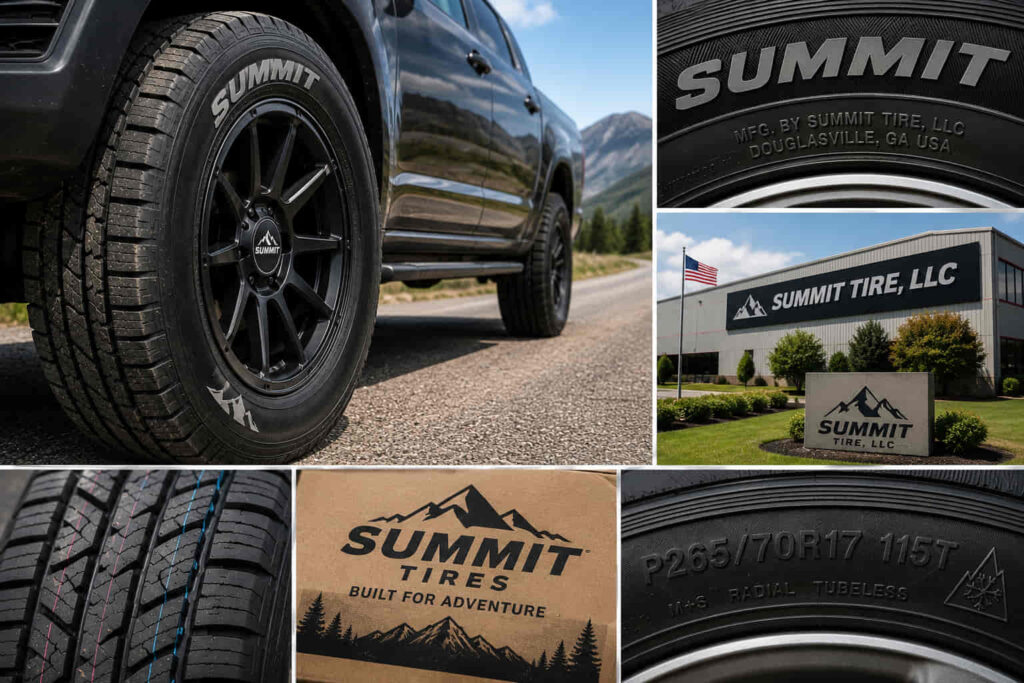
Summit Tires is a value-oriented tire brand designed to provide affordable replacement tires for everyday vehicles, but understanding who makes Summit Tires requires looking beyond the brand name itself. Many tire brands in the value segment operate through global manufacturing networks, where ownership, distribution, and production may involve different companies.
For drivers researching Summit Tires, the manufacturer behind the brand is an important factor because it helps explain the expected quality, product positioning, and intended market. Unlike major global tire companies that are widely recognized for their own engineering and manufacturing facilities, value tire brands often focus on providing practical replacement options through established supply chains.
Summit Tires is generally positioned as a budget-friendly tire option for passenger cars, SUVs, crossovers, and light trucks. The brand focuses on meeting everyday driving needs, including basic traction, road stability, and acceptable durability at a competitive price point.
However, knowing who produces a tire is only one part of evaluating its quality. Tire performance also depends on factors such as the specific tire model, manufacturing standards, tread design, vehicle compatibility, and how the tire is used.
This guide explains who makes Summit Tires, where they are produced, what types of tires Summit offers, how reliable the brand is, and whether Summit Tires are worth considering for your vehicle.
Who Makes Summit Tires?
Summit Tires is produced as a value-focused tire brand through a manufacturing and distribution network designed to provide affordable replacement tires for everyday vehicles. Unlike major tire manufacturers that operate under a single globally recognized brand identity, many value tire brands use different production partnerships and supply chains to serve specific markets.
The manufacturer information behind Summit Tires is important because it helps consumers understand where the brand fits within the tire industry. Summit is positioned as a replacement tire brand rather than a premium manufacturer competing directly with companies such as Michelin, Bridgestone, or Continental.
For value-oriented tire brands, the company responsible for selling the product and the factory producing the tire may not always be the same entity. Tires can be developed, manufactured, and distributed through different partners depending on the market, product line, and production location.
This business model allows brands like Summit Tires to offer lower-cost alternatives while still meeting basic industry requirements for safety, performance, and durability. However, the exact manufacturing source can vary between tire models, sizes, and markets.
When evaluating Summit Tires, consumers should consider more than just the manufacturer name. Factors such as tire specifications, load rating, tread design, warranty coverage, and intended vehicle use have a direct impact on real-world performance.
For example, a driver choosing Summit tires for a commuter sedan may focus mainly on affordability and everyday reliability, while an SUV owner carrying heavier loads should pay closer attention to the tire’s construction and performance rating.
Where Are Summit Tires Made?
Summit Tires are manufactured through global tire production networks, meaning the country of origin can depend on the specific tire model and production batch. Modern tire manufacturing is highly globalized, and many value tire brands source products from different facilities to maintain competitive pricing and availability.
The location where a tire is produced does not automatically determine its quality. Tire performance depends more on manufacturing standards, material quality, engineering specifications, and quality control processes used during production.
Many replacement tire brands operate with international manufacturing partners because this approach allows them to offer affordable products across different markets. These facilities produce tires according to required industry standards while supporting the price positioning of the brand.
For buyers researching Summit Tires, checking the tire sidewall markings and product documentation can provide information about the specific manufacturing origin of a tire. The sidewall usually includes required identification details that indicate where and when the tire was produced.
Understanding production origin helps consumers make informed decisions, but it should be combined with other evaluation factors such as tire ratings, warranty information, and whether the tire matches the vehicle’s requirements.
For example, two Summit tire models may come from different production facilities but still be designed around the same goal: providing an affordable replacement option for drivers with normal daily driving needs.
Read more: Are Cooper Tires Good
What Type of Tires Does Summit Make?
Summit Tires produces replacement tires designed primarily for everyday passenger vehicles, SUVs, crossovers, and light trucks. The brand focuses on practical tire categories that serve drivers who need affordable solutions for normal road use rather than specialized high-performance applications.
The product range of Summit Tires is generally built around common driving requirements, including commuting, highway travel, and general vehicle operation. Passenger tires are designed to provide basic traction, stability, and comfort for daily vehicles, while SUV and light truck options focus on supporting heavier vehicles with appropriate load capacity.
All-season tires represent an important category within the value tire market because many drivers want a single tire solution that performs adequately throughout different seasons. Summit’s approach follows this market demand by focusing on versatility and affordability rather than maximizing performance in one specific condition.
The brand also fits into the replacement tire segment, where many consumers prioritize cost control when maintaining older vehicles or vehicles used for regular transportation. In these situations, a value tire can provide practical benefits when the driver’s expectations match the tire’s intended purpose.
However, Summit Tires is not typically positioned as a performance-focused brand for drivers seeking advanced handling, racing capability, or extreme weather performance. Buyers should evaluate each tire model based on specifications such as tread design, speed rating, load rating, and intended driving environment.
For example, a commuter vehicle used mainly for city driving may benefit from Summit’s affordable approach, while a performance vehicle or heavy-duty truck requiring specialized capabilities may need a more application-specific tire.
Is Summit Tires a Reliable Brand?
Summit Tires can be considered a reasonable option for drivers who need affordable replacement tires for everyday driving conditions. The brand’s reliability should be evaluated based on its position as a value tire manufacturer rather than compared directly with premium tire companies.
Reliability in the tire industry depends on several factors, including manufacturing standards, product design, maintenance, and how well the tire matches the vehicle. A properly selected Summit tire can provide acceptable performance for drivers who mainly need dependable transportation.
The main strength of Summit Tires is its focus on affordability. Many drivers do not require advanced tire technology or extreme performance features, especially when using vehicles for commuting, errands, and routine highway travel. For these situations, a value tire can provide a practical balance between cost and functionality.
However, reliability expectations should remain realistic. Premium tire manufacturers often invest more heavily in research, advanced compounds, and specialized testing, which can result in advantages in areas such as wet braking, noise reduction, tread longevity, and performance consistency.
The best way to evaluate Summit Tires is to consider whether the product matches the driver’s needs. A tire that performs well for daily commuting may not be the right choice for demanding applications such as heavy towing, aggressive driving, or extreme weather conditions.
For example, a driver replacing worn tires on an older sedan may find Summit provides sufficient reliability at a lower cost, while a truck owner using their vehicle for commercial workloads may require a more specialized tire designed for heavier demands.
How Does Summit Tire Quality Compare?
Summit tire quality is best understood by comparing its performance, durability, and pricing position within the value tire segment. The brand is designed to provide practical performance for everyday drivers rather than compete directly with premium manufacturers that focus on advanced technology and specialized driving conditions.
Traction is one of the most important factors when evaluating any tire. Summit tires are developed to provide basic road grip for normal driving situations, including commuting, urban travel, and regular highway use. The actual traction performance depends on the specific tire model, tread pattern, weather conditions, and vehicle application.
Durability is another important consideration. Summit tires are generally designed to provide reasonable tread life when properly maintained and used under suitable conditions. Tire rotation, correct inflation pressure, wheel alignment, and driving habits all influence how long a set of tires will perform effectively.
Comfort and road noise are areas where value tires often involve trade-offs. Summit tires can provide acceptable ride quality for many everyday vehicles, but drivers who prioritize a quieter cabin experience or premium refinement may notice differences compared with higher-priced touring tires.
The overall quality of Summit Tires depends on matching expectations with the product category. A driver looking for affordable transportation tires may find the performance sufficient, while someone requiring maximum handling, extreme weather capability, or specialized performance may need a different tire category.
For example, a small sedan used for daily commuting may benefit from Summit’s affordable replacement approach, while a high-performance vehicle requiring precise handling response would likely require a more specialized tire.
Summit Tires vs Other Budget Tire Brands: How Do They Compare?
Summit Tires competes with other budget tire brands by offering affordable replacement options for drivers who prioritize cost efficiency and basic reliability. The main difference between value tire brands usually comes from product design, warranty coverage, availability, and the specific needs they are designed to serve.
Compared with premium brands such as Michelin, Goodyear, Bridgestone, and Continental, Summit Tires generally focuses on affordability rather than advanced engineering or maximum performance. Premium manufacturers often have advantages in areas such as specialized rubber compounds, extensive testing, and broader performance capabilities, but those benefits come with higher prices.
Compared with other budget tire brands, Summit’s value depends on the specific tire model and application. Some drivers may choose Summit because they need a lower-cost replacement option for an older vehicle, while others may prefer a mid-range brand with longer warranties or stronger performance ratings.
The most important factor is not simply the brand category but whether the tire matches the vehicle’s requirements. A properly selected budget tire can provide good value when used within its intended conditions.
For example, a driver who mainly uses a vehicle for short daily trips may find Summit tires provide enough performance at a lower cost, while someone who drives long highway distances or faces severe weather regularly may benefit from investing in a higher-performance tire.
Are Summit Tires Worth Buying?
Summit Tires can be worth buying for drivers who need affordable replacement tires for normal driving conditions and want to reduce maintenance costs without choosing the lowest-quality option available. The brand’s value comes from providing basic tire functionality at a competitive price.
Summit tires are most suitable for drivers who prioritize affordability, including owners of older vehicles, commuters, and people who use their vehicles mainly for everyday transportation. In these situations, the primary requirements are dependable traction, acceptable durability, and reasonable operating costs.
However, Summit Tires may not be the best choice for drivers with demanding performance requirements. Vehicles used for heavy towing, aggressive driving, extreme weather conditions, or long-distance high-speed travel may require tires with more specialized engineering.
The decision should be based on the relationship between the tire’s capabilities and the vehicle’s purpose. Choosing a tire that fits the driving environment is more important than choosing a brand based only on price.
Overall, Summit Tires represents a practical option within the value tire market. Drivers who understand its position and select the appropriate model can receive a cost-effective solution for everyday driving needs.
Are Summit Tires Worth Buying?
Summit Tires can be a suitable choice for drivers who need affordable replacement tires for everyday transportation and want a practical balance between cost and basic performance. The brand’s main advantage is its focus on providing accessible tire options for passenger vehicles, SUVs, crossovers, and light trucks without the higher price associated with premium tire manufacturers.
Understanding who makes Summit Tires and how the brand is positioned helps buyers set realistic expectations. Summit is designed for drivers who prioritize value, meaning the most important factors are affordability, acceptable traction, reasonable durability, and compatibility with normal driving conditions.
However, Summit Tires may not be the ideal choice for every situation. Drivers who need advanced performance, maximum tread longevity, superior comfort, or specialized capability for extreme weather and heavy-duty applications may benefit from choosing a tire designed for those specific requirements.
The right tire decision depends on matching the product with the vehicle and driving environment. A properly selected Summit tire can provide good value when the driver’s expectations align with what a value-focused tire is designed to deliver.
Overall, Summit Tires represents a practical option for budget-conscious drivers who need dependable replacement tires for everyday use. While it does not compete directly with premium tire brands in advanced performance and technology, it can provide a reasonable solution for drivers seeking affordable and functional tire performance.