Several Toyota and Lexus production cars came with a 2JZ engine from the factory, including the Toyota Supra, Toyota Aristo, Toyota Soarer, Toyota Crown, Toyota Mark II, Toyota Chaser, Toyota Cresta, Toyota Progres, Toyota Origin, Lexus GS, and Lexus SC. However, the exact engine depends on the model, generation, trim, and market.
The 2JZ is a 3.0-liter inline-six engine family rather than a single engine configuration. Its two best-known versions are the naturally aspirated 2JZ-GE and the performance-oriented 2JZ-GTE. The distinction matters because a car described as having a “2JZ” does not necessarily have the turbocharged 2JZ-GTE associated with the Toyota Supra. Some model lines were also offered with other engines, so the presence of a 2JZ must be determined by the specific version of the vehicle rather than its name alone.
This guide lists the production cars that received a 2JZ from the factory and separates them by engine variant, model, generation, production period, and market where relevant. It focuses on original factory applications rather than cars that received a 2JZ through an aftermarket engine swap.
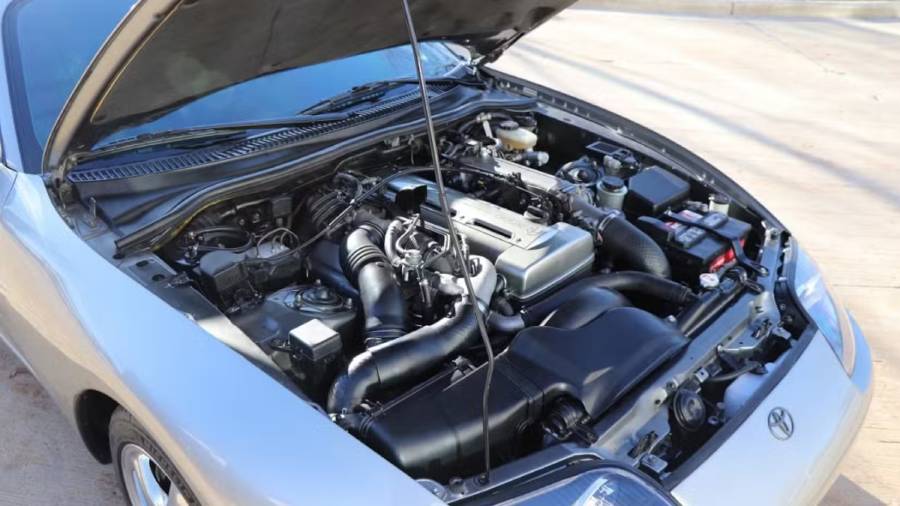
What Cars Have the 2JZ Engine?
The Toyota Supra, Aristo, Soarer, Crown, Mark II, Chaser, Cresta, Progres, Origin, Lexus GS, and Lexus SC are among the production model lines that came with a 2JZ engine from the factory. Most used the naturally aspirated 2JZ-GE, while the turbocharged 2JZ-GTE was installed in a much smaller group of performance-oriented models.
The 2JZ was not fitted uniformly across every generation or trim of these cars. Toyota used different engines within the same model line depending on the production year, trim level, drivetrain, and sales market. For example, the fourth-generation A80 Toyota Supra is closely associated with the 2JZ, but naturally aspirated versions used the 2JZ-GE while turbo models used the 2JZ-GTE. A model name alone therefore does not confirm which version of the engine is installed.
The main factory 2JZ applications can be organized as follows:
| Car | 2JZ Variant | General Application |
|---|---|---|
| Toyota Supra | 2JZ-GE, 2JZ-GTE | Sports car |
| Toyota Aristo | 2JZ-GE, 2JZ-GTE | Luxury/performance sedan |
| Toyota Soarer | 2JZ-GE | Luxury coupe |
| Toyota Crown | 2JZ-GE | Luxury sedan |
| Toyota Mark II | 2JZ-GE | Mid-size sedan |
| Toyota Chaser | 2JZ-GE | Mid-size sedan |
| Toyota Cresta | 2JZ-GE | Mid-size sedan |
| Toyota Progres | 2JZ-GE | Compact luxury sedan |
| Toyota Origin | 2JZ-GE | Luxury sedan |
| Lexus GS | 2JZ-GE | Luxury sedan |
| Lexus SC | 2JZ-GE | Luxury coupe |
This distinction explains why lists of “2JZ cars” can be misleading. A factory 2JZ-GE car belongs on a complete 2JZ vehicle list even though it does not have the turbocharged engine that made the 2JZ name famous. Conversely, a vehicle fitted with a 2JZ through an aftermarket swap is a 2JZ-powered car, but it is not a factory 2JZ application.
Which Toyota Cars Came With a 2JZ Engine?
Toyota installed 2JZ engines across sports cars, luxury sedans, coupes, and rear-wheel-drive sedans, with the Supra and Aristo representing the best-known factory applications. Other Toyota models received the 2JZ-GE primarily as a smooth, naturally aspirated 3.0-liter inline-six rather than as a high-performance turbo engine.
The Toyota Supra A80 is the model most strongly associated with the 2JZ. The fourth-generation Supra was available with both major variants: the naturally aspirated 2JZ-GE and turbocharged 2JZ-GTE. This distinction is important because identifying an A80 Supra as a “2JZ Supra” does not establish whether it has the turbo engine. Trim, market, and original engine specification determine the actual configuration.
The Toyota Aristo is another major 2JZ application and is especially significant because selected versions received the 2JZ-GTE. The Aristo was a luxury sedan rather than a sports coupe, demonstrating that Toyota did not restrict its turbocharged 3.0-liter inline-six to the Supra. Naturally aspirated 2JZ-GE configurations were also offered within the Aristo line.
The Toyota Soarer used the naturally aspirated 2JZ-GE in selected versions. The Soarer occupied Toyota’s luxury coupe segment and shared a close relationship with the Lexus SC sold in export markets. However, the model was offered with multiple powertrains, so not every Soarer should be classified as a factory 2JZ car without identifying its specific version.
Toyota also installed the 2JZ-GE in selected Crown models. In this application, the engine served the requirements of a luxury sedan rather than the performance role associated with the Supra’s 2JZ-GTE. The Crown illustrates the broader use of the 2JZ family across Toyota’s rear-wheel-drive passenger-car range.
The Toyota Mark II, Chaser, and Cresta also included selected 2JZ-GE configurations. These closely related sedan lines were available with multiple engines, including other members of Toyota’s JZ family. As a result, identifying one of these cars by model name is insufficient to prove it has a 2JZ; the generation and factory engine specification must also match.
The Toyota Progres and Toyota Origin represent less famous factory applications of the naturally aspirated 2JZ-GE. Their inclusion is useful because it demonstrates how widely Toyota applied the 2JZ outside its performance cars. These models used the engine in a luxury-oriented context where smooth inline-six operation was more important than the turbocharged performance associated with the 2JZ-GTE.
For buyers or enthusiasts identifying a specific Toyota, the safest classification is therefore based on model, generation, engine code, and market, not the model name alone. This prevents 1JZ-powered versions, alternative engine configurations, and aftermarket 2JZ swaps from being incorrectly counted as original 2JZ-equipped cars.
Which Lexus Cars Came With a 2JZ Engine?
The Lexus GS 300 and Lexus SC 300 are the two major Lexus model lines associated with factory-installed 2JZ-GE engines. Lexus used the naturally aspirated version of Toyota’s 3.0-liter inline-six rather than the 2JZ-GTE in these applications. This distinction means a factory Lexus with a 2JZ should not automatically be described as having the turbocharged Supra engine.
The Lexus GS 300 used the 2JZ-GE in multiple generations. The first-generation GS was closely related to the Toyota Aristo, but their engine lineups differed according to model and market. This relationship is especially important because selected Toyota Aristo versions received the 2JZ-GTE, whereas the corresponding Lexus GS 300 was sold with the naturally aspirated 2JZ-GE. Two vehicles can therefore share a closely related platform without sharing the same 2JZ variant.
The Lexus SC 300 is another factory 2JZ-GE application. It was closely related to the Toyota Soarer and combined a rear-wheel-drive luxury coupe platform with Toyota’s naturally aspirated 3.0-liter inline-six. The SC range also included other engine configurations, so the SC 300 designation is more useful for identifying a 2JZ application than referring to the entire Lexus SC model line.
Neither example should be confused with a factory 2JZ-GTE Lexus. The presence of a 2JZ-GTE in an SC or GS today can result from an engine swap rather than the vehicle’s original factory configuration. For this reason, engine code and original vehicle specifications are more reliable than the model family alone when identifying a used 2JZ-powered Lexus.
What Cars Came With the 2JZ-GTE Engine?
The Toyota Supra and Toyota Aristo are the two principal production model lines that received the 2JZ-GTE from the factory. This list is substantially shorter than the complete list of cars with a 2JZ because most factory 2JZ applications used the naturally aspirated 2JZ-GE.
The A80 Toyota Supra is the most recognizable 2JZ-GTE application. Toyota installed the turbocharged engine in performance versions of the fourth-generation Supra, while naturally aspirated versions used the 2JZ-GE. The exact specification also differed by sales market, which is why the generation, trim, and market should be considered when identifying an original 2JZ-GTE Supra.
The Toyota Aristo provides the other major factory application. Selected performance-oriented Aristo versions were equipped with the 2JZ-GTE, placing the turbocharged inline-six in a four-door luxury sedan. This makes the Aristo particularly important in the history of the engine because it demonstrates that the 2JZ-GTE was not exclusive to the Supra.
The factory distinction also explains why cars such as the Lexus SC 300, Lexus GS 300, Toyota Soarer, and several Toyota sedans can correctly be called 2JZ cars without being 2JZ-GTE cars. Their relevant factory configurations used the naturally aspirated 2JZ-GE instead.
A 2JZ-GTE found in another vehicle does not establish another factory application. The engine’s popularity for swaps means it can now be found in numerous Toyota, Lexus, and non-Toyota platforms. Those vehicles are aftermarket 2JZ-GTE-powered cars and should be separated from the original factory 2JZ-GTE model list.
What Cars Came With the 2JZ-GE Engine?
The 2JZ-GE was installed in a broader range of Toyota and Lexus vehicles than the 2JZ-GTE. Toyota’s own historical vehicle records show JZ applications across models including the Aristo, Chaser, Cresta, Crown, Mark II, Origin, Progrès, Soarer, and Supra, while Lexus used the 2JZ-GE in models such as the GS 300 and SC 300.
The Toyota Supra is one of the clearest examples of how the same model could use different 2JZ variants. Toyota’s factory specifications for the JZA80 list the 2JZ-GE in the naturally aspirated SZ grade and the 2JZ-GTE in the twin-turbo RZ and GZ grades. Both engines have a 2,997 cc displacement and six-cylinder inline configuration, but they serve different performance configurations.
The Toyota Aristo is another important 2JZ-GE application. Toyota’s specifications for the first-generation Aristo identify the 2JZ-GE in the 3.0Q grade alongside the 2JZ-GTE in the 3.0V grade. The second-generation Aristo continued this naturally aspirated/twin-turbo split, with the S300 using the 2JZ-GE and V300 using the 2JZ-GTE.
Toyota’s historical JZ vehicle map also identifies the Chaser, Cresta, Crown, Mark II, Origin, Progrès, and Soarer among its JZ-powered vehicle lines. However, the JZ engine family includes both 1JZ and 2JZ applications, so the model name by itself is not enough to establish that a particular car has a 2JZ-GE. The specific generation and engine specification must be checked.
This distinction is especially important when buying a used Japanese-market vehicle. A Mark II, Chaser, Cresta, Crown, or Soarer may have been sold with several engine choices during its production run. The correct way to classify a factory 2JZ-GE car is to verify the specific chassis, generation, grade, and original engine code rather than relying only on the vehicle’s name.
What Is the Difference Between the 2JZ-GE and 2JZ-GTE?
The main difference is that the 2JZ-GE is naturally aspirated, while the 2JZ-GTE is twin-turbocharged. Both belong to Toyota’s 2JZ family and use a 2,997 cc inline-six architecture, but Toyota developed them for different vehicle grades and performance requirements. Toyota’s factory Supra specifications explicitly identify the 2JZ-GE as a normally aspirated 3.0-liter inline-six and the 2JZ-GTE as a 3.0-liter twin-turbo inline-six.
The 2JZ-GE was used for naturally aspirated applications, where smooth power delivery and the characteristics of a 3.0-liter inline-six suited luxury sedans, coupes, and naturally aspirated sports-car grades. Toyota’s first-generation Aristo, for example, offered the 2JZ-GE with 230 PS alongside the 2JZ-GTE with 280 PS, demonstrating the different performance positions of the two engines within the same vehicle line.
The 2JZ-GTE was used for turbocharged performance applications. Toyota’s first-generation Aristo used the 2JZ-GTE in the 3.0V grade, while the second-generation model continued with the 2JZ-GTE in the V300 and the 2JZ-GE in the S300. This factory pairing makes the Aristo a useful example of why “2JZ” and “2JZ-GTE” should not be treated as interchangeable terms.
The fourth-generation Toyota Supra provides the same distinction in a sports-car context. Toyota listed the naturally aspirated 2JZ-GE for the SZ grade and the 2JZ-GTE for the twin-turbo RZ and GZ grades. The factory specifications list 225 PS for the representative 2JZ-GE Supra grade and 280 PS for the representative 2JZ-GTE grades in the Japanese-market specification.
For this reason, a car with a 2JZ-GE is a genuine factory 2JZ car, but it is not a factory 2JZ-GTE car. This distinction should remain consistent throughout any 2JZ vehicle list because the two engine variants appear in different model grades and have different factory configurations.
What Years Did Cars Come With the 2JZ Engine?
Toyota introduced the JZ engine family in 1990, and the 2JZ remained in production applications through the 1990s and into the early 2000s. Toyota’s historical engine lineage identifies the JZ as an inline-six gasoline engine family beginning in 1990 and lists applications across the Aristo, Chaser, Cresta, Crown, Mark II, Origin, Progrès, Soarer, Supra, and Verossa.
The exact production years depend on the vehicle rather than the 2JZ engine family as a whole. Toyota’s historical records show, for example, that the fourth-generation Cresta introduced in 1992 included a 3.0-liter model using the 2JZ-GE, while the fifth-generation Cresta introduced in 1996 also offered a 3.0-liter 2JZ-GE.
The same pattern applies to other Toyota models. A vehicle line can span several generations while only selected generations or grades receive the 2JZ. Toyota’s historical JZ map therefore provides a useful starting point, but identifying an individual 2JZ car still requires checking the specific generation, grade, engine code, and market.
This distinction matters because Toyota used several six-cylinder engine families during the same period. The 1JZ-GE, 1JZ-GTE, 2JZ-GE, and 2JZ-GTE could occupy different positions within related Toyota models. A production year by itself therefore does not prove that a particular car has a 2JZ.
For a used Japanese-market vehicle, the most reliable identification sequence is model → generation/chassis → grade → engine code. This approach separates original 2JZ cars from otherwise similar vehicles that left the factory with a different engine.
Did Every Toyota Supra Come With a 2JZ Engine?
No, not every Toyota Supra came with a 2JZ engine. The 2JZ is associated primarily with the fourth-generation A80 Supra, while earlier Supra generations used other engines. Toyota’s historical vehicle lineage lists the JZ engine in the fourth-generation Supra application, rather than treating every Supra generation as a 2JZ vehicle.
The A80 Supra itself also did not use only one 2JZ configuration. Toyota’s factory specifications identify the 2JZ-GE in naturally aspirated SZ grades and the 2JZ-GTE in twin-turbo RZ and GZ grades. The engines share the 2JZ family and 2,997 cc inline-six architecture, but they represent different factory configurations.
This means the phrase “2JZ Supra” is incomplete when the engine variant matters. An A80 Supra can be a factory 2JZ-GE car or a factory 2JZ-GTE car depending on its original specification. The turbocharged 2JZ-GTE is the version most strongly associated with the Supra’s performance reputation, but it represents only one part of the model’s factory engine lineup.
The Supra also illustrates why engine swaps should be excluded from a factory vehicle list. A non-2JZ Supra can be converted to a 2JZ, and a 2JZ-powered car can receive a different variant later in its life. The resulting vehicle may genuinely have a 2JZ installed, but its current engine does not necessarily match its original factory specification.
When identifying an A80 Supra, the chassis code, original grade, engine code, and market provide stronger evidence than the Supra name alone. This distinction keeps a factory 2JZ-GE Supra, factory 2JZ-GTE Supra, and aftermarket-swapped Supra in separate categories.
Do Any Cars Still Come With a 2JZ Engine?
No current Toyota or Lexus production car comes with a factory 2JZ engine. The 2JZ belongs to an older generation of Toyota’s inline-six gasoline engines, with its major vehicle applications concentrated in the 1990s and early 2000s. Toyota’s historical vehicle records document the engine across models such as the Supra, Aristo, Crown, Chaser, Cresta, Mark II, Soarer, Progrès, and Origin.
The absence of a current 2JZ-equipped production car is different from the continued availability of 2JZ-powered vehicles on the used market. Cars originally equipped with a 2JZ remain collectible and can still be purchased as used vehicles. The Toyota Supra and Toyota Aristo are particularly well known among enthusiasts, while less prominent applications include the Toyota Crown, Mark II, Chaser, Cresta, Progrès, and Lexus GS and SC.
The 2JZ-GTE is also no longer offered as a factory engine in a new production car. Its historical applications include performance versions of the A80 Supra and Toyota Aristo. Toyota’s second-generation Aristo specifications, for example, identify the 2JZ-GTE in the V300 and the 2JZ-GE in the S300, confirming that the two variants occupied different factory grades.
This distinction matters when searching for a “new 2JZ car.” A modern vehicle advertised as 2JZ-powered is generally an aftermarket build, restomod, engine-swapped vehicle, or a used older vehicle rather than a new car that Toyota currently produces with a 2JZ.
Read more: What Cars Have the Best Resale Value?
How Can You Tell if a Car Has a 2JZ Engine?
The most reliable way to identify a factory 2JZ car is to verify the engine code against the vehicle’s model, chassis, grade, and original specification. The engine code distinguishes the 2JZ from other Toyota JZ-family engines and prevents a model name from being used as the sole evidence.
The first distinction is between 2JZ-GE and 2JZ-GTE. The 2JZ-GE identifies the naturally aspirated version, while the 2JZ-GTE identifies the twin-turbocharged version. Toyota’s factory specifications for the A80 Supra and second-generation Aristo explicitly use these engine codes for their respective grades.
The second step is to verify the chassis and vehicle grade. This matters because Toyota frequently offered multiple engines within the same model line. The second-generation Aristo is a clear example: the JZS161 V300 used the 2JZ-GTE, while the JZS160 S300 used the 2JZ-GE. The model name “Aristo” therefore identifies the vehicle family but does not identify its exact 2JZ variant.
The third step is to distinguish a factory-installed engine from an engine swap. A vehicle can currently contain a 2JZ even when that engine was never offered for its original chassis. Checking the original vehicle specification, engine code, chassis information, and documentation helps establish whether the 2JZ was installed by Toyota or added later.
This method is particularly important for enthusiast cars because the 2JZ has been widely used in modified vehicles. A car having a 2JZ today does not automatically make it a factory 2JZ model. For a definitive classification, the original engine specification should match the vehicle’s specific chassis and factory configuration.
Can Other Cars Have a 2JZ Engine Swap?
Yes, a 2JZ can be installed in cars that never received the engine from the factory. The 2JZ’s use in aftermarket engine swaps means a vehicle can have a 2JZ today without belonging to the original factory 2JZ model list. These modified vehicles should therefore be separated from Toyota and Lexus models that were originally sold with a 2JZ.
The distinction between a factory 2JZ application and a 2JZ engine swap is important when identifying a vehicle. A factory application means Toyota or Lexus originally specified the engine for that particular model, generation, and grade. An engine swap means the engine was installed later, often as part of a performance build, restoration, or drivetrain conversion.
A swapped car can also use a different 2JZ variant from the one offered by the manufacturer. For example, a vehicle originally equipped with another Toyota engine could later receive a 2JZ-GTE. The current engine would genuinely be a 2JZ-GTE, but the vehicle would not become a factory 2JZ-GTE model.
The complete 2JZ factory car list should therefore include only original production applications. Aftermarket builds belong in a separate category because they describe what an owner has done to a vehicle rather than what Toyota or Lexus installed when the vehicle was manufactured.
This distinction also prevents inflated lists of “cars with the 2JZ engine.” A list that combines factory applications with swapped vehicles can contain dozens of unrelated chassis and obscure the actual production history of the 2JZ. For an automotive reference article, separating factory-equipped 2JZ cars, factory 2JZ-GTE cars, and aftermarket 2JZ swaps provides a more accurate entity relationship between the engine and the vehicle.
For anyone buying a modified car, the same principle applies. Verify the engine code, chassis, original specification, and modification history before assuming that a 2JZ installation was factory-original. The current engine identifies what is in the car; the original vehicle records identify what the manufacturer installed.