Toyota Sequoia trim packages differ primarily in price, interior equipment, luxury features, off-road hardware, and drivetrain configuration. For the 2026 model year, the lineup consists of six grades: SR5, Limited, Platinum, TRD Pro, 1794 Edition, and Capstone. Although these models share the Sequoia’s i-FORCE MAX twin-turbo V6 hybrid powertrain, each grade targets a different combination of capability, comfort, and equipment.
The SR5 serves as the entry point to the lineup, while the Limited adds comfort and technology features for buyers who want more than the base configuration. Platinum moves further toward premium comfort, whereas the TRD Pro prioritizes off-road capability with specialized TRD hardware. The 1794 Edition combines distinctive styling with an upscale cabin, and the Capstone sits at the top of the range as the luxury-focused flagship.
A trim or grade is a primary vehicle configuration, while a package adds a group of optional features to an eligible trim. This distinction matters when comparing Toyota Sequoia trim packages because an optional package does not necessarily turn one trim into another. This guide compares the six Sequoia grades, their major features, available packages, and intended uses to help determine which configuration provides the right combination of capability and value.
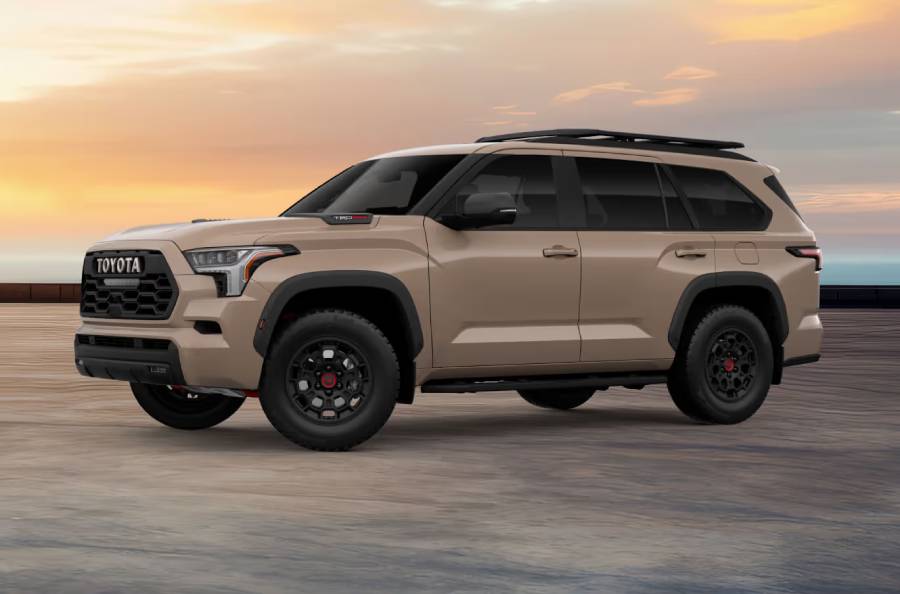
What Toyota Sequoia Trim Levels Are Available?
The 2026 Toyota Sequoia is available in six trim levels: SR5, Limited, Platinum, TRD Pro, 1794 Edition, and Capstone. The lineup progresses from the value-oriented SR5 to the luxury-focused Capstone, but the hierarchy is not based on price and luxury alone. TRD Pro has a different purpose because its equipment is designed primarily for off-road driving rather than simply adding more premium features.
All six Sequoia trims use Toyota’s i-FORCE MAX hybrid powertrain, which combines a 3.4-liter twin-turbocharged V6 engine with an electric motor. The system produces 437 horsepower and 583 lb-ft of torque. As a result, choosing a higher trim does not primarily mean upgrading to a more powerful engine. Buyers instead pay for differences in drivetrain configuration, off-road hardware, cabin equipment, exterior details, technology, and luxury features.
The SR5 establishes the starting equipment level and is followed by the more comfort-oriented Limited. Platinum adds another level of premium equipment, while TRD Pro shifts the focus toward off-road capability. The 1794 Edition combines premium equipment with distinctive Western-inspired styling. Capstone occupies the luxury end of the lineup with the most upscale materials and appearance details.
| Toyota Sequoia trim | Position in lineup | Primary focus |
|---|---|---|
| SR5 | Entry-level | Essential Sequoia capability and value |
| Limited | Mid-level | Added comfort and technology |
| Platinum | Premium | Luxury and passenger comfort |
| TRD Pro | Off-road | Specialized off-road capability |
| 1794 Edition | Premium | Luxury with distinctive styling |
| Capstone | Flagship | Highest level of luxury |
What Is the Difference Between a Toyota Sequoia Trim and a Package?
A Toyota Sequoia trim is a complete grade in the model lineup, while a package is a collection of optional equipment added to an eligible trim. SR5, Limited, Platinum, TRD Pro, 1794 Edition, and Capstone are therefore trims or grades rather than six optional packages that can be added to the same base vehicle.
A package modifies an existing grade without changing its fundamental position in the lineup. For example, off-road equipment can be offered as a package on an eligible Sequoia grade, while TRD Pro is a dedicated grade engineered around off-road use. The distinction affects equipment comparisons because two Sequoias carrying the same trim name can have different equipment when one has an optional package.
This terminology also explains why shoppers should compare both the trim level and installed options rather than relying on the trim badge alone. A Limited equipped with an available package can differ substantially from a Limited without that package, but it does not automatically gain every feature or component of another grade.
What Are the Main Differences Between Toyota Sequoia Trims?
The main differences between Toyota Sequoia trims are their drivetrain availability, off-road hardware, interior materials, comfort equipment, technology, exterior features, and overall luxury level. Engine output changes little as a selection factor because the six 2026 grades share the 437-horsepower i-FORCE MAX hybrid system. The trim decision therefore depends more heavily on how the vehicle will be used and which equipment the buyer values.
SR5 concentrates on the core capabilities of the Sequoia without the extensive premium equipment of higher grades. Limited builds on that foundation with additional comfort and convenience equipment. Platinum moves farther toward a luxury-oriented family SUV by adding premium cabin and passenger features. These three grades create a relatively straightforward progression from essential equipment to higher levels of comfort.
TRD Pro breaks that progression because its primary upgrade is capability rather than luxury. Its specialized suspension, wheels, tires, protection components, and four-wheel-drive configuration are intended for drivers who expect to travel beyond paved roads. A buyer comparing TRD Pro with Platinum should therefore evaluate off-road requirements rather than assuming the more suitable vehicle is simply whichever one has more comfort features.
The 1794 Edition and Capstone occupy the premium side of the lineup but serve slightly different preferences. The 1794 Edition emphasizes a distinctive upscale design identity, while Capstone represents the highest luxury positioning in the Sequoia range. This means buyers at the upper end of the lineup should compare cabin materials, comfort features, exterior treatments, and intended use instead of using price alone as the selection criterion.
The practical hierarchy can therefore be summarized as SR5 for value, Limited for balanced equipment, Platinum for premium comfort, TRD Pro for off-road use, 1794 Edition for distinctive premium styling, and Capstone for maximum luxury. These differences become more important than the shared powertrain when determining which Sequoia trim provides the best value for a specific buyer.
What Does the Toyota Sequoia SR5 Include?
The Toyota Sequoia SR5 provides the core powertrain, capability, safety technology, and three-row utility of the Sequoia lineup at the lowest trim level. It is the starting point for buyers who want a full-size Sequoia without paying for the additional comfort, appearance, and luxury equipment included with higher grades.
The SR5 uses the same i-FORCE MAX hybrid powertrain found throughout the 2026 Sequoia lineup. The system combines a 3.4-liter twin-turbo V6 with an electric motor to produce 437 horsepower and 583 lb-ft of torque. This shared powertrain is important for value-focused buyers because choosing the entry trim does not mean accepting a lower-output engine. The primary differences appear in equipment and configuration rather than basic engine performance.
The SR5 also establishes the Sequoia’s functional interior foundation. It is designed to accommodate passengers and cargo while providing the infotainment, connectivity, driver-assistance, and convenience equipment expected from a modern full-size SUV. Toyota Safety Sense technology provides the core active-safety functions, so buyers do not need to move directly to a premium grade simply to obtain the vehicle’s fundamental safety suite.
The main compromises become clearer when the SR5 is compared with higher trims. SR5 prioritizes capability and cost control over premium cabin equipment. Buyers seeking more sophisticated interior materials, additional convenience technology, upgraded seating features, or luxury-focused details will find those attributes increasingly emphasized in Limited, Platinum, 1794 Edition, and Capstone.
SR5 therefore makes the most sense for buyers who place the Sequoia’s powertrain, passenger capacity, utility, and full-size SUV capability ahead of luxury equipment. It can also provide a stronger starting point for buyers who prefer selecting only the options relevant to their use rather than paying for a higher grade containing features they may not need.
What Does the Toyota Sequoia Limited Include?
The Toyota Sequoia Limited builds on the SR5 by adding equipment focused on comfort, convenience, technology, and a more premium everyday driving experience. Its position above the SR5 makes it the logical step for buyers who want additional cabin features without moving into the more luxury-oriented Platinum, 1794 Edition, or Capstone grades.
The mechanical foundation remains familiar because Limited uses the same 437-horsepower i-FORCE MAX hybrid system. The upgrade therefore centers on what occupants interact with rather than a major increase in engine performance. Interior appointments, convenience functions, display and infotainment equipment, seating features, and exterior details become more important differentiators at this level.
This distinction gives Limited a different value proposition from SR5. SR5 focuses on obtaining the essential Sequoia experience at a lower entry point, while Limited spends more of its equipment budget on features occupants use during daily driving. For a family using the Sequoia for commuting, school runs, road trips, and regular passenger transportation, these cabin improvements can deliver value more frequently than specialized off-road hardware.
Limited is also an important trim for buyers considering optional equipment. A buyer may be able to configure a Limited toward a particular use without moving immediately to one of the more specialized or expensive grades. This makes the installed package and option list important when comparing two Limited vehicles; the trim badge alone does not necessarily describe every feature fitted to a specific Sequoia.
The Limited is the stronger choice over the SR5 when additional comfort and technology will be used regularly enough to justify the price increase. The SR5 remains more rational when purchase price and core capability dominate the decision. Limited becomes more compelling when the vehicle will serve as frequent family transportation and occupants will benefit from its additional convenience and cabin equipment.
The SR5-versus-Limited decision should therefore be based on incremental equipment rather than engine performance. Both provide the fundamental Sequoia powertrain and full-size SUV architecture, but Limited directs more of the purchase price toward everyday comfort and technology. Buyers who do not need those additions can retain much of the Sequoia’s fundamental capability by choosing the SR5.
What Does the Toyota Sequoia Platinum Include?
The Toyota Sequoia Platinum adds premium comfort, passenger-focused technology, and upscale interior equipment beyond the Limited trim. It is designed for buyers who want the capability and three-row utility of a Sequoia but place greater importance on cabin comfort than the typical SR5 or Limited buyer.
Platinum retains the 437-horsepower i-FORCE MAX twin-turbo V6 hybrid powertrain used across the 2026 Sequoia lineup. The upgrade from Limited therefore does not center on additional engine output. Instead, Platinum directs more of its equipment toward the passenger experience, including premium seating and comfort features, upgraded interior appointments, and additional technology intended to make long-distance travel more comfortable.
This positioning makes Platinum particularly relevant for buyers using the Sequoia primarily as a family vehicle or highway-oriented full-size SUV. Features that improve second-row comfort, cabin convenience, and the overall interior experience provide benefits on daily trips as well as longer journeys. The value of the trim consequently depends on how frequently passengers will use these additions rather than on an improvement in basic powertrain capability.
Platinum is a more logical upgrade from Limited when premium comfort is a purchasing priority. Limited remains the stronger value proposition for buyers satisfied with its equipment level, while Platinum is intended for buyers willing to spend more for a more upscale cabin. Buyers interested primarily in trail capability should instead compare these trims with TRD Pro because Platinum’s additional equipment serves a different purpose.
Platinum also occupies an important position below the most luxury-focused Sequoia configurations. It provides a substantial level of premium equipment without relying as heavily on the distinctive design themes of the 1794 Edition or the flagship positioning of Capstone. This makes Platinum a practical choice for buyers who want luxury features but prefer a more conventional Sequoia appearance.
What Does the Toyota Sequoia TRD Pro Include?
The Toyota Sequoia TRD Pro is the off-road-focused trim, combining the standard i-FORCE MAX hybrid powertrain with specialized four-wheel-drive, suspension, wheel, tire, and underbody equipment. Unlike the progression from SR5 to Limited and Platinum, TRD Pro is not primarily an additional luxury step. Its equipment is selected to increase capability when the vehicle leaves paved roads.
The TRD Pro’s specialized suspension is one of its most important differences. Off-road suspension components are designed to control vehicle movement over uneven terrain more effectively than a road-oriented setup. TRD-specific wheels and all-terrain tires further support traction on loose or irregular surfaces, while protective hardware helps reduce exposure of vulnerable components to rocks and other trail obstacles.
Four-wheel drive is also fundamental to the TRD Pro configuration. The system supports traction when surface conditions make it difficult for two driven wheels to transfer the Sequoia’s 583 lb-ft of torque effectively. Combined with the trim’s suspension and tire package, this creates a configuration intended for dirt roads, trails, uneven terrain, and other conditions where specialized hardware has greater value than additional luxury equipment.
TRD Pro also receives distinctive exterior and interior treatments that identify it as part of Toyota’s performance and off-road family. These design elements contribute to the trim’s identity, but the functional off-road components are the primary reason to choose TRD Pro. Appearance alone does not provide the same value proposition for a buyer who spends nearly all driving time on paved roads.
The difference between Platinum and TRD Pro therefore comes down to intended use. Platinum directs its upgrades toward passenger comfort and premium features, while TRD Pro directs its upgrades toward off-road capability. A family using the Sequoia mainly for highway trips is more likely to benefit regularly from Platinum’s cabin equipment. A driver who frequently encounters trails, unpaved roads, or demanding terrain can make greater use of the TRD Pro hardware.
TRD Pro is consequently best suited to buyers who have a defined need for its specialized equipment. Buyers who want occasional off-pavement capability without committing to a dedicated off-road grade should also examine eligible Sequoia trims with an available TRD Off-Road Package. That distinction becomes important because TRD Pro is a complete trim, whereas TRD Off-Road is an equipment package offered on specific configurations.
What Does the Toyota Sequoia 1794 Edition Include?
The Toyota Sequoia 1794 Edition combines premium equipment with Western-inspired interior and exterior styling, giving it a different identity from both the off-road-focused TRD Pro and the more conventionally luxurious Platinum. Rather than emphasizing trail hardware, the 1794 Edition is designed for buyers who want an upscale Sequoia with a distinctive design theme.
The cabin is one of the primary differentiators. Toyota uses premium materials and 1794-specific design details to create a more distinctive interior than buyers receive in lower grades. The emphasis is on material quality, visual character, and passenger comfort rather than increasing the output of the powertrain. Like the other 2026 Sequoia grades, the 1794 Edition uses the 437-horsepower i-FORCE MAX hybrid system with 583 lb-ft of torque.
Exterior details reinforce the same positioning. Instead of relying on the aggressive off-road appearance and specialized trail equipment associated with TRD Pro, the 1794 Edition uses grade-specific styling to establish a premium identity. This distinction matters because buyers comparing these two trims are choosing between two different uses of additional equipment: TRD Pro invests more heavily in off-road capability, while the 1794 Edition prioritizes premium design and comfort.
The 1794 Edition is therefore best suited to buyers who want a full-size SUV with a more distinctive upscale character without making dedicated off-road equipment the primary reason for choosing a trim. Its value is strongest when interior design, premium appointments, and visual differentiation are important parts of the purchase decision.
Buyers considering the 1794 Edition should also compare it with Platinum and Capstone. Platinum provides a premium Sequoia experience without placing as much emphasis on a specific design theme, while Capstone occupies the flagship luxury position. The 1794 Edition sits between these approaches by combining substantial premium content with an identifiable styling character.
What Does the Toyota Sequoia Capstone Include?
The Toyota Sequoia Capstone is the flagship luxury trim and provides the lineup’s strongest emphasis on premium materials, passenger comfort, and upscale exterior details. It is intended for buyers who want Sequoia capability and three-row utility while placing luxury near the top of their selection criteria.
Capstone shares the i-FORCE MAX hybrid powertrain with the other 2026 Sequoia grades, so its flagship position does not result from additional horsepower. Instead, Toyota differentiates the trim through the cabin, comfort equipment, appearance, and material selection. This approach means the additional purchase cost primarily pays for a more luxurious vehicle environment rather than a fundamentally different propulsion system.
Premium interior materials are central to the Capstone’s positioning. The cabin combines upscale seating surfaces, trim details, comfort equipment, and technology to separate the grade from the lower portions of the lineup. Exterior treatments and larger premium-oriented design elements reinforce this distinction, giving Capstone a different visual purpose from the rugged TRD Pro.
The main difference between Capstone and Platinum is the degree of luxury rather than basic Sequoia capability. Platinum already provides substantial premium equipment, making it sufficient for buyers who prioritize comfort without requiring the highest specification available. Capstone extends that approach for buyers who place greater value on premium materials, visual details, and flagship positioning.
The distinction between Capstone and the 1794 Edition is more nuanced because both target buyers seeking an upscale Sequoia. The 1794 Edition uses a recognizable Western-inspired design theme as part of its appeal, whereas Capstone focuses more directly on being the luxury flagship. A buyer attracted to distinctive styling may therefore prefer the 1794 Edition even when Capstone occupies the higher luxury position.
Capstone makes the most sense when premium cabin quality and luxury equipment are more important than minimizing purchase price or maximizing specialized off-road capability. Buyers who primarily need the Sequoia’s powertrain, passenger capacity, and utility can obtain those fundamental attributes from lower trims. Buyers who specifically need trail-oriented hardware receive a more purpose-built configuration from TRD Pro. Capstone instead concentrates its additional value on making the Sequoia a more upscale full-size SUV.
What Toyota Sequoia Packages Are Available?
Toyota Sequoia packages are optional groups of equipment that add capability, technology, convenience, or appearance features to eligible trims without creating a separate trim level. This is why buyers should evaluate both the Sequoia grade and its installed packages when comparing vehicles. An SR5 or Limited with optional equipment can have a substantially different feature set from another vehicle carrying the same trim badge.
Package availability also depends on the specific trim and configuration. Toyota does not make every package available across all six Sequoia grades because several higher trims already include specialized equipment as standard. TRD Pro, for example, is engineered as a complete off-road grade rather than a basic Sequoia with a TRD package added to it. Capstone follows the same principle at the luxury end of the lineup by bundling its premium equipment into a dedicated flagship grade.
For buyers comparing Sequoias, the TRD Off-Road Package is one of the most important packages to distinguish from a trim level. It adds off-road-oriented equipment to eligible Sequoia configurations and provides an intermediate option for buyers who want more trail capability without moving directly to TRD Pro. Depending on the model year and configuration, package availability and individual components can change, so the vehicle’s actual window sticker or Toyota configuration information should be checked before purchase.
Other optional equipment can alter comfort, utility, towing preparation, appearance, and convenience without changing the vehicle’s underlying grade. This means two Sequoias listed as the same trim can differ in both equipment and transaction price. Comparing only SR5 versus SR5 or Limited versus Limited is therefore insufficient when one vehicle has significant factory options installed.
The practical way to compare Toyota Sequoia packages is to identify which standard features come with the trim first and which features are added by the package second. This prevents optional equipment from being incorrectly attributed to the trim itself and makes price comparisons between individual vehicles more accurate.
What Is the Difference Between the TRD Off-Road Package and TRD Pro?
The TRD Off-Road Package adds off-road equipment to an eligible Toyota Sequoia trim, while TRD Pro is a dedicated off-road grade with a more comprehensive factory configuration. The two options target buyers interested in driving beyond paved roads, but they represent different levels of specialization.
The TRD Off-Road Package allows a buyer to retain the basic character and equipment priorities of an eligible trim while adding hardware intended for more demanding terrain. This approach is useful when off-road capability is important but does not need to dominate the entire vehicle configuration. A buyer can therefore obtain additional trail-oriented equipment while preserving more of the comfort, value, or feature mix associated with the selected grade.
TRD Pro takes the opposite approach. Off-road performance is one of the defining attributes of the entire trim rather than an optional addition. Toyota combines four-wheel drive with specialized TRD suspension components, all-terrain tires, wheels, underbody protection, and other off-road-oriented equipment to create a configuration designed around more demanding use.
Suspension is an important distinction because specialized TRD Pro components are intended to control the Sequoia over rough and uneven surfaces. Tires also influence the vehicle’s ability to transfer torque on dirt, gravel, and loose terrain. Protective components become relevant where rocks, ruts, and other obstacles create greater risk to the underside of the vehicle. These systems work together, which is why evaluating an off-road configuration requires more than checking whether the vehicle has four-wheel drive.
The package-versus-trim distinction also affects cost and daily use. Buyers who spend most of their time on pavement but encounter trails, unpaved access roads, snow, or similar conditions may not need every specialized component included with TRD Pro. An eligible trim equipped with the TRD Off-Road Package can provide a more balanced configuration in that situation.
TRD Pro is the stronger choice when off-road capability is a primary purchasing requirement, while the TRD Off-Road Package is better suited to buyers who want additional off-road hardware without making it the defining characteristic of their Sequoia. This distinction should be based on actual driving conditions rather than appearance alone. Paying for specialized suspension, tires, and protection provides the greatest value when those components are regularly used.
Which Toyota Sequoia Trim Offers the Best Value?
The Toyota Sequoia Limited offers the strongest balance of equipment and cost for buyers who want more comfort and technology than the SR5 without moving into the premium positioning of Platinum, 1794 Edition, or Capstone. The best-value trim is not automatically the cheapest grade; value depends on how frequently the additional equipment will be used relative to the price paid for it.
SR5 remains the better value for buyers whose priorities are the Sequoia’s core powertrain, passenger capacity, utility, and full-size SUV capability. Because the SR5 shares the i-FORCE MAX hybrid system with the higher grades, buyers do not need to upgrade simply to obtain more horsepower or torque. Choosing SR5 instead means accepting fewer comfort and premium features while retaining the fundamental performance characteristics of the Sequoia.
Limited becomes more compelling when the vehicle serves as regular family transportation. Its additional comfort, convenience, and technology equipment affects activities occupants experience frequently, including commuting and long-distance travel. These features can therefore provide more practical value per trip than specialized equipment that is rarely used.
Platinum, TRD Pro, 1794 Edition, and Capstone provide stronger value only when the buyer has a more specific requirement. Platinum targets premium comfort, TRD Pro targets off-road capability, the 1794 Edition combines luxury with distinctive styling, and Capstone targets buyers seeking the highest luxury level. Paying for one of these grades is easier to justify when its defining attributes match the vehicle’s actual use.
Limited is therefore the most balanced choice, while SR5 is the stronger cost-focused choice. Buyers should still compare actual vehicle pricing and installed options because optional packages can significantly change both equipment and final cost.
Which Toyota Sequoia Trim Is Best for Off-Road Driving?
The Toyota Sequoia TRD Pro is the best trim for dedicated off-road driving because off-road capability is built into the grade rather than added as a secondary option. Its combination of four-wheel drive and specialized TRD hardware makes it better suited to repeated trail use than the luxury-oriented grades.
The advantage comes from multiple components working together. Off-road suspension helps control the large SUV over uneven terrain, while all-terrain tires improve traction on loose surfaces. Underbody protection becomes important when rocks, ruts, and trail obstacles create a greater chance of contact beneath the vehicle. Four-wheel drive helps distribute the available torque when traction conditions deteriorate.
These differences are more meaningful than exterior styling. A Sequoia does not become substantially more capable off road simply because it has rugged visual elements. Suspension, tires, drivetrain systems, and protection equipment determine how effectively the vehicle can handle demanding terrain.
TRD Pro is not necessarily the most rational configuration for occasional dirt-road use. Buyers who spend most of their time on pavement but require additional capability for camping access, unpaved roads, snow, or occasional trails should compare an eligible trim equipped with the TRD Off-Road Package. That configuration can preserve a more road-oriented feature mix while adding useful off-road hardware.
Choose TRD Pro when trail capability is a primary requirement; choose an eligible TRD Off-Road-equipped trim when off-road driving is secondary to everyday use. This distinction prevents buyers from paying for specialized hardware that does not match their normal driving conditions.
Which Toyota Sequoia Trim Is Best for Luxury?
The Toyota Sequoia Capstone is the best trim for buyers who prioritize maximum luxury because it occupies the flagship position and places the strongest emphasis on premium materials, comfort, and upscale design. However, Platinum and the 1794 Edition provide two alternatives for buyers who want a premium Sequoia without necessarily choosing the flagship grade.
Platinum represents the more conventional premium choice. Its equipment focuses on passenger comfort and an upscale cabin while maintaining a less specialized identity than TRD Pro or the 1794 Edition. This makes Platinum suitable for buyers who want luxury features primarily for family transportation and highway travel.
The 1794 Edition adds another variable: design character. Its Western-inspired treatment differentiates it from Platinum and Capstone, so its appeal depends partly on whether the buyer values that specific interior and exterior identity. It is not simply a linear step between two other grades.
Capstone places the greatest emphasis on the luxury experience. Its additional value comes from premium materials, appearance details, and flagship equipment rather than greater engine output. A buyer choosing Capstone is therefore paying primarily for cabin quality, comfort, design, and specification level.
The luxury hierarchy is consequently straightforward in purpose but not necessarily in buyer preference: Platinum suits buyers seeking premium comfort, the 1794 Edition suits buyers seeking premium comfort with distinctive styling, and Capstone suits buyers seeking the flagship luxury configuration.
Which Toyota Sequoia Trim Is Best for Families?
The Toyota Sequoia Limited is the most balanced family-oriented trim because it combines three-row utility with additional comfort and technology without requiring buyers to move directly into the highest-priced luxury grades. Platinum is the stronger alternative when passenger comfort has a higher priority and the budget allows for additional premium equipment.
Family buyers should evaluate a Sequoia differently from dedicated off-road buyers. Seating configuration, passenger comfort, cargo requirements, infotainment, convenience equipment, and the frequency of long-distance travel matter more in daily family use than specialized trail hardware. A feature used on every school run or road trip can provide more practical value than an off-road component used only a few times each year.
SR5 remains relevant for larger households prioritizing cost and basic utility. It retains the Sequoia’s core powertrain and three-row SUV functionality while avoiding the additional cost associated with luxury-oriented grades. The tradeoff is a lower level of cabin and convenience equipment.
Limited provides the middle ground by adding features that occupants are more likely to use regularly. Platinum moves the equation toward premium passenger comfort and becomes more attractive for families that spend substantial time traveling in the vehicle. TRD Pro makes greater sense when family trips regularly involve demanding off-road destinations rather than conventional highway travel.
Capstone and the 1794 Edition can also function as family SUVs, but their additional cost is primarily justified by luxury and design preferences rather than family practicality alone. Families that do not specifically value those attributes can obtain the Sequoia’s core passenger and utility functions from SR5, Limited, or Platinum.
For most family-focused comparisons, the decision can therefore be narrowed to three grades: SR5 for cost-conscious utility, Limited for the strongest balance of features and value, and Platinum for greater passenger comfort. The final choice should account for seating configuration and installed options on the specific vehicle because those details can affect everyday practicality.
Do All Toyota Sequoia Trims Use the Same Engine?
All 2026 Toyota Sequoia trims use the same i-FORCE MAX hybrid powertrain, producing 437 horsepower and 583 lb-ft of torque. The system combines a 3.4-liter twin-turbocharged V6 engine with an electric motor, which means moving from the SR5 to a higher trim does not provide a corresponding increase in rated engine output.
This shared powertrain changes how buyers should evaluate the trim hierarchy. With some vehicles, moving to a higher trim unlocks a more powerful engine and creates a substantial performance difference. The Sequoia instead provides its primary hybrid powertrain across SR5, Limited, Platinum, TRD Pro, 1794 Edition, and Capstone. Trim selection is consequently driven more by drivetrain configuration, suspension, interior equipment, technology, off-road hardware, and luxury features.
The electric motor is integrated into the powertrain to supplement the twin-turbo V6 rather than turning higher Sequoia trims into separate performance models. The system’s 583 lb-ft of torque is particularly relevant to a full-size SUV because torque contributes to acceleration under load and supports tasks such as towing. Buyers should therefore distinguish between engine output, which remains consistent across the trim lineup, and vehicle capability, which can vary according to configuration.
This is also why paying more for Platinum, TRD Pro, 1794 Edition, or Capstone should not be interpreted as purchasing additional horsepower. TRD Pro uses the shared powertrain but surrounds it with specialized off-road hardware. Capstone uses the same output while directing its additional equipment toward luxury. The powertrain remains a common foundation while each trim changes how the Sequoia is configured around it.
Read more: Toyota Sequoia Mileage: How Long Do They Last?
Which Toyota Sequoia Trims Have Four-Wheel Drive?
Four-wheel drive is available across much of the Toyota Sequoia lineup, while the TRD Pro is configured around 4WD as part of its dedicated off-road purpose. Drivetrain configuration should therefore be checked separately from trim level when comparing individual Sequoias because a trim name alone does not always establish whether a specific vehicle is rear-wheel drive or four-wheel drive.
Four-wheel drive becomes valuable when the vehicle needs to transfer power across surfaces with limited or inconsistent traction. Snow, mud, loose gravel, steep unpaved roads, and trails are examples where distributing torque to both axles can provide an advantage over a rear-wheel-drive configuration. This capability is especially relevant given the i-FORCE MAX system’s 583 lb-ft of torque.
However, 4WD and an off-road package are not the same thing. Four-wheel drive describes how engine torque can be delivered through the drivetrain, while an off-road package can add suspension components, tires, protection, and other equipment intended for difficult terrain. A 4WD Sequoia without specialized off-road hardware can therefore differ substantially from a TRD Pro even though both vehicles drive all four wheels.
Buyers who primarily travel on paved roads should determine whether 4WD provides enough practical benefit to justify its additional cost and other configuration differences. Buyers regularly dealing with snow, unpaved roads, boat ramps, trails, or difficult access routes have a clearer reason to prioritize it. For dedicated trail use, drivetrain selection should be evaluated together with tires, suspension, ground clearance, and underbody protection rather than in isolation.
The correct comparison is therefore RWD versus 4WD for traction requirements, and standard suspension versus off-road hardware for terrain requirements. Separating these two decisions prevents buyers from assuming every four-wheel-drive Sequoia provides the same level of trail capability as TRD Pro.
Does Towing Capacity Change Between Toyota Sequoia Trims?
Toyota Sequoia towing capacity can change between trims and configurations even though every 2026 grade uses the same 437-horsepower i-FORCE MAX powertrain. Maximum towing capability is determined by the complete vehicle configuration rather than horsepower alone, so buyers planning to tow should verify the rating for the exact trim and drivetrain they intend to purchase.
Several vehicle attributes influence the final tow rating. Drivetrain configuration, vehicle equipment, curb weight, passenger and cargo load, and towing-related hardware can affect how much weight a particular Sequoia is rated to pull. Higher trims also add equipment and luxury features that can change vehicle weight, which is one reason a more expensive Sequoia should not automatically be assumed to have a higher tow rating.
Payload is another part of the towing calculation. Trailer tongue weight contributes to the load carried by the vehicle, along with passengers and cargo. A Sequoia may have sufficient rated towing capacity for a trailer while still requiring careful attention to payload and other limits. Buyers towing travel trailers, boats, or equipment should therefore check the vehicle-specific ratings rather than relying only on the maximum figure advertised for the Sequoia model range.
This distinction is particularly important when comparing trims for a defined towing requirement. A buyer who needs to tow a specific trailer should begin with required trailer weight and vehicle ratings, then determine which trims and configurations satisfy those requirements. Interior materials or luxury equipment should become selection factors only after the required towing capability has been established.
Towing capacity should therefore be treated as a configuration-specific attribute rather than a simple trim hierarchy. The most expensive Sequoia is not automatically the best Sequoia for towing, just as the most off-road-focused trim is not automatically necessary for every trailer owner. Matching the vehicle’s documented ratings to the intended load provides a more reliable basis for choosing between SR5, Limited, Platinum, TRD Pro, 1794 Edition, and Capstone.
How Should You Choose a Toyota Sequoia Trim Package?
Choose a Toyota Sequoia trim by matching five factors—budget, daily driving needs, off-road requirements, passenger comfort, and desired luxury features—to the equipment included with each grade. Since all six 2026 Sequoia trims use the same 437-horsepower i-FORCE MAX hybrid powertrain, buyers should focus primarily on configuration and equipment rather than choosing a higher trim to gain more engine output.
Start with budget because it establishes which grades are realistic before optional packages are considered. SR5 is the cost-focused choice for buyers who primarily need the Sequoia’s powertrain, three-row utility, and full-size SUV capability. Moving to Limited makes more sense when additional comfort, convenience, and technology will be used regularly. Optional packages should then be evaluated separately because they can increase both equipment and the final price of an individual vehicle.
Consider daily use next. Limited provides the most balanced configuration for general family use, while Platinum places greater emphasis on passenger comfort and premium equipment. Families that regularly take long road trips or spend substantial time in the vehicle can receive more practical value from comfort-oriented features than buyers who use their Sequoia primarily for short trips.
Evaluate off-road requirements separately from luxury requirements. TRD Pro is the purpose-built choice when demanding off-road driving is a regular part of vehicle use. Its specialized suspension, all-terrain tires, four-wheel-drive configuration, and protective equipment provide functional advantages on difficult terrain. Buyers who only occasionally travel on dirt roads or moderate trails should compare an eligible configuration with the TRD Off-Road Package before paying for the complete TRD Pro setup.
Luxury buyers should compare Platinum, 1794 Edition, and Capstone based on the type of premium experience they prefer. Platinum emphasizes premium comfort, the 1794 Edition combines luxury with distinctive Western-inspired styling, and Capstone provides the flagship luxury experience. The higher purchase price of these grades is primarily associated with cabin equipment, materials, technology, and design rather than additional horsepower.
Towing requirements should be checked before the final trim decision when a trailer is part of the vehicle’s intended use. The maximum rating for the Sequoia model range does not mean every configuration has an identical towing limit. Buyers should match the weight of their boat, travel trailer, or equipment trailer to the documented towing and payload ratings of the specific trim and drivetrain configuration.
The final decision should therefore follow a clear hierarchy: choose SR5 for lower-cost Sequoia capability, Limited for balanced everyday value, Platinum for premium passenger comfort, TRD Pro for dedicated off-road use, 1794 Edition for distinctive premium styling, and Capstone for maximum luxury. After selecting the appropriate grade, compare drivetrain choices and optional packages to determine the exact configuration. This approach prevents buyers from paying for equipment they will rarely use while preserving the Sequoia features that directly support their driving needs.