Imagine this situation. You plug an OBD2 scanner into your Toyota after seeing the Check Engine Light appear. A few seconds later, one code pops up on the screen: Toyota P1605 Code. For many drivers, that moment immediately triggers concern. Thoughts of expensive engine repairs, failing sensors, or even a bad ECM start racing through the mind.
The problem is that many vehicle owners make costly decisions too quickly. Some replace sensors immediately. Others spend hundreds of dollars changing parts without identifying the actual source of the problem. In reality, the Toyota P1605 Code can sometimes be triggered by relatively simple issues such as carbon buildup, a dirty throttle body, unstable idle behavior, or intake system problems.
What makes this trouble code frustrating is that it often does not point directly to a single failed component. Instead, it usually acts as a warning sign that the engine is struggling to maintain normal operation under certain conditions. Ignoring it can eventually lead to rough driving behavior, stalling, poor fuel economy, and larger repair bills.
In this complete 2026 troubleshooting guide, you will learn exactly what the Toyota P1605 Code means, the symptoms to watch for, common causes, step by step diagnostic methods, DIY fixes, and repair costs before spending money at a repair shop.
What Does Toyota P1605 Code Mean?
The Toyota P1605 Code is commonly associated with engine roughness, unstable idle conditions, or situations where the engine struggles to maintain normal operation. Toyota generally identifies this code as an issue related to engine stall history or rough idle behavior detected by the Engine Control Module, also known as the ECM.
Unlike some diagnostic trouble codes that point directly to a specific failed component, P1605 is often more of a behavioral warning. The ECM continuously monitors engine operating conditions using data from multiple systems. It analyzes engine speed, airflow, fuel delivery, throttle position, and idle stability. When the module detects irregular engine behavior over a defined period, it may trigger the Toyota P1605 Code.
This is exactly why diagnosing the problem can become frustrating. Many drivers expect a code to tell them which part to replace. P1605 rarely works that way.
Another factor that creates confusion is that P1605 frequently appears together with additional trouble codes. For example, a dirty mass airflow sensor, throttle body issue, fuel delivery problem, or vacuum leak may trigger secondary codes that ultimately lead to unstable engine behavior and activate P1605 as a related symptom.
For vehicle owners, understanding this distinction can prevent unnecessary spending. Replacing expensive parts without identifying the root cause is one of the most common repair mistakes.
Common Symptoms of Toyota P1605 Code
The severity of symptoms can vary from one Toyota model to another. Some drivers notice only a warning light, while others experience obvious engine performance problems that affect everyday driving.
The most common sign is the Check Engine Light appearing on the dashboard. While that warning alone does not reveal the exact problem, it often becomes the first indication that the ECM has detected unusual operating behavior.
Another symptom frequently reported is rough idle. The engine may shake, vibrate, or feel unstable while sitting at a traffic light or idling in a parking lot. Some drivers describe it as if the engine is struggling to stay running.
Engine stalling can also occur. This symptom often creates stress because it can happen unexpectedly during low speed driving, while stopping at intersections, or immediately after startup.
Acceleration hesitation is another warning sign. Drivers may press the gas pedal and notice a delayed response before the vehicle begins moving smoothly.
Fuel economy may gradually decline as the engine compensates for airflow or fuel delivery irregularities. Drivers sometimes overlook this symptom because changes happen slowly over time.
Hard starting conditions can also develop. The engine may crank longer than normal before starting, particularly during cold starts.
Sudden RPM fluctuations may appear as well. Instead of maintaining a stable idle speed, the tachometer needle can move up and down unexpectedly.
Below is a simple symptom severity overview:
| Symptom | Severity |
|---|---|
| Check Engine Light | Low |
| Rough idle | Moderate |
| Hard starting | Moderate |
| RPM fluctuation | Moderate |
| Hesitation during acceleration | High |
| Engine stalling | High |
Symptoms often begin mildly and become worse over time. Ignoring them may eventually turn a relatively inexpensive repair into a much larger expense.
What Causes Toyota P1605 Code?
Identifying the root cause of the Toyota P1605 Code is the most important step in avoiding wasted money. Because the code reflects abnormal engine behavior rather than a specific failed component, multiple issues can trigger it.
One of the most common causes is a dirty throttle body. Over time, carbon deposits accumulate around the throttle plate. Airflow becomes restricted and idle performance can become unstable. Many drivers spend money replacing sensors before checking this simple issue.
Vacuum leaks are another frequent source. Cracked hoses, damaged intake gaskets, or loose connections allow unmetered air to enter the system. When extra air enters the engine unexpectedly, the ECM struggles to maintain proper fuel balance.
Carbon buildup throughout the intake system can create similar effects. As mileage increases, deposits accumulate and gradually affect airflow characteristics.
Low battery voltage can also contribute. Many drivers underestimate how sensitive modern vehicle electronics are. Weak voltage may interfere with ECM calculations and sensor communication.
A faulty mass airflow sensor can trigger inaccurate airflow readings. If the ECM receives incorrect information, fuel delivery adjustments become inconsistent.
Fuel system problems should also be considered. Weak fuel pumps, clogged injectors, or restricted fuel filters can create unstable combustion conditions.
Damaged wiring can produce intermittent problems that become difficult to diagnose. Loose connections and corrosion may generate inconsistent sensor signals.
In less common cases, ECM communication problems may contribute to P1605 behavior.
An interesting pattern technicians often notice is that Toyota vehicles with moderate to high mileage frequently develop carbon buildup issues. Many vehicles between approximately 80,000 and 120,000 kilometers begin showing symptoms associated with airflow restrictions and idle instability.
Many expensive repair bills begin with assumptions. Proper diagnosis always costs less than replacing random parts.
Toyota Models Commonly Affected
The Toyota P1605 Code can appear across multiple vehicle categories because the issue is usually tied to engine behavior rather than a single model-specific defect. However, repair reports and owner experiences show that several Toyota vehicles encounter this code more frequently than others.
The Toyota Camry is one of the most commonly discussed models associated with P1605. Drivers often report rough idle conditions, RPM fluctuations, and hesitation symptoms after extended mileage. Carbon accumulation and throttle body contamination are frequently identified during inspections.
The Toyota Corolla can also experience this issue, especially in vehicles used heavily in stop and go city traffic. Repeated short trips sometimes accelerate carbon buildup and contribute to unstable idle behavior.
Owners of the Toyota RAV4 occasionally report P1605 appearing alongside additional airflow or fuel-related codes. In some cases, symptoms become noticeable during cold starts or after prolonged idle periods.
The Toyota Highlander may display slightly different behavior because of engine configuration differences. Drivers sometimes describe intermittent hesitation and occasional stalling at lower speeds.
The Toyota Prius presents an interesting scenario because hybrid systems can sometimes mask early symptoms. Owners may notice unusual transitions between engine operation and electric assistance before identifying engine performance irregularities.
The Toyota Tacoma has also appeared in various diagnostic discussions, particularly in higher mileage vehicles exposed to demanding driving environments.
One important detail many owners overlook is that symptoms do not always appear identically across models. Two vehicles showing the same Toyota P1605 Code may behave completely differently. One vehicle may only display a warning light while another may experience severe drivability concerns.
This variation is why technicians focus on symptoms and live diagnostic data rather than assuming a universal repair approach.
Step by Step Toyota P1605 Troubleshooting Guide
Diagnosing the Toyota P1605 Code properly can save significant repair costs. Many people jump directly into replacing sensors or expensive components before following a logical troubleshooting process. A systematic approach reduces guesswork and increases the chance of finding the actual source of the issue.
Step 1: Scan for all stored trouble codes
Start with a complete OBD2 scan. P1605 often appears together with additional trouble codes. Supporting codes may reveal airflow issues, fuel delivery problems, sensor malfunctions, or communication errors that help identify the root cause.
Do not focus exclusively on P1605.
Additional codes sometimes tell the real story.
Step 2: Observe idle behavior
Start the engine and allow it to reach operating temperature.
Pay attention to symptoms such as:
• Rough idle
• Engine vibration
• RPM fluctuations
• Stalling tendencies
• Hesitation during throttle response
Abnormal idle behavior often points toward airflow imbalance or intake-related problems.
Step 3: Check battery voltage
Many people underestimate electrical stability.
A weak battery can create strange electronic behavior and unstable communication between systems.
General reference values:
Engine off: approximately 12.6 volts
Engine running: approximately 13.5 to 14.7 volts
Unstable readings may require charging or battery replacement before further diagnosis.
Step 4: Inspect the throttle body
Open the intake tubing and inspect for carbon buildup around the throttle plate.
Heavy deposits may restrict airflow and create unstable idle conditions.
Cleaning the throttle body is often one of the simplest and least expensive diagnostic steps.
Step 5: Check for vacuum leaks
Inspect hoses and intake connections carefully.
Listen for hissing sounds.
Look for:
Cracked vacuum hoses
Loose clamps
Damaged intake seals
Split rubber components
Vacuum leaks frequently trigger difficult to diagnose idle problems.
Step 6: Inspect fuel system performance
If airflow systems appear normal, move to fuel delivery.
Check fuel pressure when possible.
Inspect injectors and filters for restriction issues.
Poor fuel delivery can easily create unstable engine operation.
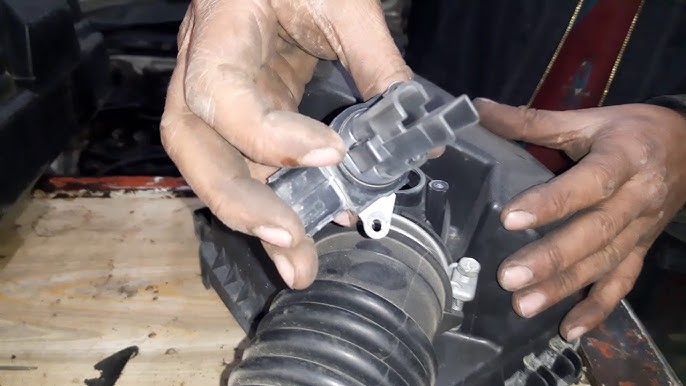
Step 7: Evaluate the mass airflow sensor
A contaminated MAF sensor may provide inaccurate airflow readings.
Cleaning the sensor with proper cleaner sometimes resolves the issue.
Avoid touching the sensor elements directly.
Step 8: Clear codes and perform a road test
After repairs or inspections, clear all stored codes.
Drive under various conditions:
Idle operation
City traffic
Moderate acceleration
Highway speed
Recheck for returning codes.
Skipping the road test often leads people to assume a problem is fixed when symptoms simply have not returned yet.
DIY Fixes Before Going to a Repair Shop
Many vehicle owners immediately prepare for expensive repairs after seeing the Toyota P1605 Code appear. The reality is that several low cost or no cost checks may resolve the issue before professional intervention becomes necessary.
The first DIY fix worth attempting is throttle body cleaning. Carbon accumulation is extremely common and can gradually disrupt airflow patterns. Cleaning the throttle body carefully may restore stable idle operation and improve engine response.
Another useful step involves performing an ECU reset procedure if appropriate for your model. Disconnecting battery power for a short period or using a scan tool reset can sometimes help clear learned values after maintenance or cleaning procedures.
Inspecting the air intake system should also become part of your routine checklist.
Look for:
Loose intake tubing
Cracked rubber connections
Disconnected hoses
Restricted airflow paths
Small issues in these areas are often overlooked.
A dirty engine air filter can contribute to airflow imbalance as well. Replacing a heavily restricted filter is inexpensive compared to replacing electronic components.
Many drivers make one expensive mistake.
They replace sensors immediately.
They replace throttle assemblies.
They replace fuel system components.
Only afterward do they discover that a simple cleaning procedure or intake leak caused the problem.
Starting with basic inspections reduces risk and prevents unnecessary spending.
Toyota P1605 Repair Cost in 2026
One of the first questions drivers ask after seeing the Toyota P1605 Code is simple: how much will this cost to fix?
The answer varies because P1605 itself does not identify a single failed component. Repair cost depends entirely on the underlying cause. Some fixes require basic maintenance procedures, while others involve major diagnostic work and parts replacement.
The good news is that many P1605 cases turn out to be relatively inexpensive. A dirty throttle body or intake issue may cost far less than many owners initially fear. The bad news is that misdiagnosis can quickly multiply expenses. Replacing parts based on assumptions instead of evidence often leads to unnecessary repair bills.
Below are estimated repair ranges for common causes associated with the Toyota P1605 Code in 2026:
| Issue | Estimated Repair Cost |
|---|---|
| Throttle body cleaning | $80 to $200 |
| Vacuum leak repair | $100 to $350 |
| Air filter replacement | $20 to $60 |
| MAF sensor cleaning | $20 to $80 |
| MAF sensor replacement | $150 to $400 |
| Fuel injector service | $150 to $500 |
| Fuel pump replacement | $400 to $1,000 |
| Wiring repair | $100 to $600 |
| ECM replacement | $800 to $2,000+ |
Labor rates can vary significantly depending on vehicle model, location, and whether repairs are completed at a dealership or independent repair facility.
One of the most painful situations owners experience is paying for multiple repairs without solving the original problem. Someone replaces a sensor. The light returns. Another component gets replaced. The light returns again.
That cycle often costs more than a proper diagnosis.
Investing in accurate troubleshooting at the beginning usually saves money in the long run.
Can You Drive With Toyota P1605 Code?
Technically, some vehicles can still be driven after the Toyota P1605 Code appears. The more important question is whether you should continue driving without investigating the cause.
If the vehicle only shows a Check Engine Light and drives normally, short trips may be possible while arranging diagnostics. Some drivers experience no immediate changes in engine performance.
However, that does not automatically mean the issue is harmless.
When symptoms become more severe, risk increases considerably.
Warning signs that deserve immediate attention include:
Engine stalling
Heavy vibration at idle
Significant power loss
Strong hesitation during acceleration
Hard starting conditions
Rapid RPM fluctuation
Repeated engine shutdowns
These symptoms can create safety concerns, especially in traffic or during highway driving.
Imagine approaching an intersection and suddenly losing engine response.
Imagine merging into traffic while acceleration becomes unpredictable.
Those situations create more than inconvenience.
They create risk.
Another issue involves secondary damage. Problems that begin as airflow or idle irregularities may gradually affect fuel efficiency, emissions performance, and engine operation if ignored over long periods.
Some drivers postpone repairs because the vehicle still appears drivable. Unfortunately, waiting too long sometimes turns a simple maintenance issue into a much larger repair.
When symptoms become noticeable, diagnosis should move higher on the priority list.
Frequently Asked Questions
Is Toyota P1605 serious?
The severity depends on the underlying cause. Some cases involve simple maintenance issues such as carbon buildup or throttle body contamination. Others may involve fuel delivery problems, electrical faults, or more significant drivability concerns. Symptoms determine urgency more than the code itself.
Can a weak battery trigger Toyota P1605?
Yes. Low battery voltage can create unstable electronic behavior and affect communication between vehicle systems. In some situations, weak voltage conditions contribute to irregular ECM calculations and abnormal engine operation.
Will Toyota P1605 clear itself?
The code may disappear temporarily if operating conditions return to normal. However, temporary disappearance does not mean the root cause has been resolved. If the issue remains, the code often returns later.
Does P1605 always mean ECM failure?
No. This is one of the most common misunderstandings. ECM replacement is usually considered only after other causes have been ruled out. Intake problems, airflow restrictions, sensor issues, and fuel system concerns are often far more common.
Can I fix Toyota P1605 myself?
Basic maintenance tasks such as throttle cleaning, air intake inspection, battery checks, and replacing a dirty air filter are reasonable DIY starting points. More advanced testing involving fuel pressure, wiring diagnosis, or ECM analysis may require professional equipment.
Conclusion
The Toyota P1605 Code can initially seem intimidating because it does not point directly to one failed component. That uncertainty causes many vehicle owners to make expensive assumptions and replace parts unnecessarily.
In reality, some of the most common causes include dirty throttle bodies, vacuum leaks, carbon buildup, unstable airflow conditions, battery issues, and sensor irregularities. Many of these problems can be identified through systematic troubleshooting rather than guesswork.
The most important takeaway is simple. Do not replace parts blindly.
Start with stored codes. Observe symptoms carefully. Inspect basic systems first. Follow a logical diagnostic process.
A small issue caught early often prevents larger repair costs later.
Have you experienced the Toyota P1605 Code on your Camry, Corolla, RAV4, Tacoma, Prius, or another Toyota model? Share your symptoms, mileage, and repair experience in the comments. Your experience may help another owner solve the problem faster.