Modern Mitsubishi vehicles are equipped with advanced safety technologies designed to make driving safer and more convenient. One of these features is the Forward Collision Mitigation (FCM) system, which helps detect potential frontal collisions and can warn the driver or automatically apply the brakes when necessary. However, if you suddenly see the message “FCM Service Required” appear on your dashboard, it can quickly become a source of concern.
Many Mitsubishi owners immediately wonder whether it is safe to continue driving, if the vehicle requires urgent repairs, or how much the problem might cost to fix. The good news is that this warning does not always indicate a major mechanical failure. In some cases, something as simple as dirt covering the front sensor or adverse weather conditions can temporarily affect the system’s performance. In other situations, the warning may point to issues involving the radar sensor, front camera, battery voltage, or the FCM control module itself.
Understanding what this warning means and knowing how to respond can help you avoid unnecessary repair expenses while ensuring that your vehicle’s critical safety features continue to function properly. In this guide, we will explain what the Mitsubishi FCM Service Required message means, explore the most common causes behind it, discuss whether it is safe to drive with the warning active, and provide practical steps to diagnose and resolve the issue effectively.
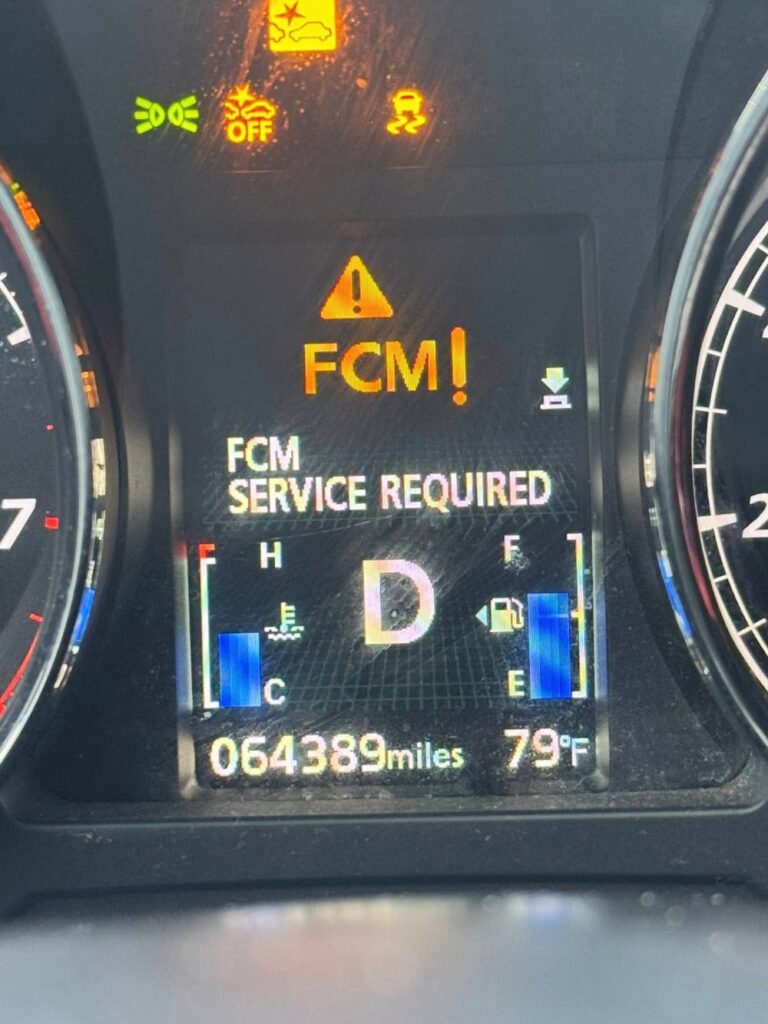
What Does “FCM Service Required” Mean on a Mitsubishi?
FCM stands for Forward Collision Mitigation, an advanced driver assistance system designed to help reduce the risk of front end collisions. Using a combination of radar sensors and a forward facing camera, the system continuously monitors the road ahead and calculates the distance between your vehicle and other objects in its path.
Under normal operating conditions, the FCM system works in three stages. First, it alerts the driver through visual and audible warnings when it detects a potential collision risk. If the driver does not react quickly enough, the system may provide brake assistance to help reduce stopping distance. In situations where an impact appears unavoidable, the vehicle can automatically apply the brakes to minimize the severity of the collision.
When the message “FCM Service Required” appears on the dashboard, it means the system has detected an abnormal condition that prevents it from functioning correctly. This warning does not necessarily indicate that the vehicle is unsafe to drive. However, it does mean that the Forward Collision Mitigation feature may be temporarily disabled until the underlying issue is resolved.
Drivers should understand that while the vehicle’s core driving functions usually remain unaffected, they may lose access to an important safety feature that provides an extra layer of protection during daily driving. Ignoring the warning for an extended period is not recommended, especially if it appears repeatedly or is accompanied by other warning lights.
Common Causes of the Mitsubishi FCM Service Required Warning
One of the most common reasons for the FCM warning is a dirty or obstructed sensor. Dust, mud, insects, snow, or heavy rain can interfere with the radar sensor’s ability to accurately detect objects ahead. In many cases, cleaning the affected area can restore normal system operation.
Adverse weather conditions can also trigger the warning message. Thick fog, intense sunlight, heavy rainfall, or snowstorms may temporarily limit the performance of the forward facing camera and radar system. Once weather conditions improve, the warning may disappear without requiring repairs.
Another possible cause is a misaligned or damaged radar sensor. This situation often occurs after a minor front end collision or improper repairs involving the front bumper. Even slight changes in sensor positioning can affect the accuracy of the system and activate the warning.
Problems involving the front camera assembly should also be considered. A malfunctioning camera, damaged wiring, or poor electrical connections can prevent the system from operating correctly. In these cases, professional diagnostic testing is usually required.
Many Mitsubishi owners are surprised to learn that a weak battery can contribute to FCM system errors. Modern safety systems rely on stable electrical voltage to function properly. If the battery is nearing the end of its lifespan, intermittent warning messages may occur.
Finally, software glitches or issues within the FCM control module itself can trigger the warning. Although these situations are less common, they may require system updates, recalibration procedures, or component replacement performed by qualified technicians.
Is It Safe to Drive with the FCM Service Required Warning?
In most situations, the answer is yes, but with caution.
The appearance of the FCM Service Required message does not usually mean that the engine, transmission, or braking system has failed. Most drivers can continue operating the vehicle normally while arranging for inspection and repairs. However, they should understand that the Forward Collision Mitigation system may no longer be available to provide automatic warnings or emergency braking assistance.
Without this safety feature functioning correctly, drivers must rely entirely on their own awareness and reaction time. This can increase stress during heavy traffic conditions and reduce the overall safety margin that advanced driver assistance technologies are designed to provide.
There are circumstances where immediate attention becomes more important. If the FCM warning appears alongside other dashboard alerts such as the Check Engine light, ABS warning light, or brake system warning, the vehicle should be inspected as soon as possible. Similarly, if unusual driving symptoms develop, including reduced braking performance or electrical irregularities, continuing to drive may not be advisable.
Ultimately, while the vehicle may remain operational, postponing diagnosis for an extended period is not a wise decision. Addressing the issue promptly can help restore the functionality of the system, maintain the intended level of safety, and potentially prevent more expensive repairs in the future.
How to Fix the Mitsubishi FCM Service Required Warning
If your Mitsubishi displays the FCM Service Required message, there are several troubleshooting steps you can perform before scheduling a service appointment. Some causes are minor and can be resolved quickly, while others may require professional diagnosis.
The first step is to turn the engine off and restart the vehicle after a few minutes. Temporary electronic glitches can occasionally trigger warning messages, and a system reboot may restore normal operation. Although this simple approach does not fix underlying hardware issues, it is often worth trying before moving on to more detailed inspections.
Next, inspect the windshield area where the forward facing camera is located. Dirt, condensation, ice, or stickers placed near the camera can obstruct its field of view. Carefully clean the windshield using appropriate glass cleaning products and ensure there are no objects interfering with the camera’s operation.
You should also examine the front radar sensor area. Depending on the Mitsubishi model, the sensor may be positioned behind the front grille or integrated into the front bumper. Remove any mud, debris, snow, or insect residue that could affect sensor performance. Use a soft cloth and avoid applying excessive pressure that could damage sensitive components.
Another important step involves checking the condition of the vehicle’s battery. A weak or aging battery can cause fluctuations in voltage that interfere with advanced safety systems. If you notice slow engine cranking, dim headlights, or multiple warning lights appearing simultaneously, having the battery tested may help identify the source of the problem.
If the warning remains active after completing these basic checks, using an OBD II diagnostic scanner can provide additional insight. Reading fault codes may help pinpoint whether the issue involves the radar sensor, camera module, communication network, or another electronic component within the FCM system.
When Should You Visit a Mitsubishi Service Center?
Although some FCM warnings result from temporary conditions, certain situations require professional attention. If the message persists for several days despite cleaning the sensors and restarting the vehicle, scheduling an inspection is strongly recommended.
Drivers should seek immediate assistance if the warning appears after a front end collision, even if the damage seems minor. The radar sensor used by the Forward Collision Mitigation system must maintain precise alignment to function correctly. Small shifts in sensor position can compromise accuracy and require specialized calibration equipment.
Professional service is also advisable when the FCM warning occurs alongside other dashboard alerts. Multiple warning lights may indicate broader electrical issues that extend beyond the collision mitigation system. Attempting to diagnose complex electronic faults without proper tools can lead to unnecessary part replacements and increased repair expenses.
During the inspection process, technicians may perform a variety of procedures depending on the identified fault. These procedures can include retrieving diagnostic trouble codes, testing sensor communication, recalibrating the radar system, updating software, repairing damaged wiring, or replacing defective components.
Choosing an authorized Mitsubishi service center offers additional advantages. Technicians trained specifically on Mitsubishi vehicles have access to manufacturer approved diagnostic equipment and technical service information. This expertise improves the likelihood of identifying the root cause accurately and resolving the issue efficiently.
How Much Does It Cost to Repair the FCM Service Required Warning?
The total cost of repairing an FCM related issue varies significantly depending on the underlying cause. In some cases, the solution may be simple and inexpensive. In others, replacement parts and calibration procedures can increase overall expenses.
If the warning is triggered by dirt or debris affecting the sensors, the only requirement may be a thorough cleaning. This represents the least expensive scenario and may not involve any repair charges at all if performed by the vehicle owner.
Battery related issues can range from a basic battery replacement to additional electrical system testing. Since modern driver assistance systems depend heavily on stable voltage, addressing battery concerns promptly may prevent recurring warning messages.
Radar sensor calibration is another potential expense. Following repairs involving the front bumper or sensor mounting points, recalibration ensures the system measures distances accurately. This procedure requires specialized equipment and trained personnel.
More significant costs arise when components such as the front camera, radar sensor, or associated control modules require replacement. These parts are sophisticated electronic devices designed to meet strict safety standards, which can make them relatively expensive compared to conventional vehicle components.
Because pricing differs according to vehicle model, geographic location, labor rates, and parts availability, obtaining a detailed estimate from a qualified service provider is always recommended. Early diagnosis can often reduce repair costs by preventing minor issues from developing into more complex problems.
How to Prevent the Mitsubishi FCM Service Required Warning
While not every FCM related problem can be avoided, regular maintenance and careful driving habits can significantly reduce the likelihood of encountering the Mitsubishi FCM Service Required warning.
One of the simplest preventive measures is keeping the windshield and front sensor areas clean. Since the Forward Collision Mitigation system relies on cameras and radar sensors to detect obstacles, even a thin layer of dirt, ice, or insect residue can affect performance. Regular washing and visual inspections can help ensure these components remain unobstructed.
Drivers should also exercise caution after any front end impact, regardless of how minor it may appear. A slight collision can alter the position of the radar sensor without causing obvious cosmetic damage. If your vehicle has been involved in an accident, it is wise to have the FCM system inspected and recalibrated if necessary.
Routine vehicle maintenance plays an equally important role. Monitoring battery health and replacing aging batteries before they fail can help maintain stable electrical performance. Since advanced safety technologies depend on consistent voltage levels, preventive battery care may reduce the risk of unexpected warning messages.
In addition, following the manufacturer’s recommended maintenance schedule allows technicians to identify potential issues before they become more serious. Early detection often leads to lower repair costs and improved reliability of the vehicle’s safety systems.
By taking these proactive steps, Mitsubishi owners can help preserve the effectiveness of the Forward Collision Mitigation system and enjoy greater confidence behind the wheel.
Frequently Asked Questions About Mitsubishi FCM Service Required
What does FCM Service Required mean on a Mitsubishi?
This warning indicates that the Forward Collision Mitigation system has detected a malfunction or is temporarily unable to operate correctly. As a result, the system’s collision warning and automatic braking functions may be limited or disabled until the issue is resolved.
Can I continue driving with the FCM Service Required warning?
In most cases, yes. The vehicle will usually continue to function normally, but the FCM system may no longer provide its intended safety assistance. Drivers should remain attentive and arrange for inspection as soon as possible, especially if other warning lights are present.
Will the warning disappear on its own?
It depends on the cause. If the warning is triggered by temporary factors such as heavy rain, snow accumulation, or a dirty sensor, it may disappear after conditions improve or the affected areas are cleaned. Persistent warnings generally require professional diagnosis.
How do I reset the FCM warning?
There is no universal reset procedure that permanently clears the warning without addressing the underlying issue. Restarting the vehicle may eliminate temporary faults, but recurring messages indicate that further inspection is necessary.
Does a weak battery affect the FCM system?
Yes. Low battery voltage can interfere with electronic safety systems and may contribute to intermittent FCM warnings. If the battery is aging or showing signs of failure, testing and replacement should be considered.
Is repairing an FCM issue expensive?
Repair costs vary depending on the source of the problem. Cleaning sensors may involve little to no expense, while replacing components such as radar sensors or front cameras can be considerably more costly. Obtaining an accurate diagnosis is the best way to determine expected repair expenses.
Conclusion
Seeing the Mitsubishi FCM Service Required message on your dashboard can be unsettling, particularly if you are unfamiliar with how the Forward Collision Mitigation system works. Fortunately, this warning does not always signal a serious mechanical failure. In many situations, the issue can be traced to temporary conditions such as dirty sensors, unfavorable weather, or minor electrical irregularities.
However, because the FCM system is designed to enhance driver safety and reduce the risk of frontal collisions, the warning should never be ignored indefinitely. Understanding the potential causes, recognizing when professional assistance is necessary, and taking prompt action can help restore the system’s functionality and maintain the protective features your Mitsubishi was engineered to provide.
Regular maintenance, routine inspections, and timely repairs are essential for ensuring that advanced driver assistance technologies continue to perform as intended. If your vehicle repeatedly displays the FCM Service Required warning despite basic troubleshooting efforts, consulting a qualified Mitsubishi technician is the most reliable course of action.
By addressing the problem early and staying informed about your vehicle’s safety systems, you can protect both your investment and the well being of everyone on board.