The Mercedes SOS Not Ready warning often surprises drivers because the vehicle may continue to run without any noticeable problems. Many owners think the message points to an engine fault. Others ignore it because the car still drives normally. However, this warning usually affects the emergency communication system instead of the powertrain. Even so, you should never ignore it because the system may fail when you need emergency assistance the most.
Mercedes designed the emergency call system to contact emergency services after a serious accident or whenever you press the SOS button. The system depends on several components to work correctly. These components include the telematics control unit, the GPS receiver, the cellular network, the roof antenna, and a backup power source. If one of these parts stops working correctly, the system cannot complete its startup process. As a result, the dashboard displays the Mercedes SOS Not Ready warning.
Several different problems can trigger this message. A weak battery is one of the most common causes. A recent battery replacement can also interrupt the system until it finishes its self check. In some cases, outdated software, poor cellular reception, or a failing backup battery creates the same warning. More serious faults may involve the telematics module, damaged wiring, or a defective antenna. For this reason, you should identify the real cause before replacing any parts.
This guide explains everything you need to know about the Mercedes SOS Not Ready warning. You will learn what the message means and why it appears. You will also discover whether it is safe to keep driving, how to diagnose the problem step by step, and which repair methods work best. By the end of this article, you will understand the warning with confidence and know how to restore your Mercedes emergency call system to normal operation.
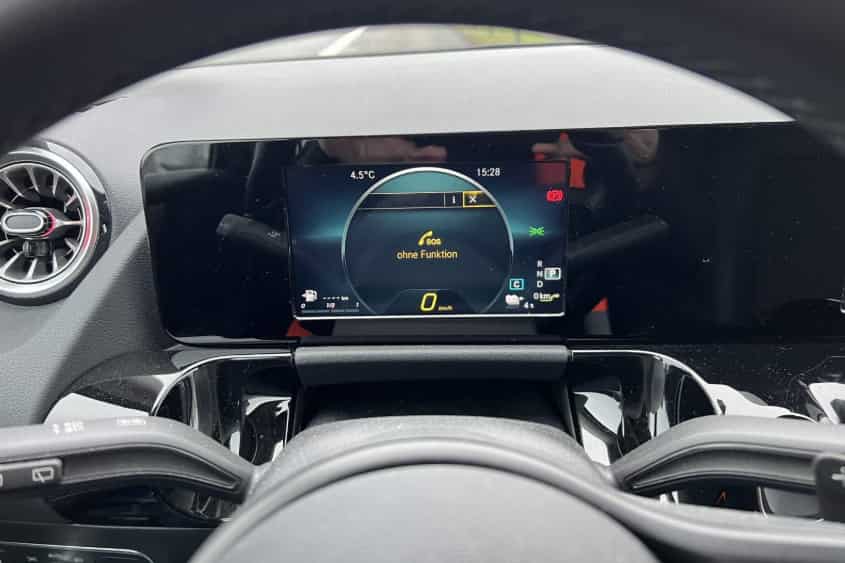
What Does Mercedes SOS Not Ready Mean?
The Mercedes SOS Not Ready warning means the vehicle cannot activate its emergency call system correctly. This message does not usually indicate a problem with the engine, transmission, or braking system. Instead, it shows that one or more components responsible for emergency communication failed to complete their startup check. As a result, the system cannot guarantee that it will contact emergency services if an accident occurs.
Every time you start your Mercedes, the emergency call system performs a quick self test. It checks the telematics control unit, GPS receiver, communication network, roof antenna, and backup power source. These components work together to send your vehicle’s location and establish a connection with emergency responders. If any part fails during this process, the system displays the Mercedes SOS Not Ready warning on the instrument cluster.
Several different issues can trigger this message. A weak main battery often causes low voltage during startup. A recently replaced battery may also interrupt the initialization process until all control modules synchronize correctly. In other cases, outdated software, poor cellular reception, damaged wiring, a faulty antenna, or a failing telematics control unit prevents the system from becoming fully operational. Although the warning looks the same in every situation, the underlying cause can vary from one vehicle to another.
Many drivers continue using their vehicles after seeing this warning because the car usually drives normally. However, the emergency call feature may remain unavailable until the fault is repaired. Understanding what Mercedes SOS Not Ready means helps you identify the problem more quickly, avoid unnecessary repairs, and choose the correct diagnostic procedure before replacing expensive components.
How the Mercedes Emergency Call System Works
The Mercedes emergency call system helps protect drivers and passengers during unexpected situations. It provides a direct connection to emergency services when a serious accident occurs or when the driver manually presses the SOS button. The system reduces response time by sharing important information with emergency operators as quickly as possible.
Several electronic components work together to make this feature reliable. The telematics control unit serves as the main control center. It communicates with the GPS receiver to determine the vehicle’s location and uses the cellular network to establish a connection with emergency services. The roof antenna strengthens signal reception, while the built in microphone and speakers allow clear communication between the occupants and the emergency operator.
The system also relies on a dedicated backup power source. This battery allows the emergency call function to continue operating even if the main vehicle battery becomes damaged during a collision. Because of this design, the system can still send critical information after a severe impact. It also performs automatic checks whenever you start the vehicle to confirm that every component works correctly.
If one part fails during the startup process, the system cannot complete its self check. It immediately records a fault and displays the Mercedes SOS Not Ready warning. The problem may involve low battery voltage, poor network communication, a damaged antenna, outdated software, or a faulty telematics control unit. Although the vehicle often continues to drive normally, the emergency call feature may not operate as intended until the fault is repaired.
Understanding how the emergency call system works makes it easier to identify the source of the warning. It also helps owners make informed repair decisions instead of replacing expensive components without proper diagnosis.
Can You Drive With the Mercedes SOS Not Ready Warning?
Yes, you can usually continue driving when the Mercedes SOS Not Ready warning appears. In most cases, the message does not affect the engine, transmission, steering, or braking system. Your Mercedes should continue to perform as expected during normal driving. However, the warning indicates that the emergency call system may not work if you need immediate assistance after an accident.
The biggest concern is the loss of an important safety feature. The emergency call system is designed to contact emergency services and share your vehicle’s location after a serious collision. If the system is not ready, it may fail to send this information. As a result, emergency responders could take longer to locate your vehicle, especially if the accident happens in a remote area or if the occupants cannot make a phone call.
You should also pay attention to other warning messages on the dashboard. If Mercedes SOS Not Ready appears together with battery, charging system, electrical system, or multiple communication warnings, the problem may involve a broader electrical fault. Low battery voltage, a failing alternator, or damaged wiring can affect several control modules at the same time. In this situation, you should inspect the vehicle as soon as possible instead of continuing to drive for an extended period.
If the warning appears by itself, you can usually drive the vehicle to your home, a trusted repair shop, or an authorized Mercedes service center. Until the problem is fixed, keep a fully charged mobile phone with you in case you need emergency assistance. You should also avoid ignoring the warning for weeks or months because a small electrical issue can develop into a more expensive repair over time.
Although the vehicle often remains safe to operate, the Mercedes SOS Not Ready warning should never become part of your normal driving routine. Diagnosing the fault early helps restore the emergency call system, protects an important safety feature, and prevents unnecessary repair costs in the future.
Common Causes of Mercedes SOS Not Ready
Several different issues can trigger the Mercedes SOS Not Ready warning. Although the message always looks the same, the underlying cause may vary depending on the model, production year, and vehicle condition. Identifying the real problem is the most important step because replacing parts without proper diagnosis often wastes both time and money. The following are the most common reasons why this warning appears.
Weak or Low 12 Volt Battery
A weak 12 volt battery is one of the most common causes of the Mercedes SOS Not Ready warning. Every time you start the vehicle, the emergency call system needs stable voltage to initialize all of its electronic components. If the battery cannot provide enough power, the telematics control unit may fail its startup check and display the warning message.
Battery voltage often drops as the battery ages. Cold weather, long periods without driving, and frequent short trips can also reduce battery performance. Some drivers first notice the warning after leaving the vehicle parked for several days. Others see it during winter when the battery experiences a heavier electrical load.
You may also notice slower engine cranking, dim interior lights, or additional battery related warnings on the dashboard. These symptoms often indicate that the battery can no longer maintain a stable voltage during startup.
Start by testing the battery with a professional battery tester instead of relying only on voltage readings. If the battery fails the test or has reached the end of its service life, replace it with the correct specification recommended for your Mercedes. After restoring proper battery performance, check whether the warning disappears during the next few drive cycles.
Faulty SOS Backup Battery
Many Mercedes models include a dedicated backup battery for the emergency call system. This small battery keeps the system operating if the main battery becomes disconnected or damaged during a serious collision. It plays an important role because emergency services must still receive the vehicle’s location even when the primary electrical system fails.
Like any rechargeable battery, the backup battery gradually loses capacity over time. Heat, repeated charging cycles, and normal aging eventually reduce its ability to hold a charge. When this happens, the emergency call system detects the fault during its self test and displays the Mercedes SOS Not Ready warning.
A failing backup battery rarely affects normal driving performance. The vehicle may start and operate without any noticeable problems. However, the emergency communication feature may not function correctly when it is needed most.
Many owners replace the main battery only to discover that the warning remains. This happens because the backup battery is a separate component with its own service life. A diagnostic scan can confirm whether the backup battery has failed before you replace any parts. Replacing the correct component saves money and restores the emergency call system more quickly.
Battery Replacement or Power Interruption
Many drivers notice the Mercedes SOS Not Ready warning shortly after replacing the main battery. Although this situation can be frustrating, it does not always indicate a faulty component. The warning often appears because several control modules need time to complete their initialization after power has been disconnected.
When the battery is removed, every electronic module loses power. Once the new battery is installed, the vehicle starts a series of internal checks. The telematics control unit must reconnect to the communication network, verify the GPS signal, and confirm that every related component is operating correctly. If this process does not finish successfully, the dashboard displays the warning message.
In some cases, the problem comes from an incorrect battery installation or a battery with the wrong capacity. Loose battery terminals can also interrupt the power supply and prevent the system from completing its startup sequence. Some Mercedes models may require battery registration or additional programming after a replacement. If this procedure is skipped, certain control modules may not function as expected.
If the warning appears immediately after a battery replacement, inspect the battery terminals and confirm that the correct battery has been installed. Drive the vehicle for several normal trips to allow the control modules to complete their self checks. If the message remains, perform a diagnostic scan to determine whether another fault is preventing the emergency call system from becoming ready.
Telematics Control Unit Failure
The telematics control unit is the central component of the Mercedes emergency call system. It manages communication between the vehicle, GPS satellites, and the cellular network. Without this module, the emergency call system cannot send location data or establish contact with emergency services.
Like any electronic control unit, the telematics module can develop internal faults over time. Heat, moisture, electrical voltage fluctuations, and normal component wear may damage its internal circuits. Software corruption or communication errors between control modules can also prevent the unit from operating correctly.
A faulty telematics control unit may trigger several symptoms in addition to the Mercedes SOS Not Ready warning. Some drivers experience problems with connected vehicle services, navigation features, or communication functions. In certain cases, multiple warning messages appear because other control modules cannot communicate with the telematics system.
Diagnosing this problem requires a Mercedes compatible diagnostic scanner that can access the communication modules. The scan results help determine whether the issue involves hardware failure, software errors, or a communication fault. Accurate diagnosis is essential because replacing the telematics control unit usually requires programming and vehicle specific coding before the new module can operate correctly.
Poor Cellular Signal or GPS Problems
The emergency call system depends on a stable cellular connection and accurate GPS data to operate correctly. If the system cannot detect your location or connect to the mobile network, it may display the Mercedes SOS Not Ready warning. This issue is often temporary, but it can also point to a deeper communication problem.
Drivers sometimes notice the warning after parking in an underground garage, driving through a tunnel, or traveling in a remote area with limited network coverage. In these situations, the system may recover automatically once the vehicle returns to an area with a stronger signal. However, the warning should disappear after the connection is restored.
If the message continues to appear in locations with good network coverage, the problem is probably not related to signal strength alone. A faulty communication module, damaged antenna, or software issue may prevent the system from connecting to the network. Testing the vehicle in different locations can help determine whether the warning is temporary or requires further diagnosis.
Damaged Roof Antenna
The roof antenna plays an important role in the emergency call system. It helps the vehicle receive GPS information and communicate through the cellular network. If the antenna or its wiring becomes damaged, the emergency call system may lose the connection required to complete its startup process.
Physical damage is one possible cause. Water entering through the roof, corrosion inside the antenna connector, or previous repair work can also affect signal quality. In some cases, drivers experience weak GPS accuracy, poor radio reception, or unreliable connected services before the Mercedes SOS Not Ready warning appears.
A visual inspection may reveal obvious signs of damage, but many antenna faults require professional testing. Technicians can measure signal strength and inspect the wiring between the antenna and the telematics control unit. Repairing the damaged connection often restores normal system operation without replacing additional components.
Blown Fuse or Electrical Wiring Issues
Every electronic system in a Mercedes depends on a reliable power supply. The emergency call system is no exception. If a fuse blows or the wiring develops a fault, the telematics control unit may lose power and fail its startup check.
Electrical problems can develop for several reasons. Moisture, vibration, damaged connectors, and previous repair work may interrupt the electrical circuit. Rodent damage can also affect wiring in some vehicles. Even a loose connector may prevent communication between control modules and trigger the warning message.
Start by checking the fuse that protects the emergency call system. Always use the fuse rating specified for your vehicle. If the replacement fuse fails again, do not continue replacing it because another electrical fault is likely present. A complete wiring inspection is the safest way to identify the source of the problem and prevent further damage.
Outdated Software or Control Module Errors
Modern Mercedes vehicles rely on software to manage communication between dozens of electronic control modules. If the telematics software becomes outdated or corrupted, the emergency call system may not complete its startup sequence. As a result, the Mercedes SOS Not Ready warning can appear even though every hardware component is working correctly.
Software related problems may occur after a battery replacement, an interrupted update, or an unexpected voltage drop. In some cases, the control module stores temporary fault codes that remain active until the system completes a successful diagnostic cycle. These faults may continue to trigger the warning even after the original issue has been resolved.
A Mercedes compatible diagnostic scanner can identify software errors and communication faults within the control modules. If an update is available, installing the latest software may restore normal operation without replacing any hardware. For this reason, technicians usually verify the software version before recommending expensive parts such as a telematics control unit or antenna.
How to Diagnose Mercedes SOS Not Ready Step by Step
Finding the real cause of the Mercedes SOS Not Ready warning requires a systematic approach. Since several different faults can trigger the same message, checking one component at a time helps eliminate unnecessary repairs. The following steps can help you identify the problem before replacing expensive parts.
Step 1. Restart the Vehicle
Begin with a complete restart. Turn off the engine, remove the key if your model uses one, and lock the vehicle. Wait a few minutes before starting the engine again. This process allows the control modules to shut down completely and perform a fresh startup sequence.
If the warning disappears and does not return after several trips, the issue may have been a temporary communication error. If it returns every time you start the vehicle, continue with the next step.
Step 2. Check the Main Battery
A weak battery is one of the most common causes of this warning. Inspect the battery terminals for corrosion or loose connections. If the battery is several years old, test its condition with a professional battery tester.
Pay attention to other signs of low voltage. Slow engine cranking, dim lights, or multiple electrical warnings often indicate that the battery can no longer provide stable power during startup.
Step 3. Look for Additional Warning Messages
The Mercedes SOS Not Ready warning rarely appears alone when a major electrical problem exists. Check the instrument cluster for messages related to the charging system, battery, navigation, communication, or electrical system.
Multiple warnings often point to a shared electrical fault instead of an isolated problem with the emergency call system. Recording every warning message before diagnosis can save valuable time.
Step 4. Test the Vehicle in an Open Area
Poor network coverage can sometimes interrupt the emergency call system. Move the vehicle to an open location with a clear view of the sky. Drive for several minutes and allow the system to reconnect to the cellular network and GPS satellites.
If the warning disappears, poor signal reception was the likely cause. If it remains in different locations, another component probably requires inspection.
Step 5. Review Recent Repairs
Think about any recent work performed on the vehicle. Battery replacement, windshield installation, roof repairs, accident repairs, or electrical modifications can all affect the emergency call system.
Even small mistakes such as a loose connector or damaged wiring may prevent the telematics control unit from completing its self check. Identifying when the warning first appeared often provides an important clue during diagnosis.
Step 6. Inspect the Fuse and Wiring
Locate the fuse that protects the emergency call system by using the owner’s manual or the fuse diagram for your specific model. Replace a blown fuse only with one that has the correct rating.
If the fuse blows again, stop the inspection and investigate the electrical circuit. Repeated fuse failures usually indicate a wiring fault or a component drawing excessive current.
Step 7. Perform a Diagnostic Scan
If the warning remains after the basic checks, connect a Mercedes compatible diagnostic scanner. A standard OBD scanner may read engine faults, but it often cannot access the telematics control unit or communication modules.
A complete diagnostic scan can identify stored fault codes, communication errors, antenna problems, software faults, and backup battery failures. This information helps determine the exact cause before any parts are replaced.
Step 8. Confirm the Repair
After repairing the fault, clear the stored diagnostic codes and restart the vehicle. Drive the car through several normal driving cycles to confirm that the Mercedes SOS Not Ready warning does not return.
If the message appears again, perform another diagnostic scan. A recurring warning usually indicates that the original problem has not been fully resolved or that more than one fault is present.
How to Fix Mercedes SOS Not Ready
Fixing the Mercedes SOS Not Ready warning starts with identifying the real cause. The same message can appear for several different reasons, so replacing parts without proper testing often leads to unnecessary costs. A systematic approach helps restore the emergency call system more quickly and prevents repeated repairs.
Begin by checking the condition of the main battery. Low voltage is one of the most common reasons the emergency call system fails to complete its startup process. Test the battery with a professional battery tester and replace it if it no longer meets the manufacturer’s specifications. After installing a healthy battery, restart the vehicle and check whether the warning disappears.
If the main battery is in good condition, inspect the SOS backup battery. Many Mercedes models use a separate backup battery to power the emergency call system during an accident. A worn backup battery can trigger the warning even when the main battery works normally.
Next, inspect the electrical system for loose connectors, damaged wiring, or blown fuses. Small electrical faults can interrupt communication between the telematics control unit and other control modules. Repair any damaged connections before replacing expensive components.
Software problems can also prevent the system from operating correctly. Use a Mercedes compatible diagnostic scanner to check for stored fault codes and available software updates. Installing the latest software may resolve communication errors without replacing any hardware.
If the warning remains after completing these checks, the telematics control unit or roof antenna may require professional testing. These components should only be replaced after confirming the fault through a complete diagnostic scan. Accurate diagnosis saves time, reduces repair costs, and restores the Mercedes SOS Not Ready system safely and effectively.
Mercedes SOS Not Ready Repair Cost
The cost to repair the Mercedes SOS Not Ready warning depends on the actual cause of the problem. Some repairs are simple and inexpensive, while others require specialized diagnostic equipment or replacement electronic modules. Getting an accurate diagnosis before replacing parts is the best way to avoid unnecessary expenses.
If a weak main battery triggers the warning, the repair cost is usually limited to battery testing or replacement. A failing SOS backup battery is another common issue and typically costs less to repair than replacing a major control module. These repairs are often completed in a single service visit.
Electrical problems can increase the total cost. Damaged wiring, loose connectors, or water intrusion require additional inspection because technicians must locate the exact point of failure before making repairs. Although this process takes more time, it prevents unnecessary replacement of components that still function correctly.
Software related faults are often less expensive than hardware failures. In many cases, updating or reprogramming the telematics system restores normal operation without replacing any parts. However, if the telematics control unit has failed internally, replacement becomes the most expensive repair. The new module usually requires programming and configuration before it can communicate with the vehicle.
Labor rates also vary by location and repair facility. An authorized Mercedes service center may charge more than an independent specialist, but both should perform a complete diagnostic scan before recommending repairs. Comparing repair estimates and confirming the fault code can help you make a more informed decision and reduce the overall cost of fixing the Mercedes SOS Not Ready warning.
How to Prevent Mercedes SOS Not Ready
Although you cannot prevent every electronic fault, regular maintenance can significantly reduce the risk of seeing the Mercedes SOS Not Ready warning. Taking care of the vehicle’s electrical system helps the emergency call system operate reliably and lowers the chance of unexpected communication problems.
Start by keeping the main battery in good condition. Replace an aging battery before it becomes too weak to supply stable voltage during startup. If you do not drive your Mercedes often, consider using a battery maintainer to keep the battery fully charged. This simple step helps protect many electronic control modules, including the emergency call system.
Pay attention to warning messages as soon as they appear. A small electrical issue can become a larger and more expensive problem if you continue driving without inspection. Early diagnosis often prevents damage to other components and reduces repair costs.
Protect the vehicle from water intrusion whenever possible. Check the condition of the roof, windshield seals, and sunroof drains during routine maintenance. Moisture can damage wiring, connectors, and communication modules that support the emergency call system.
Keep your vehicle software up to date whenever Mercedes releases new updates for your model. Software improvements can resolve communication errors, improve system stability, and reduce the risk of false warning messages.
Finally, avoid installing aftermarket electrical accessories without proper wiring. Devices such as dash cameras, tracking systems, or audio equipment can interfere with the vehicle’s electrical network if they are installed incorrectly. Following these maintenance practices helps keep the Mercedes SOS Not Ready warning from returning and ensures that the emergency call system remains ready when you need it most.
Frequently Asked Questions
What does Mercedes SOS Not Ready mean?
The Mercedes SOS Not Ready warning means the emergency call system cannot complete its startup process. The vehicle usually remains drivable, but the system may not contact emergency services during an accident until the fault is repaired.
Can I drive with the Mercedes SOS Not Ready warning?
Yes, you can usually continue driving if this is the only warning on the dashboard. However, the emergency call feature may not work when you need it. If other electrical or battery warnings appear at the same time, have the vehicle inspected as soon as possible.
Can a weak battery cause Mercedes SOS Not Ready?
Yes. A weak or failing 12 volt battery is one of the most common causes of this warning. Low voltage can prevent the telematics control unit from completing its startup check.
Why did the warning appear after replacing the battery?
The system may need time to complete its initialization after power has been disconnected. If the warning does not disappear after several drive cycles, the vehicle may require a diagnostic scan to check for stored fault codes or additional electrical problems.
How do I reset Mercedes SOS Not Ready?
There is no universal reset procedure for this warning. Restarting the vehicle may clear a temporary communication error, but a permanent fault requires proper diagnosis and repair. Clearing the warning without fixing the underlying problem usually provides only a temporary result.
Does Mercedes SOS Not Ready affect vehicle performance?
No. In most cases, the warning does not affect engine performance, steering, braking, or transmission operation. It only indicates that the emergency communication system is not fully available.
How much does it cost to fix Mercedes SOS Not Ready?
The repair cost depends on the source of the problem. A battery replacement or software update is usually less expensive than replacing a telematics control unit. A complete diagnostic scan is the best way to determine the required repair and avoid unnecessary expenses.
When should I visit a Mercedes specialist?
Visit a qualified Mercedes technician if the warning remains after basic checks, returns repeatedly, or appears together with other electrical warnings. Professional diagnostic equipment can identify the exact fault and recommend the correct repair.
Conclusion
The Mercedes SOS Not Ready warning does not always indicate a serious mechanical problem, but it should never be ignored. In most cases, the message appears because the emergency call system cannot complete its startup process. Common causes include a weak main battery, a failing backup battery, damaged wiring, poor communication signals, outdated software, or a faulty telematics control unit.
The good news is that many of these problems can be diagnosed without replacing expensive parts. Starting with the battery, checking the electrical system, and performing a complete diagnostic scan often leads to the correct solution. Taking a systematic approach not only reduces repair costs but also prevents unnecessary component replacement.
Although your Mercedes will usually continue to drive normally, the emergency call system may not be available until the fault is repaired. Restoring this feature is important because it can help emergency responders reach you more quickly after a serious accident.
If the Mercedes SOS Not Ready warning remains after basic troubleshooting, schedule an inspection with a qualified Mercedes specialist. An accurate diagnosis is the fastest way to identify the source of the problem and restore full system functionality.
We hope this guide has helped you understand the meaning of the Mercedes SOS Not Ready warning and the best ways to diagnose and fix it. If you found this article useful, consider sharing it with other Mercedes owners who may experience the same issue. It could save them valuable time, unnecessary repair costs, and a great deal of frustration.