Few dashboard warnings are as frustrating as seeing the “Blind Spot Assist Inoperative” message appear unexpectedly in your Mercedes-Benz. Whether you’re commuting through city traffic or driving on the highway, this warning can leave you wondering if your vehicle is still safe to drive, whether the problem is temporary, or if you’re facing an expensive repair bill.
Blind Spot Assist is one of Mercedes-Benz’s most valuable Advanced Driver Assistance Systems (ADAS). Using radar sensors mounted behind the rear bumper, it continuously monitors adjacent lanes and alerts you when another vehicle enters your blind spot. On models equipped with Active Blind Spot Assist, the system can even provide corrective braking to help prevent a collision if you begin changing lanes while another vehicle is alongside you.
When the system becomes inoperative, these safety features are temporarily disabled. While your Mercedes-Benz remains drivable in most situations, you lose an important layer of protection that helps reduce the risk of side-impact accidents during lane changes.
The good news is that the warning does not always indicate a major mechanical failure. In many cases, the issue is caused by something relatively simple, such as dirty radar sensors, heavy rain, low battery voltage, or a software glitch. However, it can also point to more serious problems, including a faulty radar sensor, damaged wiring, or a malfunctioning control module.
In this comprehensive guide, you’ll learn exactly what the Mercedes Benz Blind Spot Assist Inoperative warning means, the most common causes behind it, practical troubleshooting steps you can perform yourself, estimated repair costs, and when it’s time to seek professional diagnosis. By understanding the root cause before replacing expensive components, you can often save both time and money while restoring your vehicle’s safety systems to full operation.
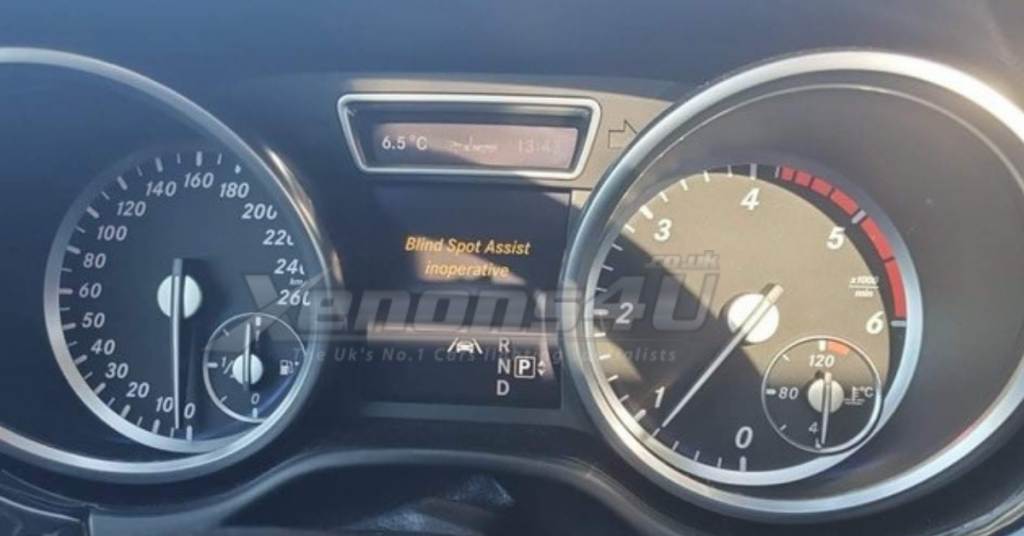
What Does “Blind Spot Assist Inoperative” Mean?
The Mercedes Benz Blind Spot Assist Inoperative message means that the vehicle’s blind spot monitoring system is currently unavailable or has detected a fault that prevents it from operating correctly. When this warning appears, the system may stop monitoring vehicles approaching from the rear or traveling beside your car.
Under normal conditions, Blind Spot Assist uses radar sensors located behind the rear bumper to detect vehicles in areas that may not be clearly visible through the side mirrors. When another vehicle enters one of these monitored zones, a warning light usually appears in the corresponding side mirror. If you activate the turn signal while a vehicle is still in the blind spot, the system may also provide an audible warning.
When the system becomes inoperative, these alerts may no longer appear. On vehicles equipped with Active Blind Spot Assist, corrective braking or steering support may also be disabled. This does not necessarily mean that the entire vehicle is unsafe or undrivable. However, it does mean that the driver must rely fully on mirrors, shoulder checks, and careful lane changing until the problem is resolved.
The warning can appear for temporary or permanent reasons. Temporary causes may include heavy rain, snow, ice, road dirt, or mud covering the radar sensor area. In these situations, the message may disappear after the sensors are cleaned or environmental conditions improve.
Permanent faults are more likely when the warning remains active after restarting the vehicle or returns repeatedly during normal driving. These problems may involve a failed radar sensor, damaged wiring, low battery voltage, software errors, or incorrect calibration after bumper repairs.
Drivers should not assume that the radar sensor itself has failed without proper diagnosis. Replacing a sensor can be expensive, and many warning messages are caused by simpler electrical or environmental issues. A systematic inspection can help identify the real cause before unnecessary parts are ordered.
How Mercedes Blind Spot Assist Works
Mercedes Blind Spot Assist is designed to help drivers identify vehicles that may be difficult to see when changing lanes. The system typically relies on short range radar sensors installed behind the left and right sides of the rear bumper.
While the vehicle is moving, these sensors continuously scan the areas beside and slightly behind the car. The system analyzes the speed, distance, and direction of nearby vehicles to determine whether they are entering a monitored blind spot zone.
If another vehicle is detected, a red or yellow warning symbol may illuminate in the relevant exterior mirror. The exact color and behavior of the warning light can vary depending on the Mercedes model, model year, and system version.
When the driver activates the turn signal toward an occupied lane, the warning may become more urgent. The mirror indicator may flash, and an audible alert may sound inside the cabin. This is intended to draw the driver’s attention before the lane change is completed.
Active Blind Spot Assist adds another layer of protection. If the system determines that a lane change could create a collision risk, it may apply braking force to selected wheels. This intervention is designed to guide the vehicle back toward its original lane. The driver remains responsible for controlling the vehicle at all times.
Several components must communicate correctly for Blind Spot Assist to function. These may include:
- Rear radar sensors
- Blind spot control modules
- Exterior mirror warning indicators
- Wheel speed sensors
- Steering angle sensors
- Electronic Stability Program components
- The vehicle’s central communication network
- Relevant driver assistance software
A fault in any connected component can cause the system to become unavailable. For example, a weak battery may reduce system voltage, a damaged bumper may interfere with radar transmission, or a communication error may prevent the control module from receiving accurate vehicle speed information.
This is why the Mercedes Benz Blind Spot Assist Inoperative warning should be treated as a system level issue rather than proof that one specific sensor needs replacement.
Common Causes of Mercedes Benz Blind Spot Assist Inoperative
Several conditions can trigger the Blind Spot Assist warning. Some are minor and can be corrected at home, while others require professional diagnostic equipment.
1. Dirty or Blocked Radar Sensor Areas
Dirt, road salt, mud, wax, ice, or snow can block the radar signals used by the system. Since the sensors are usually hidden behind the rear bumper, drivers may not realize that the detection area is contaminated.
A blocked sensor may cause the warning to appear temporarily, especially after driving on wet, muddy, or salted roads. Cleaning the outer surface of the rear bumper with water and a soft cloth may restore normal operation.
Avoid using abrasive products or applying thick stickers near the radar zones. Metallic materials can interfere with radar transmission.
2. Heavy Rain, Snow, or Fog
Severe weather can reduce radar performance. Heavy rain, dense snow, ice buildup, and road spray may prevent the sensors from accurately identifying nearby vehicles.
In these conditions, the system may switch itself off to avoid providing incorrect warnings. The message may disappear after the weather improves and the sensors become clean and dry.
A temporary warning during extreme weather does not always indicate a damaged component. However, repeated warnings in clear conditions should be investigated.
3. Low Battery Voltage
Modern Mercedes-Benz vehicles depend on stable electrical voltage to operate numerous control modules. If the main battery is weak, discharged, or nearing the end of its service life, driver assistance systems may be among the first features to display warning messages.
Low voltage can cause communication faults, incorrect sensor readings, or temporary module shutdowns. The vehicle may still start normally while storing voltage related fault codes.
A battery test should include resting voltage, starting performance, and charging system output. Simply measuring the voltage immediately after driving may not reveal a weak battery.
4. Weak Auxiliary Battery
Some Mercedes models use an auxiliary battery or voltage converter to support electronic systems. A failure in this circuit may trigger several warnings, including messages related to Blind Spot Assist, collision prevention, parking assistance, or other safety systems.
An auxiliary battery fault should be confirmed through a diagnostic scan. Replacing parts without checking stored codes may not solve the problem.
5. Faulty Radar Sensor
The radar sensor itself can fail because of internal electronic damage, water intrusion, age, manufacturing defects, or impact damage. A failed sensor may stop communicating with the vehicle or produce implausible readings.
Common signs include a warning that remains active during every trip, diagnostic codes linked to one side of the vehicle, and no response after cleaning and restarting the car.
Radar sensor replacement can be costly. Calibration or programming may also be required after installation.
6. Damaged Wiring or Connectors
Wiring behind the rear bumper is exposed to moisture, road debris, corrosion, and accident damage. A loose connector, broken wire, or corroded terminal can interrupt communication between the radar sensor and the control module.
The problem may be intermittent. The warning may appear after rain, while driving over rough roads, or when temperatures change.
A visual inspection can identify obvious damage, but advanced testing may require continuity checks, voltage measurements, and a Mercedes compatible diagnostic scanner.
7. Blown Fuse
A blown fuse may cut power to the radar sensor or driver assistance control unit. However, fuses usually fail because of an underlying electrical problem, such as a short circuit or water damaged connector.
Replacing a fuse without identifying the cause may only provide a temporary solution. If the new fuse fails again, the circuit should be inspected professionally.
Fuse locations differ by model and production year. Owners should use the correct fuse chart for their specific vehicle.
8. Software or Communication Errors
Mercedes vehicles use multiple electronic modules that exchange data through communication networks. A temporary software error or lost communication signal can disable Blind Spot Assist even when the radar hardware is functioning correctly.
In some cases, turning the vehicle off, locking it, and restarting it later may clear a temporary error. Persistent communication faults may require software updates, module programming, or professional diagnosis.
9. Rear Bumper Damage
Even minor rear bumper damage can affect radar operation. A low speed impact may shift the sensor bracket, crack a mounting point, damage wiring, or change the sensor angle.
The bumper does not need to show major cosmetic damage for the radar alignment to be affected. If the warning appeared after a collision, parking impact, or bumper removal, calibration should be considered.
10. Incorrect Sensor Calibration
Radar sensors must be positioned at precise angles. If a sensor is replaced, moved, or disturbed during body repairs, the system may require calibration.
Incorrect alignment can cause false warnings, missed detections, or an inoperative message. Calibration typically requires specialized targets, level flooring, accurate measurements, and compatible diagnostic equipment.
11. Improper Bumper Repair or Replacement
Aftermarket bumpers, thick paint layers, body filler, metallic coatings, or incorrectly installed brackets can interfere with radar signals. A replacement bumper may look correct while still preventing the system from working properly.
Repair shops should confirm that the bumper material, sensor mounts, and paint thickness are compatible with the radar system.
12. Control Module Failure
A driver assistance control module may fail because of internal electrical problems, water intrusion, voltage spikes, or software corruption. Module failure is less common than contamination, battery issues, or wiring faults, but it can be expensive to repair.
Before replacing a control module, a technician should verify power supply, ground connections, network communication, and sensor operation. Some replacement modules require coding or programming before the system can function.
Symptoms You May Notice
The Mercedes Benz Blind Spot Assist Inoperative warning is often accompanied by additional symptoms that can help identify the underlying problem. While some vehicles display only a dashboard message, others may exhibit multiple driver assistance system faults at the same time. Recognizing these symptoms can make the diagnostic process much more efficient.
The most obvious symptom is the warning message displayed in the instrument cluster or infotainment screen. Depending on the model and year, the message may appear immediately after starting the vehicle or while driving. In some cases, it disappears after restarting the engine but returns after several minutes.
Another common symptom is the absence of the blind spot warning light in the exterior mirrors. Under normal operation, the mirror icon illuminates whenever another vehicle enters your blind spot. If the system is disabled, the mirror indicators remain off even when traffic is clearly present beside the vehicle.
Drivers may also notice that no audible warning is triggered during lane changes. Normally, activating the turn signal while another vehicle occupies the blind spot causes the system to issue an alert. When Blind Spot Assist is inoperative, this feature is unavailable.
Vehicles equipped with Active Blind Spot Assist may lose automatic braking intervention during unsafe lane changes. Although the vehicle continues to drive normally, one of its important active safety features is no longer available.
Some Mercedes-Benz models display multiple warnings simultaneously because several driver assistance systems share common sensors and communication networks. It is not unusual to see messages such as Collision Prevention Assist Inoperative, Active Lane Keeping Assist Inoperative, Parking Assist Limited, or Distronic Unavailable alongside the Blind Spot Assist warning.
Intermittent operation is another important symptom. The warning may appear only during rainy weather, after driving through snow, or when the vehicle has been parked overnight. Once conditions improve, the system may begin working again without any repairs. This behavior often suggests sensor contamination or environmental interference rather than permanent hardware failure.
Electrical issues can produce additional symptoms. Drivers may notice slow engine cranking, multiple warning lights after startup, or random electronic malfunctions if the battery voltage is unstable. Since Mercedes vehicles rely heavily on electronic communication, even a slight voltage drop can trigger faults across several control modules.
Ignoring these symptoms may allow a minor issue to develop into a more expensive repair. Paying attention to when the warning appears, how often it occurs, and whether it is accompanied by other system alerts provides valuable information for troubleshooting.
DIY Troubleshooting Guide
Before scheduling an appointment at a dealership, there are several troubleshooting steps you can safely perform yourself. These checks require minimal tools and can often resolve temporary issues without replacing any parts.
Begin by cleaning the rear bumper thoroughly. The radar sensors are mounted behind the bumper cover, so dirt, mud, road salt, wax residue, or snow accumulation can interfere with radar signals. Wash both corners of the rear bumper using clean water and a microfiber cloth. Avoid using abrasive brushes or high pressure water directly against sensor locations.
After cleaning the vehicle, restart the engine and take a short drive at moderate speed. Many temporary faults disappear once the sensors regain a clear signal.
Next, inspect the rear bumper for visible damage. Even a minor parking impact may shift a radar sensor or damage its mounting bracket without leaving significant cosmetic damage. Look for cracked plastic, loose trim, uneven panel gaps, or evidence of previous repairs.
Check the condition of the vehicle’s battery. If the battery is several years old or has recently discharged, low system voltage may be responsible for the warning. Using a digital multimeter, a healthy battery should typically measure around 12.6 volts with the engine off and between 13.7 and 14.7 volts while the engine is running. Values outside these ranges may indicate battery or charging system problems.
If available, connect an OBD II scanner capable of reading Mercedes-Benz manufacturer specific diagnostic codes. Generic scanners often detect only emission related faults, while professional diagnostic tools can access the Advanced Driver Assistance Systems module and identify communication errors, radar faults, or calibration issues.
Inspect the relevant fuses according to your owner’s manual or fuse diagram. Replace only a blown fuse with one of the correct amperage. If the replacement fuse fails immediately, discontinue troubleshooting and seek professional diagnosis, as an electrical short circuit may be present.
Review any recent work performed on the vehicle. If the rear bumper was removed, painted, or replaced, the radar sensors may require recalibration. Likewise, if the battery was disconnected or replaced, certain control modules may need to complete a system initialization procedure before normal operation resumes.
Finally, perform a road test in favorable weather conditions. Drive above the minimum operating speed specified for your model, typically on a multi lane road with surrounding traffic. If the warning disappears and the mirror indicators function normally, the issue may have been temporary. If the warning persists, professional diagnosis is recommended.
Following these steps in order helps eliminate simple causes before investing in costly repairs. Many owners discover that a thorough cleaning or battery replacement restores the system without replacing expensive radar components.
Mercedes Models Commonly Affected
The Blind Spot Assist Inoperative warning can appear on nearly every modern Mercedes-Benz equipped with radar based driver assistance technology. Although the root causes are generally similar, certain models tend to experience specific issues more frequently because of their design, component placement, or electrical architecture.
The C Class is one of the most commonly reported models. Owners frequently encounter warning messages caused by contaminated radar sensors, weak batteries, or communication faults between driver assistance modules. Vehicles used in regions with heavy rain, snow, or salted roads may experience these issues more often.
The E Class shares many electronic systems with higher end Mercedes models and occasionally develops software related communication faults. Older vehicles may also experience wiring deterioration or auxiliary battery problems that trigger multiple driver assistance warnings simultaneously.
The S Class incorporates one of the most advanced ADAS packages in the Mercedes lineup. While the technology provides exceptional safety, it also depends on numerous sensors working together flawlessly. A fault in one component may disable several assistance systems at once, making professional diagnostics especially important.
GLC owners commonly report Blind Spot Assist warnings following minor rear bumper damage. Because the radar sensors are positioned behind the bumper corners, even low speed parking incidents can affect sensor alignment or mounting brackets.
The GLE and GLS frequently experience battery related issues, particularly as the vehicles age. Since these luxury SUVs contain a large number of electronic modules, declining battery performance may trigger multiple warning messages before obvious starting problems develop.
Compact models such as the CLA, GLA, GLB, and A Class also use radar based blind spot monitoring systems. Although generally reliable, these vehicles may require sensor recalibration after collision repairs or bumper replacement. Improper paint thickness or non original replacement parts can also interfere with radar performance.
AMG models equipped with high performance driver assistance packages are subject to the same types of failures. However, because these vehicles often include additional electronic features, diagnosing communication faults may require manufacturer specific diagnostic equipment.
Regardless of the model, the diagnostic approach remains largely the same. Begin with the simplest possibilities, including sensor contamination and battery condition, before progressing to wiring inspections, software updates, radar calibration, or component replacement. This methodical process minimizes unnecessary repair costs and significantly improves the likelihood of identifying the true source of the problem.
Mercedes Blind Spot Assist Repair Costs
One of the first questions most Mercedes-Benz owners ask after seeing the Blind Spot Assist Inoperative warning is how much the repair will cost. Unfortunately, there is no single answer because the final expense depends on the root cause, the vehicle model, labor rates in your area, and whether genuine Mercedes-Benz parts are required.
The least expensive repairs usually involve routine maintenance rather than replacing components. If dirt, road salt, or debris is blocking the radar sensors, cleaning the rear bumper may restore normal operation without any additional cost. Many owners are surprised to learn that a simple wash can eliminate the warning after driving in harsh weather conditions.
If the problem is related to a weak battery, replacing the main battery is often a relatively affordable solution. Mercedes-Benz vehicles rely on stable voltage for all electronic control modules, and a failing battery can trigger multiple driver assistance warnings before it completely loses its ability to start the engine.
Diagnostic testing is typically the next step if the warning remains after basic troubleshooting. A Mercedes-Benz dealership or an independent European repair specialist will use manufacturer compatible diagnostic equipment to retrieve fault codes, monitor live sensor data, and determine whether the issue is electrical, mechanical, or software related. Paying for a professional diagnosis is often worthwhile because it prevents unnecessary replacement of expensive components.
Radar sensor replacement is among the more costly repairs. The sensor itself is a precision electronic device that requires accurate positioning and communication with multiple control modules. After installation, most Mercedes models also require radar calibration to ensure the sensor measures surrounding traffic correctly. Skipping this procedure may cause inaccurate warnings or continued system faults.
If wiring damage is discovered, repair costs depend on the location and severity of the problem. Corroded connectors, damaged harnesses, or broken wires hidden behind the rear bumper generally require more labor than replacing an easily accessible component.
Control module replacement is usually reserved for situations where all other possible causes have been eliminated. Since these modules often require software programming and coding, they represent one of the most expensive repair scenarios.
The following table provides estimated repair costs that owners may encounter.
| Repair | Estimated Cost (USD) |
|---|---|
| Radar sensor cleaning | $0 to $50 |
| Professional diagnostic scan | $80 to $200 |
| Main battery replacement | $180 to $450 |
| Auxiliary battery replacement | $120 to $350 |
| Fuse replacement | $20 to $60 |
| Wiring repair | $150 to $700 |
| Radar calibration | $250 to $600 |
| Radar sensor replacement | $500 to $1,500 |
| Control module replacement | $800 to $2,500 |
These figures are general estimates and may vary depending on your Mercedes-Benz model and your local labor rates. Luxury models equipped with more advanced ADAS technology often require additional calibration procedures, increasing the overall repair cost.
Whenever possible, begin with the simplest and least expensive inspections before authorizing major repairs. Cleaning the sensors, testing the battery, and performing a complete diagnostic scan can often save hundreds or even thousands of dollars.
Can You Continue Driving?
In most situations, the answer is yes. A Mercedes Benz Blind Spot Assist Inoperative warning does not usually mean the vehicle is unsafe to drive or that an immediate mechanical failure is about to occur. The engine, transmission, steering, and braking systems generally continue operating normally.
However, the warning does indicate that one of your vehicle’s important driver assistance features is unavailable. Without Blind Spot Assist, your Mercedes-Benz can no longer monitor adjacent lanes or alert you when another vehicle is traveling in your blind spot. If your vehicle is equipped with Active Blind Spot Assist, automatic braking intervention during unsafe lane changes may also be disabled.
This means the driver must assume full responsibility for checking mirrors, performing shoulder checks, and carefully observing surrounding traffic before changing lanes. Extra caution is especially important when driving on busy highways, during heavy traffic, or in poor weather conditions where visibility may already be reduced.
Although occasional temporary warnings caused by rain or dirt are generally not considered emergencies, persistent warnings should not be ignored. Continuing to drive for weeks or months without diagnosing the problem increases the risk that a minor issue, such as a weak battery or damaged connector, could develop into a more expensive repair.
There are situations where professional inspection should be arranged as soon as possible. These include repeated warning messages after every engine start, multiple driver assistance systems becoming inoperative at the same time, warning lights accompanied by charging system problems, or the appearance of the warning immediately after a collision or rear bumper repair.
If the vehicle also displays messages related to Electronic Stability Program, ABS, steering assistance, or braking systems, the issue may extend beyond Blind Spot Assist alone. In these cases, it is advisable to minimize unnecessary driving until the vehicle has been inspected by a qualified technician.
For most owners, the safest approach is to continue driving cautiously while arranging a diagnostic appointment at the earliest convenient opportunity. Addressing the issue promptly helps maintain the effectiveness of your vehicle’s advanced safety systems and reduces the likelihood of more extensive repairs later.
How to Prevent Blind Spot Assist Problems
While some failures are unavoidable, many Blind Spot Assist Inoperative warnings can be prevented through regular maintenance and careful vehicle care. Since the system relies on sensitive radar technology and stable electronic communication, small preventive measures can significantly improve long term reliability.
The most important habit is keeping the rear bumper clean. Dirt, mud, road salt, snow, and ice can accumulate over the radar sensor locations, reducing their ability to detect nearby vehicles accurately. Washing the vehicle regularly is especially important during winter or after driving on muddy roads.
Avoid attaching decorative accessories, bumper stickers, metallic trim, or protective films over the radar sensor areas. Even thin materials may interfere with radar signals and affect system performance.
Maintaining a healthy battery is equally important. Mercedes-Benz vehicles contain numerous electronic control modules that depend on consistent voltage. Replacing an aging battery before it begins to fail can prevent a wide range of electronic warning messages, including Blind Spot Assist faults.
If your vehicle has been involved in a rear end collision, even a minor parking impact, inspect the bumper carefully. Small impacts can shift radar sensor brackets or alter sensor alignment without causing visible body damage. If the bumper has been removed or replaced, verify that the repair facility performs the required radar calibration before returning the vehicle.
Choose repair shops that are experienced with Mercedes-Benz Advanced Driver Assistance Systems. Proper calibration requires specialized equipment and manufacturer specific procedures. An incorrectly aligned sensor may continue producing warning messages even after new parts have been installed.
Regular diagnostic scans can also identify developing problems before they become serious. During routine maintenance, ask your technician to check for stored fault codes, software updates, and battery health. Detecting minor communication or voltage issues early is often far less expensive than waiting until multiple systems begin to malfunction.
Finally, pay attention to warning messages instead of dismissing them. Temporary faults may clear on their own, but repeated warnings usually indicate an underlying issue that deserves investigation. Addressing the problem promptly not only protects your investment but also ensures that your Mercedes-Benz continues to deliver the advanced safety performance it was engineered to provide.
Frequently Asked Questions
Why does my Mercedes say “Blind Spot Assist Inoperative”?
This warning appears when the Blind Spot Assist system detects a condition that prevents it from operating correctly. Common causes include dirty radar sensors, heavy rain or snow, a weak battery, damaged wiring, software issues, or a faulty radar sensor. A professional diagnostic scan is the most reliable way to determine the exact cause.
Is it safe to drive with Blind Spot Assist Inoperative?
In most cases, yes. Your Mercedes-Benz remains fully drivable because the warning affects a driver assistance feature rather than the engine, transmission, or braking system. However, you will no longer receive blind spot alerts or active lane change assistance, so you should use extra caution when changing lanes.
Can a low battery cause Blind Spot Assist to stop working?
Yes. Mercedes-Benz vehicles rely on stable battery voltage to power numerous electronic control modules. A weak or aging battery can trigger communication errors that disable Blind Spot Assist and other ADAS features. Battery testing should always be part of the diagnostic process.
Can I reset Blind Spot Assist myself?
Sometimes. If the warning is caused by temporary sensor obstruction or a minor software glitch, turning off the engine, locking the vehicle for several minutes, and restarting it may clear the message. Cleaning the radar sensor areas can also restore normal operation. Persistent warnings usually require professional diagnosis.
Where are the Blind Spot Assist sensors located?
On most Mercedes-Benz models, the radar sensors are mounted behind the left and right corners of the rear bumper. Because they are hidden behind the bumper cover, they are protected from direct impact but remain susceptible to dirt buildup, moisture, and collision damage.
Does rain or snow affect Blind Spot Assist?
Yes. Heavy rain, snow, ice, fog, or road spray can temporarily reduce radar performance. Under these conditions, the system may disable itself to avoid inaccurate vehicle detection. Once the weather improves and the sensors are clean, the warning often disappears automatically.
How much does it cost to repair Blind Spot Assist?
Repair costs vary depending on the underlying problem. Cleaning the sensors may cost little or nothing, while replacing a radar sensor and performing calibration can cost over one thousand dollars. Accurate diagnosis is essential to avoid replacing parts unnecessarily.
Will replacing the battery fix the warning?
Only if low voltage is the actual cause. While a new battery resolves many electronic issues, replacing it without proper testing may not eliminate the warning if the problem lies with the radar sensor, wiring, or control module.
Does a new radar sensor require calibration?
Yes. In most Mercedes-Benz models, installing a new radar sensor requires electronic calibration using specialized diagnostic equipment. Without proper calibration, the system may continue displaying warning messages or fail to detect surrounding vehicles accurately.
Can I replace the radar sensor myself?
Although it is physically possible on some models, it is generally not recommended. After installation, the sensor must be programmed and calibrated according to Mercedes-Benz specifications. Without the proper equipment, the system may not function correctly, making professional installation the safer choice.
Conclusion
The Mercedes Benz Blind Spot Assist Inoperative warning should never be ignored, but it also should not cause unnecessary panic. In many situations, the problem is relatively minor and can be traced to dirty radar sensors, harsh weather, low battery voltage, or temporary software issues. More serious faults, such as damaged wiring, failed radar sensors, or defective control modules, are less common but require professional diagnosis and repair.
The most effective approach is to begin with the simplest inspections. Clean the rear bumper around the radar sensor locations, check the condition of the battery, inspect the vehicle for signs of recent impact damage, and perform a comprehensive diagnostic scan before replacing any components. This step-by-step process not only reduces repair costs but also helps ensure that the true cause of the warning is identified.
If the warning remains after basic troubleshooting or is accompanied by additional driver assistance system errors, schedule an inspection with a qualified Mercedes-Benz technician. Modern ADAS systems are highly integrated, and accurate diagnosis often requires manufacturer-specific tools and calibration equipment.
Keeping your Blind Spot Assist system in proper working condition is about more than eliminating a dashboard warning. It restores one of your vehicle’s most valuable safety features, helping you make safer lane changes and reducing the risk of collisions in everyday driving.
If you’ve experienced the Mercedes Benz Blind Spot Assist Inoperative warning, share your experience, the symptoms you noticed, and the repair that ultimately solved the problem. Your insights may help other Mercedes-Benz owners diagnose similar issues more quickly and confidently.