Seeing the “Mazda i-Activsense System Malfunction” warning message on your dashboard can be an unsettling experience. Modern Mazda vehicles rely on advanced safety technologies to help drivers avoid collisions, maintain lane awareness, and improve overall driving confidence. When these systems suddenly stop working, many owners immediately worry about expensive repairs or serious vehicle problems.
However, an i-Activsense system malfunction does not always mean that a major component has failed. In many cases, the warning can be triggered by simple issues such as a dirty sensor, blocked camera view, poor weather conditions, or a weak battery. Other situations may involve more complex problems, including radar misalignment, camera calibration errors, electrical faults, or damaged safety system components.
Understanding the reason behind this warning is important because i-Activsense controls several driver assistance features, including Smart Brake Support, Mazda Radar Cruise Control, Lane Keep Assist, and Blind Spot Monitoring. Ignoring the problem may leave important safety features unavailable when you need them most.
This guide explains what the Mazda i-Activsense System Malfunction warning means, the most common causes, the symptoms to look for, how to diagnose the issue, possible fixes, and the expected repair costs. By the end, you will have a clearer understanding of whether you can safely continue driving or need professional assistance.
What Is Mazda i-Activsense?
Mazda i-Activsense is a group of advanced safety technologies. It helps drivers detect risks and avoid possible accidents. The system does not replace the driver. Instead, it provides intelligent support during daily driving.
The technology uses cameras, radar sensors, and control modules. These components monitor the area around the vehicle. They collect information about nearby cars, pedestrians, road markings, and possible obstacles.
When i-Activsense detects a potential danger, it can warn the driver. Some features can also provide automatic assistance. The level of support depends on the driving situation and vehicle model.
Mazda i-Activsense includes several important safety features. These include Smart Brake Support, Mazda Radar Cruise Control, Lane Departure Warning, Lane Keep Assist, Blind Spot Monitoring, and Rear Cross Traffic Alert.
Each feature has a specific purpose. Smart Brake Support helps reduce the risk of front collisions. It can warn the driver and provide braking assistance in certain situations. Mazda Radar Cruise Control helps maintain a safe distance from the vehicle ahead.
Lane Keep Assist and Lane Departure Warning help drivers stay aware of their lane position. Blind Spot Monitoring provides alerts when another vehicle enters an area that may be difficult to see.
Many i-Activsense features depend on shared sensors and electronic systems. Because of this, one problem can affect several safety functions at the same time.
For example, a blocked camera may prevent the system from reading road markings correctly. A radar sensor issue may affect adaptive cruise control and collision warning features.
Understanding how Mazda i-Activsense works makes it easier to identify problems. When a malfunction appears, drivers can check possible causes before assuming there is a serious failure.
What Does Mazda i-Activsense System Malfunction Mean?
The “Mazda i-Activsense System Malfunction” warning means that one or more safety assistance features cannot operate normally. The vehicle detects a problem with the system and temporarily limits certain functions.
This warning does not always mean that a major component has failed. In many cases, the issue is caused by simple conditions. A dirty sensor, poor weather, or a blocked camera view can affect how the system works.
Mazda i-Activsense depends on accurate information from multiple sensors. If the system cannot receive reliable data, it may disable some features as a safety measure. This prevents the vehicle from making incorrect decisions based on inaccurate sensor information.
There are two main types of i-Activsense malfunctions. The first type is a temporary malfunction. This usually happens because of external conditions. Heavy rain, snow, fog, dust, or direct sunlight can reduce sensor performance. The warning may disappear after conditions improve.
The second type is a permanent malfunction. This can happen when a component has a physical problem. Examples include a damaged radar sensor, incorrect camera calibration, wiring issues, or control module faults.
When this warning appears, several safety features may become unavailable. These can include Smart Brake Support, Mazda Radar Cruise Control, Lane Keep Assist, and other driver assistance systems.
Drivers should not ignore the warning, especially if it appears frequently. A temporary issue may only require cleaning the sensors or restarting the vehicle. However, repeated warnings may indicate a deeper problem that needs professional diagnosis.
Understanding the meaning of this warning helps Mazda owners take the right action. Instead of immediately replacing expensive parts, drivers can identify the possible cause and choose the correct solution.
Common Symptoms of Mazda i-Activsense System Malfunction
A Mazda i-Activsense System Malfunction can appear in different ways. Some drivers notice a warning message immediately after starting the vehicle. Others may experience problems while driving. The symptoms often depend on the cause of the malfunction.
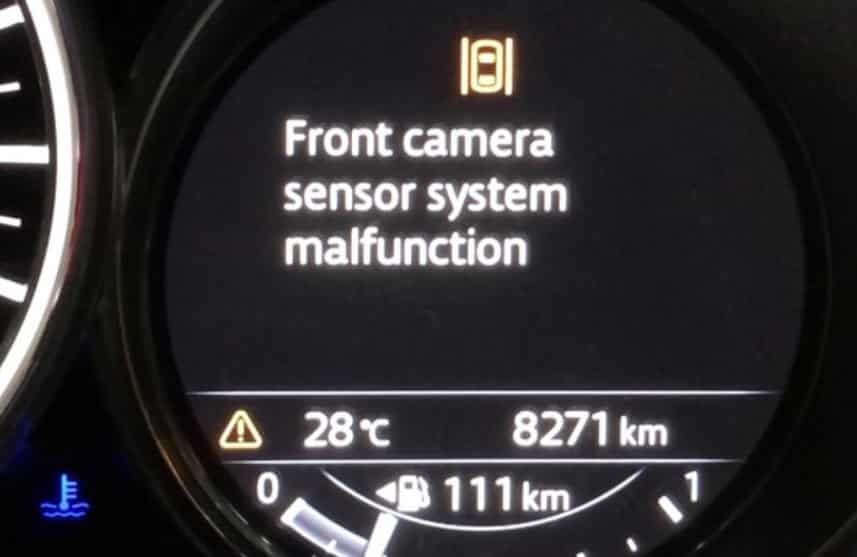
The most common sign is a warning message on the dashboard. Drivers may see messages such as “i-Activsense System Malfunction,” “Smart Brake Support Malfunction,” or “Front Radar Sensor System Malfunction.” These messages indicate that the vehicle has detected an issue with its safety technology.
Another common symptom is the sudden loss of driver assistance features. Functions such as Mazda Radar Cruise Control, Lane Keep Assist, or Smart Brake Support may stop working. The vehicle may display a message stating that these features are temporarily unavailable.
Some owners may also notice that multiple warning lights appear at the same time. This can happen when several systems depend on the same electrical connection or control module. A weak battery or unstable voltage can sometimes create multiple warnings.
An intermittent warning is another possible symptom. The message may appear during certain weather conditions and disappear later. For example, heavy rain or strong sunlight can temporarily affect camera and radar performance.
Changes in system behavior can also indicate a problem. Adaptive cruise control may fail to maintain distance properly. Lane assistance features may stop providing alerts. Automatic braking assistance may become unavailable.
The severity of these symptoms can vary. A dirty sensor may only require cleaning. However, repeated warnings may point to a more serious issue involving sensors, wiring, calibration, or electronic components.
Recognizing these symptoms early helps Mazda owners respond quickly. Proper diagnosis can prevent unnecessary repairs and ensure that important safety features return to normal operation.
Common Causes of Mazda i-Activsense System Malfunction
A Mazda i-Activsense System Malfunction can happen for many reasons. Some causes are simple and easy to fix. Others require professional inspection and specialized equipment. Understanding the common causes can help drivers avoid unnecessary repairs.
Sensor and Camera Problems
One of the most common reasons for an i-Activsense warning is a blocked or dirty sensor. Mazda safety systems depend on accurate information from radar sensors and cameras. When these components cannot detect the road environment correctly, the system may temporarily disable certain features.
The front radar sensor is especially important for functions such as Mazda Radar Cruise Control and Smart Brake Support. Dirt, mud, snow, ice, or road debris can reduce its ability to detect objects. A simple cleaning may restore normal operation in many cases.
The forward sensing camera can also cause problems. This camera is usually located near the top of the windshield. It helps the vehicle recognize lane markings, vehicles, and other objects. A dirty windshield, fog, stickers, or objects blocking the camera area can affect system performance.
Weather conditions can create temporary malfunctions as well. Heavy rain, thick fog, snow, and strong sunlight may reduce sensor accuracy. In these situations, the warning may disappear after visibility improves.
Electrical and Software Issues
Electrical problems are another common cause of i-Activsense malfunctions. Modern Mazda vehicles rely on stable electrical power to operate cameras, sensors, and control modules. A weak battery can create unstable voltage and trigger safety system warnings.
Many owners notice i-Activsense warnings after a battery replacement or battery disconnection. The system may need time to relearn settings or may require additional diagnosis if the warning remains.
Loose wiring connections can also interrupt communication between components. Damaged wires, corrosion, or moisture inside connectors may prevent sensors from sending accurate information to the vehicle computer.
Software errors can also affect system operation. The i-Activsense system communicates with different control modules inside the vehicle. A communication error may cause safety features to become temporarily unavailable.
Repair or Vehicle Modification Issues
Some i-Activsense problems appear after vehicle repairs. Windshield replacement is a common example. If the forward sensing camera is not recalibrated after a windshield change, the system may not recognize objects or lane markings correctly.
Front bumper repairs can also create problems. The radar sensor is often mounted behind the front grille or bumper area. Even a small impact can change the sensor position and affect accuracy.
Vehicle modifications may also interfere with i-Activsense. Incorrectly installed accessories, aftermarket parts, or objects placed near sensors can block detection areas.
Damaged Sensors or Control Modules
In some cases, the problem comes from a damaged component. Radar sensors, cameras, and electronic control modules can fail due to physical damage, water exposure, or internal faults.
Replacing these parts should not be the first step. A proper diagnosis is important because many warnings are caused by simpler issues. Cleaning, calibration, electrical testing, or software updates may solve the problem without replacing expensive components.
Finding the correct cause is the key to fixing a Mazda i-Activsense System Malfunction. A careful inspection helps owners save money and restore important safety features as quickly as possible.
Is It Safe to Drive With Mazda i-Activsense System Malfunction?
Seeing a Mazda i-Activsense System Malfunction warning can make drivers question whether their vehicle is still safe to use. In most cases, the vehicle can still be driven if the main systems, such as the engine, brakes, and steering, are working normally.
However, drivers should understand that some safety assistance features may no longer be available. The warning usually means that the vehicle has disabled certain technologies because it cannot guarantee accurate operation.
When i-Activsense is not working correctly, features such as Smart Brake Support, Mazda Radar Cruise Control, Lane Keep Assist, and other driver assistance systems may become unavailable. These systems are designed to support the driver, but they are not a replacement for careful driving.
Drivers should adjust their habits when this warning appears. Maintain a greater following distance from other vehicles. Avoid depending on adaptive cruise control or automatic braking assistance. Pay closer attention to lane position and surrounding traffic.
The situation may be different when other warning lights appear together. A brake warning light, ABS warning, steering warning, or multiple electrical alerts may indicate a more serious issue. In these cases, the vehicle should be inspected as soon as possible.
It is also important to consider driving conditions. Poor weather can reduce the effectiveness of cameras and sensors. If the malfunction appears during heavy rain, snow, or fog, waiting until conditions improve may help confirm whether the issue is temporary.
A Mazda i-Activsense System Malfunction does not always require an emergency stop. However, it should not be ignored for a long time. The system provides important safety support, and restoring it quickly helps maintain the vehicle’s full protection.
If the warning remains after cleaning sensors or restarting the vehicle, professional diagnosis is the best next step. A technician can identify whether the issue involves a sensor, electrical system, calibration, or another component.
How to Diagnose Mazda i-Activsense System Malfunction
Finding the exact cause of a Mazda i-Activsense System Malfunction requires a careful inspection. The warning message only shows that the system has detected a problem. It does not always identify the damaged component.
The first step is checking the exact warning message on the dashboard. Different messages can point to different areas of the system. For example, a radar sensor warning may require a different solution than a forward sensing camera warning.
The next step is inspecting the sensor areas. The front radar sensor should be checked for dirt, mud, snow, ice, or physical damage. The windshield area around the forward sensing camera should also be clean and clear.
Cleaning the sensor areas is a simple test that can solve many temporary issues. After cleaning, turn the vehicle off and restart it. Some warnings disappear once the system can collect accurate information again.
Battery condition should also be checked. A weak battery can create unstable voltage and affect electronic safety systems. Testing the battery voltage can help determine whether the electrical system is contributing to the problem.
The next diagnostic step is scanning the vehicle for trouble codes. A basic OBD scanner may detect general faults. However, professional ADAS diagnostic equipment can provide more detailed information from safety system modules.
Recent repairs should also be reviewed. If the warning appeared after a windshield replacement, bumper repair, battery change, or collision, the repair work may be related to the malfunction.
Calibration is another important part of diagnosis. Radar sensors and cameras must be correctly aligned to work properly. A small change in sensor position can affect how the vehicle detects objects and road markings.
A complete diagnosis prevents unnecessary part replacement. Many owners replace expensive sensors before checking simple causes such as dirt, battery problems, or calibration issues. A proper inspection helps identify the real problem and leads to a more effective repair.
How to Fix Mazda i-Activsense System Malfunction
Fixing a Mazda i-Activsense System Malfunction depends on the actual cause of the problem. Some issues can be solved at home with simple checks. Other problems require professional tools and technical knowledge.
The first solution is checking and cleaning the sensor areas. The front radar sensor and forward sensing camera need a clear view to work correctly. Remove dirt, dust, snow, ice, or other objects that may block the sensors.
The windshield area near the camera should also be cleaned carefully. Even a small amount of dirt or moisture can affect camera performance. After cleaning, restart the vehicle and check whether the warning message disappears.
A simple vehicle restart can sometimes resolve temporary system errors. Turn off the ignition and wait for a few minutes before starting the vehicle again. This allows the electronic modules to restart and reconnect.
Battery testing is another important step. A weak battery can cause unusual electrical behavior in modern vehicles. If the battery cannot maintain stable voltage, replacement may restore normal operation.
Some i-Activsense issues require sensor calibration. Radar sensors and cameras must be accurately positioned to measure distances and identify objects correctly. Calibration may be necessary after windshield replacement, bumper repairs, or minor collisions.
Electrical repairs may also be needed. Technicians may inspect wiring connections, connectors, and control modules. Damaged wires or poor connections can interrupt communication between safety system components.
Software updates can solve some system communication problems. Mazda vehicles use multiple electronic modules that must work together. Updated software may improve system reliability in certain situations.
Sensor replacement should only happen after proper diagnosis. Radar sensors and cameras can be expensive components. Replacing them without confirming the real cause may lead to unnecessary costs.
The best repair approach starts with the simplest solutions first. Cleaning sensors, checking battery health, and reviewing recent repairs can often reveal the problem. When the issue involves calibration or electronic components, professional service is the safest option.
How to Reset Mazda i-Activsense System Malfunction
Many Mazda owners search for a way to reset the i-Activsense System Malfunction warning. In some situations, a simple reset can remove a temporary error. However, resetting the system does not always fix the actual cause of the problem.
The first step is to safely park the vehicle and turn off the ignition. Wait for a few minutes before starting the engine again. This allows the vehicle’s electronic modules to shut down and restart.
Before restarting the vehicle, check the sensor areas. Clean the front radar sensor and the area around the forward sensing camera. Remove any dirt, snow, ice, or objects that may block the system.
After cleaning the sensors, drive the vehicle under normal conditions. The system may restore itself if the warning was caused by temporary conditions such as poor visibility or sensor blockage.
Some drivers try disconnecting the battery to reset the warning. This method may clear temporary electronic errors, but it is not a guaranteed solution. If the problem comes from a damaged sensor, calibration issue, or wiring fault, the warning will usually return.
A diagnostic scan may be required when the warning remains active. Professional scan tools can identify stored fault codes and show which part of the system needs attention.
In some cases, the system needs calibration rather than a simple reset. Radar sensors and cameras must be correctly aligned to provide accurate information. A reset cannot correct a sensor that is physically misaligned.
The best approach is to treat a reset as a troubleshooting step, not a complete repair. If the warning disappears and does not return, the issue may have been temporary. If it appears again, further inspection is recommended.
Understanding the difference between a reset and a real repair helps Mazda owners avoid repeated problems. It also prevents unnecessary replacement of expensive i-Activsense components.
Mazda i-Activsense System Malfunction Repair Cost
The repair cost for a Mazda i-Activsense System Malfunction depends on the cause of the problem. Some issues are simple and inexpensive to fix. Others can become costly when sensors, cameras, or electronic modules need replacement.
A basic inspection is usually the first expense. Technicians need to identify the source of the warning before recommending repairs. The diagnostic cost can vary depending on the repair shop, equipment used, and vehicle model.
Cleaning the radar sensor or camera area is the cheapest solution. Many temporary warnings are caused by dirt, snow, or blocked sensor views. In these cases, the repair may require little or no cost.
Battery-related problems are also relatively affordable compared with sensor repairs. A weak battery can create unstable electrical conditions. Replacing the battery may solve the warning if low voltage was the main cause.
Sensor calibration usually costs more because it requires specialized equipment. Radar sensors and cameras must be adjusted precisely. This process is often needed after windshield replacement, bumper repairs, or collision damage.
Replacing a radar sensor or forward sensing camera can be significantly more expensive. These components contain advanced technology and often require additional calibration after installation.
Windshield replacement can also affect i-Activsense operation. If the forward sensing camera is mounted near the windshield, the system may need recalibration after the glass is replaced.
Several factors influence the final repair cost. The Mazda model, vehicle year, damaged component, labor rates, and parts availability can all affect the price.
Owners should avoid replacing expensive parts without proper diagnosis. A warning message does not always mean the sensor itself has failed. A professional inspection can identify whether the problem is caused by a simple cleaning issue, electrical fault, calibration problem, or component failure.
Understanding potential repair costs helps Mazda owners make better decisions. Starting with accurate diagnosis is the best way to avoid unnecessary expenses while restoring the vehicle’s safety features.
Mazda Models That Use i-Activsense System
Mazda i-Activsense is available across many Mazda models. However, the exact features and hardware can vary depending on the vehicle year, trim level, and market. Some models use different sensor layouts or updated versions of the safety system.
The Mazda CX-5 is one of the most popular models equipped with i-Activsense technology. Many CX-5 vehicles include features such as Smart Brake Support, Mazda Radar Cruise Control, Lane Departure Warning, and Blind Spot Monitoring. Because of its large number of vehicles on the road, CX-5 owners often search for solutions related to i-Activsense warnings.
The Mazda CX-30 also uses i-Activsense as part of its standard safety technology. Its compact design includes advanced driver assistance features that depend on cameras and sensors. Issues involving blocked cameras or sensor errors can affect several functions at the same time.
The Mazda CX-50 features newer safety technology with updated versions of Mazda driver assistance systems. Like other Mazda SUVs, it relies on accurate sensor information for collision prevention and driving support features.
The Mazda CX-90 includes advanced i-Activsense features designed for a larger premium SUV platform. Its safety systems use multiple electronic components that must communicate correctly to provide reliable assistance.
The Mazda3 is another model that commonly uses i-Activsense technology. Depending on the model year and trim level, owners may have access to features such as adaptive cruise control, lane assistance, and automatic emergency braking.
The Mazda6 also uses i-Activsense on many versions. Although production and availability vary by market, many vehicles include similar camera and radar based safety functions.
When diagnosing an i-Activsense malfunction, the vehicle model is an important factor. Different Mazda models may use different sensor locations, software versions, and calibration procedures.
Knowing the specific Mazda model helps technicians identify possible causes more quickly. It also helps owners find more accurate information about common problems and repair solutions.
How to Prevent Future i-Activsense Problems
Preventing Mazda i-Activsense problems starts with regular care and proper vehicle maintenance. These safety systems depend on accurate sensor information. Small issues can affect performance if they are ignored for too long.
Keeping the sensors clean is one of the easiest ways to prevent warnings. The front radar sensor and forward sensing camera need a clear view to work correctly. Regularly remove dirt, dust, snow, and other debris from these areas.
Maintaining a healthy battery is also important. Modern Mazda vehicles use many electronic systems at the same time. A weak battery can create unstable voltage and affect safety features. Regular battery checks can help prevent unexpected warnings.
Drivers should avoid blocking sensor areas with accessories or objects. Stickers, covers, and incorrectly installed equipment can interfere with camera or radar operation. Any modification near these components should be completed carefully.
Proper repair procedures are also essential. After windshield replacement, bumper repair, or front end damage, the i-Activsense system may require calibration. Choosing a repair facility with ADAS calibration equipment can help ensure accurate system operation.
Vehicle owners should also respond quickly when warning messages appear. A temporary issue may become more complicated if the cause is ignored. Early inspection can prevent further damage and reduce repair costs.
Regular maintenance helps keep Mazda safety technology working properly. Simple actions such as cleaning sensors, checking battery condition, and using qualified repair services can improve system reliability.
A well maintained i-Activsense system provides better protection for both the driver and passengers. Since these technologies are designed to support safer driving, keeping them in good condition is an important part of vehicle ownership.
Frequently Asked Questions
Why does my Mazda say i-Activsense System Malfunction?
A Mazda i-Activsense System Malfunction warning appears when the vehicle detects a problem with its driver assistance system. Common causes include dirty sensors, blocked cameras, weak battery voltage, calibration problems, or electrical issues.
Can I drive with a Mazda i-Activsense System Malfunction?
In most cases, you can continue driving if the engine, brakes, and steering systems work normally. However, some safety features may be unavailable. Drive carefully and avoid relying on systems such as adaptive cruise control or automatic braking assistance until the issue is fixed.
Can a weak battery cause Mazda i-Activsense warnings?
Yes. A weak battery can create unstable voltage and affect electronic control systems. Since i-Activsense depends on multiple electronic components, low voltage may trigger warning messages.
How do I reset Mazda i-Activsense System Malfunction?
You can try a basic reset by turning off the vehicle, waiting a few minutes, and restarting it. Cleaning the radar sensor and camera area may also help. If the warning returns, a diagnostic scan may be required.
Does windshield replacement affect Mazda i-Activsense?
Yes. The forward sensing camera is often mounted near the windshield area. After windshield replacement, the camera may require calibration to ensure accurate detection of vehicles, lanes, and obstacles.
Why does my Mazda i-Activsense warning disappear and come back?
An intermittent warning is often caused by temporary conditions. Weather, sensor blockage, battery issues, or unstable electrical connections can make the warning appear and disappear.
How much does Mazda i-Activsense repair cost?
The cost depends on the cause of the malfunction. Cleaning sensors may cost very little, while radar replacement, camera replacement, or calibration can be more expensive.
Do I need to visit a Mazda dealer for i-Activsense problems?
Not always. Some independent repair shops have ADAS diagnostic and calibration equipment. However, complex sensor problems may require technicians with Mazda specific knowledge.
Can I replace an i-Activsense sensor myself?
Replacing an i-Activsense sensor is usually not recommended as a DIY repair. Many components require calibration after installation. Incorrect setup can affect system accuracy and safety.
Will cleaning the sensors fix Mazda i-Activsense System Malfunction?
Cleaning can fix some temporary problems caused by dirt, snow, or blocked sensor areas. However, it will not solve issues related to damaged components, wiring problems, or calibration errors.
Conclusion
A Mazda i-Activsense System Malfunction warning does not always mean there is a serious problem with your vehicle. In many cases, the cause can be simple, such as a dirty sensor, blocked camera, poor weather conditions, or a weak battery.
However, the warning should not be ignored. The i-Activsense system supports important safety features, including collision warning, adaptive cruise control, lane assistance, and automatic braking support. When these systems stop working, your vehicle may lose valuable driver assistance functions.
The best way to solve a Mazda i-Activsense System Malfunction is to start with basic checks. Clean the sensors, inspect the camera area, and check the battery condition. If the warning remains, a professional diagnosis can identify whether the issue involves calibration, wiring, software, or a damaged component.
Proper maintenance is also important. Keeping sensors clean, using qualified repair services, and completing calibration after windshield or bumper repairs can help prevent future problems.
Understanding the cause of the warning helps Mazda owners make better decisions. Instead of replacing expensive parts immediately, focus on accurate diagnosis and the correct repair solution.
Have you experienced a Mazda i-Activsense System Malfunction on your vehicle? Share your Mazda model, year, and warning message to help other drivers understand possible solutions.