A Mazda 3 Airbag Light On warning can be alarming because it involves one of the most important safety systems in your vehicle. Unlike routine maintenance reminders, this warning indicates that the Supplemental Restraint System has detected a fault that requires attention. In many cases, the vehicle will continue to drive normally. However, the airbags or seat belt pretensioners may not operate as intended during a collision, reducing the protection available to the driver and passengers.
The cause is not always a failed airbag. A loose connector beneath a front seat, a damaged clock spring, a faulty occupant detection sensor, low battery voltage, or an issue within the SRS control module can all trigger the warning light. Since several components communicate with each other, the dashboard indicator only confirms that the system has detected a problem. It does not identify the exact part that has failed.
Many owners first notice the warning after replacing the battery, adjusting a front seat, completing interior repairs, or experiencing a minor accident. These situations often lead to confusion because the vehicle may appear to drive perfectly. As a result, some drivers assume the light can simply be reset. Unfortunately, clearing the warning without identifying the underlying fault does not restore the safety system and may allow a serious problem to remain undetected.
This guide explains everything you need to know about a Mazda 3 Airbag Light On warning. You will learn the most common causes, the warning signs that accompany different faults, the safest way to diagnose the problem, and the repair options available. By the end of this article, you will understand when the issue may be relatively simple and when professional diagnosis is essential to restore the Supplemental Restraint System to proper working condition.
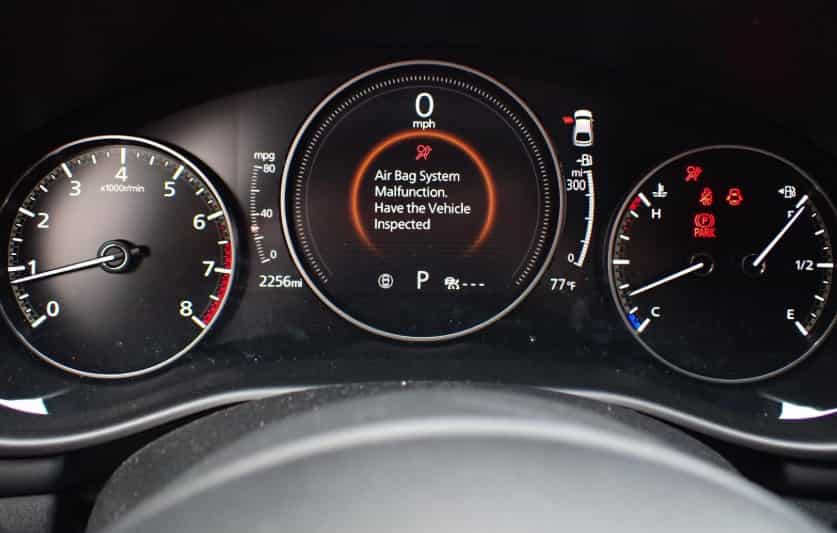
Why Is the Mazda 3 Airbag Light On?
A Mazda 3 Airbag Light On warning means the Supplemental Restraint System has detected a problem. The issue may affect one or more safety components inside the vehicle. These components include the front airbags, side airbags, curtain airbags, seat belt pretensioners, impact sensors, occupant detection sensors, wiring circuits, and the SRS control module.
When the system finds a fault, it stores a diagnostic trouble code and turns on the warning light. The light stays on until someone identifies and repairs the problem. It cannot tell you which component has failed. You need a compatible SRS scan tool to read the stored codes and locate the source of the fault.
Several different problems can trigger the warning. A loose connector under the front seat is one of the most common causes. A weak battery can also create low voltage that affects the SRS. Other possible causes include a damaged clock spring, a faulty crash sensor, a failed occupant detection sensor, or an internal SRS control module problem.
Not every airbag related indicator means the same thing. The main airbag warning light should illuminate for a few seconds when you start the engine. It should then turn off after the system completes its self check. If the light stays on, the SRS has detected an active fault. If the light flashes, the system still requires diagnosis. Some Mazda 3 models also display a passenger airbag OFF indicator. This indicator works separately from the main SRS warning light and may operate normally when the front passenger seat is empty or does not detect enough weight.
Many drivers continue using the vehicle because it feels completely normal. However, normal driving does not guarantee that the restraint system will protect you during a collision. One or more airbags or seat belt pretensioners may not operate correctly. For that reason, you should diagnose the fault instead of simply clearing the warning light.
Is It Safe to Drive a Mazda 3 With the Airbag Light On?
Yes, your Mazda 3 will usually continue to start, accelerate, steer, and brake normally. However, that does not mean the Supplemental Restraint System is working as intended. The warning light tells you that the system has detected a fault that could reduce occupant protection during a crash.
In many cases, the problem affects only one component. It could involve a seat belt pretensioner, an airbag sensor, the clock spring, or the passenger occupancy sensor. Even so, the SRS control module cannot guarantee that every safety device will respond correctly during a collision. That is why you should never ignore the warning, even if the vehicle feels completely normal.
The level of risk depends on the underlying fault. For example, a loose connector under the front seat may interrupt communication with the side airbag. A damaged clock spring may affect both the driver airbag and the steering wheel controls. If the vehicle has accident damage or stored crash data, the repair process may become more complex. A professional diagnosis is the only reliable way to identify the exact cause.
You should also avoid trying to bypass the problem. Do not install resistors to turn off the warning light. Do not disconnect airbag connectors with the battery connected. Avoid testing airbag circuits with tools that are not designed for SRS diagnostics. These actions can damage the system or create additional safety risks.
If the warning light appears after a collision, water damage, or electrical repairs, schedule an inspection as soon as possible. It is also a good idea to check your vehicle identification number for any open safety recalls. Fixing the problem early helps restore the full protection that Mazda designed into the Supplemental Restraint System.
Common Causes of a Mazda 3 Airbag Light
Loose or Damaged Wiring Under the Front Seats
Loose or damaged wiring under the front seats is one of the most common reasons a Mazda 3 Airbag Light On warning appears. Every time you move the driver’s seat or the front passenger seat, the wiring harness bends and flexes. After years of normal use, the connectors may loosen, the wires may wear, or the harness may become pinched. Even a small interruption in the electrical circuit can cause the SRS control module to detect a fault and illuminate the warning light.
The wiring beneath the seats connects several important safety components. Depending on the model year and trim level, it may connect the side airbags, seat belt pretensioners, seat position sensors, or the passenger occupancy sensor. If one of these connections becomes unstable, the control module may lose communication with that component. As a result, the airbag warning light remains on until the fault is corrected and the stored code is cleared.
Many owners notice the warning shortly after adjusting the seat to a new driving position. Others see the light after vacuuming the interior or placing heavy objects under the front seats. Items stored beneath the seat can press against the wiring harness or pull on the connectors during seat movement. Although the damage may seem minor, the SRS system continuously monitors circuit integrity and quickly detects abnormal resistance or interrupted communication.
You can perform a simple visual inspection before scheduling a repair. Turn the ignition off and remove anything stored beneath both front seats. Look for loose connectors, damaged wire insulation, or signs that the harness has become trapped by the seat tracks. Moisture, corrosion, and previous repair work can also create connection problems. However, avoid disconnecting SRS connectors or probing the wiring unless you have the proper training and follow the correct safety procedures.
If the wiring appears damaged, the safest solution is to have the circuit inspected with a professional diagnostic tool. A technician can identify the affected circuit, repair or replace the damaged section, and confirm that the SRS system operates correctly. In many cases, repairing a loose connector or damaged harness resolves the warning without replacing expensive airbag components.
Faulty Passenger Occupancy Sensor
A faulty passenger occupancy sensor is another common reason a Mazda 3 Airbag Light On warning appears. This sensor helps the Supplemental Restraint System determine whether someone is sitting in the front passenger seat and how the passenger airbag should respond during a collision. The system uses this information to improve occupant protection while reducing the risk of unnecessary airbag deployment.
Over time, the sensor can wear out or lose accuracy. Physical damage to the seat cushion may also affect its performance. In some cases, liquid spills, previous seat repairs, or damaged wiring interfere with the signal sent to the SRS control module. When the module receives incorrect or inconsistent data, it records a fault and turns on the airbag warning light.
The symptoms often vary from one vehicle to another. Some owners notice the warning light only when someone sits in the front passenger seat. Others see the light remain on all the time. You may also notice unusual behavior from the passenger airbag OFF indicator. For example, the indicator may stay on even when an adult occupies the seat, or it may switch between different states without a clear reason.
It is important to understand that the passenger airbag OFF indicator does not always signal a fault. Under normal conditions, the system may deactivate the passenger airbag if the seat is empty or the detected weight falls below a specific threshold. This behavior helps protect children and smaller occupants in certain situations. However, if the main SRS warning light appears at the same time, the system requires further diagnosis.
A technician will normally begin by scanning the SRS control module for stored trouble codes. The diagnostic process may also include inspecting the seat wiring, checking the connectors, and verifying that the occupancy sensor reports accurate data. Some repairs require sensor calibration after replacement. Skipping this step can cause the warning light to return even if the new component works correctly.
Replacing the occupancy sensor should always follow a confirmed diagnosis. The warning may come from damaged wiring or poor electrical connections rather than the sensor itself. Identifying the exact cause first saves time, reduces repair costs, and restores the airbag system to proper operating condition.
Damaged Steering Wheel Clock Spring
A damaged clock spring is another common cause of a Mazda 3 Airbag Light On warning. The clock spring sits behind the steering wheel and maintains the electrical connection between the steering wheel and the vehicle while allowing the wheel to rotate freely. It plays an important role in the operation of the driver airbag, the horn, and the steering wheel mounted controls.
The clock spring flexes every time you turn the steering wheel. After years of normal driving, the internal ribbon cable can wear out or break. Once the electrical connection becomes unstable, the SRS control module detects the fault and switches on the airbag warning light. In many cases, the problem develops gradually before the component fails completely.
Several warning signs may point to a failing clock spring. The horn may stop working without warning. Audio or cruise control buttons on the steering wheel may respond intermittently or stop working altogether. Some drivers also hear a rubbing or clicking sound when turning the steering wheel. When these symptoms appear together with the airbag warning light, the clock spring becomes one of the first components that should be inspected.
Although these symptoms strongly suggest a clock spring problem, they do not confirm the diagnosis. Damaged wiring, poor electrical connections, or other steering column components can produce similar faults. A technician should scan the SRS system for diagnostic trouble codes before replacing any parts. The stored codes provide valuable information and help narrow the inspection to the affected circuit.
Replacing the clock spring requires careful handling because the driver airbag must be removed before the new component can be installed. The steering wheel must also remain correctly centered during the repair. Incorrect installation can damage the new clock spring or create additional steering wheel problems. For this reason, the repair should follow the manufacturer’s service procedures.
After the replacement, the technician should verify that the horn, steering wheel controls, and Supplemental Restraint System all operate normally. A final system scan confirms that the repair has resolved the fault and that the Mazda 3 Airbag Light On warning no longer returns.
Seat Belt Buckle or Pretensioner Fault
A seat belt buckle or pretensioner fault can also trigger a Mazda 3 Airbag Light On warning. Many drivers assume the airbag system only monitors the airbags themselves. In reality, the Supplemental Restraint System also monitors the seat belt pretensioners because they work together during a collision. The pretensioner tightens the seat belt in the first moments of an impact, helping keep the occupant in the correct position before the airbags deploy.
Several issues can prevent the pretensioner from operating correctly. Internal wear, damaged wiring, loose connectors, corrosion, or a faulty buckle switch may all interrupt communication with the SRS control module. If the vehicle has been involved in a previous accident, the pretensioner may have deployed and require replacement. Even if the seat belt appears normal, the internal mechanism may no longer function as designed.
The warning signs often depend on the type of failure. The airbag warning light may remain on after the engine starts. Some vehicles also display a seat belt warning that stays illuminated even after the belt is fastened. In other cases, the seat belt may not retract smoothly or may feel different during normal use. These symptoms do not always confirm a pretensioner failure, but they indicate that the restraint system needs further inspection.
A professional diagnosis usually begins with scanning the SRS control module for stored fault codes. The technician then inspects the buckle assembly, wiring harness, connectors, and pretensioner circuit. This step helps determine whether the problem comes from the pretensioner itself or from another electrical fault within the system. Replacing parts without proper testing can increase repair costs and leave the original problem unresolved.
If the pretensioner has deployed or fails diagnostic testing, replacement is often the safest solution. The repair should also include a complete inspection of the related wiring and surrounding components. After the work is complete, the technician should clear the stored fault codes and verify that the Supplemental Restraint System passes its self check. A successful repair restores proper communication within the system and turns off the Mazda 3 Airbag Light On warning.
Weak Battery or Charging System Problem
A weak battery or charging system problem can trigger a Mazda 3 Airbag Light On warning even when no airbag component has failed. The Supplemental Restraint System depends on a stable power supply to monitor sensors, communicate with control modules, and perform its self check every time the engine starts. If the battery voltage drops below the expected range, the system may detect an electrical fault and store a diagnostic trouble code.
Low voltage can occur for several reasons. An aging battery may no longer hold a full charge. Loose or corroded battery terminals can interrupt the electrical connection. A failing alternator may also prevent the battery from charging properly while the engine is running. In some situations, the warning appears after jump starting the vehicle, replacing the battery, or leaving the car parked for an extended period.
The airbag warning light is often not the only symptom. You may notice slow engine cranking, dim headlights, or several dashboard warning lights turning on at the same time. Power windows and other electrical accessories may also respond more slowly than usual. These signs suggest that the vehicle should receive a complete electrical system inspection instead of focusing only on the airbag warning.
Many owners believe disconnecting the battery will reset the warning light. While this may clear some temporary settings, it rarely solves an underlying SRS problem. If the control module has stored a fault code, the warning usually returns as soon as the system completes another self check. Clearing the code without correcting the electrical problem only hides the symptom for a short time.
A proper diagnosis begins with testing the battery and charging system. A technician checks battery condition, charging voltage, cable connections, and ground points before moving to the SRS system. If the battery or alternator fails these tests, repairing the electrical system may eliminate the warning. The technician should then scan the SRS module again to confirm that no additional faults remain.
Restoring a healthy power supply is an important step because unstable voltage can affect several electronic systems at the same time. Once the electrical system operates within the correct range, the Supplemental Restraint System can complete its self check normally and verify whether any genuine airbag related faults are still present.
Faulty Impact or Crash Sensor
A faulty impact or crash sensor can also cause a Mazda 3 Airbag Light On warning. These sensors continuously monitor changes in vehicle speed and impact forces. When a serious collision occurs, they send information to the SRS control module, which decides whether the airbags and seat belt pretensioners should deploy. Because these sensors play a critical role in occupant protection, the system constantly checks their condition during normal driving.
Several factors can affect sensor performance. A minor front end collision may damage the sensor or its mounting bracket without causing obvious body damage. Moisture can enter the electrical connector and create corrosion over time. Previous body repairs may also affect sensor alignment or damage the wiring harness. Even a loose connector can interrupt communication and trigger the warning light.
The symptoms often appear after an accident or repair work. Some owners notice the warning immediately after replacing a front bumper, radiator support, or fender. Others see the light after driving through deep water or following repairs that required work near the front of the vehicle. These situations do not always mean the sensor has failed, but they increase the likelihood of a problem within the impact sensing circuit.
A diagnostic scan is the first step in identifying the fault. The stored SRS code helps determine whether the issue involves the sensor, its wiring, or another part of the circuit. The technician then inspects the sensor mounting location, electrical connector, and wiring harness for signs of damage, corrosion, or poor connections. This approach reduces unnecessary parts replacement and improves diagnostic accuracy.
Replacing a crash sensor without proper testing is not recommended. The warning light may result from damaged wiring, a poor ground connection, or another electrical fault rather than the sensor itself. Installing a new sensor without confirming the root cause may leave the original problem unresolved and increase repair costs.
After the repair, the technician should clear the stored fault codes and perform another system scan. The Supplemental Restraint System should complete its self check without detecting additional faults. Once the system confirms normal operation, the Mazda 3 Airbag Light On warning should no longer appear during startup.
Stored Crash Data or Previously Deployed Components
A previous collision can leave behind hidden problems that trigger a Mazda 3 Airbag Light On warning. Even after the visible damage has been repaired, the Supplemental Restraint System may continue to store crash information inside the SRS control module. If the repair process does not restore every related component, the system can detect the remaining fault and keep the warning light on.
Many used vehicles have an accident history that new owners do not immediately recognize. A repaired front bumper or freshly painted body panels may look perfect from the outside. However, the airbag system may still contain deployed components, damaged wiring, or stored crash records. In these situations, the dashboard warning becomes an important clue that the previous repair may not have fully restored the restraint system.
The warning often appears after airbags or seat belt pretensioners have deployed during a collision. These components are designed for a single deployment event. Once they activate, they usually require replacement before the system can operate correctly again. Simply replacing the visible airbag without inspecting the remaining SRS components can leave additional faults within the system.
A professional inspection includes much more than reading fault codes. The technician also checks whether the vehicle has a history of collision repairs, verifies that all replacement parts match the original specifications, and confirms that every related sensor and wiring circuit functions correctly. This complete inspection helps identify problems that may not appear during a basic visual check.
Some owners attempt to eliminate the warning by installing resistors, emulator devices, or other aftermarket bypass solutions. Although these products may turn off the warning light, they do not restore the Supplemental Restraint System to proper operating condition. Instead, they can hide serious faults and create a false sense of security. Relying on these shortcuts may reduce occupant protection when a real collision occurs.
If your Mazda 3 has been involved in an accident, always verify that the restraint system has been repaired according to manufacturer specifications. A complete diagnostic inspection ensures that the airbags, seat belt pretensioners, sensors, wiring, and control module all work together as intended. Once every fault has been corrected, the Mazda 3 Airbag Light On warning should disappear and the system can provide the level of protection it was designed to deliver.
SRS Control Module Failure
The SRS control module serves as the central control unit for the entire Supplemental Restraint System. It receives information from multiple sensors, monitors electrical circuits, stores diagnostic trouble codes, and determines how the restraint system should respond during a collision. When the module detects an internal fault or loses communication with another component, it can trigger a Mazda 3 Airbag Light On warning.
Several conditions can damage the control module or affect its performance. Water intrusion is one of the most common causes because moisture can corrode electronic circuits and connectors. A weak electrical system may also create voltage fluctuations that interfere with normal module operation. In vehicles with a previous accident history, the module may still contain crash data or damage that prevents the system from completing its self check successfully.
The warning signs often extend beyond the airbag light itself. A diagnostic scanner may fail to communicate with the SRS control module, or it may report multiple fault codes that affect different parts of the restraint system. In some cases, the warning light returns immediately after the technician clears the stored codes. These symptoms often indicate a deeper problem that requires more than replacing a single sensor or repairing one section of wiring.
A complete diagnosis focuses on the entire communication network rather than the module alone. The technician checks the power supply, ground connections, wiring integrity, and communication circuits before concluding that the module has failed. This process helps eliminate other faults that can produce similar warning signs. It also prevents unnecessary replacement of an expensive electronic component.
If testing confirms an internal module failure, the repair may involve replacing the control unit or restoring it according to approved service procedures. Some vehicles also require programming or calibration after installation so the replacement module can communicate correctly with the other control units. Skipping these steps may cause the warning light to remain on even though a new module has been installed.
Once the repair is complete, the technician performs a full system scan and verifies that every SRS component communicates correctly. The control module should complete its self check without recording additional faults. When the system operates normally again, the Mazda 3 Airbag Light On warning should no longer appear during vehicle startup.
Water Damage, Corrosion, or Ground Problems
Water damage, corrosion, and poor ground connections can also trigger a Mazda 3 Airbag Light On warning. Although these problems often develop slowly, they can interrupt communication between the SRS control module and other safety components. Even a small amount of corrosion can increase electrical resistance and cause the system to detect an abnormal condition.
Moisture can enter the vehicle in several ways. A leaking windshield, damaged door seal, blocked sunroof drain, or flooded interior can expose wiring and connectors to water for an extended period. As corrosion spreads across electrical terminals, the connection becomes weaker and less reliable. The SRS control module may then receive inconsistent signals from sensors or other components, causing the warning light to remain on.
Ground connections deserve equal attention because every electronic system depends on a stable electrical path. If a ground point becomes loose or corroded, voltage can fluctuate throughout the circuit. The resulting communication errors may affect several control modules at the same time. In addition to the airbag warning, drivers may notice other electrical issues such as intermittent dashboard lights, power accessory malfunctions, or unexpected warning messages.
A careful visual inspection often reveals the first signs of trouble. Damp carpet, a musty smell inside the cabin, or visible corrosion around connectors may indicate long term moisture exposure. Under the front seats, wiring harnesses should remain clean, secure, and free from rust or physical damage. Any evidence of water should be investigated before it causes additional electrical problems.
A technician will normally inspect the affected wiring, clean or replace damaged connectors, and verify the condition of all major ground points. If corrosion has spread inside the wiring harness, replacing the damaged section may provide the most reliable repair. After correcting the electrical fault, the technician should scan the Supplemental Restraint System again to confirm that every component communicates normally.
Preventing water intrusion is just as important as repairing it. Fixing leaks early and keeping the interior dry helps protect sensitive electronic components from long term damage. A clean and stable electrical system also reduces the chance of seeing another Mazda 3 Airbag Light On warning in the future.
Open Mazda Recall or Safety Campaign
An open safety recall can also explain a Mazda 3 Airbag Light On warning in certain situations. While most warning lights result from normal wear or electrical faults, some vehicles qualify for manufacturer safety campaigns that address known defects. Checking for open recalls is a simple step that every owner should complete before paying for major repairs.
Each recall applies to specific vehicles rather than every Mazda 3 produced during the same model year. Mazda identifies eligible vehicles by their Vehicle Identification Number, also known as the VIN. For that reason, two vehicles built in the same year may have different recall status. A VIN search provides much more accurate information than relying on a general recall list.
If your vehicle qualifies for an open recall, an authorized Mazda dealer can inspect the affected components and perform the required repair according to the manufacturer’s procedures. Depending on the campaign, the repair may involve replacing an airbag component, updating the SRS control module, inspecting wiring, or installing revised parts that improve long term reliability.
Even if no recall applies, checking the VIN still offers valuable information. It confirms whether previous recall work has already been completed and helps eliminate one possible cause of the warning light. This simple step can save time during the diagnostic process and prevent unnecessary replacement of parts that are still operating correctly.
A recall should never replace a complete diagnosis. The warning light may still result from damaged wiring, a faulty sensor, a weak electrical system, or another unrelated problem. If the recall check finds no outstanding campaign, the next step is to scan the Supplemental Restraint System and inspect the affected circuits. This approach helps identify the real cause of the Mazda 3 Airbag Light On warning and ensures the correct repair.
Warning Signs That May Appear With the Airbag Light
A Mazda 3 Airbag Light On warning rarely appears without other symptoms. In many cases, the restraint system provides additional clues that help narrow down the source of the problem. Recognizing these warning signs can save time during diagnosis and reduce the chance of replacing parts that are still working correctly.
One of the most common symptoms is a warning light that stays on after the engine starts. During normal operation, the airbag light should illuminate for a few seconds while the Supplemental Restraint System performs its self check. It should then turn off automatically. If the light remains illuminated, the system has detected an active fault that requires further inspection.
Some drivers notice that the warning light flashes instead of staying on continuously. A flashing light still indicates that the SRS has identified a problem. The exact meaning depends on the vehicle configuration and the stored diagnostic code. Regardless of the flashing pattern, the system should be scanned with a compatible diagnostic tool to determine the cause.
Problems with the steering wheel can also point toward an airbag related fault. If the horn suddenly stops working or the audio and cruise control buttons become unresponsive, the clock spring may have developed an internal fault. Because the driver airbag also relies on the clock spring, these symptoms often appear together.
The location of the warning can provide another useful clue. If the light appears after moving the driver’s seat or front passenger seat, the wiring beneath the seat may have become loose or damaged. Heavy objects stored under the seat can also press against the wiring harness and create an intermittent electrical connection.
Electrical problems sometimes trigger several dashboard warnings at the same time. A weak battery, poor ground connection, or charging system fault can affect multiple control modules throughout the vehicle. If the airbag warning appears together with other electrical symptoms, the charging system should be inspected before replacing airbag components.
Drivers should also pay attention to recent events that occurred before the warning appeared. A dead battery, jump start, interior repair, water leak, or minor collision can all affect the Supplemental Restraint System. Sharing this information with the technician often speeds up the diagnostic process because it helps identify the most likely cause.
The table below summarizes some of the most common warning signs and the faults they may indicate.
| Warning Sign | Possible Cause | Recommended Action |
|---|---|---|
| Airbag light stays on after startup | Active SRS fault | Scan the SRS control module |
| Airbag light flashes | Stored diagnostic fault | Read the SRS trouble codes |
| Warning appears after moving a front seat | Loose or damaged seat wiring | Inspect the wiring harness and connectors |
| Horn and steering wheel controls stop working | Damaged clock spring | Test the steering wheel circuit |
| Warning appears after battery replacement | Low system voltage or stored fault code | Test the battery and charging system |
| Warning appears after a collision | Crash sensor, pretensioner, or stored crash data | Perform a complete SRS inspection |
| Passenger airbag indicator behaves abnormally | Occupancy sensor or seat wiring problem | Inspect the passenger seat system |
| Several warning lights appear together | Electrical or communication fault | Check battery voltage, grounds, and control modules |
Recognizing these symptoms provides a useful starting point, but they do not confirm the exact cause of the problem. A proper diagnosis still requires reading the stored SRS trouble codes and inspecting the related electrical circuits. Identifying the root cause before replacing parts is the most effective way to restore the Supplemental Restraint System and eliminate the Mazda 3 Airbag Light On warning.
How to Diagnose a Mazda 3 Airbag Light
Finding the cause of a Mazda 3 Airbag Light On warning requires a logical diagnostic process. The warning light only tells you that the Supplemental Restraint System has detected a fault. It does not identify the failed component. Following each step in the correct order helps prevent unnecessary repairs and improves diagnostic accuracy.
Step 1: Confirm the Correct Warning Light
Start by identifying which dashboard indicator is illuminated. Many drivers confuse the main SRS warning light with the passenger airbag OFF indicator or the seat belt reminder. These lights serve different purposes and should not be diagnosed the same way.
The main airbag warning light should turn on briefly during startup and switch off after the self check finishes. If it stays on or begins flashing, the SRS has detected a fault. The passenger airbag OFF indicator may operate normally when the front passenger seat is empty or does not detect enough weight. Understanding this difference prevents unnecessary concern and helps focus the diagnosis on the correct system.
Step 2: Review Recent Vehicle History
Think about what happened before the warning light appeared. This information often provides valuable clues during diagnosis.
Ask yourself the following questions.
- Did the warning appear after replacing the battery?
- Did you recently move either front seat?
- Has the vehicle been involved in a collision?
- Did you notice water leaking into the cabin?
- Were any electrical or interior repairs completed recently?
- Have other dashboard warning lights appeared at the same time?
Even a simple event such as storing a heavy object under the front seat can help explain the warning.
Step 3: Perform a Basic Visual Inspection
A careful visual inspection may reveal obvious problems before any diagnostic equipment is connected.
Check both front seats for loose wiring, damaged connectors, or objects pressing against the wiring harness. Inspect the battery terminals for corrosion or loose connections. Look for signs of water damage beneath the carpet or around electrical connectors. Also check for obvious damage caused by previous repair work.
Avoid disconnecting airbag connectors or attempting electrical tests on SRS circuits. These components require specific safety procedures and should only be handled by trained technicians.
Step 4: Test the Battery and Charging System
The Supplemental Restraint System relies on a stable electrical supply. Low voltage can trigger stored fault codes even when every airbag component is functioning correctly.
A technician normally checks battery condition, charging voltage, alternator output, cable connections, and ground points. If the battery or charging system fails these tests, repairing the electrical problem may eliminate the warning before additional SRS repairs become necessary.
Step 5: Scan the SRS Control Module
Scanning the SRS control module is the most important step in the diagnostic process. A basic OBD II scanner often reads only engine related fault codes. Many entry level scan tools cannot access airbag or restraint system information.
A professional diagnostic scanner can read manufacturer specific SRS trouble codes, display active and stored faults, access live data, and clear codes after repairs. These features help technicians identify the affected circuit much faster than visual inspection alone.
Keep in mind that a diagnostic code identifies the system reporting the fault. It does not automatically confirm that one specific component has failed. Additional testing may still be necessary.
Step 6: Test the Related Circuit
After identifying the stored fault code, the technician inspects the affected electrical circuit. This step may include checking wiring continuity, connector condition, power supply, ground integrity, and communication between the control module and the related component.
If the code points toward an occupancy sensor, crash sensor, clock spring, or pretensioner, the technician verifies that component before recommending replacement. Testing the complete circuit helps eliminate false diagnoses and prevents unnecessary repairs.
Step 7: Verify the Repair
After repairing the fault, the technician clears the stored SRS codes and performs another system scan. The warning light should illuminate briefly during startup and switch off after the self check finishes successfully.
A final inspection confirms that every related component communicates correctly with the SRS control module. If no additional codes return, the repair is complete and the Mazda 3 Airbag Light On warning should no longer appear.
How to Fix a Mazda 3 Airbag Light
The correct repair depends on the fault that triggered the warning. There is no universal solution because the Supplemental Restraint System monitors many different components. Replacing parts without a proper diagnosis often increases repair costs and leaves the original problem unresolved. The safest approach is to identify the fault first and then repair only the affected component.
If the problem comes from loose wiring beneath the front seats, the technician will inspect the wiring harness and electrical connectors. Damaged terminals, worn insulation, or pinched wires may require repair or replacement. Once the electrical connection becomes stable again, the SRS control module can communicate normally with the related components.
A faulty passenger occupancy sensor usually requires a more detailed inspection. The technician checks the sensor, seat wiring, and connector condition before replacing any parts. Some Mazda 3 models also require sensor calibration after installation. Completing this procedure ensures that the system accurately detects the front passenger and controls airbag operation correctly.
A damaged clock spring normally requires replacement because the internal ribbon cable cannot be repaired. After installing the new component, the technician verifies that the driver airbag, horn, and steering wheel controls all operate correctly. A final system scan confirms that the repair has resolved the stored fault.
If the diagnosis identifies a defective seat belt pretensioner, replacement is often the only reliable solution. The technician also inspects the buckle assembly, wiring, and connectors to confirm that no additional faults remain. Vehicles with a previous collision may require replacement of other restraint system components before the warning light disappears.
Electrical problems should never be overlooked. A weak battery, poor ground connection, or failing alternator can create unstable voltage throughout the vehicle. Repairing the charging system often restores normal communication between electronic control modules and prevents the warning from returning.
When the problem involves a crash sensor or the SRS control module, the repair becomes more specialized. The technician verifies the wiring and power supply before replacing expensive components. Some repairs also require module programming or sensor calibration after installation. Following the correct service procedure ensures that every component communicates properly with the Supplemental Restraint System.
Vehicles with a previous accident history may require additional work. Stored crash data, previously deployed airbags, or damaged pretensioners can keep the warning active even after body repairs are complete. A thorough inspection helps confirm that every related component meets the manufacturer’s specifications before the system returns to normal operation.
After completing the repair, the technician clears the stored fault codes and performs another diagnostic scan. The airbag warning light should illuminate briefly during startup and switch off after the self check finishes. If no new codes appear, the repair has successfully resolved the Mazda 3 Airbag Light On warning and restored normal operation of the Supplemental Restraint System.
Can You Reset a Mazda 3 Airbag Light Yourself?
Yes, you can reset a Mazda 3 Airbag Light On warning in some situations. However, you should only reset the light after identifying and repairing the underlying fault. If the original problem still exists, the SRS control module will detect it again and turn the warning light back on during the next self check.
Many owners believe disconnecting the battery will erase the warning. This method rarely provides a permanent solution. While disconnecting the battery may reset certain electronic settings, it usually does not remove stored SRS fault codes. As soon as the system performs another self check, the warning often returns if the fault remains.
Another common misunderstanding involves generic OBD II scanners. Many basic scan tools can only read engine and transmission codes. They cannot communicate with the Supplemental Restraint System. As a result, they cannot read airbag fault codes or clear them correctly. If you need to diagnose the airbag system, use a scanner that specifically supports Mazda SRS functions.
Some drivers search for manual reset procedures or attempt to bypass the warning with aftermarket devices. These shortcuts may temporarily hide the warning light, but they do not repair the restraint system. More importantly, they can create a false sense of security because the airbags or seat belt pretensioners may still fail to operate during a collision.
If you have already repaired the underlying problem, resetting the warning is a straightforward process. A compatible diagnostic scanner connects to the SRS control module, clears the stored fault codes, and verifies that the system passes its self check. If the repair was successful, the warning light should illuminate briefly during startup and then switch off automatically.
If the warning returns immediately after the reset, the system has detected another active fault. In that situation, clearing the code again will not solve the problem. The next step is to continue the diagnostic process until you identify the root cause.
The safest approach is to treat the warning light as the final step of the repair rather than the first. Restoring the electrical circuit, replacing the failed component, or correcting the communication fault should always come before clearing the stored codes. This process ensures that the Supplemental Restraint System is ready to protect the occupants if a collision occurs.
Mazda 3 Airbag Light Repair Cost
The cost to repair a Mazda 3 Airbag Light On warning depends on the component that has failed and the amount of diagnostic work required. Some problems involve a simple wiring repair, while others require replacement of electronic modules or safety components. For this reason, a professional diagnosis should always come before requesting a repair estimate.
Labor costs vary by location, vehicle model year, and repair facility. A Mazda dealership may charge more than an independent repair shop, but both typically begin with a diagnostic inspection to identify the stored SRS fault codes. Once the technician confirms the root cause, it becomes much easier to estimate the total repair cost.
The table below outlines the most common repairs and their typical cost category.
| Repair | Typical Cost Category | Main Cost Factors |
|---|---|---|
| SRS diagnostic scan | Low | Labor rate, scanner capability, diagnostic time |
| Wiring or connector repair | Low to Moderate | Harness location, wiring damage, repair complexity |
| Battery replacement | Low to Moderate | Battery type, installation, charging system condition |
| Clock spring replacement | Moderate | Parts cost, steering wheel removal, labor |
| Passenger occupancy sensor repair | Moderate to High | Sensor price, seat disassembly, calibration |
| Seat belt pretensioner replacement | Moderate to High | Parts availability, labor, accident history |
| Crash sensor replacement | Moderate | Sensor location, wiring inspection, calibration |
| SRS control module repair or replacement | High | Programming, module availability, crash data service |
| Airbag replacement | High | Number of deployed airbags, interior damage, labor |
Several factors can increase the final repair bill. Previous collision damage often requires additional inspection because more than one SRS component may have failed. Water intrusion can also affect multiple wiring circuits, making the repair more complex. If the vehicle needs module programming or sensor calibration after replacement, labor costs may increase as well.
Choosing the cheapest repair option is not always the best decision. Replacing the wrong component can cost more than performing a complete diagnosis from the beginning. A qualified technician follows the stored fault codes, verifies the electrical circuits, and confirms the repair before replacing expensive parts. This approach reduces unnecessary expenses and improves long term reliability.
If your Mazda 3 qualifies for an open safety recall, the repair may be completed by an authorized Mazda dealer at no cost to the owner. Checking your VIN before authorizing major repairs is a simple step that could save both time and money. Even if no recall applies, a proper diagnosis remains the most effective way to resolve the Mazda 3 Airbag Light On warning without replacing parts unnecessarily.
When to Visit a Mazda Dealer or SRS Specialist
Some airbag problems have simple causes, but others require specialized equipment and manufacturer specific repair procedures. If the warning light remains on after the engine starts, professional diagnosis is the safest option. A qualified technician can access the SRS control module, read the stored fault codes, and perform tests that most basic scan tools cannot support.
You should schedule an inspection immediately if the warning appears after a collision. The same recommendation applies if the vehicle has experienced water damage or if one or more airbags have deployed. These situations often affect multiple components within the Supplemental Restraint System and require a complete inspection before the vehicle can be considered safe.
Professional service is also recommended when the warning returns immediately after being cleared. This usually indicates that an active fault is still present. Continuing to reset the light without repairing the underlying problem only delays the proper diagnosis.
If your horn, steering wheel controls, or seat belt system stop working at the same time as the airbag warning, the problem may involve shared electrical circuits. A technician can determine whether the fault comes from the clock spring, wiring harness, control module, or another related component. Identifying the exact cause helps avoid unnecessary repairs and restores the restraint system to normal operation.
How to Prevent Future Airbag Warning Problems
Although some failures cannot be avoided, regular vehicle care can reduce the risk of future SRS problems. Keeping the electrical system in good condition is one of the most effective preventive measures. A healthy battery and charging system provide stable voltage for every control module in the vehicle.
Avoid placing heavy objects beneath the front seats because they can damage wiring harnesses or pull on electrical connectors during seat adjustment. Move the seats carefully and check that no objects interfere with the wiring underneath. This simple habit can prevent one of the most common causes of an airbag warning.
Water leaks should never be ignored. Moisture can damage connectors, wiring, and electronic modules over time. If you notice damp carpet, condensation, or signs of water inside the cabin, repair the source of the leak before corrosion spreads through the electrical system.
Choose qualified repair facilities whenever the vehicle requires collision repairs or interior work. Incorrect repairs around seats, wiring harnesses, or steering wheel components can create new SRS faults. Following the manufacturer’s repair procedures helps maintain the reliability of the entire restraint system.
Finally, check your vehicle identification number for open safety recalls from time to time. Completing recall repairs promptly helps keep the Supplemental Restraint System operating according to Mazda’s original safety standards.
Frequently Asked Questions
Why did my Mazda 3 airbag light come on after moving the seat?
Moving the seat can stretch or disturb the wiring harness beneath the seat. A loose connector or damaged wire may interrupt communication with the Supplemental Restraint System and trigger the warning light.
Can a weak battery cause the airbag light to turn on?
Yes. Low battery voltage can create communication errors or store temporary SRS fault codes. However, a professional scan is still necessary to confirm whether the battery is the only cause.
Will disconnecting the battery reset the airbag light?
Usually not. Disconnecting the battery may reset some vehicle settings, but stored SRS fault codes often remain. If the original fault still exists, the warning light normally returns during the next self check.
Can a basic OBD II scanner read Mazda airbag codes?
Many basic scanners only read engine related trouble codes. You need a scan tool that supports Mazda Supplemental Restraint System diagnostics to access airbag related information.
Why is the airbag light flashing instead of staying on?
A flashing light still indicates that the Supplemental Restraint System has detected a fault. The exact cause depends on the stored diagnostic code. Reading the SRS codes is the fastest way to identify the problem.
Does the airbag light always mean the airbags need replacement?
No. The warning may result from damaged wiring, a faulty sensor, a weak battery, a clock spring, a seat belt pretensioner, or the SRS control module. A complete diagnosis should always come before replacing parts.
Can I continue driving with the airbag light on?
The vehicle will often continue to drive normally, but the restraint system may not provide full protection during a collision. Driving for a short distance to reach a repair facility is generally possible, but delaying diagnosis is not recommended.
Will my Mazda 3 pass a vehicle inspection with the airbag light on?
Inspection requirements vary by country, state, and local regulations. Some inspection programs treat an active airbag warning as a safety related failure, while others follow different standards.
Conclusion
A Mazda 3 Airbag Light On warning should never be ignored because it indicates that the Supplemental Restraint System has detected a fault. The problem may be as simple as a loose connector under the front seat, or it may involve a damaged clock spring, a faulty occupancy sensor, a crash sensor, a seat belt pretensioner, or the SRS control module. Regardless of the cause, the warning light signals that the system needs attention before it can provide full protection in an emergency.
The most effective repair always begins with a proper diagnosis. Reading the stored SRS fault codes, inspecting the related electrical circuits, and confirming the root cause help prevent unnecessary parts replacement and reduce long term repair costs. Clearing the warning light without fixing the underlying problem only hides the symptom and does not restore the safety system.
If your vehicle has recently been involved in a collision, experienced water damage, or developed electrical problems, schedule a professional inspection as soon as possible. You should also check your VIN for any open Mazda safety recalls before authorizing major repairs.
By understanding the common causes, recognizing the warning signs, and following the correct diagnostic process, you can resolve a Mazda 3 Airbag Light On warning with confidence and help ensure that your vehicle’s Supplemental Restraint System remains ready to protect you and your passengers when it matters most.