Using the wrong automatic transmission fluid can create expensive problems long before obvious symptoms appear. Many drivers assume that transmission fluid is universal, but modern automatic transmissions are engineered with highly specific friction properties, viscosity characteristics, and additive packages. Even a small mismatch can lead to rough shifting, delayed gear engagement, overheating, transmission shudder, and long term internal wear.
This is exactly why many vehicle owners and mechanics search for a JWS 3324 Compatibility Chart. Identifying the correct transmission fluid specification is often more complicated than expected. Different vehicle brands may use similar transmission systems or share transmission suppliers, yet they do not always require identical fluid formulations. Relying on assumptions or online forum opinions can easily result in choosing the wrong replacement.
One of the biggest frustrations for car owners is dealing with conflicting information. Some sources recommend universal transmission fluids, while others strongly advise using only OEM products. That uncertainty creates real risk because transmission repairs can become one of the most expensive maintenance costs a vehicle owner faces.
In this guide, we will break down the complete JWS 3324 Compatibility Chart by Vehicle Brand, explain where this specification is commonly used, discuss equivalent fluid options, and help you avoid costly mistakes before your next transmission service.
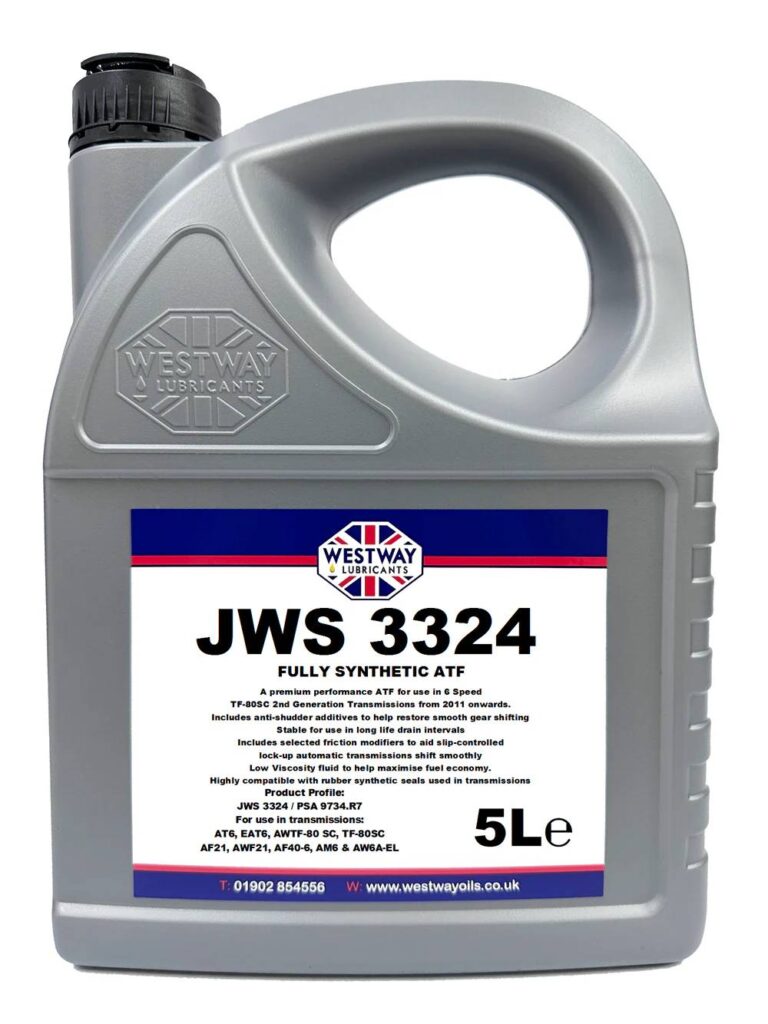
What Is JWS 3324 Transmission Fluid?
JWS 3324 is an automatic transmission fluid specification developed to meet the operating requirements of certain modern transmission systems. Rather than being a brand name, JWS 3324 represents a technical standard that defines how the fluid should perform under specific operating conditions. The specification includes requirements related to viscosity stability, friction behavior, oxidation resistance, thermal performance, and additive composition.
Many drivers mistakenly assume that transmission fluids are interchangeable. In reality, modern automatic transmissions rely heavily on precise fluid characteristics. Engineers design transmission systems around specific friction properties to ensure smooth gear changes, proper torque converter operation, and long term reliability.
A transmission fluid does much more than lubrication. It also transfers hydraulic pressure, cools transmission components, protects against wear, and helps maintain consistent shifting behavior. Because of these multiple functions, even slight differences in fluid chemistry may affect overall transmission performance.
One important detail many vehicle owners overlook is the difference between a specification and a product name. You may see bottles carrying different labels from different manufacturers while still claiming compatibility with JWS 3324 requirements. The actual compatibility depends on whether the product was engineered to meet the specification, not whether the label looks similar.
Understanding this distinction can help avoid one of the most common and expensive maintenance mistakes.
Why Compatibility Matters More Than Brand Name
When searching for replacement transmission fluid, many people focus only on the oil brand. They may choose a familiar name and assume all premium products deliver the same results. Unfortunately, transmission systems do not work that way.
The most important factor is not the manufacturer logo printed on the bottle. What truly matters is whether the fluid meets the required specification. An aftermarket product can sometimes perform perfectly if it is designed to satisfy JWS 3324 requirements. Likewise, using a premium fluid with the wrong specification may create serious transmission problems.
Modern transmissions operate with extremely tight tolerances. Shift timing, clutch engagement, hydraulic pressure control, and torque converter operation depend on fluid behavior remaining consistent under varying temperatures and loads.
Using an incompatible fluid may lead to several issues:
• Delayed shifting response
• Harsh gear changes
• Transmission shudder
• Increased operating temperatures
• Gear slipping
• Reduced fuel efficiency
• Accelerated clutch wear
Many transmission failures blamed on mechanical defects actually begin with fluid selection mistakes.
A surprising fact often overlooked by drivers is that some transmission systems suffer more damage from incorrect fluid chemistry than from low fluid levels. Small compatibility errors may gradually create wear that becomes visible only after thousands of miles.
For this reason, checking the required specification should always take priority over selecting a particular oil brand.
JWS 3324 Compatibility Chart by Vehicle Brand
Finding a complete and accurate JWS 3324 compatibility reference can be challenging because transmission requirements may vary depending on model year, transmission code, market region, and drivetrain configuration. Two vehicles from the same manufacturer may even use different transmission fluid specifications.
The chart below provides a general compatibility overview. Always verify information through the owner manual or manufacturer service documentation before replacing transmission fluid.
| Vehicle Brand | Potential Vehicle Applications | Transmission Type | JWS 3324 Requirement | Notes |
|---|---|---|---|---|
| Toyota | Selected passenger models | Automatic | Verify by model year | Check OEM documentation |
| Lexus | Selected luxury models | Automatic | Model dependent | Confirm transmission code |
| Vehicles using Aisin transmissions | Various applications | Automatic | Application specific | Cross reference required |
| Imported Asian models | Certain versions | Automatic | Possible compatibility | Confirm before service |
| Regional variants | Market dependent | Automatic | Varies significantly | Transmission identification required |
Compatibility becomes more complicated because some automakers source transmissions from third party manufacturers. A vehicle badge alone does not always determine the correct fluid.
Drivers should verify the following information before purchasing replacement fluid:
✓ Vehicle year
✓ Engine type
✓ Transmission code
✓ Owner manual recommendation
✓ OEM fluid specification
✓ Service bulletin updates
Skipping these checks may save a few minutes during maintenance but can eventually lead to expensive transmission repairs.
Common JWS 3324 Equivalent Fluids
Finding a reliable JWS 3324 equivalent is often where confusion begins. Many transmission fluid manufacturers advertise their products as multi vehicle solutions, but not all formulations deliver the same performance across every transmission design. Selecting a fluid solely based on marketing claims can become a costly mistake.
Below are some commonly referenced alternatives frequently considered for applications requiring JWS 3324 compatibility. Always verify the latest manufacturer documentation before use.
Valvoline Multi Vehicle ATF
Valvoline Multi Vehicle ATF is commonly chosen because it is designed to support multiple transmission specifications across various vehicle brands. It offers broad availability and is often easier to find than some OEM fluids.
Advantages include strong oxidation resistance, stable performance under temperature fluctuations, and compatibility claims covering numerous transmission systems.
Potential drawbacks exist as well. Since multi vehicle fluids attempt to cover a broad range of applications, some technicians still prefer OEM fluid in highly sensitive transmissions.
Many owners choose this option because it balances accessibility and cost while reducing the challenge of locating specialty transmission fluid.
Mobil Multi Vehicle ATF
Mobil products are frequently selected due to brand reputation and broad market presence. Certain formulations are engineered for modern automatic transmission systems requiring specific friction characteristics.
Benefits often include improved thermal stability and wear protection under heavy operating conditions.
However, vehicle owners should never assume all Mobil transmission products are interchangeable. Different formulations exist under similar branding.
Checking exact compatibility remains essential before making a purchase.
Castrol Transmax
Castrol Transmax products are another common option considered during fluid replacement searches. Many drivers appreciate their availability and broad application coverage.
Some versions include advanced additives intended to improve shift smoothness and maintain performance over extended service intervals.
The primary advantage is convenience because many repair shops and parts retailers carry Castrol products. The risk appears when users select products based on name familiarity rather than specification matching.
Transmission fluid selection should always begin with compatibility requirements rather than shelf popularity.
Idemitsu ATF
Idemitsu frequently manufactures transmission fluids used in OEM applications and has strong recognition in Asian vehicle markets.
Drivers often prefer Idemitsu products because of their close relationship with original equipment standards. Some technicians also consider them a safer alternative when seeking behavior closer to factory fluid performance.
For owners concerned about maintaining original shift feel and minimizing long term transmission wear, this option often becomes part of the discussion.
Symptoms of Using the Wrong JWS 3324 Equivalent
One of the biggest challenges with transmission fluid problems is that damage often develops slowly. Drivers rarely notice immediate failure after using an incompatible fluid. Instead, symptoms may appear gradually and become more severe over time.
Hard shifting is often among the first warning signs. Gear changes may suddenly feel aggressive or less refined than before.
Delayed engagement can also appear. Drivers may shift into Drive or Reverse and notice hesitation before the transmission responds.
Transmission shudder is another common symptom. During acceleration, the vehicle may vibrate or feel unstable as internal clutch systems struggle to engage properly.
Gear slipping may become increasingly noticeable as friction characteristics no longer match transmission requirements.
Additional warning signs include:
• Increased transmission temperature
• Unusual noises during shifting
• Burning odor from overheated fluid
• Dashboard transmission warnings
• Reduced fuel economy
Unfortunately, many owners ignore early symptoms because the vehicle continues driving normally. By the time serious performance issues appear, internal wear may already be occurring.
Transmission repair costs can quickly reach thousands of dollars, making prevention far less expensive than correction.
How To Verify Compatibility Before Buying Transmission Fluid
Purchasing transmission fluid should never become a guessing game. Spending a few extra minutes confirming compatibility can prevent expensive mechanical issues later.
Start by reviewing the owner manual. Manufacturers usually provide exact fluid requirements and approved specifications.
Next, identify the transmission code. This information often matters more than vehicle brand because manufacturers sometimes install different transmissions within the same model lineup.
Cross check OEM recommendations with reliable compatibility databases and product documentation.
Use this checklist before purchasing:
✓ Confirm vehicle year
✓ Verify engine configuration
✓ Locate transmission code
✓ Review owner manual specifications
✓ Compare manufacturer compatibility charts
✓ Confirm recent technical service updates
✓ Avoid relying solely on forum recommendations
Many drivers discover too late that assumptions and internet advice do not always match manufacturer requirements.
A careful verification process remains one of the simplest ways to protect long term transmission reliability.
Conclusion
Choosing the right transmission fluid involves much more than selecting a familiar brand or following recommendations from online discussions. As this JWS 3324 Compatibility Chart demonstrates, compatibility depends on multiple factors including vehicle model, transmission design, model year, and exact specification requirements. Even vehicles from the same manufacturer may require different transmission fluids depending on the transmission installed.
One of the most expensive mistakes vehicle owners make is assuming that all automatic transmission fluids work the same way. Modern transmission systems are highly engineered and rely on precise fluid characteristics to maintain smooth shifting, hydraulic performance, cooling efficiency, and long term durability. Using the wrong fluid may not create immediate problems, but gradual wear can eventually lead to rough operation and costly repairs.
Before replacing transmission fluid, always verify information through your owner manual, transmission identification code, and manufacturer specifications. A few minutes of research can potentially save thousands in repair expenses and prevent unnecessary transmission damage.
If you are searching for the right JWS 3324 equivalent, compatibility should always come before convenience. The safest approach is selecting a fluid that clearly meets the required specification rather than making assumptions based on brand reputation alone.
Have you found a confirmed JWS 3324 equivalent for your vehicle? Share your experience and help other drivers avoid costly transmission mistakes.