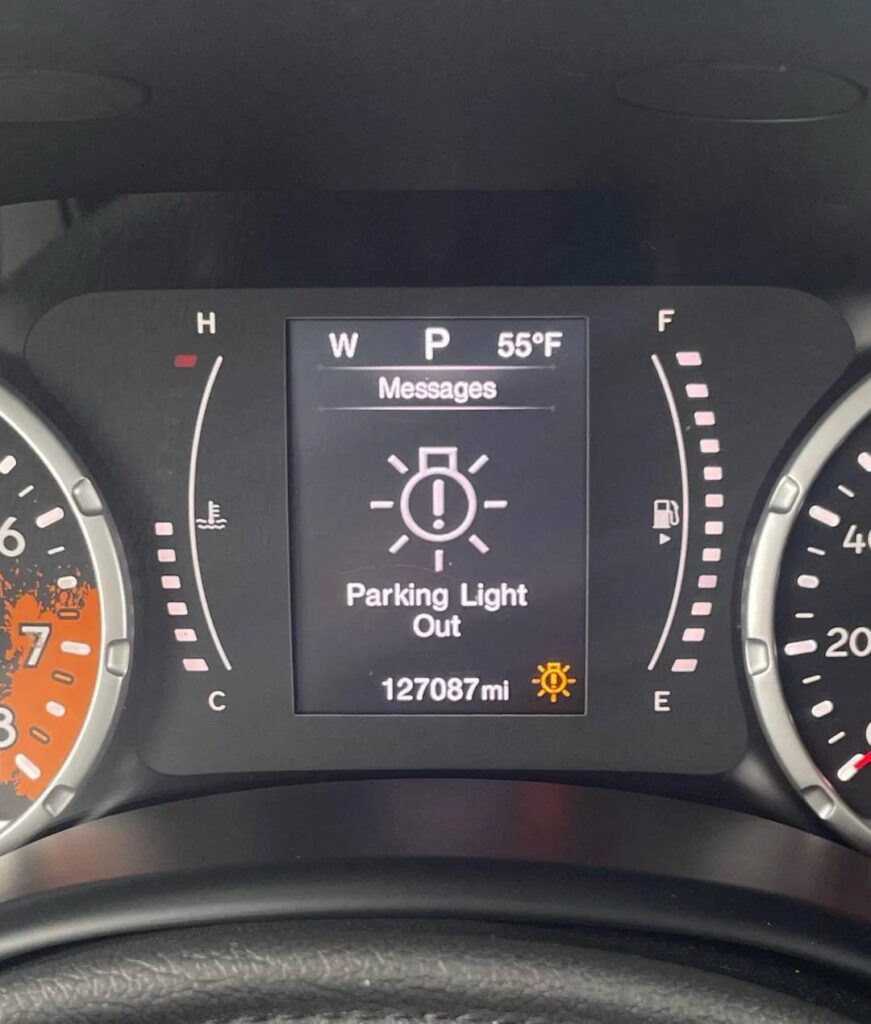
A Jeep Renegade parking light out warning may seem like a minor issue at first, but it should never be ignored. Parking lights play an essential role in improving your vehicle’s visibility, especially during low-light conditions, dusk, dawn, heavy rain, or when your car is parked along the roadside. Even if your headlights are working properly, a failed parking light can reduce your Jeep’s visibility to other drivers, increase the risk of accidents, and, in some areas, result in traffic citations.
Fortunately, a parking light failure is often easier to diagnose than many drivers expect. While a burned-out bulb is the most common cause, it is far from the only possibility. Problems such as a blown fuse, corroded bulb socket, damaged wiring, moisture inside the headlamp assembly, or even a malfunctioning Body Control Module (BCM) can all trigger a parking light failure.
This comprehensive guide will walk you through everything you need to know about diagnosing and repairing a Jeep Renegade parking light out problem. You’ll learn how the parking light system works, recognize the most common symptoms, identify the root cause, replace the faulty bulb, locate the appropriate fuse, estimate repair costs, and determine whether the repair is suitable for a DIY project or requires professional assistance.
By following the step-by-step troubleshooting process in this guide, you can save time, avoid unnecessary replacement parts, and restore your Jeep Renegade’s lighting system safely and efficiently.
What Does a Parking Light Do on a Jeep Renegade?
Parking lights are small exterior lights designed to make your Jeep Renegade more visible in dim conditions. They are commonly used at dusk, during light rain, in parking areas, or when the vehicle is stopped along a poorly lit road. Their main purpose is not to illuminate the road ahead, but to help other drivers recognize the width and position of your vehicle.
On many Jeep Renegade models, the parking lights are integrated into the front lighting assembly and may operate together with the rear position lamps, license plate lights, and side marker lights. Depending on the model year and trim level, the system may use traditional halogen bulbs, LED elements, or a combination of both.
Parking lights are often confused with daytime running lights and headlights, but each serves a different purpose. Daytime running lights are designed to improve visibility during daylight hours. Headlights provide stronger forward illumination for nighttime driving. Side marker lights help other road users identify the vehicle from an angle. Parking lights provide low intensity exterior illumination when full headlights are not required.
When the parking light switch is activated, the Body Control Module may monitor the circuit and detect changes in electrical resistance. If a bulb fails, a connector becomes loose, or the circuit draws an unexpected amount of power, the system may display a warning message on the dashboard. This is why a Jeep Renegade parking light out warning can appear even when the bulb still looks intact.
Understanding how the system works makes troubleshooting easier. Instead of replacing parts at random, you can check the bulb, fuse, socket, wiring, and control system in a logical order.
Symptoms of a Jeep Renegade Parking Light Out
The most obvious symptom is that one parking light does not illuminate when the lighting switch is turned on. However, parking light problems can appear in several different ways, and some signs are easier to miss than others.
A dashboard warning is one of the most common indications. Your Jeep Renegade may display a message related to a parking light, side light, or exterior lamp failure. In some cases, the warning appears immediately after starting the vehicle. In others, it may only appear after the lights have been switched on.
You may also notice that one side is darker than the other. This usually points to a failed bulb, poor socket connection, or damaged wiring on the affected side. If both parking lights stop working at the same time, the problem may involve a fuse, switch, shared power supply, ground connection, or Body Control Module.
Flickering is another important symptom. A parking light that turns on and off while driving often indicates a loose bulb, corroded socket, weak ground, or damaged connector. Flickering should not be ignored because intermittent electrical contact can generate heat and damage the socket over time.
A bulb that appears unusually dim may be receiving insufficient voltage. Corrosion, resistance in the wiring, or a weak ground connection can reduce brightness. If the light changes color, especially if it becomes yellow, orange, or uneven, the bulb may be nearing the end of its service life.
Some owners experience a Jeep Renegade parking light out warning after installing an LED replacement. The light may still illuminate, but the vehicle may detect the lower electrical resistance of the LED as a bulb failure. This is usually a compatibility issue rather than a defective bulb.
Moisture inside the lamp housing is another warning sign. Condensation, water droplets, or visible corrosion may indicate a damaged seal. Water intrusion can shorten bulb life, corrode terminals, and cause repeated lighting failures.
8 Common Causes of a Jeep Renegade Parking Light Out
1. Burned Out Bulb
A burned out bulb is the most common cause of a Jeep Renegade parking light out problem. Bulbs naturally wear out after repeated heating and cooling cycles. Road vibration, voltage fluctuations, and moisture can shorten their lifespan.
A failed incandescent bulb may have a broken filament or dark discoloration inside the glass. However, visual inspection is not always reliable. A filament can break in a way that is difficult to see, so testing the bulb or installing a known working replacement is often the fastest method.
When replacing the bulb, use the correct type for your specific Jeep Renegade model year and trim. Installing a bulb with the wrong wattage can trigger dashboard warnings, create excessive heat, or damage the socket.
2. Blown Fuse
A blown fuse can interrupt power to one or more exterior lights. Fuses are designed to protect the electrical system from excessive current. If a short circuit or overload occurs, the fuse opens the circuit before wiring or electronic modules are damaged.
If both parking lights fail at the same time, checking the relevant fuse is a sensible early step. However, fuse assignments can vary by model year, engine configuration, and market. Always consult the owner’s manual or the diagram printed inside the fuse box cover before removing a fuse.
A blown fuse should be replaced with another fuse of the same amperage rating. Using a higher rated fuse can allow excessive current to flow through the circuit and may create a fire risk. If the replacement fuse blows again, there is likely an underlying wiring problem that requires further diagnosis.
3. Corroded Bulb Socket
The bulb socket supplies power and ground to the parking light. Over time, moisture and road contaminants can corrode the metal contacts inside the socket. Corrosion increases electrical resistance and may cause dim lighting, flickering, warning messages, or complete failure.
Look for green or white residue, darkened terminals, melted plastic, or a loose fitting bulb. Light corrosion may sometimes be removed with electrical contact cleaner and a soft brush. Severe damage usually requires socket replacement.
A damaged socket can also cause repeated bulb failures. Poor contact creates heat, and that heat can damage both the bulb base and surrounding plastic components.
4. Loose or Damaged Wiring
Wiring problems are less common than bulb failures, but they become more likely when the light works intermittently. Wires can become loose, pinched, rubbed through, or damaged during previous repairs. Rodents, collision damage, and engine compartment heat may also affect the wiring harness.
Inspect the visible wiring near the headlamp assembly for cracked insulation, stretched sections, loose connectors, or exposed copper. Gently moving the harness while the parking light is switched on may reveal an intermittent connection. This procedure should be performed carefully to avoid creating a short circuit.
A multimeter can help determine whether the socket is receiving the correct voltage. If power is present but the bulb does not illuminate, the socket or ground connection may be faulty. If no voltage reaches the socket, the problem may be farther upstream in the circuit.
5. Faulty Connector or Ground Connection
The electrical connector behind the light assembly can loosen or develop corrosion. A poor connection may prevent current from reaching the bulb consistently. Ground problems can produce similar symptoms because the electrical circuit must have a complete return path to the battery.
A weak ground may cause the parking light to glow dimly, flicker, or behave differently when other lights are activated. For example, the parking light may dim when the turn signal or brake light operates.
Disconnect the connector and inspect the terminals for corrosion, bending, or heat damage. Electrical contact cleaner can help remove contamination, but burned or loose terminals may require connector replacement.
6. Water Intrusion
Moisture inside the lighting assembly can damage bulbs, sockets, and connectors. Water may enter through a cracked lens, damaged rear cover, worn seal, or improperly installed bulb.
A small amount of temporary condensation can occur after temperature changes, but persistent droplets or standing water indicate a sealing problem. Replacing the bulb without correcting the leak may only provide a temporary solution.
Inspect the lamp housing for cracks and make sure all access covers are installed correctly. Damaged seals should be replaced. If the assembly is badly cracked or internally corroded, replacing the complete unit may be more reliable than repeated repairs.
7. Body Control Module Malfunction
The Body Control Module, commonly called the BCM, manages many electrical functions in the Jeep Renegade, including exterior lighting. It may monitor bulb resistance, switch signals, and circuit performance.
A BCM problem is less common than a failed bulb or socket, but it should be considered when several exterior lights behave abnormally. Additional symptoms may include random warning messages, lights that remain on, lights that fail intermittently, or electrical accessories that operate unpredictably.
Diagnosing a BCM issue usually requires a professional scan tool capable of reading body control fault codes. Replacing the module without proper testing can be expensive and may not solve the problem. Some BCM repairs also require programming or vehicle specific configuration.
8. Incorrect LED Bulb Installation
Many Jeep Renegade owners replace standard bulbs with LEDs because they offer brighter output, lower power consumption, and longer service life. However, not every LED bulb is compatible with the vehicle’s monitoring system.
An LED may use much less current than a halogen bulb. The BCM can interpret this lower electrical load as a failed bulb and display a Jeep Renegade parking light out warning even though the LED is working.
Poor quality LEDs may also flicker, remain faintly illuminated after the vehicle is switched off, or fail prematurely. In some cases, a compatible CAN bus LED, decoder, or load resistor is required. Any resistor must be installed carefully because it can become extremely hot during operation.
Before upgrading, confirm that the LED is designed for the correct bulb position and is compatible with the Jeep Renegade’s electrical system. A properly matched replacement reduces the risk of warning messages, overheating, and repeated failures.
How to Diagnose a Jeep Renegade Parking Light Out Step by Step
Diagnosing a parking light problem does not require advanced mechanical skills in most cases. By following a systematic approach, you can identify the root cause without replacing unnecessary parts. Starting with the simplest components first can save both time and money.
Step 1. Inspect the Parking Light Bulb
Begin by turning off the ignition and allowing the headlight assembly to cool. Remove the parking light bulb according to your owner’s manual or service guide. Carefully inspect the bulb for a broken filament, dark spots inside the glass, or signs of overheating.
Even if the bulb appears to be in good condition, it may still be defective. Installing a new bulb or swapping it with a known working bulb is often the quickest way to confirm whether the bulb is the source of the problem.
If the replacement bulb works immediately, the original bulb was faulty. If the new bulb also fails to illuminate, continue with the next diagnostic step.
Step 2. Check the Fuse
Locate the fuse box and identify the fuse responsible for the parking light circuit. Refer to your Jeep Renegade owner’s manual because fuse assignments may vary depending on the model year and trim level.
Remove the fuse using a fuse puller and inspect the metal strip inside. If the strip is broken or burned, replace the fuse with another one of the exact same amperage.
After replacing the fuse, switch the parking lights on again. If the new fuse blows immediately, the circuit likely has a short that requires further electrical diagnosis.
Step 3. Examine the Bulb Socket
With the bulb removed, inspect the socket carefully. Look for corrosion, dirt, moisture, melted plastic, or bent terminals. These issues can interrupt electrical contact even when the bulb itself is functioning properly.
Use electrical contact cleaner to remove light corrosion. If the socket is severely damaged or loose, replacing it is usually more reliable than attempting a repair.
A secure and clean socket ensures proper electrical contact and can prevent repeated bulb failures.
Step 4. Test the Wiring and Voltage
If the bulb and socket appear normal, use a digital multimeter to check whether voltage is reaching the socket while the parking lights are switched on.
If voltage is present but the bulb does not illuminate, the socket or ground connection is likely faulty.
If no voltage is detected, inspect the wiring harness for damaged insulation, loose connectors, or broken wires between the fuse box and the headlight assembly.
Pay particular attention to areas where the wiring bends or passes near moving components, as these locations are more likely to experience wear.
Step 5. Scan for BCM Fault Codes
If every previous component checks out correctly, the Body Control Module may be preventing the parking light from operating normally.
Connect a compatible OBD-II scan tool capable of reading body control system codes. Diagnostic trouble codes can provide valuable information about communication faults, open circuits, short circuits, or module failures.
Although BCM issues are relatively uncommon, they should be investigated whenever multiple lighting functions fail simultaneously or electrical problems appear intermittently.
Following these five diagnostic steps in order allows you to eliminate the most common causes before considering more expensive repairs.
How to Replace a Jeep Renegade Parking Light Bulb
Replacing a parking light bulb is one of the easiest maintenance tasks for most Jeep Renegade owners. With basic hand tools and a replacement bulb, the job typically takes less than thirty minutes.
Tools Required
Prepare the following items before beginning the repair.
A replacement parking light bulb that matches your Jeep Renegade model year.
Protective gloves.
A clean microfiber cloth.
A flashlight.
A small flat screwdriver if necessary for access panels.
Electrical contact cleaner if corrosion is present.
Safety Precautions
Park the vehicle on a level surface and engage the parking brake.
Turn off the ignition and remove the key.
Allow the headlight assembly to cool completely before handling the bulb.
Avoid touching the glass portion of a halogen bulb with bare fingers because skin oils can shorten its lifespan.
Step 1. Open the Hood
Release the hood latch from inside the vehicle and secure the hood using the support mechanism.
Locate the rear of the headlight assembly on the side where the parking light has failed.
Step 2. Remove the Access Cover
Depending on the model year, remove the protective dust cover or access panel from the rear of the headlight housing.
Rotate the cover carefully and place it in a clean location to prevent contamination.
Step 3. Disconnect the Bulb Holder
Grip the parking light socket and rotate it counterclockwise until it releases from the housing.
Pull the socket straight out and remove the old bulb.
Inspect both the bulb and socket for signs of corrosion, discoloration, or heat damage.
Step 4. Install the New Bulb
Insert the new bulb firmly into the socket.
If installing a halogen bulb, handle it only by the base.
If installing an LED replacement, confirm that it is compatible with your Jeep Renegade’s electrical system before reassembly.
Step 5. Reinstall the Socket
Insert the socket back into the headlight housing.
Rotate it clockwise until it locks securely into place.
Reinstall the dust cover and make sure it seals properly to prevent moisture from entering the housing.
Step 6. Test the Repair
Switch on the parking lights before closing the hood.
Verify that the new bulb operates correctly and that no dashboard warning message remains.
If the warning persists despite the new bulb working normally, further diagnosis of the fuse, wiring, socket, or BCM may be necessary.
Jeep Renegade Parking Light Fuse Location
One of the first components to inspect when a parking light stops working is the fuse. A blown fuse can interrupt power to the lighting circuit and prevent one or both parking lights from operating.
The Jeep Renegade typically has multiple fuse boxes. The primary fuse box is located in the engine compartment near the battery, while another fuse panel may be located inside the cabin depending on the model year.
Because fuse layouts vary across production years and trim levels, always consult your owner’s manual or the fuse diagram attached to the fuse box cover before removing any fuse.
Once the correct fuse has been identified, remove it using a fuse puller and inspect the metal element inside. If the element is broken, replace the fuse with another one that has the identical amperage rating.
Never install a higher rated fuse in an attempt to solve the problem. Doing so can expose the wiring to excessive current and increase the risk of electrical damage.
If the replacement fuse blows shortly after installation, there is likely a short circuit somewhere in the wiring or lighting assembly. In this situation, replacing additional fuses without diagnosing the underlying fault is unlikely to resolve the issue.
When checking the fuse box, also inspect the surrounding terminals for corrosion, moisture, or loose connections. Electrical problems sometimes originate from poor contact rather than a failed fuse itself.
A quick fuse inspection can often save significant troubleshooting time and should always be performed before considering more complex electrical repairs.
DIY Repair vs Professional Repair
Many Jeep Renegade parking light issues can be resolved at home with basic tools and a little patience. Replacing a burned out bulb or a blown fuse is considered a beginner friendly repair and usually requires less than thirty minutes. However, more complex electrical problems involving damaged wiring, moisture inside the headlamp assembly, or a faulty Body Control Module may require specialized equipment and professional expertise.
Before deciding whether to perform the repair yourself or visit a repair shop, consider the complexity of the problem, the tools you have available, and your experience working on automotive electrical systems.
| Repair Type | Estimated DIY Cost | Estimated Professional Cost | Difficulty Level |
|---|---|---|---|
| Replace parking light bulb | $10 to $40 | $60 to $150 | Easy |
| Replace fuse | $2 to $10 | $50 to $120 | Very Easy |
| Replace bulb socket | $20 to $60 | $120 to $250 | Moderate |
| Repair damaged wiring | $15 to $80 | $150 to $500 | Moderate to Difficult |
| Replace headlight assembly | $150 to $600 | $300 to $900 | Moderate |
| Diagnose or replace BCM | Not recommended | $500 to $1,500 or more | Advanced |
DIY repair is usually the best option if the problem is limited to a bulb, fuse, or minor corrosion. These repairs require minimal investment and can often be completed using common household tools.
Professional service becomes the better choice if multiple exterior lights stop working simultaneously, dashboard warning messages continue after replacing the bulb, fuses repeatedly blow, or diagnostic scans indicate Body Control Module faults. Modern vehicles rely on complex electronic control systems, and incorrect repairs can sometimes create additional electrical issues.
Although professional repairs involve higher labor costs, they also provide access to manufacturer level diagnostic equipment and experienced technicians who can identify hidden faults more efficiently.
Tips to Prevent Future Parking Light Problems
Preventive maintenance is one of the easiest ways to reduce the risk of parking light failures. A few simple habits can significantly extend the life of bulbs, sockets, and other electrical components while helping you avoid unexpected dashboard warnings.
Always install replacement bulbs that meet the manufacturer’s specifications. Using incorrect wattage or poor quality aftermarket bulbs may cause premature failure, excessive heat, or compatibility issues with the vehicle’s electrical monitoring system.
Avoid touching the glass portion of halogen bulbs during installation. Oils from your skin create hot spots on the glass surface, which can shorten the bulb’s lifespan. If accidental contact occurs, clean the bulb with rubbing alcohol before installation.
Inspect the headlight housing periodically for cracks, damaged seals, or signs of water intrusion. Moisture is one of the leading causes of corrosion inside the lighting assembly. Replacing worn seals early can prevent much more expensive repairs later.
Keep electrical connectors clean and dry. If corrosion begins to develop, remove it promptly using an electrical contact cleaner designed specifically for automotive applications.
If you choose to upgrade to LED parking lights, purchase products specifically designed for Jeep Renegade models. High quality CAN bus compatible LEDs are less likely to trigger false warning messages or create electrical compatibility problems.
Whenever performing routine maintenance, take a few moments to verify that all exterior lights are functioning correctly. Catching a failing bulb early can prevent safety concerns and reduce the likelihood of additional electrical damage.
Finally, avoid ignoring intermittent flickering. A light that occasionally goes out is often an early warning sign of a loose connection, failing socket, or wiring problem. Addressing these symptoms early is usually far less expensive than waiting for complete failure.
Frequently Asked Questions
Why is my Jeep Renegade parking light out even though the bulb looks good?
A bulb may appear normal while still being internally defective. If the bulb is not the cause, inspect the fuse, bulb socket, wiring, ground connection, and Body Control Module. Electrical testing with a multimeter can help determine where power is being lost.
Can I continue driving with a parking light out?
Although the vehicle may still be drivable, it is not recommended. A failed parking light reduces visibility to other drivers, especially during dawn, dusk, rain, or when parked on the roadside. Depending on local traffic laws, driving with a defective exterior light may also result in a citation.
Where is the parking light fuse located?
The fuse location varies depending on the model year and trim level. Most Jeep Renegade models have a primary fuse box in the engine compartment, while additional fuses may be located inside the cabin. Always refer to the owner’s manual or the fuse box diagram before replacing any fuse.
Why does my parking light keep burning out?
Repeated bulb failure often indicates an underlying electrical problem rather than a defective bulb. Common causes include excessive charging voltage, corrosion inside the socket, poor electrical connections, moisture entering the headlamp assembly, or vibration caused by a loose bulb holder.
Can a bad battery cause parking light problems?
A weak battery alone rarely causes a single parking light to fail. However, unstable system voltage or charging system issues may contribute to electrical irregularities. If several electrical components behave abnormally, both the battery and alternator should be tested.
Will installing LED bulbs trigger a warning message?
It can. Many LED bulbs draw less electrical current than traditional halogen bulbs. The Jeep Renegade’s monitoring system may interpret the lower power consumption as a failed bulb. Installing high quality CAN bus compatible LEDs usually minimizes this issue.
How much does it cost to repair a Jeep Renegade parking light?
The total repair cost depends on the underlying problem. Replacing a bulb may cost less than forty dollars if you perform the repair yourself. Professional repairs involving damaged wiring, headlight assemblies, or Body Control Module replacement can range from several hundred to well over one thousand dollars.
Conclusion
A Jeep Renegade parking light out warning should never be dismissed as a minor inconvenience. While the most common causes include a burned out bulb or a blown fuse, the problem can also result from corroded sockets, damaged wiring, water intrusion, faulty connectors, or Body Control Module malfunctions.
The most effective troubleshooting approach is to begin with the simplest and least expensive components. Inspect the bulb, check the fuse, examine the socket, verify the wiring, and only then consider more advanced electrical diagnostics. This step by step process helps avoid unnecessary repairs and minimizes replacement costs.
Routine maintenance also plays an important role in preventing future lighting problems. Regularly inspecting exterior lights, replacing worn components promptly, keeping electrical connections clean, and using high quality replacement parts will improve reliability and enhance driving safety.
Whether you choose to repair the issue yourself or seek professional assistance, addressing the problem as soon as it appears helps ensure your Jeep Renegade remains visible, compliant with traffic regulations, and safe to drive in all lighting conditions.
If you have experienced a parking light failure on your Jeep Renegade, share your experience in the comments. Let us know what caused the issue and which repair successfully solved the problem. Your insights may help other owners diagnose their vehicles more quickly and confidently.