Uconnect is worth it for drivers who regularly use its integrated infotainment and connected vehicle features, but a paid subscription offers less value when Apple CarPlay or Android Auto already covers most of their daily needs. The real value depends on which Uconnect system your vehicle has, which services are included, and how often you use features that a smartphone cannot easily replace.
Uconnect is the infotainment and connected-vehicle system available across compatible Chrysler, Dodge, Jeep, Ram, and FIAT vehicles. Depending on the vehicle and system version, it can combine touchscreen controls, Bluetooth, smartphone integration, navigation, entertainment, voice commands, and connected vehicle services in one interface. Some functions come with the vehicle, while certain connected services may require a trial or paid subscription.
The key question is therefore not whether Uconnect has useful features, but whether those features justify the cost for your driving habits. A driver who relies on remote vehicle functions and integrated services can get more value from Uconnect than someone who mainly uses Google Maps, music, calls, and messaging through a connected phone.
This guide examines Uconnect’s cost, features, benefits, disadvantages, navigation, subscription value, and alternatives to help you decide whether Uconnect is worth paying for in your vehicle.
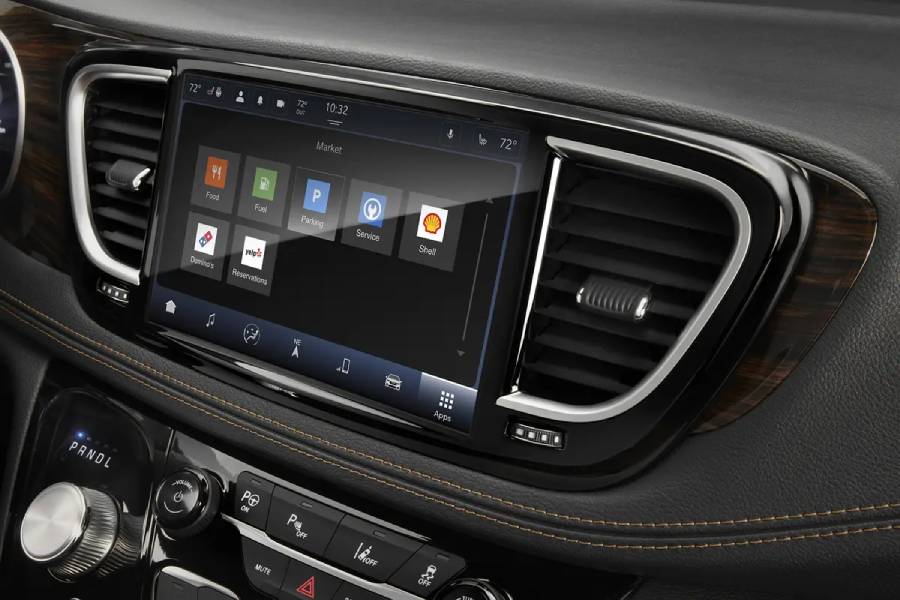
Is Uconnect Worth It?
Uconnect is worth it for drivers who value an integrated infotainment system and regularly use vehicle-specific connected features that a smartphone cannot fully replace. Its value becomes lower when a driver mainly needs navigation, music, calls, and messaging because Apple CarPlay or Android Auto can handle those functions through a compatible smartphone.
There are 5 main factors that determine whether Uconnect is worth it: the Uconnect version installed in the vehicle, the features included with that system, the connected services the driver actually uses, the availability of Apple CarPlay or Android Auto, and the cost of maintaining paid services. A Jeep owner who frequently uses compatible remote vehicle functions, for example, has a stronger reason to pay for connected services than a driver who primarily connects a phone for Google Maps and music.
The distinction between the Uconnect system and a Uconnect subscription is also important. Having Uconnect in a vehicle does not necessarily mean every function requires an ongoing payment. The infotainment hardware and supported built-in functions can remain part of the vehicle, while certain connected services may be offered through trials or subscription plans. The exact combination depends on the vehicle, model year, Uconnect system, and service availability.
For this reason, Uconnect should be evaluated according to the features that provide unique value rather than the total number of features advertised. Integrated vehicle functions and compatible connected services can make Uconnect valuable for one driver, while another driver may get most of the functionality they need from smartphone integration without paying for additional services.
What Is Uconnect and How Does It Work?
Uconnect is an integrated infotainment and connected-vehicle system used in compatible vehicles from brands such as Chrysler, Dodge, Jeep, Ram, and FIAT. It provides a central interface for supported entertainment, communication, navigation, smartphone connectivity, and vehicle functions, with available features varying by vehicle and Uconnect version.
The system primarily operates through the vehicle’s built-in touchscreen and related controls. Instead of using separate interfaces for audio, phone connectivity, navigation, and compatible vehicle settings, Uconnect brings these functions into one system. Drivers can use supported versions to manage media, connect a phone through Bluetooth, access compatible smartphone integration, use voice commands, and interact with available vehicle functions.
Uconnect can also work with Apple CarPlay and Android Auto on compatible systems. These platforms allow drivers to access supported smartphone applications through the vehicle’s display, including navigation, music, calls, and messaging. This creates an important distinction when evaluating Uconnect: Apple CarPlay and Android Auto complement the built-in infotainment system but can also replace the need for certain native infotainment functions in everyday driving.
Connected vehicle services add another layer to Uconnect. Depending on the vehicle and available service plan, supported connected functions can extend beyond the touchscreen and smartphone projection features. These services are particularly relevant when evaluating whether a paid Uconnect service is worth keeping because their value comes from vehicle integration rather than simply duplicating apps already available on a phone.
Uconnect should therefore be viewed as an ecosystem rather than a single subscription feature. The built-in infotainment system, smartphone integration, navigation, and connected services perform different functions, and not every owner receives or needs the same combination. Identifying which functions are already included and which require an additional service is the first step toward determining whether Uconnect provides enough value for its cost.
How Much Does Uconnect Cost?
The cost of Uconnect depends on the vehicle, model year, Uconnect system, and connected service plan because the infotainment system itself and subscription-based connected services are not the same product. Drivers should therefore separate the cost of the built-in Uconnect hardware and included functions from the recurring cost of optional connected services when determining whether Uconnect is worth paying for.
A vehicle equipped with Uconnect already contains the infotainment hardware associated with that configuration. The touchscreen, supported audio controls, Bluetooth connectivity, vehicle settings, and compatible smartphone integration do not become a separate monthly purchase simply because the vehicle uses Uconnect. The cost of this equipment is effectively tied to the vehicle or its selected trim and options rather than treated as one universal Uconnect subscription.
Connected services create the recurring-cost portion of the Uconnect ecosystem. These services can add functions that rely on communication between the vehicle, cellular connectivity, an associated account, and compatible mobile services. The exact package, trial period, price, and feature availability can differ by vehicle and model year. For that reason, owners should check the services available for their specific VIN or vehicle configuration rather than assuming that a price quoted for another Jeep, Ram, Dodge, Chrysler, or FIAT model applies to their vehicle.
The relevant value calculation is therefore straightforward: compare the recurring cost with the subscription-dependent features you actually use. Paying for a connected-service package makes more sense when several of its functions are used consistently. The value decreases when the driver pays primarily for functions that are already available through the vehicle’s standard equipment or a connected smartphone.
Which Uconnect Features Are Included With the Vehicle?
The Uconnect features included with a vehicle are the functions provided by its installed infotainment system and specific equipment configuration. These functions vary between vehicles, so there is no single feature list that applies to every Uconnect-equipped model.
Depending on compatibility, included functions can cover touchscreen infotainment controls, radio and media playback, Bluetooth phone connectivity, supported vehicle settings, voice functionality, Apple CarPlay, and Android Auto. A vehicle equipped with built-in navigation may also include navigation hardware and software as part of its configuration, although navigation capabilities and associated connected services should not automatically be treated as identical.
This distinction matters because an owner does not necessarily lose the entire Uconnect system when a connected-service trial or subscription ends. Built-in infotainment functions and subscription-dependent services operate as separate layers of the Uconnect ecosystem. Drivers evaluating cost should first identify which useful functions already belong to their vehicle before assigning value to an additional subscription.
Which Uconnect Features Require a Subscription?
Certain connected Uconnect services require an active service plan after any applicable trial period, while the exact subscription-dependent functions vary by vehicle and service availability. These are generally the features that require the vehicle to communicate with external connected services rather than functions performed entirely by the installed infotainment hardware.
Subscription value is strongest when these connected functions provide capabilities that the driver’s phone cannot directly replace. For example, a smartphone can provide navigation, music streaming, calls, and messaging through Apple CarPlay or Android Auto, but vehicle-specific remote or connected functions depend on integration with the vehicle itself when supported.
Drivers should verify the current connected-service package for their individual vehicle before purchasing or renewing it. Model year, hardware compatibility, market, and service changes can affect which features are offered. Evaluating the actual package prevents a misleading comparison in which the owner treats every advertised Uconnect capability as a feature available on their specific vehicle.
Does Uconnect Have a Free Trial?
Eligible Uconnect-equipped vehicles may include trial access to certain connected services, but trial availability and duration depend on the vehicle and applicable service offering. A trial allows an owner to test subscription-dependent functions before deciding whether those functions provide enough recurring value to justify paying for continued access.
The most useful way to evaluate a trial is to track actual usage rather than simply test every feature once. A feature used during the first few days because it is new does not necessarily justify a recurring payment. Features used repeatedly during normal commuting, road trips, parking, or daily vehicle operation provide stronger evidence that the service has practical value.
Before a trial expires, owners should identify which functions depend on the connected-service plan and which functions remain available through the vehicle’s built-in Uconnect system or smartphone integration. This creates a direct comparison between the subscription cost and the functions that would actually disappear without renewal.
What Features Do You Get With Uconnect?
Uconnect combines up to several major categories of vehicle technology, including infotainment controls, smartphone connectivity, communication, navigation, entertainment, voice functionality, vehicle settings, and compatible connected services. The exact feature set depends on the Uconnect generation, vehicle model, model year, trim, optional equipment, and active services.
Infotainment is the foundation of the system. The built-in display provides a central location for compatible audio sources, media controls, phone functions, and vehicle settings. This integration reduces the need to operate separate devices for common in-vehicle functions and allows supported controls to remain within an interface designed for the vehicle.
Smartphone connectivity expands the system through Bluetooth, Apple CarPlay, and Android Auto where supported. Bluetooth handles functions such as compatible hands-free calling and audio streaming, while Apple CarPlay and Android Auto bring supported smartphone apps onto the vehicle display. Drivers can therefore access familiar services for navigation, music, calls, and messaging without depending exclusively on native Uconnect applications.
Navigation is available on compatible Uconnect configurations. Its primary advantage is integration with the vehicle’s built-in display and controls rather than the need to mount and operate a separate navigation device. Its practical value depends on whether the driver prefers an integrated navigation system or already relies on smartphone-based services such as Apple Maps, Google Maps, or other compatible navigation applications.
Voice functionality provides another method of interacting with supported Uconnect functions. Instead of completing every action through touchscreen inputs, drivers can use compatible voice commands for selected communication, media, navigation, or system functions. The usefulness of this feature depends on the capabilities of the specific Uconnect system and the driver’s normal usage.
Connected vehicle services provide the clearest distinction between Uconnect and a smartphone-only infotainment setup. When a compatible vehicle and active service support them, connected functions can interact with vehicle-specific systems in ways that Apple CarPlay or Android Auto alone cannot reproduce. This integration is one of the strongest factors in favor of paying for Uconnect-related connected services.
The total number of available features should not determine whether Uconnect is worth it. A better measure is how many relevant features solve recurring driving needs. A driver who uses integrated vehicle functions and connected services every week receives more practical value than an owner who uses the Uconnect screen primarily to launch Apple CarPlay or Android Auto.
What Are the Main Benefits of Uconnect?
There are 5 main benefits of Uconnect: integrated vehicle controls, centralized infotainment, smartphone connectivity, built-in navigation on compatible systems, and access to vehicle-specific connected services. The strongest benefit is integration because Uconnect combines functions from the vehicle, infotainment system, and connected devices within an interface designed specifically for the vehicle.
Integrated vehicle controls provide value by keeping compatible vehicle functions within the factory-installed system. Unlike a smartphone app running through Apple CarPlay or Android Auto, Uconnect can interact with supported vehicle settings and systems directly. This makes Uconnect particularly useful when a driver wants one interface for both infotainment and vehicle-specific functions rather than switching between separate devices or applications.
Centralized infotainment is the second benefit. Uconnect combines compatible audio, media, communication, navigation, and vehicle settings through the built-in touchscreen and related controls. A driver can move between music, phone functions, vehicle settings, and other supported features without adding a separate aftermarket display. The practical benefit is not simply having more features; it is having frequently used functions integrated into the vehicle’s existing interface.
Smartphone connectivity adds value through Bluetooth, Apple CarPlay, and Android Auto on compatible Uconnect systems. These technologies allow drivers to combine the vehicle’s built-in interface with applications already used on their phones. For example, a driver can use Uconnect as the central display while accessing compatible navigation, music, calls, and messaging through Apple CarPlay or Android Auto. This combination makes the system more flexible because drivers are not limited to native infotainment functions.
Built-in navigation provides a fourth benefit on Uconnect systems equipped with navigation. An integrated navigation system uses the vehicle’s existing display and controls, eliminating the need for a separate navigation device. This can be useful for drivers who prefer a factory-integrated interface. However, the value of this benefit decreases for owners who are satisfied with smartphone navigation through Apple CarPlay or Android Auto.
Vehicle-specific connected services provide the fifth and most important benefit when evaluating a paid Uconnect service. Compatible connected functions can interact with the vehicle rather than simply display smartphone applications. This distinction gives connected services potential value that smartphone projection cannot completely duplicate. Drivers who use supported vehicle-specific functions regularly have a stronger reason to maintain an applicable service plan.
These benefits do not provide equal value to every owner. A driver who uses vehicle integration, connected services, and several built-in functions receives value from multiple parts of the Uconnect ecosystem. A driver who opens Apple CarPlay immediately after starting the vehicle and performs nearly every daily task through a smartphone receives less unique value from additional paid services.
What Are the Main Disadvantages of Uconnect?
There are 5 main disadvantages of Uconnect: recurring costs for certain connected services, overlap with smartphone features, differences between vehicle configurations, dependence on compatible hardware and services, and limited subscription value for drivers who rarely use connected functions. These disadvantages matter because the question is not whether Uconnect works as an infotainment system, but whether its unique functions justify any additional cost.
Recurring cost is the clearest disadvantage when a desired feature requires an active connected-service plan. A useful feature does not automatically represent good value if the owner rarely uses it. For example, paying continuously for a package becomes difficult to justify when its subscription-dependent functions are used only a few times per year. Drivers should therefore calculate value according to recurring usage rather than the length of the feature list.
Feature overlap creates a second disadvantage. Apple CarPlay and Android Auto already provide access to major smartphone functions such as navigation, music, calls, and messaging on compatible vehicles. A driver who relies on Google Maps, Apple Maps, Spotify, podcasts, or other supported smartphone applications may find that a large portion of everyday infotainment needs can be handled without additional connected services. In this situation, Uconnect remains useful as the vehicle’s infotainment interface, but the case for paying for overlapping services becomes weaker.
Differences between vehicle configurations can also make Uconnect difficult to evaluate as one product. Uconnect capabilities vary according to factors such as vehicle model, model year, installed system, trim, optional equipment, and service availability. A feature available in one Jeep or Ram configuration should not be assumed to exist in another Uconnect-equipped vehicle. Buyers comparing vehicles should evaluate the specific system installed in each vehicle rather than relying on a generic Uconnect feature list.
Compatibility creates a related limitation. Advanced functions depend on the hardware and services supported by the individual vehicle. Software alone cannot necessarily add every feature associated with newer or differently equipped Uconnect systems. This becomes especially important when purchasing a used vehicle because the presence of a Uconnect touchscreen does not establish that every current Uconnect feature or connected service is supported.
Limited usage is the fifth disadvantage and the primary reason a subscription may not be worth paying for. Connected services generate value when their vehicle-specific functions solve recurring problems. An owner who regularly uses those functions can justify the cost through convenience. An owner who rarely uses them is paying for availability rather than practical utility.
The disadvantages therefore affect the subscription decision more than the basic usefulness of Uconnect itself. Uconnect can remain valuable as an integrated infotainment system even when paying for additional connected services is unnecessary. Separating these two questions prevents owners from treating “Is Uconnect good?” and “Is a Uconnect subscription worth paying for?” as the same decision.
Uconnect Navigation is worth it for drivers who specifically value factory-integrated navigation, but it provides less additional value for drivers who are satisfied with navigation apps through Apple CarPlay or Android Auto. The decision depends primarily on whether integrated navigation solves a problem that smartphone navigation does not solve for the individual driver.
The main advantage of Uconnect Navigation is integration with the vehicle’s infotainment system. On compatible configurations, navigation operates through the factory-installed display and controls rather than requiring a separate navigation device. This creates a consistent interface for drivers who prefer to keep navigation within the vehicle’s built-in system instead of relying primarily on a connected phone.
Integrated navigation also reduces dependence on using a smartphone as the primary navigation interface. A driver who prefers factory-installed systems can access navigation through the Uconnect environment without switching to a smartphone projection platform for every trip. This distinction matters most to owners who place a high value on an integrated driving experience.
The main limitation is that Apple CarPlay and Android Auto provide strong alternatives on compatible Uconnect systems. These platforms allow drivers to use supported smartphone navigation applications through the vehicle display. For someone who already uses Google Maps, Apple Maps, or another compatible navigation app for most trips, built-in navigation may duplicate a function that is already available through a device the driver carries every day.
Navigation value should therefore be measured by usage rather than availability. A driver who consistently chooses the built-in navigation system gains practical value from having it. A driver who bypasses it and opens a preferred smartphone navigation app on nearly every trip receives little additional value from the native navigation feature.
Uconnect Navigation is consequently most valuable for drivers who prefer an integrated navigation experience and actively use it. It is less compelling as a reason to pay extra when smartphone navigation already satisfies the driver’s route guidance needs.
Is Uconnect Worth It If You Have Apple CarPlay or Android Auto?
Uconnect can still be worth it when you have Apple CarPlay or Android Auto because Uconnect manages vehicle-integrated functions that smartphone projection does not fully replace. However, Apple CarPlay and Android Auto reduce the value of paying for Uconnect-related services when the driver’s main needs are navigation, music, calls, messaging, and access to supported smartphone apps.
Apple CarPlay and Android Auto operate as smartphone integration platforms within compatible infotainment systems. They bring supported phone applications and services onto the vehicle display, while Uconnect remains the underlying vehicle infotainment environment. The technologies therefore overlap in some areas but are not complete substitutes for one another.
There are 4 major areas where Apple CarPlay or Android Auto can reduce the need for additional infotainment functions: navigation, audio entertainment, phone calls, and messaging. For example, a driver can connect a compatible smartphone, open a preferred navigation application, stream music, make calls, and access supported messages through the vehicle display. If these activities represent most of the driver’s infotainment usage, paying for services that primarily duplicate them provides limited additional value.
Vehicle-specific integration is where Uconnect maintains a clearer advantage. Uconnect is designed as part of the vehicle’s infotainment environment and can provide access to supported vehicle settings and functions. Compatible connected vehicle services can also provide functions tied directly to the vehicle. Apple CarPlay and Android Auto primarily extend a smartphone into the vehicle interface rather than replacing every vehicle-specific capability of the factory infotainment system.
The difference can be illustrated by two types of drivers. The first driver uses Apple CarPlay for Google Maps, music, calls, and messages and rarely uses subscription-dependent connected vehicle functions. That driver receives substantial value from the built-in Uconnect interface but has a weaker reason to maintain additional paid services. The second driver uses smartphone projection for media and navigation while also relying on compatible vehicle-specific connected functions. That driver receives value from both systems because they perform different jobs.
Apple CarPlay and Android Auto should therefore be treated as factors in the Uconnect value calculation rather than automatic replacements for Uconnect. They substantially reduce duplication for smartphone-based infotainment, but they do not make the vehicle’s integrated infotainment environment unnecessary.
The practical decision is to identify which functions belong to each system. Use Apple CarPlay or Android Auto when a smartphone already handles the required task effectively. Value Uconnect for the integrated vehicle functions and compatible connected services that the phone does not replace. Paying for additional services makes sense only when those unique functions are used frequently enough to justify their recurring cost.
Who Should Pay for Uconnect?
Drivers should pay for Uconnect-related connected services when they regularly use vehicle-specific functions that provide more practical value than their recurring cost. The strongest candidates are drivers who use connected vehicle features frequently, prefer factory-integrated services, rely on compatible remote functions, or want capabilities that Apple CarPlay and Android Auto do not replace.
Drivers who regularly use connected vehicle functions have the clearest reason to maintain an applicable subscription. The value comes from integration with the vehicle rather than from duplicating ordinary smartphone applications. If a supported connected function becomes part of a driver’s weekly routine, losing access to it creates a measurable inconvenience. In that situation, the subscription pays for a function the owner actively uses rather than a collection of features that remain unused.
Drivers who value an integrated vehicle experience are another relevant group. Uconnect is designed to combine compatible infotainment, communication, navigation, vehicle settings, and connected functions within the vehicle environment. Some owners prefer this integration over relying on several separate applications and devices. The benefit is strongest when the owner consistently uses the integrated functions rather than immediately switching to a smartphone interface after starting the vehicle.
Owners who frequently use compatible remote vehicle services can also receive stronger subscription value. Vehicle-specific remote functions are fundamentally different from smartphone-based music, messaging, or navigation because the service interacts with the vehicle itself. Where the owner’s vehicle and service plan support these capabilities, frequent use provides a stronger justification for recurring costs than features that can be replaced by free or already-paid-for smartphone applications.
Frequent drivers can have a stronger case for paying as well, provided they actually use the relevant features. A driver who spends substantial time in the vehicle has more opportunities to benefit from integrated and connected functions than an owner who drives only occasionally. Driving frequency alone does not make a subscription worthwhile, but frequent driving combined with repeated feature usage increases the potential value received from the service.
The best way to determine whether you belong in one of these groups is to measure actual behavior. Identify the subscription-dependent Uconnect functions you used during a normal month and separate them from features supplied by the vehicle itself, Apple CarPlay, Android Auto, or your smartphone. A paid service has a stronger value proposition when several unique functions are used repeatedly.
Who Does Not Need a Uconnect Subscription?
Drivers do not need a Uconnect subscription when their essential infotainment needs are already met by the vehicle’s included features and smartphone integration, and they rarely use subscription-dependent connected services. For these owners, allowing an optional connected-service plan to expire does not necessarily remove the practical functions they rely on during everyday driving.
Drivers who primarily use Apple CarPlay are one example. Apple CarPlay can provide compatible access to navigation, music, calls, messaging, and supported apps through the vehicle display. An iPhone user who performs nearly every infotainment task through CarPlay should examine whether any paid Uconnect function adds something important beyond that existing setup. If the answer is no, the subscription has limited incremental value.
The same logic applies to drivers who primarily use Android Auto. A compatible Android phone can provide navigation, audio, communication, and supported applications through the infotainment display. A driver who relies on Google Maps and smartphone-based media, for example, has less reason to pay specifically for overlapping infotainment capabilities.
Drivers who rarely use connected vehicle functions are another group that may not need a subscription. Subscription services create value through use, not simply through availability. Paying throughout the year for a feature used once or twice produces a weak value proposition even when the feature itself works well. Owners in this situation should distinguish between functions that are convenient to have and functions that materially improve their normal vehicle use.
Low-frequency drivers should make the same assessment. An owner who drives a vehicle occasionally has fewer opportunities to benefit from recurring connected services. A subscription can still make sense when a particular vehicle-specific function is important, but low vehicle usage reduces the likelihood that a broad package will generate enough recurring benefit to justify its cost.
Drivers satisfied with their existing setup also have little reason to subscribe solely because additional Uconnect services are available. A vehicle can still use its compatible built-in Uconnect functions while the owner relies on a smartphone for other tasks. The presence of a subscription option does not mean the system requires that subscription to provide value.
The decision should therefore be based on unique feature usage. List the paid functions you would lose without the service and determine how frequently you use each one. If those functions are rarely used or easily replaced by existing smartphone tools, skipping the subscription is the more economical choice. If several vehicle-specific functions have become part of normal driving or vehicle management, maintaining the applicable service becomes easier to justify.
What Happens If You Do Not Renew Uconnect?
If you do not renew an applicable Uconnect connected-service subscription, subscription-dependent services can stop working, while compatible features built into the vehicle’s infotainment system can remain available. Letting a service plan expire should therefore not be interpreted as removing the entire Uconnect system from the vehicle.
The key distinction is between built-in functions and connected services. The Uconnect hardware installed in the vehicle performs functions independently from an optional connected-service subscription. Compatible touchscreen controls, vehicle settings, radio and media functions, Bluetooth, and supported smartphone integration belong to the infotainment configuration rather than existing solely because an owner maintains a connected-service plan.
Subscription-dependent functions are different because they rely on an active service. When an applicable trial or paid plan ends, the connected features associated with that plan can become unavailable. The exact functions affected depend on the vehicle, model year, installed Uconnect system, market, and service package. Owners should check the current service information associated with their specific vehicle before renewal rather than relying on a generic list of Uconnect features.
Apple CarPlay and Android Auto should also be evaluated separately from subscription-dependent connected services. On compatible systems, smartphone projection is part of the relationship between the phone and vehicle infotainment system rather than a reason by itself to maintain every optional Uconnect connected-service package. This distinction is important for owners who use their phones for navigation, music, calls, and messaging.
A subscription expiration can therefore provide a useful test of Uconnect’s actual value. Identify the functions that require renewal and compare them with the functions you use during normal driving. If losing those connected functions would have little effect on how you use the vehicle, renewing provides limited practical value. If several unavailable functions are used frequently and cannot be replaced effectively by existing vehicle or smartphone features, renewal becomes easier to justify.
How Can You Decide Whether Uconnect Is Worth It for Your Vehicle?
You can decide whether Uconnect is worth it by evaluating 5 factors: vehicle compatibility, actual feature usage, smartphone alternatives, unique connected functions, and recurring cost. This method separates features that look useful on a specification sheet from functions that provide measurable value during vehicle ownership.
First, identify the Uconnect system installed in your vehicle. Uconnect is not one identical product across every Chrysler, Dodge, Jeep, Ram, or FIAT vehicle. Model year, trim, hardware, optional equipment, and service availability affect the features an individual vehicle supports. Evaluating the correct configuration prevents you from assigning value to capabilities your vehicle does not have.
Second, identify which Uconnect functions you actually use. Review a normal period of driving rather than remembering unusual situations in which a feature was useful once. Regular use is a stronger measure of value because recurring subscription costs require recurring benefits. A function used several times during normal vehicle operation carries more weight than a feature that remains unused for months.
Third, determine which needs are already covered by Apple CarPlay, Android Auto, or other smartphone functions. Navigation, music, calls, messaging, and supported applications can overlap substantially with smartphone integration. If a phone already performs these tasks effectively, their availability elsewhere should not be counted again when calculating the unique value of a paid Uconnect service.
Fourth, identify the functions your smartphone cannot replace. Vehicle-specific connected capabilities deserve greater weight because they represent a clearer difference between Uconnect-related services and ordinary phone applications. A driver who repeatedly uses these unique functions has a stronger reason to pay than a driver whose entire infotainment routine consists of smartphone-based navigation and media.
Fifth, compare the remaining benefits with the recurring cost. Do not calculate value from the total number of advertised features. Calculate it from the subscription-dependent features you expect to use consistently. A package containing numerous functions is still poor value when only one minor feature is used, while a smaller set of frequently used vehicle-specific capabilities can justify the expense.
Uconnect is worth it when its integrated or subscription-dependent features solve recurring vehicle needs that your existing smartphone setup cannot replace efficiently. It is less likely to be worth paying for when Apple CarPlay or Android Auto handles nearly every daily infotainment task and the connected vehicle functions remain unused.
For many owners, the best decision is therefore not simply to choose between “Uconnect” and “no Uconnect.” The more useful distinction is between the Uconnect system already integrated into the vehicle and optional connected services that create recurring costs. Keep using the built-in system for the functions it performs well, and pay for additional services only when their unique capabilities provide enough recurring value to justify the expense.