Motor oil plays a critical role in engine performance, durability, and long-term maintenance costs. Choosing the right oil is no longer just about selecting the correct viscosity grade. Modern engines also require lubricants that meet strict industry standards for wear protection, oxidation resistance, sludge control, and fuel efficiency. As Costco’s private-label engine oil, Kirkland Motor Oil has attracted significant attention because it offers full synthetic formulations at a noticeably lower price than many premium competitors.
Yes, Kirkland Motor Oil is a good choice for most drivers because it meets modern industry certifications, delivers reliable engine protection, and offers excellent value for money. Its full synthetic formula is designed to protect engines from wear, resist high-temperature breakdown, reduce harmful deposits, and maintain stable performance throughout the recommended oil change interval. These characteristics make it suitable for many modern gasoline-powered vehicles that require engine oils meeting current API and ILSAC specifications.
However, price alone should never determine whether a motor oil is the right choice. Manufacturing quality, certification standards, real-world performance, compatibility with different engines, and long-term reliability all influence how well an oil protects an engine over thousands of miles. Understanding these factors provides a more accurate picture than simply comparing brands on the store shelf.
This review examines every aspect of Kirkland Motor Oil, including who manufactures it, the certifications it meets, its engine protection capabilities, real-world driving performance, comparisons with leading synthetic oil brands, and whether it offers enough value to justify choosing it over more established alternatives. By the end of this guide, you will have a clear understanding of whether Kirkland Motor Oil is the right option for your vehicle and driving conditions.
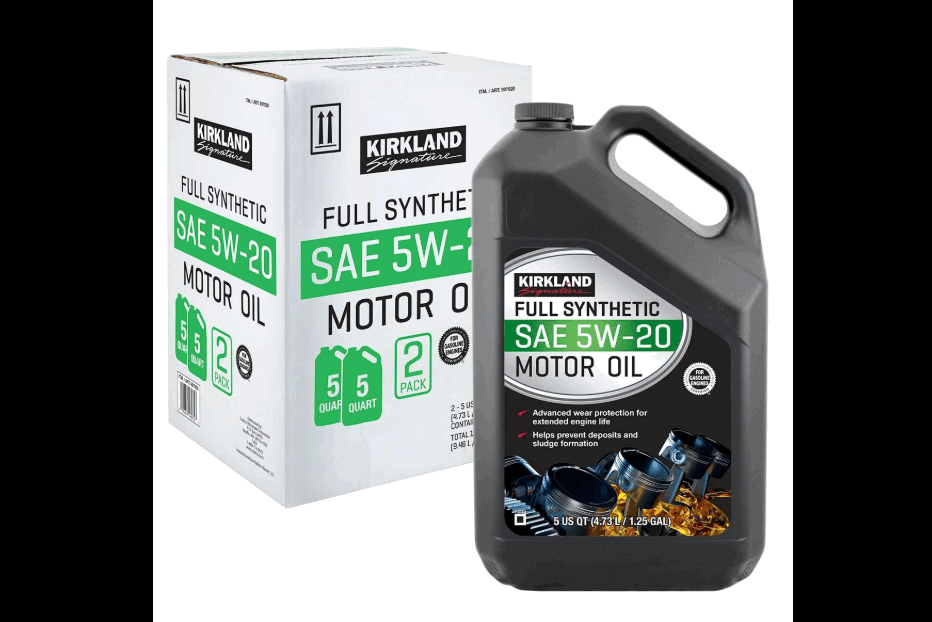
Is Kirkland Motor Oil Good?
Yes, Kirkland Motor Oil is a good full synthetic oil for most drivers. It meets modern industry standards and provides dependable engine protection. It also costs less than many premium brands. That combination makes it one of the strongest value options in the synthetic motor oil market.
Kirkland Motor Oil performs well because it uses a modern synthetic formulation. The oil helps reduce engine wear during daily driving. It also controls sludge and harmful deposits that develop over time. In addition, it resists oxidation under high temperatures and maintains stable viscosity in cold weather. These characteristics help protect critical engine components throughout the recommended oil change interval.
Another advantage is its compliance with current industry certifications. Modern gasoline engines require oils that meet strict performance standards. These standards evaluate wear protection, fuel economy, timing chain durability, and low-speed pre-ignition prevention. An oil that passes these tests has demonstrated its performance through standardized engine testing instead of relying only on marketing claims.
For most vehicle owners, Kirkland Motor Oil delivers everything needed for normal driving conditions. It performs well during city commuting, highway travel, and long-distance trips. However, some drivers may still prefer premium brands. This includes those who tow heavy loads, participate in motorsports, or extend oil change intervals beyond the manufacturer’s recommendation. Even so, Kirkland Motor Oil remains an excellent choice for drivers who want reliable protection without paying a premium price.
Who Makes Kirkland Motor Oil and Does It Affect Quality?
Kirkland Motor Oil is sold under Costco’s Kirkland Signature brand, but Costco does not manufacture the oil itself. Like many private-label automotive products, Kirkland Motor Oil is produced by an established lubricant manufacturer that follows Costco’s quality and performance requirements. This business model is common throughout the automotive industry. Many retailers work with experienced manufacturers to produce engine oils that meet recognized industry specifications while keeping costs competitive.
The company behind a motor oil matters because manufacturing expertise directly affects product consistency and quality control. Producing modern synthetic engine oil requires advanced blending equipment, carefully selected base oils, and precisely balanced additive packages. Every production batch must meet strict viscosity, volatility, and performance targets before it reaches consumers. A reputable manufacturer also performs regular testing to verify that each formulation continues to satisfy current API and ILSAC requirements.
Many drivers assume that a private-label motor oil is automatically inferior to premium brands. That assumption is often incorrect. A private-label product can deliver comparable protection when it is formulated to meet the same industry certifications as leading competitors. Passing standardized engine tests requires an oil to demonstrate acceptable performance in wear protection, oxidation resistance, sludge prevention, and fuel economy. These requirements are based on measurable results rather than brand reputation.
For most vehicle owners, the manufacturer’s identity is less important than the oil’s certified performance. The certifications printed on the bottle provide stronger evidence of quality than the brand name alone. If an engine oil meets the specifications required by the vehicle manufacturer, it has demonstrated that it can protect the engine under standardized operating conditions. That is why many drivers evaluate Kirkland Motor Oil by its certifications, real-world performance, and overall value instead of focusing only on who produces it.
Does Kirkland Motor Oil Meet Modern Engine Oil Standards?
Yes, Kirkland Motor Oil meets modern engine oil standards for many gasoline-powered vehicles. Its full synthetic formulations carry current industry certifications that verify engine protection, cleanliness, fuel efficiency, and durability. These approvals show that the oil has passed standardized laboratory and engine tests instead of relying on advertising claims. Drivers should still confirm that the viscosity grade and specifications match the requirements listed in their owner’s manual.
One of the most important certifications is API SP. This specification was developed to improve protection for today’s gasoline engines. It evaluates an oil’s ability to reduce engine wear, prevent harmful deposits, resist oxidation, and minimize low-speed pre-ignition in turbocharged direct-injection engines. It also includes testing for timing chain wear, which has become increasingly important in modern engine designs.
Kirkland Motor Oil also meets ILSAC GF-6A requirements for most viscosity grades. This certification focuses on fuel economy, engine cleanliness, sludge control, and long-term durability. It also helps protect emission control systems by limiting harmful deposits and maintaining stable oil performance throughout the recommended service interval. Meeting both API SP and ILSAC GF-6A demonstrates that the oil satisfies the performance standards expected by many vehicle manufacturers.
Some Kirkland Motor Oil products also meet dexos1 Gen 3 requirements for compatible vehicles. This specification, developed by General Motors, includes additional testing for oxidation resistance, piston cleanliness, turbocharger protection, and engine durability under demanding operating conditions. Drivers who own GM vehicles should always verify that the selected oil carries the required dexos approval before each oil change.
These certifications matter because they provide objective evidence of performance. Instead of choosing an engine oil based only on brand recognition, drivers can compare products using the same industry standards. When an oil meets the specifications recommended by the vehicle manufacturer, it has demonstrated that it can deliver the level of protection required for normal engine operation.
How Well Does Kirkland Motor Oil Protect an Engine?
Kirkland Motor Oil provides reliable engine protection for most modern gasoline engines. Its full synthetic formula is designed to reduce friction, control deposits, and maintain stable performance under different driving conditions. These characteristics help extend engine life when the oil is used with the correct viscosity grade and replaced at the recommended service interval. For most daily drivers, the level of protection is comparable to other synthetic oils that meet the same industry standards.
Engine wear protection is one of the oil’s greatest strengths. Every time an engine starts, metal components create friction before full oil pressure is established. A quality synthetic oil forms a protective lubricating film that separates moving parts and reduces direct metal-to-metal contact. This protection helps minimize wear on pistons, camshafts, bearings, valve train components, and timing chains. As a result, the engine can maintain smoother operation over thousands of miles.
Kirkland Motor Oil also helps keep the engine clean. Its detergent and dispersant additives suspend dirt, soot, and combustion by-products before they accumulate as sludge or varnish. Cleaner internal components improve oil circulation and reduce the risk of restricted oil passages. They also support better heat transfer, allowing the engine to operate more efficiently during both short trips and extended highway driving.
Thermal stability is another important advantage. Synthetic base oils resist oxidation more effectively than conventional oils when exposed to high operating temperatures. This resistance slows oil breakdown and helps preserve viscosity throughout the service interval. At the same time, the oil remains fluid during cold starts, allowing faster circulation when the engine is first started. Stable lubrication in both hot and cold conditions reduces stress on critical engine components and contributes to consistent long-term performance.
Overall, Kirkland Motor Oil delivers the protection most drivers expect from a modern full synthetic lubricant. It combines wear resistance, engine cleanliness, thermal stability, and cold-start performance in a balanced formulation. When the oil matches the manufacturer’s specifications, it provides dependable protection for everyday driving without requiring the premium price of many leading brands.
How Does Kirkland Motor Oil Perform in Real-World Driving?
Kirkland Motor Oil performs well in everyday driving conditions where consistent lubrication and engine protection matter most. Its full synthetic formulation maintains stable performance during city traffic, highway cruising, and long-distance travel. The oil is engineered to protect modern gasoline engines throughout the recommended oil change interval. For most drivers, it delivers dependable performance without noticeable differences from other synthetic oils that meet the same specifications.
City driving places extra stress on engine oil because frequent stops, short trips, and repeated cold starts prevent the engine from reaching its ideal operating temperature. Under these conditions, moisture and fuel dilution can build up inside the crankcase. Kirkland Motor Oil helps control these contaminants through its detergent and dispersant additives. These additives keep internal engine components cleaner and reduce sludge formation during daily commuting.
Highway driving creates a different challenge. Engines operate for longer periods at higher temperatures and consistent speeds. A quality synthetic oil must resist thermal breakdown while maintaining the correct viscosity. Kirkland Motor Oil performs well in these conditions because its synthetic base oils remain stable under heat. Stable viscosity allows the oil to maintain a protective film between moving engine parts, reducing wear during extended trips.
The oil also performs reliably in changing weather conditions. During cold starts, it flows quickly to critical engine components and reduces start-up wear. In hot climates, it resists oxidation and helps prevent excessive oil thickening. This balanced performance supports smooth engine operation throughout the year, provided the correct viscosity grade is used for the local climate and the vehicle manufacturer’s recommendations.
Real-world performance also depends on proper maintenance. Even the best synthetic motor oil cannot compensate for delayed oil changes or an incorrect viscosity grade. Drivers who follow the recommended maintenance schedule can expect consistent engine protection, stable performance, and reliable lubrication from Kirkland Motor Oil. These qualities explain why many owners consider it a practical and cost-effective choice for everyday driving.
How Does Kirkland Motor Oil Compare With Other Brands?
Kirkland Motor Oil competes directly with many leading full synthetic motor oils. It meets the same major industry certifications as several premium products while costing much less per quart. Many drivers choose it because it delivers dependable engine protection without increasing maintenance costs. The best motor oil, however, always depends on your vehicle, driving style, and maintenance routine.
Mobil 1 leads the premium synthetic oil market with a strong reputation for engine protection and extended drain performance. Engineers formulate many Mobil 1 products for severe driving conditions, high-performance engines, and long oil change intervals. Kirkland Motor Oil focuses on a different market. It delivers reliable protection during normal service intervals instead of emphasizing extended drain capability. For everyday driving, both products satisfy the needs of most modern gasoline engines when drivers follow the manufacturer’s recommendations.
Pennzoil Platinum attracts drivers who prioritize engine cleanliness. Its PurePlus Technology helps reduce deposits and keeps internal engine components clean over time. Kirkland Motor Oil also controls sludge and deposits effectively through its synthetic formulation and additive package. Most drivers will notice very little difference when they replace either oil at the recommended interval.
Castrol EDGE targets demanding driving conditions, including heavy acceleration, high temperatures, and increased engine loads. Valvoline Advanced Full Synthetic also focuses on wear protection and long-term durability. Kirkland Motor Oil delivers similar everyday protection, although it does not position itself as a premium performance product. Instead, it balances performance and affordability for the average driver.
SuperTech Full Synthetic remains Kirkland Motor Oil’s closest competitor. Both products target budget-conscious drivers who want certified full synthetic protection. They share many of the same industry approvals and perform well in daily driving conditions. Drivers should focus on selecting the correct viscosity grade and required certifications before comparing brand names. That decision protects the engine far more than choosing the most expensive bottle on the shelf.
What Are the Pros and Cons of Kirkland Motor Oil?
Kirkland Motor Oil offers an impressive balance of performance and affordability. It gives most drivers the protection they expect from a modern full synthetic lubricant without the premium price. That value explains why many Costco members choose it for routine maintenance. Although it performs well in everyday driving, it may not suit every vehicle or maintenance strategy.
One of its biggest advantages is its competitive price. Drivers often pay much less than they would for premium synthetic brands while receiving similar industry certifications. Kirkland Motor Oil also meets current API SP and ILSAC GF-6 standards for many viscosity grades. These certifications confirm that the oil protects against wear, controls deposits, improves oxidation resistance, and supports fuel-efficient engine operation.
Another benefit is its dependable everyday performance. The synthetic formulation flows well during cold starts and maintains stable viscosity at high operating temperatures. It also keeps internal engine components cleaner by limiting sludge and varnish formation. When drivers follow the recommended oil change interval, the oil provides consistent lubrication for commuting, highway driving, and long-distance travel.
Despite these strengths, Kirkland Motor Oil has a few limitations. Costco sells the product almost exclusively through its own stores and website, so availability remains more limited than brands found at most automotive retailers. The product line also offers fewer specialized formulations than some premium competitors. Drivers who own high-performance vehicles or follow extended oil change intervals may prefer products that specifically target those applications.
Overall, the advantages outweigh the disadvantages for most vehicle owners. Kirkland Motor Oil combines certified performance, reliable engine protection, and excellent value in one product. Drivers who want a dependable full synthetic oil at a reasonable price will likely find that it meets their needs without sacrificing engine protection.
Conclusion
Yes, Kirkland Motor Oil is a good choice for most drivers who want dependable engine protection at a competitive price. It meets current industry certifications, performs well in everyday driving, and delivers the benefits that most modern gasoline engines require. Its synthetic formulation helps reduce wear, control deposits, resist oxidation, and maintain stable viscosity throughout the recommended oil change interval.
Kirkland Motor Oil may not replace every premium product on the market, especially for drivers who demand extended drain intervals or maximum performance under extreme conditions. However, most vehicle owners do not need those specialized features for daily driving. Instead, they need an engine oil that matches the manufacturer’s specifications, protects critical engine components, and provides consistent performance over time. Kirkland Motor Oil fulfills those requirements while keeping routine maintenance costs under control.
The most important factor when choosing any motor oil is compatibility with your vehicle. Always select the viscosity grade and performance specifications listed in your owner’s manual. Following the recommended oil change interval also plays a greater role in engine longevity than choosing the most expensive synthetic oil available.
For drivers who value performance, reliability, and affordability, Kirkland Motor Oil represents a practical investment. Its combination of certified quality, balanced protection, and competitive pricing makes it one of the strongest value-oriented full synthetic motor oils available today.