Fixing hail damage on a car is usually worth it when the repair cost is reasonable compared with the vehicle’s value, the damage reduces resale value, or insurance covers most of the repair. Repair becomes less financially attractive when an older, low-value car has only minor cosmetic dents and the owner would have to pay most of the cost out of pocket.
There are 5 main factors that determine whether hail damage is worth repairing: damage severity, repair cost, current vehicle value, insurance coverage, and how long you plan to keep the car. Small dents with intact paint may qualify for paintless dent repair (PDR), while cracked paint, damaged glass, or severely deformed panels can require more extensive bodywork. The repair method directly affects the total cost and therefore changes the financial case for fixing the vehicle.
Leaving hail damage unrepaired can also affect the decision. Visible dents can reduce resale or trade-in value, while damage that breaks the paint surface requires greater attention because exposed metal loses part of its protection against corrosion. Before approving repairs, compare a professional repair estimate with your deductible, insurance coverage, current vehicle value, and expected value after repair. This comparison shows whether fixing the hail damage preserves enough value to justify the expense.
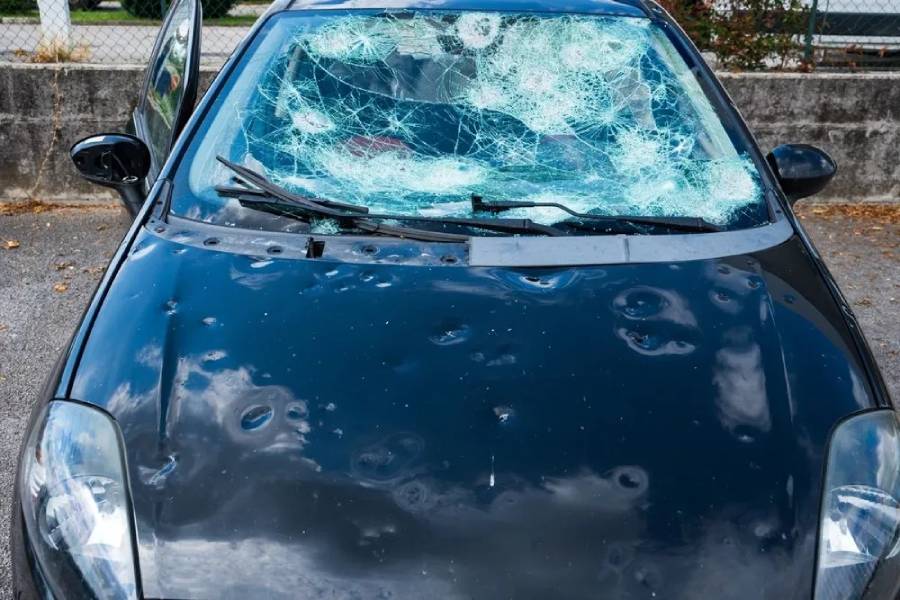
Is It Worth Fixing Hail Damage on a Car?
Hail damage is worth fixing when the financial benefit of restoring the car is greater than the amount you must pay for the repair. There are 5 main factors that determine this decision: damage severity, repair cost, vehicle value, insurance coverage, and your plans to keep, sell, or trade the vehicle. A newer vehicle covered by comprehensive insurance presents a different financial case from an older, low-value car with minor cosmetic dents.
Damage severity determines which repair methods are available and how urgently the vehicle needs attention. Shallow dents with intact factory paint are primarily cosmetic and may qualify for paintless dent repair (PDR), which reshapes the affected metal without repainting the panel. Cracked paint, broken glass, or heavily deformed panels require greater attention because the damage extends beyond appearance. For example, a dent that breaks the paint surface can expose the underlying material and remove part of the panel’s protection against corrosion.
Repair cost should then be compared with the vehicle’s current value rather than considered on its own. Spending several thousand dollars on a relatively valuable vehicle can make economic sense when the repair restores a substantial amount of resale or trade-in value. The same expense is harder to justify on an older vehicle worth only a few thousand dollars. The relevant question is therefore not simply whether the repair is expensive, but how much vehicle value the repair preserves relative to its out-of-pocket cost.
Insurance can change this calculation substantially. Hail damage generally falls within the type of weather-related vehicle damage addressed by comprehensive coverage, but the actual payment depends on the policy, deductible, repair estimate, and insurer’s assessment. A $500 deductible on an approved repair creates a different decision from paying the entire repair bill without coverage. Vehicle owners should confirm their individual policy terms before assuming that hail damage will be paid for.
Your ownership plans provide the final part of the calculation. Repairing visible hail dents becomes more important when you expect to sell or trade the vehicle because a buyer or dealer can account for unrepaired damage when determining an offer. Keeping minor cosmetic dents may be financially reasonable when the vehicle has a low market value, the paint remains intact, and you intend to drive it for several more years. In that situation, accepting the cosmetic damage can cost less than restoring a vehicle whose appearance has limited importance to its remaining use.
How Much Does It Cost to Fix Hail Damage on a Car?
The cost to fix hail damage depends primarily on the number and size of dents, the panels affected, the condition of the paint, and whether paintless dent repair or conventional body repair is required. There is no single repair price that accurately applies to every hail-damaged vehicle because two cars exposed to the same storm can sustain different damage based on body construction, impact location, hailstone size, and exposure.
Dent quantity and size directly increase the amount of repair work. A vehicle with several shallow dents on an accessible hood requires less labor than one with dozens of dents distributed across the hood, roof, doors, fenders, and trunk lid. Panel accessibility also matters because PDR technicians need appropriate access to manipulate the metal. Roof liners, interior trim, braces, and other components may need to be removed before certain dents can be reached.
Paint condition is another major cost factor. PDR is designed to reshape damaged metal while retaining the existing paint finish, making it particularly relevant to hail dents where the paint remains intact. Conventional body repair becomes more likely when an impact cracks the paint, stretches the metal beyond what PDR can correct, or damages a panel severely enough to require refinishing or replacement. Conventional work can involve several additional processes, including surface preparation, body filler, primer, paint, blending, and panel replacement.
The most useful cost figure is therefore a vehicle-specific repair estimate rather than a generic hail-damage price. Compare that estimate with the car’s current market value, insurance deductible, expected insurance payment, and likely value after repair. For example, an expensive estimate does not automatically make a repair uneconomical when insurance pays most of the approved amount and the vehicle retains substantial value. Conversely, even a smaller repair bill may be difficult to justify when the owner must pay it entirely out of pocket on a low-value vehicle.
When Is Hail Damage Worth Repairing?
Hail damage is worth repairing when the repair protects more vehicle value than it costs the owner out of pocket. The strongest cases for repair involve a relatively valuable vehicle, noticeable damage that reduces resale or trade-in value, affordable PDR, insurance coverage that absorbs most of the expense, or damage that has compromised the paint. These conditions improve either the financial return or the practical importance of completing the repair.
Vehicle value is one of the most important factors because the same hail damage can justify different decisions on different cars. Repairing multiple visible dents on a newer vehicle can preserve a meaningful portion of its resale or trade-in value. Buyers and dealers evaluate exterior condition when pricing a vehicle, so leaving widespread dents across the hood, roof, or body panels gives them a reason to reduce their offer. Restoring the exterior therefore has greater financial relevance when the vehicle still holds substantial market value.
Repair also becomes more attractive when the dents qualify for paintless dent repair. PDR reshapes the affected metal while preserving the existing paint rather than relying on conventional refinishing. This makes it particularly suitable for hail impacts that have dented a panel without cracking the paint or severely deforming the metal. Preserving the original finish while correcting the visible dents can provide a more favorable repair equation than extensive bodywork and repainting.
Insurance coverage can reduce the owner’s actual expense enough to make repair financially reasonable. Consider a hypothetical case in which an approved hail repair costs $4,000 and the applicable comprehensive deductible is $500. The relevant expense for the owner may be much closer to the deductible than the full repair estimate, subject to the insurer’s approved payment and policy terms. Comparing only the $4,000 repair estimate with the vehicle’s value would therefore give an incomplete picture of the decision.
Damage to the paint deserves greater priority than intact-paint cosmetic dents. A shallow dent with undamaged paint primarily affects appearance and vehicle value. A hail impact that chips or cracks the protective finish creates a different condition because the underlying surface has lost part of its environmental protection. Repairing that damage addresses both appearance and protection of the affected panel.
When Is Hail Damage Not Worth Fixing?
Hail damage may not be worth fixing when it is purely cosmetic and the owner’s out-of-pocket repair cost is high relative to the vehicle’s current value and expected value after repair. This situation is most relevant to older, lower-value vehicles with intact paint, no broken glass, and owners who plan to keep driving them rather than sell or trade them soon.
The relationship between repair cost and vehicle value is more useful than repair cost alone. Consider a hypothetical older car worth $5,000 before a hailstorm. If restoring cosmetic dents requires $3,000 out of pocket but the repair adds only a fraction of that amount to the car’s practical resale value, paying for the work produces a weak financial return. The owner may receive greater economic value by keeping the money and continuing to use the mechanically sound vehicle with cosmetic dents.
A high insurance deductible can produce a similar result when the repair estimate is relatively small. For example, filing a claim provides little immediate repair funding when the approved repair amount is close to the applicable deductible. The exact calculation depends on the policy and claim assessment, so owners should determine both the estimated repair cost and their actual out-of-pocket responsibility before deciding.
Ownership plans can also make cosmetic repair unnecessary. A driver who intends to keep an older vehicle until the end of its useful life has less reason to optimize its short-term trade-in appearance than an owner preparing to sell a newer car. Cosmetic hail dents do not automatically mean that the vehicle is unsafe or mechanically compromised. If inspection confirms that the damage is limited to dents with intact paint and unaffected glass, accepting the appearance can be a rational financial choice.
The decision changes when the damage extends beyond cosmetic dents. Cracked paint, damaged glass, or other compromised components should not be treated the same way as harmless surface imperfections. The central distinction is therefore not simply between repairing and ignoring hail damage. It is between damage that creates enough financial or physical consequence to justify repair and cosmetic damage whose repair cost exceeds the value the owner expects to recover.
Does Hail Damage Lower the Value of a Car?
Hail damage can lower a car’s resale and trade-in value because visible dents, damaged paint, and broken exterior components increase the amount of work required to restore the vehicle. The size of the reduction depends on the severity of the damage, the vehicle’s value before the hailstorm, the quality of any completed repairs, and how a buyer or dealer evaluates its condition.
Visible dents create the clearest value difference when hail affects several exterior panels. A buyer comparing two otherwise similar vehicles has a financial reason to pay less for the one with dents across the hood, roof, trunk, or doors because those defects remain after purchase. A dealer can make the same adjustment when calculating a trade-in offer because the dealership must either accept the damaged condition or account for the cost of reconditioning the vehicle before resale.
Minor hail damage can still affect value even when it does not change how the car drives. Cosmetic condition is part of a vehicle’s market condition, so mechanical functionality and exterior value should be evaluated separately. For example, a car with 30 shallow dents and intact paint may remain mechanically identical to its pre-storm condition while becoming less attractive to prospective buyers. The owner can therefore experience depreciation from hail damage without experiencing a mechanical failure.
Repairing the dents can recover some of the value lost to exterior damage, but owners should not assume that every dollar spent on repair creates an equal increase in resale value. A $3,000 repair does not automatically increase the selling price by $3,000. The result depends on the vehicle’s pre-damage market value, the amount buyers would discount the unrepaired vehicle, and the quality of the restoration. This is why repair cost should be compared with value preserved, rather than assuming that repair expenses are recovered dollar for dollar.
The effect also becomes more significant when hail damages the paint or glass instead of leaving only shallow dents. Cracked paint changes the repair requirements, while a damaged windshield or other glass component creates a separate defect that must be evaluated. Owners deciding whether to repair hail damage should therefore distinguish cosmetic depreciation from damage that requires additional corrective work.
What Happens If You Don’t Fix Hail Damage on a Car?
Leaving hail damage unrepaired primarily preserves the visible dents and their effect on resale or trade-in value, but additional consequences depend on whether the hail also damaged the paint, glass, or other components. Small dents with intact paint should not be treated as equivalent to hail impacts that crack the finish or damage the windshield.
Cosmetic dents remain visible for as long as the panels remain unrepaired. They can affect the appearance of the hood, roof, trunk lid, doors, and fenders without preventing the vehicle from operating normally. For an owner keeping an older vehicle for several years, accepting these dents may cost less than restoring them. For an owner planning to sell or trade the car, the same dents can become financially relevant because the next buyer or dealer can account for the damaged exterior when making an offer.
Paint damage creates a different concern. Automotive paint and related coatings help isolate the underlying body material from environmental exposure. When a hail impact chips or cracks that protective surface deeply enough to expose metal, leaving the area untreated removes part of that protection and creates conditions in which corrosion can develop. This does not mean every hail dent will rust. The corrosion concern is tied to damage that compromises the protective finish, not simply to the presence of a dent.
Glass damage should also be evaluated separately from body-panel dents. A chipped or cracked windshield is not merely another cosmetic imperfection because the windshield performs functions beyond exterior appearance. Owners should have damaged automotive glass assessed rather than assuming that a vehicle with hail damage only needs dent repair.
Unrepaired damage can also complicate future decisions about the vehicle. If another hailstorm or collision damages panels that already contain dents, distinguishing old damage from new damage becomes more important during repair and insurance assessment. Documentation such as dated photographs, repair estimates, and claim records can establish the condition of the vehicle after the original hailstorm.
The practical choice therefore depends on the type of unrepaired damage. Leaving shallow cosmetic dents with intact paint can be economically reasonable on a low-value vehicle, while damaged paint, glass, or other affected components deserve separate evaluation. Before deciding to leave the vehicle as-is, identify what the hail actually damaged rather than judging the decision solely by how noticeable the dents appear.
Is Paintless Dent Repair Worth It for Hail Damage?
Paintless dent repair is worth considering for hail damage when the dents can be reshaped without repainting or replacing the affected panels. PDR is particularly suited to shallow or moderate hail dents where the factory paint remains intact and the metal has not been damaged beyond what the technique can restore. Its main advantage is that it corrects the dent while preserving the vehicle’s existing finish.
PDR works by gradually returning the damaged section of a body panel toward its original shape. Depending on the location of the dent, a technician may access the back of the panel with specialized tools or use techniques designed to manipulate the damaged area from the exterior. Hail damage is a common application because a storm can create numerous dents across otherwise intact painted surfaces.
The condition of the paint is a key factor in determining whether PDR is appropriate. A dent with intact paint presents a different repair problem from an impact that has cracked or chipped the finish. Severe deformation, stretched metal, inaccessible damage, or paint failure can require conventional body repair instead. Conventional methods may involve refinishing, body filler, panel repair, or panel replacement depending on the extent of the damage.
PDR can also strengthen the financial case for fixing hail damage because it avoids some of the processes associated with conventional refinishing when the vehicle qualifies for the method. However, PDR should not automatically be selected simply because the damage came from hail. A professional inspection is needed to determine which dents are repairable with PDR and whether other affected areas require a different repair method.
Does Car Insurance Cover Hail Damage?
Hail damage is generally associated with comprehensive auto insurance coverage rather than collision coverage, but whether a specific repair is covered depends on the individual policy. Comprehensive coverage addresses specified non-collision losses and commonly includes weather-related events such as hail. The owner still needs to verify coverage, the applicable deductible, claim conditions, and the insurer’s damage assessment before calculating the actual cost of repair.
The deductible directly affects whether using insurance makes financial sense. Consider a hypothetical approved repair estimate of $4,500 with a $500 comprehensive deductible. If the loss is covered and the insurer approves the repair amount, the owner’s direct repair responsibility can be substantially lower than paying the entire $4,500 without coverage. A different result occurs when the estimated covered damage is only slightly higher than the deductible.
Insurance coverage also does not determine whether every hail-damaged vehicle should be repaired. The insurer may evaluate the repair estimate in relation to the vehicle’s actual cash value and other applicable claim rules. For a relatively valuable vehicle with repairable dents, completing the repair can be straightforward. For an older vehicle with extensive damage across multiple panels, the economics can move toward a total-loss evaluation instead.
Vehicle owners should document hail damage before repairs begin. Photographs of the affected hood, roof, trunk, doors, glass, and other damaged areas provide a record of the vehicle’s post-storm condition. The owner can then obtain a repair assessment and follow the insurer’s claim process rather than assuming that a body shop estimate automatically equals the amount an insurer will pay.
Should You File an Insurance Claim for Hail Damage?
Filing an insurance claim makes more financial sense when the covered repair cost is substantially higher than the comprehensive deductible and the damage is significant enough to justify repair. The calculation should start with the repair estimate, deductible, applicable coverage, and insurer assessment rather than with the number of visible dents alone.
For example, assume covered hail repairs are assessed at $5,000 and the policy carries a $500 deductible. The potential insurance contribution makes repairing the vehicle materially different from paying the full amount personally. In contrast, a hypothetical $700 repair with a $500 deductible leaves a much smaller difference between the repair amount and deductible. Policy terms and claim circumstances still determine the actual payment in either situation.
Owners should also consider whether they intend to repair the vehicle and how the damage affects its value. Significant hail damage on a newer vehicle creates a stronger reason to investigate a claim than a handful of cosmetic dents on an older car that the owner intends to keep. The correct comparison is therefore repair cost versus deductible and coverage, followed by repair benefit versus vehicle value and ownership plans.
Can Hail Damage Total a Car?
Yes, hail damage can result in a car being declared a total loss when the economics of repairing the damage meet the applicable total-loss criteria. A vehicle does not need catastrophic mechanical damage to face a total-loss evaluation. Extensive cosmetic damage can generate a large repair estimate when hail affects the roof, hood, trunk, doors, fenders, glass, and other exterior components at the same time.
Older vehicles are more susceptible to this economic problem because their actual cash value is lower. For example, extensive dent repair and refinishing that might be economically reasonable on a high-value late-model vehicle can represent too large a proportion of the value of an older car. The physical hail damage can therefore be similar while the insurance outcome differs because the vehicles have different values.
There is no single total-loss percentage that should be applied to every hail claim. Total-loss calculations can depend on jurisdiction, insurer procedures, repair estimates, vehicle value, salvage considerations, and applicable policy or regulatory requirements. Owners should rely on the insurer’s valuation and the rules that apply to their specific claim rather than assuming that reaching one universal repair-to-value percentage automatically totals the vehicle.
A total-loss determination is also different from deciding whether the vehicle is physically drivable. Hail can create extensive exterior damage without disabling the engine or drivetrain. “Total loss” is primarily an economic and insurance classification, not a statement that every hail-damaged vehicle is mechanically unusable.
Is It Worth Fixing Hail Damage on an Older Car?
Fixing hail damage on an older car is worth it when the repair protects enough vehicle value to justify the owner’s out-of-pocket cost. Vehicle age alone does not determine the answer. Current market value, damage severity, repair cost, insurance coverage, expected ownership period, and plans to sell or trade the vehicle provide a more useful basis for the decision.
Market value becomes particularly important as a vehicle ages. Consider an older car worth $6,000 before a hailstorm. Spending $4,000 out of pocket to remove cosmetic dents may provide little financial benefit if repairing the exterior does not increase the vehicle’s value by a comparable amount. A $4,000 repair on a vehicle worth $30,000 presents a different calculation because a larger amount of market value remains exposed to depreciation from visible damage. These figures are examples rather than repair-price benchmarks, but they demonstrate why repair cost should always be evaluated relative to vehicle value.
The type of damage can override the age-based calculation. Small dents with intact paint on an older vehicle are primarily an appearance and resale issue. An owner who intends to keep the car until the end of its useful life may reasonably accept those imperfections instead of paying for cosmetic restoration. Cracked paint, damaged glass, or other compromised components require a separate assessment because the decision is no longer based only on appearance.
Insurance can also make repairing an older car worthwhile. A repair that appears uneconomical at its full estimate can become reasonable when comprehensive coverage applies and the owner’s responsibility is limited primarily to the deductible, subject to the policy and insurer’s assessment. However, extensive hail damage on a lower-value vehicle can also lead to a total-loss evaluation when repair economics meet the applicable criteria.
Ownership period completes the calculation. An owner preparing to sell or trade an older vehicle has more reason to compare the cost of repair with the value lost from visible dents. An owner planning to keep the same vehicle for several more years has less reason to pay solely for appearance when the dents do not affect paint, glass, or vehicle operation. For an older car, the most useful question is not “How old is the vehicle?” but “How much value will this repair preserve compared with what I must spend?”
Read more: How to Install a Blend Door Actuator Step by Step
How Can You Decide Whether to Repair Hail Damage?
Decide whether to repair hail damage by comparing the damage severity, repair estimate, out-of-pocket cost, vehicle value, and value preserved by completing the repair. A 7-step assessment prevents the decision from being based solely on the appearance of the dents or the total number shown on a body shop estimate.
Step 1: Assess the severity of the hail damage. Identify which parts of the vehicle were affected, including the hood, roof, trunk lid, doors, fenders, and glass. Distinguish shallow dents from severe panel deformation because the extent of the damage influences both the repair method and the cost.
Step 2: Check the paint and glass. Determine whether the dents have left the paint intact or caused chips and cracks. Cosmetic dents with intact paint present a different decision from exposed body material or damaged automotive glass. This distinction also helps determine whether PDR is a realistic repair option.
Step 3: Get a professional repair estimate. The estimate establishes the cost of correcting the actual damage rather than relying on a generic hail-repair price. It should also clarify whether the vehicle qualifies primarily for PDR or requires conventional bodywork, refinishing, glass repair, or panel replacement.
Step 4: Determine the vehicle’s current value. Use the car’s age, mileage, condition, trim, equipment, and local market to establish a realistic value. The repair estimate has limited meaning without this comparison. A $3,000 repair represents 10% of a $30,000 vehicle but 50% of a $6,000 vehicle.
Step 5: Check comprehensive coverage and the deductible. Confirm whether the policy covers the hail event and identify the applicable deductible. Do not use the full body shop estimate as the owner’s repair cost when insurance will pay an approved portion of a covered claim. Likewise, do not assume coverage until the policy and claim have been reviewed.
Step 6: Estimate the value affected by leaving the damage unrepaired. Consider whether visible dents will reduce a future private-sale price or trade-in offer and whether damaged paint or glass creates reasons for repair beyond resale appearance. This step identifies the value that the repair is actually intended to protect.
Step 7: Compare the cost with the value preserved. Repair makes the strongest financial sense when the owner’s actual expense is reasonable relative to the vehicle value protected by restoring it. Leaving cosmetic damage unrepaired becomes more rational when the opposite is true.
A simplified decision framework looks like this:
| Vehicle and damage situation | Repair decision |
|---|---|
| Newer, higher-value car with significant visible hail damage and applicable insurance coverage | Repair usually makes financial sense |
| Dents qualify for PDR and repair cost is reasonable relative to vehicle value | Repair is worth considering |
| Paint is cracked or chipped and the underlying surface is exposed | Prioritize professional assessment and repair |
| Older, low-value car with minor dents and intact paint | Cosmetic repair may not be economical |
| Deductible is close to the covered repair amount | Paying for or postponing cosmetic repair may be more practical |
| Repair economics approach the vehicle’s applicable total-loss criteria | Compare repair and total-loss options with the insurer |
For most owners, the final decision comes down to value rather than the presence of hail dents alone. Determine what is damaged, establish what it costs to repair, calculate what you actually have to pay, and compare that amount with the vehicle value the repair preserves. This approach separates repairs that protect a meaningful financial asset from cosmetic work that costs more than it returns.