Subaru Forester oil leaks can originate from several engine sealing points and lubrication-system components, including valve cover gaskets, engine seals, the oil pan, drain plug, oil filter area, and timing cover. The exact source depends on the engine configuration, model year, maintenance history, and where fresh oil first appears on the engine.
An oil leak does not always mean the engine is losing oil rapidly. Minor seepage may leave a thin oily film around a gasket or sealing surface without producing drops under the vehicle. An active leak can leave fresh oil on engine components or the ground, while a more severe leak can lower the engine-oil level enough to affect lubrication. Burning-oil odors or smoke can also occur when leaking oil reaches hot engine or exhaust components.
Oil leakage should also be distinguished from oil consumption. An external leak allows oil to escape through a gasket, seal, fitting, or another sealing point, whereas oil consumption occurs when the engine uses oil internally. Because both problems can reduce the dipstick reading, oil level alone cannot identify the cause.
This guide explains the common causes and symptoms of Subaru Forester oil leaks, where to inspect for leaking oil, how the source is diagnosed, how serious different leaks are, and which repairs may be required.
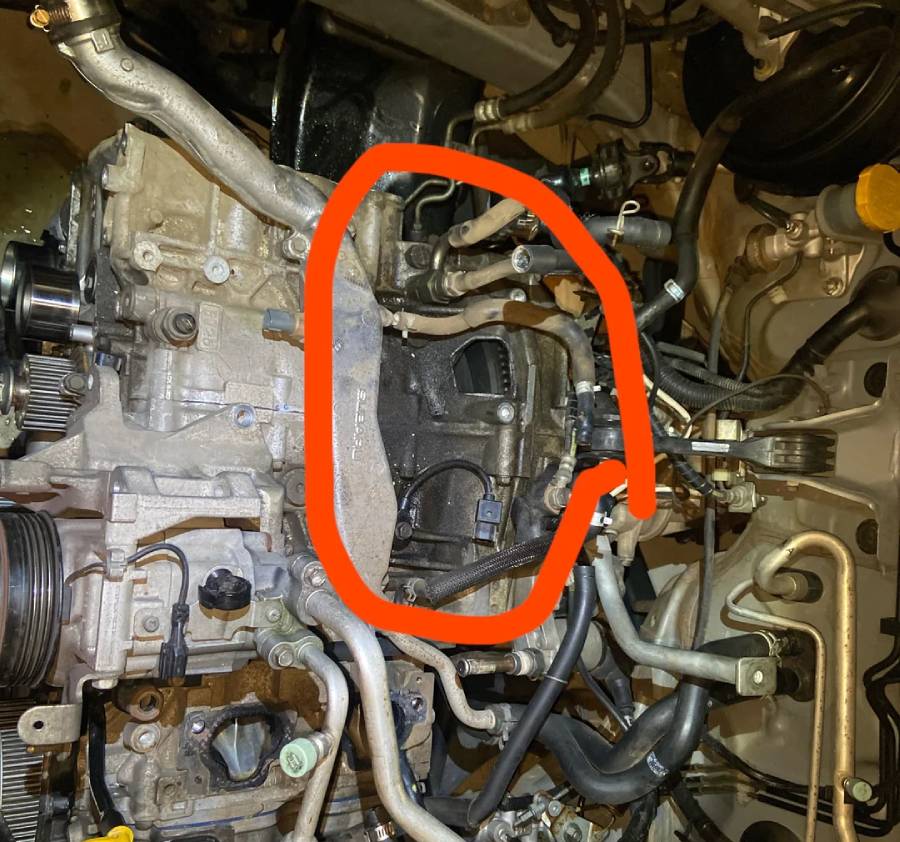
What Are the Most Common Causes of Oil Leaks in a Subaru Forester?
The most common sources of Subaru Forester oil leaks are engine gaskets and seals, the oil pan and drain plug, the oil filter area, and other sealed joints around the engine. The exact leak point varies by engine configuration, model year, component condition, and previous maintenance. For this reason, visible oil near the bottom of the engine should not automatically be attributed to the oil pan or another nearby component.
Valve cover gasket leaks occur when the gasket can no longer maintain an effective seal between the valve cover and cylinder head. Heat cycles, age, and deterioration of the sealing material can allow engine oil to seep through the joint. Oil may first appear as wet residue around the valve cover perimeter and then travel down the engine. If it reaches a hot exhaust component, the driver may notice a burning-oil smell or smoke even when little or no oil reaches the ground.
Camshaft and crankshaft seals can also allow engine oil to escape when their sealing surfaces deteriorate or no longer seal correctly. Unlike an easily visible leak around an exposed gasket, oil from a shaft seal may spread across surrounding engine components before becoming noticeable. This makes the highest point containing fresh oil more useful for diagnosis than the lowest wet area.
The oil pan and drain plug are two additional areas that should be inspected, particularly when oil appears underneath the engine. Oil can escape around a compromised oil-pan sealing surface, while the drain area can leak because of a sealing problem involving the drain plug or its washer. A leak that begins immediately after an oil change makes recently serviced components, including the drain plug and oil filter, important early inspection points.
The oil filter area can leak when the filter does not seal correctly after installation. Because the engine circulates oil while operating, a sealing problem in this area can distribute oil beyond the original leak point. The timing of the symptom provides useful diagnostic context: fresh oil appearing shortly after an oil and filter change should prompt inspection of serviced areas before assuming that an unrelated engine gasket has failed.
Oil can also seep from sealed engine joints such as the timing cover area. These leaks can be harder to identify because oil may spread along the engine surface before dripping downward. Old residue further complicates diagnosis by making an inactive leak look current. Cleaning the contaminated area and checking where fresh oil reappears provides stronger evidence of the actual source.
An external head gasket leak is another possible source, but oil around a Subaru Forester engine does not by itself prove that the head gasket has failed. Oil from a higher gasket, seal, or another nearby source can travel across the engine and resemble a leak from a different joint. A head gasket diagnosis therefore requires confirmation of the actual leak origin rather than relying only on the location where oil eventually collects.
The practical diagnostic rule is to trace oil from the highest fresh wet point toward its source. Replacing the component closest to an oil drip without tracing the leak can result in an unnecessary repair because gravity and airflow can move oil away from the component that originally leaked.
What Are the Symptoms of a Subaru Forester Oil Leak?
The main symptoms of a Subaru Forester oil leak are visible oil around the engine, oil spots under the vehicle, a falling engine-oil level, a burning-oil smell, and smoke from the engine bay. The combination of symptoms is more useful than any single sign because the location where oil becomes visible may be different from the point where the leak starts.
Oil spots or puddles underneath the Forester provide the clearest external evidence of fluid loss, but their position does not reliably identify the failed component. Engine oil can run down the side of the engine, collect on covers or underbody components, and drip onto the ground away from its original source. Airflow while driving can spread the oil farther toward the rear of the vehicle. The highest area containing fresh engine oil is therefore generally more diagnostically useful than the location of the final drip.
A burning-oil smell can develop when leaking oil reaches a hot engine or exhaust surface. The oil heats up and produces an odor that may enter the cabin or become noticeable after parking. A burning-oil smell does not automatically mean the engine is consuming oil internally. An external leak can produce a similar smell when escaped oil contacts a sufficiently hot component.
Visible smoke from the engine bay is a more significant symptom because it indicates that fluid may be reaching a hot surface. The location and timing of the smoke matter. Smoke that appears after the engine reaches operating temperature and is accompanied by fresh oily residue supports an external-leak diagnosis, but smoke alone does not identify which gasket or seal has failed. Heavy smoke or a rapidly worsening leak requires prompt inspection rather than continued driving while only monitoring the oil level.
A declining dipstick reading is another important sign, particularly when repeated measurements show that engine oil is disappearing between services. However, a falling oil level does not prove that the Forester has an external oil leak. The engine may lose oil externally, consume it internally, or experience both conditions at the same time. Visible wetness, drips, or fresh oil residue provides additional evidence for external leakage.
An oil-related warning indicator requires greater attention than a small amount of visible seepage. A lubrication warning can indicate that the engine is no longer operating under normal oil conditions, but the warning itself does not locate the leak. Continuing to operate an engine with inadequate lubrication can turn an oil-loss problem into internal engine damage. The oil level and source of the loss should therefore be investigated rather than treating the warning light as another leak-location symptom.
Where Should You Check for an Oil Leak on a Subaru Forester?
Check a Subaru Forester for oil leaks from the top of the engine downward, looking for the highest point where fresh engine oil appears. This inspection order matters because gravity moves leaked oil downward, while airflow can spread it across adjacent components when the vehicle is moving. Starting at the bottom can lead to replacing a component that is merely covered by oil leaking from somewhere above it.
Begin with visible sealing areas toward the upper part of the engine. Inspect for fresh wetness around gasket joints and nearby surfaces rather than treating dark staining alone as proof of an active leak. A gasket can leave residue from an older seep, while fresh oil generally produces a wetter and more defined trail. Following that trail upward can reveal whether oil originated around an upper sealing point before running down the engine.
Next, inspect the sides and lower areas of the engine. Look for a continuous path between the upper oily area and oil accumulated farther down. Oil that coats several vertically aligned surfaces often indicates that the highest wet component deserves closer inspection. This approach is more reliable than assuming every oil-coated component is leaking independently.
The oil filter area should receive particular attention when the leak first appears after an oil change. Inspect the surrounding area for fresh oil and determine whether the wetness begins at the filter sealing area or arrives there from another location. The relationship between the start of the leak and recent maintenance is useful diagnostic evidence because components disturbed during service should be checked before unrelated failures are assumed.
Inspect the oil pan and drain-plug area from underneath the vehicle when it can be done safely. Fresh oil concentrated around the drain point can indicate a drain-plug or sealing-washer problem, while oil distributed across the oil pan may have originated at the pan seal or higher on the engine. An oil-covered pan alone is therefore insufficient evidence that the oil pan itself needs to be resealed.
Finally, distinguish fresh leakage from accumulated residue. Engines with a history of minor seepage can retain oil and dirt on their exterior long after the original leak occurred or was repaired. Cleaning the affected area creates a clearer diagnostic baseline. If fresh oil appears again after the engine runs or the vehicle is driven, its new path can be traced back toward the source.
The objective of the inspection is not simply to find oil; it is to identify where fresh oil first escapes from the engine. Once that point is established, the suspected gasket, seal, fitting, or serviced component can be evaluated before a repair decision is made.
How Do You Diagnose the Source of a Subaru Forester Oil Leak?
Diagnose a Subaru Forester oil leak by confirming the leaking fluid, checking the engine-oil level, locating the highest point of fresh oil, cleaning contaminated surfaces, and inspecting the engine again after operation. This process separates an active engine-oil leak from old residue and reduces the risk of replacing a component simply because oil has collected around it.
First, confirm that the fluid is engine oil. Engine oil generally has an oily, slippery consistency and becomes darker as it accumulates contaminants during use. Fluid color alone is not sufficient for identification because appearance changes with age and condition. The location of the fluid, its consistency, the vehicle’s fluid levels, and the components above the wet area provide stronger evidence when considered together.
Check the engine-oil level before cleaning or operating the vehicle further. The dipstick establishes whether the engine has experienced measurable oil loss and provides a baseline for later checks. A normal reading does not rule out a small leak because minor seepage may release too little oil to produce an obvious dipstick change. A level that continues to fall, however, indicates that the rate of oil loss or consumption requires closer attention.
Inspect the engine from the highest accessible areas downward and look for the first fresh wet surface. This step is important because a valve cover or another upper sealing point can release oil that travels down the engine and eventually accumulates around the oil pan. Replacing the oil-pan seal in that situation would address the location where oil collected rather than the location where it escaped.
Clean accumulated oil when old residue prevents the leak path from being identified. After the contaminated surfaces are cleaned, run the engine and inspect the area again. A slow leak may require additional operating time or a short period of normal driving before fresh oil becomes visible. The new oil trail provides a clearer path back to the leaking gasket, seal, or connection.
UV dye can assist with leaks that are too small or intermittent to trace visually. A compatible fluorescent dye is added to the engine oil and circulated through the lubrication system. The engine is then inspected with the appropriate UV equipment so that escaped oil can be distinguished from unrelated residue. This method is most useful when normal cleaning and visual inspection have failed to establish the source.
Diagnosis should end with confirmation of the failed sealing point rather than simply confirmation that oil exists on the engine. The repair should target the component where fresh oil originates, not the component where the oil eventually accumulates.
How Serious Is a Subaru Forester Oil Leak?
A Subaru Forester oil leak can range from minor seepage to a serious loss of engine oil, and its severity depends primarily on the leak rate, oil-level change, leak location, and associated symptoms. A thin film of oil around a sealing surface does not present the same immediate risk as a leak that leaves puddles, produces smoke, or rapidly lowers the dipstick reading.
Minor seepage is the lowest severity level. Oil may create a damp film around a gasket or seal without forming drops on the ground, and repeated dipstick checks may show little measurable change. Minor seepage still deserves monitoring because seals and gaskets generally do not restore their sealing ability on their own. Recording the oil level and inspecting the same area periodically helps determine whether the condition is stable or progressing.
An active leak is more significant because fresh oil forms drops, reaches the ground, spreads across engine components, or causes a measurable decline in oil level. The leak should be diagnosed and repaired rather than managed indefinitely by adding oil. The urgency increases when escaped oil reaches hot components because the driver may experience a burning smell or visible smoke in addition to lubricant loss.
Rapid oil loss represents the highest severity level. A leak that substantially lowers the engine-oil level can reduce the amount of lubricant available to moving engine components. Warning indicators, rapidly forming puddles, substantial smoke, or an oil level that falls quickly are signs that the vehicle needs immediate attention rather than routine monitoring.
Can an Oil Leak Damage a Subaru Forester Engine?
Yes. An oil leak can damage a Subaru Forester engine when enough oil escapes to compromise normal lubrication. Engine oil creates a lubricating film between moving components, carries heat away from lubricated surfaces, and helps control friction. Losing sufficient oil reduces the system’s ability to perform these functions.
The damage follows a mechanical sequence: oil loss reduces the available lubricant, inadequate lubrication increases friction and heat, and prolonged friction accelerates wear on internal engine components. The severity depends on how much oil is lost and how long the engine continues operating under inadequate lubrication. This is why a small external seep and a rapidly falling oil level require different responses even though both are classified as oil leaks.
The leak location also affects risk. Oil that reaches a hot engine or exhaust surface can produce smoke and a strong burning-oil odor before the total oil loss becomes severe. In contrast, a leak that releases oil directly onto the ground may create substantial lubricant loss without producing the same smell. The absence of smoke therefore does not prove that a leak is harmless.
The safest assessment combines the leak rate with the dipstick reading and other symptoms. A stable oil level with minor surface seepage generally allows more time for diagnosis than rapid oil loss accompanied by a warning indicator or smoke. Once a leak threatens normal engine lubrication, continued driving can turn a sealing-system repair into a substantially more serious engine problem.
Can You Drive a Subaru Forester With an Oil Leak?
You can drive a Subaru Forester with minor oil seepage for a limited period if the engine-oil level remains correct and there are no warning lights, smoke, or signs of rapid oil loss. An active or worsening leak requires a different response because continued oil loss can eventually reduce lubrication or allow oil to reach hot engine and exhaust components.
Check the dipstick before deciding whether to continue driving. Oil level provides a more useful indication of immediate lubrication risk than the size of an old stain on the engine. A small amount of visible seepage with a stable oil level presents a different condition from a leak that requires frequent oil additions. Continue monitoring the level if the vehicle must be driven before a minor leak is repaired, and investigate any measurable downward trend.
The rate of leakage also matters. A slightly damp gasket surface indicates seepage, while fresh drops forming beneath the vehicle indicate active leakage. A puddle that develops quickly after parking suggests a higher rate of fluid loss. Because the leak can worsen as the engine runs and oil circulates, the amount visible after the vehicle has been stationary may not represent the full operating leak rate.
Burning-oil odor and smoke increase the urgency even when the dipstick still shows an acceptable oil level. Escaped oil can reach hot surfaces and produce these symptoms before enough oil has been lost to create an obvious lubrication problem. A persistent burning smell therefore requires inspection of the leak path rather than simply topping up the engine oil.
When Should You Stop Driving a Subaru Forester With an Oil Leak?
Stop driving and investigate the problem when a Subaru Forester has rapid oil loss, an oil-pressure warning, substantial smoke, or other evidence that normal engine lubrication may be compromised. Continuing to drive under these conditions increases the possibility that a repair involving a gasket or seal will progress into internal engine damage.
An oil-pressure warning requires particular attention because oil pressure is directly related to the engine’s lubrication system. Do not assume that adding oil automatically resolves the condition. Oil quantity and oil pressure are related but different measurements, and an abnormal pressure warning requires the underlying cause to be identified.
Rapidly developing puddles are another reason to avoid continued operation. The amount of oil lost while the engine is running may exceed the amount visible after parking, and repeated topping-up does not correct the failed seal or component. A leak severe enough to produce substantial fluid loss should be repaired before routine driving resumes.
Smoke from oil contacting hot components also changes the risk assessment. Turn the engine off and have the source inspected if smoke is substantial or persists. The objective is to prevent both continued oil loss and further contamination of hot surrounding components.
How Are Subaru Forester Oil Leaks Repaired?
Subaru Forester oil leaks are repaired by identifying the exact point where oil escapes and then restoring or replacing the failed seal, gasket, connection, or related component. There is no single repair for every Forester oil leak because oil appearing in the same area can originate from different components.
A leaking valve cover gasket is generally addressed by removing the valve cover and replacing the failed sealing material before reinstalling the cover correctly. The sealing surfaces must be inspected and prepared so that the replacement gasket can maintain a consistent seal. Oil contamination around the repair area should also be cleaned because residual oil can otherwise make a successful repair appear to still be leaking.
Camshaft and crankshaft seal repairs involve replacing the seal responsible for allowing oil past a rotating shaft. The replacement part may be relatively small, but access can make the repair more involved than a visible external gasket replacement. Labor requirements therefore depend not only on the price of the failed seal but also on the components that must be removed to reach it.
Oil-pan leaks require confirmation that the pan sealing area is actually the source. If the joint is leaking, the repair can involve removing the pan, cleaning the mating surfaces, and restoring the specified seal before reassembly. The pan should not be resealed solely because its exterior is oily; oil traveling down from a higher engine component can coat the pan without the pan itself leaking.
Drain-plug leaks require a different repair strategy. The plug, sealing washer, sealing surface, and threads should be inspected to determine why oil is escaping. A worn or incorrectly installed sealing component requires a different correction from damaged threads. This distinction is especially important when the leak begins immediately after an oil change.
Oil-filter-area leaks should likewise be inspected in relation to recent service. Correcting the installation or sealing problem may resolve the leak when the filter area is confirmed as the source. The surrounding engine should then be cleaned and rechecked after operation to verify that fresh oil no longer appears.
Timing-cover and other sealed-joint leaks can require substantially more disassembly. The repair generally involves gaining access to the leaking joint, removing the existing sealing material, preparing the mating surfaces, applying the required replacement seal, and reassembling the removed components. Because access drives much of the labor requirement, two leaks that release similar amounts of oil can have very different repair complexity.
A suspected external head gasket leak requires particularly careful diagnosis before major engine work is authorized. Oil visible near the head-to-block joint should not be treated as proof of head gasket failure until other possible leak paths have been excluded. Oil from a component above the joint can travel downward and create a misleading pattern.
After any oil-leak repair, the contaminated area should be cleaned and inspected again after the engine has operated. A successful repair is confirmed by the absence of new oil at the original source, not merely by replacing the component that initially appeared suspicious. This final verification also helps identify situations in which more than one leak exists.
How Much Does It Cost to Fix a Subaru Forester Oil Leak?
The cost to fix a Subaru Forester oil leak depends primarily on the leaking component, the labor required to access it, the engine configuration, the model year, and local labor rates. A service-related leak around an accessible component can require relatively little labor, while a leak from a seal or engine joint that requires substantial disassembly can result in a much larger repair bill.
The failed component alone does not determine repair cost. Access is often a major factor because replacing an inexpensive seal can require removing several surrounding components before the technician can reach it. For this reason, two Subaru Forester oil leaks with similar leak rates can have substantially different repair costs. Diagnosis should identify both the actual leak source and the work required to access that source before an estimate is evaluated.
Leaks associated with recently serviced components can be among the simpler problems when the cause is limited to the oil filter, drain plug, or sealing washer. For example, a leak that begins immediately after an oil change should prompt inspection of these service points before more extensive engine repairs are considered. The repair becomes more complicated if the drain-plug threads, oil pan, or another component has been damaged rather than simply sealed incorrectly.
Valve cover gasket repairs generally involve more work because the valve cover must be accessed and removed before the gasket can be replaced. The mating surfaces then need to be prepared and the assembly reinstalled correctly. The final labor requirement varies with engine layout and accessibility, so a repair estimate should reflect the specific Forester rather than a universal gasket-replacement price.
Camshaft seals, crankshaft seals, timing-cover joints, and other less-accessible sealing points can involve greater labor requirements. The seal or sealing material may represent only a small portion of the total bill because the technician must first gain access to the leaking area and then reassemble the surrounding components. This relationship between part cost and access labor explains why a physically small oil leak can still be expensive to repair.
A confirmed external head gasket leak can fall into a more labor-intensive repair category because accessing and replacing the gasket requires considerably more engine work than correcting an oil-filter or drain-plug leak. This is also why the diagnosis must be established before a major repair is authorized. Oil that has migrated from a higher leak source can make another engine joint appear responsible.
A useful repair estimate should therefore identify the leak source, required repair, expected labor, replacement parts or sealing materials, and any related work necessary to reach the component. Comparing estimates only by total price can be misleading if the shops are diagnosing different leak sources or proposing different repair scopes.
Exact repair prices should be checked using current local labor rates and parts pricing for the vehicle’s model year and engine. A single fixed price for “Subaru Forester oil leak repair” is not reliable because the phrase can describe anything from a minor service-related sealing issue to a labor-intensive engine repair.
Is a Subaru Forester Oil Leak the Same as Burning Oil?
No. A Subaru Forester oil leak is an external loss of engine oil, while burning oil involves oil being consumed inside the engine. Both conditions can lower the oil level between services, but they involve different mechanisms and require different diagnostic approaches.
An external oil leak occurs when engine oil escapes through a gasket, seal, joint, plug, filter connection, or another part of the lubrication system. Evidence can include fresh wetness on the engine, oil underneath the vehicle, accumulated oily residue, or oil reaching a hot surface and producing a burning smell. The defining characteristic is that oil has escaped outside the sealed engine or lubrication system.
Internal oil consumption occurs when engine oil enters an area where it is consumed during engine operation instead of leaking onto the exterior of the engine. The dipstick level can decline even when the engine remains externally dry. This is why repeatedly adding oil without finding visible leakage does not establish that the vehicle has an external oil leak.
A burning-oil smell also does not reliably distinguish the two conditions. External oil can leak onto a hot engine or exhaust component and produce a strong burning odor. In that situation, the oil is burning after leaving the engine rather than being consumed internally during combustion. Inspecting the engine for fresh external oil helps separate these two mechanisms.
Visible oil underneath the Forester provides stronger evidence for external leakage, but the absence of a puddle does not eliminate that possibility. A slow leak can remain on engine surfaces, collect on surrounding components, or burn after contacting a hot surface before enough oil reaches the ground to create a visible spot.
Oil consumption and external leakage can also exist at the same time. For example, finding a minor gasket seep does not prove that the seep accounts for all oil missing between services. The amount of visible leakage should be considered alongside the rate at which the dipstick level declines.
The diagnostic distinction is therefore straightforward: look for evidence showing where the oil goes. Fresh oil escaping onto external engine surfaces supports an oil-leak diagnosis, while declining oil level without a corresponding external leak requires investigation for oil consumption or another source of loss. Establishing this difference prevents an external gasket repair from being treated as a solution to an unrelated oil-consumption problem.
Read more: Subaru Forester Transmission Problems: Common Issues by Model Year
How Can You Help Prevent Oil Leaks on a Subaru Forester?
You can reduce the risk of Subaru Forester oil leaks by servicing the engine correctly, checking the oil level regularly, inspecting common sealing areas, and addressing minor seepage before it develops into a larger leak. Preventive maintenance cannot stop every gasket or seal from deteriorating, but it can identify oil loss early and prevent service-related problems from being mistaken for age-related engine leaks.
Perform oil and filter changes using the correct service procedure for the specific Forester model and engine. The oil filter, drain plug, sealing washer, and surrounding surfaces should be inspected during service because an installation or sealing problem can create a leak immediately afterward. Checking these areas after an oil change provides an opportunity to identify fresh leakage before a significant amount of oil is lost.
Check the engine-oil level periodically rather than waiting for a warning indicator. A dipstick reading creates a measurable record of whether oil is disappearing between services. Consistent readings suggest that minor visible seepage is not producing substantial oil loss, while a repeated decline indicates that the vehicle requires closer inspection. Measuring the level under consistent conditions also makes comparisons more useful.
Inspect the engine for fresh oil when performing routine maintenance. Pay particular attention to gasket joints, sealing areas, the oil-filter region, the oil pan, and the drain-plug area. Early seepage is easier to monitor when the engine is relatively clean, because new wetness can be distinguished from dirt and residue accumulated over months or years.
Do not assume that adding oil is a repair. Topping up the engine can restore the correct oil quantity temporarily, but it does not restore a failed gasket, seal, or connection. Repeated oil additions without identifying the source can also hide a worsening leak because the dipstick remains within the acceptable range even as the engine continues losing oil.
Keep maintenance history when possible, particularly records of oil changes and previous leak repairs. Timing provides diagnostic information. A leak that appears directly after maintenance points toward a different group of possible causes than seepage that develops gradually around an aging sealing surface. Previous repair records can also help determine whether fresh oil represents a new problem or recurrence near an earlier repair.
The most useful preventive strategy is therefore early detection rather than attempting to eliminate every possibility of leakage. Regular oil-level checks, visual inspection, correct servicing, and prompt diagnosis of new wetness can identify a developing leak before it produces rapid oil loss or contaminates a larger area of the engine.
When Should a Subaru Forester Oil Leak Be Inspected by a Mechanic?
A Subaru Forester oil leak should be professionally inspected when the source cannot be identified, the oil level continues to fall, the leak becomes more severe, smoke or a strong burning-oil smell develops, or an oil-related warning appears. Professional diagnosis is also appropriate when confirming the leak requires access to engine areas that cannot be inspected safely or reliably without proper equipment.
Have the vehicle inspected when oil appears across several engine surfaces and there is no clear starting point. Oil can travel downward and rearward from its source, creating a pattern that makes multiple components look suspicious. A technician can clean the affected area, inspect the engine under appropriate conditions, and use diagnostic methods such as UV dye when a slow leak cannot be traced visually.
A consistently declining oil level also warrants diagnosis even when there is little oil on the ground. The engine may have an external leak that does not reach the pavement, or the oil loss may involve internal consumption instead. Identifying which mechanism is responsible is necessary before selecting a repair.
Seek prompt inspection when the leak progresses from surface seepage to active dripping. A worsening leak demonstrates that the sealing problem is no longer stable, and the rate of oil loss can increase further during engine operation. Frequent topping-up should not replace diagnosis because it maintains oil quantity without correcting the source.
Smoke or a persistent burning-oil smell requires attention because escaped oil may be reaching hot components. The amount of oil necessary to create an odor can be smaller than the amount required to produce a noticeable puddle, so the absence of oil beneath the vehicle does not make these symptoms irrelevant.
An oil-pressure warning or evidence of rapid oil loss requires the highest level of urgency. Do not continue routine driving when the available evidence suggests that normal engine lubrication may be compromised. The cost and complexity of correcting an external leak are separate from the potential consequences of operating an engine without adequate lubrication.
Professional inspection is also appropriate before authorizing a major repair such as work involving a difficult-to-access seal, timing-cover joint, or suspected external head gasket leak. The diagnosis should establish the actual origin of fresh oil before substantial disassembly begins. This prevents oil migrating from another component from being mistaken for failure at a more expensive repair point.
The final repair decision should be based on where fresh oil originates, how quickly oil is being lost, whether the oil level remains safe, and what work is required to restore the failed sealing point. These factors provide a more reliable basis for action than the size of an old oil stain or the location of a single drip.