Hyundai Tucson AC Recharge: Complete Step-by-Step Guide to Recharging Your Car Air Conditioning System becomes important when your cooling system starts to lose performance. This issue often appears during hot weather when you expect strong and stable airflow inside your vehicle. Many drivers of the Hyundai Tucson notice that the air conditioner no longer feels as cold as before. Some also see that the cabin takes longer to cool down.
This problem usually does not happen suddenly. The system slowly loses refrigerant over time. Small leaks in hoses, seals, or connectors cause this loss. When refrigerant drops, the system cannot maintain proper pressure. This reduces cooling efficiency and forces the compressor to work harder.
Hyundai Tucson AC Recharge restores the refrigerant level inside the system. This process helps the air conditioning return to normal performance. It also helps protect the compressor from unnecessary stress. Many drivers ignore early signs and wait too long. This often leads to higher repair costs and lower system lifespan.
This guide explains the full process in a simple and structured way. You will learn how the AC system works and how to recognize early warning signs. You will also understand the tools needed and the correct recharge process. Each step focuses on safety and accuracy.
By reading this guide, you will understand when Hyundai Tucson AC Recharge is necessary. You will also know how to avoid common mistakes and keep your AC system running efficiently for a longer time.
How the Hyundai Tucson AC System Works
The air conditioning system in a vehicle works through a closed-loop cycle. Each component plays a specific role in producing cool air inside the cabin. In the Hyundai Tucson, this system follows the same core refrigeration principle used in most modern SUVs.
The process starts when the compressor compresses refrigerant gas. This increases both pressure and temperature. The refrigerant then moves to the condenser. The condenser removes heat from the gas and turns it into a high-pressure liquid.
Next, the refrigerant flows through the expansion valve. This valve reduces pressure quickly. The sudden pressure drop makes the refrigerant cold. The cold refrigerant then enters the evaporator inside the cabin.
The evaporator absorbs heat from the air inside the car. A blower pushes air across the evaporator. This process creates cold air that flows into the cabin. The refrigerant then returns to the compressor. The cycle repeats continuously.
When the system has enough refrigerant, it maintains strong cooling performance. When refrigerant levels drop, the cycle becomes inefficient. The compressor runs longer and cooling weakens. This is the main reason Hyundai Tucson AC Recharge becomes necessary.
Low refrigerant also affects pressure balance. The system loses its ability to transfer heat efficiently. As a result, the air from vents becomes warmer. In some cases, the compressor cycles on and off frequently.
Understanding this cycle helps you diagnose problems faster. It also helps you see why maintaining correct refrigerant levels is critical for stable AC performance.
Signs Your Hyundai Tucson AC Needs Recharge
A car air conditioning system always shows warning signs before it stops working properly. You only need to notice these changes early. In the Hyundai Tucson, these symptoms usually appear gradually as refrigerant levels drop.
One common sign is weak cooling. The air coming from the vents feels less cold than usual. In some cases, the air feels slightly warm even when you set the AC to maximum cooling.
Another sign is slow cabin cooling. The system takes longer to reduce the interior temperature. This happens because the refrigerant cannot absorb and transfer heat efficiently.
You may also notice that the compressor turns on and off more often. This behavior shows that the system struggles to maintain stable pressure. The compressor works harder to compensate for the low refrigerant level.
Some drivers hear unusual sounds from the AC system. A faint hissing sound can indicate refrigerant leakage. This sound often comes from small cracks or loose connections.
In certain cases, the airflow from vents becomes inconsistent. The fan may blow strong air, but the temperature does not stay stable. This is another early warning sign of low refrigerant.
You should not ignore these symptoms. When they appear, the system already loses efficiency. Delaying maintenance can increase stress on the compressor and other components.
Recognizing these signs early helps you decide when Hyundai Tucson AC Recharge is needed. It also helps you avoid expensive repairs and keeps the cooling system stable.
Tools Required for AC Recharge Process
Before you start the Hyundai Tucson AC Recharge process, you need to prepare the right tools. Each tool plays an important role in safety and accuracy. Using correct equipment helps you avoid system damage in the Hyundai Tucson and ensures stable performance after recharge.
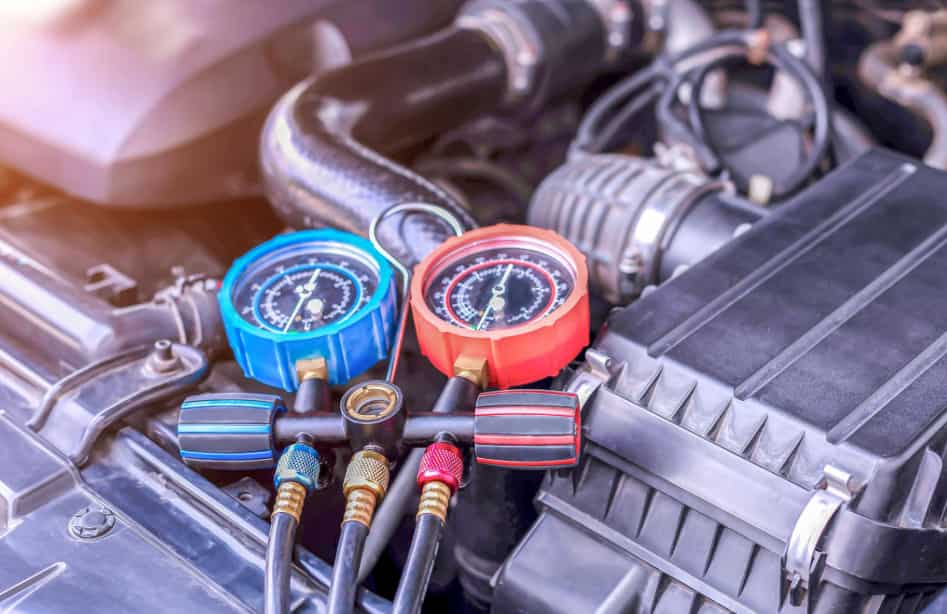
The first essential tool is an AC manifold gauge set. This tool measures system pressure. It helps you understand whether the refrigerant level is low, normal, or overcharged.
You also need a refrigerant can. Most vehicles use either R134a or R1234yf depending on the model year. You must always check the correct refrigerant type before adding gas to the system.
Safety gloves and protective goggles are also necessary. Refrigerant can cause skin irritation or injury if it comes into direct contact. Wearing protection reduces this risk during the process.
A thermometer helps you measure air temperature from the vents. This tool shows whether the cooling performance improves after the recharge.
You may also use a UV leak detection kit. This kit helps you find small refrigerant leaks in hoses or connectors. Detecting leaks early prevents future pressure loss.
Each of these tools supports a safe and accurate Hyundai Tucson AC Recharge. Skipping any of them increases the risk of incorrect pressure levels or system damage. Proper preparation ensures the recharge process runs smoothly and efficiently.
Checking System Pressure Before Recharge
Before you perform Hyundai Tucson AC Recharge, you must check the system pressure first. This step helps you understand the real condition of the air conditioning system in the Hyundai Tucson. It also prevents overcharging or undercharging the refrigerant.
You start by locating the low pressure service port. This port is usually connected to the larger AC line. You then attach the manifold gauge securely to the port.
After connecting the gauge, you start the engine. You set the air conditioning to maximum cooling. You also set the fan speed to a medium or high level. This creates stable system activity for accurate pressure reading.
You then read the pressure value on the gauge. A low reading usually indicates insufficient refrigerant. A normal reading means the system does not need a recharge. A high reading may indicate a different problem such as blockage or overcharge.
You must compare the reading with the manufacturer recommended pressure range. This range ensures the system operates efficiently and safely. If the pressure is too low, the system cannot cool properly. This condition confirms the need for Hyundai Tucson AC Recharge.
You should also observe pressure stability. If the needle fluctuates too much, the system may have leaks or internal issues. In this case, a simple recharge may not fully solve the problem.
This step is critical because it defines the correct action. It helps you avoid unnecessary refrigerant use. It also protects the compressor and maintains long term system health.
Performing Hyundai Tucson AC Recharge Process
After you confirm low refrigerant pressure, you can start the Hyundai Tucson AC Recharge process. You must follow each step carefully to ensure safety and correct performance in the Hyundai Tucson.
First, keep the engine running. Set the air conditioning to maximum cooling. Set the fan speed to a stable level. This helps the system operate under normal load conditions.
Next, connect the refrigerant can to the low pressure port. Make sure the connection is tight. A loose connection can cause refrigerant leakage during the process.
After that, slowly release refrigerant into the system. You should do this in small amounts. Adding refrigerant too quickly can cause pressure imbalance.
While adding refrigerant, you must monitor the pressure gauge continuously. The pressure should gradually rise into the recommended range. You should stop immediately when it reaches the correct level.
You must avoid overcharging the system. Too much refrigerant can reduce cooling performance. It can also damage the compressor over time.
You should also keep the refrigerant can in an upright position. This helps ensure proper gas flow into the system. It also improves accuracy during Hyundai Tucson AC Recharge.
Once the pressure reaches the correct level, close the valve. Then disconnect the hose carefully. Avoid releasing refrigerant into the air.
This step restores cooling efficiency. It also helps the system return to stable operation. When done correctly, the AC will produce cold air again within a short time.
Testing Cooling Performance After Recharge
After you complete Hyundai Tucson AC Recharge, you must test the system to confirm proper cooling performance. This step ensures the air conditioning system works correctly in the Hyundai Tucson.
First, keep the engine running. Set the air conditioning to the coldest mode. Set the fan speed to a medium or high level. This helps you evaluate real cooling performance under normal conditions.
Next, place a thermometer near the air vents. You should measure the temperature of the outgoing air. A properly charged system should produce noticeably cold air within a few minutes.
You should also observe airflow strength. The air should feel steady and consistent. Weak or unstable airflow may indicate remaining issues in the system.
Listen to the compressor during operation. The compressor should run smoothly without frequent switching on and off. Stable operation shows that the system has balanced pressure after Hyundai Tucson AC Recharge.
You must also check cabin cooling speed. The interior should cool down faster than before. If cooling remains slow, the system may still have leaks or pressure imbalance.
In some cases, performance may improve gradually. You should allow the system a few minutes to stabilize before making a final judgment.
This testing step confirms whether the recharge process was successful. It also helps you detect hidden issues early. A proper test ensures long term efficiency and protects the AC system from future damage.
Common Mistakes and Safety Precautions
Many drivers make mistakes during Hyundai Tucson AC Recharge. These mistakes can reduce cooling performance and damage the air conditioning system in the Hyundai Tucson. You must avoid them to keep the system safe and efficient.
One common mistake is overcharging the refrigerant. Some users think more gas improves cooling. In reality, too much refrigerant increases pressure and reduces efficiency. It can also damage the compressor over time.
Another mistake is using the wrong refrigerant type. Each vehicle requires a specific gas. If you use the wrong type, the system will not work properly. It may also cause long term damage to internal components.
Many users also skip the pressure check before recharge. This is a serious mistake. Without checking pressure, you cannot know the real system condition. This can lead to incorrect Hyundai Tucson AC Recharge results.
Some drivers ignore refrigerant leaks. They only refill gas without fixing the leak source. This causes refrigerant to escape again quickly. The system will lose cooling performance in a short time.
Another mistake is connecting the gauge incorrectly. Wrong connection can give false pressure readings. It can also create safety risks during the process.
You should always wear gloves and safety goggles. Refrigerant can harm skin and eyes if exposed directly. Safety protection is necessary during the entire process.
Careful handling and correct procedure protect the system. They also ensure stable cooling and longer compressor life. Avoiding these mistakes helps you maintain strong AC performance for a longer time.
Conclusion
Hyundai Tucson AC Recharge is an important maintenance process that helps restore cooling performance and protect the air conditioning system over time. When the refrigerant level drops, the system loses efficiency and struggles to produce cold air. This issue often appears in the Hyundai Tucson after long periods of use or due to small leaks in the system.
This guide showed you how the AC system works, how to recognize early warning signs, and how to perform each step of the recharge process safely. You also learned which tools to use, how to check system pressure, and how to avoid common mistakes that can damage the compressor or reduce cooling performance.
Proper Hyundai Tucson AC Recharge does more than restore cold air. It also helps maintain stable pressure inside the system. It reduces stress on key components and extends the overall lifespan of the air conditioning system. Regular maintenance also helps you avoid expensive repairs in the future.
You should always pay attention to early symptoms such as weak airflow, slow cooling, or unstable temperature. When you notice these signs, act early instead of waiting for the system to fail completely.
If you are unsure about the process, you should consider professional service. A correct recharge ensures safety, accuracy, and long term performance.
Maintaining your AC system properly will keep your driving experience comfortable in all weather conditions.