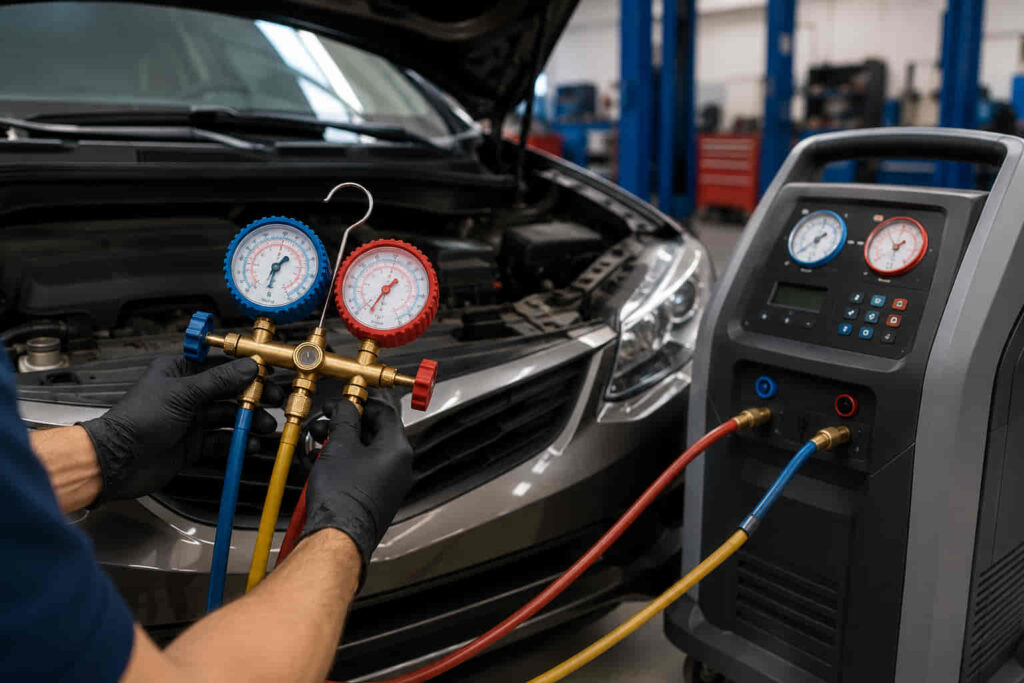
Car AC recharge costs vary because every air conditioning system has different operating conditions, refrigerant requirements, and maintenance histories. A simple refrigerant recharge on a well-maintained vehicle costs significantly less than a service that includes leak detection, component replacement, or system evacuation. Understanding what influences the final price helps vehicle owners avoid unnecessary repairs and make informed maintenance decisions.
The cost of recharging a car air conditioner is determined by more than the amount of refrigerant added to the system. The refrigerant type, vehicle model, labor rates, system condition, and repair complexity all contribute to the total service bill. Modern vehicles using R-1234yf refrigerant, for example, generally cost more to service than older models equipped with R-134a because the refrigerant itself is more expensive and requires specialized recovery equipment.
This guide explains the seven most important factors that influence car AC recharge costs while also helping you understand when an AC recharge is enough, when repairs are necessary, and how preventive maintenance can reduce long-term expenses. By the end of this article, you will have a clear understanding of what determines the price of an AC recharge and how to choose the most cost-effective solution for your vehicle.
How Much Does It Cost to Recharge a Car AC?
The average cost to recharge a car AC ranges from $100 to $350 for most passenger vehicles, although the final price depends on the refrigerant used, labor charges, and whether the system requires additional repairs. Vehicles equipped with R-134a refrigerant generally have lower service costs because the refrigerant is widely available and compatible with older recovery equipment. In contrast, newer vehicles that use R-1234yf refrigerant typically cost more to recharge because the refrigerant is significantly more expensive and requires certified servicing procedures.
A standard AC recharge service includes recovering the remaining refrigerant, evacuating moisture and air from the system, refilling the correct amount of refrigerant, and verifying that operating pressures meet manufacturer specifications. Professional repair shops also inspect the air conditioning system for visible leaks and confirm that the compressor, condenser, expansion valve, and evaporator are functioning correctly before completing the recharge. These diagnostic procedures contribute to labor costs but help prevent refrigerant loss shortly after the service is completed.
The largest price differences usually result from the condition of the air conditioning system rather than the recharge itself. A sealed system that has gradually lost a small amount of refrigerant typically requires only a recharge, while a leaking system demands additional diagnostic work and component replacement before new refrigerant can be added. Recharging an AC system without repairing an existing leak only restores cooling performance temporarily because refrigerant continues to escape through damaged seals, hoses, condensers, or evaporators.
Geographic location also affects the total service cost. Repair shops in metropolitan areas generally charge higher labor rates than independent garages in smaller cities, while dealerships usually charge more than aftermarket automotive service centers because they use manufacturer-approved equipment and follow brand-specific repair procedures. Although dealership pricing is higher, independent repair facilities with certified AC technicians frequently provide equivalent recharge quality at a lower overall cost when the system does not require manufacturer-specific repairs.
What Are the 7 Factors That Affect Car AC Recharge Cost?
The type of refrigerant is the first factor that determines how much it costs to recharge a car AC because refrigerants differ significantly in price, availability, and service requirements. Most vehicles manufactured before the mid-2010s use R-134a refrigerant, which remains relatively affordable and widely available. Newer vehicles increasingly rely on R-1234yf refrigerant, a low-global-warming-potential alternative that costs substantially more due to stricter environmental regulations and specialized recovery equipment. Since repair shops must follow manufacturer specifications when handling each refrigerant, the choice of refrigerant directly affects both material costs and labor charges.
The make and model of the vehicle also influence the total recharge cost because every air conditioning system is designed differently. Compact sedans typically have simpler AC systems with easier service access, allowing technicians to complete the recharge in less time. Luxury vehicles, performance cars, hybrid models, and electric vehicles frequently require additional disassembly, manufacturer-specific diagnostic procedures, or specialized service equipment. These differences increase labor time, making the total service cost higher even when the amount of refrigerant remains similar.
The condition of the air conditioning system has an even greater impact on the final invoice than the recharge itself. A properly sealed system that has gradually lost a small amount of refrigerant usually requires only a standard evacuation and recharge. However, a system suffering from refrigerant leaks cannot be permanently restored by adding new refrigerant alone. Technicians must first identify the leak source using pressure testing, ultraviolet dye, or electronic leak detectors before replacing damaged seals, hoses, condensers, evaporators, or O-rings. These diagnostic procedures and replacement parts often account for the largest portion of the repair bill, while the refrigerant becomes only one component of the overall service.
Labor rates vary considerably between repair facilities and geographic regions, making labor another major pricing factor. Independent repair shops generally offer lower hourly rates than authorized dealerships, while urban service centers typically charge more than shops located in smaller towns. The experience of the technician also affects pricing because certified automotive HVAC specialists perform additional inspections that help prevent future refrigerant loss. Although higher labor rates increase the immediate cost, accurate diagnosis reduces the likelihood of repeated repairs, resulting in lower long-term maintenance expenses.
Additional component repairs frequently increase the cost beyond a basic AC recharge. The compressor, condenser, evaporator, expansion valve, receiver-drier, and refrigerant hoses all work together to maintain proper cooling performance. If one of these components fails, simply adding refrigerant will not restore normal operation. For example, a worn compressor may produce insufficient pressure even after the refrigerant has been refilled, while a damaged condenser allows refrigerant to escape continuously. Replacing defective components before recharging the system ensures that cooling performance returns to manufacturer specifications and prevents newly added refrigerant from being wasted.
The evacuation and recovery process also contributes to the overall service cost because modern air conditioning systems require more than simply adding refrigerant. Professional technicians recover the remaining refrigerant, remove air and moisture from the system using a vacuum pump, and recharge the exact refrigerant quantity recommended by the vehicle manufacturer. Moisture trapped inside the AC system reacts with refrigerant and compressor oil, creating corrosive acids that reduce cooling efficiency and shorten compressor life. A complete evacuation process protects internal components and ensures the refrigerant circulates under the correct pressure, making it an essential part of professional AC servicing rather than an optional procedure.
Seasonal demand is the final factor that affects car AC recharge prices. Repair shops experience their highest workload during late spring and summer, when rising temperatures expose cooling problems that remained unnoticed during colder months. Increased demand often results in longer appointment schedules and higher labor costs because more drivers seek immediate repairs before extended trips or daily commuting. Scheduling preventive AC maintenance before peak summer temperatures allows vehicle owners to secure lower service costs, identify small refrigerant leaks before they become expensive repairs, and maintain consistent cooling performance throughout the hottest months.
These seven factors explain why two vehicles can receive the same AC recharge service yet generate very different repair bills. The refrigerant type, vehicle design, system condition, labor rates, component health, servicing procedures, and seasonal demand all influence the final cost. Understanding how these variables interact enables vehicle owners to evaluate repair estimates more accurately and determine whether a recharge alone is sufficient or whether a complete air conditioning repair offers better long-term value.
Read more: Apple Music vs SiriusXM
When Does a Car AC Need a Recharge?
A car AC needs a recharge when the refrigerant level falls below the amount required to maintain normal cooling performance. Unlike engine oil or coolant, refrigerant is stored inside a sealed system and is not designed to be consumed during normal operation. A properly functioning air conditioning system can maintain its refrigerant charge for years without requiring service. When refrigerant becomes low, it usually indicates gradual leakage through aging seals or a damaged component rather than normal usage.
The most noticeable sign of low refrigerant is warm air coming from the air vents even when the air conditioner is set to its coldest temperature. Refrigerant absorbs heat from the cabin through the evaporator before releasing it through the condenser. When the refrigerant charge drops below the manufacturer’s specification, the system loses its ability to transfer heat efficiently, causing cabin temperatures to remain higher than expected. Drivers often notice that the AC performs adequately during mild weather but struggles to cool the vehicle during extremely hot days because the remaining refrigerant cannot remove heat fast enough.
Longer cooling times also indicate that the air conditioning system may require a recharge. A properly charged system begins producing cold air within a short period after activation and quickly stabilizes the cabin temperature. When refrigerant pressure decreases, the compressor must work harder to circulate refrigerant throughout the system while removing less heat during each cycle. As a result, occupants experience slower cooling performance, especially after the vehicle has been parked under direct sunlight.
Frequent compressor cycling provides another indication that refrigerant pressure has fallen below the recommended operating range. Modern automotive air conditioning systems use pressure sensors to protect the compressor from operating under unsafe conditions. When refrigerant pressure becomes too low, the compressor repeatedly engages and disengages to prevent internal damage. This rapid cycling reduces cooling efficiency while placing additional stress on compressor components, eventually increasing the risk of mechanical failure if the underlying refrigerant loss is not addressed.
Visible signs around the air conditioning system can also help identify whether a recharge is necessary. Refrigerant itself evaporates quickly, but compressor oil circulates together with the refrigerant and often leaves oily residue near leaking hoses, fittings, condensers, or compressor seals. Some repair shops also use ultraviolet dye that becomes visible under UV light, allowing technicians to pinpoint leak locations before performing repairs. Identifying these leaks before recharging the system is essential because adding new refrigerant without repairing the leak only restores cooling temporarily.
Ignoring low refrigerant does more than reduce cabin comfort. Refrigerant carries compressor lubricant throughout the air conditioning system, allowing moving components to operate with minimal friction. As refrigerant levels decrease, lubricant circulation also declines, increasing internal wear and raising compressor operating temperatures. Over time, insufficient lubrication can lead to compressor seizure, turning an inexpensive recharge into a much more costly air conditioning repair. Addressing refrigerant loss as soon as cooling performance begins to decline helps preserve the entire AC system and minimizes long-term repair expenses.
Is It Better to Recharge or Repair a Car AC?
Choosing between recharging and repairing a car AC depends entirely on the condition of the air conditioning system rather than the loss of cooling alone. A recharge is the correct solution only when the system has experienced a minor reduction in refrigerant without significant component failure. If refrigerant pressure remains slightly below specification because of natural permeation over several years, restoring the correct refrigerant level returns the system to normal performance without requiring additional repairs.
Repairing the system becomes necessary when refrigerant escapes through damaged components or mechanical failures prevent the air conditioner from operating correctly. Cracked hoses, leaking condensers, worn compressor shaft seals, damaged evaporators, and deteriorated O-rings allow refrigerant to leave the sealed system continuously. Under these conditions, recharging the system without repairing the leak simply replaces refrigerant that will escape again within days, weeks, or months. The cooling performance temporarily improves, but the underlying problem remains unresolved.
A professional diagnosis distinguishes between a system that only requires a recharge and one that requires repairs. Technicians evaluate refrigerant pressures, inspect visible components, perform leak detection tests, and verify compressor operation before recommending the appropriate service. This diagnostic process prevents unnecessary refrigerant replacement while ensuring that hidden leaks or failing components are identified before they develop into larger mechanical failures. Accurate diagnosis also protects vehicle owners from paying repeatedly for recharges that never solve the original problem.
Repairing leaks before adding refrigerant provides greater long-term value because it restores the integrity of the sealed air conditioning system. Once defective components are replaced, technicians evacuate moisture and air from the system before recharging it with the precise refrigerant quantity specified by the manufacturer. This process ensures stable operating pressures, efficient heat transfer, and proper compressor lubrication. Although the initial repair cost is higher than a simple recharge, it eliminates continuous refrigerant loss and significantly reduces the likelihood of recurring service visits.
Continuing to operate a vehicle with insufficient refrigerant creates additional risks beyond poor cooling performance. Low refrigerant reduces compressor lubrication, increases operating temperatures, and forces the compressor to work under abnormal pressure conditions. These stresses accelerate internal wear and can eventually result in complete compressor failure, one of the most expensive repairs within an automotive air conditioning system. Repairing refrigerant leaks early therefore protects not only cooling efficiency but also the lifespan of every major AC component.
Vehicle owners should view an AC recharge as maintenance only when the system remains structurally sound. If refrigerant loss results from damaged components, repairing the source of the leak before recharging the system is the only solution that restores reliable cooling performance and prevents unnecessary repair costs in the future.
How Can You Reduce Car AC Recharge Costs?
Reducing car AC recharge costs begins with preventing refrigerant loss before it develops into a major repair. A properly maintained air conditioning system retains its refrigerant for years because it operates as a sealed system under controlled pressure. Small refrigerant leaks often go unnoticed during cooler months, but they gradually reduce cooling efficiency and force the compressor to work harder. Scheduling routine air conditioning inspections allows technicians to identify pressure changes and early leaks before they damage expensive components.
Regular operation of the air conditioning system also contributes to lower maintenance costs. Running the AC for several minutes each week, including during winter, keeps compressor seals lubricated and maintains refrigerant circulation throughout the system. Continuous lubrication reduces seal deterioration, minimizes refrigerant leakage, and helps preserve compressor performance. Vehicles that remain unused for extended periods are more likely to develop dried seals that allow refrigerant to escape once the system returns to regular operation.
Replacing the cabin air filter at the recommended service interval improves airflow across the evaporator and helps the air conditioning system operate more efficiently. A clogged cabin filter restricts airflow, making the cabin feel warmer even when the refrigerant charge remains correct. Many drivers mistakenly assume that poor cooling indicates low refrigerant and pay for unnecessary recharge services when the actual problem is reduced airflow. Maintaining unrestricted airflow enables the evaporator to transfer heat more effectively and improves overall cooling performance.
Repairing small refrigerant leaks immediately prevents significantly higher repair costs in the future. Refrigerant carries compressor oil throughout the air conditioning system, ensuring that moving components receive continuous lubrication. When refrigerant escapes through damaged hoses, seals, or fittings, lubrication decreases together with refrigerant volume. Continued operation under these conditions accelerates compressor wear and increases the likelihood of catastrophic mechanical failure. Addressing minor leaks early protects the compressor, extends system lifespan, and eliminates repeated recharge expenses.
Choosing a qualified repair facility also influences the total cost of ownership. Professional automotive HVAC technicians use refrigerant recovery machines, vacuum pumps, leak detection equipment, and manufacturer-approved charging procedures to ensure the system contains the correct refrigerant quantity. Accurate diagnosis prevents unnecessary part replacement while ensuring that hidden leaks are repaired before the recharge is completed. Although professional servicing may involve a higher initial labor cost, it reduces repeat visits and provides a more durable repair than simply adding refrigerant without verifying the system’s condition.
Preventive maintenance remains the most cost-effective strategy because it preserves every major component within the air conditioning system. Maintaining proper refrigerant levels, repairing leaks promptly, replacing worn components before failure, and performing regular inspections allow the compressor, condenser, evaporator, and expansion valve to operate under normal pressure conditions. A well-maintained system delivers consistent cooling performance while significantly reducing the lifetime cost of AC ownership.
Frequently Asked Questions About Car AC Recharge Costs
A car AC recharge typically lasts between three and five years when the air conditioning system remains completely sealed and free from refrigerant leaks. Refrigerant is not consumed during normal operation, so frequent recharging usually indicates an underlying leak that requires repair rather than routine maintenance.
An air conditioner that continues blowing warm air after a recharge usually has a mechanical or electrical fault rather than a refrigerant shortage. Compressor failure, condenser blockage, expansion valve malfunction, evaporator damage, or refrigerant leaks that were not repaired before the recharge can all prevent the system from producing cold air even when the refrigerant charge is correct.
Not every vehicle uses the same refrigerant. Older vehicles commonly operate with R-134a refrigerant, while many newer models use R-1234yf to comply with modern environmental standards. Using the incorrect refrigerant affects cooling performance, damages service equipment, and can result in expensive system repairs. Vehicle manufacturers specify the correct refrigerant type and charging capacity for every model.
A professional AC recharge service generally includes refrigerant recovery, system evacuation, vacuum testing, and refilling the specified refrigerant quantity. However, additional diagnostic procedures, leak detection, compressor oil replacement, ultraviolet dye testing, and damaged component replacement are often billed separately because they depend on the condition of the individual vehicle.
Driving with low refrigerant can damage the AC compressor because refrigerant also transports compressor lubricant throughout the system. As refrigerant pressure decreases, lubrication becomes insufficient, increasing internal friction and operating temperatures. Prolonged operation under these conditions accelerates compressor wear and can eventually lead to complete compressor failure, making early diagnosis and repair significantly more economical than replacing the entire compressor assembly.
Maintaining a sealed air conditioning system is the most effective way to control recharge costs over the long term. Regular inspections, prompt leak repairs, and manufacturer-recommended maintenance preserve cooling efficiency, extend component life, and reduce the likelihood of expensive repairs that go far beyond the cost of a standard AC recharge.