Finding the correct Honda paint codes location is one of the most important steps before repairing scratches, rock chips, or faded body panels. Many Honda owners assume that matching the paint color is as simple as choosing a color name. In reality, this approach often leads to disappointing results because the same color name may have different factory formulas depending on the model year, production plant, or vehicle trim. Even a slight variation can leave an obvious mismatch that stands out in direct sunlight.
Fortunately, Honda makes identifying the original factory paint much easier when you know where to look. Most vehicles include a factory label that displays important identification details, including the exterior paint code. Once you locate this label, you can confidently order touch up paint, purchase replacement body parts, or discuss repairs with a professional body shop. This small code helps ensure that the new paint closely matches the original finish applied at the factory.
In this guide, you will learn the exact Honda paint codes location on popular Honda models, how to recognize the correct paint code, and how to avoid confusing it with other vehicle information. You will also discover what to do if the factory sticker has faded, been damaged, or is no longer available. By the end of this guide, you will have everything you need to identify your Honda color code accurately and avoid costly paint matching mistakes.
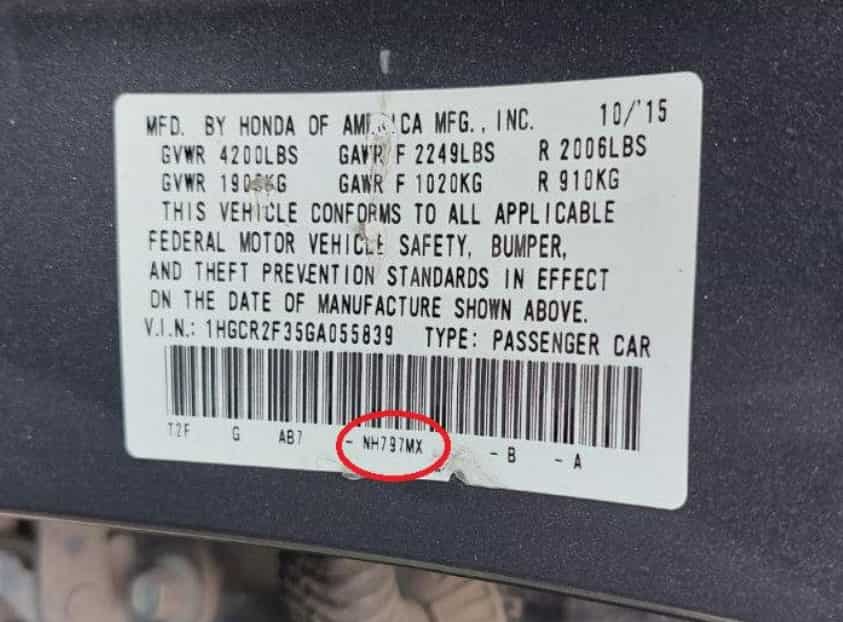
Where Is the Honda Paint Code Located?
The Honda paint codes location is usually inside the driver side door area. In most Honda models, you can find the factory information label on the driver side door jamb or the door pillar. This label is the first place you should inspect when you need the original paint code.
Open the driver side front door and look carefully at every factory sticker. Focus on the labels attached to the vehicle body instead of the door itself. You will often see important details such as the Vehicle Identification Number, the manufacturing date, weight specifications, and the exterior paint code. The paint code does not appear as a color name. Instead, Honda uses a short combination of letters and numbers, such as NH731P, NH883P, B588P, or R513. This unique code identifies the exact factory paint color for your vehicle.
The Honda paint codes location may vary slightly between different models and production years. Some vehicles place the label on the door jamb, while others place it on the door pillar near the latch area. Therefore, inspect the entire driver side door opening before you assume the label is missing.
If dirt covers the label, clean it with a soft microfiber cloth. Then use natural light or a flashlight to read the small characters more easily. Avoid confusing the paint code with the VIN because each serves a different purpose. The VIN identifies the vehicle, while the paint code identifies the original exterior color.
After you find the correct code, take a clear photo of the entire label. Save the image on your phone for future reference. This simple step helps you order the correct touch up paint, match replacement body panels, and avoid expensive color matching mistakes.
How to Find Your Honda Paint Code Step by Step
Finding your Honda paint code is a simple process when you know where to look. You only need a few minutes and good lighting. Follow these steps to locate the correct code before ordering touch up paint or scheduling body repairs.
Step 1: Park Your Vehicle in a Bright Area
Park your Honda in daylight whenever possible. Natural light makes the factory label much easier to read. If you work indoors or at night, use a flashlight to illuminate the sticker. Good lighting helps you identify small letters and numbers without mistakes.
Step 2: Open the Driver Side Front Door
Open the driver side front door completely. Inspect the door jamb, the vertical door pillar, and the area around the door latch. Honda places the factory information label in one of these locations on most models.
Step 3: Locate the Factory Information Label
Look for the original factory label instead of aftermarket service stickers. The correct label usually contains the Vehicle Identification Number, production information, weight specifications, and other vehicle details. The paint code appears alongside this information as a short alphanumeric code.
Step 4: Identify the Paint Code
Search for a code such as NH731P, NH883P, B588P, R513, or YR578M. Honda uses these codes to identify factory paint colors. Pay close attention to every letter and number because even one incorrect character can lead to the wrong paint color.
Step 5: Save the Code Before Ordering Paint
Write the paint code down or take a clear photo of the entire label. Double check the code before you place an order. This simple habit reduces the risk of purchasing the wrong touch up paint. It also makes future repairs much faster if your vehicle needs additional paint work.
What Does a Honda Paint Code Look Like?
A Honda paint code is a short combination of letters and numbers that identifies the exact factory color of your vehicle. Honda uses this code instead of the paint color name because many colors have different formulas. Even two vehicles with the same color name may require different paint codes.
Most Honda paint codes contain two or three letters followed by three numbers and a final letter. For example, you may find codes such as NH731P, NH883P, B588P, R513, or YR578M. Every character has a purpose, so you should always record the complete code without leaving out any letters or numbers.
The first letters often represent the color family. Codes that begin with NH usually identify neutral colors such as black, white, gray, or silver. A code that starts with B normally represents a blue color, while R identifies a shade of red. You may also see G for green or YR for bronze, beige, or brown tones.
The final letter also provides useful information. For example, P commonly indicates a pearl finish, while M often identifies a metallic finish. These letters help paint suppliers choose the correct factory formula. They also ensure the repaired area matches the original finish as closely as possible.
Do not rely on the paint color name when ordering touch up paint. Honda may use similar names for different colors across multiple model years. The factory paint code always provides the most accurate match. Before placing an order, compare the code on your vehicle with the information provided by the paint supplier. This extra step helps you avoid color matching problems and reduces the chance of buying the wrong product.
Honda Paint Codes Location by Model
The Honda paint codes location is similar across most models, but the exact position of the factory label can vary. In most cases, you should begin by checking the driver side door area. If you do not see the label immediately, inspect the entire door opening before looking elsewhere. The following guide explains where to check on some of the most popular Honda models.
Honda Civic Paint Code Location
Most Honda Civic models display the factory information label on the driver side door jamb or the door pillar. Open the front door and inspect the labels attached to the vehicle body. The paint code appears as a short combination of letters and numbers near other factory information. Older Civic models may have faded labels, so use a flashlight if the characters are difficult to read.
Honda Accord Paint Code Location
The Honda Accord usually places the paint code on the factory label inside the driver side door opening. Look carefully at the certification label and identify the short alphanumeric code instead of the color name. If you cannot read the sticker clearly, clean the surface before recording the code.
Honda CRV Paint Code Location
Most Honda CRV models keep the paint code on the driver side door jamb. Check the label attached to the body near the door latch or the vertical pillar. If the vehicle has undergone major body repairs, verify that the label is still original before ordering paint.
Honda HRV Paint Code Location
The Honda HRV follows the same layout as many other Honda vehicles. Open the driver side front door and inspect the factory information label. Record the complete paint code and compare it with your model year before purchasing touch up paint.
Honda Pilot Paint Code Location
You can usually find the Honda Pilot paint code inside the driver side door area. The factory label contains several vehicle details, so take your time and locate the short paint code among the other information. Do not confuse it with the VIN or other identification numbers.
Honda Odyssey Paint Code Location
Honda Odyssey models normally place the paint code on the certification label inside the driver side front door. Because several labels may appear in this area, inspect each one carefully until you find the correct factory information sticker.
Honda Ridgeline Paint Code Location
The Honda Ridgeline typically stores the paint code on the driver side door jamb or the door pillar. Check the factory label before ordering paint for body panels, bumpers, or other exterior components.
Honda Fit Paint Code Location
The Honda Fit uses a compact factory label that contains several identification numbers. Look closely for the paint code and take a clear photo once you find it. Saving the code makes future repairs much easier.
Honda Passport Paint Code Location
The Honda Passport usually places the paint code on the factory label inside the driver side door opening. If the label is damaged or missing, contact a Honda dealer with your vehicle information before purchasing replacement paint.
Is the Honda Paint Code Included in the VIN?
Many Honda owners believe the Vehicle Identification Number contains the factory paint code. However, that is not correct. The VIN identifies your vehicle, but it does not display the paint code as part of its seventeen character sequence.
The VIN provides important information about your Honda, including the manufacturer, model, engine type, production plant, and model year. It helps dealers, insurance companies, and repair shops identify your vehicle accurately. However, you cannot read the original paint code directly from the VIN.
You can usually find the VIN in several locations. Check the lower corner of the windshield on the driver side, the factory information label inside the driver side door, your vehicle registration, or your insurance documents. Although the VIN appears on the same factory label as the paint code, each serves a different purpose.
Some Honda dealerships and automotive paint suppliers can use the VIN to look up the original factory color in their database. This process works because the VIN links to the vehicle’s production records. Even so, the lookup result should match the paint code on the factory label whenever possible. This extra step helps prevent ordering the wrong paint.
If your Honda has been repainted in the past, the factory paint code may no longer match the current exterior color. Previous owners sometimes choose a different color during repairs or restoration projects. In that situation, a professional body shop can scan the existing paint with a color matching device. The scan helps identify the closest available formula for the current finish.
For the most accurate results, always locate the factory paint code first. If you cannot find the label, use the VIN as a backup method through an authorized Honda dealer or a trusted automotive paint supplier. Combining both methods gives you the best chance of finding the correct paint for your vehicle.
What to Do If the Honda Paint Code Sticker Is Missing
A missing paint code sticker does not mean you cannot identify the correct factory color. In many cases, you can still find the information by using other reliable methods. The key is to verify the paint carefully before you order touch up paint or begin any repair.
Start by checking the vehicle records. Previous owners or repair shops may have saved the paint code on maintenance invoices, repair receipts, or warranty documents. If you have purchased touch up paint before, the original container may also display the correct code.
If you cannot find the information in your records, contact a Honda dealership. Provide the Vehicle Identification Number, model, model year, and trim level. The dealer can often access the original factory specifications and help you identify the correct exterior paint color. This option is especially useful if the factory label has faded or disappeared over time.
A trusted automotive paint supplier can also help. Many suppliers maintain large color databases that match Honda paint codes with specific models and production years. They can often confirm the correct color before mixing the paint.
If your Honda has received body repairs or a complete repaint, ask a professional body shop to scan the existing finish. Modern color matching equipment analyzes the current paint and recommends the closest available formula. This method works well because sunlight, weather, and age can change the appearance of the original factory color over time.
You should also inspect hidden painted areas if you need extra confirmation. Check locations such as the fuel door, the inside edge of the trunk, or another protected section that receives little sunlight. These areas often retain more of the original color than exposed body panels. Compare this color with the paint supplier’s recommendation before placing an order.
Taking a few extra minutes to verify the correct color can save both time and money. A careful inspection reduces the risk of buying the wrong paint and helps you achieve a cleaner, more professional repair.
Why the Correct Honda Color Code Still May Not Match Perfectly
Finding the correct Honda paint code is an important first step, but it does not guarantee a perfect color match. Many Honda owners feel surprised when fresh paint looks slightly different from the surrounding panels. In most cases, the paint code is correct. Other factors create the visible difference.
Sunlight is one of the biggest reasons. Years of exposure to ultraviolet rays slowly change the appearance of automotive paint. Colors may become lighter, darker, or less vibrant over time. White, black, silver, red, and blue finishes can all fade after years of driving in different weather conditions.
The condition of the clear coat also affects the final appearance. A worn or oxidized clear coat reflects light differently than a new surface. As a result, freshly applied paint may look brighter or deeper even when it uses the correct factory formula.
Previous repairs can create another challenge. A former owner may have repainted part of the vehicle with a similar color instead of the original factory paint. If that happened, the factory paint code no longer matches the current finish. Applying paint based only on the original code may produce a noticeable difference.
Paint application also plays an important role. Spray pressure, drying time, paint thickness, and surface preparation can all influence the final color. Pearl and metallic finishes require even greater precision because they contain reflective particles that change the way light reaches the surface.
Professional paint suppliers understand these differences. Many of them offer several color variants under the same Honda paint code. These variants compensate for normal fading and production differences. A body shop can compare the available formulas and select the one that matches your vehicle most closely.
Before repairing a large panel, apply a small amount of paint to a test card or another hidden area. Allow the paint to dry completely and inspect it under natural sunlight. This simple test helps you confirm the color before you paint a highly visible section of your Honda.
How to Order Honda Touch Up Paint Using the Color Code
Once you have found the correct Honda paint code, ordering touch up paint becomes much easier. The code allows paint suppliers to identify the exact factory color for your vehicle. This step reduces the risk of buying the wrong paint and helps you achieve a more consistent repair.
Before placing an order, compare the paint code on your vehicle with the code listed by the supplier. Every letter and number matters. Even a small mistake can result in a noticeably different color.
Choose the paint type based on the size of the repair. A paint pen works well for tiny stone chips and narrow scratches because it provides excellent control. A touch up bottle with a small brush is a better option for larger paint chips and minor surface damage. If you plan to repaint a bumper, fender, or replacement body panel, aerosol spray paint usually produces a smoother and more even finish.
Many Honda paint colors require both a base coat and a clear coat. The base coat creates the original color, while the clear coat protects the surface from sunlight, moisture, and everyday wear. Using both products helps the repaired area blend more naturally with the surrounding paint.
Always buy automotive paint from a trusted supplier that specializes in factory matched colors. Reputable suppliers can mix paint according to your Honda paint code and model year for greater accuracy.
Before repairing a visible panel, test the paint on a sample card or another hidden area. Allow it to dry completely and inspect the color in natural sunlight. This simple step helps confirm the color match and reduces the chance of costly mistakes during the final repair.
Frequently Asked Questions About Honda Paint Codes Location
Where is the Honda paint code located?
The Honda paint codes location is usually inside the driver side door area. Most Honda models display the factory information label on the door jamb or the door pillar. The paint code appears as a short combination of letters and numbers rather than a color name.
Can I find the Honda paint code by VIN?
The VIN does not contain the paint code. However, an authorized Honda dealer can often use the VIN to look up the original factory color in its database if the factory label is missing or damaged.
What does a Honda paint code look like?
A Honda paint code is an alphanumeric code such as NH731P, NH883P, B588P, or YR578M. Each code identifies a specific factory paint color and finish for your vehicle.
What if I cannot find the paint code sticker?
Start by checking the driver side door area carefully. If the sticker is missing, contact a Honda dealer with your VIN or visit a professional automotive paint supplier. They can often identify the correct factory color using vehicle records or color matching equipment.
Can I order touch up paint without the paint code?
You can, but it is not recommended. Ordering paint based only on the color name increases the risk of receiving the wrong shade. The factory paint code provides the most accurate match for repairs.
Does the same Honda color have different paint codes?
Yes. Honda may use similar color names across different model years while assigning different paint codes. Always verify the factory paint code instead of relying on the color name alone.
Conclusion
Knowing the correct Honda paint codes location can save you time, money, and frustration when repairing your vehicle. In most Honda models, the factory paint code is easy to find on the information label inside the driver side door area. Once you locate the code, you can order the correct touch up paint, match replacement body panels more accurately, and avoid expensive color matching mistakes.
If the factory sticker is missing or damaged, do not worry. You can still identify the original factory color by contacting an authorized Honda dealer with your VIN or by visiting a trusted automotive paint supplier. Professional color matching services also provide a reliable solution for vehicles that have faded paint or previous repaint work.
Always verify the complete paint code before purchasing any automotive paint. Taking a few extra minutes to confirm the code can prevent costly errors and help you achieve a cleaner, more professional repair.
We hope this guide has helped you understand the Honda paint codes location and the easiest ways to identify the correct factory color for your vehicle. If you found this article useful, save it for future reference and share it with other Honda owners. A simple paint code can make every repair faster, easier, and much more accurate.