Seeing the Honda Civic Check Emission System warning on your dashboard can be stressful. Many drivers immediately think about expensive repairs. Others ignore the message because the car still feels normal. Neither approach is a good idea. Even a small emissions problem can become much more expensive if you leave it unresolved.
The Honda Civic Check Emission System warning tells you that the engine control module has detected a fault in the emissions control system. The problem may come from a loose gas cap, a worn oxygen sensor, a faulty ignition coil, an EVAP system leak, or a failing catalytic converter. Each component plays an important role in reducing harmful exhaust emissions and maintaining proper engine performance.
Some emission system problems have simple and affordable solutions. Others require immediate attention to prevent engine damage or costly repairs. For this reason, you should understand the warning before replacing any parts. A proper diagnosis can save both time and money while helping you avoid unnecessary repairs.
This guide explains everything you need to know about the Honda Civic Check Emission System. You will learn the most common causes, warning signs, diagnostic methods, repair options, and average repair costs. You will also discover practical maintenance tips that help reduce the risk of future emission system problems and keep your Honda Civic running at its best.
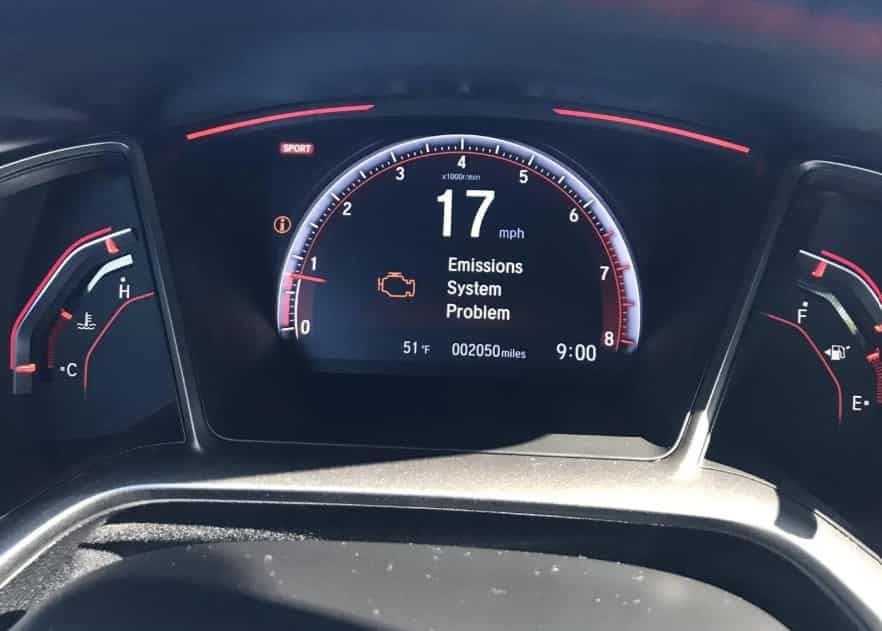
What Does the Honda Civic Check Emission System Warning Mean?
The Honda Civic Check Emission System warning indicates that the engine control module has detected a problem affecting the vehicle’s emissions control system. This system works to reduce harmful exhaust gases while maintaining efficient engine performance. When one or more components stop working correctly, the control module stores a diagnostic trouble code and displays the warning message on the dashboard.
Several systems work together to control emissions. These include the air intake system, fuel injection system, ignition system, oxygen sensors, evaporative emission system, and catalytic converter. Each component helps maintain the correct air and fuel mixture while reducing pollutants before they leave the exhaust pipe. If any part sends abnormal data or fails to perform as expected, the engine control module recognizes the issue and alerts the driver.
Many owners confuse this message with the Check Engine Light. Although the two warnings often appear together, they do not always have the same meaning. The Check Engine Light can point to many engine related faults, while the Honda Civic Check Emission System warning focuses on problems that affect exhaust emissions or engine efficiency. Reading the stored OBD II diagnostic codes is the fastest way to identify the affected system.
The severity of the warning depends on the underlying fault. A loose gas cap or a minor EVAP leak may trigger the message without causing noticeable driving problems. However, an engine misfire, a failing oxygen sensor, or a damaged catalytic converter can reduce performance and increase emissions. If the Check Engine Light starts flashing, stop driving as soon as it is safe. Continuing to drive with an active misfire can cause severe damage to the catalytic converter and lead to much higher repair costs.
What Causes the Honda Civic Check Emission System Warning?
The Honda Civic Check Emission System warning can appear for many different reasons because several components work together to control exhaust emissions. Some problems are minor and inexpensive to fix, while others require immediate repairs. Understanding the most common causes can help you identify the issue faster and avoid replacing parts that still work properly.
A loose or damaged gas cap is one of the simplest causes. If the cap cannot seal the fuel tank correctly, fuel vapors may escape and trigger the warning. The EVAP system can also develop leaks from cracked hoses, a faulty purge valve, or a worn charcoal canister. These faults often produce no obvious symptoms, but they still affect the vehicle’s emissions performance.
Sensor failures are another common reason for the warning. Oxygen sensors monitor the amount of oxygen in the exhaust, while the MAF or MAP sensor measures the air entering the engine. When these sensors provide inaccurate data, the engine control module cannot calculate the correct air and fuel mixture. As a result, the engine may consume more fuel, lose power, or produce higher emissions.
Ignition and fuel system problems can also trigger the warning. Worn spark plugs, weak ignition coils, or clogged fuel injectors may cause incomplete combustion. This condition often leads to engine misfires, rough idling, slow acceleration, and poor fuel economy. If the problem continues, unburned fuel can overheat the catalytic converter and shorten its lifespan.
More serious causes include vacuum leaks, exhaust leaks, and a failing catalytic converter. These faults reduce engine efficiency and increase harmful exhaust gases. In some cases, the warning may appear because several small issues occur at the same time. For this reason, you should always scan the vehicle for diagnostic trouble codes before replacing any components. A proper diagnosis helps identify the root cause and prevents unnecessary repair expenses.
Common Symptoms That Accompany the Warning
The Honda Civic Check Emission System warning rarely appears without other signs. In many cases, the vehicle shows noticeable changes in performance before the problem becomes serious. Recognizing these symptoms early can help you diagnose the issue faster and reduce the risk of costly repairs.
One of the most common symptoms is a rough idle. The engine may shake or vibrate while the vehicle is stopped at a traffic light. You may also notice hesitation when pressing the accelerator. Some drivers experience slower acceleration, reduced engine power, or inconsistent throttle response. These problems often occur when the engine cannot maintain the correct air and fuel mixture.
Fuel economy may also decline. A faulty oxygen sensor, clogged fuel injector, or ignition problem can cause the engine to burn more fuel than necessary. In some cases, you may smell gasoline around the vehicle or notice a stronger than normal exhaust odor. These warning signs often indicate that the combustion process is no longer operating efficiently.
As the problem becomes more severe, additional symptoms may appear. The engine may become difficult to start, especially after sitting overnight. Some vehicles produce excessive exhaust smoke or unusual engine noises. Others enter a reduced power mode to protect critical engine components from further damage. If this happens, you should avoid unnecessary driving until the problem has been diagnosed.
Pay close attention if the Check Engine Light begins flashing. This usually indicates an active engine misfire rather than a minor emissions fault. Continuing to drive under these conditions can quickly damage the catalytic converter and increase repair costs. Identifying the symptoms early and scanning the vehicle for diagnostic trouble codes will help you find the root cause before a small problem turns into a major repair.
Is It Safe to Drive with the Honda Civic Check Emission System Warning?
The answer depends on what caused the Honda Civic Check Emission System warning. Some faults have little effect on daily driving, while others can damage the engine or exhaust system within a short time. Understanding the severity of the problem will help you decide whether you can continue driving or need immediate repairs.
If the vehicle drives normally and the warning appears without any unusual symptoms, the problem may be relatively minor. A loose gas cap, a small EVAP system leak, or a sensor that has started to fail can trigger the warning without affecting engine performance. Although you may continue driving for a short distance, you should schedule a diagnostic inspection as soon as possible. Ignoring the warning for weeks or months may allow a small issue to develop into a more expensive repair.
You should become more cautious if the engine begins to idle roughly, loses power, or consumes more fuel than usual. These symptoms often indicate problems with the ignition system, fuel delivery system, or air intake system. Continuing to drive under these conditions can increase engine wear and place additional stress on the catalytic converter. Prompt diagnosis will usually reduce repair costs and prevent further damage.
Stop driving immediately if the Check Engine Light starts flashing or if the engine shakes violently. You should also stop if you notice heavy exhaust smoke, a burning smell, overheating, or a significant loss of power. These symptoms often point to an active engine misfire or another serious mechanical problem. Driving any farther can destroy the catalytic converter and lead to repairs that cost thousands of dollars. When in doubt, scan the vehicle for diagnostic trouble codes or have a qualified technician inspect the car before returning it to normal use.
How to Diagnose the Honda Civic Check Emission System Warning
Diagnosing the Honda Civic Check Emission System warning starts with identifying the exact fault instead of replacing parts based on guesswork. Many emission related problems produce similar symptoms, so a systematic approach will save both time and money. Accurate testing also reduces the chance of overlooking a hidden issue.
Begin by checking the gas cap. Make sure it is tight and inspect the seal for cracks or damage. If the cap appears worn, replace it with a quality replacement that matches your Honda Civic. Next, perform a visual inspection under the hood. Look for disconnected vacuum hoses, damaged wiring, loose electrical connectors, or signs of fluid leaks that could affect engine performance.
The next step is to connect an OBD II scanner and read the stored diagnostic trouble codes. These codes provide valuable information about the affected system. For example, oxygen sensor codes may point to inaccurate exhaust readings, while EVAP related codes often indicate vapor leaks. Misfire codes usually suggest problems with the spark plugs, ignition coils, or fuel injectors. Always record the codes before clearing them because they provide important clues during the repair process.
After reading the codes, inspect the components connected to the reported fault. Test sensors when possible and compare their readings with the manufacturer’s specifications. Check the ignition system, examine the air intake for restrictions, and inspect the exhaust system for leaks or visible damage. If the catalytic converter becomes a suspect, additional testing may be necessary to confirm its condition before replacement.
If the warning remains after basic inspections, consider seeking professional assistance. Modern Honda Civic models rely on advanced electronic systems that often require specialized diagnostic equipment. A qualified technician can perform live data analysis, smoke testing, and other advanced procedures to identify the root cause accurately. Proper diagnosis prevents unnecessary repairs and ensures the problem is resolved the first time.
How to Fix the Honda Civic Check Emission System Warning
Fixing the Honda Civic Check Emission System warning depends on the underlying cause. The best repair always starts with an accurate diagnosis. Replacing parts without confirming the fault often wastes money and fails to solve the problem. Once you identify the source of the warning, you can choose the most effective repair.
Start with the simplest solutions. Tighten the gas cap and replace it if the seal is cracked or worn. If the warning resulted from a small EVAP system leak, repairing a damaged hose or replacing a faulty purge valve may restore normal operation. After completing the repair, clear the diagnostic trouble codes and drive the vehicle through a complete drive cycle to confirm that the warning does not return.
Sensor related problems usually require replacing the failed component. A worn oxygen sensor can reduce fuel efficiency and increase exhaust emissions. A faulty MAF sensor or MAP sensor can also affect engine performance by sending incorrect airflow data to the engine control module. Installing quality replacement parts helps restore proper fuel control and improves overall engine efficiency.
If the warning comes from the ignition system, inspect the spark plugs and ignition coils for signs of wear or damage. Replace worn spark plugs at the recommended service interval and install new ignition coils if testing confirms a failure. Clean or replace clogged fuel injectors when they cannot deliver fuel evenly. These repairs often eliminate engine misfires and restore smooth acceleration.
More serious repairs may involve replacing the catalytic converter or repairing exhaust leaks. These components require careful inspection because they are more expensive than most emission system parts. Always confirm the root cause before replacing a catalytic converter. A new converter may fail again if an unresolved engine misfire or fuel system problem remains. Completing the correct repair and following the recommended maintenance schedule will help keep the emission system working efficiently for years.
Honda Civic Check Emission System Repair Costs
Repair costs for the Honda Civic Check Emission System can vary widely. The final price depends on the failed component, labor rates in your area, and the model year of your Honda Civic. Minor repairs often cost very little, while major component replacements can become expensive if the problem remains unresolved for too long.
A loose or damaged gas cap is usually the least expensive repair. Replacing the cap typically costs between $20 and $60. Small EVAP system repairs, such as replacing a purge valve or a damaged hose, often range from $100 to $300, including labor. These repairs are relatively affordable and can prevent more serious issues in the future.
Sensor replacements fall into the middle price range. An oxygen sensor generally costs between $150 and $350, depending on the sensor location and labor time. Replacing a MAF sensor often costs $200 to $400, while new spark plugs usually range from $150 to $300 for a complete service. If one or more ignition coils fail, the total repair cost may increase to $200 to $600.
The most expensive repair usually involves the catalytic converter. Depending on the model and whether you choose original or aftermarket parts, replacement can cost anywhere from $900 to $2,500 or more. Additional repairs may also become necessary if an engine misfire or fuel system problem damaged the converter before the warning appeared.
These price ranges are only estimates. Labor costs, local taxes, and parts availability can change the final bill. The best way to reduce repair expenses is to diagnose the problem early and repair the faulty component before it causes additional damage. Regular maintenance and prompt attention to warning messages can save hundreds or even thousands of dollars over the life of your Honda Civic.
How to Prevent Future Honda Civic Emission System Problems
Preventive maintenance is the most effective way to avoid the Honda Civic Check Emission System warning. Many emission related problems develop slowly and show few symptoms at first. Regular inspections and timely maintenance can help you detect small issues before they become expensive repairs.
Follow the maintenance schedule recommended by Honda. Replace spark plugs, engine air filters, and other wear items at the correct intervals. These components help the engine maintain the proper air and fuel mixture. Delaying routine service can reduce engine efficiency and increase exhaust emissions over time.
Use high quality fuel from reputable stations whenever possible. Poor fuel quality can leave deposits inside the fuel injectors and combustion chamber. These deposits may affect fuel delivery and combustion efficiency. If your Honda Civic has high mileage, consider using a fuel system cleaner that meets the manufacturer’s recommendations during scheduled maintenance.
Inspect the gas cap regularly and replace it if the seal becomes brittle or damaged. A simple gas cap problem can trigger the Honda Civic Check Emission System warning even when the rest of the emission system works correctly. You should also inspect vacuum hoses and electrical connectors for signs of wear, cracks, or corrosion during routine maintenance.
Pay attention to changes in the way your vehicle drives. Rough idling, reduced fuel economy, slow acceleration, or unusual engine noises often appear before a warning message reaches the dashboard. Addressing these symptoms early can prevent additional damage to the oxygen sensors, ignition system, or catalytic converter.
Finally, scan your Honda Civic for diagnostic trouble codes whenever the Check Engine Light or an emission warning appears. Early diagnosis allows you to repair the actual cause before it affects other components. Consistent maintenance, quality replacement parts, and prompt repairs will help keep the emission system operating efficiently and reduce the risk of unexpected breakdowns.
Frequently Asked Questions
Can I drive my Honda Civic with the Check Emission System warning on?
It depends on the cause of the warning. If the vehicle runs normally and the Check Engine Light is not flashing, you may be able to drive for a short time. However, you should diagnose the problem as soon as possible. If the engine runs rough, loses power, or the Check Engine Light flashes, stop driving and have the vehicle inspected immediately.
Will the Honda Civic Check Emission System warning reset by itself?
The warning may disappear after the problem has been repaired and the vehicle completes several normal drive cycles. In some cases, you may need an OBD II scanner to clear the diagnostic trouble codes. If the underlying fault remains, the warning will return even after you clear the codes.
Can a loose gas cap trigger the warning?
Yes. A loose, damaged, or missing gas cap can allow fuel vapors to escape from the EVAP system. The engine control module may detect the leak and display the Honda Civic Check Emission System warning. Always check the gas cap before investigating more expensive repairs.
How much does it cost to fix the Honda Civic Check Emission System warning?
Repair costs depend on the failed component. A replacement gas cap may cost less than $60, while an oxygen sensor typically costs between $150 and $350. Replacing a catalytic converter can cost $900 to $2,500 or more, depending on the model year and labor rates.
What is the most common cause of the Honda Civic Check Emission System warning?
The most common causes include a faulty oxygen sensor, an EVAP system leak, worn spark plugs, failing ignition coils, a damaged gas cap, or a catalytic converter problem. Reading the stored diagnostic trouble codes is the fastest way to identify the actual cause instead of relying on guesswork.
Conclusion
The Honda Civic Check Emission System warning should never be ignored. Although a loose gas cap or a minor EVAP system leak may cause the message, more serious faults can affect engine performance, fuel economy, and long term reliability. Identifying the problem early helps prevent unnecessary repairs and reduces the risk of expensive component failures.
A proper diagnosis is the key to finding the correct solution. Start by checking simple items such as the gas cap and scanning the vehicle for diagnostic trouble codes. Then inspect the affected components instead of replacing parts based on assumptions. This approach saves time, lowers repair costs, and ensures the emission system continues to operate efficiently.
Regular maintenance also plays an important role in preventing future problems. Replacing spark plugs at the recommended interval, using quality fuel, and paying attention to unusual engine symptoms can help keep your Honda Civic running smoothly. Small maintenance tasks today can prevent major repairs tomorrow.
If the Honda Civic Check Emission System warning appears on your dashboard, do not wait until the problem becomes more serious. Diagnose the issue as soon as possible and complete the necessary repairs before additional damage occurs. Taking prompt action will improve your vehicle’s performance, reduce emissions, and extend the life of important engine components.
If you found this guide helpful, consider sharing it with other Honda Civic owners who may face the same warning. You can also bookmark this page for future reference and return whenever you need practical troubleshooting tips or maintenance advice for your vehicle.