Honda Auto Idle Stop System problems usually begin with a weak battery, charging issues, or faulty sensors. Many drivers believe the system has failed when the engine no longer shuts off at traffic lights. In reality, Honda also disables Auto Idle Stop under specific operating conditions to protect the engine and ensure a reliable restart.
The system relies on several components that work together every second. The battery supplies enough reserve power for another engine start. The alternator maintains battery charge while driving. The brake switch, hood switch, climate control system, and engine control module continuously exchange data before the engine can stop. If one component reports abnormal information, the system keeps the engine running instead of activating Auto Idle Stop.
Some situations do not indicate a fault. A cold engine, heavy air conditioning use, or low battery charge can temporarily prevent Auto Idle Stop from operating. However, a persistent warning message or a blinking amber indicator usually signals a genuine problem. In that case, the vehicle needs a proper diagnosis instead of guesswork.
This guide explains how the Honda Auto Idle Stop System works and why it stops working. You will learn the most common symptoms, the leading causes, and the correct diagnostic process. The article also explains proven repair methods, typical repair costs, and simple maintenance practices that help prevent future problems. By the end, you will know whether the warning points to a normal operating condition or a component that requires repair.
What Does the Honda Auto Idle Stop System Do?
The Honda Auto Idle Stop System reduces unnecessary engine idling when the vehicle comes to a complete stop. It automatically shuts off the engine for a short period and restarts it as soon as the driver is ready to move again. This process helps reduce fuel consumption, lower exhaust emissions, and improve efficiency during city driving. Unlike a traditional idle control system, Auto Idle Stop constantly evaluates vehicle conditions before allowing the engine to stop.
The system only activates after several operating requirements are satisfied. The engine must reach normal operating temperature, and the battery must store enough energy for another restart. The transmission must remain in the correct drive position, while the driver keeps steady pressure on the brake pedal. At the same time, the climate control system, battery sensor, engine control module, and charging system exchange data to confirm that every condition meets Honda’s requirements. If one condition falls outside the acceptable range, the engine continues running to maintain safety and reliability.
Engine restart happens almost instantly after the system detects that the driver intends to continue driving. Releasing the brake pedal is the most common trigger. However, the engine may also restart when the battery voltage drops, the air conditioning system requires more cooling, or the steering wheel moves significantly. The control module always gives restart stability a higher priority than fuel savings. This strategy prevents unexpected power loss and ensures the vehicle remains ready to accelerate whenever necessary.
Many owners assume the system should operate every time they stop at a traffic light. That assumption often leads to unnecessary concern when the engine remains running. In reality, Honda intentionally suspends Auto Idle Stop whenever battery charge becomes too low, cabin cooling demand increases, or engine temperature falls outside the recommended range. These situations represent normal operating behavior rather than system failure. Understanding how the system makes these decisions helps drivers separate expected operation from a genuine Auto Idle Stop System problem before replacing expensive components.
What Does the Honda Auto Idle Stop System Problem Warning Mean?
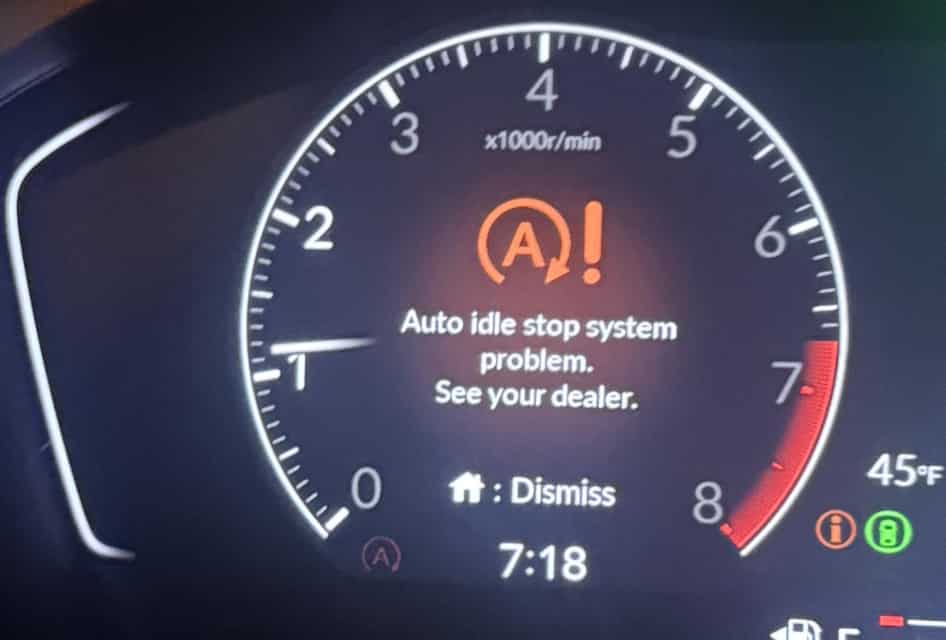
A Honda Auto Idle Stop System Problem warning tells you that the vehicle has detected a fault that affects normal system operation. In most cases, the warning does not appear because the engine skips one stop. Instead, it appears after the control module identifies an electrical or mechanical issue that prevents the system from working as designed. The warning often remains active until the fault is diagnosed and corrected.
Many drivers confuse this warning with normal Auto Idle Stop suspension. However, the two situations are completely different. Honda may temporarily disable Auto Idle Stop when the battery charge is low, the engine is still warming up, or the climate control system needs additional power. These conditions help protect the engine and maintain cabin comfort. Once the operating conditions improve, the system usually returns to normal without any repair.
A persistent warning message usually points to a problem that requires attention. A weak 12 volt battery is one of the most common causes because the system needs enough reserve power to restart the engine safely. Charging system faults, battery current sensor failures, damaged brake switches, hood latch switch problems, and software issues can also trigger the warning. In some cases, the control module stores diagnostic trouble codes that help technicians identify the exact source of the fault.
You should pay close attention to how the vehicle behaves after the warning appears. If the engine starts normally and no other warning lights are present, the problem may not require immediate roadside assistance. However, repeated warning messages, slow engine cranking, or additional battery and charging warnings often indicate a developing electrical problem. A complete battery test and diagnostic scan provide a far more reliable answer than replacing parts based only on the dashboard message.
What Are the Symptoms of Honda Auto Idle Stop System Problems?
Honda Auto Idle Stop System problems usually begin with clear warning signs that become more noticeable over time. Some drivers first notice that the engine no longer shuts off at traffic lights. Others see an Auto Idle Stop System Problem message or a blinking amber indicator on the dashboard. These symptoms often appear before the vehicle develops starting or charging issues, making early diagnosis important.
The most common symptom is that Auto Idle Stop never activates even after normal driving. Many owners assume the feature has failed immediately. However, the system only operates when every required condition is satisfied. A low battery charge, high air conditioning demand, or a cold engine can prevent activation without indicating a mechanical fault. If the system remains inactive after a long drive under normal conditions, the vehicle should be inspected for an underlying problem.
Some vehicles restart the engine immediately after Auto Idle Stop activates. Others crank more slowly than usual or produce a rough restart before returning to idle. These symptoms often indicate that the battery cannot provide enough reserve power for repeated engine starts. In other cases, poor charging performance, loose electrical connections, or a worn starter motor may reduce restart reliability. Drivers should also watch for dim headlights or slow cranking because these signs often appear before complete battery failure.
Additional warning lights can provide valuable diagnostic clues. A battery warning, charging system warning, check engine light, or brake system warning may appear together with the Auto Idle Stop message. Multiple warnings often point to a shared electrical problem rather than separate component failures. Identifying every symptom before beginning repairs helps narrow the diagnosis and reduces the risk of replacing parts that still operate correctly.
What Are the Most Common Causes of Honda Auto Idle Stop System Problems?
Several mechanical and electrical issues can trigger Honda Auto Idle Stop System problems. However, a weak 12 volt battery remains the most common cause. The system requires enough reserve power to restart the engine safely after every stop. Even if the battery starts the engine each morning, it may no longer meet the higher performance requirements for Auto Idle Stop. As battery capacity declines, the control module often disables the feature before complete battery failure occurs.
An incorrect replacement battery can create similar symptoms. Some owners install a battery with the correct size but the wrong capacity or specifications. Although the engine may start normally, the control module may reject the battery because it cannot deliver the expected performance. As a result, Auto Idle Stop remains unavailable or repeatedly displays a warning message. Choosing the battery recommended for the exact model and model year helps prevent unnecessary system faults.
Charging system problems also prevent Auto Idle Stop from operating correctly. A failing alternator may not recharge the battery fast enough during normal driving. Corroded battery terminals, loose ground connections, or damaged wiring can produce the same result by reducing charging efficiency. The battery gradually loses reserve capacity, and the control module responds by keeping the engine running instead of activating Auto Idle Stop. This protective strategy reduces the risk of an unsuccessful engine restart.
Several sensors and safety switches also influence system operation. The battery current sensor monitors battery condition, while the brake pedal switch confirms that the driver intends to remain stopped. The hood latch switch prevents automatic engine restart when the hood is open. If any of these components sends incorrect data, the control module disables Auto Idle Stop to avoid unsafe operation. Software issues or outdated control module calibration can also contribute to system warnings, although technicians should always rule out battery and charging faults before considering module updates or replacement.
How Can You Diagnose Honda Auto Idle Stop System Problems?
Accurate diagnosis always begins with a simple inspection instead of immediate parts replacement. Many Auto Idle Stop warnings result from battery or charging issues rather than failed control modules. A systematic approach helps identify the real cause and prevents unnecessary repair costs. It also reduces the chance of replacing expensive components that still operate correctly.
Start by checking the dashboard for additional warning lights and recording the exact message displayed. Then inspect the battery for corrosion, loose terminals, or visible damage. Confirm that the installed battery matches Honda’s recommended specifications for the vehicle. A recently replaced battery with the wrong capacity or type can trigger Auto Idle Stop problems even if the engine starts normally. You should also consider the battery’s age because most batteries lose capacity as they get older.
The next step involves testing both the battery and the charging system. Battery voltage alone cannot confirm battery health because a weak battery may still show normal voltage after charging. A complete battery test should measure state of charge, reserve capacity, and cold cranking performance. The alternator should also maintain stable charging voltage under different electrical loads. If either component fails these tests, the Auto Idle Stop System may remain disabled until the problem is corrected.
A diagnostic scan provides the final piece of the investigation. A professional scan tool can retrieve manufacturer specific trouble codes and display live data from several control modules. Technicians can review battery condition, charging status, brake switch input, hood switch position, engine temperature, and Auto Idle Stop operating status in real time. This information allows them to confirm the exact fault instead of relying on assumptions. As a result, the repair becomes faster, more accurate, and less expensive.
How Do You Fix Honda Auto Idle Stop System Problems?
The correct repair depends on the actual cause of the warning rather than the warning itself. Many owners replace the battery or starter immediately, but that approach often wastes time and money. A complete diagnosis should always come first because several different faults can produce the same dashboard message. Once the underlying problem is confirmed, the repair usually becomes straightforward and much more effective.
Battery related issues account for most Auto Idle Stop System problems. If testing shows that the battery has lost reserve capacity, replacing it with the correct Honda approved specification often restores normal operation. A discharged battery may only require a full recharge if it still passes a capacity test. After battery service, technicians should inspect the battery terminals and ground connections because corrosion or loose cables can reduce charging efficiency and trigger the same warning again.
Charging system faults require a different repair strategy. A failing alternator cannot maintain the battery at the required state of charge, so the control module disables Auto Idle Stop to ensure reliable engine restarts. Damaged wiring, poor ground connections, and faulty battery current sensors can create similar symptoms. Replacing these components without testing may leave the warning unchanged. For that reason, technicians usually verify charging performance before replacing any electrical part.
Some repairs involve sensors, safety switches, or software rather than major hardware. A faulty brake pedal switch or hood latch switch may send incorrect signals that prevent Auto Idle Stop from operating. In other cases, Honda may release updated software that improves system performance or corrects known calibration issues. After every repair, the vehicle should complete a road test under normal driving conditions. The engine should stop and restart smoothly without displaying another warning message. If the warning returns, the diagnostic process should continue until the root cause is confirmed.
Can You Reset the Honda Auto Idle Stop System Yourself?
Many Honda owners look for a quick reset after the Auto Idle Stop System Problem warning appears. Unfortunately, no universal reset works for every Honda model. The system monitors battery condition, sensor input, and control module data continuously. If the original fault remains, the warning usually returns after a short period of driving.
Turning the engine off and restarting the vehicle may clear a temporary message in some situations. This happens when the system disables Auto Idle Stop because of temporary operating conditions, such as a low battery charge or high climate control demand. Once the battery recovers and normal conditions return, the feature may begin working again without any repair. However, this result should not be confused with a successful system reset because the control module has not repaired the underlying issue.
Some drivers disconnect the battery to erase warning messages. Although this method may clear stored data temporarily, it rarely fixes the actual problem. It can also erase learned vehicle settings and require additional initialization procedures. If the battery remains weak or a sensor continues sending incorrect information, the warning will reappear after the control module completes another self check. For this reason, clearing fault codes without diagnosis often delays the correct repair.
The most reliable way to restore Auto Idle Stop is to correct the component that caused the warning. A healthy battery, proper charging voltage, and accurate sensor signals allow the control module to reactivate the system automatically. After the repair, technicians usually perform a road test to confirm that the engine stops and restarts normally under the correct operating conditions. When the warning does not return, the repair can be considered complete instead of temporary.
Is It Safe to Drive With a Honda Auto Idle Stop System Problem?
In many cases, you can continue driving after an Auto Idle Stop System Problem warning appears. The warning usually disables the Auto Idle Stop feature instead of affecting normal engine operation. If the engine starts smoothly, runs normally, and no critical warning lights appear, the vehicle often remains safe for short trips. Even so, you should arrange an inspection because the warning may indicate an electrical problem that can become more serious over time.
The overall condition of the vehicle matters more than the warning message itself. A weak battery, failing alternator, or charging system fault may trigger the Auto Idle Stop warning long before they cause a no-start condition. As these components continue to deteriorate, the engine may crank slowly, electrical accessories may lose power, and starting reliability may decline. Addressing the problem early often prevents unexpected breakdowns and reduces repair costs.
You should stop driving if the warning appears with other serious symptoms. A battery warning light, charging system warning, repeated engine stalling, or noticeable power loss may indicate a fault that affects more than the Auto Idle Stop System. Smoke, a burning smell, overheating, or steering and brake warnings also require immediate attention. Continuing to drive under these conditions may increase the risk of further vehicle damage or leave the car unable to restart.
The safest approach is to monitor how the vehicle performs after the warning appears. If the engine continues to operate normally, schedule a battery test and a complete diagnostic scan as soon as possible. If the vehicle struggles to start or additional warning lights appear, avoid unnecessary driving until the underlying fault is identified. Early diagnosis not only restores Auto Idle Stop but also helps prevent a small electrical issue from developing into a major repair.
How Much Does It Cost to Fix Honda Auto Idle Stop System Problems?
The cost of fixing Honda Auto Idle Stop System problems depends on the failed component rather than the warning message itself. A simple battery replacement costs far less than replacing a starter motor or repairing the charging system. Labor rates, vehicle model, and diagnostic time also affect the final repair bill. For this reason, an accurate diagnosis usually saves more money than replacing parts based on assumptions.
Battery service is the least expensive repair in many cases because the battery causes most Auto Idle Stop warnings. If the battery only needs charging, the repair cost remains relatively low. However, a battery that fails a capacity test usually requires replacement with the correct specification. Installing the wrong battery may solve the starting problem but still prevent Auto Idle Stop from working properly. Choosing the correct battery from the beginning often avoids additional repair costs.
Repairs become more expensive when the fault involves the charging or starting system. A failing alternator, damaged wiring, or worn starter motor requires more labor and additional testing before replacement. Sensor failures also increase repair costs because technicians must confirm the defective component before installing a new part. Replacing parts without testing can create unnecessary expenses while leaving the original warning unchanged.
The best way to reduce repair costs is to identify the root cause before authorizing any work. A professional battery test, charging system inspection, and diagnostic scan provide reliable evidence for the repair decision. Owners should also request a written explanation of the test results before approving major repairs. This approach helps prevent unnecessary parts replacement and ensures that every repair addresses the actual cause of the Auto Idle Stop System Problem instead of only removing the dashboard warning.
Which Honda Models Can Have Auto Idle Stop System Problems?
Honda Auto Idle Stop System problems can affect several models, but the symptoms and repair procedures are not always the same. Honda updates the system over time, so battery specifications, control software, and electrical components may differ between model years. A repair that solves the problem on one vehicle may not work on another. For that reason, owners should always confirm the exact model year and engine before beginning any diagnosis.
The Honda CR-V is one of the most frequently discussed models because many owners report Auto Idle Stop warnings after battery performance begins to decline. The Honda Accord and Honda Civic can develop similar symptoms when the battery loses reserve capacity or the charging system cannot maintain the required voltage. In many cases, replacing the battery with the correct specification restores normal operation, provided that no other electrical fault exists.
Larger Honda models, including the Pilot, Passport, Ridgeline, and Odyssey, use the same operating principle but may include different battery capacities, software calibrations, or control strategies. These vehicles place greater electrical demand on the charging system because they often support additional comfort and safety features. As a result, battery condition becomes even more important for reliable Auto Idle Stop operation. A weak battery that still starts the engine may no longer satisfy the system’s performance requirements.
Although the warning message looks similar across different Honda vehicles, the correct repair depends on the specific vehicle configuration. Engine type, transmission, trim level, and model year all influence diagnostic procedures and replacement parts. Before replacing a battery, sensor, or control module, owners should compare the vehicle identification number with the correct service information. This step helps ensure that every repair matches the exact Honda model and eliminates unnecessary parts replacement.
How Can You Prevent Honda Auto Idle Stop System Problems?
Preventing Honda Auto Idle Stop System problems starts with proper battery maintenance. The system depends on a healthy battery to restart the engine after every stop. As battery capacity declines, the control module may disable Auto Idle Stop before any starting problems become obvious. Regular battery inspections help identify early signs of wear and reduce the risk of unexpected warning messages.
Driving habits also affect system performance. Frequent short trips prevent the battery from reaching a full state of charge because the alternator has limited time to recharge it. Heavy use of air conditioning, heated seats, or other electrical accessories can increase battery demand even further. Taking longer drives whenever possible allows the charging system to restore battery capacity and helps the Auto Idle Stop System operate as intended.
Routine electrical maintenance plays an important role as well. Clean battery terminals improve electrical flow and reduce charging resistance. Tight battery connections help maintain stable voltage throughout the vehicle. During scheduled maintenance, technicians should also inspect the charging system and confirm that the alternator maintains the correct output under different operating conditions. Addressing small electrical problems early often prevents larger and more expensive repairs later.
Using the correct replacement battery is equally important. Every Honda model requires a battery that meets specific performance requirements for the Auto Idle Stop System. Installing the wrong battery may allow the engine to start normally while preventing the feature from operating correctly. Following the recommended maintenance schedule, testing the battery before extreme weather, and correcting charging issues as soon as they appear will help keep the system reliable and reduce the likelihood of future warning messages.
Conclusion
Honda Auto Idle Stop System problems do not always indicate a major mechanical failure. In many cases, the warning results from a weak battery, reduced charging performance, or temporary operating conditions that prevent the system from activating. Understanding how the system works makes it easier to recognize the difference between normal Auto Idle Stop suspension and a fault that requires repair.
A systematic diagnosis always delivers better results than replacing parts based on the dashboard message alone. Testing the battery, inspecting the charging system, and scanning the vehicle for diagnostic trouble codes help identify the actual cause before unnecessary repairs begin. This approach reduces repair costs, improves reliability, and restores normal Auto Idle Stop operation more quickly.
If the warning appears repeatedly or returns soon after a repair, schedule a professional inspection as early as possible. Correcting battery, charging, or sensor issues before they become more serious can help prevent starting problems and unexpected breakdowns. With the right diagnosis and the correct replacement parts, most Honda Auto Idle Stop System problems can be resolved efficiently, allowing the vehicle to operate safely and as designed.