Imagine you’re driving your GMC Terrain on the highway when the vehicle suddenly loses acceleration. Pressing the gas pedal harder makes little difference, and a warning message appears on the dashboard: “Engine Power Reduced.” It’s an unsettling experience that can leave you wondering whether your SUV is safe to drive or if you’re facing an expensive repair.
The Engine Power Reduced warning is one of the most common issues reported by GMC Terrain owners. While the message may sound alarming, it doesn’t always mean your engine has suffered serious damage. In most cases, it indicates that the vehicle’s Engine Control Module (ECM) has detected a fault and intentionally limited engine performance to protect critical components. This protective feature, often called Reduced Power Mode or Limp Mode, helps prevent further damage while allowing you to drive the vehicle to a safe location or a repair shop.
Several different problems can trigger this warning, ranging from a dirty throttle body and faulty sensors to wiring issues, fuel delivery problems, or software malfunctions. Because multiple components can produce the same dashboard message, identifying the root cause is essential before replacing any parts.
In this guide, you’ll learn what the GMC Terrain Engine Power Reduced warning really means, the most common causes behind it, the symptoms you should never ignore, and the most effective diagnostic and repair methods. We’ll also cover typical repair costs, explain whether it’s safe to continue driving, and share maintenance tips that can help prevent this issue from happening again.
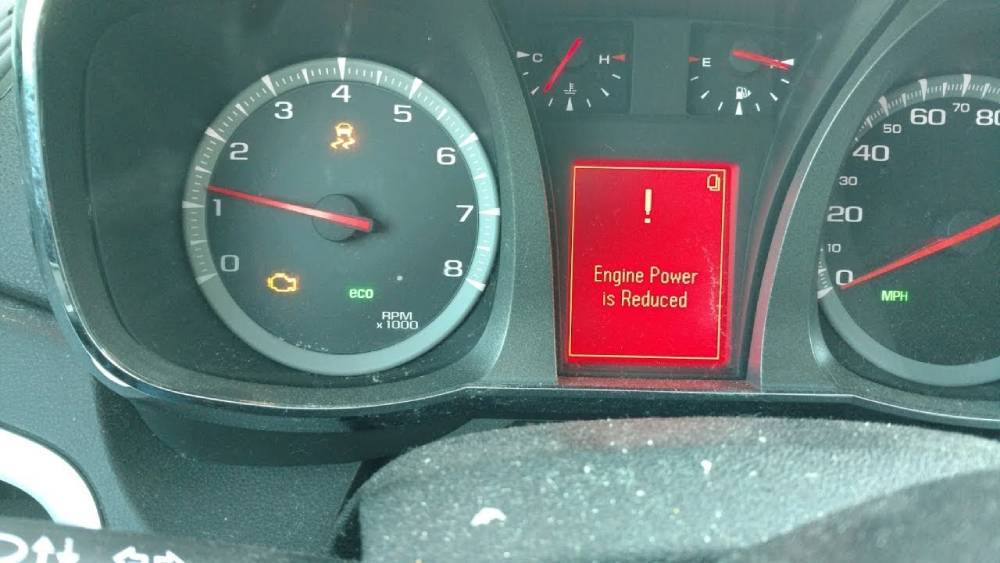
What Does “Engine Power Reduced” Mean?
When your GMC Terrain displays the Engine Power Reduced warning, it means the vehicle’s Engine Control Module (ECM) has detected a fault that could affect engine performance or potentially damage critical components. Instead of allowing the engine to continue operating normally, the ECM activates a protective strategy known as Reduced Power Mode, often referred to as Limp Mode.
In this mode, the ECM intentionally limits throttle response, engine output, and sometimes transmission performance. As a result, the vehicle may accelerate very slowly, struggle to climb hills, or become unable to exceed moderate speeds. While this sudden loss of power can be alarming, it is designed to reduce the risk of more serious mechanical failures and help you safely reach a repair facility.
Reduced Power Mode can be triggered by various issues, including problems with the electronic throttle control system, accelerator pedal position sensor, throttle position sensor, fuel delivery system, ignition components, or engine sensors. Even a loose electrical connector or damaged wiring harness can cause the ECM to detect inconsistent data and reduce engine power.
Many drivers assume that the warning automatically means the engine itself has failed. In reality, the engine is often functioning normally, but the computer no longer trusts the information it receives from one or more sensors. To protect the engine, the ECM limits performance until the underlying problem is diagnosed and repaired.
It is also important to understand that the Engine Power Reduced warning differs from a standard Check Engine Light. A Check Engine Light may indicate anything from a loose fuel cap to a major engine problem while allowing the vehicle to continue operating normally. In contrast, the Engine Power Reduced message means the vehicle has already entered a protective operating mode because the detected fault is considered significant enough to affect safe operation.
Ignoring this warning can increase repair costs if the original fault worsens over time. Performing a diagnostic scan as soon as possible is the most effective way to identify the cause and avoid unnecessary replacement of expensive components.
Common Symptoms of GMC Terrain Engine Power Reduced
The symptoms associated with Engine Power Reduced can vary depending on the underlying fault, but they all point to one common issue: the vehicle is no longer able to deliver its normal performance. Recognizing these symptoms early can help prevent additional damage and reduce repair costs.
The most noticeable symptom is significantly reduced acceleration. Pressing the accelerator may produce little response, making it difficult to merge onto highways or overtake slower traffic. In many cases, the SUV feels sluggish and lacks the power needed for everyday driving.
Another common symptom is limited vehicle speed. The ECM may restrict the engine to a maximum speed of around 20 to 40 mph, depending on the severity of the detected fault. This speed limitation is intended to protect the engine while still allowing the driver to move the vehicle to a safe location.
Drivers often experience poor throttle response, where the accelerator pedal feels unresponsive or delayed. Instead of a smooth increase in engine speed, the vehicle may hesitate before accelerating or fail to accelerate altogether.
The Check Engine Light almost always accompanies the Engine Power Reduced warning. Additional dashboard indicators, such as the Stability Control or Traction Control warning lights, may also illuminate if related systems are affected.
Engine performance may become rough during idle. You may notice vibrations, fluctuating RPMs, or occasional stalling when the vehicle is stopped. These symptoms are particularly common when throttle body problems or ignition system faults are involved.
Fuel efficiency can also decline because the engine is no longer operating under optimal conditions. A faulty sensor or incorrect air-fuel mixture forces the engine management system to compensate, often resulting in increased fuel consumption.
Transmission behavior may change as well. Some drivers report delayed gear changes, harsh shifting, or the transmission remaining in a single gear while the vehicle is in Reduced Power Mode. This occurs because the powertrain control system works to minimize stress on both the engine and transmission.
Common symptoms include:
| Symptom | What You May Notice |
|---|---|
| Reduced acceleration | Vehicle struggles to gain speed |
| Limited top speed | Speed may be restricted to approximately 20 to 40 mph |
| Poor throttle response | Accelerator pedal responds slowly or inconsistently |
| Check Engine Light | Warning light remains illuminated |
| Engine Power Reduced message | Dashboard warning appears immediately |
| Rough idle | Engine shakes or RPM fluctuates while stopped |
| Engine hesitation | Delayed response when accelerating |
| Poor fuel economy | Increased fuel consumption |
| Transmission shifting issues | Delayed or harsh gear changes |
| Stability or traction control warning | Additional warning lights may appear |
Because these symptoms can also be caused by several different mechanical or electrical issues, an OBD-II scan should always be the first step before replacing any parts.
10 Common Causes of GMC Terrain Engine Power Reduced
The Engine Power Reduced warning is not a fault by itself. Instead, it is the result of the ECM detecting a problem that could compromise engine operation. Below are the most common causes, starting with the issues technicians encounter most frequently.
1. Faulty Throttle Body
A malfunctioning electronic throttle body is the leading cause of the Engine Power Reduced warning in many GMC Terrain models.
Over time, carbon deposits accumulate around the throttle plate, restricting airflow and preventing smooth movement. In other cases, the throttle body’s internal electric motor or position sensor fails, causing the ECM to receive inaccurate throttle position data.
Common signs include sluggish acceleration, unstable idle, hesitation, and diagnostic trouble codes such as P1516, P2101, or P2176. Cleaning the throttle body may resolve minor buildup, while a failed unit usually requires replacement.
2. Failed Accelerator Pedal Position Sensor
The accelerator pedal position (APP) sensor measures how far the driver presses the accelerator pedal and sends that information to the ECM. If the sensor produces inconsistent readings, the ECM cannot accurately determine the driver’s intended throttle input.
To prevent unintended acceleration, the computer limits engine power immediately. Drivers often notice poor throttle response, delayed acceleration, or an engine that barely responds to pedal input.
Replacing the APP sensor is typically a straightforward repair and restores normal throttle operation when the sensor is confirmed to be faulty.
3. Faulty Throttle Position Sensor
The throttle position sensor continuously monitors the position of the throttle plate. If the signal becomes erratic due to wear, contamination, or electrical failure, the ECM may interpret it as a loss of throttle control.
A failing TPS can cause hesitation, surging, rough idle, and sudden entry into Reduced Power Mode. Diagnostic trouble codes such as P0121 or P2135 frequently accompany this issue.
In some GMC Terrain models, the throttle position sensor is integrated into the throttle body assembly, meaning the entire throttle body must be replaced rather than just the sensor.
4. Damaged Wiring or Loose Electrical Connections
Modern GMC Terrain models rely on dozens of sensors and electronic components that constantly communicate with the Engine Control Module. If this communication is interrupted by damaged wiring, corroded connectors, or loose electrical terminals, the ECM may receive inaccurate or incomplete information. As a safety precaution, it can activate Engine Power Reduced mode.
Electrical problems are more common than many drivers realize. Wiring harnesses located near the engine are exposed to extreme heat, vibration, moisture, and road debris. Over time, insulation can crack, connectors may corrode, and wires can break internally. Even a partially loose connector attached to the throttle body or accelerator pedal sensor can cause intermittent communication failures that trigger the warning message.
Symptoms caused by wiring issues often appear randomly. The warning may disappear after restarting the vehicle only to return later. Drivers may also experience occasional hesitation, rough idling, or multiple dashboard warning lights appearing simultaneously.
Diagnosing electrical faults usually requires a careful visual inspection followed by voltage and continuity testing with a multimeter. Repairing or replacing damaged wiring is often significantly less expensive than replacing major engine components, making accurate diagnosis especially important.
5. Dirty or Faulty Mass Air Flow Sensor
The Mass Air Flow (MAF) sensor measures the amount of air entering the engine and sends this information to the ECM so it can calculate the correct air-fuel mixture. When the sensor becomes contaminated with dust, oil residue, or debris, it may provide inaccurate airflow readings.
Incorrect airflow data can cause poor combustion, hesitation during acceleration, reduced fuel economy, and in some cases trigger the Engine Power Reduced warning. Although a dirty MAF sensor is less likely to activate Reduced Power Mode than a throttle body failure, it can contribute to the problem when combined with other sensor faults.
Drivers may notice rough idle, sluggish acceleration, black exhaust smoke, or difficulty maintaining speed. Diagnostic trouble codes related to airflow measurements may also be stored in the vehicle’s computer.
Fortunately, this is one of the easiest problems to address. Cleaning the sensor with a dedicated MAF sensor cleaner often restores proper operation if contamination is the only issue. However, if the sensor has failed internally, replacement is the only permanent solution.
6. Fuel Delivery Problems
An engine cannot produce normal power without a consistent supply of fuel. If the fuel system fails to deliver adequate pressure or volume, the ECM may detect abnormal engine operation and reduce power to prevent further damage.
Several fuel system components can contribute to this issue. A weak fuel pump may struggle to deliver sufficient fuel under heavy acceleration. A clogged fuel filter can restrict fuel flow, while dirty or malfunctioning fuel injectors may prevent the proper amount of fuel from reaching the combustion chamber. Low fuel pressure caused by a failing pressure regulator can produce similar symptoms.
Common signs include hard starting, engine hesitation, loss of power during acceleration, engine misfires, and occasional stalling. These symptoms often become more noticeable when driving uphill or attempting to accelerate quickly.
Fuel pressure testing is one of the most effective diagnostic procedures for confirming fuel delivery problems. If pressure falls below factory specifications, technicians can identify whether the issue originates from the fuel pump, filter, pressure regulator, or another component within the fuel system.
7. Ignition System Problems
The ignition system is responsible for igniting the air-fuel mixture inside each cylinder. When one or more ignition components fail, the engine can develop misfires that reduce performance and increase emissions. If the ECM detects severe or repeated misfires, it may activate Engine Power Reduced mode to protect the catalytic converter and engine.
Worn spark plugs are among the most common causes of ignition-related problems. As electrodes wear over time, the spark becomes weaker, leading to incomplete combustion. Failing ignition coils can produce similar symptoms by delivering inconsistent voltage to the spark plugs. In some cases, damaged spark plug wires or poor electrical connections can also interrupt the ignition process.
Drivers may experience rough idling, shaking during acceleration, poor fuel economy, difficulty starting the engine, or a noticeable loss of power. Diagnostic trouble codes such as P0300 through P0304 frequently indicate random or cylinder-specific misfires.
Replacing worn spark plugs according to the manufacturer’s maintenance schedule is one of the simplest ways to prevent ignition-related performance issues. If ignition coils are found to be faulty, replacing the affected coil or coils usually restores normal engine operation.
8. Vacuum Leaks
The engine depends on a precisely balanced mixture of air and fuel for efficient combustion. A vacuum leak allows unmetered air to enter the intake system after the Mass Air Flow sensor has measured incoming airflow. As a result, the ECM receives incorrect information and the engine runs with a lean air-fuel mixture.
Vacuum leaks commonly occur because of cracked vacuum hoses, deteriorated intake manifold gaskets, damaged PCV hoses, or loose intake connections. Although these leaks may seem minor, they can significantly affect engine performance.
Typical symptoms include rough idle, fluctuating engine speed, hesitation during acceleration, high idle RPM, reduced fuel economy, and occasional stalling. Depending on the severity of the leak, the ECM may eventually trigger Reduced Power Mode to protect the engine.
Technicians often use smoke testing to locate small vacuum leaks that cannot be detected during a visual inspection. Repairing the damaged hose or replacing the faulty gasket usually resolves the problem without requiring major engine repairs.
9. ECM Software Issues
Not every Engine Power Reduced warning is caused by a mechanical failure. In some GMC Terrain models, outdated or corrupted Engine Control Module software can produce false sensor readings or improper throttle control behavior.
Manufacturers occasionally release software updates to improve engine management, correct programming errors, and address known drivability issues. If the ECM software contains a bug or has become corrupted due to voltage fluctuations or interrupted programming, the vehicle may enter Reduced Power Mode even though all major components are functioning correctly.
Drivers experiencing intermittent warning messages without any obvious mechanical symptoms should ask their dealership or repair shop to check for available ECM software updates. Reprogramming the control module is often less expensive than replacing parts that are actually functioning normally.
10. Failing Engine Control Module
Although relatively uncommon, a failing Engine Control Module itself can trigger the Engine Power Reduced warning. The ECM serves as the central computer that manages fuel injection, ignition timing, throttle control, emissions systems, and communication between numerous electronic components.
Internal circuit failures, moisture intrusion, overheating, or electrical damage can prevent the ECM from processing sensor information correctly. When this happens, the vehicle may display multiple warning lights, store numerous unrelated diagnostic trouble codes, or experience recurring Reduced Power Mode despite replacing sensors and other components.
Because ECM replacement is one of the most expensive repairs associated with this warning, technicians typically eliminate all other possible causes before condemning the control module. If replacement is necessary, the new ECM must be programmed with the vehicle’s factory software and configured to communicate with the anti-theft system and other onboard modules.
Diagnostic Trouble Codes (DTCs)
When the Engine Power Reduced warning appears, the first diagnostic step should always be connecting an OBD-II scanner to retrieve stored Diagnostic Trouble Codes. These codes provide valuable clues about which system or component triggered the warning, helping narrow down the root cause before unnecessary parts are replaced.
While a single code rarely identifies the exact failed component, it points technicians toward the affected system and significantly reduces diagnostic time. In many cases, multiple related codes may be stored simultaneously, indicating a shared electrical or mechanical problem.
The table below lists some of the most common DTCs associated with GMC Terrain Engine Power Reduced warnings.
| DTC Code | Description | Possible Cause |
|---|---|---|
| P0121 | Throttle Position Sensor Performance | Faulty throttle position sensor |
| P1516 | Throttle Actuator Control Module Performance | Defective throttle body or actuator |
| P2101 | Throttle Actuator Performance | Electronic throttle control failure |
| P2135 | TPS Correlation Error | Mismatch between throttle position sensors |
| P2176 | Minimum Throttle Position Not Learned | Dirty or faulty throttle body |
| P0220 | Throttle Position Sensor Circuit | Sensor wiring or electrical failure |
| P0101 | Mass Air Flow Sensor Performance | Dirty or failing MAF sensor |
| P0300 | Random Engine Misfire | Ignition or fuel system problem |
Although clearing these codes may temporarily remove the warning message, it does not repair the underlying problem. If the fault remains, the ECM will detect it again and reactivate Reduced Power Mode after the vehicle is driven. For that reason, diagnostic codes should always be treated as the starting point of the repair process rather than the final diagnosis.
How to Diagnose the Problem
Diagnosing an Engine Power Reduced warning requires a systematic approach. Replacing parts without testing often leads to unnecessary expenses and may fail to resolve the issue. A logical diagnostic process helps identify the true cause while minimizing repair costs.
Begin by connecting a quality OBD-II scan tool and recording all stored and pending diagnostic trouble codes. These codes provide the first indication of which system requires further inspection. Avoid clearing the codes until the repair has been completed, as valuable diagnostic information may be lost.
Next, inspect the throttle body for carbon buildup, sticking throttle plates, or visible damage. Because throttle body failures are among the most common causes of Reduced Power Mode, this component should receive careful attention.
Continue by examining the wiring harnesses and electrical connectors associated with the throttle body, accelerator pedal position sensor, throttle position sensor, and Mass Air Flow sensor. Look for corrosion, broken insulation, loose connectors, or signs of rodent damage.
If no obvious electrical problems are found, inspect the air intake system and clean the Mass Air Flow sensor if contamination is present. Check for vacuum leaks around intake hoses and manifold gaskets that could affect engine performance.
Fuel pressure testing should follow if symptoms suggest inadequate fuel delivery. Measuring fuel pressure under different operating conditions helps determine whether the fuel pump, filter, or pressure regulator is functioning correctly.
Finally, clear the stored diagnostic codes and perform a road test while monitoring live sensor data. If the warning does not return and all system values remain within factory specifications, the repair can be considered successful. If the Engine Power Reduced message reappears, further testing of the affected system or professional diagnostic equipment may be required.
How to Fix GMC Terrain Engine Power Reduced
Once you have identified the root cause of the Engine Power Reduced warning, the next step is performing the appropriate repair. Some issues can be resolved with basic maintenance, while others require professional equipment and specialized knowledge. Starting with the simplest and least expensive solutions is usually the most practical approach.
Clean the Throttle Body
Carbon buildup inside the throttle body is one of the leading causes of Reduced Power Mode. Over time, deposits accumulate around the throttle plate, restricting airflow and preventing smooth movement. Even a small amount of buildup can interfere with the electronic throttle control system.
Remove the air intake duct and inspect the throttle body for visible carbon deposits. Using a throttle body cleaner and a soft cloth, carefully clean both sides of the throttle plate without forcing it open excessively. After reassembly, some GMC Terrain models may require a throttle relearn procedure before idle speed returns to normal.
If cleaning does not resolve the issue and diagnostic codes continue to point toward the throttle body, replacement may be necessary.
Clean or Replace the Mass Air Flow Sensor
A contaminated Mass Air Flow sensor can send incorrect airflow information to the Engine Control Module, resulting in poor engine performance and occasional Reduced Power warnings.
Disconnect the sensor and spray the sensing element with a dedicated Mass Air Flow sensor cleaner. Never touch the sensing wires directly, as they are extremely delicate. Allow the sensor to dry completely before reinstalling it.
If cleaning fails to improve performance or diagnostic codes persist, replacing the sensor is generally a straightforward repair.
Inspect Electrical Connections
Electrical issues are often overlooked during diagnosis. Loose connectors, corrosion, broken wires, or damaged terminals can interrupt communication between sensors and the ECM.
Carefully inspect the connectors attached to the throttle body, accelerator pedal position sensor, throttle position sensor, and Mass Air Flow sensor. Clean corroded terminals using electrical contact cleaner and repair any damaged wiring before replacing expensive components.
Many intermittent Engine Power Reduced problems are solved simply by restoring reliable electrical connections.
Replace Faulty Sensors
If diagnostic testing confirms that a sensor has failed, replacement is usually the most effective solution.
Common sensors associated with Reduced Power Mode include:
- Accelerator Pedal Position Sensor
- Throttle Position Sensor
- Mass Air Flow Sensor
- Manifold Absolute Pressure Sensor
- Crankshaft Position Sensor
After installation, clear all stored trouble codes and perform a road test to verify that the warning does not return.
Repair Fuel System Problems
If fuel pressure is below factory specifications, further inspection of the fuel delivery system is necessary.
Potential repairs include replacing:
- Fuel pump
- Fuel filter
- Fuel pressure regulator
- Fuel injectors
Proper fuel pressure is essential for maintaining engine performance and preventing drivability issues.
Replace Ignition Components
Engine misfires caused by worn spark plugs or failing ignition coils can eventually trigger Reduced Power Mode.
Replacing spark plugs at the manufacturer’s recommended service interval helps maintain smooth engine operation. If diagnostic testing identifies a defective ignition coil, replacing the affected unit usually restores normal performance.
Update ECM Software
Some GMC Terrain models have received manufacturer software updates that improve throttle response and correct false Engine Power Reduced warnings.
If no mechanical fault can be identified, ask a dealership or qualified repair facility to check for available ECM software updates. Reprogramming the control module may completely eliminate the problem without replacing any parts.
Replace the Engine Control Module
Engine Control Module replacement should always be considered a last resort.
Because the ECM manages nearly every aspect of engine operation, replacing it requires programming with manufacturer-specific software. Most repair shops recommend replacing the ECM only after every sensor, wiring circuit, and mechanical component has been thoroughly tested.
GMC Terrain Engine Power Reduced Repair Cost
Repair costs vary depending on the underlying cause, vehicle model year, labor rates, and whether original equipment or aftermarket parts are used. Fortunately, many Engine Power Reduced problems are caused by relatively inexpensive components rather than catastrophic engine failures.
| Repair | Estimated Cost |
|---|---|
| Throttle body cleaning | $50–150 |
| MAF sensor cleaning | $20–60 |
| Air filter replacement | $30–80 |
| Spark plug replacement | $120–300 |
| Ignition coil replacement | $150–350 |
| Throttle Position Sensor replacement | $120–350 |
| Accelerator Pedal Position Sensor replacement | $150–350 |
| Mass Air Flow Sensor replacement | $150–400 |
| Throttle body replacement | $300–800 |
| Fuel pump replacement | $500–1,200 |
| Wiring repair | $100–600 |
| ECM software update | $100–250 |
| Engine Control Module replacement | $800–2,000 |
Before authorizing major repairs, it is always advisable to obtain a complete diagnostic report. Replacing parts based solely on symptoms rather than confirmed test results can quickly become more expensive than paying for a professional diagnosis.
Can You Drive with Engine Power Reduced?
The answer depends on the severity of the problem, but in most situations, you should avoid driving any farther than necessary.
Reduced Power Mode is designed to protect your engine when the ECM detects a potentially serious issue. While the vehicle may still be capable of moving, its performance is intentionally restricted. Acceleration is significantly reduced, top speed may be limited, and throttle response often becomes unpredictable. These limitations can create dangerous situations when merging onto highways, crossing busy intersections, or climbing steep grades.
If the warning appears while driving and the vehicle still operates smoothly, carefully reduce your speed and move to a safe location. Avoid aggressive acceleration, heavy towing, or extended driving until the problem has been diagnosed.
If the engine is shaking, stalling, overheating, producing unusual noises, or flashing the Check Engine Light, stop driving immediately. Continuing to operate the vehicle under these conditions may cause severe engine damage or destroy the catalytic converter, resulting in repair costs far higher than addressing the original fault.
In many cases, the safest option is to have the vehicle towed to a qualified repair facility, particularly if Reduced Power Mode is accompanied by multiple warning lights or severe drivability issues.
As a general rule, treat the Engine Power Reduced warning as a protective alert rather than a minor inconvenience. Prompt diagnosis not only improves safety but can also prevent a relatively inexpensive repair from becoming a much larger mechanical problem.
How to Prevent Engine Power Reduced Issues
Although not every failure can be prevented, regular maintenance significantly reduces the likelihood of encountering an Engine Power Reduced warning.
Cleaning the throttle body every 30,000 to 50,000 miles helps prevent carbon buildup that can interfere with throttle operation. Replacing the engine air filter at recommended intervals keeps contaminants away from the Mass Air Flow sensor and maintains proper airflow.
Periodic inspection of wiring harnesses and electrical connectors can identify corrosion or damaged insulation before communication problems develop. Keeping the battery and charging system in good condition also helps ensure stable voltage for the vehicle’s electronic control systems.
Following the manufacturer’s maintenance schedule for spark plugs, ignition coils, fuel system service, and software updates allows the engine management system to operate as designed. Finally, scanning the vehicle periodically with an OBD-II scanner can reveal pending diagnostic trouble codes before they trigger dashboard warnings or Reduced Power Mode.
Routine maintenance is almost always less expensive than emergency repairs and greatly improves the long-term reliability of your GMC Terrain.
Frequently Asked Questions
Why does my GMC Terrain say “Engine Power Reduced”?
The Engine Power Reduced warning appears when the Engine Control Module (ECM) detects a fault that could affect engine performance or potentially damage critical components. To protect the powertrain, the ECM limits throttle response and engine output by placing the vehicle in Reduced Power Mode, also known as Limp Mode.
The warning itself does not identify the exact problem. It simply indicates that the ECM has detected a condition requiring immediate attention. Common causes include a faulty throttle body, failing accelerator pedal position sensor, throttle position sensor issues, damaged wiring, ignition misfires, fuel delivery problems, or software-related faults.
Can a bad battery cause Engine Power Reduced?
Yes, although it is less common than throttle body or sensor failures.
A weak battery or failing alternator can cause unstable voltage throughout the vehicle’s electrical system. Since the electronic throttle control system depends on accurate voltage signals, low system voltage may result in communication errors between the ECM and various sensors.
If your battery is more than four or five years old, have both the battery and charging system tested before replacing other components. In some cases, restoring proper voltage resolves intermittent Engine Power Reduced warnings.
Will disconnecting the battery reset the warning?
Disconnecting the battery may temporarily clear stored fault codes and remove the warning message, but it does not repair the underlying problem.
If the original fault still exists, the ECM will detect it again during the next drive cycle and reactivate Reduced Power Mode. Clearing codes without diagnosing the root cause can also erase valuable information that technicians use during troubleshooting.
Instead of simply resetting the system, scan the vehicle with an OBD-II scanner and repair the issue responsible for triggering the warning.
Is it safe to drive with Engine Power Reduced?
Driving a short distance to reach a safe location or repair facility is often possible, but extended driving is not recommended.
Reduced Power Mode limits engine performance to protect critical components. If the vehicle begins shaking, overheating, stalling, or displaying a flashing Check Engine Light, stop driving immediately and arrange for towing.
Continuing to drive with an unresolved problem may lead to catalytic converter damage, engine overheating, or additional component failures that significantly increase repair costs.
Does the throttle body always need to be replaced?
Not necessarily.
Carbon buildup is one of the most common reasons a throttle body stops operating correctly. In many cases, a thorough cleaning restores normal performance and eliminates the Engine Power Reduced warning.
However, if the internal motor, throttle position sensor, or electronic circuitry has failed, cleaning will not solve the problem. Diagnostic testing should always be completed before replacing the throttle body.
Which GMC Terrain model years experience this problem most often?
Reports of Engine Power Reduced warnings have been documented across multiple model years, but they appear more frequently on first-generation GMC Terrain vehicles produced between 2010 and 2017, particularly those equipped with electronic throttle control systems that have accumulated higher mileage.
That said, newer models are not immune. Any GMC Terrain can experience Reduced Power Mode if a sensor, wiring harness, throttle body, or other engine management component develops a fault.
How much does it cost to fix Engine Power Reduced on a GMC Terrain?
Repair costs vary widely depending on the root cause.
Minor repairs, such as cleaning the throttle body or Mass Air Flow sensor, may cost less than $100 if performed yourself. Replacing a faulty throttle position sensor or accelerator pedal sensor typically ranges from $150 to $350.
More extensive repairs, such as replacing the throttle body, fuel pump, or Engine Control Module, can cost anywhere from $300 to more than $2,000. Obtaining an accurate diagnosis before replacing parts is the best way to avoid unnecessary expenses.
Conclusion
Seeing the GMC Terrain Engine Power Reduced warning can be frustrating, especially if it appears unexpectedly while you’re driving. Fortunately, this message does not automatically indicate catastrophic engine damage. In most cases, it is the vehicle’s way of protecting itself after detecting a fault within the electronic throttle control system, fuel delivery system, ignition system, or one of several critical engine sensors.
The key to resolving the problem is accurate diagnosis rather than guessing. Retrieving diagnostic trouble codes with an OBD-II scanner, inspecting the throttle body, checking electrical connections, and testing related sensors can quickly narrow down the root cause. Addressing minor issues early often prevents more expensive repairs later and helps restore your GMC Terrain’s performance with minimal downtime.
Regular maintenance also plays an important role in preventing future Engine Power Reduced warnings. Cleaning the throttle body, replacing worn spark plugs, servicing the air intake system, inspecting wiring, and following the manufacturer’s recommended maintenance schedule can significantly reduce the risk of unexpected power loss.
If your GMC Terrain continues to display the Engine Power Reduced warning after basic troubleshooting, professional diagnosis is the safest course of action. Modern engine management systems are highly sophisticated, and specialized diagnostic equipment is often required to identify intermittent electrical or software-related faults.
Have you experienced this warning on your GMC Terrain? Let us know your model year, engine size, and any OBD-II trouble codes you found in the comments below. The more details you provide, the easier it is to identify the underlying cause and recommend the most effective solution.