GMC Active Grill Shutter (AGS) problems usually appear as a Check Engine Light, diagnostic trouble codes such as P059F, abnormal grille noises, or reduced cooling efficiency. Although the system is relatively small, it directly affects engine temperature management, aerodynamic performance, fuel economy, and emissions. When the grille shutters fail to open or close properly, the vehicle’s Powertrain Control Module (PCM) detects the abnormal operation and stores fault codes, often requiring inspection or repair.
Active Grill Shutter failures have been reported on several GMC models, including the Sierra, Yukon, Acadia, and Terrain, particularly those sharing GM’s electronically controlled grille shutter design. The most common failures involve worn actuator motors, broken shutter louvers, damaged wiring, water intrusion, and debris preventing the shutters from moving freely. These faults range from minor performance issues to conditions that can increase engine operating temperatures under heavy loads or reduce fuel efficiency during normal driving.
This guide explains the complete diagnosis and repair process for GMC Active Grill Shutter problems. You will learn how the system works, recognize the most common symptoms, identify the underlying causes, diagnose the fault using visual inspection and OBD-II trouble codes, compare repair and replacement options, estimate repair costs, determine whether it is safe to continue driving, and apply maintenance practices that help prevent future failures. The goal is to provide a practical troubleshooting resource that helps GMC owners make informed repair decisions while reducing unnecessary parts replacement. This introduction reflects the article’s diagnostic and repair-focused source context rather than serving only as a general overview.
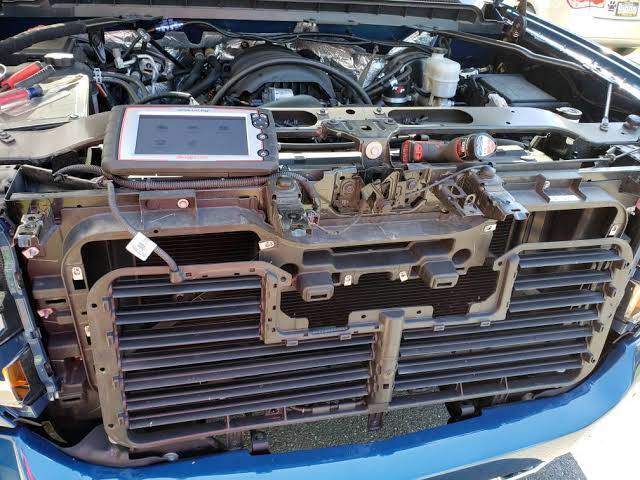
What Are the Most Common GMC Active Grill Shutter Problems?
There are seven common GMC Active Grill Shutter problems: stuck shutters, failed actuators, broken shutter louvers, damaged wiring, water intrusion, debris blockage, and communication faults between the shutter assembly and the Powertrain Control Module (PCM). These failures prevent the Active Grill Shutter (AGS) from regulating airflow through the radiator, reducing the system’s ability to balance engine cooling, aerodynamic efficiency, and fuel economy. While a failed shutter does not always cause immediate drivability issues, it frequently triggers the Check Engine Light and stores diagnostic trouble codes that require inspection.
Stuck Open
A shutter stuck in the open position reduces the aerodynamic efficiency of the vehicle. The AGS is designed to close when maximum airflow is unnecessary, allowing air to flow around the vehicle instead of through the radiator. When the shutters remain open, aerodynamic drag increases, especially at highway speeds, which can slightly reduce fuel economy and extend engine warm-up time during cold weather.
The condition is commonly caused by worn actuator gears, broken shutter hinges, or physical obstruction from dirt, road debris, or ice. Vehicles driven in regions with heavy snow, gravel roads, or salted highways experience a higher risk because contaminants accumulate between the shutter blades and prevent smooth movement.
Stuck Closed
A shutter stuck in the closed position restricts airflow to the radiator and cooling system. Under light driving conditions, the engine may continue operating normally because cooling demand remains low. During towing, mountain driving, heavy acceleration, or hot weather, however, insufficient airflow can cause coolant temperatures to rise beyond their normal operating range.
The PCM continuously monitors engine temperature and attempts to command the shutter assembly to open when additional cooling is required. If the shutters fail to respond, the control module records a fault and may activate protective operating strategies to reduce the risk of overheating.
Failed Active Grill Shutter Actuator
Actuator failure is one of the most frequent causes of GMC Active Grill Shutter problems. The actuator contains a small electric motor and reduction gears that move the shutter blades between open and closed positions. Thousands of operating cycles, combined with heat, moisture, and vibration, gradually wear internal components until the motor can no longer position the shutters accurately.
When the actuator fails, the shutters may stop moving completely, operate intermittently, or produce repeated clicking noises as stripped plastic gears continue slipping during each startup cycle.
Broken Shutter Louvers
Broken shutter louvers prevent the system from controlling airflow even if the actuator continues to function correctly. The shutter blades are manufactured from lightweight plastic to reduce vehicle weight, but repeated exposure to road debris, minor front-end impacts, freezing temperatures, and long-term UV exposure can weaken the material.
A cracked or detached louver often creates uneven airflow through the radiator and places additional stress on the remaining shutter assembly. In severe cases, damaged blades interfere with adjacent shutters, causing the entire mechanism to jam.
Damaged Wiring and Electrical Connectors
Electrical faults can prevent the PCM from communicating with the Active Grill Shutter assembly. Wiring harnesses located behind the front grille are exposed to rain, road salt, mud, and constant vibration. Over time, connector corrosion, damaged insulation, or loose electrical terminals interrupt power or signal transmission between the control module and the actuator.
Unlike mechanical failures, electrical problems may produce intermittent symptoms. The Check Engine Light may appear and disappear depending on weather conditions or vehicle movement, making a thorough wiring inspection an important step during diagnosis.
Water Intrusion and Environmental Damage
Water intrusion accelerates wear inside the actuator motor and electrical connectors. Moisture entering the actuator housing can corrode electrical contacts, increase resistance, and damage the internal motor. Vehicles frequently exposed to heavy rain, flooded roads, automated car washes, or freezing conditions are more susceptible because repeated moisture cycles shorten the service life of electronic components.
Environmental contamination also includes mud, sand, insects, leaves, and road debris that accumulate inside the grille opening. Even if the actuator remains functional, physical blockage can stop the shutter blades from completing their full movement.
PCM Communication Faults
Some Active Grill Shutter problems originate from communication errors rather than mechanical failure. The Powertrain Control Module continuously monitors shutter position through feedback signals. If the commanded position does not match the actual position within a specified period, the module stores a diagnostic trouble code and illuminates the Check Engine Light.
Communication faults may result from actuator failure, damaged wiring, connector corrosion, low system voltage, or internal control module issues. Because multiple components can produce identical symptoms, scanning diagnostic trouble codes should always precede parts replacement.
What Symptoms Indicate a Bad GMC Active Grill Shutter?
A faulty GMC Active Grill Shutter typically produces six primary symptoms: an illuminated Check Engine Light, diagnostic trouble codes, abnormal grille noises, engine temperature irregularities, reduced fuel economy, and inconsistent shutter movement. These symptoms vary depending on whether the failure is mechanical, electrical, or software-related, but they generally appear before complete system failure.
Why Does the Check Engine Light Come On?
The Check Engine Light illuminates when the PCM detects that the Active Grill Shutter system cannot reach or maintain its commanded position. During normal operation, the control module continuously compares the requested shutter position with feedback from the actuator. If movement stops unexpectedly or exceeds the allowable response time, the PCM identifies the condition as a fault and stores a diagnostic code.
The warning light itself does not confirm a failed shutter assembly because similar symptoms can result from damaged wiring, connector corrosion, or actuator motor failure. Retrieving stored OBD-II codes is therefore the first step in identifying the underlying cause.
Why Does the Vehicle Store DTC P059F or Related Codes?
Diagnostic Trouble Code P059F is one of the most common fault codes associated with Active Grill Shutter problems. It generally indicates that the grille air shutter is stuck outside its expected operating range or cannot reach the commanded position.
Other manufacturer-specific codes may also appear depending on the vehicle model and control strategy. These codes help technicians determine whether the problem originates from actuator performance, circuit faults, or communication errors before any components are replaced.
Can a Bad Active Grill Shutter Affect Engine Temperature?
Yes. A malfunctioning Active Grill Shutter can affect engine temperature by preventing proper airflow management. When the shutters remain closed under high cooling demand, airflow through the radiator decreases, reducing heat dissipation from the engine cooling system.
The effect is most noticeable during towing, prolonged uphill driving, stop-and-go traffic in hot weather, or heavy engine loads. Conversely, shutters stuck open may delay engine warm-up during cold weather because excessive airflow continuously cools the radiator.
Can Fuel Economy Decrease?
Yes. Fuel economy can decline when the Active Grill Shutter remains open. The system improves aerodynamic efficiency by limiting airflow through the engine compartment when additional cooling is unnecessary. Closing the shutters reduces aerodynamic drag, allowing the vehicle to move more efficiently at higher speeds.
When the shutters cannot close, airflow resistance increases and the engine requires slightly more energy to maintain cruising speed. Although the reduction in fuel economy is generally modest, it becomes more noticeable during sustained highway driving.
Can the Grille Make Clicking or Grinding Noises?
Yes. Clicking or grinding noises from the front grille are common indicators of actuator failure. These sounds occur when worn internal gears continue attempting to move the shutter blades after mechanical resistance prevents normal operation.
The noise often lasts several seconds immediately after engine startup because the PCM performs a system check by cycling the shutters through their operating range. Repeated clicking during every startup usually indicates that the actuator assembly has reached the end of its service life.
What Causes GMC Active Grill Shutter Failure?
Seven primary factors cause GMC Active Grill Shutter failure: actuator motor wear, broken shutter louvers, debris accumulation, damaged wiring, water intrusion, PCM communication faults, and normal component aging. Although these failures produce similar symptoms, identifying the root cause is essential because replacing the wrong component increases repair costs without resolving the problem.
Actuator Motor Wear
Actuator motor wear is the leading cause of Active Grill Shutter failure. The actuator contains a compact electric motor and a gear reduction mechanism that opens and closes the grille shutters based on commands from the Powertrain Control Module (PCM). Every engine start, temperature adjustment, and driving condition adds another operating cycle to the actuator. Over thousands of cycles, the motor brushes, plastic gears, and internal bearings gradually wear until the actuator can no longer move the shutters through their full operating range.
As the internal gears deteriorate, the actuator often produces repeated clicking sounds during startup because the motor continues attempting to rotate damaged gear teeth. Eventually, the shutter assembly remains fixed in either the open or closed position, causing the PCM to detect an abnormal operating condition and illuminate the Check Engine Light.
Broken Plastic Louvers
Broken shutter louvers prevent the Active Grill Shutter system from controlling airflow correctly. The louvers are manufactured from lightweight plastic to reduce vehicle weight while maintaining aerodynamic performance. Although durable under normal operating conditions, repeated exposure to gravel, road debris, freezing temperatures, minor front-end impacts, and ultraviolet radiation gradually weakens the material.
A single cracked louver can disrupt the movement of adjacent blades because the shutters operate as an interconnected assembly. In many cases, damage that initially appears cosmetic eventually causes the entire grille shutter mechanism to bind or stop moving completely.
Ice, Dirt, and Road Debris
Environmental contamination is one of the most common external causes of Active Grill Shutter problems. Dirt, leaves, insects, mud, snow, and road salt accumulate behind the front grille where the shutter blades operate. During winter, trapped moisture can freeze around the louvers, preventing the actuator from moving the shutters freely. Instead of completing the commanded movement, the actuator encounters excessive resistance that places additional stress on the motor and gear assembly.
Vehicles driven frequently on unpaved roads or in regions with severe winter weather generally experience faster contamination buildup. Regular inspection and cleaning of the grille area reduce the likelihood of debris-related failures.
Damaged Wiring or Electrical Connectors
Electrical circuit faults interrupt communication between the Powertrain Control Module and the shutter actuator. The wiring harness supplying the Active Grill Shutter assembly is mounted near the front of the vehicle, where it is continuously exposed to water, vibration, temperature fluctuations, and road contaminants. Over time, connector corrosion, damaged insulation, loose terminals, or broken wires increase electrical resistance or completely interrupt the control signal.
Electrical failures often create intermittent symptoms. The system may function normally under dry conditions but generate diagnostic trouble codes after driving through heavy rain or washing the vehicle. Because intermittent electrical faults are difficult to identify visually, technicians typically inspect connectors while monitoring live scan tool data.
Water Intrusion
Water intrusion accelerates mechanical and electrical deterioration inside the actuator assembly. Although the actuator housing is designed to resist moisture, damaged seals or prolonged exposure to harsh environmental conditions can allow water to enter the internal components. Moisture promotes corrosion on electrical contacts, increases friction inside moving parts, and shortens motor life.
Repeated freeze-thaw cycles further increase the risk because expanding ice places additional stress on plastic gears and housing components. Once corrosion develops inside the actuator, replacement is usually more reliable than attempting internal repairs.
PCM Communication Faults
Communication faults occur when the Powertrain Control Module cannot verify the actual position of the grille shutters. During operation, the PCM sends movement commands and expects position feedback from the actuator. If the reported position differs from the commanded position for longer than the programmed tolerance, the module records a fault code and activates the Check Engine Light.
Communication problems do not always indicate actuator failure. Low battery voltage, poor electrical connections, damaged wiring, software calibration issues, or failures within the control circuit can all prevent proper communication between system components. For this reason, diagnostic testing should always confirm electrical integrity before replacing expensive hardware.
Normal Aging of Moving Components
Normal wear eventually reduces the reliability of every Active Grill Shutter assembly. Unlike stationary cooling components, the grille shutter system contains multiple moving parts that operate throughout the vehicle’s service life. Continuous exposure to engine heat, vibration, moisture, dust, and changing weather conditions gradually weakens gears, hinges, bushings, and electronic components.
Older vehicles with high mileage are therefore more likely to experience actuator failure even without a specific manufacturing defect or external damage. Preventive inspection during routine maintenance helps identify excessive wear before complete system failure occurs.
Which GMC Models Commonly Experience Active Grill Shutter Problems?
Active Grill Shutter problems have been reported most frequently on GMC Sierra, Yukon, Acadia, and Terrain models equipped with electronically controlled grille shutter systems. Many of these vehicles share GM platforms and component designs with Chevrolet models, meaning similar failure patterns can appear across multiple vehicles using the same actuator assembly and control strategy.
GMC Sierra
The GMC Sierra is one of the models most commonly associated with Active Grill Shutter issues. Full-size pickup trucks experience greater exposure to mud, gravel, road salt, and towing conditions than many passenger vehicles. These operating environments increase mechanical stress on the shutter assembly while accelerating contamination around the actuator and moving louvers.
Owners frequently report Check Engine Light illumination, clicking noises during startup, and diagnostic codes related to shutter position performance after extended use.
GMC Yukon
The GMC Yukon uses the Active Grill Shutter system to improve fuel economy and aerodynamic efficiency despite its large body size. Because the vehicle often operates under higher cooling loads while transporting passengers or towing trailers, the shutter system cycles regularly to balance engine temperature and airflow.
Actuator wear, electrical connector corrosion, and debris accumulation are among the most common causes of shutter-related faults on higher-mileage Yukon models.
GMC Acadia
The GMC Acadia integrates the Active Grill Shutter system into its engine cooling strategy to improve efficiency during everyday driving. Urban traffic, frequent engine start-stop cycles, and changing ambient temperatures require the shutters to operate repeatedly throughout normal use.
As mileage increases, owners may notice intermittent shutter operation, stored diagnostic trouble codes, or reduced fuel economy caused by actuator wear or communication faults.
GMC Terrain
The GMC Terrain uses electronically controlled grille shutters to reduce aerodynamic drag and shorten engine warm-up time. Compact crossover vehicles spend a significant portion of their operating life in city traffic where repeated opening and closing cycles gradually wear internal actuator components.
In addition to normal mechanical aging, the Terrain’s front-mounted shutter assembly remains vulnerable to water intrusion and road contamination, particularly in regions that experience heavy rain or winter road salt. Proper inspection during routine maintenance helps detect these issues before they develop into complete actuator failure.
How Do You Diagnose GMC Active Grill Shutter Problems?
Diagnosing GMC Active Grill Shutter problems requires a systematic inspection of the electronic control system, mechanical shutter assembly, and electrical circuits. Many AGS failures produce identical symptoms, such as a Check Engine Light or abnormal grille noises, making it important to identify the root cause before replacing components. A complete diagnosis usually consists of six steps that move from electronic fault detection to physical inspection and functional testing.
Scan for Diagnostic Trouble Codes
The first step is to retrieve all stored OBD-II diagnostic trouble codes using a professional scan tool. The Powertrain Control Module continuously monitors the position and operation of the Active Grill Shutter system. When the commanded position does not match the actual position, the module records a fault code that provides the starting point for diagnosis.
Codes such as P059F, P05AE, and P05B0 commonly indicate shutter performance or actuator-related faults. Freeze-frame data should also be reviewed because it records engine temperature, vehicle speed, and operating conditions at the moment the fault occurred. This information helps determine whether the problem developed during engine warm-up, highway driving, or heavy engine load.
After recording all diagnostic information, technicians should clear the codes and perform another drive cycle. If the same code returns immediately, the fault is active rather than historical, allowing diagnosis to focus on the current failure.
Perform a Visual Inspection
A visual inspection can identify mechanical damage without removing major vehicle components. Begin by examining the front grille for cracked shutter blades, broken hinges, loose mounting brackets, or foreign objects trapped between the louvers. Even small stones, leaves, or accumulated mud can prevent the shutters from completing their full operating range.
The actuator housing should also be inspected for physical damage, missing fasteners, or signs of impact from road debris. If the shutter assembly appears misaligned or partially detached, the actuator may still operate normally while the damaged linkage prevents proper movement.
Because the shutter assembly is positioned directly behind the grille, contamination is common on vehicles operated in snowy climates or on unpaved roads. Cleaning visible debris before additional testing eliminates one of the simplest potential causes.
Check Actuator Movement
The actuator should move the shutter blades smoothly throughout their entire operating range. Many advanced scan tools allow technicians to command the Active Grill Shutter to open and close while observing the movement directly. During this functional test, the shutter blades should travel smoothly without hesitation, binding, or excessive noise.
If the actuator motor operates but the shutters fail to move, the internal gear mechanism or linkage is likely damaged. Conversely, if neither the actuator nor the shutters respond to scan tool commands, the problem may involve electrical power, wiring, or the actuator motor itself.
Repeated clicking during commanded movement usually indicates stripped actuator gears attempting to rotate without engaging the shutter linkage.
Inspect Electrical Connectors
Electrical connector inspection is essential because corrosion and loose terminals frequently interrupt communication between the PCM and the actuator. Disconnect the actuator connector and examine each terminal for moisture, corrosion, bent pins, damaged locking tabs, or signs of overheating.
The wiring harness should also be checked for abrasion caused by vibration against nearby components. Broken insulation, stretched wires, or evidence of rodent damage can all create intermittent electrical faults that produce the same diagnostic codes as mechanical failures.
Applying dielectric grease to clean electrical terminals during reassembly helps reduce future moisture-related corrosion.
Test the Actuator Motor
Electrical testing confirms whether the actuator motor is capable of operating under load. Using a digital multimeter, technicians can verify that battery voltage and ground reach the actuator connector when the PCM commands movement. If proper voltage is present but the actuator remains inactive, the motor has likely failed internally.
Some service procedures also include resistance testing of the actuator motor windings. Resistance values outside the manufacturer’s specifications indicate internal electrical damage that requires actuator replacement rather than wiring repair.
When voltage is absent, diagnosis should continue upstream toward the wiring harness, fuse, relay, or Powertrain Control Module instead of replacing the actuator prematurely.
Verify PCM Communication
The final diagnostic step is confirming that the Powertrain Control Module communicates correctly with the Active Grill Shutter system. Live data from a professional scan tool allows technicians to compare the commanded shutter position with the actual reported position. If the commanded value changes while the reported position remains fixed, the fault usually involves the actuator or shutter assembly.
Software updates should also be considered if the vehicle manufacturer has released revised PCM calibrations addressing known Active Grill Shutter issues. In some cases, updated control software improves system monitoring or resolves false diagnostic trouble codes without requiring hardware replacement.
Completing all six diagnostic steps significantly reduces the risk of replacing functional components while ensuring that the true source of the failure is identified.
Can You Drive With a Faulty Active Grill Shutter?
Yes, you can usually drive with a faulty GMC Active Grill Shutter, but doing so depends on the nature of the failure and the vehicle’s operating conditions. A failed shutter assembly rarely prevents the engine from running, but it can reduce cooling efficiency, affect fuel economy, and increase the likelihood of overheating under demanding driving conditions. Ignoring the problem for an extended period may also allow additional damage to develop within the cooling system or shutter assembly.
Is It Safe to Continue Driving?
Driving is generally safe when the only symptom is an illuminated Check Engine Light and the engine maintains a normal operating temperature. If the shutters are stuck open, the primary consequences are reduced aerodynamic efficiency, slower engine warm-up, and a slight decrease in fuel economy. Most drivers will not notice immediate drivability issues during everyday commuting.
However, continued operation without diagnosis is not recommended because the same warning light could also indicate electrical faults that affect other vehicle systems. Scanning for diagnostic trouble codes should always be the first step after the warning appears.
Can a Bad Active Grill Shutter Cause Engine Overheating?
Yes. Engine overheating becomes possible if the shutters remain closed while the engine requires maximum airflow through the radiator. During highway towing, mountain driving, extended idling in hot weather, or carrying heavy loads, the cooling system depends on unrestricted airflow to remove heat from the radiator.
If the shutters cannot open, coolant temperatures may rise above their normal operating range. Modern GMC vehicles often respond by activating radiator fans at higher speeds, reducing engine power, or displaying temperature warnings before severe overheating occurs. Even with these protective strategies, continued operation under high temperatures increases stress on the cooling system.
Does a Faulty Active Grill Shutter Affect Fuel Economy?
Yes. Fuel economy usually decreases when the shutters remain permanently open. The Active Grill Shutter system improves aerodynamic efficiency by reducing airflow into the engine compartment when cooling demand is low. This reduction in aerodynamic drag contributes to improved highway fuel efficiency.
When the shutters cannot close, airflow resistance increases and the engine must work slightly harder to maintain cruising speed. Although the fuel economy reduction is generally modest, drivers who spend significant time on highways may notice a measurable decline over time.
Can Cold Weather Make the Problem Worse?
Cold weather can increase both the frequency and severity of Active Grill Shutter failures. Ice accumulation between the shutter blades restricts movement and places additional load on the actuator motor. Repeated attempts to move frozen shutters accelerate gear wear and increase the likelihood of actuator failure.
Vehicles operated in regions with snow and road salt also experience faster corrosion of electrical connectors and greater contamination inside the shutter assembly. Cleaning accumulated snow, ice, and road debris during winter maintenance helps reduce these risks.
When Should the Vehicle Be Repaired Immediately?
Immediate repair is recommended whenever the engine begins overheating, multiple cooling-related diagnostic codes appear, or the vehicle enters a reduced-power operating mode. Drivers should also schedule prompt repairs if loud clicking noises continue during every startup, because this often indicates severe actuator gear damage that can eventually affect the entire shutter assembly.
Repairing the problem early generally limits replacement to the actuator or minor electrical components. Delaying repairs increases the likelihood that additional mechanical damage will require replacement of the complete Active Grill Shutter assembly instead of a single component.
How Do You Fix GMC Active Grill Shutter Problems?
Repairing a GMC Active Grill Shutter problem depends on the root cause identified during diagnosis. Minor issues such as debris buildup or corroded electrical connectors can often be resolved without replacing major components. Mechanical failures involving the actuator motor or shutter assembly usually require replacement because these parts are manufactured as integrated units. Completing the correct repair also prevents recurring diagnostic trouble codes and restores proper airflow management.
Clean Debris From the Shutter Assembly
Cleaning the shutter assembly is the simplest repair for an Active Grill Shutter that is obstructed by dirt or debris. Leaves, mud, gravel, insects, and winter road salt frequently accumulate between the shutter blades, preventing them from moving freely. Removing these contaminants restores normal movement if no mechanical damage has occurred.
The front grille should be inspected thoroughly before cleaning. Soft brushes, compressed air, or low-pressure water can remove loose debris without damaging the plastic louvers. High-pressure washers should be avoided because excessive water pressure may force moisture into electrical connectors or damage the shutter blades.
After cleaning, the shutter assembly should be cycled using a scan tool or by allowing the vehicle to complete its normal startup sequence. Smooth movement without hesitation indicates that contamination was the primary cause of the fault.
Repair Damaged Wiring
Electrical repairs are necessary when damaged wiring or corroded connectors interrupt communication between the actuator and the Powertrain Control Module. Wiring located behind the front grille is continuously exposed to moisture, vibration, and temperature changes, making it susceptible to corrosion and insulation damage.
The repair process involves replacing damaged wire sections, cleaning corroded terminals, securing loose connectors, and verifying proper voltage supply to the actuator. Heat-shrink tubing and weather-resistant connectors should be used whenever wiring repairs are performed because they provide better long-term protection against moisture than standard electrical tape.
After completing the repair, diagnostic trouble codes should be cleared and the system retested to confirm that communication has been restored.
Replace the Active Grill Shutter Actuator
Replacing the actuator is the most common repair for mechanically failed Active Grill Shutter systems. When internal gears wear out or the electric motor fails, the actuator can no longer position the shutter blades correctly. Because the actuator is a sealed component, internal repairs are generally not recommended by manufacturers.
Replacement typically involves removing the front grille or upper radiator support trim to access the actuator mounting bolts and electrical connector. After installing the new actuator, technicians should verify that the shutter blades move smoothly throughout their full operating range before reassembling the front fascia.
Using an OEM actuator generally provides the highest compatibility with the vehicle’s control software, although reputable aftermarket replacements may also perform reliably when manufactured to original specifications.
Replace the Complete Active Grill Shutter Assembly
A complete Active Grill Shutter assembly replacement is required when the shutter blades, linkage, and actuator are damaged beyond individual component repair. Broken louvers, warped mounting frames, or severe impact damage often affect multiple parts simultaneously, making partial repairs impractical.
Although replacing the entire assembly costs more than replacing only the actuator, it eliminates the possibility of hidden mechanical damage remaining inside the shutter mechanism. Many repair facilities recommend complete assembly replacement when the shutter blades have fractured or the housing has been distorted by collision damage.
A new assembly also restores factory alignment, allowing the shutters to operate with minimal mechanical resistance throughout their service life.
Reset Diagnostic Trouble Codes
Diagnostic trouble codes should be cleared only after all repairs have been completed. Clearing codes before correcting the underlying fault does not solve the problem because the Powertrain Control Module will detect the failure again during the next system self-test.
After repairs, a professional scan tool should erase all stored and pending codes. The vehicle should then complete a full drive cycle so the PCM can verify proper Active Grill Shutter operation. If no codes return after multiple operating cycles, the repair can generally be considered successful.
Perform System Calibration
Some GMC models require calibration after replacing the actuator or complete shutter assembly. Calibration allows the Powertrain Control Module to learn the fully open and fully closed positions of the new component, ensuring accurate operation under different driving conditions.
The calibration procedure is usually performed with a factory-level diagnostic scan tool capable of initiating the manufacturer’s relearn process. Skipping this step may result in incorrect shutter positioning or the immediate return of diagnostic trouble codes, even when all hardware has been installed correctly.
How Much Does GMC Active Grill Shutter Repair Cost?
The total cost of repairing a GMC Active Grill Shutter system varies according to the failed component, labor rates, and vehicle model. Minor electrical repairs are relatively inexpensive, while complete shutter assembly replacement requires significantly higher parts and labor costs. Understanding the typical cost breakdown helps vehicle owners decide whether professional repair or a DIY approach is more practical.
Diagnostic Inspection Cost
Professional diagnostic services typically cost between $100 and $180. This inspection generally includes scanning diagnostic trouble codes, checking live data, inspecting the shutter assembly, and verifying actuator operation. Some repair shops apply the diagnostic fee toward the total repair cost if the customer authorizes the recommended service.
Vehicles that require advanced electrical troubleshooting or manufacturer-specific diagnostic procedures may incur higher inspection charges because additional testing equipment and labor time are involved.
Actuator Replacement Cost
Replacing only the Active Grill Shutter actuator generally costs between $250 and $500, including parts and labor. The actuator itself usually represents the smaller portion of the repair, while labor costs vary according to the amount of front-end disassembly required to access the component.
Using genuine OEM parts often increases the total repair cost but reduces compatibility concerns and may provide longer service life than lower-quality replacement components.
Complete Shutter Assembly Replacement Cost
Replacing the complete Active Grill Shutter assembly typically costs between $500 and $1,200. The final price depends on the vehicle model, engine configuration, and the design of the front fascia. Full-size GMC trucks and SUVs generally require more labor because additional exterior trim components must be removed before accessing the assembly.
Vehicles that have suffered collision damage may require further repairs beyond the shutter assembly itself, increasing the total repair expense.
Labor Cost
Labor charges usually range from one to three hours depending on vehicle design. Compact crossover models generally require less disassembly than full-size trucks or SUVs, resulting in lower labor costs. Independent repair facilities often charge lower hourly labor rates than dealership service departments, although dealerships may have greater experience with manufacturer-specific calibration procedures.
Owners should request a written estimate that separates parts, labor, taxes, and diagnostic fees before approving repairs.
DIY vs. Professional Repair
DIY repair is practical only for owners with experience working on automotive electrical and cooling system components. Cleaning debris, inspecting connectors, and replacing accessible wiring can often be completed using standard hand tools. These repairs require minimal specialized equipment and carry relatively low risk when performed carefully.
Replacing an actuator or complete shutter assembly is considerably more complex because front-end trim removal, electrical diagnosis, and system calibration may be required. Incorrect installation can cause recurring diagnostic trouble codes or premature component failure. For most vehicle owners, professional repair provides a more reliable long-term solution despite the higher initial cost.
Why Does GMC Use an Active Grill Shutter System?
GMC uses the Active Grill Shutter (AGS) system to improve aerodynamic efficiency, increase fuel economy, shorten engine warm-up time, reduce emissions, and optimize engine cooling performance. Instead of allowing a constant flow of air through the radiator, the system automatically adjusts the grille shutters according to engine operating conditions. When cooling demand is low, the shutters close to reduce aerodynamic drag. When engine temperature rises, the shutters open to increase airflow through the radiator.
Improve Aerodynamic Efficiency
Reducing aerodynamic drag is one of the primary purposes of the Active Grill Shutter system. Air entering the engine compartment creates turbulence that increases drag, especially at highway speeds. By closing the grille shutters when additional cooling is unnecessary, the vehicle allows more air to flow around the front fascia rather than through the engine bay.
Lower aerodynamic drag enables the engine to maintain cruising speed with less effort. Although the improvement during individual trips is relatively small, the cumulative reduction in air resistance contributes to measurable fuel savings throughout the vehicle’s lifetime.
Increase Fuel Economy
The Active Grill Shutter system helps improve fuel economy by reducing unnecessary airflow through the engine compartment. Every reduction in aerodynamic drag decreases the amount of energy required to move the vehicle forward. Because fuel consumption increases with aerodynamic resistance at higher speeds, the benefits of closed shutters become more noticeable during highway driving.
The Powertrain Control Module continuously adjusts the shutter position based on coolant temperature, vehicle speed, and engine load. This automatic control allows the system to balance fuel efficiency with cooling performance without requiring any driver intervention.
Shorten Engine Warm-Up Time
Closing the grille shutters allows the engine to reach its optimal operating temperature more quickly. During a cold start, unrestricted airflow removes heat from the radiator even though maximum cooling is unnecessary. By limiting airflow, the AGS system helps retain engine heat until normal operating temperature is achieved.
Faster warm-up improves combustion efficiency, reduces internal engine wear caused by cold operation, and allows climate control systems to produce cabin heat sooner during winter driving.
Reduce Vehicle Emissions
Lower exhaust emissions are another benefit of faster engine warm-up. Modern gasoline engines produce their cleanest exhaust after reaching normal operating temperature because catalytic converters require heat to function efficiently.
By helping the engine and exhaust system warm more quickly, the Active Grill Shutter system reduces the amount of time the engine operates under cold-start conditions, when fuel consumption and emissions are typically highest.
Optimize Cooling Performance
The Active Grill Shutter system continuously balances cooling efficiency with aerodynamic performance. During towing, climbing steep grades, or driving in hot weather, the PCM commands the shutters to open completely, maximizing airflow through the radiator and condenser.
When cooling demand decreases, the shutters partially close or close completely to restore aerodynamic efficiency. This continuous adjustment allows the cooling system to respond automatically to changing operating conditions without sacrificing fuel economy.
What Diagnostic Trouble Codes Are Related to Active Grill Shutter Problems?
Several diagnostic trouble codes are associated with GMC Active Grill Shutter failures, with P059F being the most common. These codes indicate that the Powertrain Control Module has detected abnormal shutter movement, actuator performance issues, or communication failures. Although a diagnostic code identifies the affected system, additional testing is required to determine the exact failed component.
P059F – Active Grille Air Shutter Performance
P059F indicates that the Active Grill Shutter cannot reach or maintain its commanded position. This code is commonly triggered when the shutter assembly becomes stuck, the actuator motor fails, or excessive resistance prevents normal movement.
Possible causes include worn actuator gears, broken shutter louvers, debris obstruction, damaged wiring, or internal actuator failure. Because several different faults can generate the same code, technicians should complete a full diagnostic inspection before replacing parts.
P05AE – Active Grille Air Shutter Control Circuit
P05AE generally indicates an electrical problem within the Active Grill Shutter control circuit. The Powertrain Control Module stores this code when it detects abnormal voltage or communication within the actuator circuit.
Loose connectors, damaged wiring, corrosion, poor grounding, or actuator electrical failure are among the most common causes. Electrical testing with a digital multimeter is usually required to isolate the defective component.
P05B0 – Active Grille Air Shutter Position Performance
P05B0 indicates that the reported shutter position does not match the position commanded by the Powertrain Control Module. The actuator may continue operating, but inaccurate position feedback prevents the PCM from confirming correct system operation.
Mechanical binding, damaged position sensors, actuator wear, or communication faults can all produce this diagnostic code. Live scan tool data is useful for comparing the commanded and actual shutter positions during testing.
Manufacturer-Specific Diagnostic Codes
Some GMC models store manufacturer-specific diagnostic codes that provide additional information about Active Grill Shutter failures. These codes vary according to vehicle platform, engine configuration, and software calibration. Professional diagnostic equipment capable of accessing manufacturer-specific data often provides more detailed fault descriptions than a generic OBD-II scanner.
Reviewing freeze-frame data together with manufacturer-specific codes helps technicians identify the operating conditions present when the malfunction first occurred.
How Can You Prevent Active Grill Shutter Problems?
Preventive maintenance significantly reduces the likelihood of Active Grill Shutter failure by minimizing contamination, corrosion, and unnecessary mechanical wear. Although normal component aging cannot be avoided completely, routine inspection allows small issues to be corrected before they develop into expensive repairs.
Inspect the Front Grille Regularly
Regular inspection helps identify physical damage before it affects shutter operation. During routine maintenance, examine the grille opening for cracked shutter blades, loose mounting points, broken linkage components, or accumulated debris. Detecting damage early often prevents excessive stress on the actuator motor.
Visual inspections are particularly important after driving on gravel roads or following minor front-end impacts that may not leave obvious exterior damage.
Remove Dirt and Road Debris
Keeping the shutter assembly clean reduces mechanical resistance and extends actuator life. Leaves, insects, sand, mud, and road salt gradually accumulate around the moving shutter blades, increasing friction during operation.
Cleaning the grille area whenever the vehicle is washed helps prevent debris from hardening or freezing inside the mechanism. Vehicles operating in harsh environments benefit from more frequent cleaning throughout the year.
Perform Winter Maintenance
Winter conditions create some of the most demanding operating environments for the Active Grill Shutter system. Snow, slush, freezing rain, and road salt increase the likelihood of frozen shutters and connector corrosion.
Before driving after heavy snowfall, remove packed snow and ice from the front grille to prevent excessive load on the actuator. Washing road salt from the front of the vehicle during winter also reduces long-term corrosion.
Check Electrical Connectors
Electrical connectors should be inspected periodically for moisture and corrosion. Even small amounts of corrosion increase electrical resistance, causing intermittent communication problems between the actuator and the Powertrain Control Module.
Damaged connector seals should be replaced promptly to prevent water intrusion. Applying dielectric grease to clean terminals provides additional protection in regions with high humidity or heavy road salt use.
Scan for Stored Diagnostic Codes
Periodic diagnostic scanning can detect developing problems before warning lights appear. Some intermittent faults remain stored as pending codes long before they activate the Check Engine Light.
Routine scanning during scheduled maintenance allows technicians to identify abnormal actuator performance, communication issues, or electrical irregularities while the problem is still minor, reducing the likelihood of unexpected system failure.
Frequently Asked Questions About GMC Active Grill Shutter Problems
Can an Active Grill Shutter be repaired instead of replaced?
Yes, but only when the failure is limited to contamination, minor wiring damage, or corroded electrical connectors. Mechanical failures involving stripped actuator gears, burned-out motors, or broken shutter blades generally require replacement because these components are manufactured as sealed assemblies.
Does a bad Active Grill Shutter reduce fuel economy?
Yes. A shutter that remains permanently open increases aerodynamic drag, especially during highway driving. Although the reduction in fuel economy is usually modest, the effect becomes more noticeable during long-distance travel at higher speeds.
Can cold weather damage the Active Grill Shutter?
Yes. Ice accumulation, repeated freeze-thaw cycles, and road salt accelerate wear on both mechanical and electrical components. Frozen shutter blades also place additional strain on the actuator motor during startup.
How long does an Active Grill Shutter last?
Most Active Grill Shutter systems operate reliably for many years under normal driving conditions. Actual service life depends on climate, road conditions, maintenance practices, and the total number of operating cycles completed throughout the vehicle’s lifetime.
Will the Check Engine Light turn off after the repair?
Yes, provided the underlying fault has been corrected and the diagnostic trouble codes have been cleared. After repairs are completed, the Powertrain Control Module verifies normal shutter operation during subsequent drive cycles. If the fault no longer exists, the warning light remains off.
Is the problem covered under warranty?
Warranty coverage depends on the vehicle’s age, mileage, and applicable manufacturer warranty terms. Vehicles still covered by the factory powertrain or bumper-to-bumper warranty may qualify for repairs, while older vehicles generally require owner-paid service unless an extended warranty applies.
GM has issued Technical Service Bulletins for certain models and production years addressing Active Grill Shutter diagnostics, software updates, and repair procedures. The availability of a TSB or recall depends on the specific vehicle identification number (VIN), model year, engine, and production date. Owners should verify eligibility through a GMC dealership using the vehicle’s VIN before authorizing repairs.
Conclusion
GMC Active Grill Shutter problems are typically caused by actuator failure, damaged shutter components, electrical faults, or environmental contamination, but most issues can be diagnosed and repaired before they affect long-term vehicle reliability. Early symptoms such as a Check Engine Light, diagnostic trouble codes, clicking noises, or irregular engine temperatures should not be ignored because they often indicate that the shutter system is no longer operating as designed.
A systematic diagnostic process begins with scanning OBD-II trouble codes, followed by visual inspection of the shutter assembly, electrical connector testing, actuator verification, and confirmation of PCM communication. This step-by-step approach helps distinguish between mechanical and electrical failures, reducing unnecessary parts replacement and lowering repair costs.
Routine maintenance also plays an important role in extending the service life of the Active Grill Shutter system. Regularly cleaning debris from the front grille, inspecting wiring and connectors, removing accumulated snow and road salt during winter, and addressing warning lights promptly can prevent many common failures before they become expensive repairs.
Whether your GMC requires a simple cleaning, actuator replacement, or a complete shutter assembly, identifying the root cause is the most effective way to restore proper airflow management, maintain engine cooling efficiency, and preserve fuel economy. Following the diagnostic and maintenance practices outlined in this guide will help ensure the Active Grill Shutter system continues operating reliably throughout the vehicle’s service life.