Have you started your GMC Acadia only to see the “Service StabiliTrak” message appear on the dashboard? If so, you’re not alone. This warning is one of the most common issues reported by GMC Acadia owners, and it often raises an important question: Is it safe to keep driving, or does my vehicle need immediate attention?
The StabiliTrak system is GMC’s electronic stability control technology, designed to help maintain traction and vehicle stability during challenging driving conditions such as slippery roads, sudden turns, or emergency maneuvers. When the system detects a malfunction, it disables some or all of its safety functions and displays the Service StabiliTrak message. In many cases, this warning may also appear alongside the Check Engine, ABS, or Traction Control lights, making it even more concerning for drivers.
The good news is that the warning doesn’t always indicate a major mechanical failure. It can be triggered by something as simple as a weak battery, a faulty wheel speed sensor, or a malfunctioning brake switch. However, ignoring the message could compromise your vehicle’s stability and handling, especially in adverse weather or emergency situations.
In this guide, we’ll explain what the GMC Acadia Service StabiliTrak Message means, explore its most common causes, discuss the warning signs you shouldn’t ignore, walk you through the diagnostic process, and provide practical solutions to help restore your vehicle’s safety and performance.
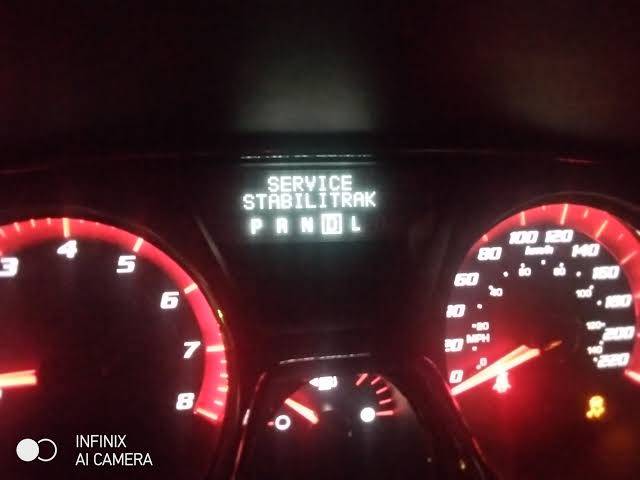
What Does “Service StabiliTrak” Mean on a GMC Acadia?
The Service StabiliTrak message indicates that your GMC Acadia has detected a fault within its electronic stability control system. Rather than confirming a specific failed component, the message serves as a warning that the StabiliTrak system can no longer operate as intended and requires diagnosis.
StabiliTrak is General Motors’ Electronic Stability Control (ESC) system, designed to improve vehicle stability and reduce the risk of skidding or losing control. It constantly monitors how your vehicle responds to steering inputs and compares the driver’s intended direction with the vehicle’s actual movement. If the system detects understeer, oversteer, or wheel slip, it automatically applies braking force to individual wheels and may reduce engine power to help regain control.
To perform these adjustments accurately, StabiliTrak relies on data from several sensors and control modules, including the wheel speed sensors, steering angle sensor, yaw rate sensor, brake system, and engine control module. If any of these components provide inaccurate data or stop communicating correctly, the system may disable itself and display the warning message.
In many cases, the Service StabiliTrak warning is accompanied by other dashboard indicators such as the ABS Light, Traction Control Light, or Check Engine Light. Some drivers may also notice reduced engine performance, disabled cruise control, or changes in vehicle handling. Because the stability control system shares information with multiple safety systems, a fault in one component can trigger several warning lights at the same time.
Although your GMC Acadia will usually remain drivable, it may no longer have the electronic assistance designed to keep the vehicle stable during emergency maneuvers or slippery road conditions. For this reason, the warning should never be ignored, especially if it appears together with braking or engine-related alerts.
Common Causes of the GMC Acadia Service StabiliTrak Message
Several mechanical and electrical issues can trigger the GMC Acadia Service StabiliTrak Message. While some problems are relatively inexpensive to repair, others require professional diagnosis and specialized equipment. Understanding the most common causes can help narrow down the issue before visiting a repair shop.
1. Faulty Wheel Speed Sensor
A defective wheel speed sensor is one of the most frequent causes of the Service StabiliTrak warning. Each wheel is equipped with a sensor that measures rotational speed and sends real-time data to the ABS and stability control systems. If one sensor begins transmitting incorrect information or fails completely, the control module may determine that it can no longer accurately monitor wheel traction and disable StabiliTrak.
Common symptoms include an illuminated ABS warning light, traction control light, intermittent speedometer issues, and reduced stability control performance. In many cases, replacing the faulty sensor immediately resolves the warning.
2. Steering Angle Sensor Failure
The steering angle sensor monitors the position and direction of the steering wheel. This information allows StabiliTrak to determine whether the vehicle is following the driver’s intended path. If the sensor becomes damaged, loses calibration, or provides inconsistent readings, the system may incorrectly interpret normal driving as a loss of control.
Drivers may notice the Service StabiliTrak message shortly after starting the vehicle, following steering or suspension repairs, or after hitting a pothole. Recalibrating or replacing the sensor typically restores proper operation.
3. ABS Module Problems
The Anti-lock Braking System (ABS) control module plays a central role in the operation of the StabiliTrak system. Internal electronic failures, communication errors, or software issues within the module can prevent stability control from functioning correctly.
Because the ABS module manages several safety systems simultaneously, drivers often experience multiple warning lights, including ABS, Traction Control, and Service StabiliTrak. Professional diagnostic equipment is usually required to confirm an ABS module failure.
4. Weak or Failing Battery
Many drivers are surprised to learn that a weak battery can trigger the Service StabiliTrak message. Modern vehicles depend on stable electrical voltage for communication between numerous electronic control modules. When battery voltage drops below acceptable levels, sensors and modules may transmit inconsistent data, causing false fault codes and disabling various vehicle systems.
If the warning appears after cold weather, extended vehicle storage, or repeated jump starts, checking the battery and charging system should be one of the first diagnostic steps.
5. Brake Pedal Switch Failure
The brake pedal position switch informs the vehicle when the brake pedal is pressed. Since StabiliTrak coordinates braking interventions during stability events, an inaccurate brake switch signal can interfere with normal system operation.
A failing brake switch may also cause cruise control to stop working, brake lights to malfunction, or transmission shifting irregularities. Fortunately, this component is relatively inexpensive and easy to replace.
Symptoms That Usually Accompany the Service StabiliTrak Warning
The Service StabiliTrak message rarely appears by itself. Because the stability control system communicates with several other vehicle systems, drivers often notice additional warning signs that help identify the underlying problem.
The most common symptom is the illumination of the ABS Warning Light, indicating that the anti-lock braking system has detected a fault. In many cases, the Traction Control Light also appears, signaling that traction control has been disabled along with electronic stability control.
Many GMC Acadia owners also report seeing the Check Engine Light at the same time. Engine-related issues such as misfires, throttle body malfunctions, or communication errors between control modules can cause the stability control system to deactivate as a precaution.
Some vehicles enter Reduced Engine Power mode, limiting throttle response and acceleration to protect critical drivetrain components. While this safety feature allows the vehicle to remain operational, it can significantly reduce performance, especially during highway driving or when climbing steep grades.
Other symptoms may include rough or delayed transmission shifts, disabled cruise control, inconsistent steering feel, poor acceleration, unexpected ABS activation, or noticeable loss of traction on wet or icy roads. In severe cases, the vehicle may feel less stable during sudden lane changes or emergency braking because the electronic stability system is no longer actively assisting the driver.
If multiple warning lights appear simultaneously or the vehicle begins exhibiting unusual driving behavior, it is advisable to diagnose the problem as soon as possible. Prompt repairs not only restore the StabiliTrak system but also help prevent minor faults from developing into more expensive mechanical or electrical failures.
Can You Drive with the Service StabiliTrak Message?
The answer depends on what caused the warning to appear. In many situations, your GMC Acadia will remain drivable even after the Service StabiliTrak message appears. However, the vehicle may no longer benefit from the electronic stability control and traction assistance designed to help you maintain control during emergency maneuvers or on slippery road surfaces.
If the warning appears by itself and the vehicle drives normally, you can usually continue driving for a short distance to reach your destination or a repair facility. Nevertheless, you should avoid aggressive acceleration, high-speed cornering, towing heavy loads, or driving in rain, snow, or icy conditions until the problem has been diagnosed and repaired.
You should stop driving as soon as it is safe to do so if the Service StabiliTrak message appears together with any of the following symptoms:
- Reduced Engine Power mode
- Severe engine misfires
- Flashing Check Engine Light
- Brake warning light
- Loss of steering response
- Unusual braking behavior
- Difficulty accelerating
- Loud grinding or mechanical noises
These symptoms could indicate a more serious issue affecting the braking system, engine management, or drivetrain. Continuing to drive under these conditions could increase repair costs and create a significant safety risk.
Ignoring the Service StabiliTrak warning for an extended period is never recommended. Even if the vehicle appears to drive normally, the disabled stability control system may be unable to assist during sudden lane changes, emergency braking, or loss of traction. Addressing the underlying problem promptly helps maintain your Acadia’s safety features and prevents additional components from being affected.
How to Diagnose the GMC Acadia Service StabiliTrak Message
Because the Service StabiliTrak message can be triggered by multiple systems, proper diagnosis is essential before replacing any parts. Guessing at the cause can lead to unnecessary repairs and increased expenses. A systematic inspection allows you to identify the root cause and resolve the issue efficiently.
Step 1: Scan for Diagnostic Trouble Codes
Begin by connecting an OBD-II scanner to your GMC Acadia’s diagnostic port. Read both the powertrain codes and the ABS or chassis codes, as many StabiliTrak-related problems are stored in the ABS control module rather than the engine control module. Record all active and pending fault codes before clearing anything.
Step 2: Check the Battery and Charging System
A weak battery or failing alternator can generate communication errors between multiple electronic control modules. Measure battery voltage with the engine off and while the engine is running. Corroded battery terminals or loose electrical connections should also be inspected and cleaned if necessary.
Step 3: Inspect the Wheel Speed Sensors
Examine each wheel speed sensor for physical damage, excessive dirt, corrosion, or damaged wiring. Since these sensors operate in harsh road conditions, they are susceptible to debris, moisture, and impact damage. A faulty sensor often generates ABS-related trouble codes.
Step 4: Inspect the Brake System
Check the brake fluid level and inspect the brake pedal switch for proper operation. Low brake fluid or a malfunctioning brake switch can interfere with communication between the braking system and the stability control module.
Step 5: Test the Steering Angle Sensor
If recent suspension, steering, or wheel alignment work has been performed, the steering angle sensor may require recalibration. Specialized scan tools can verify whether the sensor is reporting accurate steering wheel position data.
Step 6: Evaluate the Throttle Body and Engine Performance
If the Check Engine Light is illuminated, inspect the throttle body, ignition system, spark plugs, and ignition coils. Engine misfires or throttle control issues frequently cause the StabiliTrak system to disable itself as a protective measure.
Step 7: Perform a Road Test
After completing repairs or clearing fault codes, perform a controlled road test under safe driving conditions. Confirm that all warning lights remain off and verify that traction control and stability control systems function normally during acceleration, braking, and cornering.
Following these diagnostic steps helps ensure that the actual cause is identified before replacing expensive components such as the ABS module or steering angle sensor.
How to Fix the GMC Acadia Service StabiliTrak Message
The correct repair depends entirely on the fault identified during diagnosis. Simply resetting the warning message without addressing the underlying problem will usually result in the warning returning after a short period of driving.
If a faulty wheel speed sensor is responsible, replacing the damaged sensor is typically the most effective solution. After installation, clear the stored trouble codes and verify proper operation with a road test.
When the steering angle sensor has lost calibration, performing a steering angle relearn procedure with a professional scan tool may solve the problem. If the sensor itself has failed, replacement will be necessary before recalibration.
Battery-related issues should be addressed by replacing a weak battery, repairing charging system faults, or cleaning corroded battery terminals. Restoring stable system voltage often eliminates multiple electronic warning messages at once.
If diagnostic testing reveals a defective brake pedal switch, installing a new switch is generally straightforward and inexpensive. This repair can restore proper communication between the brake system, cruise control, and StabiliTrak.
Vehicles experiencing engine misfires should have worn spark plugs, failing ignition coils, fuel delivery problems, or vacuum leaks repaired first. Once the engine operates normally, the stability control system often resumes normal operation automatically.
Throttle body contamination is another common cause. Cleaning the throttle body or replacing it if internal electronic components have failed can eliminate Reduced Engine Power mode and related StabiliTrak warnings.
Damaged wiring harnesses, loose connectors, or corroded electrical terminals should be repaired immediately. Electrical communication faults are among the most difficult issues to diagnose but are also common causes of intermittent warning messages.
If the ABS control module has failed internally, replacement and programming may be required. Because this repair typically involves specialized diagnostic equipment and module coding, it is best performed by a qualified repair facility.
After completing any repair, always clear all stored diagnostic trouble codes and perform a comprehensive road test. If the Service StabiliTrak message does not return and all vehicle systems operate normally, the repair can be considered successful.
Repair Cost Estimates
The cost of repairing a GMC Acadia Service StabiliTrak Message varies significantly depending on the failed component, labor rates in your area, and the model year of your vehicle. While some repairs can be completed for less than $150, others involving major electronic modules may exceed $1,500.
The table below provides typical repair cost estimates, including parts and labor.
| Repair | Estimated Cost |
|---|---|
| Wheel Speed Sensor Replacement | $100–$300 |
| Steering Angle Sensor Replacement | $200–$600 |
| Brake Pedal Switch Replacement | $50–$150 |
| Battery Replacement | $150–$350 |
| Throttle Body Cleaning | $100–$250 |
| Throttle Body Replacement | $350–$800 |
| Wiring Harness Repair | $100–$500 |
| ABS Module Replacement | $800–$1,500 |
| ECM/PCM Software Update | $100–$250 |
| Professional Diagnostic Fee | $80–$180 |
Keep in mind that these prices are only estimates. Costs can vary depending on your location, dealership labor rates, aftermarket versus OEM replacement parts, and the complexity of the repair.
Many repair shops recommend performing a full diagnostic inspection before replacing any components. This approach often saves money because multiple warning lights can sometimes be traced back to a single issue, such as a weak battery or a damaged wheel speed sensor.
If your GMC Acadia is still covered by the factory warranty or an extended service contract, check whether the affected component is included in the coverage. Certain electronic modules may qualify for warranty repairs, significantly reducing your out-of-pocket expenses.
How to Prevent Future StabiliTrak Problems
Although not every failure can be avoided, regular maintenance greatly reduces the likelihood of seeing the Service StabiliTrak warning unexpectedly. Most issues develop gradually and can be identified during routine inspections before they disable the stability control system.
Start by maintaining a healthy battery and charging system. Modern GMC vehicles rely heavily on stable electrical voltage, and a weak battery can cause multiple electronic systems to malfunction. Have the battery tested annually, especially if it is more than three years old or if you frequently drive in extreme temperatures.
Inspect your braking system during every scheduled maintenance visit. Replace worn brake pads before they become excessively thin, maintain the correct brake fluid level, and repair any brake warning lights immediately. Since StabiliTrak works closely with the ABS system, brake-related problems can quickly affect vehicle stability control.
Wheel speed sensors should also be checked periodically, particularly if you frequently drive on gravel roads, through deep water, or in snowy conditions where road debris and corrosion are more common. Keeping the wheel hubs and sensor mounting areas clean can help prevent premature sensor failures.
Follow your manufacturer’s recommended maintenance schedule for spark plugs, ignition coils, and air intake components. A properly running engine reduces the risk of engine-related faults that may trigger the Service StabiliTrak warning.
Whenever steering, suspension, or wheel alignment work is performed, ensure that the steering angle sensor is properly recalibrated if required. An improperly calibrated sensor can cause the stability control system to misinterpret the vehicle’s direction of travel.
Finally, never ignore dashboard warning lights. Addressing small issues early often prevents more expensive repairs later and helps ensure that all of your GMC Acadia’s advanced safety systems continue operating as designed.
Frequently Asked Questions
Can I reset the Service StabiliTrak message myself?
Sometimes. If the warning was triggered by a temporary electrical issue, it may disappear after restarting the vehicle or clearing the fault codes with an OBD-II scanner. However, if the underlying problem has not been repaired, the message will usually return shortly after driving.
Can a weak battery cause the Service StabiliTrak warning?
Yes. Low battery voltage is one of the most common causes of electronic communication problems in modern vehicles. Before replacing expensive sensors or modules, always verify that the battery and charging system are operating correctly.
Will disconnecting the battery permanently clear the warning?
Disconnecting the battery may temporarily erase some stored fault codes, but it does not repair the underlying issue. Once the system detects the same fault again, the Service StabiliTrak message will reappear.
Why are the Check Engine Light and Service StabiliTrak message on together?
Many engine management problems can affect the stability control system. Engine misfires, throttle body failures, faulty sensors, or communication errors between control modules often cause both warnings to appear simultaneously.
Can I continue driving if only the Service StabiliTrak message is displayed?
If the vehicle drives normally and no other warning lights are present, you can usually drive cautiously to a repair facility. However, avoid hazardous weather conditions or aggressive driving because the electronic stability control system may be disabled.
Which GMC Acadia model years experience this issue most often?
While the warning can occur on nearly any model year, owners of first-generation GMC Acadia models frequently report issues involving wheel speed sensors, steering angle sensors, ABS modules, throttle bodies, and electrical connections. Newer models generally experience fewer failures but can still develop problems as mileage increases.
Conclusion
The GMC Acadia Service StabiliTrak Message is more than just another dashboard notification. It indicates that one of your vehicle’s most important safety systems has detected a fault and may no longer be able to assist during emergency driving situations. Although the problem can sometimes be traced to a simple issue such as a weak battery or a faulty wheel speed sensor, it may also point to more complex failures involving the ABS module, steering angle sensor, throttle body, or engine management system.
The most effective way to resolve the warning is to begin with a thorough diagnostic inspection rather than replacing parts based on guesswork. Reading diagnostic trouble codes, inspecting key sensors, and checking the vehicle’s electrical system can significantly reduce repair time and unnecessary expenses.
Routine maintenance also plays an important role in preventing future StabiliTrak problems. Regular battery testing, brake inspections, sensor checks, and prompt attention to dashboard warning lights can help keep your GMC Acadia’s electronic stability control system operating reliably for years to come.
If the Service StabiliTrak message appears repeatedly or is accompanied by reduced engine power, ABS warnings, or noticeable changes in vehicle handling, schedule a professional inspection as soon as possible. Addressing the issue early not only protects your investment but also ensures that your GMC Acadia continues to deliver the safe, confident driving experience it was designed to provide.