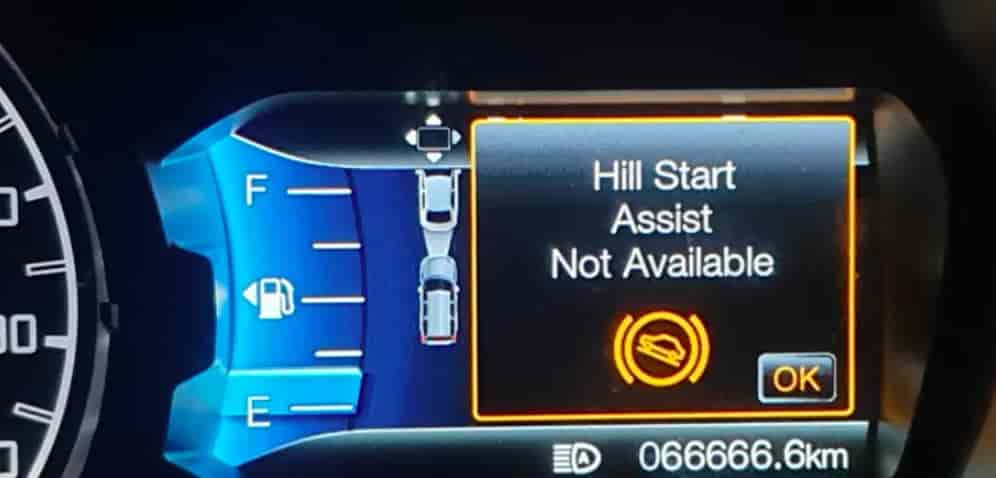
You are driving your Ford on a steep road, everything feels normal, and then suddenly a warning appears on the dashboard: “Ford Hill Start Assist Not Available.” At that moment, confusion quickly turns into concern. Is your car still safe to drive uphill? Will it roll backward? And more importantly, how serious is this issue and how much will it cost to fix?
For many drivers, especially those who frequently navigate hills or urban traffic, the Hill Start Assist system is more than just a convenience feature. It is a safety support that prevents the vehicle from rolling backward when starting on an incline. When this function becomes unavailable, it can create anxiety, particularly for new drivers or those unfamiliar with manual brake control on slopes.
The problem is that this warning message does not always clearly explain what went wrong. It could be a minor electrical glitch, a weak battery, or a deeper issue involving the ABS or braking system. Without proper understanding, drivers often fear the worst or delay fixing the problem, which can lead to higher repair costs or potential safety risks over time.
In this guide, you will learn what Ford Hill Start Assist Not Available really means, the most common causes behind it, and practical ways to fix it efficiently. By the end, you will have a clear understanding of whether this is a quick fix or a sign of a more serious problem.
Contents
- What Does “Ford Hill Start Assist Not Available” Really Mean?
- Top Causes of Ford Hill Start Assist Not Available
- How to Fix Ford Hill Start Assist Not Available
- Is It Safe to Drive With Ford Hill Start Assist Not Available?
- Repair Cost for Ford Hill Start Assist Not Available
- How Hill Start Assist Works in Ford Vehicles
- Warning Signs Before Hill Start Assist Fails
- Conclusion
What Does “Ford Hill Start Assist Not Available” Really Mean?
When you see the message “Ford Hill Start Assist Not Available”, it does not mean your vehicle has completely lost braking ability. Instead, it indicates that the Hill Start Assist system has been temporarily disabled due to a detected issue within related components.
Hill Start Assist is designed to hold brake pressure for a few seconds after you release the brake pedal on an incline. This gives you enough time to move your foot to the accelerator without the vehicle rolling backward. It relies heavily on data from systems such as ABS, traction control, and electronic stability control to function correctly.
When this warning appears, your Ford is essentially telling you that it can no longer guarantee the proper operation of this feature. The car will still drive normally under most conditions, but you will need to manually control the brake when starting on a hill. For experienced drivers, this may not feel like a major issue. However, for less experienced drivers, it can significantly increase stress and the risk of rolling backward in traffic.
From a technical perspective, this message often acts as a secondary alert. It usually means another system, such as the ABS or a sensor, is not providing reliable data. Because Hill Start Assist depends on accurate input from these systems, it automatically shuts off to prevent incorrect behavior.
In simple terms, Ford Hill Start Assist Not Available is not the root problem. It is a symptom that points to a deeper issue somewhere in the braking or electronic control system. Understanding this distinction is critical, because fixing the underlying cause is the only way to restore the feature.
Top Causes of Ford Hill Start Assist Not Available
The warning Ford Hill Start Assist Not Available usually appears when one or more supporting systems stop working properly. Instead of being a standalone issue, it often signals a problem within the braking or electronic system.
A faulty ABS sensor is one of the most common causes. This sensor tracks wheel speed and sends data to the control system. When it gets dirty or damaged, it sends incorrect signals, and the system disables Hill Start Assist to prevent risk. In many cases, the ABS warning light appears at the same time.
A weak battery can also trigger this issue. Ford vehicles rely on stable voltage for electronic functions. When the battery loses power, especially in cold conditions, multiple warnings may show up. Replacing or charging the battery often fixes the problem quickly.
Brake system issues are another key factor. Worn brake pads or low brake fluid can affect pressure control. Since Hill Start Assist depends on precise braking, any inconsistency can cause it to stop working.
The steering angle sensor may also create problems. It helps the system detect vehicle direction. If it sends inaccurate data, the system may shut down the feature.
In addition, electrical faults such as loose wiring or corroded connections can interrupt communication between components. Software glitches or temporary ECU errors may also trigger the warning.
Finally, weather conditions like rain or humidity can impact sensors and connectors. Identifying the exact cause early helps prevent bigger issues and reduces repair costs.
How to Fix Ford Hill Start Assist Not Available
Fixing the Ford Hill Start Assist Not Available warning requires a step by step approach. The goal is to identify whether the issue comes from a simple temporary glitch or a deeper mechanical problem.
Start by restarting the vehicle. In some cases, the system triggers a warning due to a temporary electronic error. Turning the car off, waiting a few minutes, and restarting it can reset minor faults and clear the message.
Next, check the battery condition. A weak battery often causes multiple system warnings. Make sure the voltage is stable and the terminals are clean and tight. If the battery shows signs of aging or low power, replacing it can quickly restore normal system function.
After that, use an OBD2 scanner to read error codes. This step helps you pinpoint the exact issue instead of guessing. The codes will indicate whether the problem comes from the ABS sensor, brake system, or another component.
Inspect the ABS sensors carefully. Dirt, debris, or damage can interfere with their performance. Cleaning or replacing a faulty sensor often resolves the issue. At the same time, check the brake system, including brake pads and fluid levels, to ensure everything works properly.
You can also try resetting the ECU by disconnecting the battery for a short period. This action may clear minor software glitches. However, if the warning returns, the problem likely requires professional diagnosis.
If you notice multiple warning lights or inconsistent braking behavior, it is best to take the vehicle to a qualified technician. Early inspection can prevent more expensive repairs and ensure your car remains safe to drive.
Is It Safe to Drive With Ford Hill Start Assist Not Available?
The short answer is yes, you can still drive your vehicle when the Ford Hill Start Assist Not Available warning appears. However, the level of safety depends on the driving conditions and your experience behind the wheel.
When this system stops working, your car loses the ability to hold brake pressure for a few seconds on an incline. This means the vehicle may roll backward when you move your foot from the brake to the accelerator. On flat roads, this does not create a serious problem. But on steep hills or in heavy traffic, it can increase the risk of minor accidents.
Experienced drivers may adapt quickly by using manual brake control. They can balance the brake and accelerator smoothly without relying on assistance. However, new drivers often find this situation stressful, especially in stop and go traffic on slopes.
You should also pay attention to other warning lights. If the Hill Start Assist message appears along with ABS or traction control warnings, it may indicate a deeper issue. In that case, the overall braking performance could be affected, and driving becomes less safe.
In general, short distance driving is acceptable if the vehicle feels normal and no additional warnings appear. However, you should avoid steep terrain and schedule a check as soon as possible. Fixing the issue early not only restores convenience but also ensures full safety support while driving.
Repair Cost for Ford Hill Start Assist Not Available
The cost to fix the Ford Hill Start Assist Not Available issue can vary widely depending on the root cause. In many cases, the problem is minor and affordable. However, if it involves major components, the cost can increase significantly.
If the issue comes from an ABS sensor, the repair is usually inexpensive. Cleaning the sensor may cost very little, while replacing it typically ranges from 50 to 200 dollars. This is one of the most common and cost effective fixes.
A weak or failing battery is another frequent cause. Replacing a car battery usually costs between 100 and 300 dollars, depending on the model and brand. Since the battery affects multiple systems, this fix can resolve several warning messages at once.
Brake system repairs can vary. Replacing brake pads or topping up brake fluid is relatively affordable. However, more serious issues such as brake module problems can increase the cost.
If the problem involves the ABS module, the repair becomes more expensive. Costs can range from 300 to over 1000 dollars, especially if replacement is required. This is one of the higher end scenarios.
Software issues or ECU resets are often less costly. Some garages may perform a reset for a small fee, while software updates may cost more depending on the service center.
In general, fixing the issue yourself can reduce costs if the problem is simple, such as cleaning sensors or replacing the battery. However, professional diagnosis is recommended for complex issues to avoid unnecessary expenses and ensure long term reliability.
How Hill Start Assist Works in Ford Vehicles
Hill Start Assist is a feature designed to make driving on slopes easier and safer. It works by holding brake pressure for a short time after you release the brake pedal, which prevents the vehicle from rolling backward when starting on an incline.
The system uses data from several components to operate accurately. It relies on ABS sensors to monitor wheel speed, while the stability control system helps determine vehicle position and movement. At the same time, the brake control module manages pressure to keep the car stationary for a few seconds.
When you stop on a hill and press the brake pedal, the system prepares to activate. As soon as you release the brake, it maintains braking force briefly. This gives you enough time to press the accelerator and move forward smoothly without rolling back.
The system works automatically in the background and does not require any manual activation. However, it only functions when all related systems operate correctly. If any component sends incorrect data, the system disables itself to avoid unsafe behavior. That is why the Ford Hill Start Assist Not Available warning appears when there is a problem.
Understanding how this system works helps you see why even small issues, such as a weak battery or faulty sensor, can affect its performance. It also explains why fixing the root cause is essential to restore full functionality.
Warning Signs Before Hill Start Assist Fails
Recognizing the early signs of a failing Hill Start Assist system can prevent inconvenience and potential safety risks. Often, the warning does not appear out of nowhere; there are subtle indications that the system is struggling.
One of the most common signs is dashboard warning lights. If you notice ABS, traction control, or Hill Start Assist messages appearing frequently, it indicates that one of the supporting systems may be malfunctioning. These lights are signals from your car that require attention.
Another warning sign is a change in brake response. You may feel that the brakes are less firm or that the car rolls slightly when stopping on a slope. These issues often precede a full system shutdown and the appearance of the “Ford Hill Start Assist Not Available” message.
Drivers may also notice unusual noises near the wheels or brake components, such as clicking or scraping. These sounds can indicate sensor problems or worn brake pads affecting system operation.
Environmental factors can amplify these signs. For example, driving in heavy rain, high humidity, or after the vehicle has been parked in cold conditions overnight may temporarily trigger warnings. While the system may reset after a short drive, repeated occurrences signal that inspection is necessary.
Paying attention to these early indicators allows you to address the underlying issues promptly. Early detection often leads to simpler and less costly repairs while maintaining safety on the road.
Conclusion
The Ford Hill Start Assist Not Available warning is a common but important alert that drivers should not ignore. While the vehicle remains drivable, the feature that helps prevent rolling backward on slopes is temporarily disabled. Understanding the root causes, from faulty ABS sensors and weak batteries to brake system issues and software glitches, helps drivers respond appropriately and avoid further complications.
Prompt diagnosis and repair can save both time and money. Simple issues like cleaning sensors or replacing a battery are often low-cost fixes, while more complex problems involving the ABS module or ECU may require professional attention. Monitoring warning lights, brake response, and unusual noises can provide early signs before the system completely shuts down.
Ultimately, addressing this issue restores the convenience and safety of Hill Start Assist, giving you confidence when driving on inclines. If you have experienced this warning, consider checking your vehicle promptly or consulting a qualified technician. Sharing your experiences and symptoms with others can also help the Ford community better understand these issues and prevent unnecessary risks.
Being proactive ensures that your Ford continues to operate safely and that Hill Start Assist functions as intended, keeping both you and your passengers secure on the road.