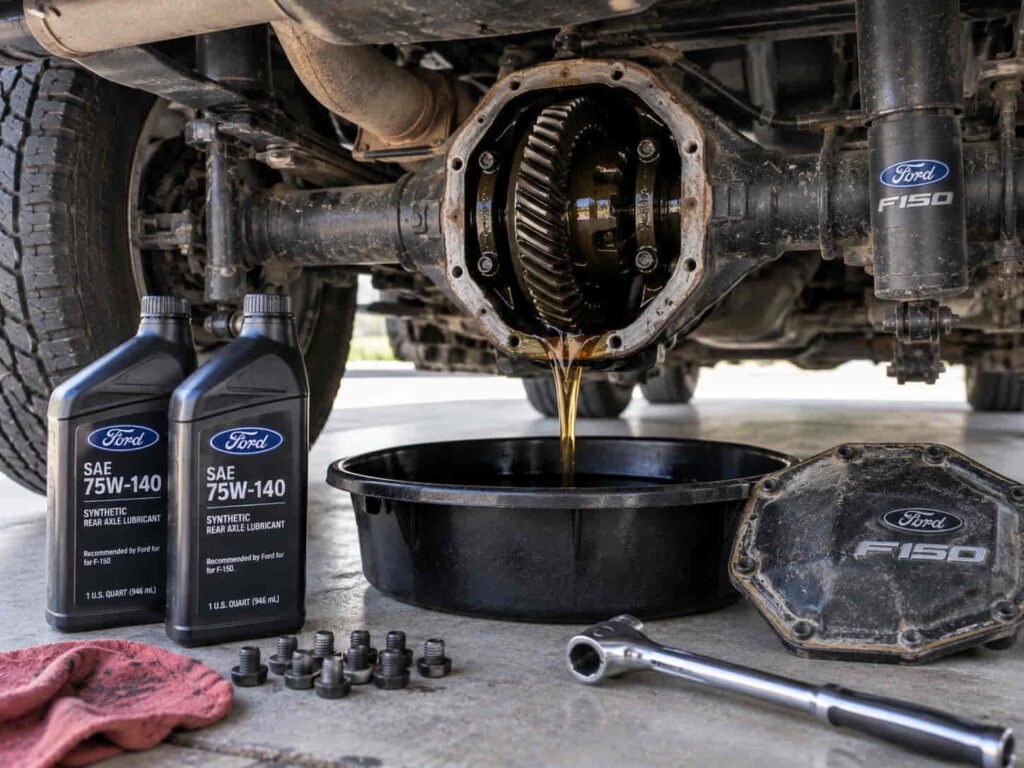
Your Ford F-150 rear differential works quietly behind the scenes every time the truck accelerates, carries a load, or sends power to the rear wheels. Inside the axle housing, gears and bearings operate under substantial pressure and depend on the right lubricant to control friction, heat, and wear. Over time, differential fluid can lose some of its protective properties, making a proper Ford F-150 rear differential fluid change an important part of drivetrain maintenance.
However, changing the fluid is not simply a matter of draining the old oil and adding a new bottle. The correct fluid specification and capacity can vary depending on the F-150’s model year, rear axle configuration, equipment, and drivetrain. Some trucks may also have features that require additional consideration when selecting or servicing the differential fluid.
Knowing when the fluid should be changed can be just as important as knowing how to change it. Towing, hauling, frequent off-road driving, severe operating conditions, and high mileage can place additional demands on the rear axle and may influence maintenance requirements.
This guide explains what you need to know before performing a Ford F-150 rear differential fluid change, including fluid selection, capacity, service intervals, warning signs of differential problems, replacement costs, and the basic principles behind the service. The goal is to help you protect the rear axle while avoiding the common mistake of using the wrong fluid or applying a one-size-fits-all maintenance interval.
What Fluid Does a Ford F-150 Rear Differential Use?
Choosing the correct fluid is one of the most important parts of a Ford F-150 rear differential fluid change. The rear differential contains precision-machined gears and bearings that require lubricant with the appropriate viscosity and performance characteristics. Using a fluid simply because it is marketed as “gear oil” does not guarantee that it meets the requirements of a particular F-150.
The correct specification depends on the truck’s model year and rear axle configuration. Ford has used different rear axle designs and drivetrain configurations throughout the F-150’s production history, so the recommended lubricant should always be confirmed against the vehicle-specific service information. The axle configuration can be especially important when the truck is equipped with a limited-slip or electronically controlled differential system.
Viscosity is another consideration, but it should not be treated as the only selection criterion. Two gear oils can have similar viscosity ratings while having different additive packages or manufacturer approvals. The fluid needs to meet the specification intended for the specific differential rather than simply matching a number printed on the bottle.
This is particularly important for trucks that regularly tow or carry heavy loads. Increased drivetrain temperatures can place additional demands on the rear axle lubricant, making the correct fluid specification and proper fluid level even more important. Using an unsuitable product can affect lubrication and may contribute to premature wear or unwanted differential behavior.
The safest approach is to identify the exact F-150 model year, drivetrain, axle configuration, and applicable factory specification before purchasing fluid. The owner’s manual and appropriate Ford service information are more reliable references than a generic parts listing because they account for differences between vehicle configurations.
During a Ford F-150 rear differential fluid change, the objective is therefore not simply to replace old lubricant with new lubricant. It is to restore the rear axle with a fluid that is appropriate for the specific differential. Confirming the specification before opening the differential can prevent an inexpensive maintenance job from becoming an avoidable drivetrain problem.
Read more: ford f150 backup sensor replace
How Much Rear Differential Fluid Does a Ford F-150 Take?
The amount of fluid required for a Ford F-150 rear differential is not necessarily the same across every truck. Rear axle design, model year, axle configuration, and the specific differential housing can affect the amount of lubricant required. This means a generic capacity found in an online forum or parts listing should not automatically be treated as the correct specification for your truck.
For this reason, fluid capacity should be viewed as a vehicle-specific measurement rather than a universal F-150 specification. The correct service information can identify the applicable rear axle and provide the appropriate filling procedure. In many cases, the correct fluid level is determined by the fill opening rather than by simply pouring in a predetermined volume. Following the specified procedure helps ensure that the differential contains the appropriate amount without relying on guesswork.
This distinction matters because both underfilling and overfilling can create problems. Too little lubricant can reduce the protection available to gears and bearings, particularly when the rear axle becomes hot under towing or heavy-load conditions. Overfilling can also be undesirable because the lubricant needs appropriate space for thermal expansion and normal operation inside the housing.
The condition of the differential can also affect what you see during a fluid service. If the housing has a leak, simply adding the specified amount of new lubricant will not address the underlying problem. A leak around a seal, cover, plug, or housing can gradually reduce the fluid level and may eventually expose internal components to inadequate lubrication.
Before beginning a Ford F-150 rear differential fluid change, identify the truck’s exact axle configuration and confirm the applicable service specification. Have enough of the correct lubricant available to complete the service, but use the manufacturer’s filling procedure to establish the final level. This approach is more dependable than relying on a universal capacity figure that may apply to a different F-150 configuration.
When Should You Change the Ford F-150 Rear Differential Fluid?
There is no single rear differential fluid change interval that applies to every Ford F-150. The appropriate maintenance schedule can depend on the truck’s model year, axle configuration, drivetrain, operating conditions, and how the vehicle is used. A pickup that spends most of its time commuting on paved roads can place very different demands on its rear axle than one that regularly tows trailers, carries heavy loads, or operates in demanding conditions.
Towing is particularly relevant because sustained loads can increase heat inside the drivetrain. The rear differential transfers engine torque through the axle gears, and additional weight can increase the workload placed on those components. For owners who regularly tow or haul, following the maintenance requirements for the specific vehicle is especially important rather than assuming that fluid can remain in service indefinitely.
Severe operating conditions can also change the maintenance picture. Frequent short trips, heavy stop-and-go driving, off-road use, exposure to water, and repeated operation under high loads can place additional demands on drivetrain components. When the truck is used in these conditions, the owner’s maintenance schedule should be consulted for any additional service requirements.
Mileage alone is therefore not the best way to decide whether a Ford F-150 rear differential fluid change is due. The maintenance history matters as well. A truck with an unknown service history may deserve closer attention than one that has consistently followed the manufacturer’s recommended maintenance schedule.
Fluid condition can provide useful context, but appearance alone should not be treated as a precise replacement interval. Gear oil naturally becomes darker as it accumulates contaminants and experiences heat cycles. Unusual debris, a strong burnt odor, or visible metallic material can be more concerning and may justify further inspection of the differential rather than simply replacing the lubricant.
The most reliable approach is to combine the factory maintenance schedule with the truck’s actual operating conditions and service history. If the F-150 regularly works hard, tows, or operates in demanding environments, the rear axle deserves the same attention given to engine oil, transmission fluid, and other critical drivetrain fluids. Regular maintenance can help preserve lubrication quality and provide an opportunity to identify leaks or developing problems before they become major repairs.
How to Change Ford F-150 Rear Differential Fluid
A Ford F-150 rear differential fluid change is a relatively straightforward maintenance procedure when the correct fluid and vehicle-specific service information are available. The exact access method can differ between F-150 generations and axle configurations, so the procedure should always be adapted to the differential installed on the truck rather than treated as an identical process for every model year.
Before starting, the truck needs to be positioned securely and level enough to allow the differential to be serviced correctly. The area around the differential housing and fill point should be cleaned so dirt does not enter the housing when the plugs or cover are removed. Having the correct replacement lubricant ready is equally important because the differential should not be opened until the appropriate fluid has been confirmed.
Access to the old lubricant depends on the rear axle design. Some configurations use a serviceable drain arrangement, while others require access through the differential cover. Once the old lubricant is removed, it is worth examining what comes out. Darkened fluid is not necessarily unusual, but excessive metallic particles, fragments, or other abnormal material can indicate internal wear that deserves further inspection.
The sealing surfaces should then be inspected before the differential is closed or the service opening is secured. Any damaged gasket, seal, plug, or sealing material should be addressed according to the requirements of the specific axle. A clean sealing surface helps reduce the risk of a leak after the service.
New lubricant can then be added using the specified filling method. Rather than relying solely on a generic volume, the final level should be established according to the vehicle’s applicable service procedure. The correct fluid level is important because both insufficient lubrication and overfilling can create unwanted drivetrain conditions.
After the service is complete, the differential and surrounding area should be inspected for leaks. A short, controlled drive followed by another inspection can help identify seepage around the service points. If unusual gear noise, vibration, persistent leakage, or abnormal fluid contamination was observed during the service, simply replacing the lubricant may not resolve the underlying issue.
A successful Ford F-150 rear differential fluid change is therefore more than draining old oil and adding new fluid. It is an opportunity to inspect the rear axle, confirm the correct lubricant and level, and identify early signs of mechanical problems before they become more expensive repairs.
Ford F-150 Rear Differential Fluid Change Cost
The cost of a Ford F-150 rear differential fluid change can vary depending on the truck’s axle configuration, the type and quantity of lubricant required, labor rates, and whether additional components need attention during the service. A basic fluid replacement may be relatively inexpensive compared with major drivetrain repairs, but the final price can increase when the differential requires additional inspection or sealing work.
For a DIY owner, the main expense is typically the correct differential lubricant along with any required sealing materials or service components. The tools and equipment needed to access the rear axle can also affect the overall cost if they are not already available. Doing the work yourself can reduce labor expenses, but only when the owner can safely support and access the truck and follow the correct service procedure.
Professional service costs more because the price includes labor, shop equipment, waste-fluid handling, and the technician’s inspection of the rear axle. A professional can also identify problems that may not be obvious to an owner, such as a leaking seal, damaged housing, abnormal gear wear, or excessive metallic material in the old lubricant.
The choice between DIY maintenance and professional service should therefore depend on more than the advertised price. If the differential is accessible, the vehicle-specific fluid specification is known, and the owner has the appropriate equipment and experience, a DIY Ford F-150 rear differential fluid change can be a practical maintenance job. If the truck has an unknown service history, visible leaks, unusual drivetrain noise, or evidence of internal wear, professional inspection may provide better value.
It is also worth considering what is included in a quoted service price. A low-cost fluid change may cover only lubricant replacement, while another service may include inspection of the differential housing, seals, cover, plugs, and fluid condition. Comparing the scope of the service can be more useful than comparing the headline price alone.
Ultimately, the purpose of the service is to maintain the rear axle rather than simply minimize the cost of the fluid. Using the correct lubricant, establishing the correct fluid level, and identifying potential problems during the service can help protect the differential and potentially prevent much more expensive drivetrain repairs later.
Signs Your Ford F-150 Rear Differential Needs Attention
A Ford F-150 rear differential can often operate for a long time without obvious symptoms, which is why routine maintenance is important. When the lubricant becomes degraded, the fluid level drops because of a leak, or internal components begin to wear, however, the truck may provide several warning signs that should not be ignored.
Unusual noise from the rear axle is one of the most noticeable symptoms. A whining, humming, grinding, or clunking sound that changes with acceleration or deceleration can indicate a problem within the differential. Old or insufficient lubricant can contribute to poor lubrication, but noise should not automatically be blamed on the fluid. Gear wear, bearing damage, incorrect gear setup, or other mechanical issues can produce similar symptoms.
A visible fluid leak around the differential housing is another reason to investigate the rear axle. Gear oil can escape through seals, service plugs, cover surfaces, or other points depending on the axle design. If the fluid level becomes too low, internal gears and bearings may not receive adequate lubrication. Simply adding more fluid without finding the source of the leak can allow the underlying problem to continue.
The condition of the old lubricant can also provide useful information during service. Dark or aged gear oil does not necessarily indicate a serious failure, but an unusual amount of metallic material or visible fragments can be a warning of internal wear. In that situation, a Ford F-150 rear differential fluid change should be treated as an opportunity for further inspection rather than a complete solution by itself.
Changes in drivetrain behavior can also deserve attention. Vibrations, abnormal resistance, or noises that appear after towing or under load may point toward a differential or axle problem. These symptoms can have several possible causes, so proper diagnosis is more useful than replacing fluid based on symptoms alone.
It is important to distinguish routine fluid maintenance from mechanical repair. Fresh differential fluid can restore appropriate lubrication when the lubricant is due for replacement, but it cannot repair worn gears, damaged bearings, leaking seals, or a mechanically damaged differential. Recognizing that distinction can prevent an owner from spending money on repeated fluid changes when the rear axle requires a more comprehensive inspection.
Can You Change Ford F-150 Rear Differential Fluid Yourself?
A Ford F-150 rear differential fluid change can be a manageable DIY maintenance job for an experienced truck owner, but it should not be treated as a simple fluid drain and refill. The exact procedure depends on the rear axle configuration, and the truck must be supported securely before any work is performed underneath it.
The first consideration is whether you have the correct vehicle-specific service information. The required lubricant, fluid specification, fill level, sealing method, and access procedure can vary between F-150 configurations. Using a gear oil simply because its viscosity appears correct can be a mistake if it does not meet the required specification for the axle.
Cleanliness is equally important. Dirt entering the differential while the service opening is exposed can contaminate the new lubricant and potentially affect internal components. The surrounding area should be cleaned before opening the differential, and the fill and drain or cover surfaces should be handled carefully throughout the service.
Another common DIY mistake is assuming that the amount removed tells you exactly how much new fluid belongs in the axle. A differential may have lost fluid because of a leak, or the previous service may have used an incorrect level. The correct procedure should therefore follow the specified fill-level method rather than blindly replacing the same volume that came out.
The condition of the old lubricant should also be evaluated before disposing of it. Excessive metallic material, unusual debris, a burnt odor, or evidence of contamination can indicate a problem that deserves further diagnosis. Simply installing fresh fluid and ignoring these signs may delay necessary repairs.
For owners who are comfortable working safely under a truck and have the appropriate tools, a Ford F-150 rear differential fluid change can reduce labor costs and provide an opportunity to inspect the axle. However, professional service is the safer choice when the truck has persistent axle noise, significant leaks, unknown mechanical damage, or a configuration the owner cannot confidently identify.
The most important rule is not to rush the job. Correct fluid selection, proper vehicle support, careful sealing, accurate fluid level, and a final leak inspection all matter. When any of these steps are uncertain, paying for professional service can be considerably cheaper than repairing a damaged differential caused by an avoidable maintenance error.
Ford F-150 Rear Differential Fluid Change FAQs
How often should you change the rear differential fluid on a Ford F-150? There is no single interval that applies to every F-150. The recommended service schedule depends on the model year, rear axle configuration, drivetrain, and how the truck is used. Frequent towing, heavy loads, off-road driving, water exposure, or other severe operating conditions can increase the importance of differential fluid maintenance. The owner’s manual and vehicle-specific service information should be used to determine the appropriate interval.
What fluid should you use for a Ford F-150 rear differential? The correct lubricant depends on the specific rear axle and model year. The viscosity shown on a bottle is not enough to confirm compatibility because differential lubricants can have different performance requirements and additive packages. Always verify the required specification for the exact truck before purchasing fluid.
How much fluid does a Ford F-150 rear differential take? Capacity varies according to the rear axle and vehicle configuration. The correct service procedure should be followed rather than relying on a generic capacity number found online. In many cases, the final fluid level is more important than simply measuring a predetermined quantity.
Can you change Ford F-150 rear differential fluid without removing the differential? The service method depends on the rear axle design. Some configurations provide a drain and fill arrangement, while others may require access through the differential cover or another service opening. The correct procedure should be confirmed for the specific axle before beginning the job.
Does changing differential fluid make a noisy rear axle quiet? Fresh lubricant can help when degraded or insufficient fluid is contributing to poor lubrication, but it cannot repair damaged gears, bearings, seals, or other internal components. Persistent whining, grinding, humming, or clunking should be diagnosed rather than assuming a fluid change will solve the problem.
Is a Ford F-150 rear differential fluid change necessary if the truck still drives normally? Normal driving does not necessarily mean the lubricant is still in ideal condition. Differential fluid gradually experiences heat, load, contamination, and additive degradation. Following the appropriate maintenance schedule can help protect the axle before symptoms develop.
Should you change the differential fluid after towing or off-road driving? Heavy towing and severe operating conditions can place additional thermal and mechanical stress on the rear axle. Whether these conditions require more frequent service depends on the vehicle’s maintenance schedule and operating conditions. If the differential has been exposed to water or there is concern about contamination, inspection may be appropriate even when the normal service interval has not been reached.
What happens if the Ford F-150 rear differential is low on fluid? Insufficient lubricant can reduce protection for gears and bearings and increase heat and wear. A low fluid level should not simply be corrected without investigating why the level dropped. A leak may indicate a damaged seal, service plug, cover surface, or another issue that needs attention.
Is a Ford F-150 rear differential fluid change worth doing yourself? For an experienced DIY owner with the correct tools and vehicle-specific service information, it can be a practical maintenance task. However, anyone who is uncertain about the correct lubricant, fluid level, axle configuration, or safe vehicle support should consider professional service. The cost of a professional fluid change is generally much lower than the cost of repairing differential damage caused by an incorrect procedure.
Final Thoughts on Ford F-150 Rear Differential Fluid Change
A Ford F-150 rear differential fluid change is an important maintenance task that can help protect the gears, bearings, and other components inside the rear axle. Although the procedure may appear straightforward, the correct fluid specification, service method, fluid level, and maintenance interval can vary depending on the F-150 model year and rear axle configuration.
The most important step is to avoid treating every F-150 as if it uses the same differential setup. Before buying fluid or starting the service, confirm the requirements for the exact truck. This is particularly important for owners who tow frequently, carry heavy loads, drive off-road, or operate the truck under severe conditions.
A fluid change can also provide an opportunity to inspect the differential for leaks, contamination, abnormal debris, and other warning signs. If the old lubricant contains excessive metallic material or the axle produces persistent whining, grinding, humming, or clunking noises, replacing the fluid alone may not resolve the underlying problem. Professional diagnosis may be necessary to prevent a minor maintenance issue from developing into an expensive drivetrain repair.
For experienced DIY owners, changing the rear differential fluid can be a practical way to maintain an F-150 while reducing labor costs. For anyone uncertain about the correct lubricant, axle configuration, fill procedure, or safe access to the truck, professional service is the better option.
Ultimately, good differential maintenance is about more than replacing old oil. It is about using the correct lubricant, maintaining the proper level, identifying leaks early, and paying attention to changes in rear axle behavior. Following the vehicle-specific maintenance requirements can help keep the Ford F-150 rear differential properly lubricated and support reliable performance for many miles.