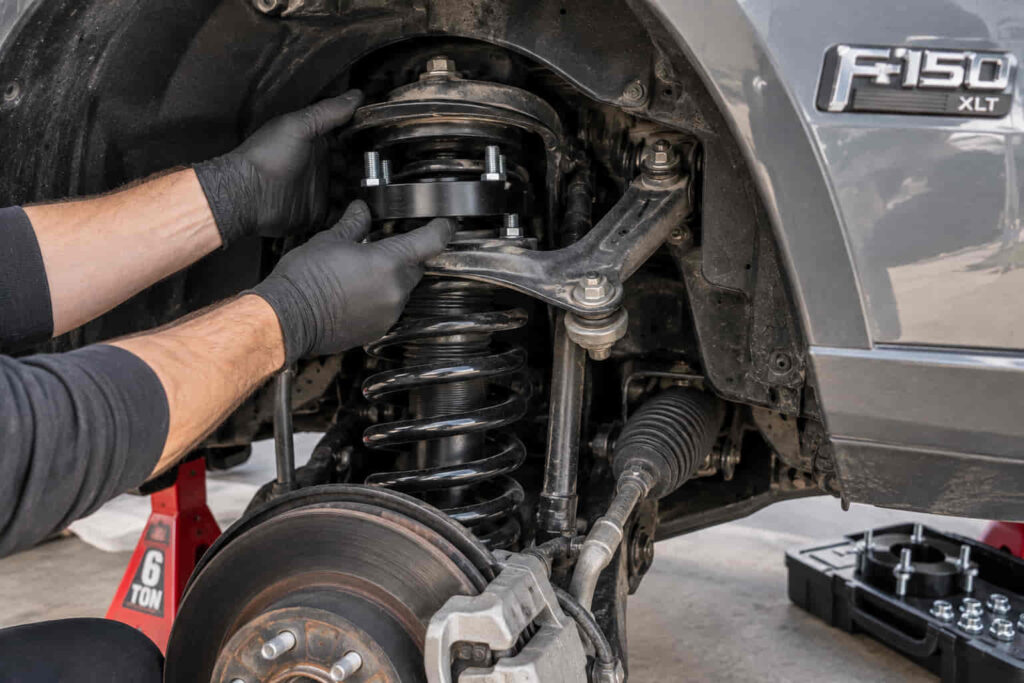
Ford F150 leveling spacer installation changes the front ride height of the truck by adding a spacer to the existing suspension assembly. The installation method depends on the type of leveling spacer, the F-150 suspension configuration, the model year, and whether the spacer is installed above the strut assembly, within the spring assembly, or as part of another leveling system.
Although a leveling spacer can be simpler than replacing the complete suspension system, installation still involves components that control vehicle height, suspension movement, steering geometry, and wheel alignment. Correct installation therefore requires more than simply placing the spacer on the truck and tightening the hardware.
The exact procedure should always be matched to the specific Ford F-150 and the spacer manufacturer’s instructions. Suspension components can differ between model years, drivetrains, engines, and front suspension designs.
What Is a Ford F150 Leveling Spacer?
A leveling spacer is a suspension component designed to increase the front ride height of the Ford F-150. The purpose is generally to reduce the factory front-to-rear height difference and create a more level appearance.
The spacer does not necessarily replace the original spring or strut. Depending on the kit design, it may be positioned above the strut assembly, between suspension components, or in another specified location.
Because the spacer changes the relationship between suspension components, installation affects more than visual ride height. Suspension geometry, available travel, alignment, and tire clearance can all be affected.
Ford F150 Leveling Spacer Compatibility
Compatibility should be established before beginning installation. The correct spacer must match the F-150 model year, drivetrain, suspension configuration, and intended front suspension design.
A spacer designed for one F-150 generation may not fit another generation even when the trucks appear mechanically similar. Four-wheel-drive and two-wheel-drive configurations can also use different suspension arrangements.
Engine configuration, factory suspension options, and existing modifications can create additional compatibility differences.
The safest approach is to verify the exact vehicle application using the spacer manufacturer’s fitment information before removing any suspension components.
Types of Ford F150 Leveling Spacers
Not every leveling spacer installs in the same location. Top-mounted strut spacers are installed in relation to the upper portion of the strut assembly, while other designs can interact differently with the spring or suspension components.
The spacer’s position determines the installation procedure and the way the suspension geometry changes. This means instructions for one spacer design should not automatically be applied to another.
The physical shape of the spacer, mounting holes, orientation marks, and supplied hardware should all correspond to the specific suspension application.
Preparing for Ford F150 Leveling Spacer Installation
Preparation is an important part of suspension installation. The truck should be parked on a stable surface and supported using equipment appropriate for suspension work.
Before disassembly, the installer should review the complete installation instructions and identify the components that must be removed to access the spacer location. The required tools, replacement hardware, torque specifications, and safety procedures should be confirmed before work begins.
The original suspension should also be inspected. Worn components, damaged bushings, leaking shocks, broken hardware, or other existing problems should not be ignored simply because a leveling spacer is being installed.
Ford F150 Leveling Spacer Installation Process
The general installation begins by safely raising and supporting the truck and removing the components necessary to access the front suspension assembly. Wheel removal is normally required, and additional suspension components may need to be disconnected depending on the specific spacer design.
The original strut or spring assembly is then accessed according to the manufacturer’s procedure. The spacer is positioned in its specified location and orientation, with all mounting surfaces properly seated.
Installation hardware should be installed according to the kit instructions. The suspension assembly must remain correctly aligned throughout reassembly so that the spacer does not become incorrectly positioned.
Once the spacer and associated components are installed, the suspension is reassembled and all required fasteners are tightened to the specified torque values. The final installation sequence varies by kit and F-150 configuration, so a generic torque value or universal procedure should not replace the manufacturer’s instructions.
Read more: Ford F150 Tonneau Cover Install Guide
How a Leveling Spacer Changes F150 Suspension Geometry
Increasing front ride height changes the operating position of the front suspension. Depending on the amount of lift and suspension design, this can affect control-arm angles, steering geometry, camber, caster, toe, and available suspension travel.
The amount of geometric change depends on the spacer height and the original suspension configuration. A small change in ride height can therefore produce a measurable change in alignment.
This is why leveling spacer installation should be treated as a suspension modification rather than only a cosmetic change.
Ford F150 Leveling Spacer Installation and Torque
Torque specifications are critical when reinstalling suspension components. The correct value depends on the specific fastener, component, model year, and installation procedure.
Suspension hardware should not be tightened using a generic torque number simply because the bolt appears similar to another fastener. Manufacturer specifications should be used wherever available.
Some components may also require a particular tightening position or procedure because suspension bushings and other parts can be sensitive to the vehicle’s ride-height position during final tightening.
Does Ford F150 Leveling Spacer Installation Require Alignment?
A wheel alignment is generally an important post-installation step when ride height or suspension geometry has been changed.
The leveling spacer can alter the position of the front suspension and therefore affect alignment angles. Even when the truck drives normally after installation, alignment values may have changed.
The appropriate approach is to have the alignment checked after the suspension modification and correct any values that fall outside the applicable specifications.
Ford F150 Leveling Spacer and Tire Clearance
Increasing front ride height can create additional clearance between the tire and certain body or suspension components, but the result depends on tire size, wheel offset, spacer height, suspension design, and vehicle configuration.
A leveling spacer should not be treated as a guarantee that a particular tire and wheel combination will fit. Larger tires can introduce clearance issues at full steering lock or during suspension compression.
Clearance should therefore be checked after installation with the steering turned through its operating range and the suspension evaluated according to the applicable procedure.
Ford F150 Leveling Spacer Installation and Ride Quality
A leveling spacer changes the operating position of the original suspension. The resulting ride characteristics depend on the spacer design, amount of height increase, condition of the factory suspension, and overall vehicle configuration.
A spacer does not automatically increase the spring rate or transform the factory suspension into a complete lift system. In many applications, the original suspension components remain in place.
The effect on ride quality can therefore differ between vehicles, especially when the factory components already have significant wear.
What Happens After Installing a Ford F150 Leveling Spacer?
After installation, the truck may sit higher at the front and appear more level relative to the rear. However, the installation should not be considered complete immediately after the vehicle is lowered back onto the ground.
The suspension may settle slightly after being reassembled and driven. The vehicle should be inspected for abnormal noises, uneven ride height, interference, or changes in steering behavior.
Alignment should also be checked, and the mounting hardware should be inspected according to the spacer manufacturer’s recommended post-installation procedure.
Common Ford F150 Leveling Spacer Installation Problems
Incorrect spacer orientation can prevent the suspension assembly from seating correctly. Misalignment of mounting holes can also indicate that the component is not positioned as intended.
Other problems can result from incorrect hardware, insufficient clearance, improper torque, damaged suspension components, or installation procedures that do not match the specific spacer design.
A new noise after installation should not automatically be considered normal. Clunks, binding, unusual steering behavior, or contact between suspension components should be investigated before continued use.
Can You Install a Ford F150 Leveling Spacer at Home?
A leveling spacer can be installed by an experienced DIY mechanic with appropriate tools, equipment, and suspension knowledge. However, the work involves components that can store significant mechanical energy and affect vehicle control.
Safe lifting and support are essential. The installer must also understand the specific suspension design and follow the manufacturer’s disassembly and reassembly procedures.
If the required suspension tools or safe lifting equipment are unavailable, professional installation is a safer option than improvising during the installation.
Ford F150 Leveling Spacer Installation vs Leveling Kit
A leveling spacer is one possible component within a broader leveling system. Some leveling kits may include spacers along with shocks, control arms, hardware, or other suspension components designed to work together.
The correct comparison depends on what the specific kit is designed to change. A spacer-only installation should not be assumed to provide the same suspension characteristics or component compatibility as a complete leveling system.
The intended ride height, suspension geometry, tire size, and vehicle use should all be considered when choosing between installation approaches.
Ford F150 Leveling Spacer Installation for Different Model Years
F-150 suspension designs have changed across generations, making model-year compatibility important. Even when the truck uses a similar suspension concept, mounting dimensions and component relationships can differ.
Installation information should therefore be organized around the actual vehicle application rather than treating every F-150 as mechanically identical.
This is particularly important when using aftermarket leveling spacers because manufacturers may list different part numbers for different generations, drivetrains, or suspension configurations.
Final Checks After Ford F150 Leveling Spacer Installation
The final inspection should confirm that the spacer and all associated suspension components are correctly seated, the mounting hardware is properly secured, and there is no interference between the suspension, wheels, tires, brake components, and other nearby parts.
The steering should operate normally, and the suspension should move without abnormal binding or contact. The truck should then receive the appropriate wheel alignment inspection.
A short road test can help identify unusual noises, steering changes, or handling problems that were not apparent while the truck was stationary. Any abnormal behavior should be investigated before normal driving resumes.
FAQ About Ford F150 Leveling Spacer Installation
How difficult is Ford F150 leveling spacer installation?
Difficulty depends on the spacer design, F-150 model year, drivetrain, and required suspension disassembly. Because the procedure can involve removing or repositioning suspension components, it requires appropriate tools and safe support equipment.
Does a leveling spacer go above the F150 strut?
Many leveling spacer designs use a top-mounted position above the strut assembly, but not every spacer uses the same design. The exact mounting location should be confirmed from the specific kit instructions.
Does installing a leveling spacer affect alignment?
Yes. Changing front ride height can alter suspension geometry and alignment angles. An alignment check after installation is therefore important.
Can a leveling spacer damage the F150 suspension?
A properly selected and correctly installed spacer is designed for its intended application. Problems can occur when the wrong spacer is used, installation is incorrect, suspension components are already damaged, or the resulting geometry and clearance are not appropriate.
Do I need new shocks with a Ford F150 leveling spacer?
Not necessarily. Some spacer systems are designed to work with the factory shocks, while other leveling systems may include replacement shocks. The correct answer depends on the spacer height, design, and specific application.
Will a leveling spacer let me fit larger tires on my F150?
It can increase available front clearance, but tire fitment also depends on wheel size, offset, tire dimensions, suspension geometry, and the amount of leveling. A leveling spacer does not guarantee that any particular tire and wheel combination will fit.
Does a Ford F150 leveling spacer change ride quality?
It can. The effect depends on the spacer design, height, original suspension condition, and vehicle configuration. A spacer changes suspension geometry and operating position even when the factory spring and shock remain installed.