When the weather becomes hot, a strong air conditioning system is essential for any truck owner. If the air coming from your vents suddenly feels warm or weak, the problem may not be as serious as you think. In many cases, the solution is simply performing a ford f150 ac recharge to restore the correct refrigerant level in the system.
Over time, the refrigerant inside a vehicle air conditioning system can slowly decrease. This happens through small leaks, normal wear, or aging seals. When the refrigerant level becomes too low, the air conditioner cannot absorb heat properly, which leads to poor cooling performance. Many Ford F150 owners assume they need an expensive repair, but a simple recharge is often enough to bring the cold air back.
The good news is that a ford f150 ac recharge can often be done at home with basic tools and a recharge kit. With a little guidance, most truck owners can complete the process in less than an hour. Learning this simple maintenance task can save money and help you avoid unnecessary trips to the repair shop.
In this guide, you will learn how the Ford F150 air conditioning system works, the signs that your truck needs more refrigerant, where to find the recharge port, and the step by step process to refill your truck air conditioner safely and correctly.
Contents
- Signs Your Ford F150 AC Needs a Recharge
- What Refrigerant Does a Ford F150 Use
- Where Is the Ford F150 AC Recharge Port
- Tools Needed for a Ford F150 AC Recharge
- Ford F150 AC Recharge Step by Step Guide
- Ford F150 AC Recharge Cost
- Common AC Problems After a Recharge
- How Often Should You Recharge a Ford F150 AC
- Conclusion
Signs Your Ford F150 AC Needs a Recharge
A weak or warm air conditioner is often the first warning sign that your truck may need a ford f150 ac recharge. The air conditioning system in a Ford F150 relies on refrigerant to remove heat from the cabin. When the refrigerant level becomes too low, the system cannot cool the air effectively.
One common symptom is warm air coming from the vents even when the air conditioner is set to the coldest setting. Many drivers notice this problem during very hot days when the AC system is under heavy demand. Instead of producing cold air, the vents may only deliver slightly cool or completely warm air.
Another sign is that the air conditioner takes much longer to cool the cabin. Normally, a properly working system should begin producing cold air within a short time after turning it on. If your truck takes several minutes to cool the interior, the refrigerant level may be lower than recommended.
You may also notice the AC compressor turning on and off frequently. This cycling behavior happens when the system struggles to maintain the correct pressure. Low refrigerant levels often cause the compressor to engage and disengage repeatedly.
Some drivers also report a faint hissing sound from the AC lines or engine bay. This sound can indicate refrigerant escaping from the system. In many situations, performing a ford f150 ac recharge can restore the correct pressure and bring the cooling performance back to normal.
Understanding these warning signs helps truck owners identify the problem early and prevent further damage to the air conditioning system.
What Refrigerant Does a Ford F150 Use
Before performing a ford f150 ac recharge, it is important to understand which refrigerant your truck uses. Different model years of the Ford F150 use different types of refrigerant, and using the correct one is essential for proper cooling performance and system safety.
Most Ford F150 models produced between 1994 and 2020 use R134a refrigerant. This type of refrigerant became the industry standard for many vehicles during that period. It is widely available and commonly used in DIY recharge kits that can be found in most auto parts stores. Because of its availability, many truck owners choose to perform a ford f150 ac recharge at home using an R134a recharge kit.
Newer Ford F150 models may use a more environmentally friendly refrigerant called R1234yf. This refrigerant was introduced to reduce environmental impact and meet modern emissions regulations. While it works similarly to older refrigerants, it requires specific recharge equipment and is usually more expensive.
Another important factor to consider is refrigerant capacity. Each Ford F150 generation requires a specific amount of refrigerant for the air conditioning system to work properly. Adding too little refrigerant will not restore cooling performance, while adding too much can increase pressure and potentially damage system components.
For this reason, truck owners should always check the owner manual or the information label located in the engine compartment. This label usually lists the correct refrigerant type and the recommended capacity for your specific model year.
Understanding the correct refrigerant type and capacity is a critical step before starting a ford f150 ac recharge, since it ensures the air conditioning system can operate efficiently and safely.
Where Is the Ford F150 AC Recharge Port
Before starting a ford f150 ac recharge, you must locate the correct service port in the air conditioning system. Most vehicles have two AC service ports, which are known as the high pressure port and the low pressure port. When recharging the system, you should only connect the recharge kit to the low pressure port.
In most Ford F150 models, the low pressure AC recharge port is located on the larger aluminum line that runs between the compressor and the firewall. This line is usually found on the passenger side of the engine bay. The port is covered with a plastic cap, which is often black or blue. Removing this cap will expose the valve where the recharge hose connects.
The low pressure port is designed to prevent incorrect connections. Recharge hoses from AC kits typically fit only this port, which reduces the risk of attaching the hose to the high pressure side. Connecting to the wrong port can cause serious damage to the air conditioning system and may also create a safety risk.
Another helpful tip is to follow the thicker AC line under the hood. The thicker line usually carries low pressure refrigerant returning to the compressor. This line will lead directly to the correct service port used during a ford f150 ac recharge.
If you are unsure about the location, checking the owner manual or the diagram inside the engine compartment can provide accurate guidance. Taking a moment to identify the correct port will make the recharge process safer and much easier.
Tools Needed for a Ford F150 AC Recharge
Before starting a ford f150 ac recharge, it is important to prepare the right tools and equipment. Having everything ready will make the process faster, safer, and much easier for truck owners who plan to recharge the air conditioning system themselves.
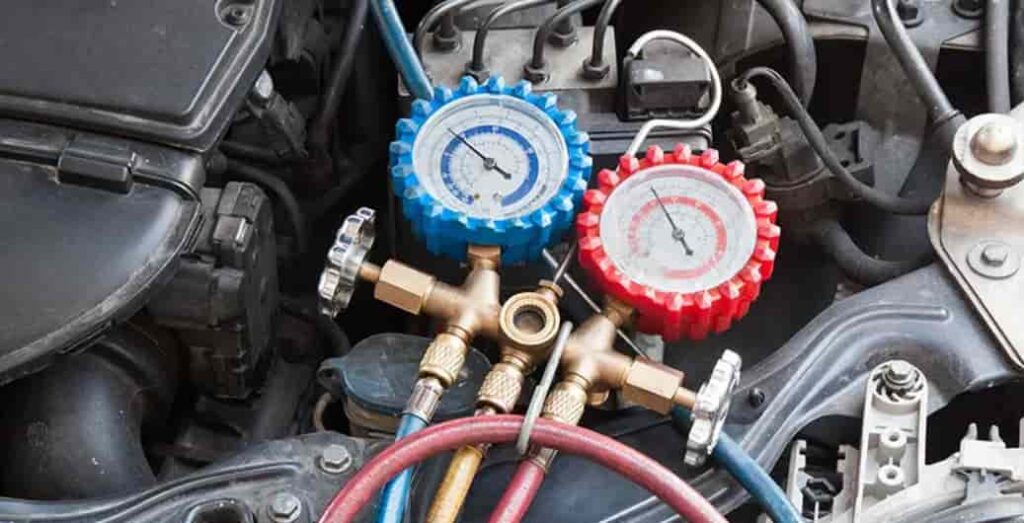
The most important tool is an AC recharge kit. These kits usually include a refrigerant can and a hose with a pressure gauge. The gauge allows you to monitor the system pressure while adding refrigerant, which helps prevent overfilling the air conditioning system. Many recharge kits are designed specifically for DIY vehicle maintenance and are widely available in auto parts stores.
You will also need the correct refrigerant for your truck. Most Ford F150 models use R134a refrigerant, while some newer models use R1234yf. Always verify the correct refrigerant type before beginning the recharge process. Using the wrong refrigerant can damage the system and reduce cooling performance.
Safety equipment is another important part of the preparation. Protective gloves help prevent frostbite because refrigerant can become extremely cold when released from the can. Safety glasses are also recommended to protect your eyes from accidental exposure during the recharge process.
A simple thermometer can also be helpful when performing a ford f150 ac recharge. By measuring the air temperature coming from the vents, you can easily see when the cooling performance improves. This makes it easier to determine when the system has reached the proper refrigerant level.
Preparing these basic tools ensures that the recharge process goes smoothly and helps restore the cold air inside your truck more efficiently.
Ford F150 AC Recharge Step by Step Guide
Performing a ford f150 ac recharge is a simple process when the correct steps are followed. Many truck owners can complete this task at home with a recharge kit and a basic understanding of the air conditioning system. The following instructions explain how to refill refrigerant safely and restore cold air inside your truck.
Step 1 Start the Engine and Turn the AC to Maximum
Begin by starting the engine and allowing the truck to idle. Turn the air conditioning system to the coldest setting and set the fan speed to the highest level. This allows the AC compressor to run continuously and helps the refrigerant circulate through the system.
Keeping the air conditioner on maximum cooling during a ford f150 ac recharge ensures that the pressure readings are accurate while you add refrigerant.
Step 2 Locate the Low Pressure Service Port
Open the hood and find the low pressure AC service port. This port is usually located on the larger aluminum line in the engine bay, often on the passenger side near the firewall. Remove the protective plastic cap to expose the service valve.
Confirm that you are connecting to the low pressure port before continuing with the recharge process.
Step 3 Connect the Recharge Hose
Take the hose from your AC recharge kit and attach it to the low pressure service port. Press the connector firmly until it locks into place. Most recharge kits are designed so they can only connect to the correct port.
Once connected, the pressure gauge will display the current system pressure. This reading helps determine whether your truck actually needs a ford f150 ac recharge.
Step 4 Check the System Pressure
Observe the gauge on the recharge kit while the air conditioner is running. If the pressure reading is below the recommended range, the system likely needs additional refrigerant.
Low pressure is a common reason why the air conditioner blows warm or weak air. Adding refrigerant gradually will help restore normal pressure inside the system.
Step 5 Add Refrigerant Slowly
Hold the refrigerant can upright and slowly squeeze the trigger on the recharge hose. Add refrigerant in short bursts while monitoring the pressure gauge. Shake the can gently between bursts to help the refrigerant flow evenly.
While performing a ford f150 ac recharge, it is important to add refrigerant slowly. Overfilling the system can increase pressure and reduce cooling performance.
Step 6 Monitor Vent Temperature
As refrigerant enters the system, the air coming from the dashboard vents should begin to feel colder. You can place a thermometer near the vent to track the temperature change.
When the pressure reaches the recommended level and the air becomes noticeably colder, the system has likely reached the proper refrigerant level.
Step 7 Disconnect the Recharge Kit
Once the recharge is complete, carefully disconnect the hose from the low pressure port. Replace the protective cap on the service port to keep dirt and moisture out of the system.
At this point, the ford f150 ac recharge process is finished. The air conditioner should now deliver stronger and colder airflow inside the cabin.
Ford F150 AC Recharge Cost
The cost of a ford f150 ac recharge can vary depending on whether you choose to do the job yourself or visit a professional mechanic. Many truck owners prefer the DIY option because it is affordable and does not require advanced tools.
A typical AC recharge kit with refrigerant and a pressure gauge usually costs between thirty and sixty dollars. These kits are designed for simple home maintenance and are available at most auto parts stores. For many drivers, this is the most economical way to restore cold air in the truck cabin.
Professional service at a repair shop can be significantly more expensive. A mechanic will usually charge between one hundred fifty and three hundred fifty dollars for a full AC recharge service. The higher price often includes system inspection, pressure testing, and checking for possible leaks.
Although the DIY method saves money, there are situations where professional service is recommended. If your air conditioning system continues to lose refrigerant quickly or fails to produce cold air after a ford f150 ac recharge, the system may have a leak or a damaged component that requires expert repair.
Understanding the cost difference helps truck owners decide whether a quick recharge at home is enough or if a professional inspection is necessary.
Common AC Problems After a Recharge
In many cases, performing a ford f150 ac recharge will restore normal cooling performance. However, there are situations where the air conditioner still does not work properly even after adding refrigerant. When this happens, the problem may be related to other components in the AC system.
One possible issue is a refrigerant leak. Small leaks can occur in hoses, seals, or connectors within the air conditioning system. If refrigerant continues to escape, the system pressure will drop again and the cooling performance will decline.
Another common problem is a faulty AC compressor. The compressor is responsible for circulating refrigerant throughout the system. If it fails or operates weakly, the air conditioner may not produce cold air even when the refrigerant level is correct.
The condenser is another component that can affect cooling performance. Located at the front of the vehicle, the condenser releases heat from the refrigerant. Dirt, debris, or physical damage can reduce its efficiency and prevent the system from cooling properly.
Electrical issues can also play a role. A damaged pressure switch, relay, or sensor may prevent the AC system from operating normally. If these problems occur after a ford f150 ac recharge, a detailed inspection may be required to identify the exact cause.
How Often Should You Recharge a Ford F150 AC
Many drivers believe that the air conditioning system needs to be refilled every year, but this is usually not necessary. In a properly sealed system, refrigerant should last for several years without needing replacement.
For most trucks, a ford f150 ac recharge may only be required every two to three years. Over time, small amounts of refrigerant can slowly escape through seals and connections, which gradually reduces the cooling efficiency.
If you find that your truck needs frequent recharging within a short period, this may indicate a refrigerant leak somewhere in the system. In this situation, simply adding more refrigerant will not solve the underlying problem.
Regular vehicle maintenance can help keep the air conditioning system working efficiently. Running the AC periodically during cooler months helps maintain internal seals and keeps the compressor lubricated.
By monitoring cooling performance and performing a ford f150 ac recharge only when necessary, truck owners can extend the life of the air conditioning system and maintain reliable cabin comfort.
Conclusion
A properly functioning air conditioning system is essential for comfort during hot weather, especially for drivers who rely on their trucks every day. When the air conditioner begins blowing warm air or struggles to cool the cabin, the issue is often related to low refrigerant levels.
Fortunately, performing a ford f150 ac recharge is a task that many truck owners can handle on their own. With a simple recharge kit and the correct refrigerant, the process can usually be completed in less than an hour. This simple maintenance step can restore strong cooling performance and help avoid expensive repair costs.
Understanding the warning signs of low refrigerant, locating the correct recharge port, and following the proper step by step procedure are all important for completing the job safely. When done correctly, a recharge can bring the air conditioning system back to normal operation and provide consistent cold air throughout the cabin.
However, if the air conditioner continues to lose refrigerant or fails to cool even after a ford f150 ac recharge, it may be necessary to inspect the system for leaks or damaged components. Addressing these issues early can prevent further damage and maintain the reliability of the vehicle.
By keeping the air conditioning system properly maintained, Ford F150 owners can enjoy a comfortable driving experience even during the hottest days of the year.