When your Ford Escape AC stops blowing cold air on a hot day, the discomfort hits immediately. The cabin becomes stuffy, and every drive feels exhausting. Many drivers think this problem requires an expensive repair. In reality, a simple Ford Escape AC recharge can often fix it.
Low refrigerant is one of the most common reasons behind weak cooling. It reduces AC performance and puts extra strain on the system. If you ignore it, the compressor may wear out faster and lead to higher repair costs. That is why early action is important.
Learning how to perform a Ford Escape AC recharge gives you more control over your vehicle. You can save money, avoid unnecessary garage visits, and keep your AC system running efficiently. The process is not as complicated as many people think.
In this guide, you will discover clear and practical steps to recharge your AC system safely. You will also learn how to spot warning signs and avoid common mistakes. If you want a cooler cabin and a smoother driving experience, this guide will help you achieve it with confidence.
Contents
- What Is Ford Escape AC Recharge and Why It Matters
- Signs Your Ford Escape Needs an AC Recharge
- What Type of Refrigerant Does Ford Escape Use
- Step-by-Step Guide to Recharge Ford Escape AC System
- Common Mistakes When Recharging Ford Escape AC
- Ford Escape AC Recharge Cost
- How Often Should You Recharge Your AC System
- Conclusion
What Is Ford Escape AC Recharge and Why It Matters
A Ford Escape AC recharge is the process of adding refrigerant back into the air conditioning system. This refrigerant plays a key role in cooling the air before it enters the cabin. Without enough refrigerant, the system cannot remove heat effectively.
Your AC system works by circulating refrigerant through components like the compressor, condenser, and evaporator. As the refrigerant moves through this cycle, it absorbs heat from inside the car and releases it outside. This process keeps the cabin cool and comfortable.
Over time, small leaks or natural loss can reduce refrigerant levels. When this happens, the system loses efficiency. You may notice warmer air, longer cooling time, or uneven airflow. Many drivers ignore these early signs, which often leads to bigger problems later.
A proper Ford Escape AC recharge restores the correct refrigerant level. This helps the system run smoothly and prevents unnecessary strain on important components. It also improves cooling performance and extends the lifespan of your AC system.
Signs Your Ford Escape Needs an AC Recharge
Recognizing early signs can save you both time and money. Your vehicle often gives clear warnings before the AC system fails completely.
One of the most common signs is warm air coming from the vents. Even when you set the temperature to the lowest level, the air does not feel cold. This usually indicates low refrigerant levels.
Weak airflow is another issue to watch for. The AC may still work, but it struggles to push strong, cool air into the cabin. This makes driving uncomfortable, especially in hot weather.
You might also hear unusual noises when the AC is running. A clicking or hissing sound can signal pressure issues or refrigerant leaks. In some cases, the compressor may turn on and off more frequently than normal.
Another sign is longer cooling time. If your car takes much longer to reach a comfortable temperature, the system may not have enough refrigerant to work efficiently.
By identifying these symptoms early, you can perform a Ford Escape AC recharge before the problem becomes more serious.
What Type of Refrigerant Does Ford Escape Use
Not all Ford Escape models use the same type of refrigerant. Choosing the correct one is essential for both performance and safety.
Older Ford Escape models typically use R134a refrigerant. This type has been widely used for many years and is easy to find. It is also more affordable, which makes it a common choice for DIY recharge.
Newer models often use R1234yf refrigerant. This type is more environmentally friendly and meets newer regulations. However, it is more expensive and requires compatible equipment.
You can find the correct refrigerant type by checking the label under the hood. It usually provides clear information about the system specifications. Using the wrong refrigerant can damage your AC system and lead to costly repairs.
Understanding this detail ensures that your Ford Escape AC recharge is both safe and effective.
Step-by-Step Guide to Recharge Ford Escape AC System
Recharging your AC system may sound complex, but you can do it safely if you follow the correct steps. Take your time and focus on accuracy to avoid costly mistakes.
Step 1: Locate the Low Pressure Port
Start by opening the hood and finding the low pressure port. This port is usually on the larger AC line and has a plastic cap. It often shows an “L” symbol to help you identify it.
Do not confuse it with the high pressure port. The fittings are different, and most recharge kits only connect to the low pressure side. This design helps prevent incorrect use, but you should still double check before moving forward.
Step 2: Check the Current Pressure
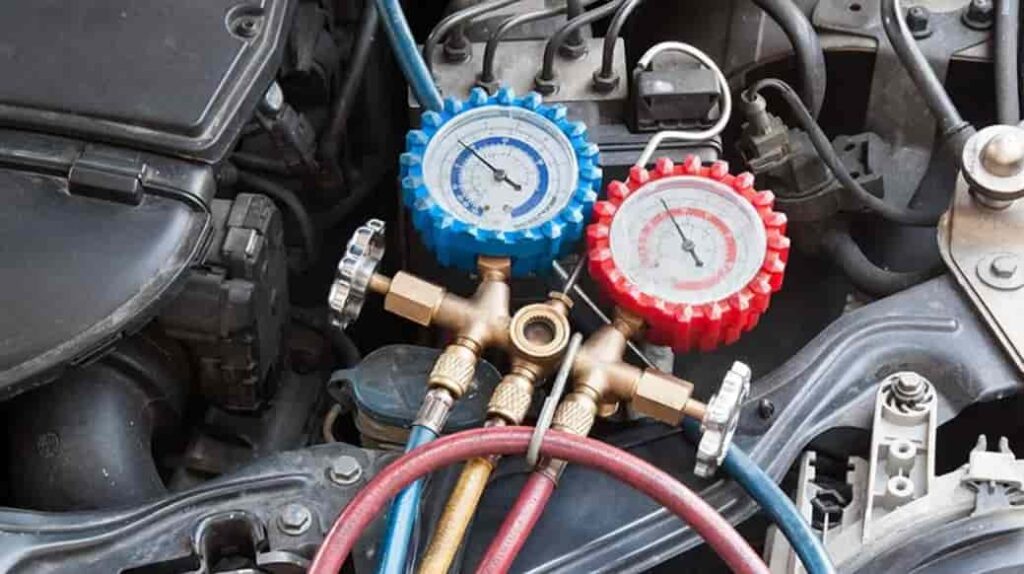
Attach the pressure gauge from your AC recharge kit to the low pressure port. Make sure the connection is secure before reading the gauge.
Start the engine and turn the AC to the maximum cooling setting. Let it run for a few minutes. Then check the pressure reading.
If the pressure is below the recommended level, your system likely needs a Ford Escape AC recharge. If the pressure is already high, do not add more refrigerant.
Step 3: Connect the Recharge Kit
Once you confirm low refrigerant, connect the refrigerant can to the recharge hose. Keep the can upright and ensure all connections are tight.
Shake the can gently if the instructions recommend it. This helps maintain consistent flow during the recharge process.
Always wear gloves and safety glasses during this step. Direct contact with refrigerant can cause skin irritation or injury.
Step 4: Add Refrigerant Slowly
Press the trigger to release refrigerant into the system. Do this in short bursts instead of one continuous flow. This allows you to monitor the pressure more accurately.
Watch the gauge closely as you add refrigerant. Stop once the pressure reaches the recommended range. Overcharging can damage the AC system and reduce performance.
Take breaks between each burst. This gives the system time to stabilize and ensures a more precise reading.
Step 5: Test the AC Performance
After recharging, remove the kit and close the port cap securely. Let the AC run for a few minutes and check the airflow.
The air should feel colder and more consistent. If the cooling improves, your Ford Escape AC recharge was successful.
If the AC still does not perform well, there may be a deeper issue such as a leak or compressor problem. In that case, you should consider professional inspection.
Common Mistakes When Recharging Ford Escape AC
Many drivers attempt a Ford Escape AC recharge without fully understanding how the system works. This often leads to mistakes that reduce performance or cause long term damage. One of the most common errors is overcharging the system. When you add too much refrigerant, the pressure inside the AC system increases beyond the optimal range. This can reduce cooling efficiency and place unnecessary stress on the compressor. Over time, this stress may lead to expensive repairs that could have been avoided.
Another frequent issue is using the wrong type of refrigerant. Ford Escape models do not all use the same refrigerant, and choosing the incorrect one can damage internal components. Older models typically use R134a, while newer versions rely on R1234yf. Always check the label under the hood to confirm the correct type before starting the recharge process.
Many car owners also skip checking for leaks. This mistake causes the refrigerant to escape again after a short period. As a result, the AC system quickly loses its cooling ability, and the same problem returns. In addition, failing to monitor the pressure gauge during the recharge process can lead to inaccurate filling. Without proper control, both undercharging and overcharging become more likely. To ensure a safe and effective Ford Escape AC recharge, you need to follow each step carefully and pay close attention to system pressure.
Ford Escape AC Recharge Cost
The cost of a Ford Escape AC recharge can vary depending on the method you choose and the condition of your AC system. For many drivers, the main concern is finding a balance between saving money and ensuring long term reliability. A DIY recharge is often the most affordable option. Recharge kits are widely available and come with basic tools such as a pressure gauge and a refrigerant can. This allows car owners to complete the process at home without paying for labor. For simple cases where the system only lacks refrigerant, this approach can be both effective and cost efficient.
However, a low upfront cost does not always mean the best value. If your AC system has hidden issues such as leaks or worn components, adding refrigerant alone will not solve the problem. In fact, it may lead to repeated recharges and higher expenses over time. This is where professional service becomes a better option. Mechanics use specialized equipment to measure pressure accurately, detect leaks, and ensure the system is properly sealed. These steps help prevent recurring problems and protect key components like the compressor.
Choosing between DIY and professional service depends on your situation. If your system shows early signs of low refrigerant, a DIY Ford Escape AC recharge may be enough. If performance does not improve or problems persist, investing in professional inspection can save you more money in the long run.
How Often Should You Recharge Your AC System
Many drivers assume that a Ford Escape AC recharge should be done regularly, but this is a common misunderstanding. A properly functioning air conditioning system is sealed, which means it should not lose refrigerant under normal conditions. If the system is in good shape, you do not need to recharge it every year. Frequent recharging often signals an underlying issue rather than normal wear.
Instead of following a fixed schedule, you should pay attention to performance changes. One of the earliest signs is reduced cooling efficiency. The air may feel less cold, even when the AC runs at maximum settings. You might also notice that it takes longer for the cabin to reach a comfortable temperature. These symptoms often indicate low refrigerant levels and suggest that a Ford Escape AC recharge may be necessary.
Regular inspection is a better strategy than routine recharging. Checking your AC system once a year helps you detect small problems before they become serious. Running the AC occasionally during colder months also keeps the system lubricated and prevents seals from drying out. This simple habit can extend the life of your AC components and maintain consistent performance.
By understanding when your system truly needs attention, you can avoid unnecessary costs and keep your vehicle running efficiently. A well maintained system will provide reliable cooling without frequent intervention.
Conclusion
A Ford Escape AC recharge is one of the most practical ways to restore comfort and improve your overall driving experience. When your air conditioning system begins to lose cooling power, taking action early can prevent more serious problems and reduce long term repair costs. Many drivers ignore the warning signs, which often leads to damage in critical components such as the compressor. By understanding how the system works and recognizing these signs, you can make better decisions for your vehicle.
Performing a Ford Escape AC recharge is not as difficult as it may seem. With the right tools and a careful approach, you can handle this task on your own and save money. At the same time, knowing your limits is just as important. If the system shows signs of leaks or continues to underperform, professional service remains the safest option. This balance between DIY maintenance and expert support helps you protect your investment.
In the end, maintaining a properly charged AC system ensures consistent cooling, better efficiency, and a more enjoyable ride in any weather. Use the knowledge from this guide to take control of your vehicle maintenance. If you notice any changes in performance, act quickly and apply the correct solution. A well maintained Ford Escape AC system will keep you comfortable and confident every time you drive.