The Duramax 6.6 oil capacity is generally 10 quarts (9.5 liters) of engine oil with a new oil filter for the common 6.6L Duramax diesel configurations. Using the correct amount of oil is essential because both overfilling and underfilling can interfere with proper lubrication. The final oil level should always be verified with the dipstick after an oil change rather than relying only on the stated capacity.
The 6.6L Duramax engine family includes several generations, including the LB7, LLY, LBZ, LMM, LML, and L5P. Although 10 quarts is a widely applicable service capacity across these engines, owners should identify their engine generation and model year before performing maintenance. Oil specifications, recommended viscosity, and service requirements can change between applications.
Choosing the correct oil also matters as much as adding the correct quantity. A Duramax diesel requires engine oil that meets the appropriate specification and viscosity for its engine generation and operating conditions. This guide explains the 6.6 Duramax oil capacity by year and generation, oil capacity with a filter, recommended oil type and viscosity, correct oil level, and the effects of adding too much or too little oil.
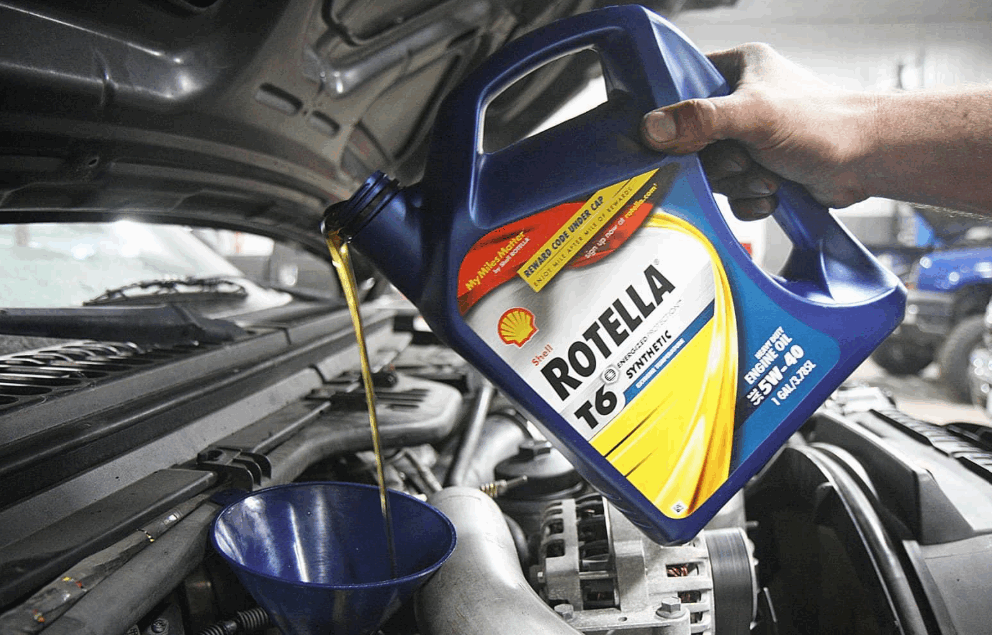
How Much Oil Does a 6.6 Duramax Take?
A 6.6 Duramax generally takes 10 quarts (9.5 liters) of engine oil when the oil filter is replaced. This capacity applies to many common 6.6L Duramax applications and provides a practical reference when preparing for a routine oil change. However, the exact service specification for the engine and model year should take priority because maintenance requirements can vary by application.
The oil filter is an important part of the capacity calculation. A new filter must fill with oil after the engine starts, so the amount required during a complete oil and filter change differs from a partial drain or top off. For this reason, owners should replace the filter during a normal oil change and use the specified capacity as a starting point for refilling the lubrication system.
Adding exactly 10 quarts does not eliminate the need to check the oil level. After refilling the engine, start it according to the appropriate service procedure so oil can circulate through the filter and lubrication system. Then shut the engine off, allow the oil to return to the oil pan, and check the dipstick on level ground.
The dipstick provides the final confirmation that the engine contains the correct amount of oil. Add more oil only when the reading indicates that the level is low. If the level is above the specified range, remove the excess rather than operating the engine overfilled. This approach combines the published oil capacity with an actual oil level measurement.
What Is the 6.6 Duramax Oil Capacity by Year?
The 6.6 Duramax oil capacity is commonly 10 quarts (9.5 liters) with an oil filter change across the LB7, LLY, LBZ, LMM, LML, and L5P generations. These engines span multiple model years, so identifying the engine code remains useful when selecting the correct oil specification, viscosity, filter, and maintenance procedure.
| Duramax Engine | Model Years | Oil Capacity With Filter |
|---|---|---|
| LB7 | 2001 to 2004 | 10 qt (9.5 L) |
| LLY | 2004 to 2005 | 10 qt (9.5 L) |
| LBZ | 2006 to 2007 | 10 qt (9.5 L) |
| LMM | 2007 to 2010 | 10 qt (9.5 L) |
| LML | 2011 to 2016 | 10 qt (9.5 L) |
| L5P | 2017 and newer | 10 qt (9.5 L) |
The LB7 introduced the 6.6L Duramax to Chevrolet and GMC heavy duty trucks for the 2001 model year. It was followed by the LLY, LBZ, LMM, LML, and eventually the L5P. Although the basic 10 quart oil capacity remains consistent across these generations in the applications covered here, other maintenance specifications changed as the Duramax platform evolved.
Model year is therefore important for more than determining how much oil to pour into the engine. The correct oil specification, viscosity, oil filter, and service procedure should match the specific truck and engine. This is especially relevant around transition years because two Duramax engine codes can be associated with the same calendar or model year.
Owners should confirm the engine code before purchasing maintenance parts and fluids. After adding the specified quantity, verify the final level with the dipstick. This prevents a capacity figure from being treated as a substitute for checking the actual oil level after service.
Does the Duramax 6.6 Oil Capacity Include the Oil Filter?
The commonly specified 10 quart (9.5 liter) oil capacity for a 6.6 Duramax includes an oil filter change. This figure represents the amount needed during a standard oil service when the old engine oil is drained and the oil filter is replaced. Changing both at the same time helps remove used oil and contaminants that remain inside the old filter.
A new oil filter initially contains little or no engine oil. After the engine starts, the oil pump circulates oil through the lubrication system and fills the filter. As a result, the oil level in the pan can change after the first circulation cycle. This is why checking the dipstick immediately after pouring in the specified quantity does not always provide the final service reading.
After replacing the filter and adding oil, follow the appropriate service procedure for the vehicle. Allow the engine oil to circulate, shut the engine off, and give the oil enough time to return to the pan. Park the truck on level ground before checking the dipstick. The reading should fall within the specified operating range.
Treat the 10 quart capacity as the service specification rather than a reason to ignore the dipstick. Small differences can occur because of drainage conditions and residual oil within the engine. The correct final level is confirmed by the dipstick after the oil and filter service has been completed.
What Type of Oil Does a 6.6 Duramax Take?
A 6.6 Duramax requires diesel engine oil that meets the specification approved for its model year and engine generation. Oil selection should be based on the manufacturer specification first, followed by the appropriate viscosity for the operating temperature. Using an oil formulated for diesel service provides the lubrication and protection required by the Duramax engine under normal driving, towing, and heavy load conditions.
The required oil specification is important because the Duramax platform has evolved through the LB7, LLY, LBZ, LMM, LML, and L5P generations. Later engines use different emissions equipment and engine management systems than earlier versions. For this reason, an oil that is suitable for one generation should not automatically be assumed to meet every requirement of another generation.
Synthetic oil is a practical option when it meets the required specification and viscosity. Its performance characteristics can be useful during cold starts and demanding operating conditions. However, the word synthetic alone does not determine whether an oil is suitable for a Duramax. The specification printed on the oil container must match the requirements for the specific vehicle.
Owners should therefore identify the model year and engine generation before buying oil. The correct combination of oil specification, viscosity, and quantity is more important than choosing oil based only on brand or marketing claims.
What Oil Viscosity Should You Use in a 6.6 Duramax?
The correct oil viscosity for a 6.6 Duramax depends on the engine generation, ambient temperature, and manufacturer requirements for the specific model year. Common viscosity grades associated with Duramax diesel engines include 15W 40 and 5W 40. The correct choice must also meet the required diesel engine oil specification rather than being selected by viscosity alone.
Oil viscosity determines how easily the lubricant flows at different temperatures. The first number followed by W describes cold temperature performance, while the second number represents viscosity at normal operating temperatures. A 5W 40 oil flows more readily at low temperatures than a 15W 40 oil, while both are rated as SAE 40 oils at their specified higher temperature test conditions.
Climate is therefore an important factor when choosing between approved viscosity grades. Lower viscosity during a cold start allows oil to circulate through the engine more readily when temperatures fall. A suitable 15W 40 oil can be appropriate under warmer operating conditions when it is permitted by the manufacturer. The vehicle owner manual should remain the primary reference because viscosity recommendations can differ by model year and operating environment.
Oil quantity and viscosity should be treated as separate specifications. Filling a Duramax with the correct 10 quart quantity does not compensate for using an unsuitable viscosity. The engine needs the correct amount of oil and an approved viscosity to maintain proper lubrication.
Should You Use 15W 40 or 5W 40 in a 6.6 Duramax?
Choose between 15W 40 and 5W 40 according to the temperature range and oil requirements specified for your 6.6 Duramax. The main practical difference appears during cold operation because 5W 40 has better low temperature flow characteristics than 15W 40.
This difference becomes more relevant when the truck is started in cold weather. Engine oil thickens as temperature decreases, so an approved 5W 40 formulation can circulate more readily during a cold start. In warmer conditions, an approved 15W 40 oil may be suitable when the manufacturer permits that viscosity for the specific engine and model year.
Do not choose between the two grades based only on the assumption that thicker or thinner oil provides better protection. The correct viscosity is the grade that satisfies the applicable manufacturer specification under the truck’s operating conditions. Confirm both the viscosity and diesel oil specification before completing the oil change.
How Do You Check the Oil Level on a 6.6 Duramax?
Check the oil level on a 6.6 Duramax with the truck on level ground and the oil given enough time to return to the oil pan before reading the dipstick. A correct dipstick reading confirms whether the engine has the proper amount of oil after servicing and helps identify both underfilling and overfilling.
Start by parking the truck on a flat surface. Follow the oil checking procedure specified for the vehicle, particularly the instructions concerning engine temperature and waiting time after shutdown. Remove the dipstick and wipe it clean with a lint free cloth. Insert it completely into the dipstick tube, remove it again, and examine where the oil reaches the marked operating range.
Add oil gradually when the reading is below the specified range. Avoid pouring a large amount into the engine at once because this makes accidental overfilling more likely. After adding oil, allow it to settle and check the dipstick again. Continue only until the level reaches the appropriate range.
The same procedure is important after an oil and filter change. Oil must circulate through the new filter before the final level is confirmed. Even when the specified 10 quart capacity has been added, the dipstick remains the practical reference for verifying the final oil level before normal operation.
What Happens If You Overfill a 6.6 Duramax With Oil?
Too much oil in a 6.6 Duramax can disrupt lubrication, aerate the oil, and increase crankcase pressure. The crankshaft and other moving parts may contact excess oil when the level rises too high. This contact can whip air into the oil and create foam.
Foamy oil cannot maintain the same stable lubricating film as liquid oil. Air bubbles reduce lubrication between moving engine components. As a result, excessive oil can increase wear instead of providing extra protection. Severe overfilling can create greater risks when the engine runs under heavy loads or for long periods.
Excess oil can also raise pressure inside the crankcase. Higher crankcase pressure places extra stress on seals and the crankcase ventilation system. The severity depends on the amount of excess oil and the duration of engine operation. A slightly high reading presents a different situation from a severe overfill.
Check the dipstick when you suspect an overfill. Park the truck on level ground and follow the correct oil checking procedure. Remove excess oil when the level sits above the specified range. Then check the dipstick again before normal operation.
Adding more than the specified Duramax 6.6 oil capacity does not improve engine protection. The lubrication system works best with the correct oil quantity. Keep the level within the specified dipstick range after every oil change.
What Happens If a 6.6 Duramax Is Low on Oil?
Low oil in a 6.6 Duramax reduces lubrication and increases the risk of friction, heat, accelerated wear, and engine damage. Engine oil forms a protective film between moving components. It also carries heat away from critical areas and supports proper lubrication throughout the engine.
The risk increases as the oil level falls. A reduced oil supply gives the lubrication system less oil to circulate. Moving components can experience greater friction and higher temperatures when lubrication becomes inadequate. A severe shortage can also affect oil pressure and restrict oil delivery to critical engine parts.
Drivers should also identify why the oil level dropped. External leaks can allow oil to escape from the engine. The engine may also consume oil during operation. A level that repeatedly drops after topping off requires further inspection rather than repeated refilling alone.
Check the dipstick regularly to identify a low oil level before it becomes severe. Add the correct engine oil gradually when the reading falls below the specified range. Recheck the level after each addition to prevent accidental overfilling.
Keeping the oil within the correct range protects the lubrication system from both extremes. Too little oil limits lubrication, while too much oil can create aeration and pressure problems. The correct oil level provides the operating condition that the 6.6 Duramax lubrication system requires.
How Often Should You Change the Oil in a 6.6 Duramax?
Change the oil in a 6.6 Duramax according to the Oil Life System and the service requirements for your specific model year. Driving conditions affect how quickly engine oil reaches the end of its useful service life. For this reason, one fixed mileage interval does not fit every Duramax owner.
Many Duramax equipped trucks use an Oil Life System to estimate when the engine needs fresh oil. The system considers vehicle operation rather than measuring oil condition directly. Owners should monitor the oil life display and follow the maintenance instructions for their specific truck.
Operating conditions can shorten the practical service interval. Frequent towing places the engine under greater load and produces more heat. Long periods of idling also add operating hours without adding many miles to the odometer. Dusty environments, frequent short trips, and demanding commercial use can place additional stress on the engine oil.
Time also matters when a truck accumulates few miles. Engine oil does not need to remain in service indefinitely simply because the vehicle has low annual mileage. Follow the time limit stated in the owner’s manual when the truck does not reach its mileage or oil life threshold first.
Check the oil level between scheduled services as well. An oil change interval does not replace routine dipstick checks. Regular checks can reveal oil consumption or leaks before the oil level becomes dangerously low.
How Much Oil Should You Buy for a 6.6 Duramax Oil Change?
Buy at least 10 quarts (9.5 liters) of the correct engine oil for a standard 6.6 Duramax oil and filter change. This quantity matches the commonly specified service capacity for the LB7, LLY, LBZ, LMM, LML, and L5P applications covered in this guide.
Buying the correct quantity before starting the service prevents interruptions during the oil change. Owners should also confirm the required oil specification and viscosity before purchasing it. Ten quarts of an unsuitable oil does not meet the engine’s lubrication requirements.
Container size can affect how much oil you need to purchase. For example, two 5 quart containers provide 10 quarts in total. Other package sizes may leave a small amount of unused oil. Keep compatible leftover oil sealed and stored correctly if you plan to use it for future top offs.
Do not pour extra oil into the engine simply because you purchased more than the required capacity. Add the specified amount, circulate the oil according to the correct service procedure, and check the dipstick. Add more only when the reading requires it.
The dipstick determines the final service level. The published capacity tells you how much oil to prepare, while the dipstick confirms the actual level inside the engine. Using both prevents underfilling and overfilling during a Duramax oil change.
How Much Oil Does a 6.6 Duramax Need?
A 6.6 Duramax generally needs 10 quarts (9.5 liters) of engine oil for a complete oil and filter change. This capacity applies to the LB7, LLY, LBZ, LMM, LML, and L5P applications covered in this guide. Owners should still confirm the specifications for their model year before starting an oil change.
Oil quantity represents only one part of proper Duramax maintenance. The engine also needs oil that meets the correct specification and viscosity requirements. Climate, operating conditions, and engine generation can affect the appropriate oil choice. Always check the requirements for your specific truck instead of choosing oil by brand alone.
After adding oil, check the dipstick on level ground according to the correct service procedure. The dipstick confirms the final oil level after oil circulates through the engine and new filter. Add oil gradually when the level remains low, and remove excess oil when the reading exceeds the specified range.
Using the correct oil capacity helps the 6.6 Duramax maintain proper lubrication. Combining the correct quantity, specification, viscosity, and oil level provides the engine with the protection it needs during normal driving, towing, and heavy duty operation.