Many pickup truck owners wonder whether installing a tonneau cover can actually improve gas mileage or if it is simply another automotive myth. A tonneau cover can improve fuel economy under the right driving conditions, but the savings are usually modest rather than dramatic. Most independent tests and aerodynamic studies report fuel economy improvements ranging from approximately 2% to 6%, with the greatest benefits occurring during steady highway driving where aerodynamic drag has a much greater impact on vehicle efficiency.
The reason behind these potential fuel savings lies in airflow management rather than engine performance. As air moves over an open truck bed, it creates complex turbulence that increases drag and forces the engine to work harder at higher speeds. A properly fitted tonneau cover helps smooth the airflow across the vehicle, reducing resistance and allowing the truck to move more efficiently. However, the exact improvement depends on several variables, including vehicle design, driving speed, cargo weight, weather conditions, and the type of tonneau cover installed.
Although fuel savings are often the primary reason people consider a truck bed cover, they are only one part of its overall value. A quality tonneau cover also protects cargo from rain and theft, enhances the truck’s appearance, and may improve driving comfort by reducing wind noise. This article examines the science behind aerodynamic efficiency, reviews findings from laboratory testing and real-world driving, compares different types of tonneau covers, and explains whether the investment is worthwhile for drivers who want to reduce fuel costs without sacrificing practicality.
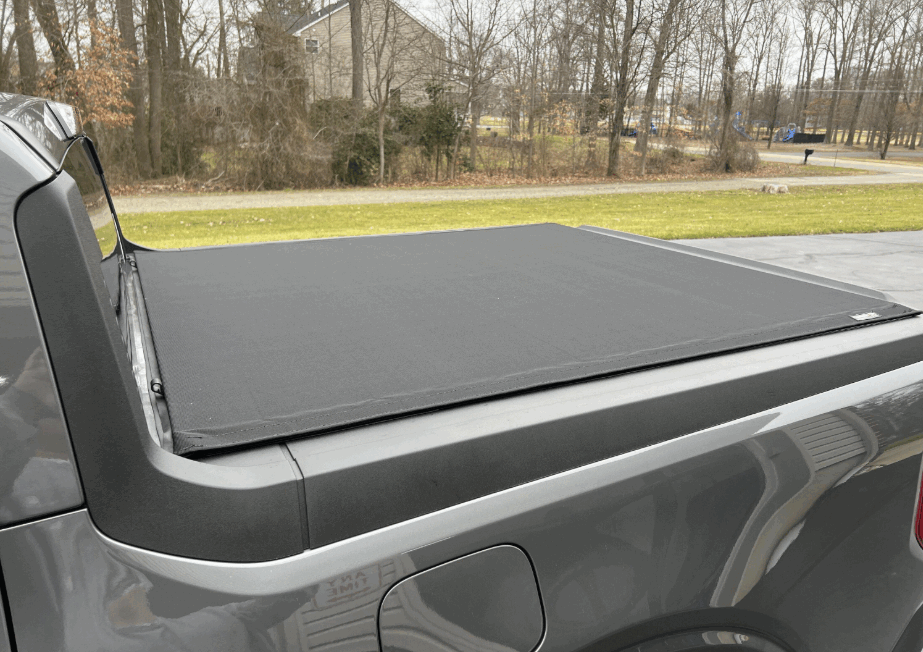
Does a Tonneau Cover Improve Gas Mileage?
Yes, a tonneau cover can improve gas mileage. Most pickup trucks gain between 2% and 6% better fuel economy under the right conditions. The biggest improvements usually happen during highway driving. City driving produces smaller gains because aerodynamic drag plays a less important role at lower speeds.
A tonneau cover improves fuel economy by reducing aerodynamic drag. Air flows smoothly over a covered truck bed instead of creating turbulence inside an open bed. This smoother airflow reduces resistance behind the cab. As a result, the engine needs less power to maintain the same speed. The effect becomes more noticeable once the truck travels above 50 mph.
Independent tests support this principle, but the results are not always identical. Wind tunnel experiments often report higher fuel savings than real-world road tests. Everyday driving introduces additional variables such as traffic, road conditions, tire pressure, cargo weight, and weather. These factors affect fuel consumption and make it difficult to achieve the same results outside a controlled environment.
Truck design also influences the outcome. Older pickup trucks often benefit more because they produce greater aerodynamic drag. Newer models already include aerodynamic improvements from the factory. Consequently, the additional benefit of a tonneau cover may be smaller on modern trucks. Drivers who spend most of their time on highways are also more likely to notice measurable fuel savings than those who mainly drive in urban areas.
Fuel economy is only one reason to install a tonneau cover. It also protects cargo from rain, dust, and theft. Many covers reduce wind noise and give the truck a cleaner appearance. When these advantages are combined with modest fuel savings, a tonneau cover becomes a practical upgrade for many pickup owners instead of simply a fuel-saving accessory.
Why Does a Tonneau Cover Reduce Fuel Consumption?
A tonneau cover reduces fuel consumption because it improves the truck’s aerodynamic efficiency. When a pickup moves at higher speeds, air flows over the cab and into the open bed. This airflow creates turbulence behind the cab and increases aerodynamic drag. The engine must work harder to overcome this resistance. As a result, fuel consumption increases, especially during long highway trips.
A properly fitted tonneau cover changes how air moves across the truck. Instead of swirling inside the cargo bed, the airflow remains smoother as it travels toward the tailgate. This smoother path reduces drag and helps the truck maintain speed with less effort. Although the improvement seems small, it becomes more valuable over long distances because the engine spends less energy pushing against air resistance.
Speed has the greatest influence on this effect. Aerodynamic drag rises quickly as vehicle speed increases. At city speeds, rolling resistance and frequent acceleration consume most of the fuel. Air resistance becomes a secondary factor. However, once a truck reaches highway speeds, drag becomes one of the largest forces acting against the vehicle. This explains why drivers usually notice better fuel economy during highway travel instead of daily commuting.
The design of the pickup also affects the final result. Some trucks already include aerodynamic features that direct airflow more efficiently around the body. Others produce more turbulence because of their shape. A tonneau cover often provides greater benefits on trucks with less aerodynamic designs. The size of the cargo, tire selection, and suspension height can also change airflow and influence fuel economy.
Although aerodynamic improvement is the primary reason for lower fuel consumption, it is not the only advantage. A tonneau cover also keeps the truck bed cleaner by reducing dust and debris. Many models protect valuable cargo from rain and theft while creating a cleaner exterior appearance. These practical benefits often make the investment worthwhile, even if fuel savings alone are relatively modest.
What Do Scientific Tests and Real-World Studies Say?
Scientific research shows that a tonneau cover can improve fuel economy, but the results vary between studies. Most researchers agree that a covered truck bed reduces aerodynamic drag. However, the amount of fuel saved depends on the vehicle, the testing method, and the driving conditions. This is why published results range from small improvements to more noticeable gains.
Wind tunnel testing often reports the largest benefits. These controlled experiments remove variables such as traffic, weather, and driver behavior. Engineers can measure changes in airflow and drag with greater accuracy. Many wind tunnel studies have found that a tonneau cover lowers the drag coefficient of a pickup truck. Lower drag allows the vehicle to move through the air more efficiently, which reduces fuel consumption at highway speeds.
Real-world road tests usually produce smaller improvements. Everyday driving introduces factors that cannot be controlled in a laboratory. Stop-and-go traffic, strong crosswinds, steep hills, and varying cargo loads all affect fuel economy. Tire pressure, engine condition, and driving style also influence the final results. Because of these variables, two drivers using the same tonneau cover may report different fuel savings.
Several independent organizations and manufacturers have conducted their own evaluations. Some tests reported fuel economy improvements of around 2%, while others measured gains closer to 5% or 6% during highway driving. These differences do not mean the research is unreliable. Instead, they show that aerodynamic performance changes with vehicle design and operating conditions. Modern pickup trucks may also experience smaller improvements because manufacturers already optimize body shapes for better airflow.
The overall evidence supports one clear conclusion. A tonneau cover is not a miracle solution for reducing fuel costs. Instead, it offers a measurable aerodynamic advantage under the right conditions. Drivers who spend long hours on highways are more likely to notice the benefit than those who mainly drive short urban routes. When combined with proper tire maintenance, moderate driving speeds, and regular vehicle servicing, a tonneau cover can become part of an effective strategy for improving overall fuel efficiency.
How Much Gas Can You Actually Save With a Tonneau Cover?
Most pickup owners should expect modest fuel savings rather than dramatic reductions in fuel costs. A tonneau cover typically improves fuel economy by 2% to 6% under favorable conditions. The exact improvement depends on the truck model, driving speed, road conditions, and the type of cover installed. Drivers who spend more time on highways usually see the greatest benefit because aerodynamic drag becomes a larger source of fuel consumption at higher speeds.
The annual savings can become meaningful for drivers who cover long distances. For example, a truck that averages 20 miles per gallon and travels 15,000 miles each year consumes about 750 gallons of fuel. A 4% improvement in fuel economy reduces annual fuel use by roughly 30 gallons. Although this amount may seem small, it can offset part of the purchase price over several years, especially when fuel prices remain high.
The payback period varies from one driver to another. Someone who regularly drives long highway routes may recover the cost sooner because the truck spends more time operating under conditions where aerodynamic improvements are most effective. In contrast, drivers who mainly travel short urban routes may need much longer to recover the initial investment. Frequent stops, traffic lights, and lower speeds reduce the influence of aerodynamic drag on overall fuel consumption.
Fuel savings should never be the only reason to purchase a tonneau cover. Most owners receive greater long-term value from the combination of benefits it provides. The cover protects cargo from rain, snow, dust, and direct sunlight. It also improves security by keeping valuable items out of sight. Many drivers appreciate the cleaner appearance and quieter cabin during highway trips. When these advantages are considered together, a tonneau cover becomes a practical upgrade that delivers both convenience and gradual fuel savings instead of an immediate financial return.
Which Type of Tonneau Cover Is Best for Fuel Economy?
The best tonneau cover for fuel economy is one that fits securely and maintains smooth airflow across the truck bed. Both hard and soft covers can improve gas mileage by reducing aerodynamic drag. However, the difference between cover types is often smaller than many drivers expect. A well-installed cover usually performs better than a premium model with poor fitment or installation.
Hard tonneau covers are often considered the most aerodynamic option. Their rigid construction creates a flat and stable surface that helps air flow smoothly over the truck bed. Many hard covers also seal more tightly around the edges, reducing air leakage. As a result, they may deliver slightly better fuel economy during long highway trips. They also provide stronger cargo protection and greater resistance to harsh weather.
Soft tonneau covers also improve fuel efficiency, even though they use flexible materials. Modern soft covers remain tight while driving and reduce much of the turbulence created by an open truck bed. They are lighter than hard covers and usually cost less. For many pickup owners, the difference in fuel savings between a quality soft cover and a hard cover is too small to justify choosing one over the other based on fuel economy alone.
Retractable, folding, and rolling tonneau covers offer a balance between convenience and performance. Their aerodynamic benefits depend on their design and how securely they close. A retractable cover with visible rails or raised sections may create slightly more drag than a flush-mounted hard cover. However, the difference is usually minor during everyday driving. Most drivers are unlikely to notice a significant change in fuel economy between these premium designs.
Choosing the right tonneau cover should involve more than fuel savings. Consider how often you access the truck bed, the level of cargo security you need, and your available budget. A cover that matches your daily driving habits will usually provide greater long-term value than selecting a model based only on a small difference in fuel economy.
What Factors Affect Fuel Savings the Most?
Fuel savings from a tonneau cover depend on several vehicle and driving factors. The cover itself only reduces aerodynamic drag. It does not change engine power, fuel quality, or driving habits. Because of this, the final improvement in gas mileage depends on how, where, and why the truck is used.
Driving speed is one of the strongest factors affecting fuel savings. Aerodynamic drag increases significantly as speed rises. At highway speeds, the engine uses more energy to push air away from the vehicle. A tonneau cover becomes more effective in these conditions because it reduces turbulence around the truck bed. In contrast, city driving creates less aerodynamic benefit because frequent braking and acceleration have a greater impact on fuel consumption.
The pickup truck model also affects the results. Larger trucks with taller profiles usually create more air resistance than smaller and more aerodynamic models. Older pickup designs may experience greater improvements because they often produce more turbulence around the bed area. Newer trucks already include advanced aerodynamic features, so the additional benefit from a tonneau cover may be smaller.
Cargo conditions can also influence fuel economy. An empty truck bed with an open design creates airflow disruption behind the cab. However, large items that extend above the bed rails can increase drag even when a tonneau cover is installed. A properly covered and organized cargo area allows air to move more efficiently across the vehicle.
Weather and maintenance conditions play an important role as well. Strong winds, low tire pressure, poor wheel alignment, and heavy loads can reduce fuel efficiency. A tonneau cover cannot overcome these factors. Drivers who combine a quality cover with proper tire maintenance, steady speeds, and efficient driving habits are more likely to achieve measurable fuel savings.
The biggest fuel economy improvements usually come from multiple small changes working together. A tonneau cover provides an aerodynamic advantage, but it works best as part of a complete approach to reducing fuel consumption. Understanding these factors helps truck owners set realistic expectations and choose upgrades that match their driving needs.
Is a Tonneau Cover Worth Buying for Gas Mileage Alone?
A tonneau cover is usually not worth buying for gas mileage alone. The fuel savings are real, but they are often too small to quickly recover the purchase cost. Most drivers should consider fuel economy as an additional benefit rather than the main reason to install a tonneau cover.
The financial return depends on driving distance, fuel prices, and the truck’s existing fuel economy. A driver who travels 20,000 highway miles each year may save more fuel than someone who only drives short local trips. For example, a pickup that gains 4% better fuel economy may reduce fuel consumption by several dozen gallons annually. However, the exact savings depend on the vehicle and driving conditions.
The purchase decision becomes more valuable when other benefits are included. A tonneau cover protects cargo from weather exposure and improves truck bed security. It prevents rain, snow, and sunlight from damaging stored items. It also keeps valuable equipment hidden from view, which can reduce the risk of theft. These practical advantages provide daily value even when fuel savings are limited.
The right buyer is usually someone who already needs better truck bed protection and frequently drives at highway speeds. Long-distance commuters, contractors, outdoor enthusiasts, and truck owners who carry valuable equipment often receive more value from a tonneau cover. They benefit from both improved cargo protection and potential fuel savings.
However, drivers who only want to reduce fuel costs may find other improvements more effective. Maintaining correct tire pressure, reducing unnecessary cargo weight, and driving at consistent speeds often create similar or greater fuel savings. A tonneau cover works best as part of a broader vehicle efficiency strategy.
Overall, a tonneau cover provides measurable aerodynamic benefits, but fuel savings should not be the only purchase factor. The combination of improved appearance, cargo protection, security, and modest fuel efficiency makes it a worthwhile upgrade for many pickup truck owners. For drivers focused only on saving money at the fuel pump, the return may take several years.
Conclusion: Does a Tonneau Cover Improve Gas Mileage?
A tonneau cover can improve gas mileage, but the improvement is usually moderate rather than significant. The main reason is reduced aerodynamic drag. By covering the truck bed, a tonneau cover helps control airflow and reduces turbulence behind the cab. This allows the pickup truck to move more efficiently, especially during highway driving.
The average fuel economy improvement typically ranges from 2% to 6%, depending on the truck design, driving speed, and road conditions. Drivers who spend most of their time on highways are more likely to notice measurable savings because aerodynamic drag has a stronger effect at higher speeds. In contrast, urban drivers may see limited changes because acceleration, braking, and traffic conditions have a larger impact on fuel consumption.
A tonneau cover should not be viewed as a fuel-saving solution by itself. Its real value comes from combining several advantages in one upgrade. Better cargo protection, improved security, reduced wind noise, and a cleaner truck appearance add long-term benefits beyond fuel efficiency.
For pickup owners who frequently travel long distances or need better truck bed protection, a tonneau cover is often a practical investment. However, drivers who only want to reduce fuel costs may achieve faster results through basic maintenance and efficient driving habits. The best approach is to consider a tonneau cover as part of a complete vehicle efficiency strategy rather than a standalone method for saving fuel.