The recommended oil type for most 3.6 Pentastar engines is SAE 0W-20 full synthetic motor oil that meets Chrysler MS-6395, API SP, or ILSAC GF-6A specifications. This combination provides the lubrication, thermal stability, and wear protection required to keep the Pentastar V6 operating efficiently under a wide range of driving conditions. However, some model years and specific operating environments may also permit SAE 5W-30, making it important to verify your owner’s manual before every oil change.
Choosing the correct engine oil affects much more than routine maintenance. Oil creates a protective film between moving engine components, reduces internal friction, controls operating temperature, and prevents harmful deposits from forming inside the engine. When the correct viscosity and manufacturer-approved specifications are used, the 3.6 Pentastar engine delivers smoother cold starts, improved fuel economy, and longer service life. In contrast, using the wrong oil can increase engine wear, reduce lubrication efficiency, and contribute to sludge buildup or premature component failure over time.
This guide explains everything you need to know about the 3.6 Pentastar oil type, including the recommended viscosity, required oil specifications, oil capacity, and ideal oil change interval. You will also learn how to choose the best full synthetic oil for your vehicle, understand when alternative viscosities are appropriate, and avoid common mistakes that can shorten engine life. By the end of this article, you will have the information needed to select the right engine oil with confidence and maintain your 3.6 Pentastar engine according to manufacturer recommendations.
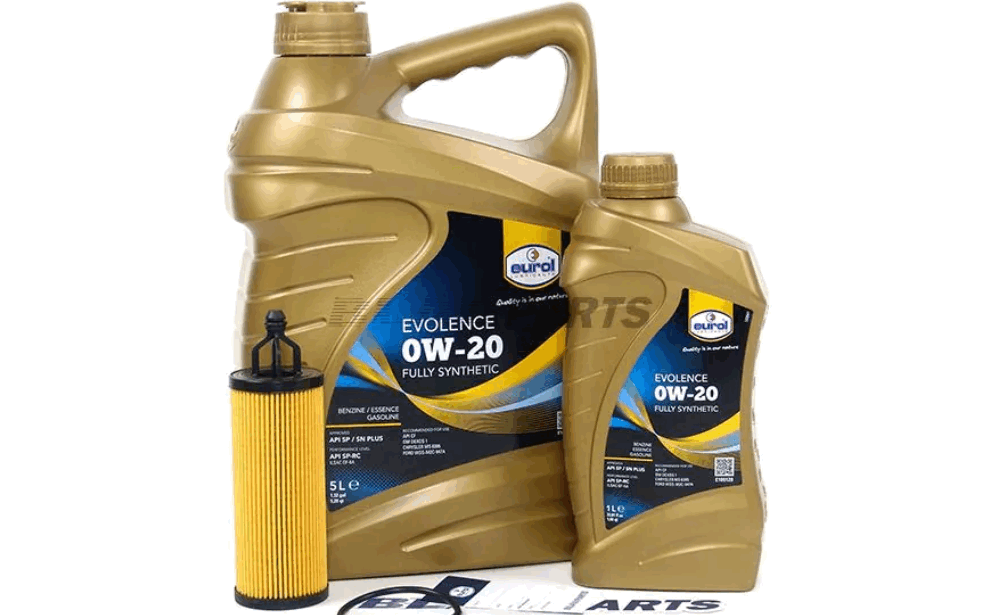
What Is the Recommended Oil Type for a 3.6 Pentastar Engine?
The recommended oil type for most 3.6 Pentastar engines is SAE 0W-20 full synthetic motor oil. The oil should also meet Chrysler MS-6395, API SP, and ILSAC GF-6A specifications. These standards ensure proper lubrication, engine protection, and fuel efficiency under normal driving conditions.
Chrysler recommends SAE 0W-20 because it flows quickly during cold starts. Fast oil circulation reduces friction before the engine reaches operating temperature. It also creates a stable protective film as the engine heats up. This protection helps reduce wear on the camshafts, pistons, timing chain, and valve train. As a result, the engine performs more efficiently and lasts longer.
Most modern Jeep, Dodge, Chrysler, and Ram vehicles equipped with the 3.6 Pentastar engine use this viscosity. However, some earlier model years allow SAE 5W-30. Manufacturers may also recommend it for severe operating conditions. These conditions include frequent towing, heavy payloads, extended highway driving in high temperatures, or engines with higher mileage. Always confirm the recommended viscosity in your owner’s manual before changing engine oil.
Full synthetic oil is the best choice for the 3.6 Pentastar engine. It withstands heat better than conventional oil and resists oxidation more effectively. It also keeps internal engine parts cleaner by reducing sludge and deposit formation. In addition, synthetic oil maintains a more stable viscosity throughout the oil change interval. This stability helps preserve oil pressure and protects the engine during demanding driving conditions.
Although many premium brands produce excellent engine oil, the specification matters more than the label on the bottle. Choose a full synthetic oil that meets Chrysler’s required specifications instead of selecting a product based only on brand reputation. Following the manufacturer’s recommendation provides the best balance of engine protection, fuel economy, and long-term reliability.
What Oil Specifications Should a 3.6 Pentastar Engine Meet?
A 3.6 Pentastar engine should use engine oil that meets Chrysler MS-6395, API SP, and ILSAC GF-6A specifications. These approvals confirm that the oil satisfies Chrysler’s performance requirements for lubrication, wear protection, oxidation resistance, and fuel efficiency. Even if two products share the same viscosity, they may not provide the same level of protection if they do not meet these standards.
Chrysler MS-6395 is the most important specification for most 3.6 Pentastar engines. Chrysler developed this standard to ensure engine oil performs consistently under different temperatures and driving conditions. An approved oil must resist sludge formation, maintain stable viscosity, and protect critical engine components throughout the recommended oil change interval. Before purchasing engine oil, check the product label for the MS-6395 approval instead of relying only on marketing claims.
API SP is another essential specification. It represents one of the latest performance standards established by the American Petroleum Institute. Oils carrying the API SP certification provide improved protection against engine wear, timing chain wear, and low-speed pre-ignition in modern gasoline engines. They also offer better oxidation control, helping the oil remain effective during extended service intervals.
Most manufacturers also recommend oils that meet the ILSAC GF-6A standard. This specification focuses on fuel economy, piston cleanliness, and engine durability. It also improves protection during cold starts and helps reduce harmful deposits that can affect long-term engine performance. As a result, the engine operates more efficiently while maintaining reliable lubrication in both low and high temperatures.
When selecting engine oil, prioritize the required specifications before choosing a specific brand. A full synthetic oil that meets Chrysler MS-6395, API SP, and ILSAC GF-6A will provide the protection the 3.6 Pentastar engine was designed to receive. This approach helps maintain engine reliability, supports fuel efficiency, and reduces the risk of premature wear over thousands of miles.
How Much Oil Does a 3.6 Pentastar Engine Hold?
Most 3.6 Pentastar engines require approximately 5.9 quarts (5.6 liters) of engine oil when replacing both the oil and the oil filter. This capacity applies to many Jeep, Dodge, Chrysler, and Ram models equipped with the 3.6L Pentastar V6. However, the exact amount may vary slightly depending on the model year and vehicle application. For that reason, always verify the specification in your owner’s manual before refilling the engine.
Replacing the oil filter is an important part of every oil change. A new filter holds a small amount of fresh oil, which affects the engine’s total oil capacity. If you refill the engine without considering the filter, the oil level may fall below the recommended range. On the other hand, adding too much oil can create excessive crankshaft resistance and increase internal pressure. Both situations reduce lubrication efficiency and may shorten engine life over time.
After adding fresh oil, start the engine and let it idle for a few minutes. This process allows the new oil to circulate through the lubrication system and fill the oil filter. Next, turn off the engine and wait several minutes before checking the dipstick. The oil level should remain between the minimum and maximum marks. Add small amounts if necessary, but avoid filling above the maximum line.
Oil capacity can differ between vehicles because manufacturers may use different oil pans, filters, or engine configurations. For example, a Jeep Wrangler equipped with the 3.6 Pentastar engine may have a slightly different refill capacity than a Chrysler Pacifica or a Ram 1500. Although the difference is usually small, using the correct capacity helps maintain proper oil pressure and consistent engine protection.
Checking the oil level regularly is just as important as choosing the correct oil type. A properly filled 3.6 Pentastar engine delivers stable lubrication, better cooling, and reliable long-term performance. Inspect the dipstick at least once a month or before long trips to detect low oil levels before they affect engine operation.
Which Synthetic Oil Brands Are Best for the 3.6 Pentastar Engine?
The best synthetic oil for a 3.6 Pentastar engine is any product that meets Chrysler MS-6395, API SP, and ILSAC GF-6A specifications. Manufacturer approval is more important than brand recognition because it confirms the oil has passed the performance tests required for this engine. Once those specifications are met, you can compare products based on performance, availability, and price.
Pennzoil Platinum Full Synthetic is one of the most popular choices for the 3.6 Pentastar engine. Chrysler has recommended Pennzoil products for many factory-fill applications, making the brand a familiar option for Pentastar owners. The oil provides excellent oxidation resistance, keeps engine components clean, and performs consistently during cold starts. It also helps reduce sludge formation, which supports long-term engine reliability.
Mobil 1 Advanced Fuel Economy Full Synthetic is another high-quality option. It delivers strong wear protection across a wide temperature range and maintains stable viscosity throughout the oil change interval. Many drivers choose Mobil 1 because it performs well in both daily commuting and demanding driving conditions. The formulation also supports fuel efficiency by reducing internal engine friction.
Valvoline Advanced Full Synthetic and Castrol EDGE Full Synthetic also meet the needs of many 3.6 Pentastar owners. Both products protect against high-temperature breakdown and help prevent harmful deposits inside the engine. In addition, they provide reliable lubrication during cold weather and maintain consistent performance under heavy loads. These qualities make them suitable for vehicles used for towing, long-distance travel, or frequent stop-and-go driving.
Amsoil Signature Series Full Synthetic is often selected by drivers who want extended performance and premium engine protection. The oil offers excellent thermal stability and resists viscosity breakdown during severe operating conditions. Although it usually costs more than conventional synthetic oils, many owners value its long service life and advanced additive package.
Brand selection should always come after specification verification. Choose a full synthetic oil that matches Chrysler’s requirements before comparing individual brands. This approach ensures the 3.6 Pentastar engine receives the lubrication, cleanliness, and wear protection it needs throughout every oil change interval.
How Often Should You Change Oil in a 3.6 Pentastar Engine?
Most 3.6 Pentastar engines require an oil change every 7,500 to 10,000 miles when using full synthetic oil under normal driving conditions. However, the ideal interval depends on driving habits, climate, engine load, and the oil quality. Following the recommended maintenance schedule helps maintain proper lubrication and reduces long-term engine wear.
Normal driving includes steady highway travel, moderate temperatures, and light engine loads. Under these conditions, high-quality full synthetic oil retains its viscosity and protective properties for an extended period. It continues to lubricate moving components, resist oxidation, and prevent sludge from forming inside the engine. Even so, owners should inspect the oil level regularly because consumption rates can increase as the engine accumulates mileage.
Severe driving conditions require more frequent oil changes. Frequent short trips, stop-and-go traffic, towing, off-road driving, dusty environments, and prolonged idling place additional stress on the engine oil. These conditions accelerate contamination and reduce the oil’s ability to protect internal components. In many cases, changing the oil every 5,000 to 7,500 miles provides better long-term engine protection than waiting for the maximum service interval.
Many vehicles equipped with the 3.6 Pentastar engine also include an Oil Life Monitoring System. This system calculates the remaining oil life by analyzing operating conditions instead of relying only on mileage. It considers factors such as engine temperature, driving time, load, and start-up frequency. As a result, the maintenance reminder reflects actual engine use rather than a fixed distance. When the system indicates that service is due, schedule an oil change as soon as practical.
Several warning signs may also indicate that the engine needs fresh oil. Dark, dirty oil, unusual engine noise, reduced fuel economy, or an illuminated oil maintenance reminder should never be ignored. Changing the oil before lubrication quality declines helps protect the 3.6 Pentastar engine from unnecessary wear and supports consistent long-term performance. Regular maintenance remains one of the simplest and most effective ways to maximize engine reliability.
What Happens If You Use the Wrong Oil in a 3.6 Pentastar Engine?
Using the wrong oil in a 3.6 Pentastar engine can reduce lubrication efficiency, increase engine wear, and shorten the lifespan of critical components. Engine oil is formulated to match specific viscosity and performance requirements. When the oil does not meet Chrysler’s recommended specifications, it may fail to protect the engine under different temperatures and operating conditions.
Incorrect viscosity is one of the most common problems. Oil that is too thick flows more slowly during cold starts, delaying lubrication to moving parts. This delay increases friction between components such as the camshafts, timing chain, and valve train. In contrast, oil that is too thin may lose its protective film when the engine reaches high operating temperatures. As a result, metal surfaces experience greater contact, which accelerates wear over time.
Using engine oil that does not meet Chrysler MS-6395 or current API standards can also affect engine cleanliness. Lower-quality oil breaks down more quickly under heat and oxidation. Once the additives lose their effectiveness, sludge and varnish begin to form inside the engine. These deposits restrict oil flow, reduce cooling performance, and place additional stress on the oil pump and other lubrication system components.
Fuel economy and engine performance may also decline. Modern 3.6 Pentastar engines are calibrated to operate with a specific oil viscosity. Using a heavier oil than recommended increases internal resistance, forcing the engine to work harder during normal operation. The result may include lower fuel efficiency, reduced throttle response, and higher operating temperatures during extended driving or heavy towing.
Drivers should also avoid mixing different oil viscosities or combining conventional and synthetic oils unless the manufacturer’s guidelines allow it. Although occasional mixing during an emergency is unlikely to cause immediate damage, it can reduce the overall performance of the lubricant. Maintaining a single oil specification throughout each service interval provides more consistent protection and predictable engine performance.
The safest approach is to use a full synthetic oil that matches the recommended viscosity and meets Chrysler MS-6395, API SP, and ILSAC GF-6A specifications. Following these requirements helps maintain stable oil pressure, protects internal engine components, and supports the long-term reliability of the 3.6 Pentastar engine.
Frequently Asked Questions About 3.6 Pentastar Oil Type
Can I use 5W-30 instead of 0W-20?
Yes, but only if your owner’s manual specifically allows it. Most modern 3.6 Pentastar engines are designed for SAE 0W-20. However, some earlier model years and certain operating conditions permit SAE 5W-30. Always follow the viscosity listed by the manufacturer because it matches the engine’s design and lubrication requirements.
Is full synthetic oil required for the 3.6 Pentastar engine?
Yes. Chrysler recommends full synthetic oil for most 3.6 Pentastar applications. Synthetic oil maintains stable viscosity under extreme temperatures, resists oxidation, and protects the engine for longer service intervals. It also reduces sludge formation and improves lubrication during cold starts.
Do all 3.6 Pentastar engines use the same oil capacity?
No. Most models require about 5.9 quarts (5.6 liters) with a new oil filter, but the exact capacity varies by vehicle and model year. Differences in oil pan design and engine configuration can slightly change the refill amount. Always confirm the specification before adding fresh oil.
Which oil filter should I use?
Choose a high-quality oil filter that meets the manufacturer’s specifications. An approved filter removes contaminants efficiently while maintaining proper oil flow. Replacing the filter during every oil change helps keep the lubrication system clean and protects internal engine components from premature wear.
Can the wrong oil reduce fuel economy?
Yes. Engine oil with the wrong viscosity increases internal resistance and forces the engine to work harder. This extra friction may lower fuel efficiency and reduce overall engine performance. Using the recommended oil helps the engine operate as intended.
How often should I check the engine oil level?
Check the oil level at least once a month and before long trips. You should also inspect it after towing, driving in extremely hot weather, or covering long highway distances. Regular inspections help detect low oil levels before they become serious mechanical problems.
Conclusion
The best oil for most 3.6 Pentastar engines is SAE 0W-20 full synthetic motor oil that meets Chrysler MS-6395, API SP, and ILSAC GF-6A specifications. Choosing the correct oil protects critical engine components, maintains proper lubrication, and supports consistent performance throughout the recommended service interval. Following the manufacturer’s specifications is always more important than selecting a particular oil brand because approved products are engineered to meet the engine’s exact performance requirements.
Regular maintenance plays an equally important role in long-term engine reliability. Replacing the engine oil and oil filter at the recommended interval, checking the oil level every month, and responding promptly to maintenance reminders help prevent premature wear and costly repairs. These simple practices also improve fuel efficiency, reduce sludge buildup, and maintain stable oil pressure under both normal and demanding driving conditions.
If you want to maximize the lifespan of your 3.6 Pentastar engine, always verify the correct viscosity, capacity, and oil specifications before every service. Using the right engine oil today is one of the most effective ways to protect your engine for thousands of miles to come. For a complete maintenance strategy, you can also learn about the best oil filter for the 3.6 Pentastar engine, the recommended maintenance schedule, and how different engine oil viscosities affect performance in various climates.