A Dodge Ram fuel gauge reset can help restore an incorrect fuel-level reading when the problem comes from a temporary instrument cluster or electronic system issue. However, resetting the gauge will not repair a failed fuel level sensor, damaged fuel sending unit, stuck float, faulty wiring, or defective instrument cluster. The correct approach is to reset the system first, verify the fuel reading, and then diagnose the fuel-level system if the problem remains.
The exact reset and diagnostic procedure can vary by Dodge Ram model year and electrical system. A Ram 1500, 2500, or 3500 may therefore require different checks rather than one universal reset sequence. Common symptoms include a fuel gauge stuck on empty or full, a reading that changes unexpectedly, and a displayed fuel level that does not match the amount of fuel in the tank.
This guide explains how to reset and check a Dodge Ram fuel gauge, what to do when the reset does not work, and how to identify problems involving the fuel level sensor, sending unit, float, wiring, and instrument cluster before replacing parts.
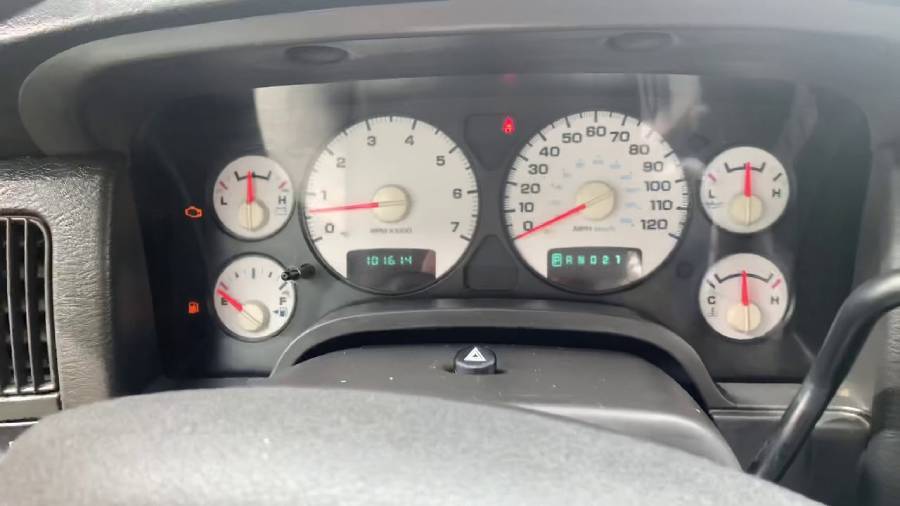
How Do You Reset the Fuel Gauge on a Dodge Ram?
Reset a Dodge Ram fuel gauge by first cycling the ignition and checking whether the instrument cluster recalibrates the fuel-level reading. The exact reset method depends on the Ram model year and instrument cluster design, so there is no single manual reset sequence that applies to every Ram 1500, 2500, and 3500. A reset is most useful when the gauge displays an incorrect reading because of a temporary electronic or instrument-cluster issue rather than a failed fuel system component.
Start with the truck parked on a level surface and confirm that there is fuel in the tank. Turn the ignition off, remove the key if the vehicle uses one, and wait briefly before switching the ignition back to the ON position without starting the engine. Observe the fuel gauge as the instrument cluster powers up. On systems that perform a startup check or recalculation, the gauge should move toward the fuel level reported by the fuel-level sensing system.
Start the engine after the instrument cluster has completed its startup process and monitor the gauge again. Compare the displayed level with the amount of fuel you reasonably expect to be in the tank. Adding a known amount of fuel can provide another reference point when the gauge is showing an obviously incorrect level. A working system should eventually reflect the change in fuel level rather than remaining permanently at the same position.
Do not repeatedly disconnect the battery or perform unrelated reset procedures when the gauge remains inaccurate. A reset cannot repair a stuck fuel float, worn fuel level sensor, failed sending unit, damaged connector, open or shorted wiring circuit, or defective instrument cluster. Continuing to reset the system in these cases delays diagnosis of the component that is actually causing the incorrect reading.
The appropriate procedure can also differ between Dodge-branded Ram trucks from earlier model years and later Ram-branded trucks. Instrument cluster electronics, fuel pump modules, fuel-level sensing systems, and diagnostic capabilities changed across generations. For that reason, use the service information for the specific model year when a basic ignition cycle does not restore the reading rather than assuming that an online reset sequence applies to every Dodge Ram.
How Do You Know if the Dodge Ram Fuel Gauge Reset Worked?
The reset worked if the fuel gauge returns to a plausible reading and continues responding correctly as the amount of fuel in the tank changes. A single movement of the gauge during startup does not prove that the entire fuel-level system is operating correctly. The reading must remain consistent with the actual fuel level during subsequent driving and refueling.
Check the gauge before and after adding a known amount of fuel. For example, a gauge that was incorrectly stuck near empty should show a meaningful increase after fuel is added once the system updates the reading. The exact needle or display movement depends on tank capacity, the amount added, vehicle position, and the way the specific model processes the fuel-level signal, so the test should focus on whether the reading responds logically rather than expecting an exact movement.
A successful reset should also produce a stable reading. A gauge that jumps between levels, drops suddenly, stays permanently on full or empty, or becomes inaccurate again has not had its underlying problem resolved. These symptoms point toward a fuel-level sensing, electrical, mechanical, or instrument-cluster fault that requires further diagnosis.
Do not rely exclusively on the dashboard fuel reading while the fault remains unresolved. Track the distance driven and refuel conservatively until the fuel-level system is working correctly. Running the tank unexpectedly low can leave the vehicle stranded, while repeated operation at very low fuel levels is unnecessary when the gauge cannot provide a dependable indication of the remaining fuel.
Why Is Your Dodge Ram Fuel Gauge Still Not Working After a Reset?
A Dodge Ram fuel gauge that remains inaccurate after a reset usually has a fault elsewhere in the fuel-level sensing or display system. The gauge depends on information originating inside the fuel tank and passing through electrical circuits before the instrument cluster displays the level. Resetting the cluster cannot correct the reading when that information is mechanically or electrically incorrect.
The fuel level sensor and sending unit are key parts of this process. A float moves as the fuel level rises and falls, while the sensing mechanism converts that movement into an electrical signal. The vehicle uses the signal to determine the amount of fuel in the tank and display it on the dashboard. A stuck float, worn sensor contact, or failed sending unit can therefore leave the gauge stuck at one position or cause a reading that does not correspond with the actual fuel level.
Electrical faults can produce similar symptoms. Damaged wiring, corrosion, loose connectors, poor electrical connections, or circuit faults can interrupt or alter the signal between the tank and the vehicle electronics. In this situation, the dashboard may display empty, full, or another incorrect value even though the gauge itself is capable of moving normally.
The instrument cluster or associated electronic control system is another diagnostic area when the sending circuit tests correctly. The cluster is responsible for presenting fuel-level information to the driver, so a display or internal electronic fault can create an inaccurate indication even when the fuel-level sensor is functioning. Diagnosis should isolate the sensor, circuit, and display side of the system before a component is replaced.
The correct next step after an unsuccessful reset is diagnosis, not another reset. Confirm the symptom first, inspect the relevant electrical connections, check the fuel-level sensing circuit using the service procedure for the specific Ram model year, and review applicable diagnostic trouble codes or scan data when the vehicle provides them. This sequence separates a temporary electronic issue from a failed sensor, sending unit, wiring circuit, or instrument cluster and reduces unnecessary parts replacement.
Why Is Your Dodge Ram Fuel Gauge Stuck on Empty?
A Dodge Ram fuel gauge can stay on empty when the fuel level sensor, sending unit, float mechanism, wiring circuit, or related electrical connection fails to provide a valid fuel-level signal. The symptom does not automatically mean the fuel gauge in the instrument cluster is defective. The complete signal path must be checked before replacing the gauge or fuel pump module.
The fuel-level system starts inside the fuel tank. A float changes position as the amount of fuel rises or falls, and the sending mechanism converts that movement into an electrical value that the vehicle uses to determine fuel level. When the sender cannot produce the expected signal, the vehicle may interpret the condition as an empty tank or otherwise display an implausible reading. This explains why adding fuel does not necessarily move a gauge when the sending system has failed.
An electrical fault can create the same symptom without a mechanical failure inside the tank. A damaged wire, corroded terminal, loose connector, poor connection, or circuit fault can prevent the fuel-level signal from reaching the electronics that process it. The diagnostic process must therefore determine whether the problem originates at the sending unit or somewhere along the electrical path.
Check the actual amount of fuel before diagnosing a gauge that remains on empty. Add a known amount of fuel when necessary and observe whether the displayed level changes after the vehicle is restarted and driven. A gauge that remains on empty despite a confirmed increase in tank fuel requires diagnosis of the fuel-level sensing circuit rather than repeated reset attempts.
Can a Bad Fuel Sending Unit Make the Gauge Read Empty?
Yes, a faulty fuel sending unit can cause a Dodge Ram fuel gauge to remain on empty because the gauge depends on the sending system for information about the amount of fuel in the tank. A failure at the sender can produce a fixed, intermittent, or inaccurate signal even when the tank contains fuel.
The sending mechanism operates with the movement of the fuel-level float. As fuel is consumed, the float changes position; after refueling, it moves in the opposite direction. The sender translates that position into an electrical input used by the vehicle’s fuel-level monitoring system. Wear, mechanical restriction, or an electrical failure within this assembly can prevent the reported value from following the actual fuel level.
A bad sending unit should not be diagnosed from the dashboard reading alone. The same empty reading can result from a wiring or connector problem between the tank and the rest of the system. Testing the circuit according to the service information for the specific Ram model year helps determine whether the incorrect signal originates at the sender or elsewhere.
Can Wiring Problems Cause a Dodge Ram Fuel Gauge to Read Empty?
Yes, wiring and connector faults can make a Dodge Ram fuel gauge read empty even when the fuel level sensor and float are mechanically functional. The sensor information must travel through an electrical circuit, so an interruption or abnormal electrical condition can prevent the vehicle from receiving the correct fuel-level input.
Inspect accessible connectors and wiring associated with the fuel-level circuit for physical damage, loose connections, corrosion, or other visible deterioration. Wiring near components exposed to moisture, road debris, vibration, or previous repair work deserves particular attention. Visual inspection can identify obvious faults, but an intact-looking wire does not prove that the circuit is electrically sound.
Electrical testing should follow the wiring diagram and specifications for the exact model year. Ram trucks across different generations do not necessarily use identical circuits, modules, or diagnostic logic. Replacing a fuel sending unit without verifying the circuit can leave the original problem unresolved when damaged wiring was responsible for the empty reading.
Why Is Your Dodge Ram Fuel Gauge Stuck on Full?
A Dodge Ram fuel gauge stuck on full indicates that the fuel-level system is continuously reporting or displaying a high fuel level even as fuel is consumed. The fault can involve the float or sending mechanism, the electrical circuit, or the system that processes and displays fuel-level information. Resetting the gauge may temporarily address an electronic anomaly, but it cannot release a mechanically stuck float or repair a defective circuit.
A restricted float is one mechanical possibility. The float is supposed to move through a range that corresponds with changing fuel levels. If it remains near the upper part of its travel, the sending mechanism may continue reporting a high level after the tank is no longer full. Problems within the sender can also produce a signal that does not change correctly with float position.
Electrical problems must also be considered because the dashboard displays a processed electrical signal rather than directly measuring fuel inside the tank. A circuit fault can produce an abnormal input that results in a full or otherwise incorrect indication. Diagnosis should compare the reported fuel-level information with the actual tank condition and then isolate the sender, circuit, and display side of the system.
A practical warning sign is a gauge that remains at full after enough driving to consume a noticeable amount of fuel. Do not assume that a permanently full gauge means the truck has unusually low fuel consumption. Track mileage and refuel conservatively until the fault is repaired because the gauge cannot provide a reliable estimate of remaining range.
Why Does Your Dodge Ram Fuel Gauge Give an Incorrect or Fluctuating Reading?
An incorrect or fluctuating Dodge Ram fuel gauge reading usually means the fuel-level signal is changing in a way that does not accurately represent the amount of fuel in the tank. A worn fuel level sensor, restricted float, intermittent electrical connection, wiring problem, or fault elsewhere in the fuel-level monitoring system can create this behavior.
Normal fuel movement inside the tank can cause limited short-term changes in the sensed level while the truck accelerates, brakes, turns, or travels on an incline. The vehicle’s fuel-level system is designed to provide a useful overall indication despite this movement. A gauge that repeatedly makes large changes, drops unexpectedly, or reports substantially different levels under similar conditions requires further diagnosis.
Intermittent faults are particularly important because the gauge may appear normal during one drive and become inaccurate during another. Vibration and vehicle movement can affect a loose connector or damaged electrical connection, while a worn or restricted sender may behave differently as the float moves through different parts of its range. Recording when the problem occurs can help identify whether the symptom is associated with a particular fuel level or driving condition.
Compare the dashboard indication after several known refueling events instead of relying on a single observation. For example, note the reading before refueling, record how much fuel was added, and check whether the gauge responds logically afterward. Consistent disagreement between known fuel additions and displayed fuel level provides stronger evidence of a system fault than one unusual gauge movement.
Can a Faulty Fuel Level Sensor Cause an Incorrect Reading?
Yes, a faulty fuel level sensor can produce an incorrect reading because the vehicle uses its input to estimate how much fuel remains in the tank. When the sensor or sending mechanism reports a value that does not correspond with the actual float position, the displayed fuel level can be higher, lower, or less stable than the true tank level.
Sensor-related faults can be continuous or intermittent. A continuous fault may keep the reading at one position, while an intermittent problem may appear only when the float reaches a particular part of its travel. This distinction is useful during diagnosis because a gauge that becomes inaccurate at approximately the same tank level after repeated refueling cycles can point toward a problem associated with sender operation through that range.
Testing is still required before replacing the sensor or sending unit. Wiring, connectors, and the system receiving the signal can produce similar symptoms. A replacement decision should be based on diagnostic evidence showing that the sender or sensor is producing an incorrect signal, not solely on an inaccurate dashboard gauge.
Can a Stuck Fuel Float Cause the Gauge to Read Incorrectly?
Yes, a stuck or restricted fuel float can cause an incorrect Dodge Ram fuel gauge reading because the float must move with the fuel level for the sending unit to report changing tank conditions. If the float remains in one position while the actual fuel level changes, the resulting gauge indication can remain artificially high, artificially low, or stop changing through part of its normal range.
The mechanism explains why a reset has limited value in this situation. A reset affects electronic operation or displayed information; it does not physically move a restricted component inside the fuel tank. If the gauge initially responds to a reset but returns to the same incorrect reading as fuel is consumed, the underlying fuel-level sensing system still requires diagnosis.
Compare gauge behavior across a refueling and driving cycle before concluding that the float is stuck. A reading that repeatedly fails to follow significant changes in actual tank level establishes the symptom, but determining whether the float, sender, wiring, or another component is responsible requires component and circuit testing. This prevents unnecessary removal or replacement of fuel-system parts.
How Can You Test a Dodge Ram Fuel Gauge Before Replacing Parts?
Test a Dodge Ram fuel gauge by confirming the actual fuel level, checking the gauge response, inspecting the fuel-level circuit, reviewing scan data when available, and testing the sending unit before replacing components. The goal is to identify whether the fault originates inside the fuel tank, in the wiring and connectors, or on the display side of the system. Replacing a fuel pump module, sending unit, or instrument cluster without isolating the fault can add repair cost without correcting the inaccurate reading.
Start by establishing a known fuel condition. Park the truck on a reasonably level surface, record the current gauge position, and add a known amount of fuel. Restart the vehicle and observe whether the gauge responds to the increased fuel level. A gauge that moves logically after refueling demonstrates that at least part of the sensing and display system is responding, while a gauge that remains fixed provides a clear symptom for further testing.
Inspect accessible wiring and electrical connectors associated with the fuel-level system next. Look for loose connections, damaged insulation, corrosion, bent or damaged terminals, and evidence of previous electrical repairs. The inspection should follow the wiring information for the specific Ram model year because the circuit arrangement can differ between truck generations. A visual inspection identifies obvious physical defects, but electrical measurements are required when the circuit appears intact and the fault remains.
Test the fuel-level sending circuit according to the service specifications for the specific vehicle. The sending unit changes its electrical output as the float moves with the fuel level. Comparing the measured or reported value with the expected specification helps determine whether the sender is responding correctly. If the sender produces the expected signal but the dashboard displays the wrong fuel level, diagnosis should move downstream toward the wiring, modules, communication path, or instrument cluster rather than replacing the sender.
The order of testing matters. Confirm the symptom first, test the signal source second, verify the electrical path third, and evaluate the display side after the first three checks. This sequence reduces guesswork because each test removes one group of possible causes. For example, replacing the instrument cluster first would not repair a sender that continuously reports an incorrect fuel level.
Electrical testing also requires the correct wiring diagram, connector identification, and specifications. Do not apply voltage or ground to an unidentified fuel-level circuit simply to see whether the gauge moves. Vehicle electronics can use signal circuits that are not designed for direct battery voltage, and the configuration differs across model years. Use the service procedure for the exact Dodge Ram or Ram truck being diagnosed.
Can an OBD-II Scanner Diagnose a Dodge Ram Fuel Gauge Problem?
An OBD-II-capable scan tool can assist with Dodge Ram fuel gauge diagnosis when the vehicle exposes relevant fuel-level data or diagnostic trouble codes, but a scanner cannot identify every mechanical or electrical fuel-gauge failure by itself. Its value is in showing what the vehicle’s electronic systems are receiving or reporting so that the information can be compared with the actual amount of fuel in the tank.
A scan tool with access to manufacturer-specific data may provide more useful information than a basic generic code reader. Depending on the model year and system, diagnostic information can help determine whether the vehicle is receiving a plausible fuel-level input or has detected an electrical or communication fault. This distinction matters because the dashboard gauge can be inaccurate even when the vehicle electronics are receiving a valid signal, while an implausible input can direct diagnosis toward the sensor, sender, or circuit.
Compare scan data with a known physical condition whenever relevant fuel-level information is available. For example, if the tank has recently received a substantial amount of fuel but the reported fuel-level value remains unchanged, the result provides evidence that the sensing or signal path needs further investigation. If the scan data changes appropriately while the dashboard gauge remains incorrect, attention can shift toward how that information is processed or displayed.
A diagnostic trouble code identifies a detected condition, not automatically the failed component. A circuit-related code can be associated with a sensor, connector, wiring fault, electrical condition, or another part of the signal path. Read the code definition and follow the diagnostic procedure for the specific vehicle instead of replacing the component named or associated with the code without testing.
A basic OBD-II reader may therefore be insufficient for a complete Dodge Ram fuel gauge diagnosis. Generic readers primarily provide standardized powertrain information, while deeper diagnosis may require a scan tool capable of communicating with additional vehicle modules and displaying manufacturer-specific parameters. When the required data is unavailable, electrical tests and model-specific service information become more important.
The most reliable diagnosis combines scan information with physical and electrical evidence. A known fuel quantity establishes the real condition, scan data shows what the electronic system reports when accessible, circuit testing verifies signal integrity, and sender testing evaluates the component inside the tank. Together, these checks provide a stronger basis for replacing a part than the dashboard reading alone.
Does Disconnecting the Battery Reset a Dodge Ram Fuel Gauge?
Disconnecting the battery may reset certain electronic states on a Dodge Ram, but it does not repair a fuel gauge problem caused by a failed sending unit, stuck float, damaged wiring, poor electrical connection, or defective component. Battery disconnection should therefore not be treated as a universal Dodge Ram fuel gauge reset procedure.
A battery disconnect removes electrical power from vehicle systems and may cause some modules or electronic functions to restart when power is restored. This can make the procedure appear to fix a fuel gauge when the original problem was temporary. However, the fuel-level system still depends on a valid signal from the fuel tank and the electrical path that carries or processes that information. Restoring power cannot correct an inaccurate signal produced by a mechanically or electrically failed sending system.
The distinction between an electronic reset and a component repair is important. For example, a fuel float that is physically restricted inside the tank will remain restricted after the battery is reconnected. A worn sending unit will continue producing an incorrect or intermittent signal, and an open or damaged circuit will continue interrupting that signal. In each case, the underlying condition remains even though the vehicle’s electronic systems have restarted.
Battery disconnection can also affect other vehicle settings or electronic functions, depending on the model year and equipment. For this reason, do not disconnect the battery repeatedly simply because the fuel gauge remains on empty, full, or another incorrect position. Follow the battery disconnection and reconnection procedure specified for the particular truck when power removal is required for diagnosis or repair.
Treat a fuel gauge that remains inaccurate after power is restored as a diagnostic problem rather than evidence that another battery reset is needed. Confirm the actual fuel level and continue testing the sender, fuel-level circuit, connectors, applicable electronic data, and display system. This approach identifies the cause instead of repeatedly restarting a system that is receiving incorrect information.
How Can You Tell if the Dodge Ram Fuel Sending Unit Is Bad?
A Dodge Ram fuel sending unit is suspect when the fuel gauge repeatedly reports an incorrect level and testing shows that the sender output does not correspond with the actual fuel level or expected specification. Common symptoms include a gauge stuck at one position, an intermittent reading, a reading that fails to change after refueling, or inaccurate readings through part of the tank’s usable range. These symptoms identify a fuel-level system problem, but testing is required before confirming that the sending unit itself has failed.
The sending unit provides information about the fuel level through a mechanism associated with a float inside the tank. As the fuel level changes, the float moves and the sender’s electrical output changes accordingly. The vehicle uses this information to calculate or display the fuel level. A sender that cannot accurately translate float position into the expected electrical signal causes the displayed level to disagree with the physical amount of fuel.
A gauge that becomes inaccurate only within a particular portion of the tank range can provide useful diagnostic evidence. For example, the gauge may respond normally after the tank is filled but become unstable or stop changing as the fuel level falls. Repeating the same behavior across multiple refueling cycles strengthens the case for a problem associated with sender operation at a particular part of its travel, although it does not eliminate wiring or connection faults without testing.
An intermittent gauge can also result from a sending-unit problem. Vehicle movement changes the fuel level and moves the float while vibration affects electrical and mechanical components. A worn or irregular sender can therefore produce a signal that changes unexpectedly as the vehicle moves. However, a loose connector or damaged wire can create similar intermittent behavior, which is why the symptom alone cannot identify the failed component.
Confirm a bad sending unit by comparing its operation with the applicable electrical specifications rather than by replacing it based solely on the dashboard gauge. The diagnostic procedure should verify that the unit receives or uses the correct circuit conditions and that its output changes appropriately with fuel level. Exact resistance values, connector terminals, test points, and circuit configurations must come from service information for the specific Dodge Ram or Ram model year.
The location and service configuration of the sending unit can also affect the repair decision. On vehicle applications where the fuel-level sender is associated with a larger in-tank assembly, accessing or replacing it can require fuel-system disassembly. Confirming the fault before removing tank-related components prevents unnecessary labor and parts replacement.
A sender should not be condemned when its measured or reported operation matches specification. If the sender produces the expected fuel-level information while the dashboard remains inaccurate, diagnosis should continue through the wiring, connectors, electronic processing, communication path, and instrument cluster as applicable. A correct sender signal combined with an incorrect dashboard reading moves the diagnostic focus away from the sending unit.
When Should You Replace a Dodge Ram Fuel Level Sensor or Sending Unit?
Replace a Dodge Ram fuel level sensor or sending unit when diagnostic testing confirms that the component does not produce the expected fuel-level signal and the associated wiring and connections have been verified. An unsuccessful gauge reset alone is not sufficient evidence for replacement.
There are three useful conditions for making this repair decision. First, the truck has a repeatable fuel-level symptom, such as a gauge that remains empty after refueling, stays full as fuel is consumed, or becomes inaccurate through the same portion of the tank range. Second, inspection and circuit testing do not identify an external wiring or connector fault that explains the symptom. Third, testing of the sending system shows that its output does not correspond with actual fuel level or applicable service specifications.
This diagnostic sequence separates component failure from faults that produce nearly identical dashboard symptoms. For example, replacing a sender will not correct a broken wire between the tank and the vehicle electronics. Likewise, replacing an instrument cluster will not correct a float that cannot move with the fuel level. Identifying where the valid fuel-level signal stops or becomes incorrect provides the basis for choosing the component that actually requires repair.
Do not use a fixed resistance value, terminal assignment, or replacement procedure across every Dodge Ram truck. Model year, truck generation, fuel-tank configuration, and fuel-system design can change the component layout and diagnostic specifications. Use service information that matches the vehicle identification and configuration before performing electrical tests or ordering replacement parts.
Replacement becomes justified when testing isolates the sender or sensor as the source of the incorrect information. If the sender output remains within specification, continue diagnosis instead of replacing it as a precaution. This evidence-based approach reduces unnecessary fuel-system work and addresses the component responsible for the inaccurate gauge reading.
When Should a Dodge Ram Fuel Gauge Problem Be Diagnosed by a Mechanic?
A Dodge Ram fuel gauge problem should be diagnosed by a mechanic when a reset does not restore an accurate reading and basic checks cannot isolate the fault to the sender, wiring, connectors, or instrument cluster. Professional diagnosis is also appropriate when testing requires access to the fuel tank, manufacturer-specific scan data, electrical diagrams, or measurements that cannot be performed reliably with the tools available to the vehicle owner.
A gauge that repeatedly stays on empty, remains on full after significant fuel consumption, fluctuates unpredictably, or returns to an incorrect reading after a reset indicates that the underlying fault remains. Repeating the reset does not provide additional diagnostic value in these cases. The next step is to determine where the fuel-level information becomes incorrect between the sending mechanism and the dashboard display.
Electrical faults are another reason to seek professional diagnosis when basic inspection does not reveal the cause. Fuel-level information can pass through wiring, connectors, electronic modules, and the instrument cluster depending on the vehicle configuration. A technician can use the correct wiring diagram and electrical specifications to test the circuit systematically rather than replacing components based on the position of the gauge.
Professional diagnosis is particularly useful when the fuel-level sender or related component requires access to an in-tank assembly. Removing fuel-system components introduces additional labor and safety considerations, so the sender should be confirmed as the source of the fault before this work begins. A diagnostic result showing that the sender output is incorrect provides stronger justification for fuel-system disassembly than an inaccurate dashboard reading alone.
A mechanic may also use a scan tool with manufacturer-specific capabilities when the particular Ram model provides relevant module data or diagnostic information. Comparing electronic fuel-level information with the actual tank condition can help separate a sender-side problem from a display-side problem. If the electronic system receives a plausible fuel-level value while the dashboard displays something different, diagnosis can move toward the processing or instrument-cluster side rather than the fuel tank.
Do not continue relying on an inaccurate fuel gauge while waiting for repair. Track fuel consumption conservatively and refuel before the tank approaches an uncertain low level. The distance that can be driven safely cannot be determined from the faulty gauge itself, and actual fuel economy changes with engine, load, towing, traffic, driving speed, terrain, and other operating conditions.
The most efficient repair path is therefore based on evidence: verify the symptom, confirm the actual fuel condition, inspect accessible connections, retrieve applicable diagnostic information, test the fuel-level circuit, and replace a component only after the fault has been isolated. A Dodge Ram fuel gauge reset is an initial troubleshooting step, not a substitute for diagnosis when the incorrect reading persists.