Dodge Durango gas mileage depends on three main factors: engine type, drivetrain, and vehicle configuration. The 3.6L Pentastar V6 delivers the best fuel economy among Durango models. The HEMI V8 engines provide more power, stronger towing ability, and faster acceleration, but they consume more fuel.
The Dodge Durango is a midsize SUV built for both daily driving and performance. Buyers who need an efficient family vehicle usually look at V6 models. Drivers who need higher towing capacity often choose V8 versions despite their lower MPG ratings. Engine selection creates the biggest difference in fuel consumption.
Dodge Durango fuel economy also changes based on trim level, drivetrain, driving style, and maintenance condition. EPA ratings help compare different models, but real world MPG can vary during city driving, highway trips, and towing situations.
This guide explains Dodge Durango gas mileage by engine and trim level. It covers MPG ratings, fuel economy differences, ownership costs, and the factors that influence efficiency. The goal is to help buyers choose the Durango model that matches their performance needs and fuel expectations.
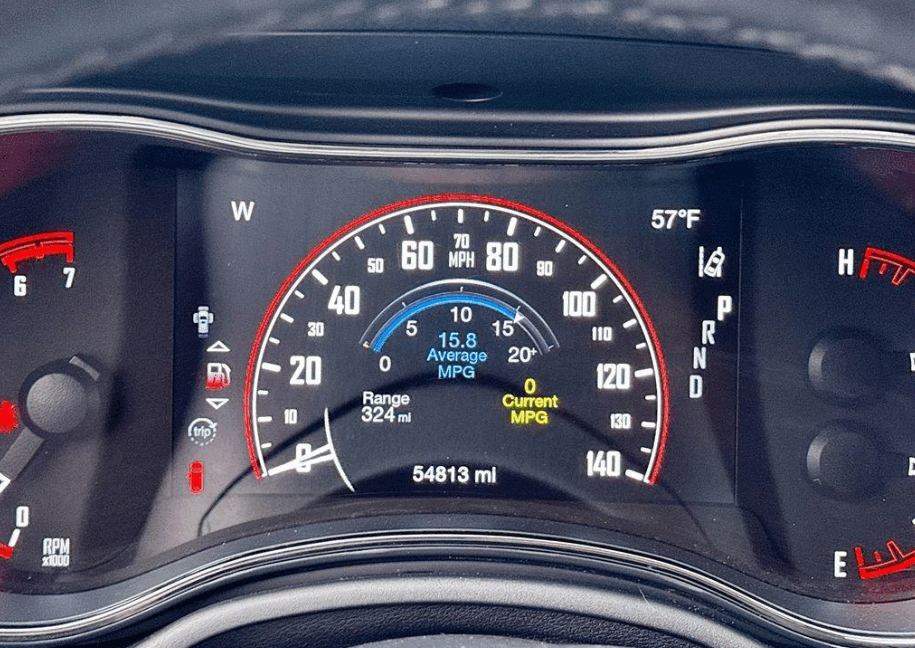
What is the gas mileage of a Dodge Durango?
Dodge Durango gas mileage depends on the selected engine and drivetrain configuration. The most efficient Durango models achieve their best MPG with the 3.6L Pentastar V6 engine, while models with larger HEMI V8 engines use more fuel because they deliver higher horsepower and towing capability. A Dodge Durango can provide different fuel economy results depending on whether it uses rear wheel drive or all wheel drive.
The EPA fuel economy rating measures Dodge Durango efficiency through three main categories: city MPG, highway MPG, and combined MPG. City driving usually produces lower fuel economy because frequent stops, acceleration, and slower speeds increase fuel consumption. Highway driving typically achieves better MPG because the engine operates at a more consistent speed with fewer changes in power demand.
The engine size creates the largest difference in Dodge Durango fuel consumption. The 3.6L Pentastar V6 focuses on daily usability and efficiency, making it suitable for drivers who want lower fuel costs. The 5.7L HEMI V8 improves towing ability and acceleration but requires more fuel. The 6.4L HEMI V8 and 6.2L Supercharged HEMI V8 prioritize performance, so their fuel economy ratings are lower compared with V6 powered models.
Real world Dodge Durango gas mileage also changes based on driving conditions and vehicle usage. Heavy cargo, aggressive acceleration, high speeds, towing, and poor maintenance can reduce MPG. Maintaining proper tire pressure, following service schedules, and using efficient driving habits help drivers achieve fuel economy closer to the EPA estimates.
For most buyers, the best Dodge Durango gas mileage comes from choosing a V6 powered model with the right drivetrain for their needs. However, drivers who require maximum towing capacity or performance may prefer V8 configurations despite their higher fuel consumption.
How does Dodge Durango gas mileage compare by engine?
Dodge Durango gas mileage changes significantly between engine options because each powertrain has a different balance between efficiency and performance. The Durango lineup includes V6 and V8 engines that serve different driving purposes. The 3.6L Pentastar V6 focuses on fuel efficiency and everyday driving, while the HEMI V8 engines provide more power for towing, acceleration, and high performance applications.
The 3.6L Pentastar V6 is the most fuel efficient engine available in the Dodge Durango lineup. This engine produces enough power for family transportation, commuting, and regular highway driving while maintaining lower fuel consumption than the V8 options. Drivers who spend most of their time on daily routes usually benefit from choosing the V6 because it reduces fuel expenses without sacrificing basic SUV capability.
The 5.7L HEMI V8 offers a different approach by combining strong performance with practical towing ability. This engine generates more horsepower and torque than the V6, which makes it suitable for drivers who frequently tow trailers, boats, or heavy loads. The tradeoff is higher fuel consumption because the larger displacement engine requires more fuel to produce additional power.
The 6.4L HEMI V8 and 6.2L Supercharged HEMI V8 represent the performance focused side of the Dodge Durango lineup. These engines deliver significantly higher horsepower and support the SRT 392 and SRT Hellcat models. Their purpose is not maximum fuel efficiency but providing sports car level acceleration in a three row SUV body. Drivers who choose these versions usually prioritize performance over fuel savings.
Engine selection is the most important factor when evaluating Dodge Durango gas mileage. Buyers should match the engine to their driving needs rather than focusing only on MPG numbers. A V6 model works best for fuel conscious drivers, while V8 models provide advantages for towing, power, and performance.
Which Dodge Durango trim level gets the best gas mileage?
Dodge Durango gas mileage varies between trim levels because each version combines different engines, equipment packages, and drivetrain options. The trim level itself does not always determine fuel economy, but it affects the available powertrain choices and vehicle configuration. Models with the 3.6L Pentastar V6 usually achieve better MPG, while trims equipped with HEMI V8 engines focus more on performance and towing capability.
The Dodge Durango SXT and GT trims typically provide the best fuel economy because they commonly use the V6 engine. These trims are designed for drivers who want a practical three row SUV with comfortable daily performance and lower fuel consumption. The V6 configuration offers enough power for commuting, family transportation, and highway driving while keeping operating costs lower than V8 models.
The Dodge Durango Citadel also provides a balance between comfort and efficiency when equipped with the V6 engine. This trim adds more premium features while maintaining similar fuel economy characteristics. However, choosing optional performance upgrades or different drivetrain configurations can change the final MPG rating.
The Dodge Durango R/T, SRT 392, and SRT Hellcat trims deliver stronger performance but consume more fuel. The R/T uses the 5.7L HEMI V8, while SRT models use larger performance engines designed for higher horsepower output. These trims attract buyers who value acceleration, towing strength, and driving excitement more than maximum fuel efficiency.
The best Dodge Durango trim for gas mileage depends on the driver’s priorities. The SXT and GT trims with the V6 engine provide the lowest fuel consumption, while the V8 powered trims offer greater capability. Buyers should choose a configuration based on their daily driving needs, towing requirements, and expected ownership costs.
Does AWD affect Dodge Durango gas mileage?
The all wheel drive system affects Dodge Durango gas mileage because it adds weight and mechanical components that increase energy demand. AWD models send power to all four wheels, which improves traction in challenging conditions but usually reduces fuel efficiency compared with similar rear wheel drive configurations. The difference depends on the engine, driving conditions, and vehicle setup.
Rear wheel drive Dodge Durango models generally achieve slightly better fuel economy because the drivetrain has fewer components and lower mechanical resistance. AWD models use additional hardware, including a transfer case and front drivetrain components, which increase vehicle weight and require more energy to operate. This additional workload can reduce MPG during daily driving.
The impact of AWD becomes more noticeable in certain situations. Drivers who frequently travel through snow, rain, gravel roads, or areas with poor road conditions may benefit from the improved traction and stability of an AWD system. The small reduction in fuel economy can be a reasonable tradeoff for better control and confidence in difficult environments.
Drivers who mainly use their Dodge Durango on highways and city roads with normal weather conditions may prefer a rear wheel drive configuration. This setup can provide slightly better fuel efficiency while still delivering strong performance and towing capability. However, the MPG difference should be considered alongside safety needs and driving conditions.
Choosing between AWD and rear wheel drive depends on the purpose of the vehicle. Buyers who prioritize maximum Dodge Durango gas mileage should select the most efficient engine with a drivetrain that matches their environment. Buyers who need additional traction should consider AWD while accepting a small fuel economy compromise.
How much does it cost to fuel a Dodge Durango?
The fuel cost of a Dodge Durango depends on three main factors: annual mileage, fuel price, and engine configuration. Models with the 3.6L Pentastar V6 usually have lower fuel expenses because they consume less gasoline during daily driving. Models with HEMI V8 engines create higher fuel costs because they use more fuel to produce greater horsepower and towing capability.
A driver who travels longer distances each year will notice a larger difference between Durango engine options. For example, a commuter who drives thousands of miles annually may save more money with a V6 model because the improved MPG reduces the number of fuel stops. A driver who uses the SUV mainly for occasional trips may place less importance on fuel savings and choose a more powerful V8 configuration.
Fuel consumption also changes based on driving conditions. City driving usually increases fuel costs because frequent braking and acceleration require more energy from the engine. Highway driving can reduce fuel expenses because the vehicle maintains a more consistent speed. Towing, carrying heavy cargo, and driving at high speeds can further increase gasoline usage.
Maintenance habits also influence long term fuel costs. Proper tire inflation, regular oil changes, and scheduled engine service help the Dodge Durango operate efficiently. A vehicle with neglected maintenance may consume more fuel because the engine and drivetrain cannot perform at their intended efficiency.
The most affordable Dodge Durango to operate is typically a V6 powered model with efficient driving habits. However, buyers should consider total ownership needs instead of fuel cost alone. A V8 Durango may create higher gasoline expenses, but it provides additional towing strength, performance, and capability that some drivers require.
How can you improve Dodge Durango gas mileage?
Dodge Durango gas mileage depends not only on the engine and drivetrain but also on how the vehicle is maintained and driven. Even models with powerful engines can achieve better fuel efficiency when owners follow proper maintenance practices and use efficient driving techniques. Small changes in vehicle operation can reduce unnecessary fuel consumption over time.
Maintaining correct tire pressure is one of the simplest ways to improve Dodge Durango fuel economy. Underinflated tires create more rolling resistance, which forces the engine to work harder and use more gasoline. Checking tire pressure regularly helps the SUV maintain smoother movement and reduces energy loss during driving.
Driving habits also have a direct effect on MPG. Smooth acceleration, steady highway speeds, and avoiding unnecessary idling help reduce fuel consumption. Aggressive acceleration and frequent high speed driving require more engine power, which increases fuel usage, especially in V8 powered Durango models.
Regular maintenance keeps the engine and drivetrain operating efficiently. Replacing air filters, following oil change schedules, and checking important vehicle systems help maintain proper performance. A well maintained Dodge Durango can deliver fuel economy closer to its expected rating compared with a vehicle that has neglected service.
Reducing unnecessary weight can also improve gas mileage. Carrying heavy items inside the vehicle or using additional cargo equipment increases the workload on the engine. Drivers who remove unused cargo and choose efficient driving conditions can improve overall fuel efficiency.
Towing is another important factor that affects Dodge Durango MPG. The Durango has strong towing capability, but pulling a trailer increases engine load and fuel consumption. Drivers who tow regularly should expect lower gas mileage and select driving habits that balance performance with efficiency.
Improving Dodge Durango gas mileage requires a combination of maintenance, driving technique, and proper vehicle use. While owners cannot change the fuel characteristics of a specific engine, they can maximize efficiency through better operating conditions.
Is Dodge Durango fuel efficient compared with other SUVs?
Dodge Durango fuel efficiency depends on the buyer’s expectations because the vehicle focuses on performance, towing capability, and engine power rather than achieving the highest MPG in the midsize SUV segment. Compared with many competitors, the Durango provides stronger performance options, including powerful V8 engines, but these engines require more fuel than smaller powertrains used by efficiency focused SUVs.
The Dodge Durango competes with vehicles such as the Jeep Grand Cherokee, Ford Explorer, Chevrolet Traverse, Kia Telluride, and Hyundai Palisade. Many of these SUVs offer similar passenger capacity and family focused features, but their fuel economy ratings differ because manufacturers use different engine technologies and vehicle designs. Models with smaller turbocharged engines or hybrid systems can achieve better MPG than traditional V6 and V8 powered SUVs.
The Dodge Durango has an advantage in performance capability. Its available HEMI V8 engines provide higher horsepower and stronger towing ability than many competitors. For drivers who regularly tow boats, trailers, or heavy equipment, the additional capability may be more valuable than achieving the lowest possible fuel consumption.
The Ford Explorer and other midsize SUVs may provide better fuel economy in certain configurations because they use smaller displacement engines and efficiency focused designs. However, the Durango offers a unique combination of three row seating, rear wheel drive architecture, and high performance engine options that few competitors provide.
The right choice depends on the buyer’s priorities. Drivers who want the lowest fuel costs should compare efficient engine options across the SUV segment. Drivers who need a powerful SUV with strong towing capability may find that Dodge Durango gas mileage represents a reasonable tradeoff for its performance advantages.
Which Dodge Durango engine should you choose for the best fuel economy?
The best Dodge Durango engine for fuel economy depends on the driver’s needs. The 3.6L Pentastar V6 provides the lowest fuel consumption in the Durango lineup. It focuses on daily usability, smooth performance, and lower operating costs. HEMI V8 engines deliver more power, but they use more fuel because they produce higher horsepower and torque.
Drivers who want lower fuel expenses should choose the 3.6L Pentastar V6. This engine works well for commuting, family transportation, and regular highway driving. It provides enough power for everyday use while helping owners reduce long term gasoline costs.
The 5.7L HEMI V8 suits buyers who need more towing strength. This engine creates additional torque for pulling trailers, boats, and heavy equipment. The higher capability comes with increased fuel consumption compared with the V6 model.
Performance focused drivers may prefer the 6.4L HEMI V8 or the 6.2L Supercharged HEMI V8. These engines provide strong acceleration and high horsepower output. Their lower MPG ratings reflect their purpose as performance SUVs rather than fuel saving vehicles.
Choosing the right Dodge Durango engine requires balancing efficiency and capability. The V6 model delivers the best gas mileage for most daily drivers. The 5.7L HEMI V8 offers a stronger balance between power and fuel use. The SRT models provide maximum performance for buyers who accept higher fuel costs.
Conclusion
Dodge Durango gas mileage depends on the relationship between engine choice, driving purpose, and vehicle configuration. The 3.6L Pentastar V6 provides the best fuel economy for drivers who want lower operating costs and reliable daily performance. The 5.7L HEMI V8 offers more towing capability with a moderate increase in fuel consumption, while the SRT performance engines focus on power rather than efficiency.
Choosing the right Dodge Durango requires more than comparing MPG numbers. Drivers should consider how they use the SUV, including daily commuting, family transportation, towing needs, and performance expectations. A fuel efficient V6 model may be the better option for regular driving, while a V8 model may provide greater value for owners who need additional capability.
Fuel economy also depends on maintenance, driving habits, drivetrain selection, and road conditions. Proper tire pressure, regular servicing, and efficient driving techniques help owners achieve better real world MPG from any Durango configuration.
The Dodge Durango remains a unique midsize SUV because it combines three row practicality with powerful engine options. Buyers who understand the differences between each engine and trim level can choose a model that provides the right balance between fuel economy, performance, and ownership costs.