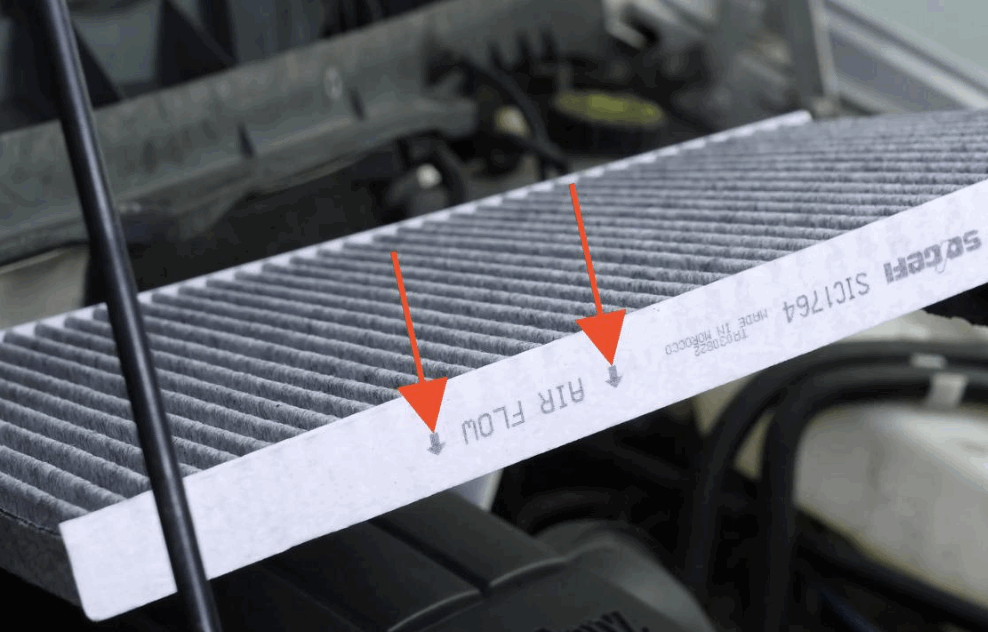
The correct cabin air filter air flow direction follows the path of air through the HVAC system. An Air Flow arrow should point in the same direction that air moves through the filter. An UP arrow shows the filter’s physical position. It should point upward.
An Air Flow arrow does not always point up or down. Each vehicle can use a different HVAC layout. The air intake, cabin air filter, blower motor, and other HVAC components determine the airflow path. You should check the filter housing and the vehicle’s installation instructions before fitting a replacement filter.
The difference between an Air Flow arrow and an UP arrow matters. Confusing these markings can lead to an incorrect installation. The correct direction also depends on the filter design and the vehicle’s airflow system.
This guide explains how to identify cabin air filter air flow direction. It also explains how to read Air Flow and UP arrows. You will learn how to determine whether the arrow points up or down. The guide also covers correct installation and the effects of installing a directional filter backward.
Which Way Should the Air Flow Arrow Point on a Cabin Air Filter?
The Air Flow arrow should point in the direction that air travels through the cabin air filter. The arrow shows the path of air through the filter media. It does not simply show which side should face upward. The correct direction depends on the vehicle’s HVAC design.
Air usually enters the HVAC system through an air intake. It then passes through the cabin air filter before reaching other HVAC components. The filter removes airborne particles as air passes through its filter media. The Air Flow arrow should follow this movement from the intake side toward the downstream side of the HVAC system.
The arrow can point downward in some vehicles. It can point upward in others. The filter position and HVAC layout determine the direction. This means you should not assume that every cabin air filter needs the arrow to point down. You should also avoid using a generic installation rule when the vehicle has a different airflow layout.
The filter housing can provide useful information about the correct direction. The old filter can also show how the replacement should fit. However, the previous filter may have been installed incorrectly. Check the filter marking and vehicle specific instructions when the direction remains unclear.
The key rule is simple. Follow the Air Flow arrow in the same direction as the vehicle’s actual airflow. Do not treat the arrow as an UP marking.
What Is the Difference Between an Air Flow Arrow and an UP Arrow?
An Air Flow arrow shows the direction of air through the cabin air filter. An UP arrow shows the physical orientation of the filter. These markings provide different instructions. You should follow the marking that appears on your specific filter.
An Air Flow arrow relates to the HVAC airflow path. It should point from the side where air enters the filter toward the side where air leaves it. The arrow can point upward or downward. Its direction depends on the vehicle’s HVAC layout and the position of the cabin air filter.
An UP arrow works differently. It tells you which side of the filter should face upward. An UP arrow does not describe airflow. It describes the filter’s physical position inside the housing. If a filter has an UP arrow, position the filter so that the arrow points toward the top of the vehicle or filter housing.
Some filters may use both markings. In that situation, each marking has its own meaning. The Air Flow arrow identifies airflow direction. The UP arrow identifies physical orientation. Do not assume that both arrows should point in the same direction.
The easiest rule is to read the marking before installation. Air Flow means follow the airflow. UP means point the arrow upward. If the filter has no clear marking, check the filter housing and vehicle specific instructions before installing it.
Does the Cabin Air Filter Air Flow Arrow Point Up or Down?
The cabin air filter Air Flow arrow can point up or down, depending on the vehicle’s HVAC design. There is no universal direction that applies to every vehicle. The arrow should follow the actual path of air through the filter.
Some vehicles place the cabin air filter above the blower motor. In these systems, air can move downward through the filter. The Air Flow arrow should then point downward. Other vehicles use a different filter position or HVAC layout. Their airflow can move upward or in another direction.
The filter housing helps identify the correct airflow path. Look for an airflow marking near the filter slot. The position of the blower motor can also help show where filtered air travels next. However, these features vary between vehicle designs. You should not assume the airflow direction from the filter position alone.
The replacement filter provides another important clue. Check whether it has an Air Flow arrow or an UP arrow. An Air Flow arrow must follow the airflow path. An UP arrow must point upward. These two markings should not be treated as interchangeable.
The safest rule is to follow the vehicle’s actual airflow direction rather than assuming that the arrow points up or down. Check the filter housing and vehicle specific instructions when the direction remains unclear.
How Can You Determine Cabin Air Filter Air Flow Direction?
You can determine cabin air filter air flow direction by checking the old filter, filter housing, and vehicle specific instructions. These sources help identify how air moves through the filter. The replacement filter marking also provides an important reference.
Can You Use the Old Cabin Air Filter to Check Air Flow Direction?
The old cabin air filter can show the correct installation position. Before removing it, check for an Air Flow or UP arrow. Note which way the arrow faces. You can then compare that position with the replacement filter.
Do not rely on the old filter alone if you suspect it was installed incorrectly. A previous owner or technician may have installed it in the wrong direction. Check the filter marking against the vehicle’s airflow path when the position seems uncertain.
How Can You Check Air Flow Direction Without the Old Filter?
Check the cabin air filter housing for an airflow marking. Some housings provide information about the direction of air movement. You can also check the vehicle owner’s manual for the recommended filter installation position.
The HVAC layout provides another clue. Air enters through the intake and passes through the cabin air filter before reaching downstream HVAC components. The exact layout varies between vehicles. For this reason, the blower motor location and filter position should support the installation instructions rather than replace them.
The most reliable approach is to combine the filter marking with vehicle specific information. If the Air Flow arrow matches the documented airflow direction, install the filter with the arrow pointing along that path. If the filter uses an UP arrow, position it upward instead.
How Does Air Flow Through a Cabin Air Filter and the HVAC System?
Air moves through the cabin air filter as part of the vehicle’s HVAC airflow path. The general path is air intake → cabin air filter → HVAC components → air vents → passenger cabin. This sequence explains why the Air Flow arrow must match the direction of air movement.
Fresh air can enter the HVAC system through an outside air intake. Recirculated air can also enter the system from inside the vehicle. The airflow then reaches the cabin air filter. The filter removes airborne particles before the air continues through the HVAC system.
The cabin air filter therefore has an upstream side and a downstream side. The upstream side receives incoming air. The downstream side sends filtered air toward the next HVAC components. A directional filter uses the Air Flow arrow to identify this movement.
The exact HVAC layout varies between vehicles. The cabin air filter can sit in different positions within the system. Its location does not automatically determine the arrow direction. You need to identify where air enters the filter and where filtered air travels next.
The Air Flow arrow should always follow the vehicle’s airflow path through the filter. Understanding this path makes the installation direction easier to identify. It also helps prevent confusion when the arrow points in a direction that differs from another vehicle.
How Do You Install a Cabin Air Filter in the Correct Direction?
Install a cabin air filter by matching its marking with the vehicle’s airflow direction. The correct process starts with the filter housing. You should then identify the filter marking before inserting the replacement filter.
First, locate the cabin air filter housing. Many vehicles place the filter behind the glove box or within the HVAC housing. Remove the cover carefully and take out the old filter. Before removing it, check its position and look for an Air Flow or UP arrow.
Next, inspect the replacement filter. An Air Flow arrow should follow the direction of air through the filter. An UP arrow should point upward. Do not treat an Air Flow arrow as an UP arrow. Each marking provides different information.
Then, confirm the airflow direction before inserting the filter. Check the housing for an airflow marking and compare it with the vehicle’s instructions. If the old filter provides a useful reference, compare its orientation with the replacement filter. Do not copy the old position if you suspect the previous installation was incorrect.
Finally, insert the filter without damaging or deforming the filter media. Make sure it sits correctly inside the housing. Reinstall the cover and check that the HVAC system operates normally.
The correct installation depends on the filter marking and the vehicle’s airflow path. Follow the Air Flow arrow when the filter uses an airflow marking. Follow the UP arrow when the filter uses an orientation marking.
What Happens If You Install a Cabin Air Filter Backwards?
Installing a directional cabin air filter backward puts the filter in the wrong airflow orientation. The filter may still fit inside the housing, but its design will no longer match the intended direction of air movement. The effect depends on the filter construction and the vehicle’s HVAC system.
The filter media has a specific airflow path when the manufacturer marks it with an Air Flow arrow. Reversing the filter changes that intended path. The filter can still capture airborne particles, but its performance may not match the design specification. The filter also needs to sit correctly inside the housing to maintain proper airflow.
A backward filter can also create confusion during future maintenance. A technician or vehicle owner may use the incorrect position as a reference when replacing the filter again. This can repeat the installation error and make the correct airflow direction harder to identify.
Installing a filter backward does not automatically mean that the HVAC system will suffer immediate damage. The available source material does not establish a universal rule that a reversed cabin air filter damages the blower motor or other HVAC components. The main concern is incorrect filter orientation and airflow.
If the Air Flow arrow points against the vehicle’s airflow, remove the filter and reinstall it in the correct direction. Check the filter marking and vehicle specific instructions before repositioning it.
How Can You Tell If a Cabin Air Filter Is Installed Backwards?
You can tell a cabin air filter is installed backward by checking its arrow against the vehicle’s airflow direction. An Air Flow arrow should point in the same direction as air moves through the filter. An UP arrow should point upward.
Start by checking the marking on the filter. Look for an Air Flow arrow or an UP arrow on the filter frame. If you find an Air Flow arrow, compare its direction with the HVAC airflow path. If the arrow points against the airflow, the filter needs to be repositioned.
Next, check the filter housing. Some housings include an airflow marking or other orientation information. Compare this information with the filter marking. You can also check the vehicle owner’s manual when the direction remains unclear.
The old filter can provide another reference. However, do not assume that its position was correct. A previous installation may have used the wrong direction. Compare the old filter with the replacement filter and the vehicle’s installation instructions before using it as a guide.
Check the filter’s physical fit after installation. The filter should sit correctly inside the housing without obvious deformation. A filter that does not fit correctly may have the wrong orientation or may not be the correct replacement.
If the Air Flow arrow points against the vehicle’s airflow, reinstall the filter in the correct direction. Replace the filter if it is damaged, deformed, or too dirty to reuse.
Which Cabin Air Filter Direction Should You Use?
The correct cabin air filter direction depends on the marking and the vehicle’s airflow path. An Air Flow arrow should point in the same direction that air moves through the filter. An UP arrow has a different purpose. It shows the physical orientation of the filter and should point upward.
Do not assume that every cabin air filter Air Flow arrow points down. Some vehicles use a different HVAC layout. The filter housing, air intake, and HVAC components determine the actual airflow direction. The vehicle’s installation instructions provide the best reference when the direction is unclear.
Check the filter before installing it. Identify whether it has an Air Flow arrow or an UP arrow. Then compare the marking with the filter housing and vehicle specific instructions. You can also use the old filter as a reference when you know it was installed correctly.
The key rule is simple: follow the Air Flow arrow with the airflow, and follow the UP arrow upward. Correct orientation helps ensure that the directional filter works according to its intended design.