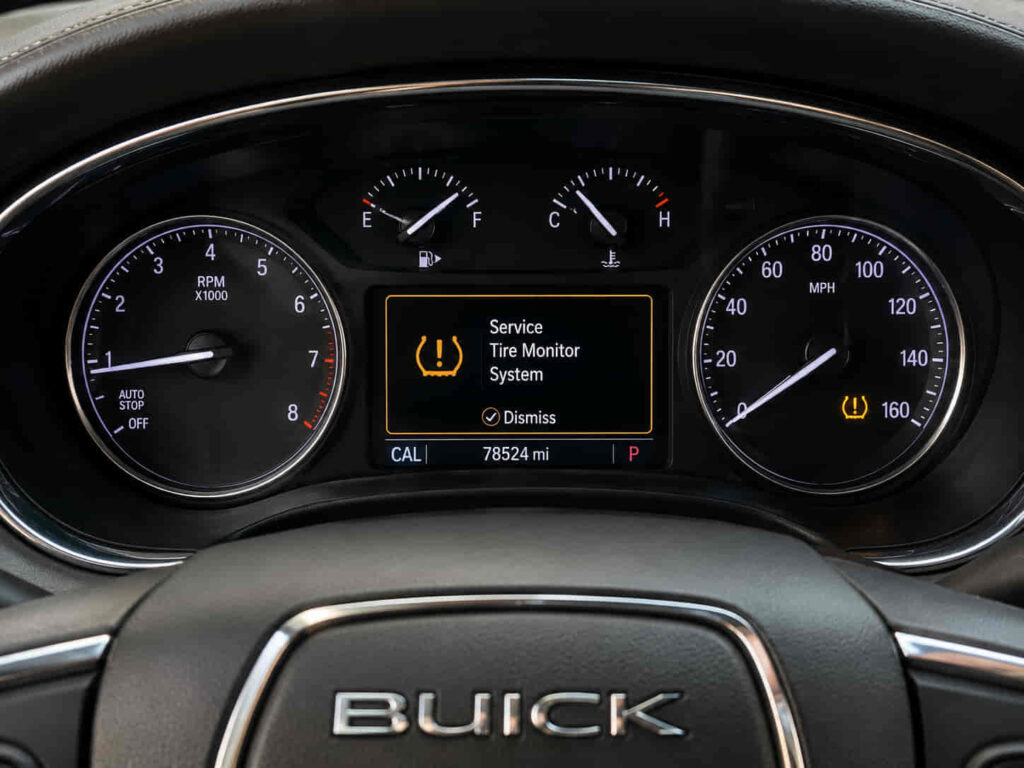
The Buick Enclave Service Tire Monitor System message means the vehicle has detected a problem with the Tire Pressure Monitoring System (TPMS) rather than simply detecting a low tire condition. The TPMS is a safety system designed to monitor tire pressure through electronic sensors installed inside the wheels and alert the driver when pressure information is missing, inaccurate, or outside the expected range.
Many Buick Enclave owners confuse this warning with a normal low tire pressure alert. However, these messages indicate different conditions. A low tire pressure warning usually means the system has detected that one or more tires need inflation, while a Service Tire Monitor System message means the vehicle may have difficulty communicating with or processing information from the tire pressure sensors.
The Buick Enclave TPMS depends on several components working together, including tire pressure sensors, control modules, wireless communication systems, and dashboard warning displays. A problem with any of these components can cause the warning message to appear.
Common situations that trigger this message include a failed sensor battery, damaged tire pressure sensor, incorrect sensor programming after tire replacement, or a TPMS relearn procedure that has not been completed correctly. Because the warning can come from different sources, replacing parts without proper diagnosis may not solve the actual problem.
This guide explains how the Buick Enclave Tire Pressure Monitoring System works, why the Service Tire Monitor System warning appears, how to diagnose the issue, reset the system, and determine when sensor replacement is necessary.
How Does the Buick Enclave Tire Pressure Monitoring System Work?
The Buick Enclave Tire Pressure Monitoring System works by using electronic sensors inside each wheel to measure tire pressure and transmit information to the vehicle’s control module. The system allows the vehicle to monitor tire conditions continuously and warn the driver when pressure information indicates a potential safety concern.
Each tire pressure sensor is mounted inside the wheel assembly and contains electronic components that measure pressure data. The sensor sends wireless signals to the TPMS control system, which processes the information and determines whether each tire is operating within the expected pressure range.
The system does more than detect a flat tire. It compares the measured tire pressure with the vehicle’s programmed specifications and monitors communication between the sensors and the vehicle. When the system cannot receive accurate information from one or more sensors, it may display the Service Tire Monitor System warning.
The TPMS system is especially important on a Buick Enclave because the vehicle uses a larger SUV design with multiple seating rows and heavier operating conditions. Correct tire pressure affects handling, braking performance, fuel efficiency, and tire lifespan.
After tire replacement, wheel rotation, or sensor replacement, the vehicle may need a TPMS relearn procedure. This process allows the Buick Enclave to recognize sensor identification information and correctly associate each sensor with its wheel position.
For example, if a new tire pressure sensor is installed but the vehicle does not recognize its signal, the tire may have the correct air pressure while the dashboard continues displaying a Service Tire Monitor System message.
What Causes Buick Enclave Service Tire Monitor System Warning?
The most common causes of a Buick Enclave Service Tire Monitor System warning include failed tire pressure sensors, weak sensor batteries, incorrect sensor programming, communication problems, and damaged TPMS components. Because the system depends on electronic communication, a problem with any part of the network can prevent accurate tire monitoring.
A failed tire pressure sensor is one of the most frequent causes. TPMS sensors contain internal batteries that provide power for wireless communication. Over time, these batteries lose capacity, causing the sensor to send weak signals or stop transmitting completely.
Incorrect sensor programming can also trigger the warning. When tires or TPMS sensors are replaced, the new sensors must be recognized by the vehicle. If the sensor IDs are not programmed or relearned correctly, the Buick Enclave may not be able to identify the tire information.
Low tire pressure can sometimes contribute to warning messages, but it is not always the main cause of a Service Tire Monitor System alert. The message usually indicates a communication or monitoring problem rather than only a tire inflation issue.
Damage to the sensor or valve stem area can also create problems. Tire installation equipment can sometimes damage older sensors if they are not handled properly during tire replacement.
Electrical interference or communication failures between the TPMS module and sensors may create intermittent warnings. In these cases, the warning may appear and disappear depending on vehicle conditions, temperature changes, or sensor signal strength.
For example, a Buick Enclave that displays the Service Tire Monitor System message shortly after getting new tires may have a programming issue rather than a mechanical tire problem.
Read more: Buick Regal Service StabiliTrak
What Symptoms Occur When Buick Enclave TPMS Has a Problem?
A Buick Enclave TPMS problem can cause warning messages, incorrect tire pressure information, sensor communication failures, and repeated dashboard alerts. The symptoms depend on whether the issue comes from tire pressure itself, a damaged sensor, incorrect programming, or a communication problem within the tire monitoring system.
The most common symptom is the “Service Tire Monitor System” message appearing on the vehicle display. This warning indicates that the Buick Enclave cannot properly verify tire pressure information from one or more sensors. Unlike a simple low-pressure warning, this message points toward a system monitoring problem.
A TPMS warning light that remains illuminated after checking tire pressure is another common sign. If all tires are inflated correctly but the warning continues, the issue may involve a weak sensor battery, failed sensor, or incorrect sensor identification.
Incorrect tire pressure readings can also indicate a TPMS problem. For example, the vehicle may show missing pressure information, display inaccurate values, or fail to recognize one tire position. These problems usually occur when sensor communication is interrupted.
Warnings that appear after tire replacement are also common. New tires, wheels, or sensors can change the information stored in the TPMS module. Without completing the relearn process, the vehicle may not recognize the new sensor locations.
A failing sensor may also create intermittent warnings. Temperature changes, battery weakness, or reduced signal strength can cause the system to work normally at certain times and fail under different conditions.
For example, a Buick Enclave that shows correct tire pressure but continues displaying the Service Tire Monitor System message likely has a sensor communication issue rather than an actual tire inflation problem.
How Do You Diagnose Buick Enclave Tire Monitor System Problems?
Diagnosing Buick Enclave Tire Monitor System problems requires checking tire condition, sensor communication, and stored system information before replacing any components. Since multiple issues can create the same warning message, a structured diagnosis helps identify the actual source of the failure.
The first step is verifying the physical tire condition. Each tire should be checked for proper inflation according to the vehicle manufacturer’s specifications. This confirms whether the problem is caused by incorrect tire pressure or a TPMS communication failure.
The next step involves scanning the vehicle’s TPMS system for fault information. A professional diagnostic tool can communicate with the tire monitoring module and identify whether a specific sensor is missing, malfunctioning, or unable to transmit data.
Sensor activation testing can determine whether each tire pressure sensor is sending a signal. If one sensor does not respond while the others function normally, that sensor may have a dead battery or internal failure.
The diagnostic process may also include inspecting the valve stem area and checking for physical sensor damage. This is especially important after tire replacement because improper handling during installation can damage TPMS components.
Programming verification is another important step. If replacement sensors were installed, technicians need to confirm that the vehicle has learned the correct sensor identification codes and wheel positions.
For example, if a Buick Enclave has one missing tire pressure reading after a tire change, checking sensor communication and completing a TPMS relearn may resolve the issue without replacing the entire system.
How Do You Reset Buick Enclave Service Tire Monitor System?
Resetting the Buick Enclave Service Tire Monitor System usually requires correcting tire pressure, activating the TPMS relearn mode, and allowing the vehicle to recognize each tire pressure sensor again. The exact procedure depends on the model year because Buick Enclave generations use different TPMS configurations.
Before performing a reset, all tires should be adjusted to the recommended pressure level. A TPMS relearn process cannot correct incorrect tire inflation, and the warning may return if the actual tire pressure remains outside the required range.
After tire pressure is confirmed, the vehicle can enter TPMS relearn mode through the appropriate procedure for that model. During this process, each sensor communicates its identification information to the vehicle in a specific sequence.
Some Buick Enclave models may require a TPMS relearn tool to activate the sensors. The tool sends a signal that wakes up each sensor and allows the vehicle control module to record the correct sensor information.
Once all sensors are recognized, the system stores the updated information and the warning message should disappear if no other problems exist. If the warning remains after reset, the issue may involve a failed sensor, incorrect programming, or another TPMS component.
For example, after replacing a tire pressure sensor on a Buick Enclave, completing the relearn process is necessary because the vehicle must recognize the new sensor before it can display accurate tire pressure information.
When Does Buick Enclave Need a TPMS Sensor Replacement?
A Buick Enclave needs a TPMS sensor replacement when a tire pressure sensor can no longer measure pressure accurately, communicate with the vehicle, or maintain a reliable signal. Since each sensor contains an internal battery and electronic components, failure usually occurs because of age, physical damage, or communication problems.
The internal battery is one of the main reasons TPMS sensors eventually fail. Unlike a vehicle battery, the sensor battery is usually sealed inside the sensor assembly and cannot be replaced separately. When the battery loses power, the sensor may stop transmitting pressure information to the TPMS module.
Sensor replacement is also necessary when the component becomes damaged during tire service. The sensor is installed inside the wheel near the valve stem, which means improper tire removal or installation procedures can damage the housing or communication components.
A replacement sensor may also be required when the vehicle repeatedly shows incorrect tire pressure readings even after proper inflation and relearn procedures. If the sensor cannot provide accurate information, the TPMS system cannot correctly monitor tire conditions.
After installing a new sensor, programming or relearning is required so the Buick Enclave can recognize the new sensor identification code. Without this step, the new component may be physically installed but the vehicle may continue displaying the Service Tire Monitor System warning.
For example, a Buick Enclave with original TPMS sensors that have been used for many years may develop multiple sensor failures around the same period because the internal batteries reach the end of their service life.
How Much Does Buick Enclave TPMS Repair Cost?
The cost of repairing a Buick Enclave Service Tire Monitor System problem depends on whether the issue involves tire pressure adjustment, sensor programming, sensor replacement, or a larger communication problem. A proper diagnosis is important because the warning message alone does not identify the exact failed component.
A simple tire pressure correction is usually the least expensive solution when the system warning is caused by incorrect inflation. However, if the warning remains after pressure adjustment, additional testing is required to determine whether the sensors are functioning correctly.
TPMS sensor replacement generally costs more because the repair involves both the physical sensor and the programming process needed to connect the sensor with the vehicle. Labor costs may increase when multiple sensors require replacement at the same time.
Programming and relearn procedures may also add to the repair cost, especially when specialized diagnostic equipment is required. Some Buick Enclave models need specific tools to activate sensors and complete the registration process.
More complex repairs involving the TPMS control module or communication system can require additional diagnosis and higher repair expenses. These cases are less common than sensor-related problems but may occur when the vehicle cannot communicate with multiple sensors.
For example, replacing one failed tire pressure sensor on a Buick Enclave is usually a simpler repair than diagnosing a vehicle that has lost communication with the entire tire monitoring system.
How Can You Prevent Buick Enclave Tire Monitor System Problems?
Preventing Buick Enclave Tire Monitor System problems requires maintaining correct tire pressure, monitoring sensor condition during tire service, and completing proper relearn procedures after changes to the wheel system. Regular maintenance helps the TPMS provide accurate information and reduces unnecessary warning messages.
Checking tire pressure regularly is one of the simplest ways to support TPMS operation. Proper inflation reduces stress on tires and allows the system to accurately compare measured pressure values with the vehicle’s recommended specifications.
Tire service should also include inspection of TPMS sensors. When tires are replaced or repaired, technicians should check the condition of the sensor and valve stem area to prevent accidental damage.
Completing the relearn process after installing new sensors or changing wheel positions is essential. The Buick Enclave must know the location and identification of each sensor to display accurate pressure information.
Battery condition can also indirectly affect TPMS reliability because modern vehicle systems depend on stable electrical communication. Maintaining the vehicle’s battery and electrical system helps reduce unexpected electronic warnings.
Drivers should also respond quickly when a Service Tire Monitor System message appears. Ignoring the warning can make it more difficult to identify whether the problem is a simple sensor issue or a larger system communication problem.
For example, a Buick Enclave owner who checks tire pressure monthly and completes TPMS relearn procedures after tire replacement can reduce the likelihood of inaccurate readings and repeated warning messages.