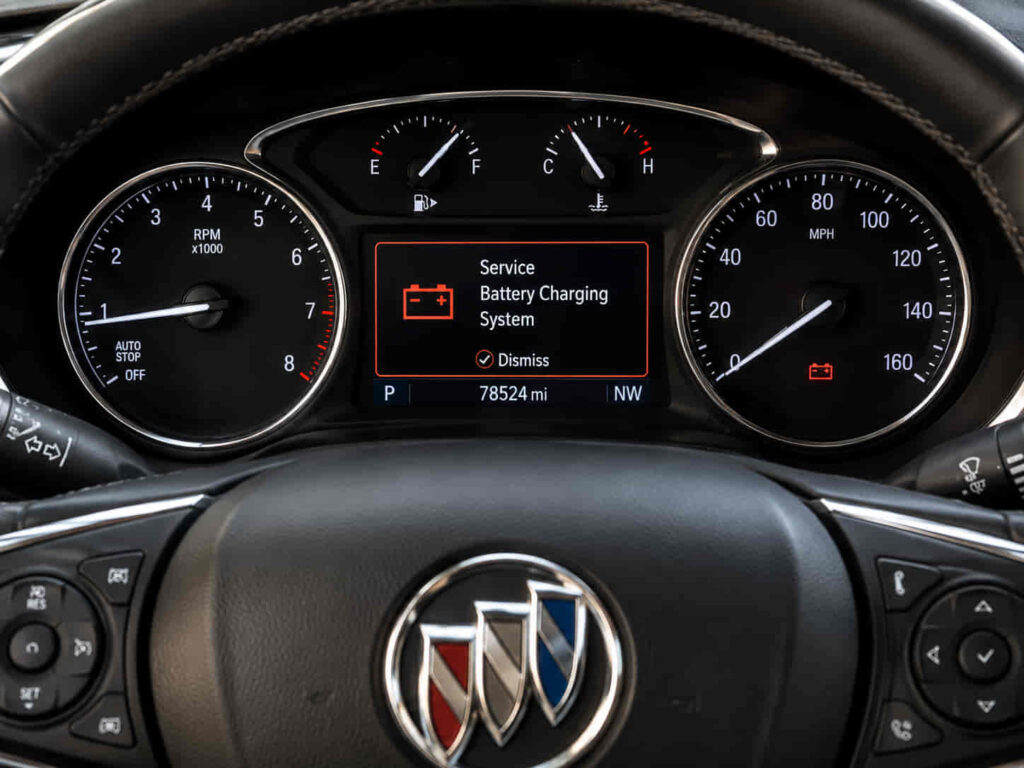
The Buick Enclave Service Battery Charging System warning means the vehicle has detected a problem with the electrical system responsible for maintaining battery power and supplying energy to the vehicle. This message does not always indicate that the battery itself has failed. Instead, it points to a potential issue within the charging system, which includes the battery, alternator, voltage regulation components, sensors, and electrical connections.
The battery charging system plays an essential role in keeping the Buick Enclave operating reliably. While the battery provides electrical power for starting the engine and supporting vehicle systems, the alternator generates electricity while the engine is running and restores energy back to the battery.
When the charging system cannot maintain proper voltage, the vehicle may activate the Service Battery Charging System warning to alert the driver before electrical performance becomes unstable. A failing alternator, weak battery, damaged wiring, or faulty charging component can all create this condition.
Many Buick Enclave owners notice this warning together with symptoms such as a battery light, dim headlights, slow engine cranking, electrical system failures, or difficulty starting the vehicle. Because modern Buick vehicles rely heavily on electronic control modules, even a small voltage problem can affect multiple systems.
Understanding the cause of the warning is important because continuing to drive with a failing charging system can eventually leave the vehicle without enough electrical power to operate. This guide explains how the Buick Enclave charging system works, why the warning appears, how to diagnose the problem, and what repair options are available.
How Does the Buick Enclave Battery Charging System Work?
The Buick Enclave battery charging system works by generating, regulating, and distributing electrical power to keep the vehicle operating while maintaining the battery’s charge level. The system depends on several components working together, with the alternator acting as the primary source of electrical energy when the engine is running.
The battery provides power when starting the engine and supports electrical systems when the vehicle requires stored energy. Once the engine starts, the alternator produces electricity and sends power back through the charging system to recharge the battery and supply energy to components such as lighting, climate control, infotainment systems, and electronic control modules.
The voltage regulator plays an important role by controlling the amount of electrical output produced by the alternator. Maintaining stable voltage is necessary because modern Buick Enclave models rely on many electronic systems that require consistent power levels to operate correctly.
The battery current sensor and related power management components monitor electrical usage and help the vehicle determine how much charging capacity is needed. This allows the charging system to adjust operation based on driving conditions and electrical demand.
When all components function correctly, the Buick Enclave maintains a stable electrical supply. However, if the alternator cannot produce enough power, the battery cannot hold sufficient charge, or electrical connections become damaged, the system may detect abnormal conditions and display the Service Battery Charging System warning.
For example, a Buick Enclave with a weak alternator may continue running after startup but gradually lose electrical power because the battery is not being properly recharged while the engine is operating.
What Causes Buick Enclave Service Battery Charging System Warning?
The most common causes of a Buick Enclave Service Battery Charging System warning include alternator failure, weak battery condition, voltage regulation problems, damaged wiring, and poor electrical connections. Since the charging system relies on multiple components working together, a failure in one area can affect the entire electrical network.
A failing alternator is one of the most common causes of this warning. The alternator is responsible for producing electricity while the engine runs, and when its internal components wear out, it may no longer provide enough charging output. A failing alternator can cause the battery to slowly lose power even though the vehicle starts normally at first.
A weak or aging battery can also trigger charging system warnings. Although the alternator may be functioning correctly, a battery that cannot store electrical energy properly may create voltage irregularities that the vehicle detects as a charging problem.
Voltage regulator issues can affect how the alternator controls electrical output. If voltage becomes too low or too high, the vehicle may activate the warning system to protect sensitive electronic components from unstable power conditions.
Damaged wiring, loose battery terminals, or corroded electrical connections can interrupt the flow of electricity between charging components. These issues may appear as intermittent warnings because the connection quality changes with vibration, temperature, or vehicle movement.
Problems with the battery current sensor or charging system monitoring components can also create false warnings. Since modern Buick Enclave models use electronic monitoring to manage power distribution, incorrect sensor information may cause the vehicle to believe a charging problem exists.
For example, a Buick Enclave that displays the Service Battery Charging System message after driving over rough roads may have a loose electrical connection rather than a completely failed alternator.
Read more: Buick Enclave Service Tire Monitor System
What Symptoms Occur When Buick Enclave Charging System Fails?
A Buick Enclave charging system failure can cause battery warning lights, electrical problems, starting difficulties, and unstable vehicle operation because the battery may not receive enough power from the alternator. The symptoms often become more noticeable as the charging system loses its ability to maintain consistent electrical output.
One of the most common signs is the battery warning light or Service Battery Charging System message appearing on the dashboard. This warning indicates that the vehicle has detected abnormal charging performance and cannot confirm that the battery is receiving the correct amount of electrical support.
A weak charging system can also cause slow engine cranking or difficulty starting the vehicle. When the alternator does not properly recharge the battery, the battery gradually loses stored energy and may struggle to provide enough power for the starter motor.
Electrical components may begin operating differently when voltage becomes unstable. Drivers may notice dim headlights, flickering interior lights, reduced performance from electronic features, or warning messages from different vehicle systems.
In more serious cases, the Buick Enclave may lose power while driving. If the alternator stops producing electricity completely, the vehicle continues using the remaining battery power until the battery becomes discharged. Once available power is exhausted, essential electrical systems may stop functioning.
Some charging system failures develop gradually, while others appear suddenly. For example, a battery nearing the end of its service life may cause occasional starting problems, while a failed alternator may quickly trigger warning messages and electrical failures.
A Buick Enclave showing multiple electrical symptoms at the same time should be inspected because modern vehicle systems depend on stable voltage to communicate correctly.
Can You Drive a Buick Enclave With Service Battery Charging System Warning?
A Buick Enclave with a Service Battery Charging System warning may continue operating temporarily, but driving for an extended period can result in complete electrical failure if the charging problem is not repaired. The risk depends on whether the issue comes from the battery, alternator, wiring, or another charging component.
If the alternator is still producing some electrical output, the vehicle may continue running for a limited time. However, the battery may gradually lose charge because it is not being replenished correctly. This can lead to a situation where the engine stops and cannot restart.
Driving becomes more risky when additional symptoms appear, such as dimming lights, repeated warning messages, unusual electrical behavior, or difficulty starting the engine. These signs indicate that the charging system may be close to complete failure.
The vehicle’s electronic systems also depend on stable voltage. Low voltage conditions can affect modules responsible for engine management, safety features, and other electrical functions.
Short-distance driving to a repair facility may be possible in some situations, but continuing normal use without diagnosis increases the chance of becoming stranded.
For example, a Buick Enclave displaying a charging warning but still starting normally may have limited remaining battery power, while a vehicle with a dead alternator may stop operating shortly after the battery is depleted.
How Do You Diagnose Buick Enclave Charging System Problems?
Diagnosing Buick Enclave charging system problems requires testing battery condition, alternator output, electrical connections, and charging system control components. Since the warning can come from different sources, replacing the battery or alternator without testing may not solve the actual problem.
The first step is usually checking battery voltage and overall battery condition. A battery test can determine whether the battery can store electrical energy properly or whether it has become weak due to age or internal damage.
The alternator output should then be measured while the engine is running. This test determines whether the alternator is producing enough electricity to recharge the battery and support vehicle electrical demands.
Electrical connections should also be inspected because loose terminals, corrosion, or damaged wiring can prevent electricity from flowing correctly. A fully functional battery and alternator cannot maintain proper charging if the electrical connections are compromised.
Diagnostic scanning may also be required on newer Buick Enclave models. Electronic control modules can store fault information related to charging performance, battery monitoring sensors, or communication problems.
Technicians may also inspect the battery current sensor and voltage regulation system to confirm that the vehicle is accurately monitoring electrical conditions.
For example, if a Buick Enclave has a new battery but continues showing the Service Battery Charging System warning, testing the alternator output and electrical connections can reveal whether the actual issue is elsewhere in the charging system.
How Do You Fix Buick Enclave Service Battery Charging System Warning?
Fixing a Buick Enclave Service Battery Charging System warning requires repairing the component that prevents the charging system from maintaining proper electrical output. The correct repair depends on whether the failure comes from the battery, alternator, wiring, voltage regulation system, or another charging component.
If the battery is weak or unable to hold a proper charge, replacing the battery may restore normal electrical operation. However, battery replacement alone will not solve the problem if the alternator or charging system components are not working correctly.
When the alternator fails, replacement is usually required because internal components such as brushes, bearings, diodes, or voltage regulation parts may no longer function properly. Since the alternator is responsible for generating electricity while the engine runs, a failed alternator can quickly drain the battery and leave the vehicle without enough power.
Electrical connection problems may require cleaning corrosion, tightening terminals, or repairing damaged wiring. These repairs are often simpler than replacing major components but are important because poor connections can prevent the charging system from operating efficiently.
If the issue involves the voltage regulator or battery monitoring system, additional diagnosis may be necessary. Modern Buick Enclave models use electronic power management systems that communicate with multiple vehicle modules, so incorrect signals can affect charging performance.
After repairs are completed, the charging system should be tested again to confirm that voltage output, battery condition, and electrical communication are operating correctly.
For example, a Buick Enclave with a corroded battery terminal may only require connection repair, while a vehicle with a failed alternator will need alternator replacement to restore normal charging performance.
How Much Does Buick Enclave Battery Charging System Repair Cost?
The cost of repairing a Buick Enclave battery charging system depends on the failed component, diagnostic requirements, replacement parts, and labor involved. Because the warning can result from several different causes, the final repair cost varies significantly between vehicles.
A diagnostic inspection is usually the first step because technicians need to determine whether the issue comes from the battery, alternator, wiring, or another electrical component. Accurate diagnosis prevents unnecessary replacement of parts that are still functioning correctly.
Battery-related repairs are generally less complex compared with alternator repairs. A battery replacement may solve the issue when the battery can no longer store enough energy, but the charging system should still be tested to ensure the new battery will charge properly.
Alternator replacement usually involves higher repair costs because the component requires more labor to access and replace. The total expense depends on the Buick Enclave model year, alternator design, parts quality, and service labor rates.
Electrical repairs can vary widely because the problem may range from a simple loose connection to more complex wiring or module-related issues. Problems involving battery sensors or power management components may require specialized diagnostic equipment.
For example, a Buick Enclave with a weak battery may require a relatively straightforward repair, while a vehicle with alternator failure and additional electrical issues may require more extensive service.
How Can You Prevent Buick Enclave Charging System Problems?
Preventing Buick Enclave charging system problems requires regular battery inspection, electrical maintenance, and early attention to warning signs. Since the charging system depends on multiple connected components, maintaining each part helps reduce the risk of unexpected electrical failures.
Battery condition should be monitored regularly because aging batteries can place additional stress on the charging system. A battery that struggles to hold a charge may cause repeated starting problems and create unnecessary demand on the alternator.
Inspecting battery terminals and electrical connections is also important. Corrosion or loose connections can interrupt electrical flow and create charging problems even when the battery and alternator are functioning properly.
Regular vehicle maintenance can help identify charging system issues before they become serious. During service visits, technicians can check battery performance, charging voltage, and signs of alternator wear.
Drivers should also respond quickly when warning messages appear. A Service Battery Charging System warning should not be ignored because a small electrical issue can develop into a complete loss of vehicle power.
Monitoring early symptoms such as dim lights, slow starting, or repeated battery warnings allows problems to be addressed before the vehicle becomes unreliable.
For example, a Buick Enclave owner who tests the battery regularly and repairs minor electrical issues early can reduce the risk of sudden charging system failure and unexpected breakdowns.