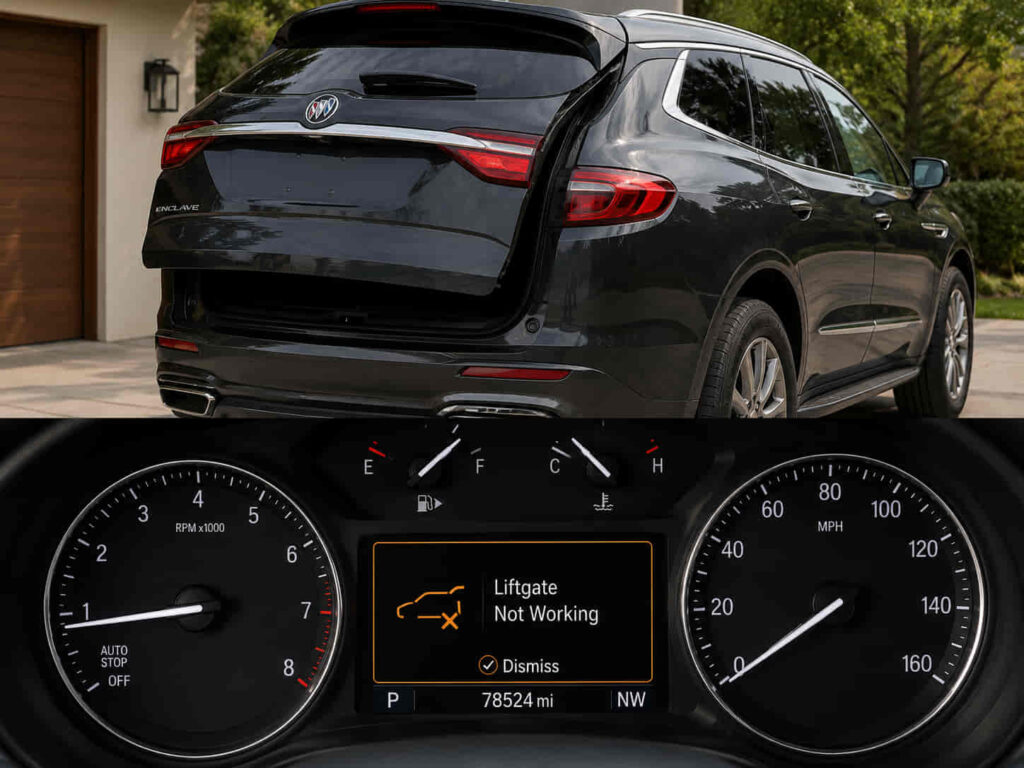
The Buick Enclave Liftgate Not Working problem usually indicates a failure within the vehicle’s power liftgate system, which controls the automatic opening and closing of the rear hatch. The issue can prevent the liftgate from responding to the key fob, interior button, exterior switch, or automatic closing mechanism.
The Buick Enclave power liftgate system depends on multiple components working together, including the liftgate motor, actuator, latch assembly, position sensors, control module, and electrical connections. Because the system combines mechanical movement with electronic control, a failure in any related component can stop the liftgate from operating correctly.
A liftgate problem does not always mean the motor itself has failed. In many cases, the cause may be a weak vehicle battery, blown fuse, damaged wiring connection, faulty switch, or a control system issue. The symptoms can also vary depending on the failed component. Some Buick Enclave owners may experience a liftgate that does not open at all, while others may notice the door opening partially, making a clicking sound, or stopping during movement.
The correct repair approach starts with identifying whether the problem comes from the electrical supply, mechanical components, or electronic control system. Replacing parts without diagnosis can result in unnecessary repairs because several different failures can create the same liftgate warning or malfunction.
This guide explains how the Buick Enclave power liftgate system works, why the liftgate stops working, how to diagnose the problem, reset the system, and determine when repair or replacement is required.
How Does the Buick Enclave Power Liftgate System Work?
The Buick Enclave power liftgate system works by combining electrical control, mechanical components, and position monitoring sensors to automatically open and close the rear hatch. The system is designed to provide hands-free access to the cargo area while controlling liftgate movement safely and smoothly.
The main operating components include the liftgate motor, actuator, latch assembly, control module, and position sensors. When the driver presses the liftgate button on the key fob, dashboard switch, or rear hatch button, the signal is sent to the liftgate control system. The module then activates the motor and actuator to release the latch and move the liftgate upward.
The position sensors allow the system to monitor how far the liftgate has opened or closed. This information helps the control module adjust motor operation and detect abnormal conditions, such as an obstruction during movement. If the system detects excessive resistance, it may stop or reverse movement to prevent damage or injury.
The liftgate control module also communicates with other vehicle systems, including the Body Control Module (BCM). This communication allows the vehicle to manage power supply, remote commands, security functions, and automatic operation settings.
Because the Buick Enclave power liftgate depends on both electrical signals and mechanical movement, a problem in any part of the system can prevent normal operation. A weak battery may reduce available power, while a damaged actuator or latch may prevent physical movement even when the electrical commands are working correctly.
For example, a Buick Enclave liftgate that releases the latch but cannot raise itself may have a motor or actuator problem rather than a remote control issue.
What Causes Buick Enclave Liftgate Not Working Problem?
The most common causes of a Buick Enclave Liftgate Not Working problem include weak battery voltage, blown fuses, failed liftgate actuators, damaged latch components, faulty switches, wiring problems, and control module issues. Since the power liftgate system depends on multiple connected components, the exact cause must be identified through proper diagnosis.
A weak battery is one of the simplest causes of liftgate failure. The power liftgate motor requires significant electrical power to operate, and low voltage can prevent the system from completing the opening or closing cycle. This problem may appear together with other electrical symptoms, such as slow engine starting or dim interior lights.
A failed liftgate actuator or motor is another common cause. These components provide the physical force needed to move the rear hatch, and internal wear can reduce their ability to lift or support the door. When the actuator fails, the liftgate may unlock but remain closed or may fall back down after opening.
A damaged latch assembly can also prevent proper operation. The latch must release and secure the liftgate correctly before the motor can move the door. If the latch mechanism becomes stuck or fails electronically, the system may stop the opening process.
Electrical issues such as blown fuses, damaged wiring, or poor electrical connections can interrupt communication between switches, motors, and control modules. These problems are often intermittent because vibration, temperature changes, or movement can affect the quality of the connection.
Control switch failures may also cause the liftgate to appear completely unresponsive. If the key fob button, interior switch, or exterior liftgate button does not send the correct signal, the system may not activate.
For example, a Buick Enclave liftgate that works occasionally but fails at other times may have an electrical connection problem or weak voltage supply rather than a completely failed motor.
Read more: Buick Enclave Service StabiliTrak Message
What Symptoms Occur When Buick Enclave Power Liftgate Fails?
A Buick Enclave power liftgate failure can cause the rear hatch to stop opening, stop closing, respond slowly, or operate inconsistently because one or more components in the liftgate system cannot complete the required movement. The symptoms often provide important clues about whether the problem comes from electrical power, mechanical parts, or electronic control.
One common symptom is a liftgate that does not respond at all when using the key fob, interior button, or exterior switch. When there is no sound, movement, or latch activity, the problem may involve the power supply, fuse, control switch, or communication between modules.
A liftgate that makes a clicking sound but does not move usually indicates that the electrical command is reaching the system, but the mechanical movement cannot be completed. This situation may point toward a weak actuator, damaged motor, or a mechanical problem with the liftgate assembly.
Some Buick Enclave owners experience a liftgate that opens partially and then stops. This can happen when the system detects abnormal resistance, incorrect position information, or insufficient motor power. The control module may stop operation as a protective measure.
Another symptom is a liftgate that works manually but not automatically. This often suggests that the physical hatch structure is still functional while the power liftgate components, such as the motor, actuator, switch, or control module, have a problem.
Intermittent operation is also common. A liftgate may work normally one day and fail the next because electrical connections, battery voltage, or electronic components can change performance depending on temperature and vehicle conditions.
For example, a Buick Enclave liftgate that opens normally after driving but fails after the vehicle sits overnight may have a weak battery or voltage-related issue affecting the power liftgate motor.
How Do You Diagnose Buick Enclave Liftgate Problems?
Diagnosing Buick Enclave liftgate problems requires checking the electrical supply, control signals, mechanical components, and stored system information before replacing parts. Since multiple failures can create similar symptoms, a systematic inspection helps identify the actual cause.
The first step is checking the vehicle battery condition and voltage supply. The power liftgate motor requires sufficient electrical power, and a weak battery can prevent normal operation even when the liftgate components are not damaged.
The fuse and electrical connections should also be inspected. A blown fuse, loose connector, damaged wire, or poor ground connection can interrupt power delivery to the liftgate motor and control module.
The liftgate switches should then be tested to confirm they are sending the correct commands. The key fob, interior switch, and exterior button all depend on proper communication with the vehicle control system.
The actuator and motor operation should be examined if electrical signals are present but the liftgate does not move. A technician may test whether the motor receives power and whether the actuator can generate enough force to move the rear hatch.
Diagnostic scanning can also help identify problems stored within the Body Control Module (BCM) or liftgate control system. Modern Buick Enclave models use electronic modules to manage liftgate operation, so fault codes can provide useful information about communication or sensor failures.
The position sensors and latch mechanism may also require inspection. Incorrect position data or a latch that does not release properly can cause the system to stop operation even when the motor is functioning.
For example, if a Buick Enclave liftgate receives a command but does not move, checking voltage at the motor and scanning the liftgate module can determine whether the problem is electrical control or mechanical failure.
How Do You Reset Buick Enclave Power Liftgate?
Resetting the Buick Enclave power liftgate can restore normal operation when the problem is caused by a temporary control issue, incorrect settings, or a lost electronic position reference. However, a reset cannot repair physically damaged components such as a failed motor, broken actuator, or damaged latch.
The first step is usually checking that the liftgate has enough electrical power and that the vehicle battery is operating correctly. Low voltage can cause temporary liftgate malfunctions because the control module may not complete the opening or closing cycle correctly.
Some Buick Enclave models allow the liftgate position to be relearned by manually setting the desired opening height and allowing the system to store the new position. This helps correct situations where the liftgate stops at an incorrect height.
A power cycle can also help reset temporary electronic errors. Disconnecting power according to the correct vehicle service procedure allows control modules to restart and restore normal communication.
After a reset, the liftgate should be tested through all available controls, including the key fob, interior button, and rear hatch switch. If the system continues failing, further diagnosis is needed because the cause is likely a hardware or electrical problem.
For example, a Buick Enclave liftgate that stopped working after a weak battery event may return to normal after power restoration, while a liftgate with a damaged actuator will continue showing the same problem after reset.
When Does Buick Enclave Liftgate Need Repair or Replacement?
A Buick Enclave liftgate needs repair or replacement when a component in the power liftgate system can no longer provide reliable electrical control or mechanical movement. The correct solution depends on whether the failure comes from the actuator, motor, latch, switch, wiring, or control system.
A failed liftgate actuator is one of the common reasons for replacement. The actuator provides the force needed to raise and support the rear hatch, and internal wear can prevent it from maintaining proper movement. When the actuator becomes weak, the liftgate may open slowly, stop halfway, or fail to stay in position.
The liftgate motor may also require replacement when it cannot generate enough power to move the hatch. A motor failure often appears as a clicking sound, partial movement, or complete lack of automatic operation even though electrical signals are reaching the system.
Latch problems require repair when the liftgate cannot properly release or secure the rear hatch. Since the latch communicates with the control system, a mechanical or electrical latch failure can prevent the entire power liftgate sequence from starting.
Some problems can be repaired without replacing major components. Damaged wiring, loose connectors, or faulty switches may only require electrical repair or component replacement. Proper diagnosis is important because replacing a motor or actuator will not solve a problem caused by a poor electrical connection.
For example, a Buick Enclave liftgate that does not respond because of a damaged switch should not require actuator replacement. Identifying the failed component prevents unnecessary repair costs.
How Much Does Buick Enclave Liftgate Repair Cost?
The cost of repairing a Buick Enclave liftgate problem depends on the failed component, diagnostic requirements, replacement parts, and labor involved. Since the power liftgate system includes both electrical and mechanical components, repair costs can vary significantly depending on the cause.
A diagnostic inspection is usually the first expense because technicians need to determine whether the problem comes from the battery, fuse, wiring, actuator, motor, latch, or control module. Accurate diagnosis helps avoid replacing expensive components that are still functioning correctly.
Electrical repairs such as fixing damaged wiring, replacing a fuse, or repairing a switch are generally less complex because they involve smaller components. However, locating intermittent electrical problems may require additional testing time.
Actuator and motor replacement usually involve higher costs because these components are responsible for the physical movement of the liftgate. Labor time can increase depending on the Buick Enclave model year and access to the liftgate assembly.
Control module-related repairs may require additional programming or calibration after installation. Modern Buick Enclave models rely on electronic communication between the liftgate system and vehicle control modules, so replacement components may need to be configured correctly.
The final repair cost depends on the exact failure, but proper diagnosis remains the most important step because the same symptom can come from very different causes.
For example, a Buick Enclave with a blown fuse may require a simple repair, while a vehicle with a failed actuator and control issue may require more extensive service.
How Can You Prevent Buick Enclave Liftgate Problems?
Preventing Buick Enclave liftgate problems requires maintaining the vehicle’s electrical system, protecting mechanical components, and addressing early warning signs before they develop into larger failures. The power liftgate depends on both electrical power and mechanical movement, so both areas require proper maintenance.
Maintaining battery health is important because the liftgate motor requires stable electrical power to operate. A weak battery can cause slow movement, incomplete opening cycles, or temporary system failures.
Keeping the latch area clean and properly maintained can also improve reliability. Dirt, debris, or excessive resistance in the latch mechanism can increase stress on the motor and actuator during operation.
Electrical connections should be inspected during vehicle service, especially if the liftgate operates intermittently. Loose connectors or corrosion can interrupt communication between switches, sensors, and control modules.
Drivers should avoid forcing the liftgate manually when the power system is not working. Excessive manual force can damage the actuator, hinges, or other components designed to operate electronically.
Addressing early symptoms is one of the most effective prevention methods. A liftgate that moves slowly, makes unusual noises, or occasionally fails should be inspected before the problem becomes a complete system failure.
For example, a Buick Enclave owner who maintains battery condition and repairs intermittent liftgate problems early can reduce the risk of expensive motor or actuator replacement.