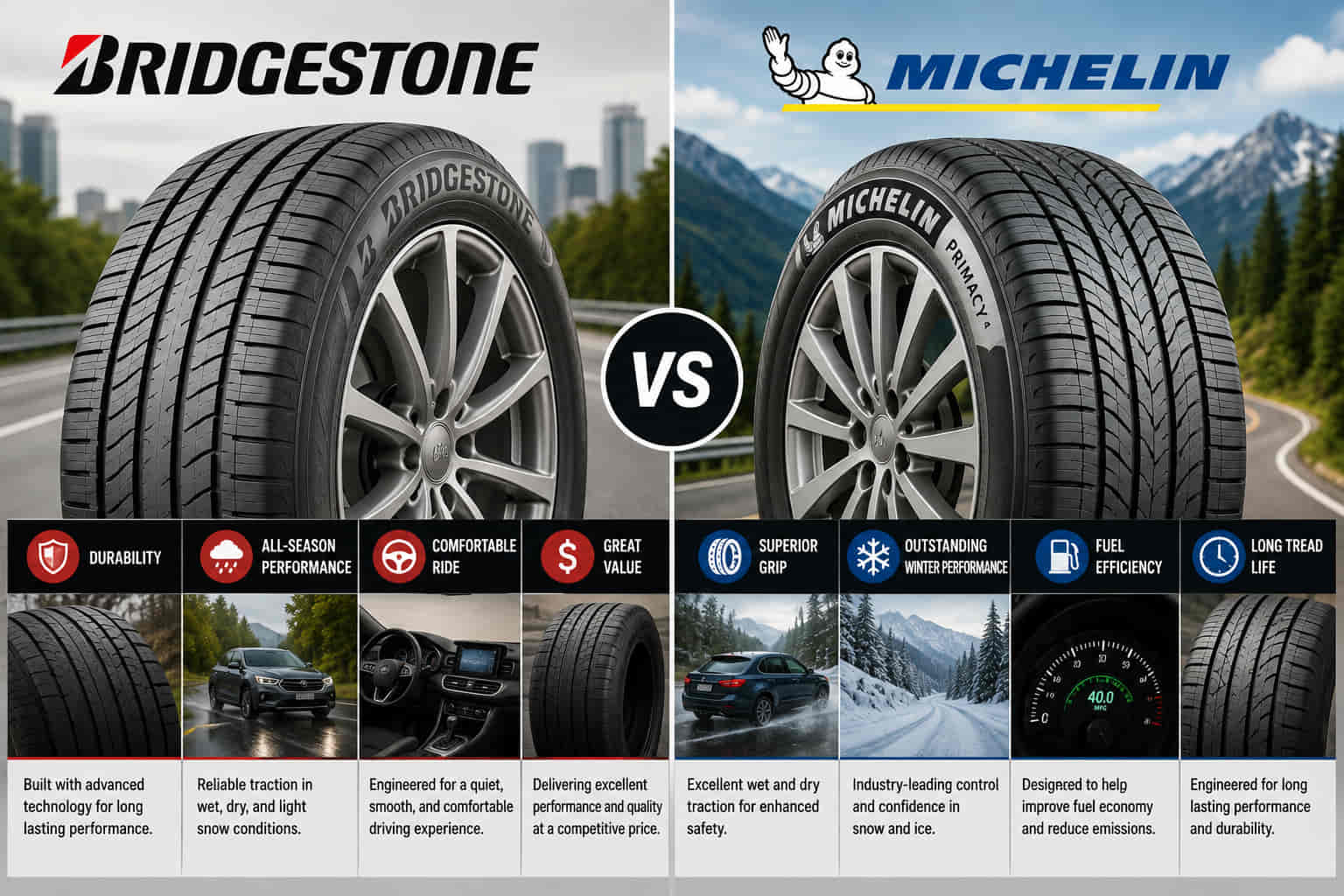
Bridgestone and Michelin are two of the most recognized premium tire brands in the world, but choosing between them depends on the driver’s priorities, vehicle type, and expected driving performance. Both manufacturers produce advanced tires with strong reputations for quality, yet they approach tire development differently in areas such as durability, comfort, handling, and specialized applications.
Michelin is widely recognized for creating tires that balance performance, longevity, and driving comfort. The brand focuses on engineering solutions that help drivers achieve consistent handling, lower road noise, and reliable performance across passenger cars, SUVs, luxury vehicles, and performance models.
Bridgestone is known for its broad product range and advanced tire technology designed for different driving conditions. The brand produces tires for everyday vehicles, performance applications, SUVs, trucks, and electric vehicles while emphasizing traction, stability, and adaptability.
The question of whether Bridgestone or Michelin is better does not have a universal answer because each brand serves different driving needs. A driver who prioritizes long tread life and refined comfort may value different characteristics than someone looking for maximum traction or specialized performance.
This comparison examines the key differences between Bridgestone and Michelin tires, including performance, durability, comfort, vehicle applications, and overall value to help drivers choose the tire brand that best matches their requirements.
Which Brand Offers Better Tire Performance, Bridgestone or Michelin?
Bridgestone and Michelin both offer strong tire performance, but their engineering approaches differ because each brand focuses on different aspects of driving experience. Michelin often emphasizes balanced performance across comfort, handling, and longevity, while Bridgestone focuses heavily on traction, stability, and technology designed for a wide range of driving conditions.
Michelin tires are known for delivering predictable handling, strong grip, and consistent performance throughout their service life. The brand invests heavily in rubber compounds and tread designs that aim to maintain traction while reducing compromises between comfort and efficiency. This approach makes Michelin popular among drivers who want premium performance for daily driving, luxury vehicles, and long-distance travel.
Bridgestone develops tires with a strong focus on control, traction, and adaptability. Many Bridgestone tire models are designed to perform across different environments, including wet roads, highways, SUVs, trucks, and performance applications. The brand’s technology often prioritizes maintaining stability and confidence in changing road conditions.
Wet traction and braking performance depend largely on the specific tire model rather than only the manufacturer. A Michelin touring tire may provide a smoother and more refined experience, while a Bridgestone all-season or performance tire may offer stronger traction characteristics for certain driving environments.
For example, a driver of a luxury sedan who wants quiet operation and balanced handling may prefer a Michelin tire designed for comfort and refinement. A driver of an SUV who frequently encounters rain, temperature changes, or mixed road conditions may find a Bridgestone tire better suited to those demands.
The better-performing brand depends on the driving purpose. Michelin often appeals to drivers seeking a balanced premium experience, while Bridgestone provides strong options for drivers who prioritize versatility and road adaptability.
Which Tires Last Longer, Bridgestone or Michelin?
Michelin and Bridgestone both produce durable tires, but Michelin is often recognized for strong tread longevity while Bridgestone provides reliable durability across a wide range of vehicle applications. Tire lifespan depends on the tire model, rubber compound, tread design, vehicle weight, driving habits, and maintenance practices rather than the brand name alone.
Michelin has built a reputation around producing tires that maintain performance over extended periods. Many Michelin models use advanced compounds and optimized tread patterns designed to reduce uneven wear while preserving traction and handling characteristics throughout the tire’s life.
Bridgestone also offers long-lasting tire options, especially in categories such as all-season tires, touring tires, SUV tires, and truck tires. The brand develops products designed to handle different loads and driving environments, which makes durability an important factor in many of its tire lines.
Proper maintenance significantly affects how long either brand’s tires will last. Maintaining correct inflation pressure, rotating tires regularly, keeping wheels properly aligned, and avoiding excessive acceleration or braking can help maximize tread life.
For example, a Michelin touring tire installed on a commuter vehicle may provide excellent mileage because it is designed around comfort and long-term consistency. A Bridgestone SUV tire used on a heavier vehicle may provide strong durability because it is built to handle higher loads and changing conditions.
When comparing Bridgestone vs Michelin for tire life, Michelin often has an advantage for drivers focused on maximum tread longevity and refined performance. However, Bridgestone can be the better choice for drivers who need durable tires designed for specific vehicle types and driving environments.
Read more: Goodyear vs Michelin
Which Brand Provides Better Ride Comfort and Noise Control?
Michelin often has an advantage in ride comfort and noise control because many of its tire designs focus on creating a refined and balanced driving experience. Bridgestone also produces comfortable tires, but the brand’s wider focus on traction, stability, and different vehicle applications creates a different approach to comfort.
Michelin develops many touring and passenger tires with technologies designed to reduce road vibration and improve cabin quietness. These tires are often engineered for drivers who spend significant time commuting or traveling long distances and want a smoother driving experience without sacrificing safety.
Bridgestone also offers premium comfort-oriented tires, especially in its touring and passenger categories. However, the brand has a strong presence in performance, SUV, truck, and all-season segments where traction and control are often equally important. Some Bridgestone models with more aggressive tread designs may produce more road feedback compared with comfort-focused touring tires.
Tread pattern, rubber compound, and tire construction all influence ride quality. Tires with softer compounds and optimized tread designs can absorb more road imperfections, while tires built for stronger traction or heavier loads may provide a firmer driving feel.
For example, a luxury sedan driver who prioritizes a quiet cabin and smooth highway ride may prefer Michelin because of its focus on refinement. A crossover or SUV owner who needs a combination of comfort, stability, and all-weather capability may find Bridgestone better suited to their driving conditions.
Michelin is often preferred by drivers seeking premium comfort and a refined ride, while Bridgestone provides strong comfort options for drivers who need additional versatility and stability across different vehicle categories.
Are Bridgestone Tires Better for SUVs and Trucks?
Bridgestone tires are often a strong choice for SUVs and trucks because the brand offers a wide range of products designed for heavier vehicles, changing road conditions, and higher load requirements. These vehicles require tires that can provide reliable traction, structural strength, and stability under greater stress compared with smaller passenger vehicles.
SUVs and trucks place different demands on tires because they often carry more weight, tow heavier loads, or operate on surfaces beyond normal highways. Bridgestone develops many tire models with reinforced construction, durable tread patterns, and traction-focused designs to support these applications.
Bridgestone’s SUV and truck tire offerings include products designed for highway driving, all-terrain use, and changing weather conditions. This allows drivers to select tires based on how their vehicles are actually used rather than choosing a single tire type for every situation.
Michelin also produces high-quality SUV and truck tires, especially for drivers who prioritize comfort, fuel efficiency, and long-distance reliability. Michelin’s approach often focuses on creating a balanced driving experience that combines durability with premium ride quality.
For example, a truck owner who frequently drives on gravel roads, carries heavy equipment, or needs stronger all-weather traction may benefit from a Bridgestone tire designed for those conditions. An SUV owner who mainly drives on highways and wants a quieter, smoother ride may prefer Michelin.
Bridgestone often has an advantage for drivers who need versatility and durability from their SUV or truck tires, while Michelin may be better suited for drivers who prioritize comfort, efficiency, and refined everyday performance.
Are Michelin Tires Better for Everyday Driving?
Michelin tires are often a strong choice for everyday driving because the brand focuses on creating a balanced combination of comfort, durability, safety, and consistent performance. For drivers who use their vehicles mainly for commuting, family transportation, and highway travel, Michelin’s design philosophy aligns well with the requirements of daily driving.
Many Michelin tire models are developed for touring and passenger vehicles where long-term reliability and ride comfort are important factors. These tires are designed to provide stable handling, low road noise, and dependable traction across different weather conditions. This makes Michelin a popular option for drivers who want a premium driving experience without focusing only on maximum performance.
Bridgestone also produces many tires suitable for everyday vehicles, including all-season and touring models. However, Michelin is often associated more strongly with drivers who want a refined balance between tread life, comfort, and efficiency. The brand’s focus on consistency makes it attractive for people who keep their vehicles for many years and want predictable tire performance.
Daily driving requires tires that perform well across many situations rather than excelling in only one area. Drivers need reliable braking, comfortable highway operation, stable cornering, and reasonable tread life. Michelin’s product strategy often focuses on achieving this balance.
For example, a commuter driving a sedan several thousand miles per year may benefit from Michelin’s emphasis on comfort and durability. A driver who needs stronger traction performance for changing weather may prefer a Bridgestone all-season tire designed for those conditions.
Michelin is often the better match for drivers who prioritize refinement and long-term reliability, while Bridgestone remains a strong option for drivers seeking versatility across different driving environments.
Which Brand Offers Better Value for Money?
The better value between Bridgestone and Michelin depends on how drivers evaluate tire ownership because the true cost of a tire includes performance, lifespan, comfort, and replacement frequency. A lower purchase price does not always represent better value if the tire requires earlier replacement or provides fewer benefits during ownership.
Michelin often provides value through premium construction, strong tread life, and consistent performance throughout the tire’s lifespan. Drivers who prioritize long-term ownership may find that paying more initially results in better overall value because the tire maintains its performance characteristics over time.
Bridgestone provides value through its broad product range and ability to meet different driving requirements. The brand offers tires for passenger cars, SUVs, trucks, performance vehicles, and electric vehicles, allowing drivers to choose products specifically designed for their conditions.
Warranty support and maintenance requirements also influence the total value of a tire purchase. A tire that lasts longer, maintains traction, and requires fewer replacements may provide greater financial benefits even if its initial price is higher.
For example, a driver who uses a vehicle primarily for highway commuting may find Michelin’s long-term durability provides better value. A truck or SUV owner who needs specialized traction and durability may receive more value from a Bridgestone tire designed for heavier use.
Neither Bridgestone nor Michelin is the universal winner in terms of value. The better choice depends on matching the tire’s strengths with the vehicle type, driving conditions, and priorities of the owner.
Should You Choose Bridgestone or Michelin Tires?
The choice between Bridgestone and Michelin depends on the driver’s vehicle, driving conditions, and the performance characteristics that matter most. Both brands represent premium tire engineering and provide reliable options, but their strengths are designed around different types of drivers and applications.
Michelin is often the better choice for drivers who prioritize long-term durability, refined comfort, quiet operation, and consistent everyday performance. Its tires are especially suitable for commuters, family vehicles, luxury cars, and drivers who want a balanced ownership experience with strong reliability.
Bridgestone is often a strong option for drivers who need versatility, traction, and specialized performance across different environments. The brand’s wide range of passenger, SUV, truck, and performance tires allows drivers to choose products designed around specific driving requirements.
The best decision should consider factors such as vehicle type, weather conditions, annual mileage, budget, and expected tire performance. A driver seeking maximum comfort and long tread life may prefer Michelin, while someone needing adaptable traction for SUVs, trucks, or changing road conditions may find Bridgestone a better fit.
Ultimately, Bridgestone and Michelin are both excellent premium tire manufacturers. The right choice is not about selecting the brand with the strongest reputation but choosing the tire that delivers the best combination of safety, durability, comfort, and value for the way the vehicle is used.