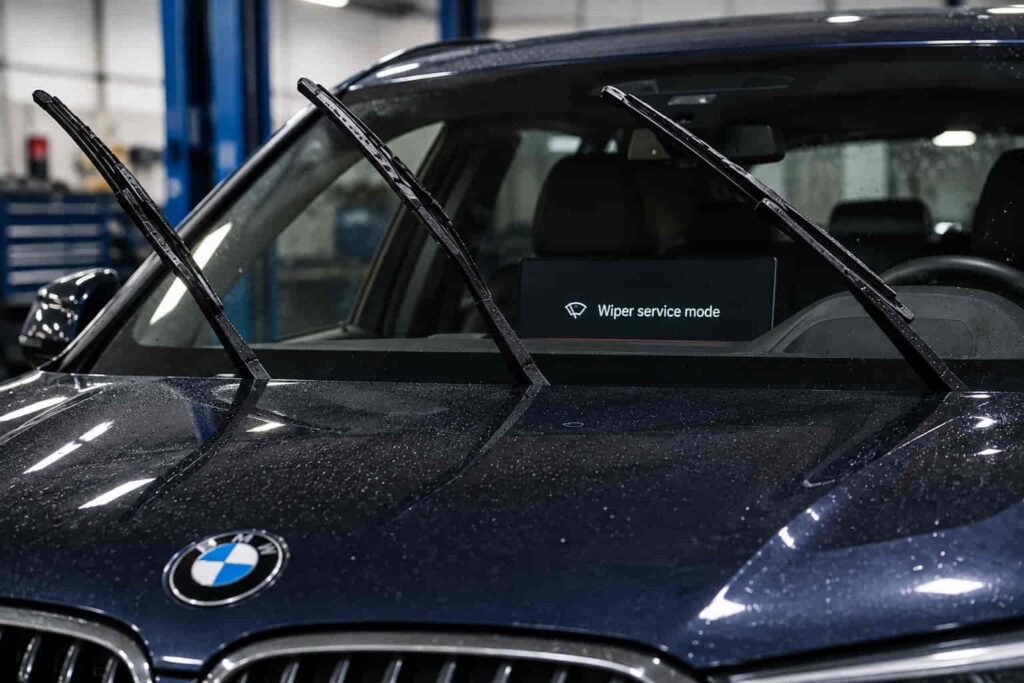
BMW wiper service mode moves the windshield wipers into a maintenance position where the wiper arms can be accessed more easily for blade replacement, cleaning, or other applicable service. On BMW models where the wipers park low against the windshield, moving them into this position can provide the clearance needed to lift the arms without trying to force them upward from their normal parked position.
The exact procedure for activating BMW wiper service mode can vary by model, generation, and vehicle configuration. In applicable vehicles, activation involves placing the vehicle in the required operating or ignition state and using the wiper control to move the arms into their service position. The service position itself does not repair a wiper problem; it temporarily changes where the wipers stop so maintenance can be performed with better access.
There are 7 important things to know about BMW wiper service mode, including when to use it, why the vehicle state matters, how the wiper control is involved, how to handle the arms safely, and how to return the wipers to normal operation after service. The correct sequence is to activate the service position before lifting the arms, perform the required maintenance while controlling the spring-loaded wiper arms, then lower them carefully and return the system to its normal parked position.
What Are the 7 Things to Know About BMW Wiper Service Mode?
The 7 important things to know about BMW wiper service mode are that it moves the wiper arms into a maintenance position, should be used before lifting the arms on applicable models, requires the correct vehicle state, commonly involves the wiper control stalk, provides access for blade replacement, requires careful handling of the spring-loaded arms, and must be exited after service is complete. Understanding these functions helps separate the purpose of service mode from actual wiper-system diagnosis or repair.
BMW wiper service mode first changes the position of the windshield wipers to provide better maintenance access. In their normal parked position, the wipers on applicable BMW models can sit low on the windshield where lifting or servicing the arms is difficult. Service mode moves the wipers away from this normal resting position and places them where the arms and blades can be accessed more easily. The function therefore changes wiper position rather than changing how the blades wipe the windshield or correcting a mechanical problem.
Service mode should also be used before lifting the wiper arms when the normal parked position does not provide appropriate clearance. Attempting to force a wiper arm upward while it remains restricted by its parked position can create unnecessary contact or stress around the arm, windshield, or adjacent bodywork. Moving the wipers into their intended maintenance position first provides a more appropriate starting point for blade replacement or cleaning. The relevant distinction is not that a parked wiper can never be touched, but that service position exists to provide the access intended for maintenance on applicable BMW designs.
The vehicle must be in the correct state before BMW wiper service mode can be activated. The wiper system responds according to the vehicle’s electrical and operating state, which is why the same stalk movement may perform a normal wiping function in one condition but participate in entering service position in another. This also explains why following a procedure without first establishing the required vehicle state can result in the wipers remaining parked or operating normally instead of moving into their maintenance position. Because BMW procedures can differ by model and generation, the exact ignition or operating sequence should match the vehicle being serviced.
The wiper stalk is commonly part of the service-mode activation procedure on applicable BMW models. Once the vehicle is in the required state, the wiper control provides the command that allows the system to move the arms into their service position. Timing and control behavior can differ between applications, so one stalk sequence should not automatically be treated as universal across every BMW. The successful result is more important than assuming one procedure fits all vehicles: the wipers should move from their normal parked location and stop in the intended maintenance position before the arms are lifted.
BMW wiper service mode is particularly useful when replacing windshield wiper blades. Moving the arms into an accessible position makes it easier to raise them away from the glass and work with the blade attachment. Service mode does not determine which replacement blade fits the vehicle, however. Blade length, connector design, and application still need to match the specific BMW. The service position provides access to the component; it does not make an incompatible replacement blade suitable for the wiper arm.
The wiper arms must be controlled carefully while they are lifted away from the windshield. A wiper arm is spring-loaded so the blade maintains contact with the glass during normal operation. Once the blade is removed, the arm no longer has the blade assembly between it and the windshield. If the exposed arm is released and returns abruptly, it can strike the glass. Maintaining control of the arm during blade removal and installation therefore protects the windshield independently of whether service mode itself was activated correctly.
The same principle applies when lowering the arm after maintenance. The new blade should be properly attached before the arm is returned to the windshield, and the arm should be lowered deliberately rather than allowed to snap back under spring tension. This turns service mode into part of a complete maintenance process rather than treating activation itself as the entire procedure.
The wipers must finally be returned from service position to normal operation after maintenance is complete. Service mode is a temporary state used to create access, not the intended operating position for normal driving. Once the blades are installed or the required work is finished, the arms should be lowered correctly against the windshield before the vehicle’s applicable procedure returns the wiper system to normal operation. Activating the wipers while the arms remain physically lifted away from the glass can create an unnecessary risk of movement or contact.
These 7 points establish the practical purpose of BMW wiper service mode: it creates controlled access to the windshield wiper arms so maintenance can be performed without treating their normal parked position as the service position. Service mode changes where the wipers stop; it does not repair worn blades, a defective wiper motor, a linkage problem, or another operational fault. When the problem is poor wiping performance or failure of the wipers to operate normally rather than difficulty accessing the arms, the underlying blade or wiper-system condition must be evaluated separately.
Read more: BMW TPM Malfunction
How Do You Put BMW Wipers in Service Mode?
You put BMW wipers in service mode by placing the vehicle in the required ignition or operating state and then using the applicable wiper-control procedure to move the windshield wipers from their normal parked position into the maintenance position. The exact sequence can vary by BMW model and generation, so the correct procedure for the specific vehicle should take priority over a universal button or stalk sequence.
The vehicle state matters because the wiper stalk can perform different functions depending on whether the vehicle is operating normally or has been placed in the condition required for service-mode activation. During normal operation, moving the control generally commands a wiping function. During the applicable service procedure, the required control input allows the wipers to move away from their parked position and stop where the arms can be accessed for maintenance. If the vehicle is in the wrong state, the same input may not activate service position.
Once the correct vehicle state has been established, the applicable wiper-control action should be performed according to the procedure for that BMW. The objective is to see the wiper arms move upward from their normal resting location and stop in the intended service position. The arms should not be lifted away from the windshield until they have reached that position when the vehicle design requires service mode for appropriate access.
Successful movement into service position also provides useful confirmation that the procedure has been accepted by the wiper system. If the wipers continue operating normally, remain in their parked position, or do not respond as expected, repeating the control input without checking the vehicle state may not solve the problem. The first step is to confirm that the correct model-specific procedure is being followed before treating the lack of movement as a wiper-system fault.
The service position should also be established before beginning blade removal. Once the wipers have stopped in the correct location, the arms can be lifted carefully away from the windshield for the required maintenance. This separates electronic positioning from physical handling: the wiper system moves the arms into service position first, and the person performing the maintenance lifts the arms only after that movement has finished.
BMW wiper service mode is therefore activated through a vehicle-state and wiper-control sequence that positions the arms for maintenance. The important result is that the wipers reach their designated service position before they are physically lifted, while the exact activation steps should be matched to the specific BMW rather than assumed to be identical across every model and generation.
Why Should You Use BMW Wiper Service Mode Before Lifting the Wipers?
BMW wiper service mode should be used before lifting the wipers on applicable models because it moves the arms away from their normal parked position and provides the clearance needed for safer maintenance access. This is particularly relevant when the wipers park low on the windshield or close to surrounding bodywork, where their normal resting position is not intended to function as the maintenance position.
The parked position is designed primarily for normal wiper operation and storage when the system is not wiping. It allows the blades to rest low on the windshield rather than remaining in the driver’s field of view. That functional position does not necessarily provide the best geometry for lifting the arms. Service mode changes that geometry by moving the wipers to a location where the arms can be raised and the blades can be accessed more easily.
Trying to lift an arm while it remains restricted in its normal position can create unnecessary contact around the wiper assembly or nearby vehicle surfaces. Forcing the arm past an obstruction does not create additional service clearance; it places mechanical force on components that were not moved into their intended maintenance position first. Service mode avoids this situation by using the wiper system itself to reposition the arms before manual handling begins.
The service position also improves access during blade replacement. A wiper blade must be detached from its arm and a compatible replacement installed correctly. Working with the arm in a more accessible position gives the person performing the service better control over both the arm and attachment. This is particularly important after the old blade has been removed because the exposed spring-loaded arm should remain under control until the new blade is securely installed.
Using service mode does not remove every maintenance risk. The arm can still return toward the windshield under spring tension if it is released, and service position does not protect the glass from an uncontrolled bare arm. The person replacing the blade must therefore continue supporting the arm and lower it carefully after the replacement blade has been secured.
The practical reason for using BMW wiper service mode is controlled access rather than simply moving the wipers higher on the windshield. Normal parked position is intended for driving and storage, while service position creates the geometry required for applicable maintenance. Keeping those two positions separate reduces the need to force the wiper arms and provides a more appropriate starting point for blade replacement or other work requiring the arms to be lifted.
How Do You Replace BMW Wiper Blades in Service Mode?
To replace BMW wiper blades in service mode, first move the wipers into their maintenance position, lift the applicable wiper arm carefully away from the windshield, remove the existing blade from its attachment, install the correct replacement blade, and lower the arm back onto the glass under control. Service mode provides access to the wiper assembly, while the exact blade-removal method depends on the attachment and replacement blade used on the specific BMW.
The wipers should already be stationary in their service position before either arm is lifted. This separates the vehicle-controlled movement of the wipers from the manual blade-replacement process. Trying to remove a blade while the wipers are still capable of moving or before they have reached the required maintenance position creates unnecessary difficulty and can reduce the available clearance around the arm.
Once the wipers are correctly positioned, the arm can be raised away from the windshield while remaining under physical control. Wiper arms apply spring force toward the glass so the blades maintain contact with the windshield during normal operation. That same force remains present during maintenance. Lifting the arm does not remove the spring tension; it only changes the arm’s position.
The existing blade can then be released using the attachment mechanism applicable to that BMW and blade design. Connector styles are not identical across all BMW models or replacement products, so the blade should not be forced off simply because it does not release in the same way as another vehicle. The correct removal action should disengage the attachment without bending the wiper arm or applying unnecessary force to the connector.
The exposed wiper arm requires particular attention after the old blade has been removed. Without the blade assembly between the arm and windshield, an uncontrolled return can allow the arm or attachment point to strike the glass directly. The arm should therefore remain supported while the replacement blade is prepared and installed rather than being left in a position where it can snap back toward the windshield.
The replacement blade must also be compatible with the specific BMW application. Service mode only creates maintenance access; it does not compensate for an incorrect blade length, attachment type, or fitment. The new blade should engage securely with the applicable connector before the arm is returned to the windshield. If the attachment does not seat as intended, forcing it into position can create a separate installation problem.
After the replacement blade is secured, the arm should be lowered carefully until the blade rests normally against the windshield. Allowing the arm to fall under spring tension is unnecessary even when the new blade is installed. Controlled lowering protects the glass and confirms that the blade sits against the windshield in its intended orientation.
BMW wiper blade replacement in service mode therefore follows a controlled sequence: the vehicle positions the wipers for access, the arm is physically supported during blade removal and installation, and the compatible replacement blade is secured before the arm is returned to the windshield. Service mode makes the component easier to reach, while correct blade fitment and careful arm handling determine whether the replacement itself is completed properly.
How Do You Exit BMW Wiper Service Mode?
You exit BMW wiper service mode after maintenance by first returning the wiper arms and blades correctly to the windshield, then using the applicable vehicle or wiper-system procedure to restore normal operation and allow the wipers to return to their normal parked position. The exact sequence can vary by BMW model and generation, so the vehicle-specific procedure should take priority over one universal exit method.
The physical position of the arms should be addressed before normal wiper operation is restored. If the arms were lifted for blade replacement or cleaning, they should be lowered carefully until the blades are resting against the windshield. Activating normal wiper movement while one or both arms remain raised away from the glass can create uncontrolled movement and unnecessary mechanical risk.
Blade installation should also be verified before leaving service mode. A replacement blade that is not securely attached can shift or separate when the wiper system begins moving again. Confirming that the blade is seated correctly and that both arms are resting normally provides the correct physical starting condition before the system is commanded out of its temporary maintenance state.
The vehicle can then be returned to the operating condition required by the applicable BMW procedure. Normal wiper operation should allow the system to leave its service state and return the arms to their expected parked location. The important result is not a particular button sequence applied to every BMW, but that the system transitions from maintenance position back to normal controlled operation.
The wipers should be observed during their first normal movement after service. Both blades should remain attached, move without obvious interference, and return to the expected resting position. If a newly installed blade does not sit correctly or the arm makes abnormal contact, the condition should be addressed before routine wiper use continues. Service completion includes verifying operation rather than assuming that installation is correct because the blade physically attached to the arm.
A wiper that does not return from service position should not immediately be forced through its normal wiping path by hand. The arms are connected to the wiper drive system, so manually forcing them through powered movement can introduce mechanical stress without identifying why the expected return did not occur. The correct response is first to verify the applicable exit procedure and vehicle state.
Exiting BMW wiper service mode completes the maintenance cycle: lower and secure the serviced wipers first, restore the system to normal operation second, and verify that the arms return to their expected parked position. If the wipers remain in service position despite the correct procedure, the condition moves from normal maintenance access into troubleshooting and should be evaluated separately.
Why Won’t My BMW Wipers Go Into Service Mode?
BMW wipers may fail to enter service mode when the vehicle is not in the required operating state, the applicable wiper-control sequence is not performed correctly, the timing of the procedure is incorrect, or an underlying wiper-system problem prevents the arms from responding normally. The first diagnostic step should therefore be verifying the procedure for the specific BMW rather than assuming that a component has failed.
Vehicle state is particularly important because the wiper control does not perform the same function under every operating condition. If the vehicle remains in a state where the stalk is interpreted as a normal wiping command, the expected service-position movement may not occur. This can make a correct-looking stalk movement appear ineffective even though the wiper system itself is functional. Establishing the required vehicle state before repeating the control action separates a procedural problem from a component problem.
The control sequence and its timing can create a similar issue. BMW models and generations do not necessarily use one identical procedure for entering wiper service position. A sequence that works on one vehicle should not automatically be treated as the correct procedure for another. When the wipers remain parked, the relevant question is whether the procedure matches the specific vehicle before electrical or mechanical diagnosis begins.
The current position and operating state of the wipers can also affect the result. Service mode is intended to move normally functioning wipers from their expected parked position into a maintenance position. If the wipers are already behaving abnormally, stopping in an unexpected location, or failing to respond during normal operation, difficulty entering service mode can be a symptom of the broader operational problem rather than an isolated service-mode fault.
An underlying electrical or mechanical problem becomes more relevant after the correct vehicle-specific procedure has been confirmed. The wiper motor, control system, electrical supply, linkage, or another part of the operating system may require diagnosis when the wipers do not respond normally outside service mode as well. Service-mode failure alone, however, does not identify which of these components is responsible.
The response during normal wiper operation provides useful diagnostic context. Wipers that function normally but do not enter service position create a different troubleshooting path from wipers that do not operate at all. In the first situation, procedure and vehicle state deserve greater attention. In the second, the failure extends beyond maintenance positioning and the normal wiper system itself becomes the primary diagnostic target.
A BMW that will not enter wiper service mode should therefore be checked in the sequence of vehicle state, model-specific procedure, control response, and normal wiper operation before a component failure is assumed. Service mode is a commanded maintenance position, so failure to activate it is not sufficient evidence by itself that the wiper motor needs replacement.
What If BMW Wipers Are Stuck in Service Position?
BMW wipers that remain in service position after maintenance should first be returned to the correct physical state and operated using the applicable exit procedure before the condition is treated as a mechanical or electrical fault. The wiper arms should be lowered against the windshield before normal system operation is attempted, especially if they were physically lifted during blade replacement or cleaning.
A wiper remaining in the maintenance position immediately after service does not necessarily mean that the system is broken. Service mode intentionally places the arms away from their normal parked location, so the system must transition back to normal operation after maintenance is completed. If that transition has not occurred because the vehicle has not been placed in the required state or the applicable exit action has not been performed, the service position can persist even though the wiper hardware remains functional.
The first distinction is therefore between wipers that remain electronically parked in service position and arms that have been manually lifted away from the windshield. Physically raised arms should be lowered carefully before the wiper system is commanded to move. Allowing the motor to operate while the arms are standing away from the glass can create unnecessary movement and contact risk.
If the blades are resting correctly against the windshield but the wipers still do not return to their normal parked position, normal wiper response should be evaluated. A system that wipes correctly but returns to an unexpected position creates a different condition from a system that does not move at all. The former can involve service-state or parking behavior, while the latter indicates that diagnosis should expand to the wiper system’s ability to operate.
The wiper arms should not be forced manually through the powered wiping path simply to move them back toward the bottom of the windshield. The arms are mechanically connected to the drive system, and forcing their movement does not establish why they failed to return normally. It can also introduce additional stress into a system that may already have an operational problem.
A persistent condition after the correct exit procedure deserves diagnosis rather than repeated physical repositioning. Electrical control, motor operation, linkage behavior, or another system-level issue may need to be evaluated if the wipers cannot complete normal movement or consistently fail to park as expected. The relevant evidence is how the complete wiper system behaves, not merely the fact that the arms were previously placed in service mode.
BMW wipers stuck in service position should therefore be treated first as a service-mode exit issue and then, if normal operation cannot be restored, as a potential wiper-system problem. Correct procedure should restore a normal maintenance state; persistent abnormal movement or parking requires diagnosis of the system that controls the wipers.
When Should BMW Wiper Service Mode Be Used?
BMW wiper service mode should be used when maintenance requires the windshield wiper arms to be moved away from their normal parked position so they can be accessed and lifted appropriately. The most common context is wiper blade replacement, but the service position can also provide useful access for applicable cleaning or maintenance around the blades and wiper arms.
Blade replacement is the clearest use because the blade must be separated from the wiper arm before the new component can be installed. When the normal parked position restricts access, service mode moves the assembly to a location where the arm can be lifted and controlled more easily. This makes service mode part of the preparation for blade replacement rather than a function that changes the blade itself.
Cleaning can create another appropriate maintenance context when access to the blade or windshield area requires the arm to be lifted. Moving the wipers into their intended maintenance position provides access without treating the normal parked location as the service position. The same handling rules still apply because the arm remains spring-loaded regardless of why it has been raised.
Service mode is not required simply because the windshield wipers leave streaks, skip across the glass, make noise, or perform poorly. Those symptoms can relate to blade condition, contamination, windshield condition, installation, or another wiper-system issue. Service mode may provide access while those conditions are inspected or corrected, but entering service position does not itself remove the underlying cause.
The same distinction applies when the wipers fail to move normally. A wiper motor, linkage, electrical, or control problem is an operational fault rather than a maintenance-position problem. Attempting to activate service mode does not substitute for diagnosing why the wipers cannot perform their normal function. If normal movement is already impaired, the underlying system condition takes priority over positioning the arms for routine maintenance.
Service mode should therefore be understood as an access function with a defined place in the maintenance sequence. The vehicle moves the wipers from normal parked position into service position, the required physical maintenance is performed while the arms are controlled carefully, and the system is then returned to normal operation.
Use BMW wiper service mode when you need maintenance access to the wiper arms; diagnose the wiper system when the problem is how the wipers operate rather than where they are positioned for service. This distinction keeps service mode within its intended purpose and prevents a maintenance procedure from being mistaken for a repair method.