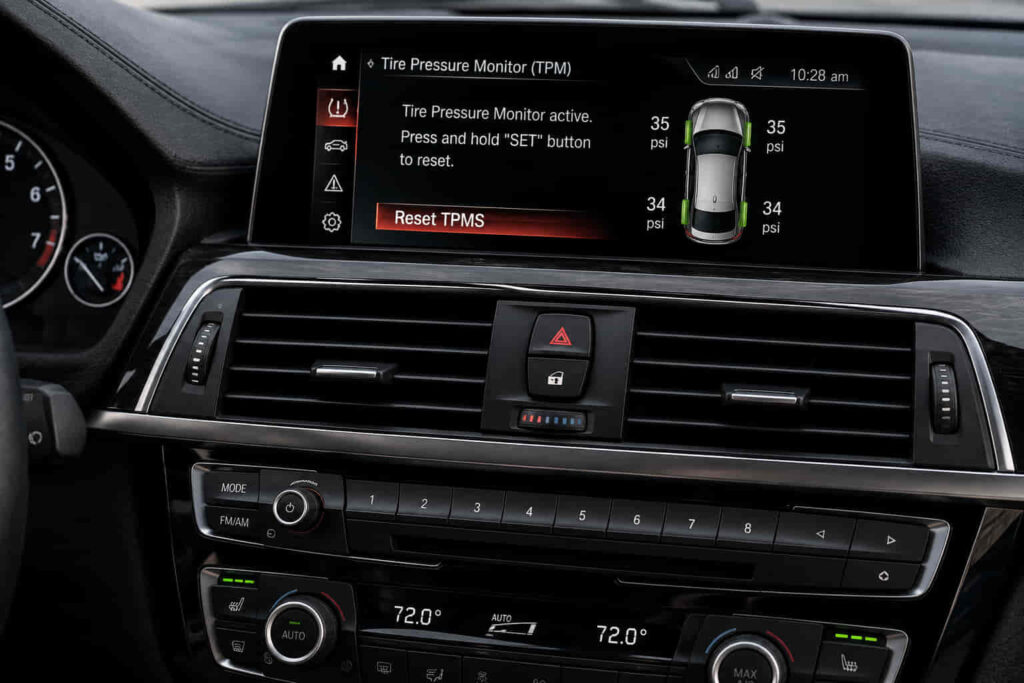
A BMW tire pressure warning may not reset when the tire pressure is incorrect, the reset procedure has not been completed, the system is still initializing, a tire continues to lose air, or the Tire Pressure Monitoring System (TPMS) has a sensor or system fault. Resetting the warning alone does not correct the underlying problem if the tires or monitoring system still require attention.
BMW uses a tire pressure monitoring system to detect changes that may indicate an underinflated tire or another tire-related issue. After tire pressure is corrected or certain tire and wheel services are performed, the system may need to be reset or reinitialized so it can establish the appropriate reference values. A warning that remains active after this process therefore requires more than repeatedly selecting the reset function.
There are 7 main reasons a BMW tire pressure warning may not reset. Identifying the specific cause helps determine whether you need to correct tire pressure, complete the initialization process, inspect a tire for pressure loss, check the TPMS sensors, or have the monitoring system diagnosed. The following sections explain each cause and the appropriate action to take before attempting another BMW tire pressure reset.
Can Incorrect Tire Pressure Prevent a BMW TPMS Reset?
Incorrect tire pressure can prevent a BMW tire pressure reset from resolving the warning because resetting the monitoring system does not correct an underinflated or overinflated tire. The tire pressure should first be adjusted to the specification applicable to the vehicle and tire configuration. The monitoring system can then be reset or reinitialized using the corrected pressure as its reference condition.
BMW tire pressure specifications are not represented by one universal PSI value for every model. The correct value depends on the vehicle and tire configuration, so drivers should use the pressure specification provided for their BMW rather than assuming that a commonly recommended pressure applies. Tire pressure should also be checked when the tires are in the condition specified by the vehicle manufacturer because temperature affects measured pressure. Resetting the system while a tire remains incorrectly inflated can establish an unsuitable reference condition or leave the original tire-pressure problem unresolved.
The correct sequence is to check the tires, adjust their pressure when necessary, and then perform the BMW tire pressure reset. This distinction matters because TPMS initialization and tire inflation perform different functions. Inflation changes the physical air pressure inside the tire, while initialization allows the monitoring system to establish or recognize reference values after the pressure has been corrected. Repeatedly resetting the system is therefore not a substitute for correcting the tire pressure itself.
A warning that returns after the pressure has been corrected also requires further investigation. A tire may initially reach the specified pressure but subsequently lose air because of a puncture, valve-related leak, or another sealing problem. In that situation, another BMW TPMS reset may temporarily restart the monitoring process, but it does not repair the source of the pressure loss. The underlying tire problem must be identified before the warning can be expected to remain cleared.
Can an Incorrect Reset Procedure Keep the BMW Tire Pressure Warning On?
An incorrect or incomplete reset procedure can keep the BMW tire pressure warning active because starting a TPMS reset is not necessarily the same as completing the system initialization. The exact procedure varies by BMW model, production year, and vehicle interface, so the reset controls available through iDrive or the vehicle settings should be followed for the specific vehicle.
On BMW models that provide tire-pressure initialization through iDrive, the relevant function is generally located within the vehicle or tire-status settings. The driver initiates the reset after confirming that the tires have been adjusted correctly. The system then needs to establish its new reference condition. Selecting the reset command without satisfying the required initialization conditions can leave the process incomplete, which is why the warning may remain visible even though the driver has already attempted a reset.
Driving can be part of this initialization process on BMW systems because the monitoring system needs operating data after the reset has been initiated. This means a driver should distinguish between a reset command that has been accepted and a reset process that has actually finished. Turning the vehicle off immediately after initiating the process, interrupting initialization, or repeatedly restarting the reset can prevent the system from reaching its completed state.
The safest approach is to follow the reset instructions provided for the specific BMW rather than relying on one button sequence for every model. BMW vehicles use different generations of monitoring systems and interfaces, and menu terminology can differ between them. If the correct tire pressure has been confirmed and the specified reset procedure has been completed but the warning remains, the next step is to determine whether initialization is still in progress or another tire or TPMS fault is preventing completion.
Read more: BMW Low Beam Malfunction
Why Is My BMW Tire Pressure Reset Stuck or Not Completing?
A BMW tire pressure reset can remain incomplete when the TPMS initialization has started but the system has not yet collected the operating data required to establish its new reference condition. Starting the reset through the vehicle controls therefore does not mean the tire pressure monitoring system has finished resetting. The initialization process must reach its completed state before the new tire-pressure reference is fully established.
This distinction explains why a driver may select the reset function successfully but continue to see an initialization message or tire pressure warning afterward. Depending on the BMW model and monitoring system, initialization can require the vehicle to be driven after the reset is started. During this period, the system evaluates tire-related data under operating conditions rather than clearing the warning solely because the reset command was selected.
There is no single reset time that should be applied to every BMW model. The monitoring system, vehicle generation, driving conditions, and initialization procedure can affect how the process completes. For this reason, a reset that does not disappear immediately should not automatically be treated as a failed TPMS sensor. The first check is whether the vehicle indicates that initialization is still underway and whether the reset procedure specified for that BMW has been completed.
A reset that repeatedly stops, remains incomplete after the required initialization process, or cannot be initiated requires a different diagnosis. First confirm the tire pressures and repeat the procedure according to the instructions for the specific vehicle. If the pressure is correct and initialization still cannot complete, another condition may be interfering with the monitoring system. Possible causes include continuing tire-pressure loss, a TPMS sensor problem, or a broader system fault. Repeating the reset without identifying that cause does not correct the underlying problem.
Can a Tire Leak Cause the BMW Tire Pressure Warning to Return After Reset?
A tire leak can cause the BMW tire pressure warning to return after a reset because TPMS initialization does not repair the physical source of air loss. A tire can be inflated to the specified pressure and the system can be reset successfully, but the warning may appear again when pressure subsequently falls below the condition recognized by the monitoring system.
Slow pressure loss is particularly relevant when the warning disappears after inflation and reset but returns later. Air can escape through a puncture, a valve-related problem, or a leak where the tire and wheel must maintain an airtight seal. The important diagnostic pattern is repeated pressure loss. If the same tire requires inflation again after its pressure was previously corrected, the problem is no longer simply an old warning that needs to be cleared.
A BMW tire pressure reset should therefore follow correction of the pressure problem rather than replace that correction. For example, inflating a leaking tire and immediately reinitializing TPMS may establish a new reference condition, but the tire will continue losing pressure until the source of the leak is repaired. Once pressure drops sufficiently, the monitoring system can detect the change and generate another warning. In this situation, the returning warning indicates that the system may be responding to a continuing tire condition rather than that the reset itself failed.
Check the actual tire pressure again when a BMW tire pressure warning returns after a successful reset. A measurable reduction helps separate an ongoing air-loss problem from an initialization or electronic fault. If pressure continues to decrease, the tire and related sealing components should be inspected instead of repeatedly resetting TPMS. A reset changes the monitoring reference; it does not seal a puncture, repair a valve, or restore a damaged tire.
Can a Faulty TPMS Sensor Prevent a BMW Tire Pressure Reset?
A faulty TPMS sensor can prevent a BMW tire pressure reset from completing correctly when the monitoring system cannot receive the tire data it needs. In this situation, correcting the tire pressure and repeating the reset may not solve the warning because the problem is within the monitoring system rather than the amount of air in the tire.
This distinction is important when diagnosing a persistent BMW tire pressure warning. A low-pressure condition indicates that a tire requires attention, while a TPMS malfunction indicates that the system responsible for monitoring the tires may not be operating correctly. The exact warning message and displayed information vary by BMW model and monitoring system, so the vehicle-specific message should be used to distinguish a pressure warning from a system fault.
Resetting the BMW TPMS does not physically repair a failed sensor. A reset or reinitialization establishes the monitoring reference after tire pressure or related tire conditions have been addressed. It cannot restore communication from a sensor that is no longer functioning correctly. If the tires are at the specified pressure, the correct initialization procedure has been completed, and the system repeatedly fails to provide normal monitoring, the TPMS itself requires further diagnosis.
A sensor problem becomes a stronger possibility when the warning persists despite correct tire pressures and repeated initialization attempts performed according to the vehicle instructions. However, a persistent warning alone does not prove that a sensor has failed. Tire-pressure loss, incomplete initialization, and other system faults can produce related symptoms. Confirming the physical tire condition first prevents a functioning sensor from being incorrectly blamed for a warning caused by an actual pressure problem.
Can Changing Tires or Wheels Cause BMW TPMS Reset Problems?
Changing tires or wheels can cause a BMW TPMS reset problem when the monitoring system requires reinitialization or when the new wheel and tire setup is not correctly recognized by the vehicle. Tire and wheel service changes the conditions the monitoring system uses to evaluate the vehicle, which is why the applicable BMW initialization procedure should be completed after relevant changes when required by the specific system.
A tire or wheel change should not automatically create a permanent TPMS warning. When the components and setup are compatible with the vehicle and the required initialization is completed correctly, the monitoring system should be able to establish the appropriate operating reference. Problems arise when initialization is omitted or incomplete, or when a component involved in tire-pressure monitoring is not operating as required.
TPMS sensor compatibility also matters on BMW systems that use wheel-mounted pressure sensors. Installing a wheel or sensor that is not appropriate for the vehicle can prevent normal monitoring even when the tire itself is inflated correctly. Likewise, a sensor-related installation problem cannot be corrected simply by repeatedly selecting the reset function. The system must first be capable of receiving and processing the required tire information.
The timing of a warning can provide useful diagnostic context. If a BMW tire pressure warning or reset problem begins immediately after tire replacement, wheel replacement, or related service, check the work performed before assuming that an unrelated TPMS failure occurred at the same time. Confirm the tire pressures, verify that the required initialization was performed, and have the installed monitoring components checked when the system still cannot complete its reset. This sequence separates a straightforward reinitialization requirement from a component or compatibility problem that needs further diagnosis.
Can a BMW TPMS System Fault Cause the Warning to Stay On?
A BMW TPMS system fault can cause the tire pressure warning to remain active when the vehicle cannot monitor or initialize the tire pressure system correctly. This differs from a normal low-pressure warning because correcting the tire pressure alone does not resolve a fault within the monitoring system. If the tires have the correct pressure and the prescribed reset procedure repeatedly fails, the system itself becomes a relevant area for diagnosis.
A system fault should be considered after physical tire conditions and the normal initialization process have been checked. This order prevents a genuine low-pressure condition from being mistaken for an electronic problem. It also prevents unnecessary resets when a tire continues to lose air. The diagnostic sequence is therefore to verify tire pressure, inspect for continuing pressure loss, complete the correct initialization procedure, and then investigate the TPMS when the warning or malfunction remains.
Repeated reset failure is particularly important when the vehicle cannot complete initialization despite the tire pressures being corrected. Depending on the BMW model and monitoring system, the fault may involve a sensor or another component required for tire-pressure monitoring. The warning displayed by the vehicle provides additional context because BMW systems can distinguish between conditions involving tire pressure and conditions in which monitoring itself is impaired.
Stop repeatedly resetting the TPMS when the correct tire pressures have been confirmed, the tires are not continuing to lose pressure, and the prescribed initialization procedure still does not restore normal monitoring. At that point, another reset repeats an action that has already failed to address the cause. The appropriate next step is diagnosis of the tire pressure monitoring system so the defective or incorrectly functioning component can be identified.
Does Resetting BMW TPMS Fix a Low Tire Pressure Problem?
Resetting BMW TPMS does not fix low tire pressure because a reset changes or reestablishes the monitoring reference rather than adding air to a tire or repairing the cause of pressure loss. The physical tire condition must be corrected first. The monitoring system can then be initialized so it evaluates the tires from the appropriate reference condition.
This distinction explains why clearing or resetting a warning without checking the tires is the wrong sequence. If a tire is underinflated, it still contains insufficient pressure after the driver selects the reset function. If the tire has a puncture or another leak, it will continue losing air after initialization. The TPMS monitors the condition; it does not correct the mechanical problem responsible for it.
For example, a driver may inflate an underinflated tire and successfully complete a BMW tire pressure reset. If the original pressure loss resulted only from a condition that has been properly addressed, normal monitoring can resume. If the same tire loses pressure again because of an unresolved leak, the warning can return. The second warning should trigger another physical pressure check rather than an attempt to permanently suppress the alert through repeated resets.
The practical sequence is therefore tire condition first and TPMS initialization second. Verify the specified pressure, correct any pressure problem, investigate repeated air loss when present, and reset or initialize the monitoring system according to the vehicle instructions. This sequence allows the BMW TPMS to perform its intended monitoring function instead of using the reset procedure as a substitute for tire maintenance.
When Should You Reset the Tire Pressure Monitoring System on a BMW?
A BMW tire pressure monitoring system should be reset or reinitialized when the vehicle-specific instructions require a new reference condition after relevant tire pressure, tire, or wheel changes. The exact requirement depends on the BMW model and monitoring system, so the owner’s information for the specific vehicle takes priority over a universal reset sequence.
One common context is after the tire pressures have been checked and corrected. The system needs an appropriate reference for subsequent monitoring, which is why initialization follows pressure adjustment rather than preceding it. Relevant tire or wheel service can also require reinitialization when the vehicle’s monitoring system specifies it. This keeps the monitoring reference aligned with the current tire and wheel condition.
A reset should not be used simply because a warning is inconvenient. Tire pressure warnings exist to identify a condition that requires attention, and resetting before checking the tires can obscure the distinction between a completed maintenance action and an unresolved problem. The driver should first determine why the warning appeared and then perform initialization after the underlying condition has been addressed.
The same principle applies after tire or wheel replacement. Complete any initialization required for the specific BMW after confirming that the installed components and tire pressures are appropriate for the vehicle. If the system cannot complete initialization afterward, investigate the installation, monitoring components, and TPMS rather than continuing to restart the reset process.
How Can You Prevent BMW Tire Pressure Warnings From Returning?
Preventing BMW tire pressure warnings from returning requires maintaining the specified tire pressures, correcting recurring pressure loss, and keeping the tire pressure monitoring system in working condition. A successful reset only establishes or reestablishes the monitoring reference; long-term warning prevention depends on maintaining the physical tire conditions that the system monitors.
Check tire pressure regularly and whenever the vehicle reports a tire-pressure change. Use the specification applicable to the particular BMW and tire configuration rather than applying one PSI value to every vehicle. Pressure readings can also change with tire temperature and operating conditions, so measurements should be made according to the conditions specified for the vehicle.
Repeated pressure loss should be investigated instead of managed through repeated inflation and TPMS resets. A tire that consistently loses air can have a puncture, valve-related leak, or another sealing issue that requires inspection. Correcting the source of the loss allows the tire to maintain pressure and gives the monitoring system a stable condition to evaluate.
TPMS warnings that persist despite correct and stable tire pressures require a different response. Complete the appropriate initialization procedure first. If normal monitoring still cannot be restored, have the system diagnosed rather than repeatedly resetting it. Separating tire-pressure problems from initialization problems and TPMS faults is the most reliable way to prevent the same BMW tire pressure warning from becoming a recurring issue.