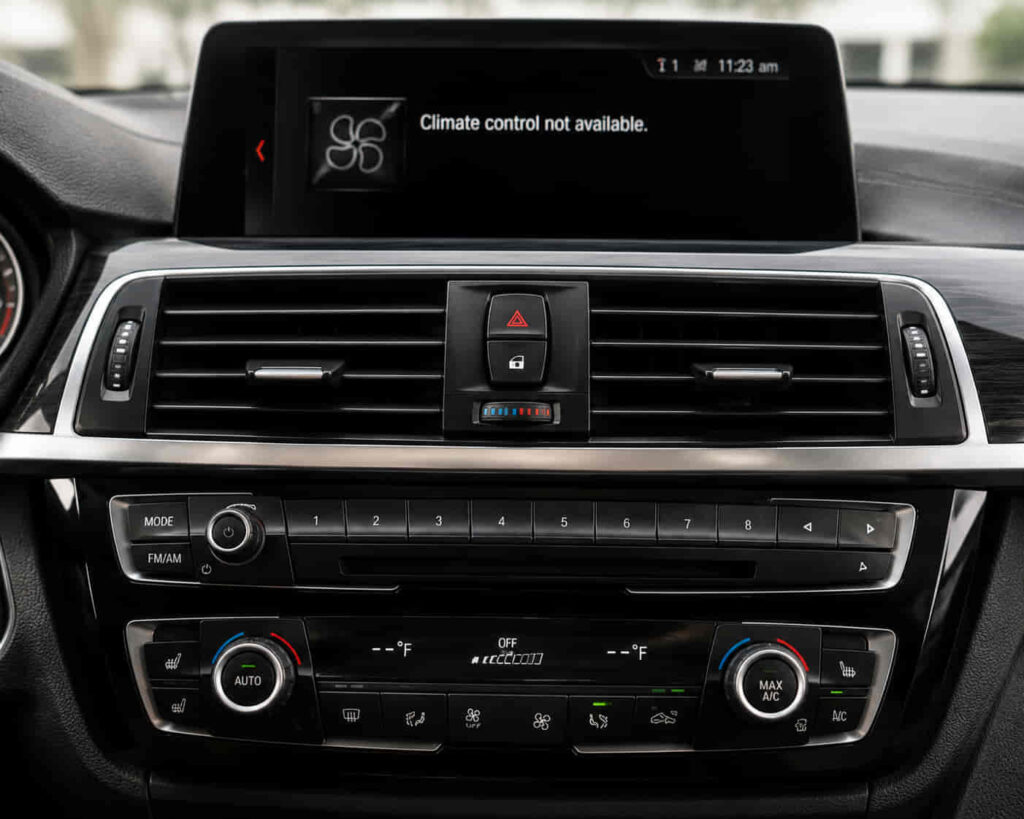
BMW Climate Control Not Working means the vehicle has detected a condition preventing the HVAC system from controlling cabin temperature, airflow, or air distribution correctly. The climate control system is responsible for much more than producing cold air. It manages cooling, heating, ventilation, air distribution, and automatic temperature regulation through a combination of mechanical components and electronic control systems.
Modern BMW climate control systems use multiple connected components, including the IHKA climate control module, temperature sensors, blower motor, A/C compressor, heater system, actuators, and vehicle communication networks. When the driver adjusts the temperature or airflow settings, the climate module processes this information and coordinates different components to achieve the requested cabin environment.
A common mistake is assuming that BMW Climate Control Not Working always means the air conditioning compressor has failed or the system only needs refrigerant. In reality, the HVAC system depends on several processes working together. A faulty sensor, weak electrical supply, failed blower motor, actuator problem, control module issue, or refrigerant problem can create similar symptoms.
The failure symptoms can also vary depending on which part of the climate control system is affected. Some BMW owners may experience no cold air, no heat, weak airflow, incorrect temperature regulation, or a climate display that works normally while the HVAC system does not respond correctly.
The correct repair approach starts by identifying where the HVAC process has failed. The problem may come from airflow generation, temperature control, cooling components, heating components, or electronic communication between climate system modules.
This guide explains the common causes of BMW Climate Control Not Working, how BMW HVAC components interact, how to diagnose each possible failure, and when professional repair is required.
Can BMW A/C Compressor Problems Cause Climate Control Failure?
BMW A/C compressor problems can prevent the climate control system from producing cold air because the compressor is responsible for circulating and compressing refrigerant throughout the air conditioning system. The compressor is one of the main components that allows the HVAC system to remove heat from the cabin and deliver cooled air through the vents.
The BMW cooling process depends on a complete refrigerant cycle. The compressor pressurizes refrigerant, the condenser releases heat, the expansion system regulates refrigerant flow, and the evaporator absorbs heat from the cabin air. If the compressor cannot operate correctly, the system may still blow air through the vents but the air will not become cold.
A compressor-related climate control problem does not always mean the compressor itself has completely failed. The issue may involve compressor electrical activation, pressure control components, wiring problems, refrigerant pressure conditions, or communication problems between the climate control module and compressor system.
A failing compressor can create different symptoms depending on the failure condition. The BMW climate control display may operate normally while the air remains warm, cooling performance may become inconsistent, or the system may stop activating the compressor entirely.
Diagnosing BMW A/C compressor problems requires checking compressor activation, refrigerant pressure, electrical signals, stored HVAC faults, and the condition of related cooling components. Confirming the actual cause prevents unnecessary compressor replacement when another part of the A/C system is responsible.
Can Low Refrigerant Cause BMW Climate Control Not Working?
Low refrigerant levels can affect BMW climate control operation because the air conditioning system requires a specific refrigerant amount and pressure range to produce effective cooling. Refrigerant is the medium that transfers heat from inside the cabin to the outside environment, allowing the HVAC system to reduce interior temperature.
The refrigerant system must maintain proper pressure to allow the compressor, condenser, expansion valve, and evaporator to work together. When refrigerant levels become too low, the system may not create enough cooling capacity, and pressure sensors may prevent compressor operation to protect the system.
Low refrigerant does not automatically mean the system only needs a recharge. A refrigerant shortage usually indicates that the system has lost refrigerant through a leak or another condition affecting the sealed cooling circuit. Adding refrigerant without identifying the cause may provide temporary improvement while allowing the original problem to continue.
A refrigerant-related BMW climate control problem may appear as weak cooling, warm air from vents, inconsistent temperature control, or a system that cools briefly before losing performance.
Diagnosing BMW refrigerant problems requires checking system pressure, inspecting for leaks, evaluating compressor operation, and confirming that HVAC sensors are reporting accurate information. Identifying why refrigerant levels are incorrect is essential for restoring reliable climate control performance.
Read more: BMW Lighting System Malfunction
Can BMW Blower Motor Problems Cause Climate Control Failure?
BMW blower motor problems can cause climate control failure because the HVAC system cannot deliver conditioned air into the cabin without proper airflow generation. The blower motor is responsible for pushing air through the evaporator, heater core, and air vents, allowing the climate control system to distribute cooled or heated air inside the vehicle.
The climate control process requires both temperature regulation and airflow movement. Even when the A/C compressor and heater system are operating correctly, the cabin will not receive the expected temperature output if the blower motor cannot move air through the HVAC system. This means a BMW may appear to have an air conditioning or heating problem when the actual failure is related to airflow.
A blower motor problem does not always mean the motor itself has completely failed. The issue may involve the blower resistor, blower control module, electrical supply, wiring connections, or climate control commands from the IHKA module. Each component affects how the blower motor receives and controls power.
Blower motor failures can create different symptoms depending on the affected component. The fan may stop working completely, operate only at certain speeds, produce weak airflow, or behave inconsistently when the climate system is adjusted.
Diagnosing BMW blower motor problems requires checking electrical power, blower control signals, fan speed operation, wiring condition, and HVAC module fault information. Identifying whether the problem comes from the motor, control unit, or power supply prevents unnecessary replacement of functioning HVAC components.
Can Temperature Sensor Problems Affect BMW Climate Control?
BMW temperature sensor problems can affect climate control operation because the HVAC system depends on accurate temperature information to regulate heating, cooling, and airflow decisions. The climate control module uses data from multiple sensors to determine the current cabin condition and adjust the system to maintain the selected temperature.
BMW HVAC systems may use different sensors, including cabin temperature sensors, ambient temperature sensors, and evaporator temperature sensors. These components provide feedback that allows the IHKA module to control the A/C compressor, blower speed, air distribution, and temperature adjustment functions.
A faulty temperature sensor does not automatically mean the entire climate control system has failed. The issue may involve inaccurate sensor readings, damaged wiring, blocked sensor airflow, connector problems, or communication errors between the sensor and climate module.
Sensor problems can create symptoms that appear unrelated to temperature measurement. The system may produce air that is too hot or too cold, adjust temperature incorrectly, cycle the compressor at the wrong time, or fail to maintain the selected cabin temperature.
Diagnosing BMW climate control sensor problems requires checking sensor values, comparing readings with actual conditions, inspecting wiring connections, and scanning HVAC module faults. Accurate sensor data is essential because the climate control system can only regulate temperature correctly when it receives reliable information.
Can BMW Blend Door Actuator Problems Cause Climate Control Issues?
BMW blend door actuator problems can cause climate control issues because these components control how air is mixed, directed, and distributed throughout the cabin. The HVAC system does not only need to create hot or cold air; it must also control where that air travels and how different temperature zones are adjusted.
Inside the BMW HVAC system, blend door actuators move internal air control doors that regulate airflow direction and temperature mixing. The climate control module sends commands to these actuators based on driver settings, sensor information, and automatic temperature control calculations.
A blend door actuator problem does not automatically mean the entire climate control system has failed. The issue may involve a damaged actuator motor, worn internal gears, incorrect position feedback, wiring problems, or communication errors between the actuator and IHKA climate module.
Actuator failures often create specific symptoms. A BMW may produce cold air on one side and warm air on the other, fail to change airflow direction, produce air from the wrong vents, or remain stuck at one temperature setting despite changes on the climate control panel.
Diagnosing BMW blend door actuator problems requires checking actuator movement, position feedback, HVAC fault codes, electrical signals, and air distribution behavior. Confirming whether the actuator is physically stuck or electronically controlled incorrectly helps avoid unnecessary replacement of other climate system components.
Can BMW IHKA Module Problems Cause Climate Control Failure?
BMW IHKA module problems can cause climate control failure because the module acts as the central control unit responsible for managing HVAC functions, sensor inputs, and communication with climate system components. The IHKA module processes driver commands and sensor information before controlling components such as the compressor, blower motor, actuators, and temperature regulation systems.
The climate control system depends on continuous communication between electronic components. When the IHKA module receives incorrect data, loses communication, or develops an internal fault, the HVAC system may not respond correctly to temperature settings, airflow commands, or automatic climate adjustments.
An IHKA module problem does not always mean the module hardware has completely failed. The issue may involve software faults, communication errors, unstable voltage, coding problems, damaged connectors, or another component causing the module to report incorrect system conditions.
Module-related climate control problems can create various symptoms. The display may operate normally while HVAC functions fail, temperature adjustments may not respond correctly, multiple climate functions may become unavailable, or the system may work intermittently.
Diagnosing BMW IHKA module problems requires checking HVAC fault codes, module communication, software condition, power supply, and the response of connected climate control components. Identifying whether the module itself has failed or is reacting to another system problem is essential before replacement.
Can Electrical Problems Cause BMW Climate Control Not Working?
Electrical problems can cause BMW Climate Control Not Working because HVAC components require stable power supply and reliable communication between electronic modules to operate correctly. The BMW climate control system combines mechanical components with electronic control systems, meaning voltage problems or communication interruptions can affect multiple HVAC functions.
The IHKA climate control module, blower motor, compressor controls, sensors, and actuators all depend on consistent electrical conditions. When the vehicle experiences unstable voltage, poor electrical connections, damaged wiring, or communication faults, the climate system may not receive or execute the correct commands.
An electrical-related climate control problem does not automatically mean that a major HVAC component has failed. The issue may involve a weak vehicle battery, charging system problems, faulty grounds, damaged connectors, or wiring problems affecting communication between climate control components.
Electrical problems can create intermittent symptoms. The climate system may work normally at one time but fail later, especially after low-voltage events, battery issues, or periods when the vehicle has been inactive. Other electronic systems may also display warnings because they share the same electrical network.
Diagnosing BMW climate control electrical problems requires checking battery voltage, charging system performance, wiring conditions, connector quality, module communication, and stored HVAC faults. Confirming the electrical condition helps determine whether the HVAC components are actually damaged or simply affected by unstable power.
Why Is My BMW Climate Control Display Working But No Air Comes Out?
A BMW climate control display that works while no air comes from the vents usually indicates that the control interface is functioning but another HVAC component is preventing airflow production or distribution. The climate display only allows the driver to request temperature and airflow settings; it does not guarantee that the blower system and internal HVAC components are operating correctly.
The climate control process requires several stages. The IHKA module receives driver input, activates the blower motor, controls airflow doors, and manages temperature regulation components. If the blower motor, blower control module, wiring, or airflow actuators fail, the display may continue working while the cabin receives little or no airflow.
This symptom does not automatically mean the climate control module has failed. The module may be sending correct commands while a mechanical or electrical component cannot respond. For example, a failed blower motor can prevent airflow even though all temperature controls appear normal.
A no-airflow condition can appear as complete fan failure, weak airflow at all speeds, or airflow that changes unpredictably. These differences provide important information when identifying the failed component.
Diagnosing BMW climate control airflow problems requires checking blower motor operation, electrical supply, fan control signals, actuator movement, and HVAC module fault information. Finding where airflow production stops helps identify the correct repair path.
Why Is My BMW Air Conditioning Not Cooling But Blowing Air?
A BMW air conditioning system that blows air but does not produce cold air usually indicates a failure in the cooling process rather than an airflow problem. The blower system may be working correctly, but the components responsible for removing heat from cabin air are not operating as expected.
The cooling process depends on several components working together. The compressor must circulate refrigerant, the condenser must release heat, and the evaporator must absorb heat from cabin air. If any part of this refrigerant cycle fails, the vents may continue producing airflow without delivering cold air.
A no-cooling condition does not automatically mean the system only needs refrigerant. The problem may involve compressor activation, refrigerant leaks, pressure sensor issues, expansion valve problems, or electrical communication faults preventing the cooling system from operating.
The symptom pattern can provide useful diagnostic information. Warm air from all vents may indicate a cooling system problem, while uneven temperature output may point toward airflow control or blend door actuator issues.
Diagnosing BMW air conditioning problems requires checking refrigerant pressure, compressor operation, temperature sensor readings, electrical signals, and HVAC module faults. Identifying the exact failure point prevents unnecessary refrigerant service or replacement of functioning components.
Why Is My BMW Heater Not Working?
A BMW heater that is not working usually indicates a problem with heat generation, coolant circulation, airflow control, or electronic temperature management. The heating system relies on engine heat transfer and HVAC control components to deliver warm air into the cabin.
BMW heating operation depends on multiple components working together. Engine coolant carries heat to the heater core, the blower motor moves air through the system, and climate control actuators direct heated air toward the correct areas. A failure in any part of this process can reduce or eliminate cabin heating.
A heater problem does not automatically mean the heater core has failed. The issue may involve low coolant level, coolant flow problems, thermostat issues, temperature sensors, blend door actuators, or climate control module faults.
Heating failures can create different symptoms. The vehicle may produce cold air even when the engine is warm, provide heat only at certain settings, deliver uneven temperatures between zones, or fail to respond to temperature adjustments.
Diagnosing BMW heater problems requires checking coolant conditions, heater core operation, temperature sensors, airflow control, and HVAC module data. Understanding whether the failure is related to heat supply or air distribution is essential for accurate repair.
How Do You Reset BMW Climate Control System?
Resetting the BMW climate control system can help resolve temporary electronic or communication problems, but it does not repair mechanical HVAC failures or damaged components. A reset restarts the climate control module and may restore normal operation when the issue is caused by a temporary software condition.
A reset may be useful after situations such as low voltage events, temporary module communication errors, or minor system glitches. However, if the system has an active problem such as compressor failure, refrigerant loss, blower motor failure, or actuator damage, the warning or symptom will usually return.
Resetting the climate system without identifying the underlying cause can delay proper diagnosis. The HVAC system contains multiple components, and each requires different testing depending on the symptom.
BMW climate control reset should be considered a troubleshooting step rather than a complete repair solution. Restoring normal HVAC operation requires identifying and correcting the component or condition causing the failure.
How Do You Diagnose BMW Climate Control Not Working?
Diagnosing BMW Climate Control Not Working requires identifying whether the failure comes from airflow production, temperature regulation, cooling components, heating components, or electronic control systems. Because BMW HVAC systems combine mechanical and electronic components, the symptom alone does not identify the failed part.
The diagnostic process begins by identifying the exact behavior of the system. A vehicle with no airflow requires different testing from one with airflow but no cooling, incorrect temperature control, or intermittent climate operation.
The next step involves scanning the HVAC system for fault codes, checking sensor readings, testing electrical supply, evaluating compressor and blower operation, and inspecting actuators and related mechanical components. BMW-specific diagnostic tools provide access to climate module information that basic scanners may not provide.
A common mistake is replacing major HVAC components immediately because the system is not working. In many cases, the actual cause may be a sensor, electrical issue, actuator, or communication fault rather than a failed compressor or climate module.
The correct BMW climate control diagnostic sequence is: identify symptom → scan HVAC module → check electrical supply → test sensors and components → inspect cooling and heating systems → repair cause → verify operation.
How Much Does BMW Climate Control Repair Cost?
BMW Climate Control repair costs depend on the failed component, diagnostic complexity, and whether the problem involves electrical, mechanical, or electronic HVAC systems. The climate control system contains multiple components, meaning repair requirements vary depending on the actual source of the failure.
A sensor replacement, actuator repair, or electrical correction requires a different approach compared with replacing an A/C compressor, blower motor, or climate control module. The final repair process depends on accurate diagnosis rather than the warning symptom alone.
Replacing expensive HVAC components without confirming the cause can increase repair costs while leaving the original problem unresolved. Proper diagnosis helps determine whether the issue requires a simple correction or a major component replacement.
BMW climate control repair costs are determined by the diagnosed cause, not simply by the fact that the climate system is not working.
When Should BMW Climate Control Problems Be Diagnosed Professionally?
Professional diagnosis is recommended when BMW Climate Control problems continue after basic checks, multiple HVAC functions fail, cooling or heating performance becomes inconsistent, or electronic faults appear. Modern BMW climate systems combine mechanical HVAC components with advanced electronic control modules, making accurate diagnosis important.
A professional evaluation becomes especially important when the issue involves the IHKA module, compressor control, electrical communication, sensor data, or actuator operation. These systems require specialized diagnostic equipment to identify the exact failure point.
Ignoring repeated climate control problems can allow a minor issue to develop into a larger HVAC failure. For example, an electrical problem affecting module communication or a component operating incorrectly may create additional stress on related systems.
The correct diagnostic path is:
climate problem appears → identify symptom → scan HVAC system → test components → repair cause → verify temperature and airflow operation
BMW Climate Control Not Working is an HVAC system symptom, not a specific component diagnosis. Understanding the relationship between climate modules, sensors, airflow components, cooling systems, and heating systems is essential for restoring reliable cabin temperature control.